
Alfa Romeo Tipo 33/TT/3

Brand
Produced from
Portal
Vehicle category
Model line
Predecessor
Successor
Submodel Overview
In the chaos of early 1970s prototype racing, sound was a weapon. The air at every circuit was torn apart by the thunder of 5.0-litre V12s from the Ferrari 512 and the guttural, turbocharged flat-12s of the Porsche 917s. Yet, piercing through that cacophony, was another, more manic sound: a high-pitched, complex, and utterly glorious V8 scream. This was the voice of the Alfa Romeo Tipo 33, the war-cry of Autodelta, and the personal obsession of its brilliant, mercurial leader, Carlo Chiti. By 1971, the writing was on the wall for the 5.0-litre giants. The FIA had mandated a new, 3.0-litre formula for the 1972 World Championship for Makes, and the battle lines were being drawn. Alfa’s existing 33/3, with its complex monocoque chassis, was fast but fragile. Porsche was retreating to its proven 908. But most terrifyingly, Ferrari was preparing the 312 PB, an F1 car with a full-width body. Chiti needed a new car—one that was not just fast, but strong, reliable, and pragmatic. The answer was the Tipo 33/TT/3, a car that represented a fundamental shift in philosophy and would become the critical stepping stone to Alfa Romeo’s ultimate world championship glory.
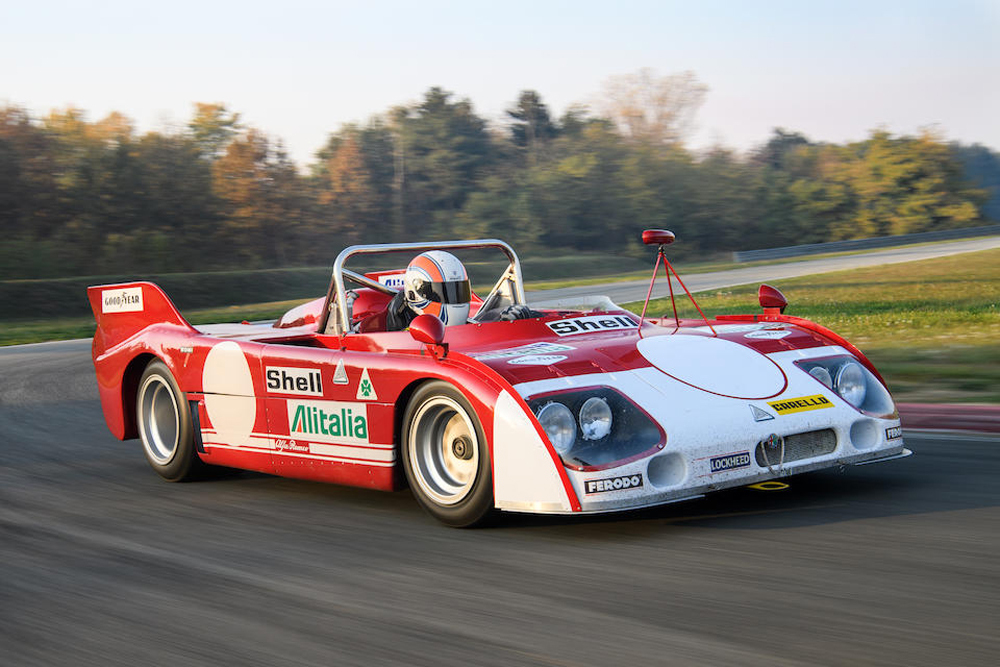
The genius, and the entire story, of the car is revealed in its name. “TT” stood for Telaio Tubolare—tubular chassis. In a move that stunned many in the paddock, Chiti and Autodelta abandoned their advanced, aviation-inspired monocoque chassis in favour of a seemingly simpler, more conventional steel tube space frame. This was not a regression; it was a masterstroke of pragmatism. The monocoque of the 33/3 was light but enormously complex and expensive, and it proved difficult to repair during the punishing 1000km races. A shunt that would be a terminal failure for a monocoque could be cut, re-welded, and fixed on a tube frame in a matter of hours. This new chassis was stiffer, more robust, and infinitely more serviceable, a perfect platform for a long-distance warrior. Into this new frame, Chiti slotted the car’s soul: the glorious 3.0-litre, 90-degree V8. This was a purebred racing engine, a 32-valve, quad-cam jewel fed by a SPICA mechanical fuel-injection system. It screamed to over 10,000 rpm and, by 1971, was producing a reliable 420 hp, a figure that would climb to over 440 hp by the end of its life. This magnificent engine was mated to a 5-speed Colotti gearbox, and the entire package was wrapped in a low, wide, wedge-shaped body, dominated by a full-width “spade” nose and a towering air-intake snorkel that fed the thirsty V8.
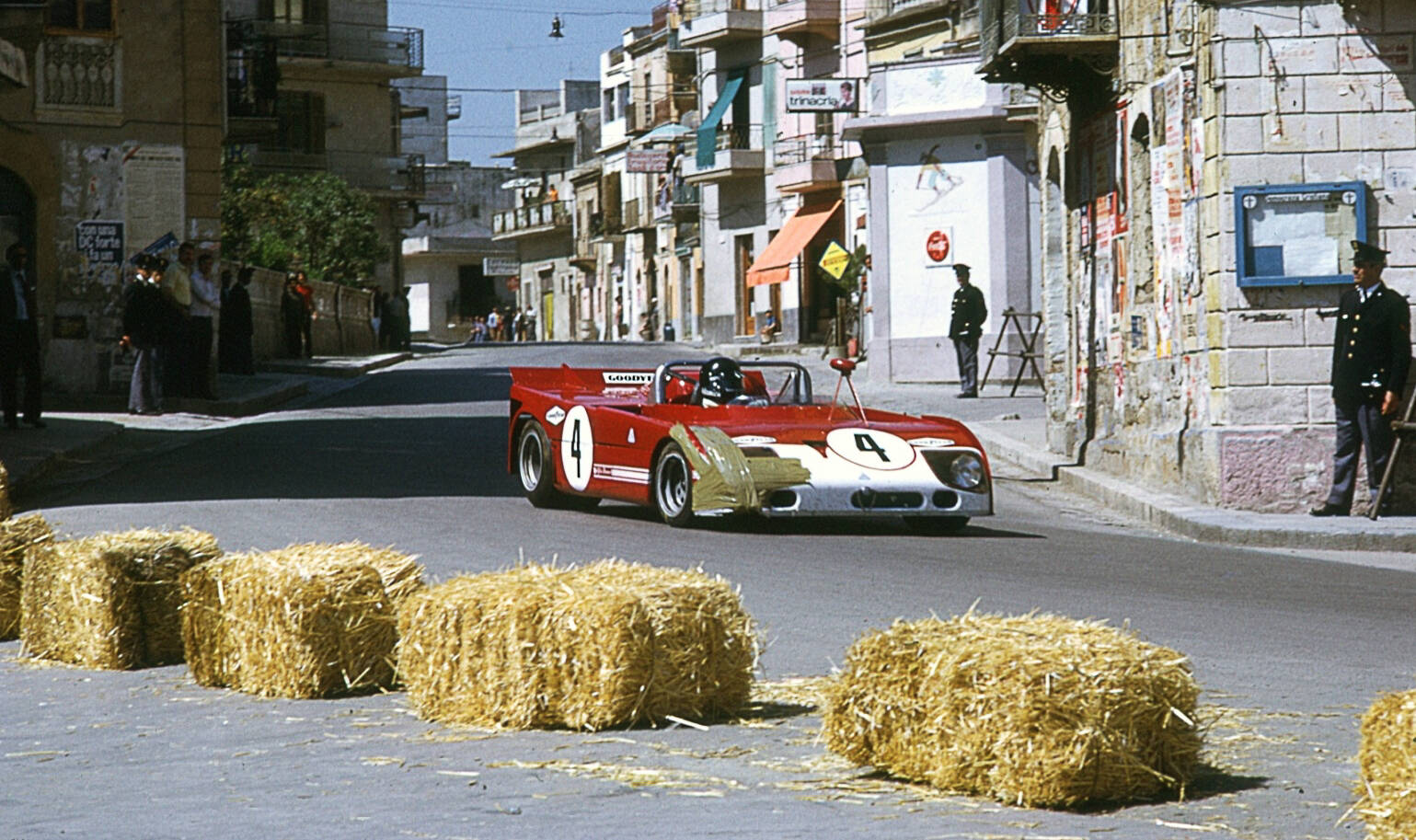
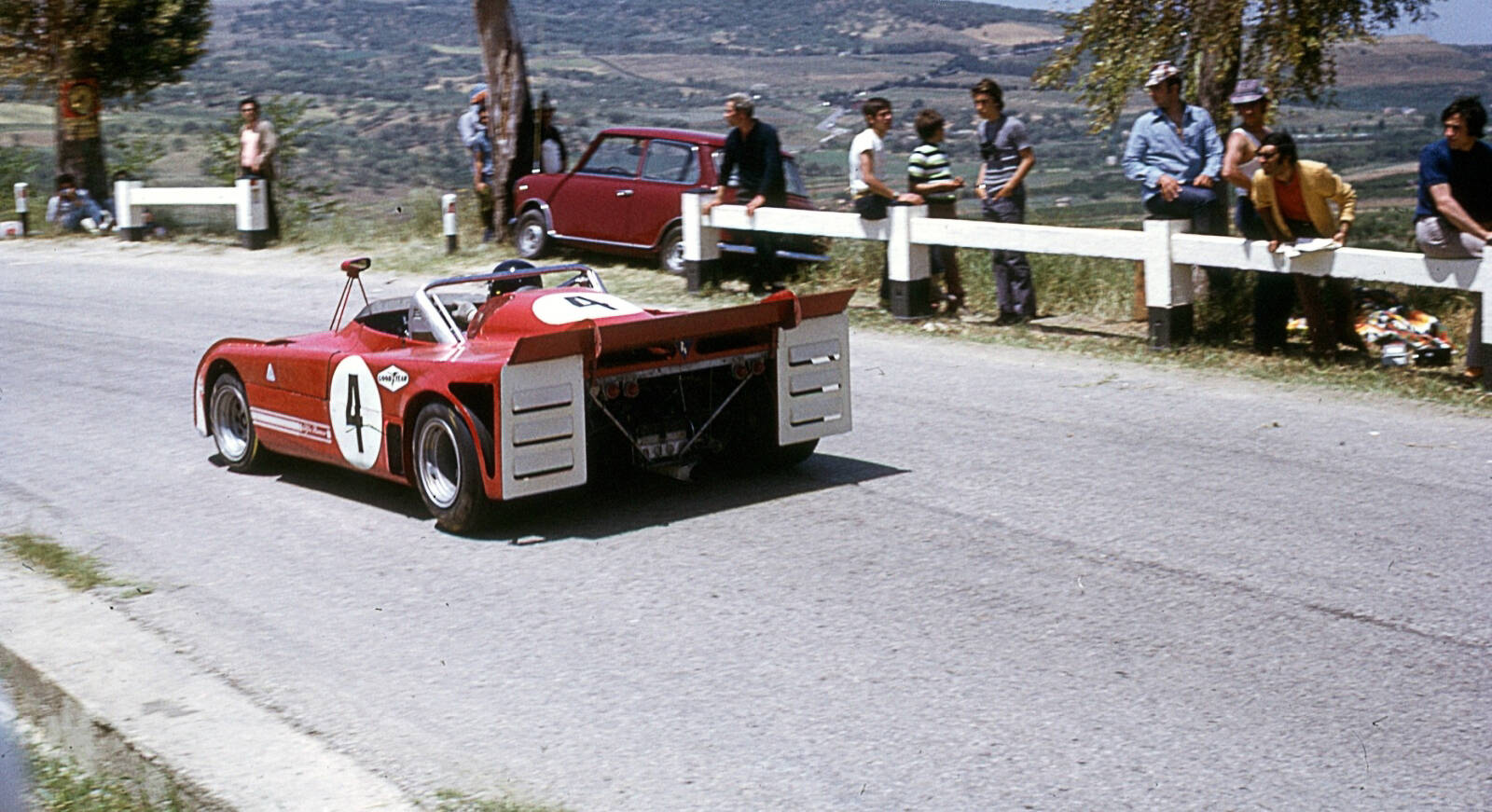
The 33/TT/3’s competition history is a two-act play. The 1971 season was a transitional, developmental year. The 5.0-litre 917s and 512s were still eligible, making overall wins an impossibility. The TT/3 raced alongside its monocoque 33/3 predecessor (which, in a glorious anomaly, won the 1971 Targa Florio, piloted by Vaccarella and Hezemans). The new TT/3, meanwhile, was being debugged in the heat of battle. A-list drivers like Rolf Stommelen, Nanni Galli, and Andrea de Adamich wrestled with the new chassis, scoring a podium at the Targa Florio behind the winning 33/3. It showed flashes of immense speed, but it was clear that Chiti and his men were treating 1971 as a full-scale test session for the real war to come.
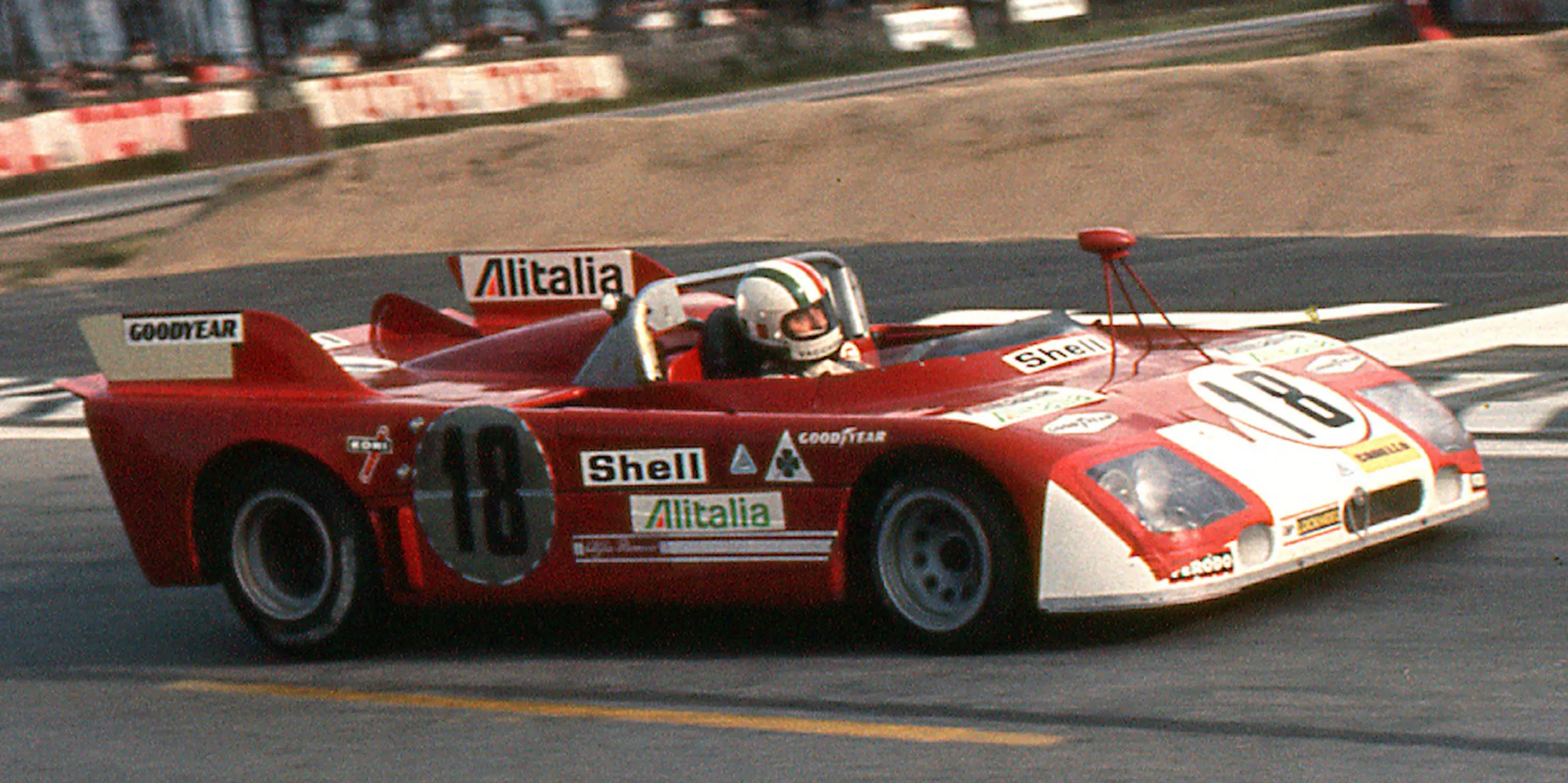
Then came 1972. The 5.0-litre cars were banned. The stage was set for the new 3.0-litre prototypes. This was Autodelta’s moment. But their grand ambitions were met by a red wall. Ferrari, having skipped Le Mans in 1971 to focus development, unleashed the 312 PB. It was perfect. Lighter, more powerful with its F1-derived flat-12, and flawlessly prepared, the Ferrari 312 PB proceeded to win every single World Championship race it entered in 1972. The 1972 season thus became the story of the 33/TT/3’s heroic, heartbreaking, and glorious failure. At every round, from Buenos Aires to Daytona, Sebring to Brands Hatch, the red Alfas were the only cars that could even get close to the dominant Ferraris. They were the perennial “best of the rest,” snapping at the 312 PBs’ heels, waiting for a mistake that never came. The driver lineup was a “who’s who” of motorsport legends, with Vic Elford, Helmut Marko, Gijs van Lennep, and even Peter Revson joining the Italian stalwarts. The car was a consistent podium finisher, a testament to its new-found reliability. At Le Mans, which Ferrari infamously skipped, the 33/TT/3s looked set for glory until a series of misfortunes, allowing Matra to take the home win, with the TT/3 of de Adamich and Galli finishing a strong 4th overall.
The 33/TT/3 never won the championship. It was overshadowed by one of the most dominant single-season cars in motorsport history. And yet, its legacy is monumental. It was the car that validated Chiti’s Telaio Tubolare philosophy. It proved that the chassis concept was sound, tough, and a true contender. It was the car that forged Autodelta into a seasoned, world-class endurance team. Chiti knew that his glorious V8, one of the greatest-sounding engines ever made, had reached its development ceiling. To beat Ferrari, he needed his own 12-cylinder. The 33/TT/3’s robust chassis was so good that it became the testbed for Alfa’s new 3.0-litre flat-12 engine. Re-engineered to house the wider, more powerful engine, it was reborn as the 33/TT/12. That car, a direct descendant of the TT/3’s chassis, would go on to win the World Championship for Makes in 1975, finally vanquishing all foes. The 33/TT/3 was the vital, title-losing crucible—the magnificent failure that was the necessary foundation for Alfa Romeo’s ultimate triumph.
Brand
Produced from
Portal
Vehicle category
Model line
Predecessor
Sucessor
Brand
Produced from
Portal
Vehicle category
Model line
Model generation
Predecessor
Sucessor
Submodel Overview
In the chaos of early 1970s prototype racing, sound was a weapon. The air at every circuit was torn apart by the thunder of 5.0-litre V12s from the Ferrari 512 and the guttural, turbocharged flat-12s of the Porsche 917s. Yet, piercing through that cacophony, was another, more manic sound: a high-pitched, complex, and utterly glorious V8 scream. This was the voice of the Alfa Romeo Tipo 33, the war-cry of Autodelta, and the personal obsession of its brilliant, mercurial leader, Carlo Chiti. By 1971, the writing was on the wall for the 5.0-litre giants. The FIA had mandated a new, 3.0-litre formula for the 1972 World Championship for Makes, and the battle lines were being drawn. Alfa’s existing 33/3, with its complex monocoque chassis, was fast but fragile. Porsche was retreating to its proven 908. But most terrifyingly, Ferrari was preparing the 312 PB, an F1 car with a full-width body. Chiti needed a new car—one that was not just fast, but strong, reliable, and pragmatic. The answer was the Tipo 33/TT/3, a car that represented a fundamental shift in philosophy and would become the critical stepping stone to Alfa Romeo’s ultimate world championship glory.
The genius, and the entire story, of the car is revealed in its name. “TT” stood for Telaio Tubolare—tubular chassis. In a move that stunned many in the paddock, Chiti and Autodelta abandoned their advanced, aviation-inspired monocoque chassis in favour of a seemingly simpler, more conventional steel tube space frame. This was not a regression; it was a masterstroke of pragmatism. The monocoque of the 33/3 was light but enormously complex and expensive, and it proved difficult to repair during the punishing 1000km races. A shunt that would be a terminal failure for a monocoque could be cut, re-welded, and fixed on a tube frame in a matter of hours. This new chassis was stiffer, more robust, and infinitely more serviceable, a perfect platform for a long-distance warrior. Into this new frame, Chiti slotted the car’s soul: the glorious 3.0-litre, 90-degree V8. This was a purebred racing engine, a 32-valve, quad-cam jewel fed by a SPICA mechanical fuel-injection system. It screamed to over 10,000 rpm and, by 1971, was producing a reliable 420 hp, a figure that would climb to over 440 hp by the end of its life. This magnificent engine was mated to a 5-speed Colotti gearbox, and the entire package was wrapped in a low, wide, wedge-shaped body, dominated by a full-width “spade” nose and a towering air-intake snorkel that fed the thirsty V8.
The 33/TT/3’s competition history is a two-act play. The 1971 season was a transitional, developmental year. The 5.0-litre 917s and 512s were still eligible, making overall wins an impossibility. The TT/3 raced alongside its monocoque 33/3 predecessor (which, in a glorious anomaly, won the 1971 Targa Florio, piloted by Vaccarella and Hezemans). The new TT/3, meanwhile, was being debugged in the heat of battle. A-list drivers like Rolf Stommelen, Nanni Galli, and Andrea de Adamich wrestled with the new chassis, scoring a podium at the Targa Florio behind the winning 33/3. It showed flashes of immense speed, but it was clear that Chiti and his men were treating 1971 as a full-scale test session for the real war to come.
Then came 1972. The 5.0-litre cars were banned. The stage was set for the new 3.0-litre prototypes. This was Autodelta’s moment. But their grand ambitions were met by a red wall. Ferrari, having skipped Le Mans in 1971 to focus development, unleashed the 312 PB. It was perfect. Lighter, more powerful with its F1-derived flat-12, and flawlessly prepared, the Ferrari 312 PB proceeded to win every single World Championship race it entered in 1972. The 1972 season thus became the story of the 33/TT/3’s heroic, heartbreaking, and glorious failure. At every round, from Buenos Aires to Daytona, Sebring to Brands Hatch, the red Alfas were the only cars that could even get close to the dominant Ferraris. They were the perennial “best of the rest,” snapping at the 312 PBs’ heels, waiting for a mistake that never came. The driver lineup was a “who’s who” of motorsport legends, with Vic Elford, Helmut Marko, Gijs van Lennep, and even Peter Revson joining the Italian stalwarts. The car was a consistent podium finisher, a testament to its new-found reliability. At Le Mans, which Ferrari infamously skipped, the 33/TT/3s looked set for glory until a series of misfortunes, allowing Matra to take the home win, with the TT/3 of de Adamich and Galli finishing a strong 4th overall.
The 33/TT/3 never won the championship. It was overshadowed by one of the most dominant single-season cars in motorsport history. And yet, its legacy is monumental. It was the car that validated Chiti’s Telaio Tubolare philosophy. It proved that the chassis concept was sound, tough, and a true contender. It was the car that forged Autodelta into a seasoned, world-class endurance team. Chiti knew that his glorious V8, one of the greatest-sounding engines ever made, had reached its development ceiling. To beat Ferrari, he needed his own 12-cylinder. The 33/TT/3’s robust chassis was so good that it became the testbed for Alfa’s new 3.0-litre flat-12 engine. Re-engineered to house the wider, more powerful engine, it was reborn as the 33/TT/12. That car, a direct descendant of the TT/3’s chassis, would go on to win the World Championship for Makes in 1975, finally vanquishing all foes. The 33/TT/3 was the vital, title-losing crucible—the magnificent failure that was the necessary foundation for Alfa Romeo’s ultimate triumph.
Tech Specs
Technical Specifications
Tech Specs
Technical Specifications
Engine
01
03
Internal combustion engine
Configuration
V8 90º
Location
Mid, longitudinally mounted
Construction
Aluminium alloy block and head
Displacement (cc)
2,998 cc
Displacement (cu in)
182.9 cu in
Compression
11.0:1
Bore x Stroke
86.0 mm x 64.4 mm
Valvetrain
4 valves per cylinder, DOHC
Fuel feed
Spica Fuel Injection
Lubrication
Dy Sump
Aspiration
Naturally aspirated
Output
Power (hp)
440 hp
Power (kW)
328 kW
Max power at
9,800 RPM
Torque (Nm)
-
Torque (ft lbs)
-
Max torque at
-
Drivetrain
02
03
Chassis
Type
Tubular space frame
Material
Steel
Body
Material
Aluminium alloy
Transmission
Gearbox
Colotti, 5-speed manual
Drive
Rear Wheel Drive
Suspension
Front
Double wishbones, transverse arms, coil springs, telescopic shock absorbers, anti-roll bar
Rear
Double wishbones, transverse arms, longitudinal beam, coil springs, telescopic shock absorbers, anti-roll bar
Steering
Type
Rack and pinion
Brakes
Front
Ventilated discs
Rear
Ventilated discs
Wheels
Front
-
Rear
-
Tires
Front
-
Rear
-
Dimensions and performance
03
03
Dimensions
Length (mm)
3,700 mm
Length (in)
145.7 in
Width (mm)
1,900 mm
Width (in)
74.8 in
Height (mm)
980 mm
Height (in)
38.6 in
Wheelbase (mm)
2,240 mm
Wheelbase (in)
88.2 in
Weight (kg)
650 kg
Weight (lbs)
1,433 lbs
Performance
Power to weight
0.68 hp/kg
Top speed (km/h)
-
Top speed (mph)
-
0-100 km/h (0-60 mph)
-