Austin Healey 100
Brand
Produced from
Vehicle category
Portal
Model line
Model generation
Predecessor
Sucessor
Model Overview
The 1952 Earls Court Motor Show was a defining crossroad for the British motor industry, a moment when post-war austerity finally began to yield to automotive romance. Amidst the gleaming chrome and polished lacquer, a single prototype stole the collective breath of the motoring press and the public alike: the “Healey Hundred”. Conceived by the irrepressible Donald Healey, a man who possessed an innate understanding of what made a sports car truly sing, this prototype was a masterstroke of opportunism. Healey recognized a gaping void in the sports car market. On one end sat the MG TD, charming but archaic and painfully slow; on the other reigned the Jaguar XK120, a magnificent beast but priced far beyond the reach of the average enthusiast. The Healey Hundred was designed to sit squarely in the middle. Before the motor show had even concluded, Leonard Lord, the autocratic head of the Austin Motor Company, saw the prototype, immediately recognized its brilliance, and struck a deal with Healey. The car was rebranded overnight, and the Austin-Healey 100 was born. It arrived to face stiff competition, most notably from the rugged Triumph TR2, but the “Big Healey” brought a level of sophistication and stylistic grace that its rivals simply could not match.
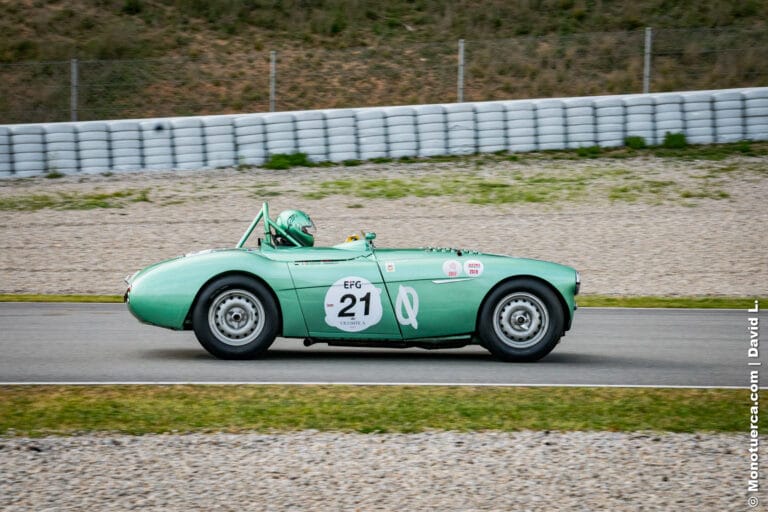
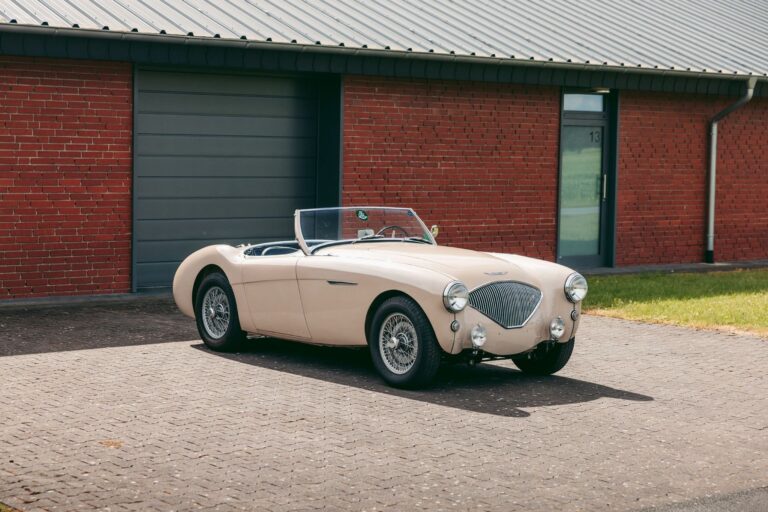
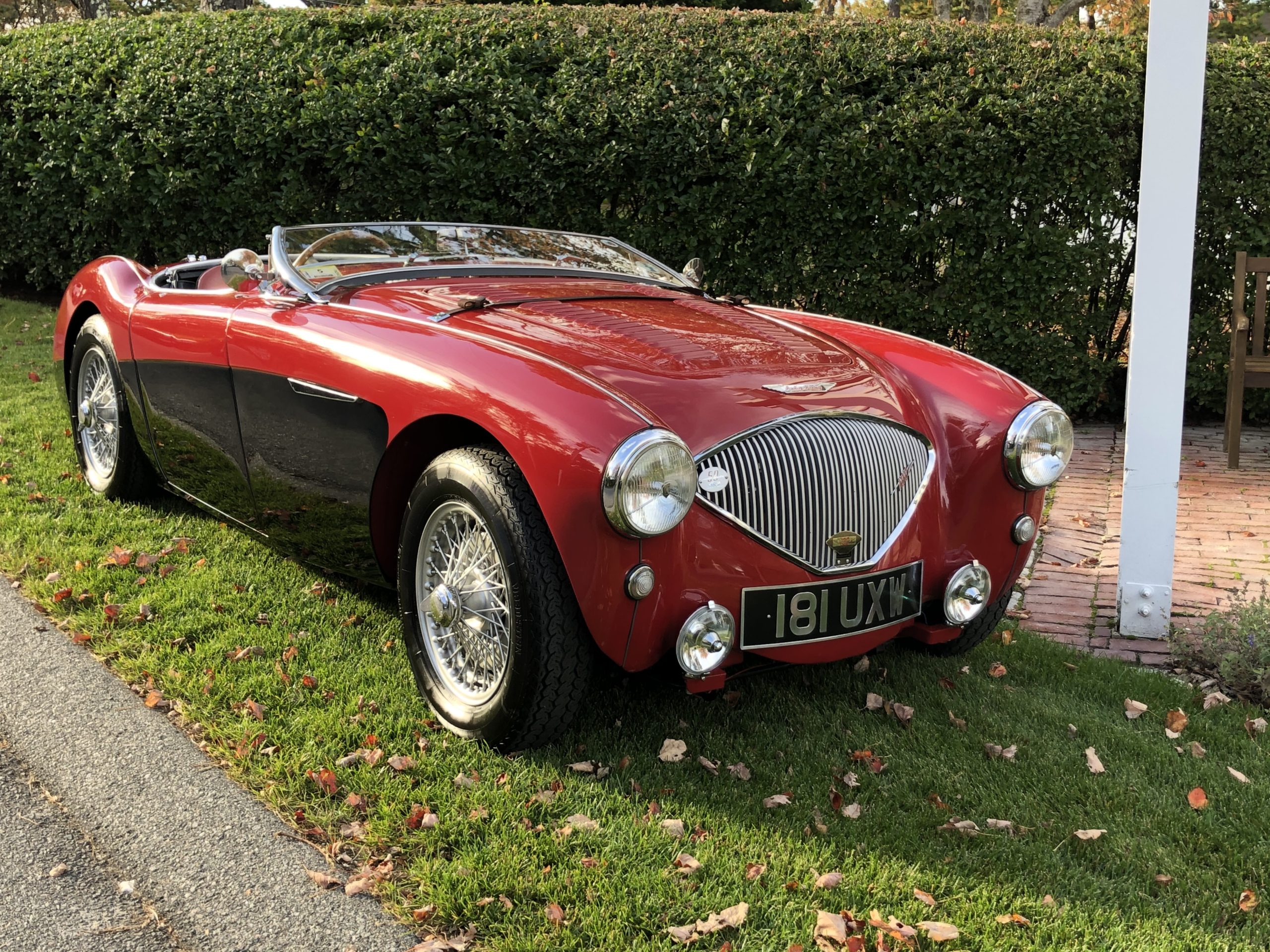
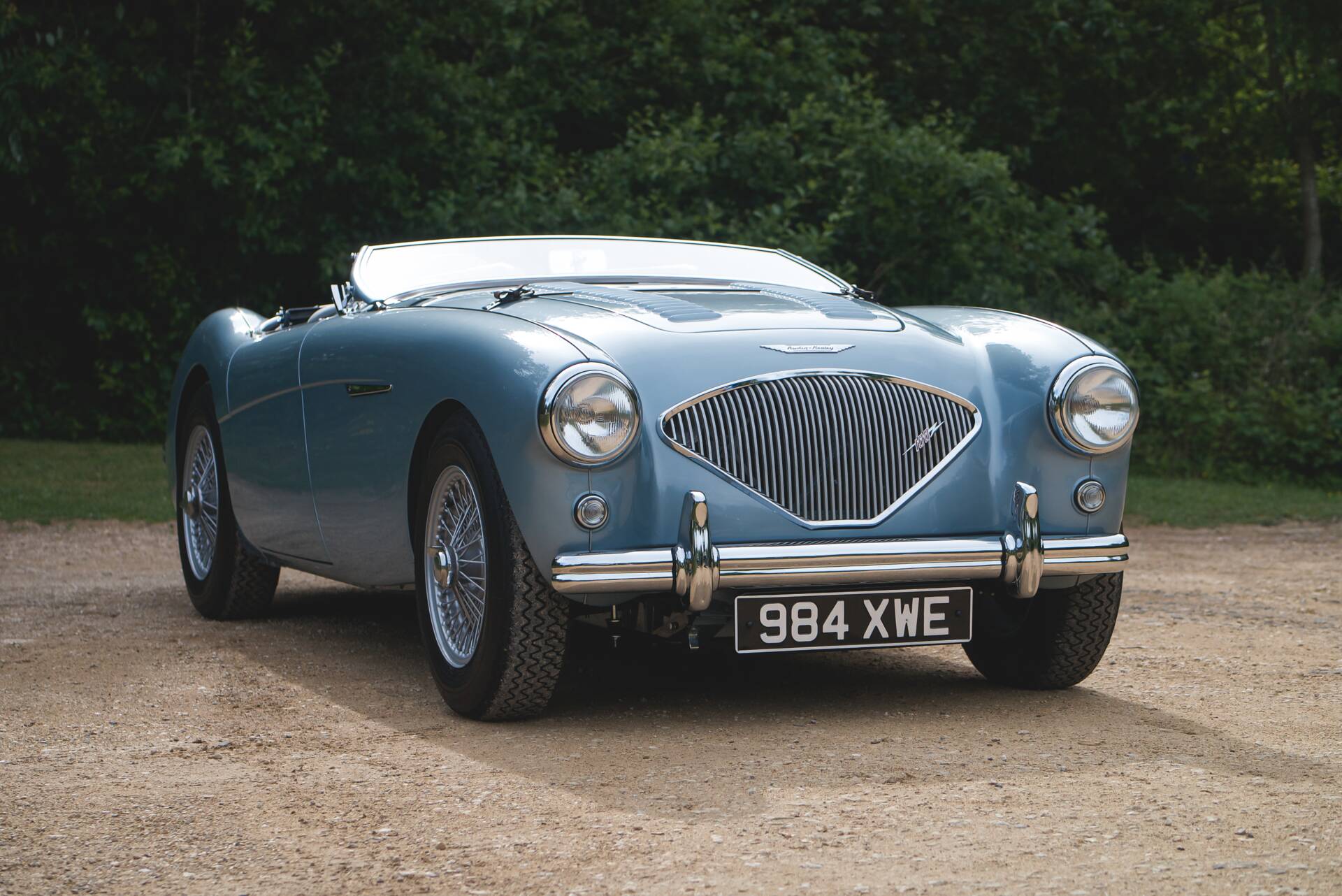
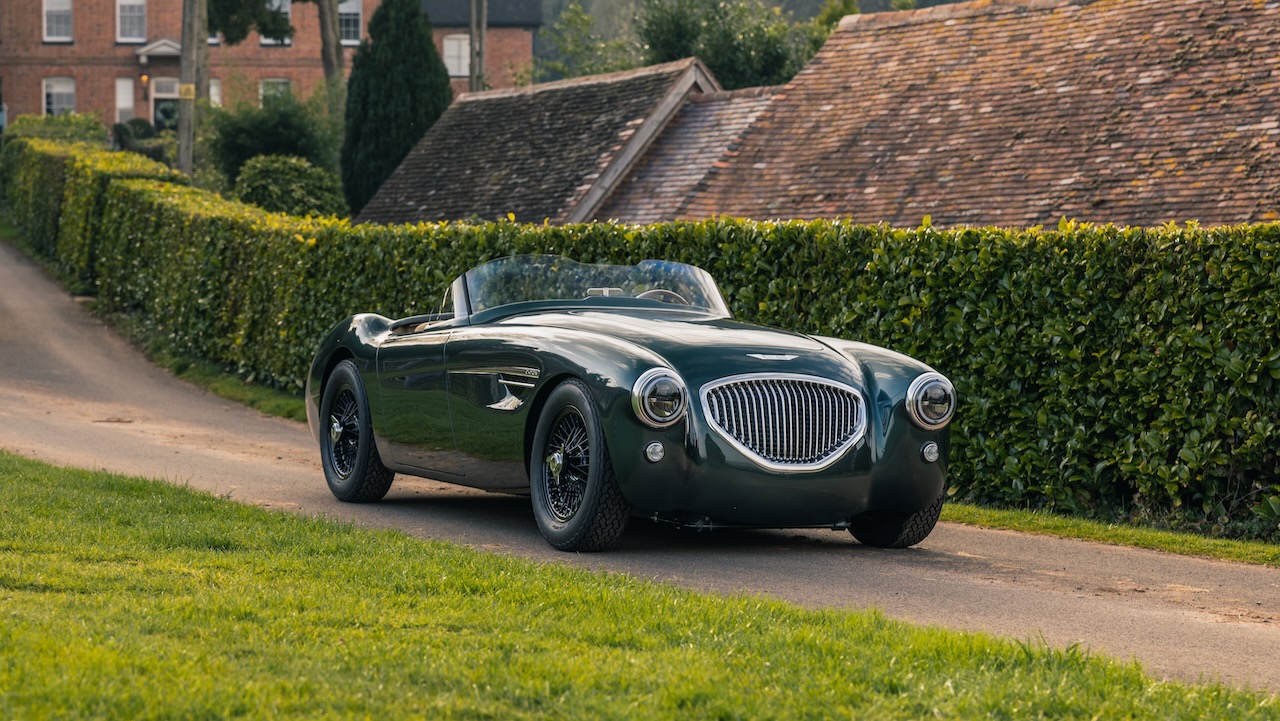
To examine the Austin-Healey 100 is to study a triumph of resourceful engineering cloaked in one of the most beautiful bodies ever pressed into metal. The design, penned by Gerry Coker, was a masterclass in proportion. Its sweeping, unbroken fender line ran from the headlights all the way to the rear, creating a silhouette that looked impossibly fast even when parked. A defining feature of these early cars was the fold-flat windscreen, an invitation to unadulterated, wind-in-the-teeth motoring. Beneath this sensuous skin lay a robust, conventional ladder-type chassis, but Healey cleverly underslung the rear axle to keep the ride height and center of gravity remarkably low.
The beating heart of the 100 was sourced directly from the Austin A90 Atlantic parts bin. It was a massive, 2.6-liter (2660cc) long-stroke inline-four engine. While it only produced around 90 brake horsepower in its standard guise, it churned out a mountainous wave of torque. This meant the car didn’t need to be revved to the heavens; it surged forward on a relentless tide of low-end grunt, pulling strongly out of corners. The initial production run, designated the BN1 (1953–1955), featured a rather curious transmission. It utilized an Austin four-speed gearbox, but because the first gear was considered too low for the torquey engine, Healey simply blocked it off, resulting in a three-speed manual transmission supplemented by an overdrive on second and third gears. By 1955, the BN2 generation arrived, finally gifting the car a true four-speed manual gearbox with overdrive on the top two ratios, alongside slightly larger front drum brakes.
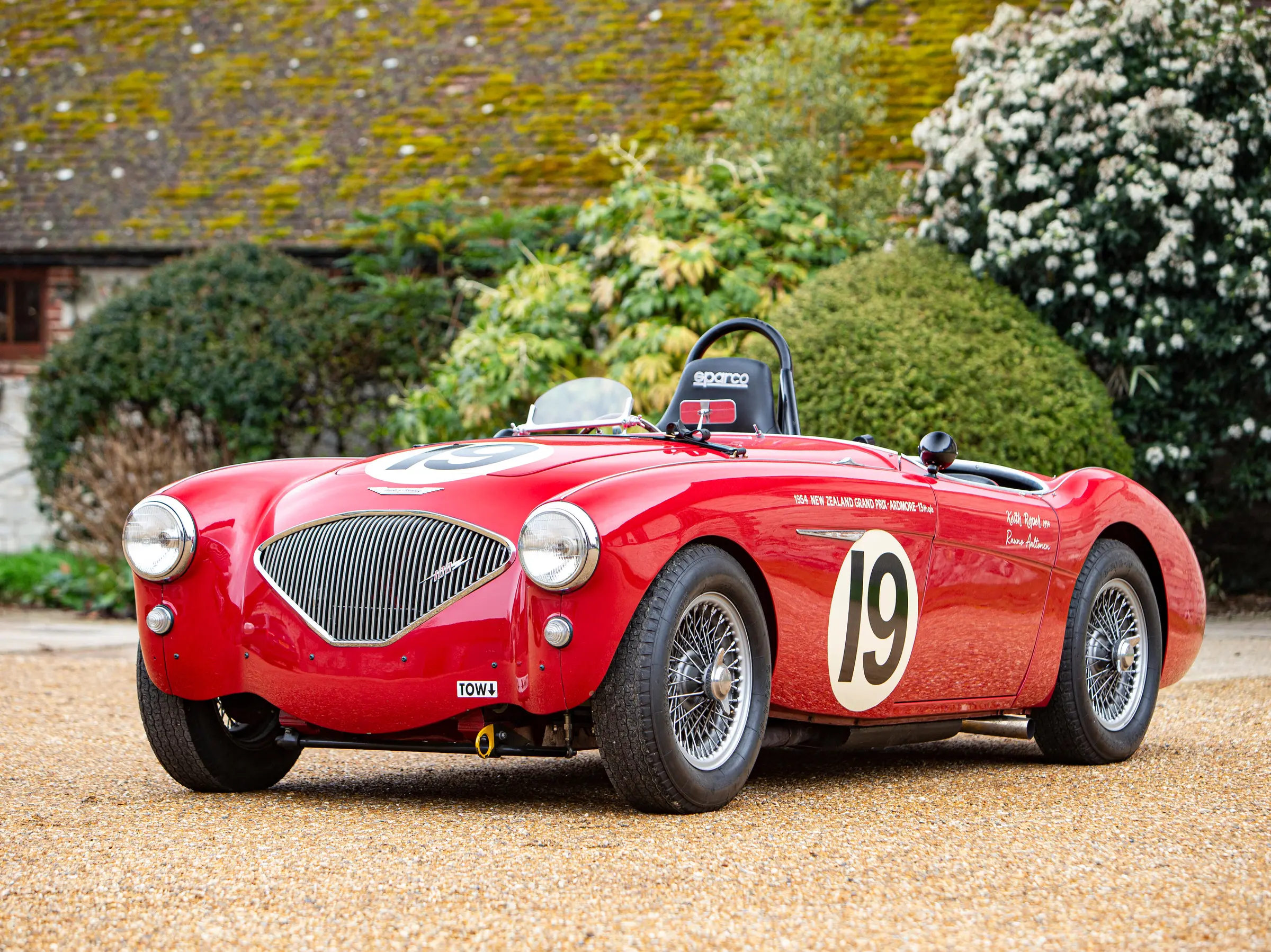
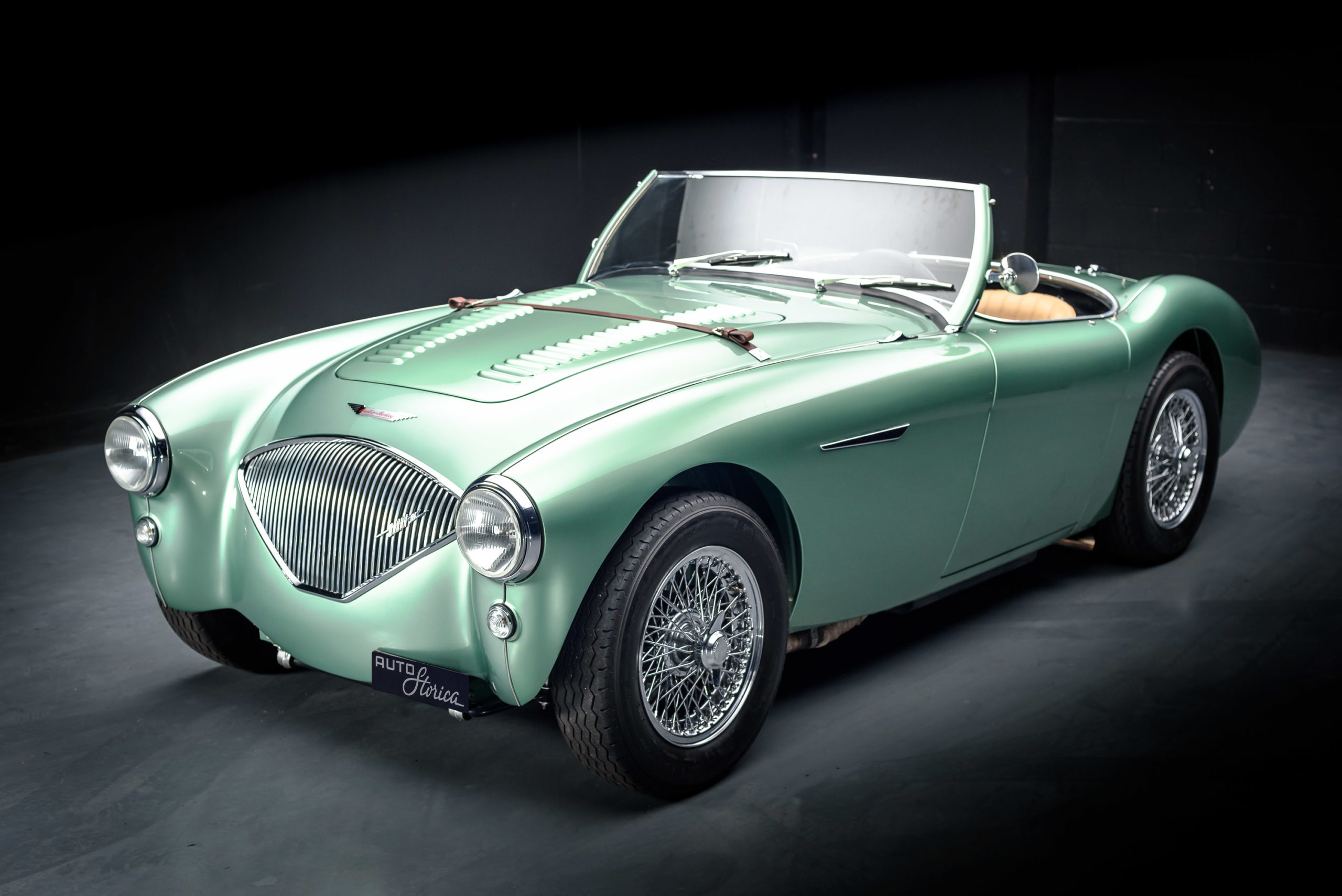
However, Donald Healey knew that racing improved the breed, and more importantly, racing sold cars. This ethos birthed the high-performance variants that elevate the 100 from a great sports car to an automotive legend. The first was the 100M, a factory or dealer-fitted “Le Mans” kit. Visually distinguished by its aggressively louvered bonnet secured by a rakish leather strap, the 100M featured larger SU carburettors, a high-lift camshaft, and higher compression, bumping power to 110 horsepower. But the ultimate expression of the four-cylinder Healey was the mythical 100S (Sebring). Built exclusively for competition, only 50 of these purebred racers were ever made. The 100S was stripped of its bumpers, clad in lightweight aluminum bodywork, and fitted with an aluminum cylinder head designed by Harry Weslake that pushed output to a reliable 132 horsepower. Crucially, the 100S was the first production car in the world to feature disc brakes on all four wheels, utilizing a Dunlop setup that gave it immense stopping power.
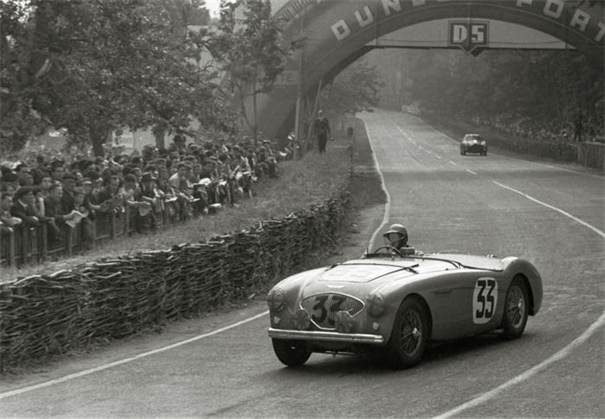
The impact of the Austin-Healey 100 was profound, particularly across the Atlantic. It became a darling of the American sports car boom, vacuuming up crucial export dollars for a recovering Britain. Hollywood stars and weekend warriors alike flocked to the 100. On the track, the car was a formidable weapon. Heavily modified Healey 100s, including a streamlined version, set numerous speed records at the Bonneville Salt Flats. The works cars campaigned valiantly at the Mille Miglia, the grueling Carrera Panamericana, and the 12 Hours of Sebring. At the 24 Hours of Le Mans in 1953, the relatively untried Healeys finished an astonishing 12th and 14th overall. Tragically, the car’s racing history is also inextricably linked to motorsport’s darkest day. It was Lance Macklin’s Austin-Healey 100S that was rear-ended by Pierre Levegh’s Mercedes-Benz 300 SLR in the catastrophic 1955 Le Mans disaster. Yet, despite this tragedy, the 100’s reputation as a rugged, dependable, and ferociously capable sports car remained untarnished.
The legacy of the Austin-Healey 100 is secure in the uppermost echelons of the classic car pantheon. It laid the foundation for an entire dynasty. It was eventually succeeded by the 100-Six and the legendary 3000 series—the heavy, luxurious “Big Healeys” powered by smooth inline-six engines. Yet, for the true purist, the original four-cylinder 100 remains the definitive article. The BN1 and BN2 are significantly lighter than their six-cylinder successors, offering a sharper, more responsive front end, a purer aesthetic uncorrupted by later modifications, and a raw, visceral driving experience that defines the golden age of the British roadster. To grip the large, thin-rimmed steering wheel, fold the windscreen flat, and ride that wave of four-cylinder torque down a country lane is to understand exactly why Donald Healey’s opportunistic masterpiece changed the sports car world forever.
Portal
Model line
Brand
Produced from
Vehicle category
Portal
Model line
Model generation
Predecessor
Sucessor
Model Overview
The 1952 Earls Court Motor Show was a defining crossroad for the British motor industry, a moment when post-war austerity finally began to yield to automotive romance. Amidst the gleaming chrome and polished lacquer, a single prototype stole the collective breath of the motoring press and the public alike: the “Healey Hundred”. Conceived by the irrepressible Donald Healey, a man who possessed an innate understanding of what made a sports car truly sing, this prototype was a masterstroke of opportunism. Healey recognized a gaping void in the sports car market. On one end sat the MG TD, charming but archaic and painfully slow; on the other reigned the Jaguar XK120, a magnificent beast but priced far beyond the reach of the average enthusiast. The Healey Hundred was designed to sit squarely in the middle. Before the motor show had even concluded, Leonard Lord, the autocratic head of the Austin Motor Company, saw the prototype, immediately recognized its brilliance, and struck a deal with Healey. The car was rebranded overnight, and the Austin-Healey 100 was born. It arrived to face stiff competition, most notably from the rugged Triumph TR2, but the “Big Healey” brought a level of sophistication and stylistic grace that its rivals simply could not match.
To examine the Austin-Healey 100 is to study a triumph of resourceful engineering cloaked in one of the most beautiful bodies ever pressed into metal. The design, penned by Gerry Coker, was a masterclass in proportion. Its sweeping, unbroken fender line ran from the headlights all the way to the rear, creating a silhouette that looked impossibly fast even when parked. A defining feature of these early cars was the fold-flat windscreen, an invitation to unadulterated, wind-in-the-teeth motoring. Beneath this sensuous skin lay a robust, conventional ladder-type chassis, but Healey cleverly underslung the rear axle to keep the ride height and center of gravity remarkably low.
The beating heart of the 100 was sourced directly from the Austin A90 Atlantic parts bin. It was a massive, 2.6-liter (2660cc) long-stroke inline-four engine. While it only produced around 90 brake horsepower in its standard guise, it churned out a mountainous wave of torque. This meant the car didn’t need to be revved to the heavens; it surged forward on a relentless tide of low-end grunt, pulling strongly out of corners. The initial production run, designated the BN1 (1953–1955), featured a rather curious transmission. It utilized an Austin four-speed gearbox, but because the first gear was considered too low for the torquey engine, Healey simply blocked it off, resulting in a three-speed manual transmission supplemented by an overdrive on second and third gears. By 1955, the BN2 generation arrived, finally gifting the car a true four-speed manual gearbox with overdrive on the top two ratios, alongside slightly larger front drum brakes.
However, Donald Healey knew that racing improved the breed, and more importantly, racing sold cars. This ethos birthed the high-performance variants that elevate the 100 from a great sports car to an automotive legend. The first was the 100M, a factory or dealer-fitted “Le Mans” kit. Visually distinguished by its aggressively louvered bonnet secured by a rakish leather strap, the 100M featured larger SU carburettors, a high-lift camshaft, and higher compression, bumping power to 110 horsepower. But the ultimate expression of the four-cylinder Healey was the mythical 100S (Sebring). Built exclusively for competition, only 50 of these purebred racers were ever made. The 100S was stripped of its bumpers, clad in lightweight aluminum bodywork, and fitted with an aluminum cylinder head designed by Harry Weslake that pushed output to a reliable 132 horsepower. Crucially, the 100S was the first production car in the world to feature disc brakes on all four wheels, utilizing a Dunlop setup that gave it immense stopping power.
The impact of the Austin-Healey 100 was profound, particularly across the Atlantic. It became a darling of the American sports car boom, vacuuming up crucial export dollars for a recovering Britain. Hollywood stars and weekend warriors alike flocked to the 100. On the track, the car was a formidable weapon. Heavily modified Healey 100s, including a streamlined version, set numerous speed records at the Bonneville Salt Flats. The works cars campaigned valiantly at the Mille Miglia, the grueling Carrera Panamericana, and the 12 Hours of Sebring. At the 24 Hours of Le Mans in 1953, the relatively untried Healeys finished an astonishing 12th and 14th overall. Tragically, the car’s racing history is also inextricably linked to motorsport’s darkest day. It was Lance Macklin’s Austin-Healey 100S that was rear-ended by Pierre Levegh’s Mercedes-Benz 300 SLR in the catastrophic 1955 Le Mans disaster. Yet, despite this tragedy, the 100’s reputation as a rugged, dependable, and ferociously capable sports car remained untarnished.
The legacy of the Austin-Healey 100 is secure in the uppermost echelons of the classic car pantheon. It laid the foundation for an entire dynasty. It was eventually succeeded by the 100-Six and the legendary 3000 series—the heavy, luxurious “Big Healeys” powered by smooth inline-six engines. Yet, for the true purist, the original four-cylinder 100 remains the definitive article. The BN1 and BN2 are significantly lighter than their six-cylinder successors, offering a sharper, more responsive front end, a purer aesthetic uncorrupted by later modifications, and a raw, visceral driving experience that defines the golden age of the British roadster. To grip the large, thin-rimmed steering wheel, fold the windscreen flat, and ride that wave of four-cylinder torque down a country lane is to understand exactly why Donald Healey’s opportunistic masterpiece changed the sports car world forever.
Generations
Model Generations

Submodels