
BMW 2002 Ti Group 2



Brand
Produced from
Portal
Vehicle category
Model line
Predecessor
Successor
Submodel Overview
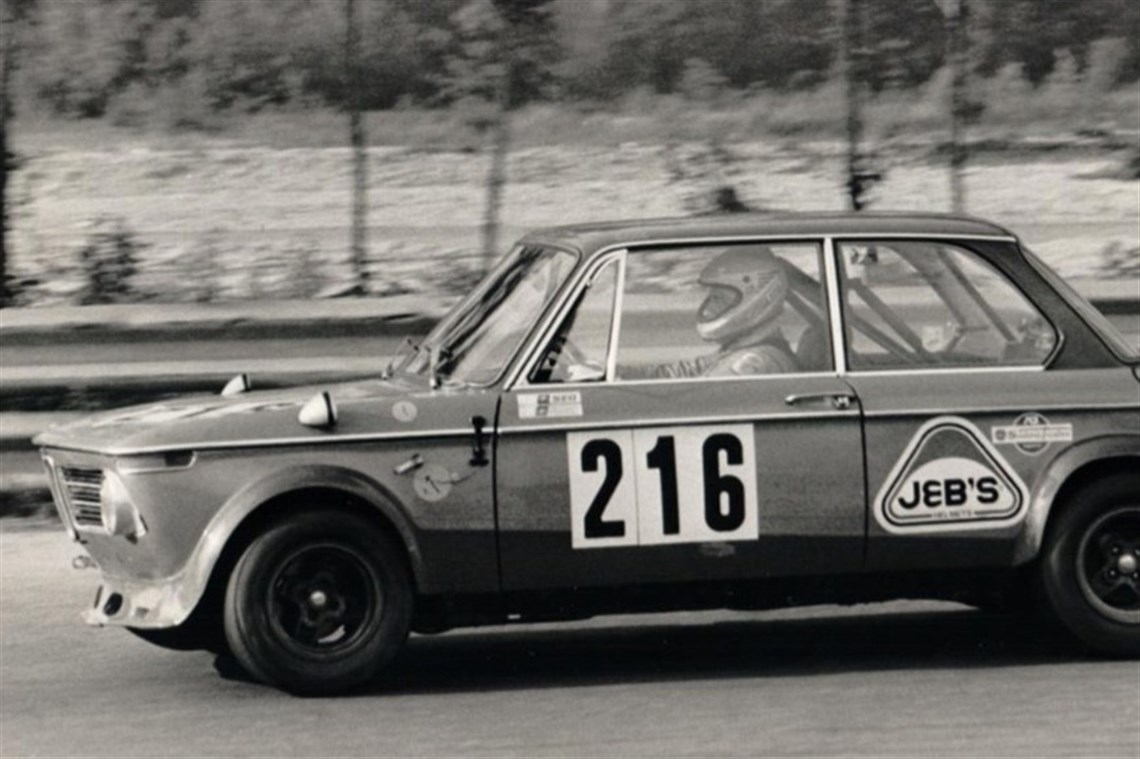
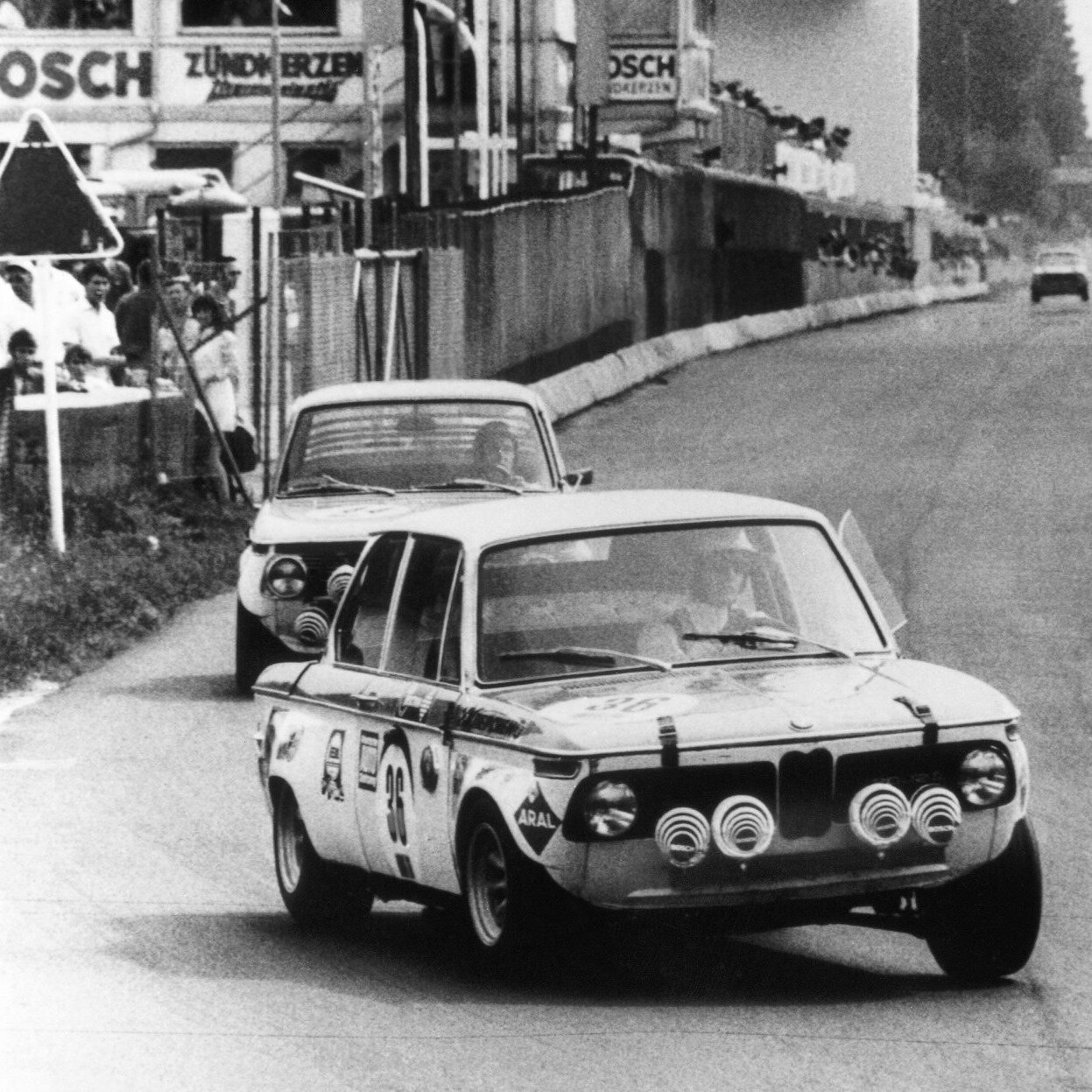
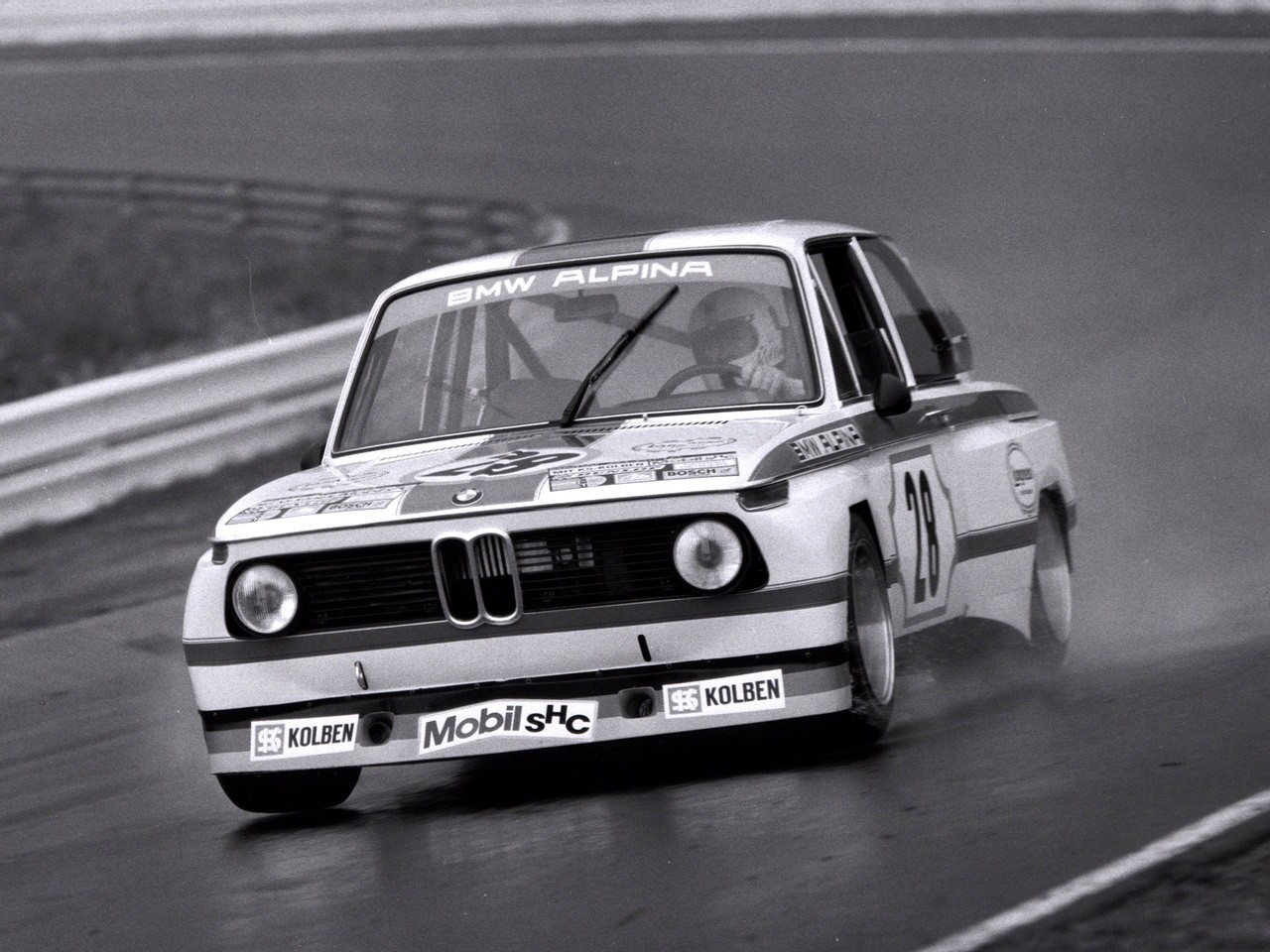
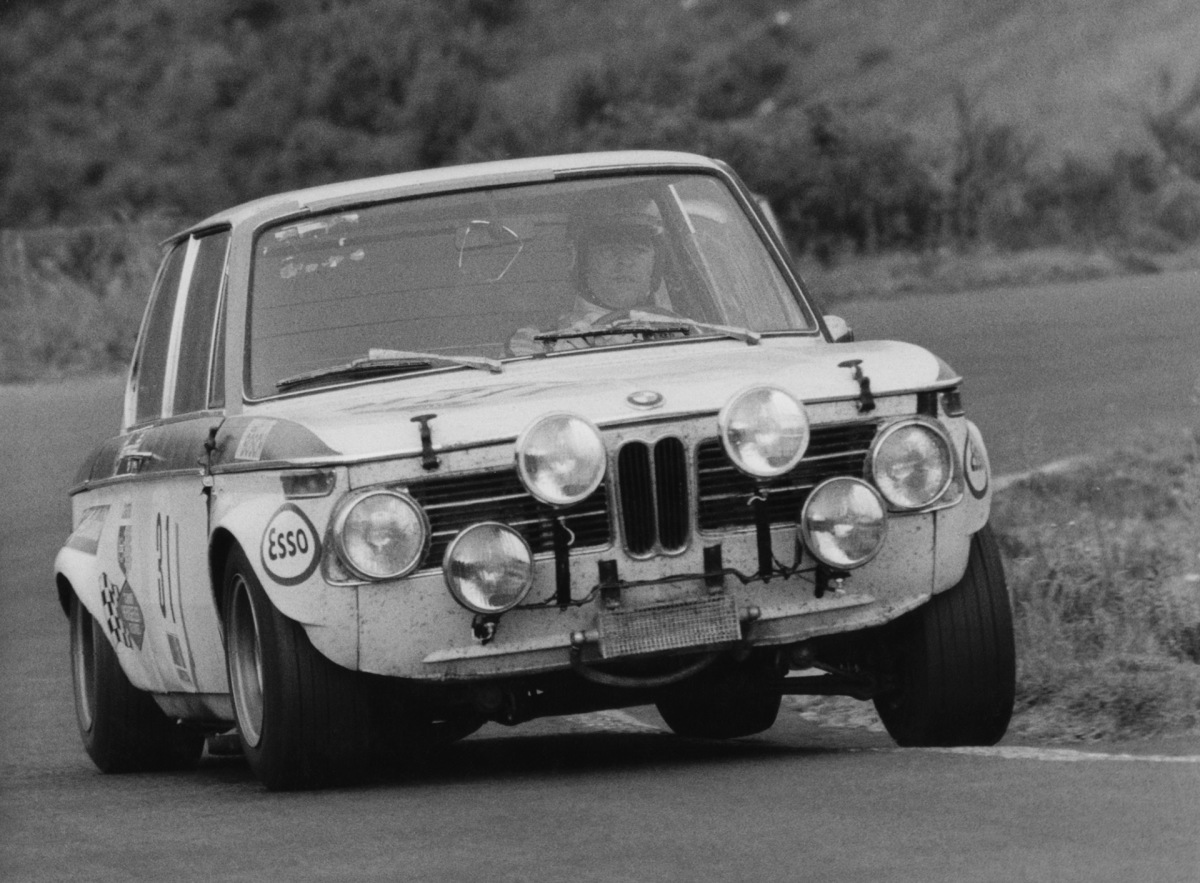
The standard BMW 2002 was, by 1968, already a revelation. It was the car that had, almost single-handedly, invented the modern sports saloon. It was a perfectly balanced, practical, and spirited machine that established a dynasty. But this was just the canvas. For the engineers at BMW Motorsport, and more pointedly, for the legendary tuning houses of Alpina and Schnitzer, the 2002 chassis was a weapon in waiting. Its true purpose was to be found not on the high street, but in the brutal, bare-knuckle brawl of the European Touring Car Championship. The result was the 2002 Ti Group 2, a car that took the “sensible” 02 and transformed it into a snarling, three-wheeling, giant-killing icon.
This was a car forged in the heat of one of racing’s greatest rivalries. Its existence was a direct response to the absolute dominance of Ford’s Escort RS1600, a featherweight machine powered by the mythical, 16-valve Cosworth BDA engine. The 2.0-litre “Division 2” of the ETCC was a warzone, and the BMW 2002 Ti was Munich’s chosen champion. While the Alfa Romeo GTAm and Ford Capri RS2600 battled in the class above, the 2002 Ti’s fight was a more personal, bitter, and spectacular duel against the Escorts. This was not a polished, factory-run program in the modern sense; it was a glorious proxy war, waged by brilliant, semi-independent teams like Alpina, Schnitzer, and Koepchen, who pushed the 2002 platform to its absolute limit.
The transformation from road-going “Ti” to a “Group 2” monster was profound. The M10 engine, the 2.0-litre, single-overhead-cam four-cylinder, was the car’s indestructible heart. Its standard cast-iron block was so tough that it would, a decade later, form the basis of BMW’s 1,400-hp Formula 1 turbo engine. In Group 2 tune, it was a work of art. The standard 120-hp twin-carb “Ti” setup was discarded. In its place, tuners like Alpina and Schnitzer fitted forged pistons, high-lift, long-duration camshafts, and a dry-sump lubrication system. The induction roar, a defining characteristic, came from a pair of massive, side-draught Weber 45 DCOE carburettors (later 50 DCOEs), sucking air through huge steel trumpets. This setup was notoriously finicky but, when dialled in, spat out over 190 hp. Later, Schnitzer developed its own, highly-advanced 16-valve cylinder head, pushing the 2.0-litre M10 to an incredible 260 hp, a direct answer to the BDA.
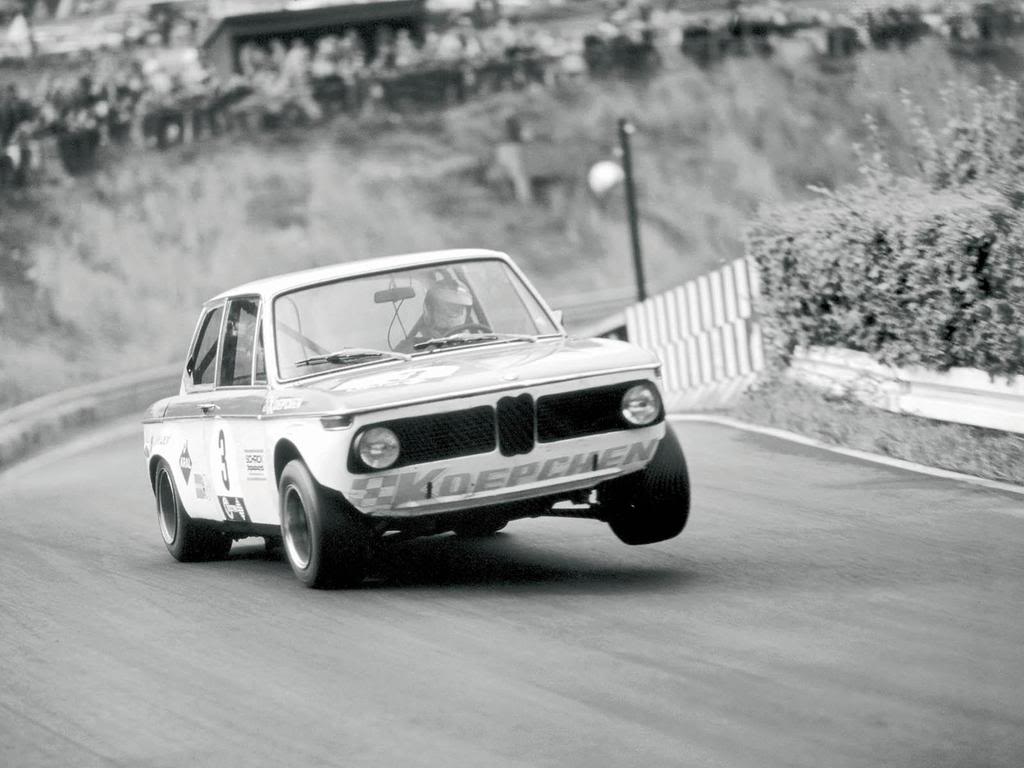
Visually, the car was pure aggression. FIA Group 2 rules allowed for dramatic bodywork modifications. The 2002’s famously slender body was hacked apart, and massive, riveted-on fibreglass “box flares” or “pig cheek” arches were fitted. This was not for style; it was a necessity, the only way to cover the enormous, 13-inch or 15-inch, three-piece racing slicks. The shells were acid-dipped to remove weight, Plexiglas windows were fitted, and all creature comforts were deleted. The chassis, already a masterpiece of independent suspension, was exaggerated for racing. The MacPherson strut front and semi-trailing arm rear were stiffened to the point of being almost solid. The enormous anti-roll bars, combined with the unique geometry of the rear axle, created the car’s most iconic visual signature: its tendency to lift the inside front wheel several inches off the ground under hard cornering. This was not a flaw; it was the fastest way to get the car to rotate, a spectacular, three-wheeling posture that defined its “on-the-limit” handling. The interior was a pure office of speed: a single, deep bucket seat, a web of roll-cage tubing, and a simple aluminium dash with a large tachometer and a few vital gauges.
The 2002 Ti’s competition history is the stuff of legend. It was the car that made Hans-Joachim Stuck a household name. His wild, flamboyant style was a perfect match for the 2002. His most famous moment, immortalized in photos, was at the 1970 ETCC race at the Nürburgring Nordschleife, where he famously launched his Koepchen-prepared 2002 clean into the air at the Pflanzgarten “jump,” all four wheels airborne, in pursuit of the dominant Fords. But the 2002 Ti was not just a show pony; it was a winner. Its greatest single victory came at the 1970 24 Hours of Spa. In a race of attrition, the Alpina-prepared 2002 Ti of Helmut Marko and Gérard Larrousse outlasted the entire field—including the more powerful 3.0-litre Capris and Alfa GTAms—to take a stunning outright victory. It was a triumph of reliability and strategy.
Throughout the early 1970s, the ETCC was a spectacular, wheel-banging, season-long war between the BMWs and the Fords. The 2002s were dominant at high-speed tracks like Monza and the Österreichring, while the lighter, more nimble Escorts often had the edge on tighter circuits. The rivalry was fierce, the driving was hard, and the spectacle was second to none. The car’s success was not limited to Europe; it was a dominant force in the SCCA Trans-Am 2.5-litre class in America, cementing BMW’s new-found reputation as the “Ultimate Driving Machine” in its most important market.
The Group 2 2002 Ti’s legacy is immeasurable. It was the car that, in spirit, launched BMW’s “M” division. The lessons learned by Alpina and Schnitzer in the heat of the ETCC were brought in-house to create the 3.0 CSL “Batmobile” and, eventually, the M1. This car was the direct ancestor to the M3 (E30), another four-cylinder touring car legend. The 2002 Ti Group 2 was the original “giant-killer,” a car that punched so far above its weight that it rewrote the rules. It was the noisy, three-wheeling, flame-spitting hero that built a performance dynasty.
Brand
Produced from
Portal
Vehicle category
Model line
Predecessor
Sucessor
Brand
Produced from
Portal
Vehicle category
Model line
Model generation
Predecessor
Sucessor
Submodel Overview
The standard BMW 2002 was, by 1968, already a revelation. It was the car that had, almost single-handedly, invented the modern sports saloon. It was a perfectly balanced, practical, and spirited machine that established a dynasty. But this was just the canvas. For the engineers at BMW Motorsport, and more pointedly, for the legendary tuning houses of Alpina and Schnitzer, the 2002 chassis was a weapon in waiting. Its true purpose was to be found not on the high street, but in the brutal, bare-knuckle brawl of the European Touring Car Championship. The result was the 2002 Ti Group 2, a car that took the “sensible” 02 and transformed it into a snarling, three-wheeling, giant-killing icon.
This was a car forged in the heat of one of racing’s greatest rivalries. Its existence was a direct response to the absolute dominance of Ford’s Escort RS1600, a featherweight machine powered by the mythical, 16-valve Cosworth BDA engine. The 2.0-litre “Division 2” of the ETCC was a warzone, and the BMW 2002 Ti was Munich’s chosen champion. While the Alfa Romeo GTAm and Ford Capri RS2600 battled in the class above, the 2002 Ti’s fight was a more personal, bitter, and spectacular duel against the Escorts. This was not a polished, factory-run program in the modern sense; it was a glorious proxy war, waged by brilliant, semi-independent teams like Alpina, Schnitzer, and Koepchen, who pushed the 2002 platform to its absolute limit.
The transformation from road-going “Ti” to a “Group 2” monster was profound. The M10 engine, the 2.0-litre, single-overhead-cam four-cylinder, was the car’s indestructible heart. Its standard cast-iron block was so tough that it would, a decade later, form the basis of BMW’s 1,400-hp Formula 1 turbo engine. In Group 2 tune, it was a work of art. The standard 120-hp twin-carb “Ti” setup was discarded. In its place, tuners like Alpina and Schnitzer fitted forged pistons, high-lift, long-duration camshafts, and a dry-sump lubrication system. The induction roar, a defining characteristic, came from a pair of massive, side-draught Weber 45 DCOE carburettors (later 50 DCOEs), sucking air through huge steel trumpets. This setup was notoriously finicky but, when dialled in, spat out over 190 hp. Later, Schnitzer developed its own, highly-advanced 16-valve cylinder head, pushing the 2.0-litre M10 to an incredible 260 hp, a direct answer to the BDA.
Visually, the car was pure aggression. FIA Group 2 rules allowed for dramatic bodywork modifications. The 2002’s famously slender body was hacked apart, and massive, riveted-on fibreglass “box flares” or “pig cheek” arches were fitted. This was not for style; it was a necessity, the only way to cover the enormous, 13-inch or 15-inch, three-piece racing slicks. The shells were acid-dipped to remove weight, Plexiglas windows were fitted, and all creature comforts were deleted. The chassis, already a masterpiece of independent suspension, was exaggerated for racing. The MacPherson strut front and semi-trailing arm rear were stiffened to the point of being almost solid. The enormous anti-roll bars, combined with the unique geometry of the rear axle, created the car’s most iconic visual signature: its tendency to lift the inside front wheel several inches off the ground under hard cornering. This was not a flaw; it was the fastest way to get the car to rotate, a spectacular, three-wheeling posture that defined its “on-the-limit” handling. The interior was a pure office of speed: a single, deep bucket seat, a web of roll-cage tubing, and a simple aluminium dash with a large tachometer and a few vital gauges.
The 2002 Ti’s competition history is the stuff of legend. It was the car that made Hans-Joachim Stuck a household name. His wild, flamboyant style was a perfect match for the 2002. His most famous moment, immortalized in photos, was at the 1970 ETCC race at the Nürburgring Nordschleife, where he famously launched his Koepchen-prepared 2002 clean into the air at the Pflanzgarten “jump,” all four wheels airborne, in pursuit of the dominant Fords. But the 2002 Ti was not just a show pony; it was a winner. Its greatest single victory came at the 1970 24 Hours of Spa. In a race of attrition, the Alpina-prepared 2002 Ti of Helmut Marko and Gérard Larrousse outlasted the entire field—including the more powerful 3.0-litre Capris and Alfa GTAms—to take a stunning outright victory. It was a triumph of reliability and strategy.
Throughout the early 1970s, the ETCC was a spectacular, wheel-banging, season-long war between the BMWs and the Fords. The 2002s were dominant at high-speed tracks like Monza and the Österreichring, while the lighter, more nimble Escorts often had the edge on tighter circuits. The rivalry was fierce, the driving was hard, and the spectacle was second to none. The car’s success was not limited to Europe; it was a dominant force in the SCCA Trans-Am 2.5-litre class in America, cementing BMW’s new-found reputation as the “Ultimate Driving Machine” in its most important market.
The Group 2 2002 Ti’s legacy is immeasurable. It was the car that, in spirit, launched BMW’s “M” division. The lessons learned by Alpina and Schnitzer in the heat of the ETCC were brought in-house to create the 3.0 CSL “Batmobile” and, eventually, the M1. This car was the direct ancestor to the M3 (E30), another four-cylinder touring car legend. The 2002 Ti Group 2 was the original “giant-killer,” a car that punched so far above its weight that it rewrote the rules. It was the noisy, three-wheeling, flame-spitting hero that built a performance dynasty.
Tech Specs
Technical Specifications
Tech Specs
Technical Specifications
Engine
01
03
Internal combustion engine
Configuration
BMW M10, Inline-4
Location
Front, longitudinally mounted
Construction
Cast iron block, aluminium alloy head
Displacement (cc)
1,990 cc
Displacement (cu in)
121.4 cu in
Compression
9.3:1
Bore x Stroke
89.0 mm x 80.0 mm
Valvetrain
2 valves per cylinder, SOHC
Fuel feed
2 Solex 40 PHH carburetors / 2 Weber 45 DCOE carburetors
Lubrication
Dry sump
Aspiration
Naturally aspirated
Output
Power (hp)
120 hp
Power (kW)
89 kW
Max power at
5,500 RPM
Torque (Nm)
166 Nm
Torque (ft lbs)
122 ft lbs
Max torque at
3,600 RPM
Drivetrain
02
03
Chassis
Type
Monocoque unibody
Material
Steel
Body
Material
Steel
Transmission
Gearbox
4 or 5-speed manual
Drive
Rear Wheel Drive
Suspension
Front
McPherson strut with lower wishbone, coil springs, Bilstein telescopic gas shock absorbers (450lb/in) and 22mm diameter anti roll bar
Rear
Semi trailing arm with coil springs, Bilstein telescopic gas shock absorbers (450lb/in) and 19mm diameter anti roll bar
Steering
Type
Rack and pinion, electric power assist
Brakes
Front
Ventilated discs Ø256 mm, 4-piston
Rear
Drums Ø200 mm
Wheels
Front
5.5" x 13" / 6" x 13" / 7" x 13" / 7.5" x 13" / 8" x 13" / 9" x 13"
Rear
5.5" x 13" / 6" x 13" / 7" x 13" / 7.5" x 13" / 8" x 13" / 9" x 13"
Tires
Front
175 SR13 / 175 HR13 / 185 SR13 / 185HR13 / 185CR70-13" / 195DR70-13" / 235/55 R15
Rear
175 SR13 / 175 HR13 / 185 SR13 / 185HR13 / 185CR70-13" / 195DR70-13" / 235/55 R15
Dimensions and performance
03
03
Dimensions
Length (mm)
4,230 mm
Length (in)
166.7 in
Width (mm)
1,590 mm
Width (in)
62.6 in
Height (mm)
1,270 mm
Height (in)
50.0 in
Wheelbase (mm)
2,500 mm
Wheelbase (in)
98.4 in
Weight (kg)
890 kg
Weight (lbs)
1,692 lbs
Performance
Power to weight
0.13 hp/kg
Top speed (km/h)
-
Top speed (mph)
-
0-100 km/h (0-60 mph)
-