
BMW 3.0 CSi Group 1
Brand
Produced from
Portal
Vehicle category
Model line
Predecessor
Successor
Submodel Overview
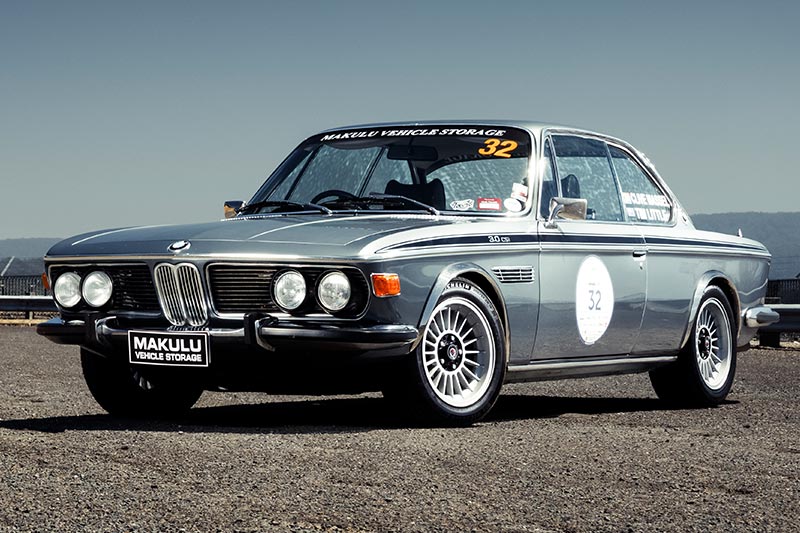
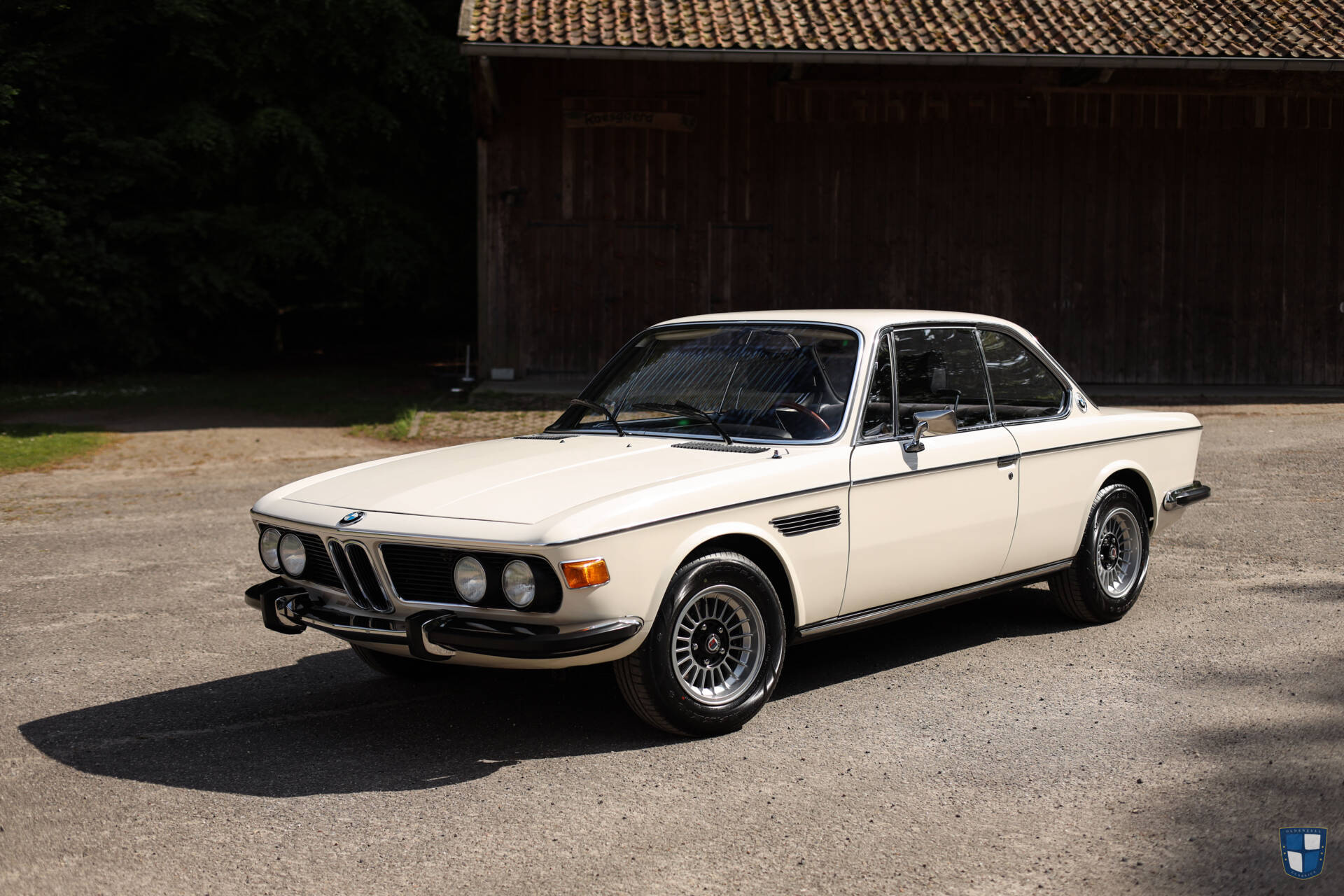
While the fire-breathing, winged “Batmobile” CSL rightfully holds a mythical place in motorsport history, its legend casts a shadow over the car that, in many ways, was even more important. Before the 1973 homologation special, before the aluminium panels and riveted-on flares, there was the car that started it all: the 1971 BMW 3.0 CSi Group 1. This was not a purpose-built silhouette racer; it was a production-line E9 coupé, taken from the showroom floor and sent into battle. It was the car that proved the E9’s inherent genius. In the European Touring Car Championship of the early 1970s, Group 1 was the “Standard Production” class. It was a category for the “gentleman driver,” a true test of the manufacturer’s road-going product, and the CSi was BMW’s new, sophisticated weapon.
This was a car designed to fight a different war than its Group 2 sibling. Its direct rival was not the lightweight, homologation-special Ford Capri RS2600, but rather the “standard” V6-powered Ford Capri 3000 GT, the Opel Commodore GS/E, and even the occasional V8 Mercedes-Benz 300 SEL. This was a battle of purebred, off-the-shelf grand tourers. The 3.0 CSi, launched in 1971, was the perfect candidate. It was the top-of-the-range E9, replacing the carburetted 3.0 CS with a technological marvel: the Bosch D-Jetronic electronic fuel injection system. This made the CSi not just powerful, but reliable, responsive, and efficient—all critical traits for endurance racing.
The magic of the Group 1 car was in its technical restrictions. The rules were strict, designed to keep the cars as close to standard as possible. This meant the 3.0 CSi went to war with its factory-steel body shell, its glass windows, and, most charmingly, its full, luxurious interior. The beautiful, curving walnut-veneer dashboard, the plush carpets, and the standard door panels all had to remain. A roll cage was fitted around this opulent cabin, creating a wonderful paradox: a pure-bred racing machine with the comfort of a gentleman’s express. The Karmann-built steel body, famously susceptible to rust, was a liability in terms of weight, but the E9’s brilliant chassis design was its ace in the hole.
The engine was the magnificent M30 3.0-litre (2,986cc) straight-six, the same unit that was in the showroom car. In Group 1 trim, it was “blueprinted”—meticulously balanced and assembled to the finest tolerances—and fitted with a freer-flowing exhaust. But the core components, including the 200-hp fuel-injection system, remained stock. This was a testament to the M30’s superb engineering, as it was reliable and powerful straight out of the box. The standard four-speed gearbox was retained, as was the E9’s brilliant, fully independent suspension. The MacPherson strut front and semi-trailing arm rear were the car’s true secret weapon. Tuners like Alpina and Schnitzer would simply fit stiffer, lower springs, competition-grade Bilstein dampers, and perhaps a thicker anti-roll bar. The standard four-wheel disc brakes were retained, upgraded only with more aggressive racing pads. This was a car that won not through brute force, but through its innate balance, sophistication, and reliability.
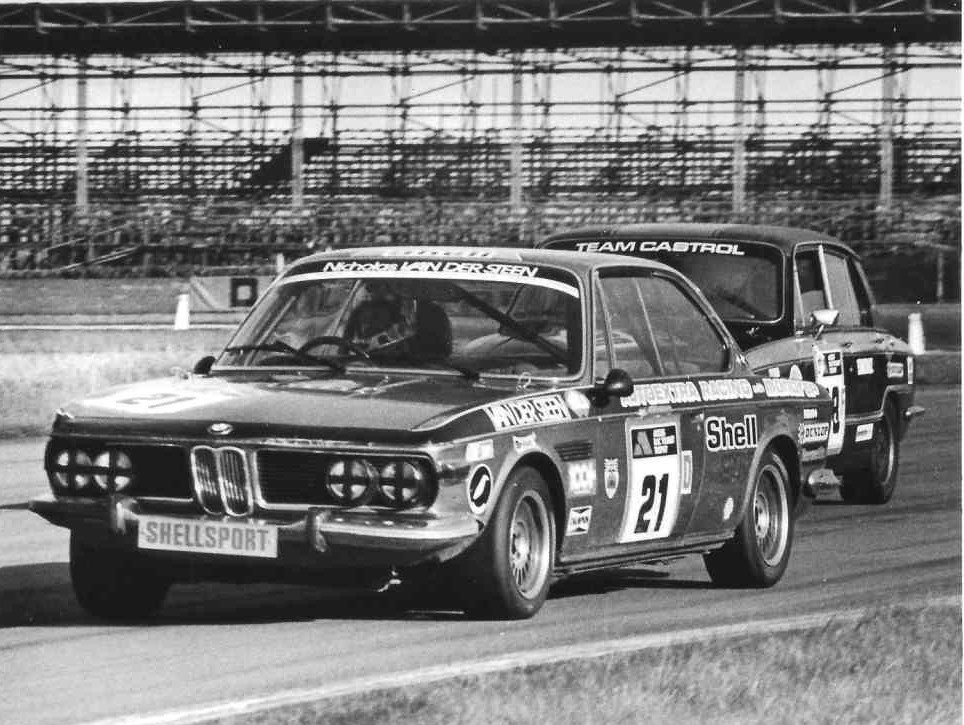
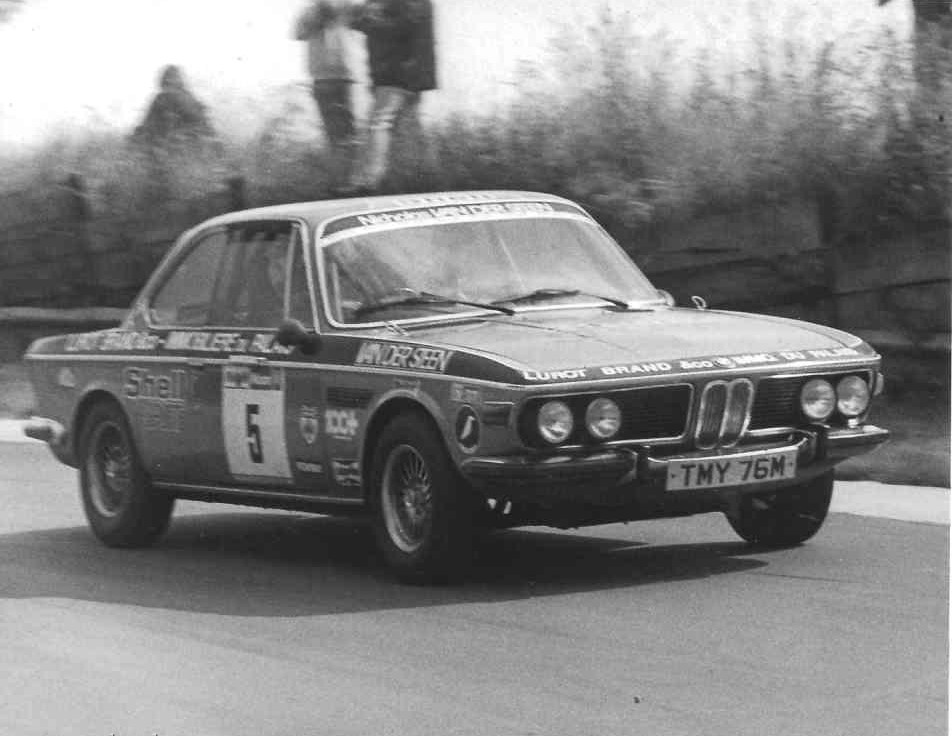
The 3.0 CSi Group 1’s competition history was brief but foundational. It was the car that BMW and its satellite teams used to dominate the “standard” class of the ETCC in 1971 and 1972, while the 2800 CS and the first CSLs began their development in Group 2. It was a common sight to see these elegant, pillarless coupés, often in Alpina’s signature green or Schnitzer’s white, running in formation, their walnut dashboards gleaming in the sun as they cornered flat and true. They were driven by a roster of future legends, including Niki Lauda and James Hunt, who cut their teeth in these “stock” touring cars. They consistently won their class and often embarrassed more powerful, modified machinery by simply outlasting them. At the 1972 24 Hours of Spa, while the Group 2 cars battled for the overall win, a fleet of Group 1 CSi models flooded the field, proving their mettle in the toughest endurance race of all.
The 3.0 CSi Group 1 was the unsung hero of the E9 dynasty. It was the car that proved the road-going E9 was not just a beautiful face, but a true thoroughbred. Its success in the “stock” class was the vital, foundational proof-of-concept that gave BMW the confidence to invest millions in the CSL “Batmobile” program. The Group 1 car was the “Win on Sunday, Sell on Monday” machine in its purest form, a car that any wealthy enthusiast could buy and, with minimal modification, take to the track. It was the true gentleman’s racer, the perfect, walnut-trimmed bridge between the autobahn and the apex.
Brand
Produced from
Portal
Vehicle category
Model line
Predecessor
Sucessor
Brand
Produced from
Portal
Vehicle category
Model line
Model generation
Predecessor
Sucessor
Submodel Overview
While the fire-breathing, winged “Batmobile” CSL rightfully holds a mythical place in motorsport history, its legend casts a shadow over the car that, in many ways, was even more important. Before the 1973 homologation special, before the aluminium panels and riveted-on flares, there was the car that started it all: the 1971 BMW 3.0 CSi Group 1. This was not a purpose-built silhouette racer; it was a production-line E9 coupé, taken from the showroom floor and sent into battle. It was the car that proved the E9’s inherent genius. In the European Touring Car Championship of the early 1970s, Group 1 was the “Standard Production” class. It was a category for the “gentleman driver,” a true test of the manufacturer’s road-going product, and the CSi was BMW’s new, sophisticated weapon.
This was a car designed to fight a different war than its Group 2 sibling. Its direct rival was not the lightweight, homologation-special Ford Capri RS2600, but rather the “standard” V6-powered Ford Capri 3000 GT, the Opel Commodore GS/E, and even the occasional V8 Mercedes-Benz 300 SEL. This was a battle of purebred, off-the-shelf grand tourers. The 3.0 CSi, launched in 1971, was the perfect candidate. It was the top-of-the-range E9, replacing the carburetted 3.0 CS with a technological marvel: the Bosch D-Jetronic electronic fuel injection system. This made the CSi not just powerful, but reliable, responsive, and efficient—all critical traits for endurance racing.
The magic of the Group 1 car was in its technical restrictions. The rules were strict, designed to keep the cars as close to standard as possible. This meant the 3.0 CSi went to war with its factory-steel body shell, its glass windows, and, most charmingly, its full, luxurious interior. The beautiful, curving walnut-veneer dashboard, the plush carpets, and the standard door panels all had to remain. A roll cage was fitted around this opulent cabin, creating a wonderful paradox: a pure-bred racing machine with the comfort of a gentleman’s express. The Karmann-built steel body, famously susceptible to rust, was a liability in terms of weight, but the E9’s brilliant chassis design was its ace in the hole.
The engine was the magnificent M30 3.0-litre (2,986cc) straight-six, the same unit that was in the showroom car. In Group 1 trim, it was “blueprinted”—meticulously balanced and assembled to the finest tolerances—and fitted with a freer-flowing exhaust. But the core components, including the 200-hp fuel-injection system, remained stock. This was a testament to the M30’s superb engineering, as it was reliable and powerful straight out of the box. The standard four-speed gearbox was retained, as was the E9’s brilliant, fully independent suspension. The MacPherson strut front and semi-trailing arm rear were the car’s true secret weapon. Tuners like Alpina and Schnitzer would simply fit stiffer, lower springs, competition-grade Bilstein dampers, and perhaps a thicker anti-roll bar. The standard four-wheel disc brakes were retained, upgraded only with more aggressive racing pads. This was a car that won not through brute force, but through its innate balance, sophistication, and reliability.
The 3.0 CSi Group 1’s competition history was brief but foundational. It was the car that BMW and its satellite teams used to dominate the “standard” class of the ETCC in 1971 and 1972, while the 2800 CS and the first CSLs began their development in Group 2. It was a common sight to see these elegant, pillarless coupés, often in Alpina’s signature green or Schnitzer’s white, running in formation, their walnut dashboards gleaming in the sun as they cornered flat and true. They were driven by a roster of future legends, including Niki Lauda and James Hunt, who cut their teeth in these “stock” touring cars. They consistently won their class and often embarrassed more powerful, modified machinery by simply outlasting them. At the 1972 24 Hours of Spa, while the Group 2 cars battled for the overall win, a fleet of Group 1 CSi models flooded the field, proving their mettle in the toughest endurance race of all.
The 3.0 CSi Group 1 was the unsung hero of the E9 dynasty. It was the car that proved the road-going E9 was not just a beautiful face, but a true thoroughbred. Its success in the “stock” class was the vital, foundational proof-of-concept that gave BMW the confidence to invest millions in the CSL “Batmobile” program. The Group 1 car was the “Win on Sunday, Sell on Monday” machine in its purest form, a car that any wealthy enthusiast could buy and, with minimal modification, take to the track. It was the true gentleman’s racer, the perfect, walnut-trimmed bridge between the autobahn and the apex.
Tech Specs
Technical Specifications
Tech Specs
Technical Specifications
Engine
01
03
Internal combustion engine
Configuration
M30, Inline-6
Location
Front, longitudinally mounted
Construction
Cast iron block, aluminium head
Displacement (cc)
2,986 cc
Displacement (cu in)
182.2 cu in
Compression
-
Bore x Stroke
-
Valvetrain
2 valves per cylinder, SOHC
Fuel feed
Bosch D-Jetronic Fuel Injection
Lubrication
-
Aspiration
Turbocharged Garret GT 1446
Output
Power (hp)
180 hp
Power (kW)
132.3 kW
Max power at
6,200 RPM
Torque (Nm)
255 Nm
Torque (ft lbs)
188 ft lbs
Max torque at
3,700 RPM
Drivetrain
02
03
Chassis
Type
Monocoque unibody
Material
Steel
Body
Material
Steel and aluminium parts
Transmission
Gearbox
4-speed manual
Drive
Rear Wheel Drive
Suspension
Front
Coil springs, lower wishbone, anti-roll bar
Rear
Independent coil springs, semi-trailing arm, anti-roll bar
Steering
Type
Rack and pinion
Brakes
Front
Discs
Rear
Discs
Wheels
Front
-
Rear
-
Tires
Front
-
Rear
-
Dimensions and performance
03
03
Dimensions
Length (mm)
4,660 mm
Length (in)
183.4 in
Width (mm)
1,700 mm
Width (in)
66.9 in
Height (mm)
1,360 mm
Height (in)
53.5 in
Wheelbase (mm)
2,625 mm
Wheelbase (in)
103.14 in
Weight (kg)
1,280 kg
Weight (lbs)
2,821 lbs
Performance
Power to weight
0.14 hp/kg
Top speed (km/h)
213 km/h
Top speed (mph)
132 mph
0-100 km/h (0-60 mph)
-