Cheetah G601
Brand
Produced from
Vehicle category
Portal
Model line
Model generation
Predecessor
Sucessor
Model Overview
In the mid-1970s, the World Championship for Makes was a battlefield of gods and mortals. The gods were the factory titans: the indomitable, turbocharged Porsche 936 and the screaming, V6-powered Renault-Alpine A442s. They were Goliaths, built with colossal budgets to win one race: Le Mans. The mortals were the privateers, the brilliant, garagiste constructors who filled the Group 6 grid. This was the 2.0-litre class, a spectacular, high-revving war fought by a grid of near-identical customer cars, chiefly the British-built Chevrons and Lolas. And into this war, from the unlikely nation of Switzerland, came one of the most beautiful, ambitious, and unique privateer cars of the era: the 1976 Cheetah G601.
This was not the brutish, V8-powered American “Cheetah” of the 1960s; this was a sophisticated, European, mid-engined prototype. It was the singular vision of its creator, Swiss-American engineer Chuck Graemiger. The G601 was not a customer car or a modified chassis; it was a bespoke, ground-up design built in-house by Graemiger’s tiny team. Its direct rivals were the cars that defined the 2.0-litre class: the dominant Chevron B36, the ubiquitous Lola T290-series, and the fellow Swiss-built Sauber C5. The G601 was Graemiger’s attempt to beat the “kit-car” establishment with superior, in-house engineering.
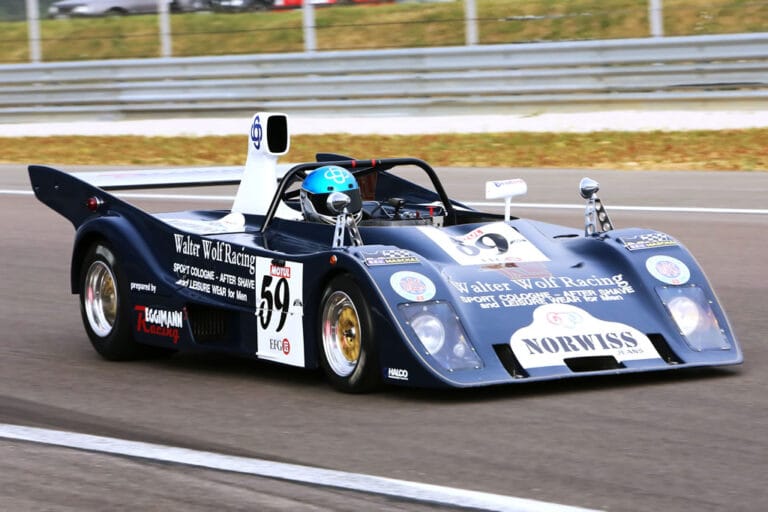
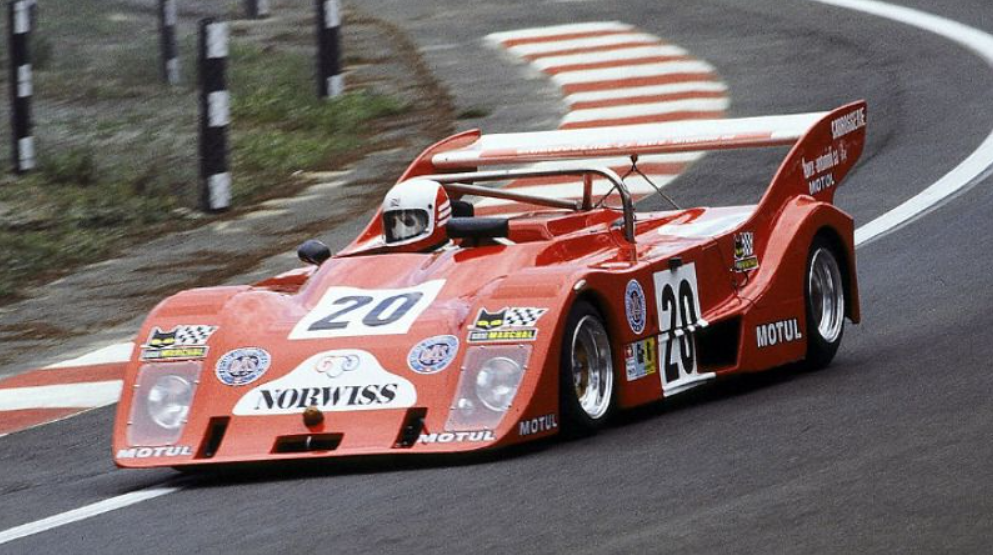
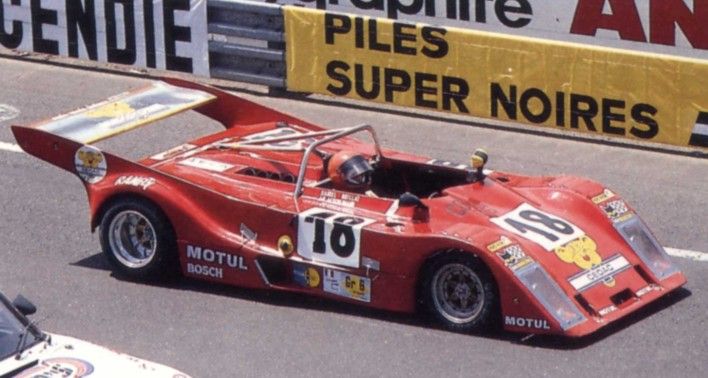
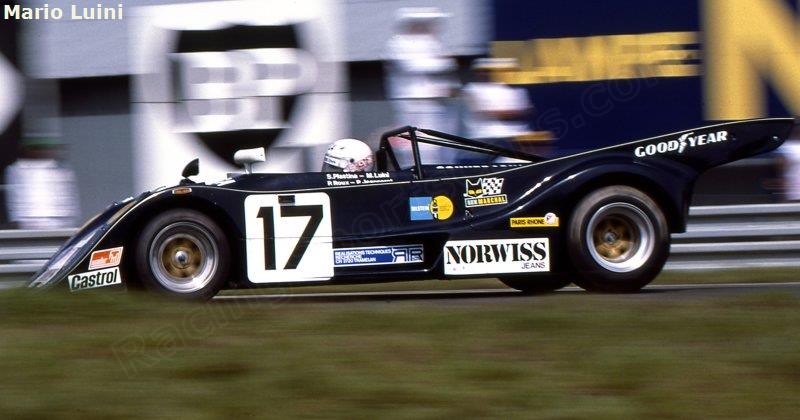
The genius of the G601, and its key differentiator, was its chassis. While most 2.0-litre privateers relied on a simpler, cheaper-to-produce tube-frame, Graemiger designed a full-length, stressed-skin aluminium monocoque. This was a technology still being perfected by the likes of Lotus in Formula 1, and it gave the Cheetah immense torsional rigidity at a feather-light weight. The entire car, in its initial form, tipped the scales at a scant 600kg, making it a true lightweight. The bodywork, also an in-house design, was a classic, low-drag, aerodynamic wedge, perfectly proportioned and stunningly beautiful. With a wide, spade-like nose, a wrap-around cockpit, and a long, flat rear deck, it was a pure, functional expression of the Group 6 regulations.
The G601’s history is defined by its engine versatility. It was a chassis designed to accept the “best-in-class” 2.0-litre, four-cylinder engines of the day. The car’s most famous and successful iteration was the 1976 Cheetah G601 BMW M12. This was, in effect, a Formula 2 engine—a 1,990cc, 16-valve powerhouse, fitted with Kugelfischer mechanical fuel injection and screaming to over 9,500 rpm. It was a reliable, 300-hp masterpiece, the same engine used by the “Works” March F2 team and Sauber. This was the heart of the car that would become a Le Mans legend. As the chassis was campaigned by other privateers, it also used the other great F2 engine: the 1978 Cheetah G601 Cosworth BDG. The BDG was Cosworth’s answer to the M12, a lighter, equally potent 16-valve 2.0L engine. A team’s choice often came down to availability and tuner preference. In a final, obscure chapter, a G601 was even entered in the 1979 Le Mans (by “ROC”) with a Simca-ROC engine, a 2.0L unit based on a Simca block, proving the chassis’s adaptability.
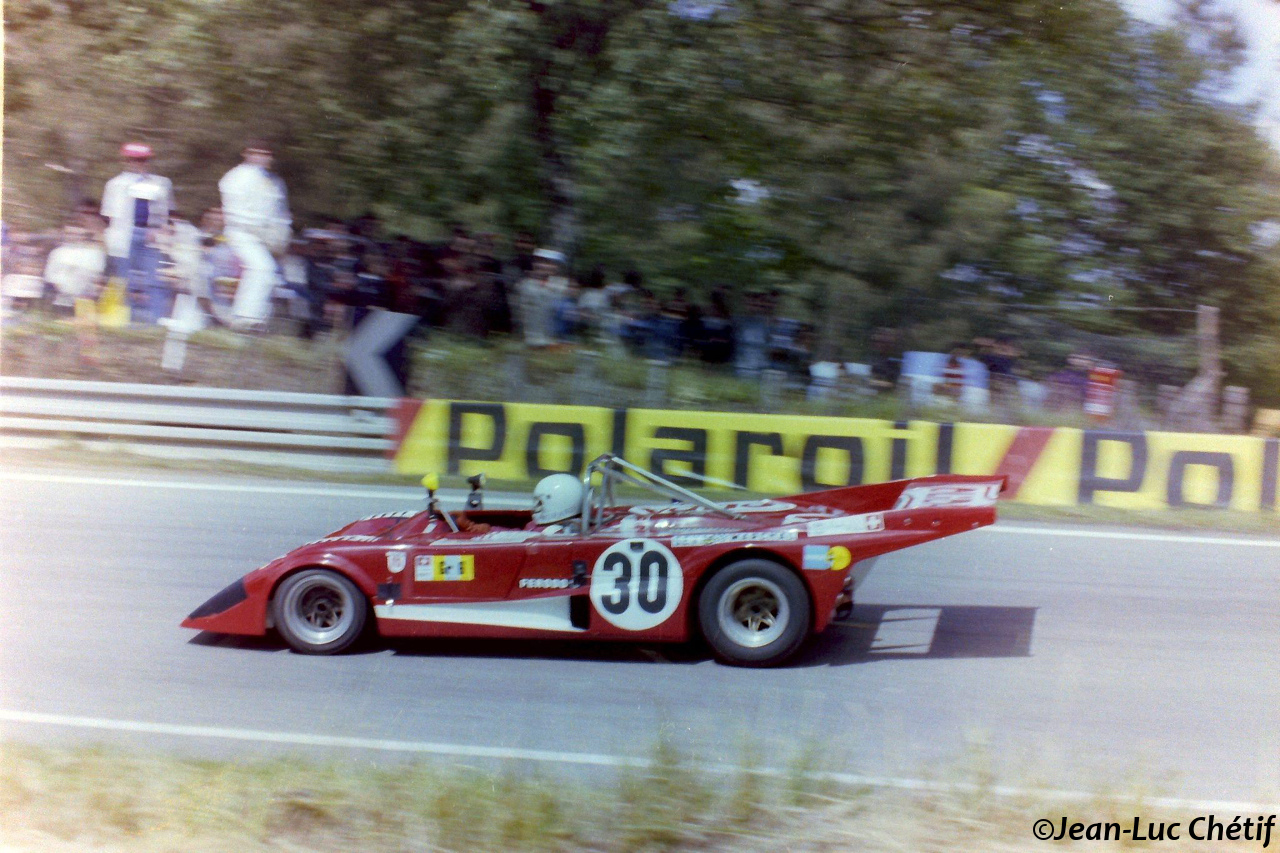
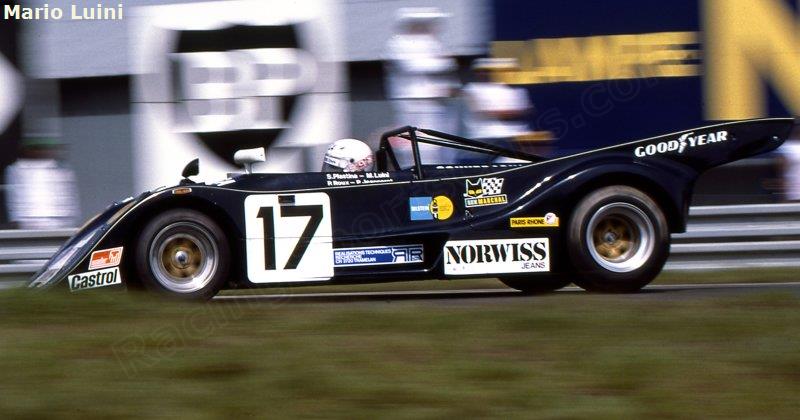
The G601’s entire legend was written in 24 hours. At the 1976 24 Hours of Le Mans, the #1 Cheetah G601-BMW, entered by the factory team and driven by an all-Swiss crew, arrived as a beautiful, yellow, unknown quantity. While the 3.0-litre giants battled (and often broke) up front, the little Cheetah ran with the metronomic, flawless precision of a Swiss watch. It was fast, it was stable, and it was stunningly reliable. It dominated its 2.0-litre class, running rings around the Chevrons and Lolas. As night fell and the field began to thin, the G601 was a shocking 9th overall. A “David” was, for a moment, in the top 10 at Le Mans. But Le Mans is a cruel mistress. In the 18th hour, after a heroic, near-flawless run, the dream ended with a familiar oil leak and engine failure. The car had proved its potential, but was denied the glory.
The following years were a story of diminishing returns. The G601-Cosworth BDG returned to Le Mans in 1978 but retired. The Simca-ROC version failed to even qualify in 1979. The car’s 1976 run was its high-water mark, and it proved a difficult, heartbreaking lesson: no matter how brilliant a 2.0-litre car was, it could no longer compete for an overall victory. This realization is the G601’s ultimate legacy. It was the car that forced Chuck Graemiger to abandon the 2.0-litre class and make the ambitious leap to the 3.0-litre category. This led directly to the G601’s successor, the Cheetah G602, a new car designed to hold the 3.0L Cosworth DFV V8. The G601, therefore, is not a “what if” that failed; it is the “what if” that succeeded so brilliantly in its class that it proved it was time to move on. Today, it is a cherished star in historic racing, where its beauty and its F2 engine can finally, and reliably, shine.
Portal
Model line
Model generation
Predecessor
Sucessor
Brand
Produced from
Vehicle category
Portal
Model line
Model generation
Predecessor
Sucessor
Model Overview
In the mid-1970s, the World Championship for Makes was a battlefield of gods and mortals. The gods were the factory titans: the indomitable, turbocharged Porsche 936 and the screaming, V6-powered Renault-Alpine A442s. They were Goliaths, built with colossal budgets to win one race: Le Mans. The mortals were the privateers, the brilliant, garagiste constructors who filled the Group 6 grid. This was the 2.0-litre class, a spectacular, high-revving war fought by a grid of near-identical customer cars, chiefly the British-built Chevrons and Lolas. And into this war, from the unlikely nation of Switzerland, came one of the most beautiful, ambitious, and unique privateer cars of the era: the 1976 Cheetah G601.
This was not the brutish, V8-powered American “Cheetah” of the 1960s; this was a sophisticated, European, mid-engined prototype. It was the singular vision of its creator, Swiss-American engineer Chuck Graemiger. The G601 was not a customer car or a modified chassis; it was a bespoke, ground-up design built in-house by Graemiger’s tiny team. Its direct rivals were the cars that defined the 2.0-litre class: the dominant Chevron B36, the ubiquitous Lola T290-series, and the fellow Swiss-built Sauber C5. The G601 was Graemiger’s attempt to beat the “kit-car” establishment with superior, in-house engineering.
The genius of the G601, and its key differentiator, was its chassis. While most 2.0-litre privateers relied on a simpler, cheaper-to-produce tube-frame, Graemiger designed a full-length, stressed-skin aluminium monocoque. This was a technology still being perfected by the likes of Lotus in Formula 1, and it gave the Cheetah immense torsional rigidity at a feather-light weight. The entire car, in its initial form, tipped the scales at a scant 600kg, making it a true lightweight. The bodywork, also an in-house design, was a classic, low-drag, aerodynamic wedge, perfectly proportioned and stunningly beautiful. With a wide, spade-like nose, a wrap-around cockpit, and a long, flat rear deck, it was a pure, functional expression of the Group 6 regulations.
The G601’s history is defined by its engine versatility. It was a chassis designed to accept the “best-in-class” 2.0-litre, four-cylinder engines of the day. The car’s most famous and successful iteration was the 1976 Cheetah G601 BMW M12. This was, in effect, a Formula 2 engine—a 1,990cc, 16-valve powerhouse, fitted with Kugelfischer mechanical fuel injection and screaming to over 9,500 rpm. It was a reliable, 300-hp masterpiece, the same engine used by the “Works” March F2 team and Sauber. This was the heart of the car that would become a Le Mans legend. As the chassis was campaigned by other privateers, it also used the other great F2 engine: the 1978 Cheetah G601 Cosworth BDG. The BDG was Cosworth’s answer to the M12, a lighter, equally potent 16-valve 2.0L engine. A team’s choice often came down to availability and tuner preference. In a final, obscure chapter, a G601 was even entered in the 1979 Le Mans (by “ROC”) with a Simca-ROC engine, a 2.0L unit based on a Simca block, proving the chassis’s adaptability.
The G601’s entire legend was written in 24 hours. At the 1976 24 Hours of Le Mans, the #1 Cheetah G601-BMW, entered by the factory team and driven by an all-Swiss crew, arrived as a beautiful, yellow, unknown quantity. While the 3.0-litre giants battled (and often broke) up front, the little Cheetah ran with the metronomic, flawless precision of a Swiss watch. It was fast, it was stable, and it was stunningly reliable. It dominated its 2.0-litre class, running rings around the Chevrons and Lolas. As night fell and the field began to thin, the G601 was a shocking 9th overall. A “David” was, for a moment, in the top 10 at Le Mans. But Le Mans is a cruel mistress. In the 18th hour, after a heroic, near-flawless run, the dream ended with a familiar oil leak and engine failure. The car had proved its potential, but was denied the glory.
The following years were a story of diminishing returns. The G601-Cosworth BDG returned to Le Mans in 1978 but retired. The Simca-ROC version failed to even qualify in 1979. The car’s 1976 run was its high-water mark, and it proved a difficult, heartbreaking lesson: no matter how brilliant a 2.0-litre car was, it could no longer compete for an overall victory. This realization is the G601’s ultimate legacy. It was the car that forced Chuck Graemiger to abandon the 2.0-litre class and make the ambitious leap to the 3.0-litre category. This led directly to the G601’s successor, the Cheetah G602, a new car designed to hold the 3.0L Cosworth DFV V8. The G601, therefore, is not a “what if” that failed; it is the “what if” that succeeded so brilliantly in its class that it proved it was time to move on. Today, it is a cherished star in historic racing, where its beauty and its F2 engine can finally, and reliably, shine.
Submodels