
Cheetah G601 BMW


Brand
Produced from
Portal
Vehicle category
Model line
Predecessor
Successor
Submodel Overview
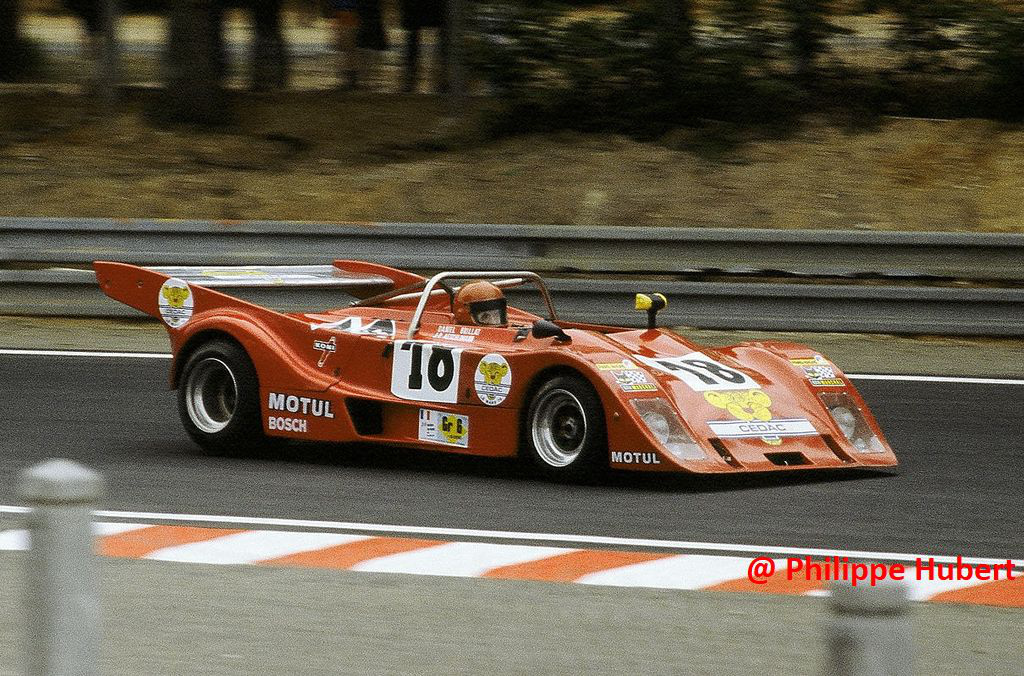
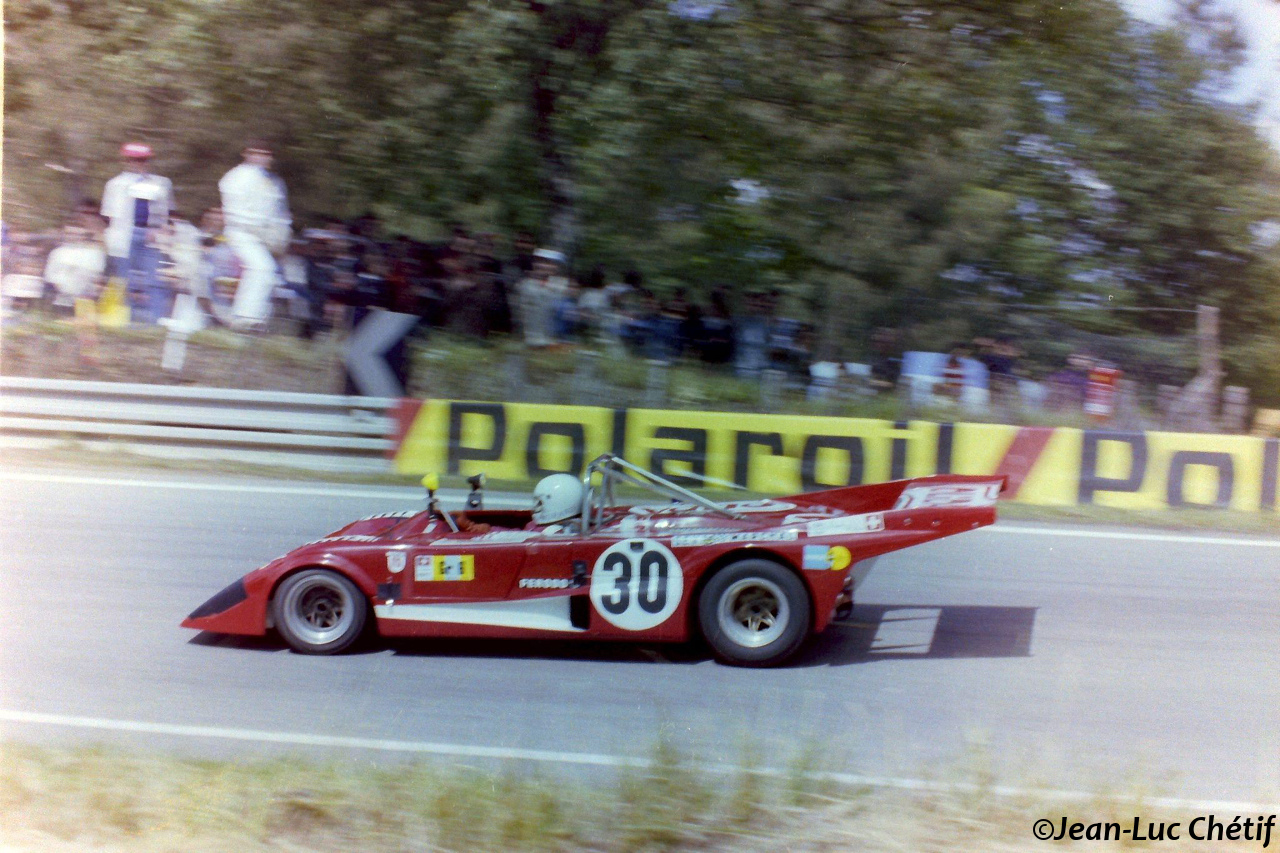
In the mid-1970s, the 2.0-litre Group 6 prototype class was a war fought by “kit-car” constructors. It was a grid filled with British-built, off-the-shelf chassis from Lola and, most dominantly, Chevron. These were good, fast, reliable tube-frame cars, a “customer” solution for any privateer with a budget. Into this established, pragmatic world, stepped an outlier. From the unlikely nation of Switzerland, a country of precision engineering, came the singular vision of Swiss-American designer Chuck Graemiger. His 1976 Cheetah G601 was not a customer car; it was a bespoke, in-house, and breathtakingly ambitious assault on the establishment. And for its heart, it chose the most potent 2.0-litre weapon available: the BMW M12 engine.
This was a car built to fight on two fronts. In the “war within a war”, its direct rivals were the ubiquitous, BMW-powered Chevron B36s and the Sauber C5, the other Swiss-built BMW contender. This was a battle for 2.0-litre class supremacy. But the G601’s advanced design had a far more arrogant goal: to outlast the 3.0-litre factory “gods”—the Porsche 936s and Renault-Alpines—and, with a combination of lightness, efficiency, and reliability, to steal a high overall finish at the greatest race on earth: the 24 Hours of Le Mans.
The G601’s genius, and its most profound departure from its rivals, was its chassis. While the Chevrons and Lolas were built around a conventional (and easier to repair) steel tube-frame, Graemiger designed a full-length, stressed-skin aluminium monocoque. This was a Formula 1 technology, a design that provided immense torsional rigidity for a fraction of the weight. The entire car tipped the scales at a feather-light 600kg, making it a true welterweight. This advanced tub was wrapped in a stunning, in-house-designed body. It was a classic Group 6 wedge, but one penned with a remarkable, low-drag elegance. Its wide, spade-like nose, flowing, wrap-around cockpit, and long, flat tail were a masterpiece of aerodynamic efficiency.
The car’s heart was a perfect match for its advanced chassis. The BMW M12/7 was, simply, the engine to have. It was, in effect, a “Works” Formula 2 engine, a 1,990cc, 16-valve, four-cylinder powerhouse. With a dry-sump lubrication system, a screaming 9,500-rpm redline, and a set of slide-throttles for its Kugelfischer mechanical fuel-injection, this engine produced a reliable, high-strung 300 hp. It was a proven, bulletproof unit, and when mated to the G601’s light, slippery form and a 5-speed Hewland gearbox, it created a package that was, on paper, a giant-killer.
The G601-BMW’s entire, immortal legend was written in a single 18-hour blaze of glory: the 1976 24 Hours of Le Mans. The team arrived as a tiny, all-Swiss privateer effort, their single yellow #1 car a beautiful but unknown quantity. From the start, the car, driven by Claude Haldi, Sandro Plastina, and Florian Vetsch, was not just fast for its class; it was flawless. As the sun set and the more powerful, 3.0-litre factory cars began to hit trouble, the little Cheetah ran with the metronomic, unerring precision of a Swiss watch. It was not just leading its 2.0-litre class; it was annihilating it. By the mid-point of the race, it was climbing the overall standings. 15th, 12th, 10th… by the 18th hour, the yellow Cheetah was running in a scarcely believable 9th place overall. It was a “David vs. Goliath” story unfolding in real-time. The tiny, 2.0-litre privateer was on the same lap as the factory-backed Inaltera and was running ahead of Lolas and Porsches.
But Le Mans is a cruel and romantic mistress. The dream ended as it so often does. An oil leak, a common and mundane failure, proved terminal. The M12 engine, which had run flat-out for 18 hours, finally gave out. The car retired. It did not get the podium, it did not get the trophy, but it had won the respect of the entire paddock. It had proven, unequivocally, that Chuck Graemiger’s bespoke monocoque design was not just a flight of fancy; it was a genuine, world-class contender.
The 1976 Le Mans run was the car’s high-water mark. The G601 chassis would be raced again, most notably with a Cosworth BDG engine, but it never recaptured that 1976 magic. The G601-BMW’s legacy is that of the ultimate “what if”. It was the car that proved a tiny, visionary privateer could build a chassis more advanced than the “kit-car” giants. It was the last great gasp of the 2.0-litre hero, a car so good that its very success proved a heartbreaking truth: the 2.0-litre class was a dead-end. To win overall, Graemiger knew he needed a 3.0-litre engine. The G601-BMW’s heroic failure was the direct inspiration for its successor, the 3.0L DFV-powered G602. It was, for 18 glorious hours, the most dangerous giant-killer in the world.
Brand
Produced from
Portal
Vehicle category
Model line
Predecessor
Sucessor
Brand
Produced from
Portal
Vehicle category
Model line
Model generation
Predecessor
Sucessor
Submodel Overview
In the mid-1970s, the 2.0-litre Group 6 prototype class was a war fought by “kit-car” constructors. It was a grid filled with British-built, off-the-shelf chassis from Lola and, most dominantly, Chevron. These were good, fast, reliable tube-frame cars, a “customer” solution for any privateer with a budget. Into this established, pragmatic world, stepped an outlier. From the unlikely nation of Switzerland, a country of precision engineering, came the singular vision of Swiss-American designer Chuck Graemiger. His 1976 Cheetah G601 was not a customer car; it was a bespoke, in-house, and breathtakingly ambitious assault on the establishment. And for its heart, it chose the most potent 2.0-litre weapon available: the BMW M12 engine.
This was a car built to fight on two fronts. In the “war within a war”, its direct rivals were the ubiquitous, BMW-powered Chevron B36s and the Sauber C5, the other Swiss-built BMW contender. This was a battle for 2.0-litre class supremacy. But the G601’s advanced design had a far more arrogant goal: to outlast the 3.0-litre factory “gods”—the Porsche 936s and Renault-Alpines—and, with a combination of lightness, efficiency, and reliability, to steal a high overall finish at the greatest race on earth: the 24 Hours of Le Mans.
The G601’s genius, and its most profound departure from its rivals, was its chassis. While the Chevrons and Lolas were built around a conventional (and easier to repair) steel tube-frame, Graemiger designed a full-length, stressed-skin aluminium monocoque. This was a Formula 1 technology, a design that provided immense torsional rigidity for a fraction of the weight. The entire car tipped the scales at a feather-light 600kg, making it a true welterweight. This advanced tub was wrapped in a stunning, in-house-designed body. It was a classic Group 6 wedge, but one penned with a remarkable, low-drag elegance. Its wide, spade-like nose, flowing, wrap-around cockpit, and long, flat tail were a masterpiece of aerodynamic efficiency.
The car’s heart was a perfect match for its advanced chassis. The BMW M12/7 was, simply, the engine to have. It was, in effect, a “Works” Formula 2 engine, a 1,990cc, 16-valve, four-cylinder powerhouse. With a dry-sump lubrication system, a screaming 9,500-rpm redline, and a set of slide-throttles for its Kugelfischer mechanical fuel-injection, this engine produced a reliable, high-strung 300 hp. It was a proven, bulletproof unit, and when mated to the G601’s light, slippery form and a 5-speed Hewland gearbox, it created a package that was, on paper, a giant-killer.
The G601-BMW’s entire, immortal legend was written in a single 18-hour blaze of glory: the 1976 24 Hours of Le Mans. The team arrived as a tiny, all-Swiss privateer effort, their single yellow #1 car a beautiful but unknown quantity. From the start, the car, driven by Claude Haldi, Sandro Plastina, and Florian Vetsch, was not just fast for its class; it was flawless. As the sun set and the more powerful, 3.0-litre factory cars began to hit trouble, the little Cheetah ran with the metronomic, unerring precision of a Swiss watch. It was not just leading its 2.0-litre class; it was annihilating it. By the mid-point of the race, it was climbing the overall standings. 15th, 12th, 10th… by the 18th hour, the yellow Cheetah was running in a scarcely believable 9th place overall. It was a “David vs. Goliath” story unfolding in real-time. The tiny, 2.0-litre privateer was on the same lap as the factory-backed Inaltera and was running ahead of Lolas and Porsches.
But Le Mans is a cruel and romantic mistress. The dream ended as it so often does. An oil leak, a common and mundane failure, proved terminal. The M12 engine, which had run flat-out for 18 hours, finally gave out. The car retired. It did not get the podium, it did not get the trophy, but it had won the respect of the entire paddock. It had proven, unequivocally, that Chuck Graemiger’s bespoke monocoque design was not just a flight of fancy; it was a genuine, world-class contender.
The 1976 Le Mans run was the car’s high-water mark. The G601 chassis would be raced again, most notably with a Cosworth BDG engine, but it never recaptured that 1976 magic. The G601-BMW’s legacy is that of the ultimate “what if”. It was the car that proved a tiny, visionary privateer could build a chassis more advanced than the “kit-car” giants. It was the last great gasp of the 2.0-litre hero, a car so good that its very success proved a heartbreaking truth: the 2.0-litre class was a dead-end. To win overall, Graemiger knew he needed a 3.0-litre engine. The G601-BMW’s heroic failure was the direct inspiration for its successor, the 3.0L DFV-powered G602. It was, for 18 glorious hours, the most dangerous giant-killer in the world.
Tech Specs
Technical Specifications
Tech Specs
Technical Specifications
Engine
01
03
Internal combustion engine
Configuration
BMW M12/7, Inline-4
Location
Mid, longitudinally mounted
Construction
-
Displacement (cc)
1,998 cc
Displacement (cu in)
121.9 cu in
Compression
-
Bore x Stroke
-
Valvetrain
4 valves per cylinder
Fuel feed
Kugelfischer mechanical Fuel Injection
Lubrication
Dry sump
Aspiration
Naturally aspirted
Output
Power (hp)
300 hp
Power (kW)
223.7 kW
Max power at
-
Torque (Nm)
-
Torque (ft lbs)
-
Max torque at
-
Drivetrain
02
03
Chassis
Type
Tubular spaceframe
Material
Steel
Body
Material
Aluminium
Transmission
Gearbox
Hewland, 5-speed manual
Drive
Rear Wheel Drive
Suspension
Front
-
Rear
-
Steering
Type
Rack and pinion
Brakes
Front
Ventilated discs
Rear
Ventilated discs
Wheels
Front
-
Rear
-
Tires
Front
-
Rear
-
Dimensions and performance
03
03
Dimensions
Length (mm)
-
Length (in)
-
Width (mm)
-
Width (in)
-
Height (mm)
-
Height (in)
-
Wheelbase (mm)
-
Wheelbase (in)
-
Weight (kg)
-
Weight (lbs)
-
Performance
Power to weight
-
Top speed (km/h)
-
Top speed (mph)
-
0-100 km/h (0-60 mph)
-