
Chevron B21 BMW M12
Brand
Produced from
Portal
Vehicle category
Model line
Predecessor
Successor
Submodel Overview
By 1972, the romance of the 2.0-litre sports prototype class had hardened into a ruthless arms race. The previous year had belonged to Chevron’s B19, a car that swarmed the grids of Europe and crushed the opposition through sheer numbers and handling prowess. But Derek Bennett, the pragmatic genius behind the marque, knew that in motorsport, dominance is a depreciating asset. Lola had launched the aluminium-monocoque T290, a car designed specifically to render the steel-framed Chevron obsolete. Simultaneously, the engine war was escalating. The trusty Ford Cosworth FVC was being outgunned by a new generation of purebred racing engines. Bennett needed a car that was longer, more stable, and capable of housing the most powerful 2.0-litre engine on the planet. His answer was the B21, and in its ultimate, fire-breathing specification, it was mated to the Bavarian masterpiece: the BMW M12.
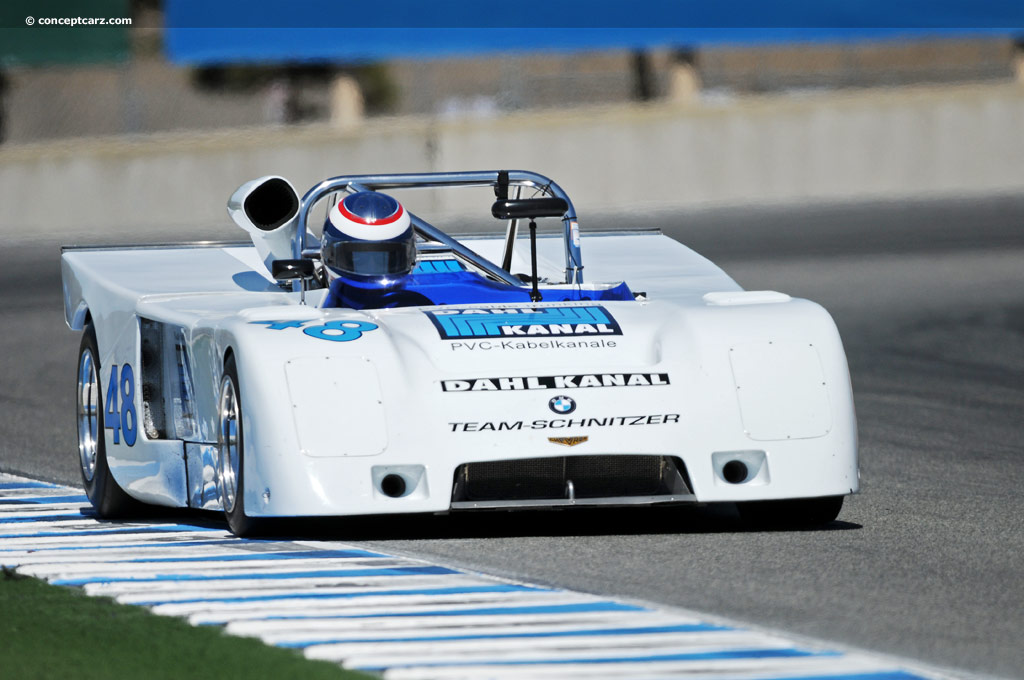
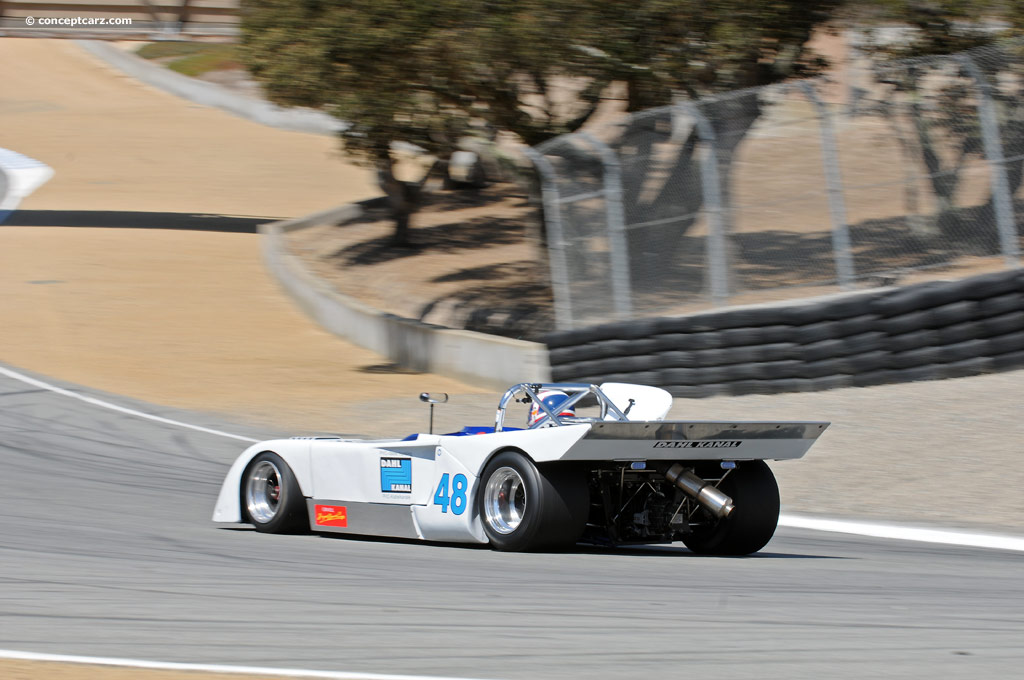
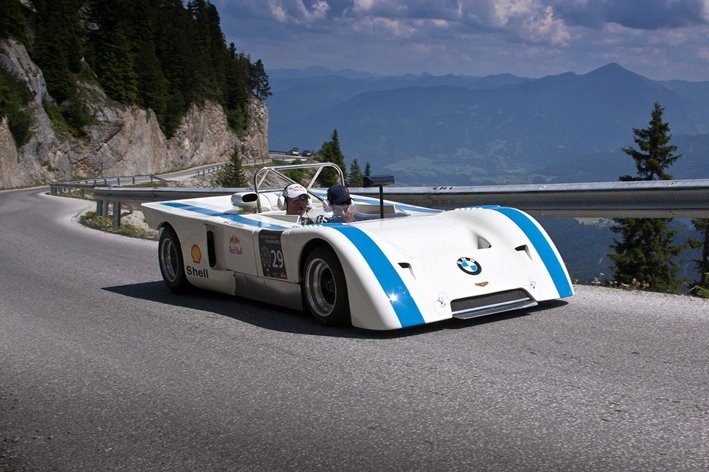
The Chevron B21 BMW was not a car for the faint of heart or the light of wallet. It was the “heavy artillery” of the model line. While the B21 chassis was an evolution of the B19—retaining the tubular steel spaceframe that privateers loved for its repairability and feedback—it featured a critical modification: a four-inch extension in the wheelbase. Bennett realized that the B19’s nervous, agile nature, while perfect for the twisty circuits of the UK, was a liability on the high-speed sweepers of the continent, especially when dealing with increased horsepower. The B21 was stretched to provide high-speed stability and to physically accommodate the larger, taller engines now coming into vogue. The bodywork was sharpened into a refined wedge, with a flatter nose and a more integrated rear deck, aimed at reducing drag while maintaining the downforce that glued the car to the track.
However, the soul of this specific submodel was the BMW M12/7 engine. This was no tuned road-car unit; it was a purebred Formula 2 engine, a technological jewel designed by the legendary Paul Rosche. Displacing 1,990cc, the M12 featured a cast-iron block (derived from the production M10) topped with a complex, 16-valve aluminium cylinder head. Fed by Kugelfischer mechanical fuel injection and breathing through slide throttles, it produced a staggering 285 to 300 bhp at over 9,000 rpm. This gave the B21 BMW a significant power advantage over the Cosworth FVC-powered cars (which hovered around 245 bhp). The installation of the tall, upright BMW engine into the low-line B21 chassis was an engineering challenge, often necessitating distinctive bulges in the engine cover that marked this submodel out to the knowledgeable observer.
On the track, the B21 BMW was a machine of devastating potential but complex temperament. When everything sang in harmony, it was untouchable. The torque and top-end power of the M12 allowed the B21 to storm away from its rivals on the long straights of the Österreichring or Hockenheim. It transformed the Chevron from a momentum car into a power car. However, the M12 was famous for its destructive harmonic vibrations. It shook everything. Engine mounts cracked, exhaust manifolds fractured, and ancillary components rattled loose. Running a B21 BMW required a team with meticulous preparation standards and a budget to match the engine’s rebuild schedule. It was the “high risk, high reward” option compared to the “safe bet” Cosworth FVC.
Despite the mechanical challenges, the B21 BMW carved out a formidable reputation in the 1972 European 2-Litre Sports Car Championship. In the hands of drivers like Dieter Quester—a BMW factory man who bridged the gap between Munich and Bolton—the car was a front-runner. It engaged in titanic battles with the Abarth-Osellas and the Lola T290s. The car found particular success in the South African Springbok Series. The high altitude of the Kyalami circuit sapped the power of the smaller engines, making the superior output of the BMW M12 a critical advantage. There, the B21 BMWs would scream through the 9-hour endurance races, their engines holding together to deliver victories that cemented the car’s legacy in the Southern Hemisphere.
The 1972 B21 BMW M12 represents the zenith of the steel-frame era’s power wars. It was the moment when a “garagiste” chassis from Bolton successfully harnessed a Formula 2 engine from Munich to take on the world. It was a bridge to the future—the engine would go on to dominate the class in the Osella chassis, and the B21 would evolve into the B23—but for one glorious season, this hybrid of British ingenuity and German horsepower was the fastest, loudest, and most exciting way to go racing on a Sunday afternoon. Today, the B21 BMW remains a star of historic racing, its distinct induction roar and sheer speed continuing to captivate crowds just as it did fifty years ago.
Brand
Produced from
Portal
Vehicle category
Model line
Predecessor
Sucessor
Brand
Produced from
Portal
Vehicle category
Model line
Model generation
Predecessor
Sucessor
Submodel Overview
By 1972, the romance of the 2.0-litre sports prototype class had hardened into a ruthless arms race. The previous year had belonged to Chevron’s B19, a car that swarmed the grids of Europe and crushed the opposition through sheer numbers and handling prowess. But Derek Bennett, the pragmatic genius behind the marque, knew that in motorsport, dominance is a depreciating asset. Lola had launched the aluminium-monocoque T290, a car designed specifically to render the steel-framed Chevron obsolete. Simultaneously, the engine war was escalating. The trusty Ford Cosworth FVC was being outgunned by a new generation of purebred racing engines. Bennett needed a car that was longer, more stable, and capable of housing the most powerful 2.0-litre engine on the planet. His answer was the B21, and in its ultimate, fire-breathing specification, it was mated to the Bavarian masterpiece: the BMW M12.
The Chevron B21 BMW was not a car for the faint of heart or the light of wallet. It was the “heavy artillery” of the model line. While the B21 chassis was an evolution of the B19—retaining the tubular steel spaceframe that privateers loved for its repairability and feedback—it featured a critical modification: a four-inch extension in the wheelbase. Bennett realized that the B19’s nervous, agile nature, while perfect for the twisty circuits of the UK, was a liability on the high-speed sweepers of the continent, especially when dealing with increased horsepower. The B21 was stretched to provide high-speed stability and to physically accommodate the larger, taller engines now coming into vogue. The bodywork was sharpened into a refined wedge, with a flatter nose and a more integrated rear deck, aimed at reducing drag while maintaining the downforce that glued the car to the track.
However, the soul of this specific submodel was the BMW M12/7 engine. This was no tuned road-car unit; it was a purebred Formula 2 engine, a technological jewel designed by the legendary Paul Rosche. Displacing 1,990cc, the M12 featured a cast-iron block (derived from the production M10) topped with a complex, 16-valve aluminium cylinder head. Fed by Kugelfischer mechanical fuel injection and breathing through slide throttles, it produced a staggering 285 to 300 bhp at over 9,000 rpm. This gave the B21 BMW a significant power advantage over the Cosworth FVC-powered cars (which hovered around 245 bhp). The installation of the tall, upright BMW engine into the low-line B21 chassis was an engineering challenge, often necessitating distinctive bulges in the engine cover that marked this submodel out to the knowledgeable observer.
On the track, the B21 BMW was a machine of devastating potential but complex temperament. When everything sang in harmony, it was untouchable. The torque and top-end power of the M12 allowed the B21 to storm away from its rivals on the long straights of the Österreichring or Hockenheim. It transformed the Chevron from a momentum car into a power car. However, the M12 was famous for its destructive harmonic vibrations. It shook everything. Engine mounts cracked, exhaust manifolds fractured, and ancillary components rattled loose. Running a B21 BMW required a team with meticulous preparation standards and a budget to match the engine’s rebuild schedule. It was the “high risk, high reward” option compared to the “safe bet” Cosworth FVC.
Despite the mechanical challenges, the B21 BMW carved out a formidable reputation in the 1972 European 2-Litre Sports Car Championship. In the hands of drivers like Dieter Quester—a BMW factory man who bridged the gap between Munich and Bolton—the car was a front-runner. It engaged in titanic battles with the Abarth-Osellas and the Lola T290s. The car found particular success in the South African Springbok Series. The high altitude of the Kyalami circuit sapped the power of the smaller engines, making the superior output of the BMW M12 a critical advantage. There, the B21 BMWs would scream through the 9-hour endurance races, their engines holding together to deliver victories that cemented the car’s legacy in the Southern Hemisphere.
The 1972 B21 BMW M12 represents the zenith of the steel-frame era’s power wars. It was the moment when a “garagiste” chassis from Bolton successfully harnessed a Formula 2 engine from Munich to take on the world. It was a bridge to the future—the engine would go on to dominate the class in the Osella chassis, and the B21 would evolve into the B23—but for one glorious season, this hybrid of British ingenuity and German horsepower was the fastest, loudest, and most exciting way to go racing on a Sunday afternoon. Today, the B21 BMW remains a star of historic racing, its distinct induction roar and sheer speed continuing to captivate crowds just as it did fifty years ago.
Tech Specs
Technical Specifications
Tech Specs
Technical Specifications
Engine
01
03
Internal combustion engine
Configuration
BMW M12, Inline-4
Location
Mid, longitudinally mounted
Construction
Cast iron block, aluminium alloy head
Displacement (cc)
1,998 cc
Displacement (cu in)
121.9 cu in
Compression
-
Bore x Stroke
89.2 mm x 80.0 mm
Valvetrain
4 valves per cylinder, DOHC
Fuel feed
Kugelfischer Fuel Injection
Lubrication
Dry sump
Aspiration
Naturally aspirated
Output
Power (hp)
275 hp
Power (kW)
205 kW
Max power at
9,000 RPM
Torque (Nm)
-
Torque (ft lbs)
-
Max torque at
-
Drivetrain
02
03
Chassis
Type
Tubular spaceframe
Material
Steel and aluminium
Body
Material
Fibreglass
Transmission
Gearbox
5-speed manual
Drive
Rear Wheel Drive
Suspension
Front
Double wishbones, coil springs over dampers, anti-roll bar
Rear
Single top links, twin lower links, twin trailing arms, coil springs over dampers, anti-roll bar
Steering
Type
Rack and pinion
Brakes
Front
Ventilated discs
Rear
Ventilated discs
Wheels
Front
-
Rear
-
Tires
Front
-
Rear
-
Dimensions and performance
03
03
Dimensions
Length (mm)
3,683 mm
Length (in)
145 in
Width (mm)
1,676 mm
Width (in)
66 in
Height (mm)
2,362 mm
Height (in)
93 in
Wheelbase (mm)
-
Wheelbase (in)
-
Weight (kg)
-
Weight (lbs)
-
Performance
Power to weight
-
Top speed (km/h)
-
Top speed (mph)
-
0-100 km/h (0-60 mph)
-