
Chevron B21 Ford Cosworth FVA
Brand
Produced from
Portal
Vehicle category
Model line
Predecessor
Successor
Submodel Overview
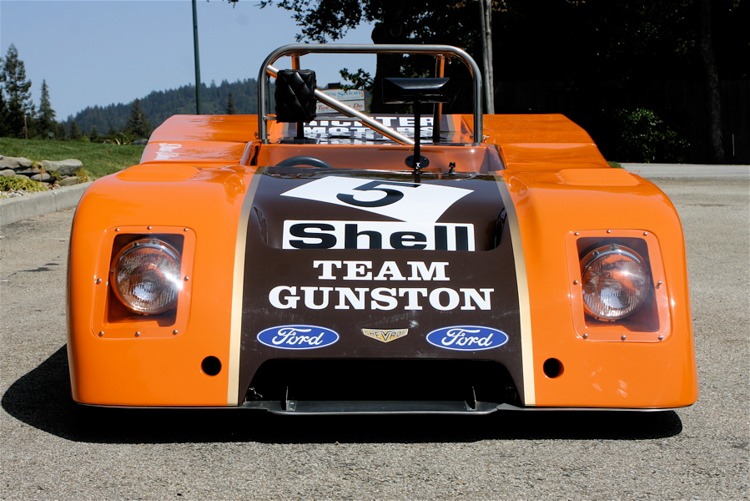
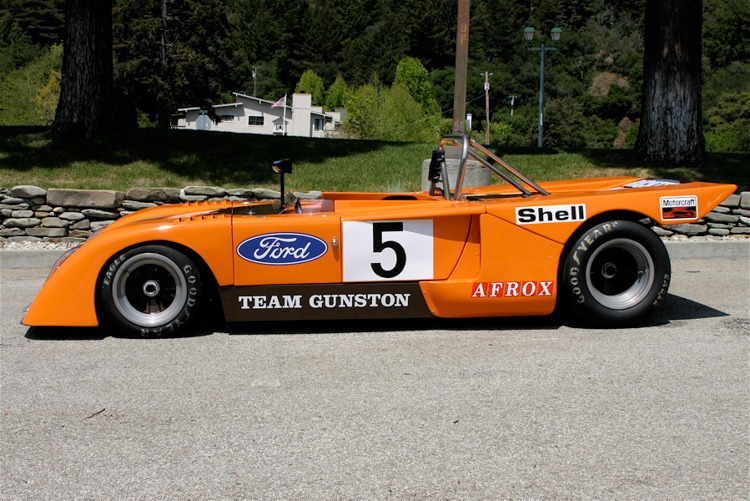
By 1972, the golden age of the 2.0-litre sports prototype was reaching a fever pitch of technological escalation. The European championship had evolved into a heavyweight prize-fight between the new, alloy-block Ford Cosworth BDG and the complex BMW M12, engines that were pushing horsepower figures toward the 300 mark. Yet, amidst this “arms race” for outright power, a parallel war was being fought in the 1.6-litre class. This category was the domain of precision, momentum, and stratospheric engine speeds, a place where brute force was secondary to chassis balance. For the privateer who wished to dominate this technical arena, Derek Bennett’s updated B21 chassis, when mated to the legendary Cosworth FVA engine, created a machine of surgical capability: the Chevron B21 FVA.
The B21 was, fundamentally, a reaction to the evolving demands of speed. Bennett’s previous masterpiece, the B19, had been a dominant force, but its short wheelbase made it twitchy on high-speed sweepers. The B21 addressed this with a four-inch wheelbase stretch and a stiffer tubular steel spaceframe. While the factory teams and wealthy privateers stuffed the engine bays of these new cars with the latest 2.0-litre mills, the decision to install the 1.6-litre Cosworth FVA (Four Valve Type A) created a distinct submodel with a unique character. The FVA was automotive royalty; designed by Keith Duckworth for Formula 2, it was the engine that had pioneered the four-valve, gear-driven camshaft architecture that would conquer the world in the DFV. In 1972, it was a veteran unit, but it remained the gold standard for the 1.6-litre class. Displacing 1,598cc and producing around 225 bhp at a screaming 9,500 rpm, it transformed the B21 into a frantic, kinetic instrument that demanded total commitment from its driver.
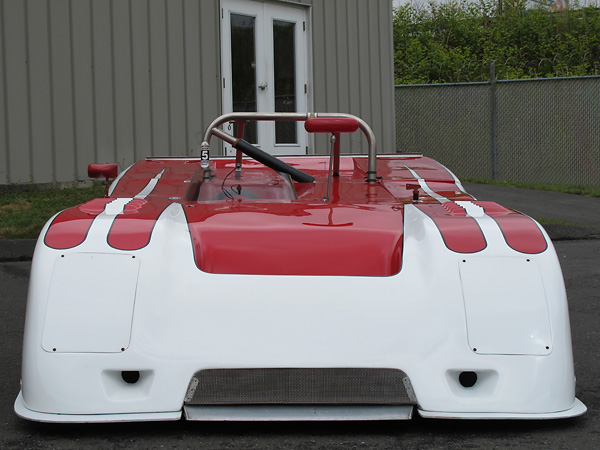
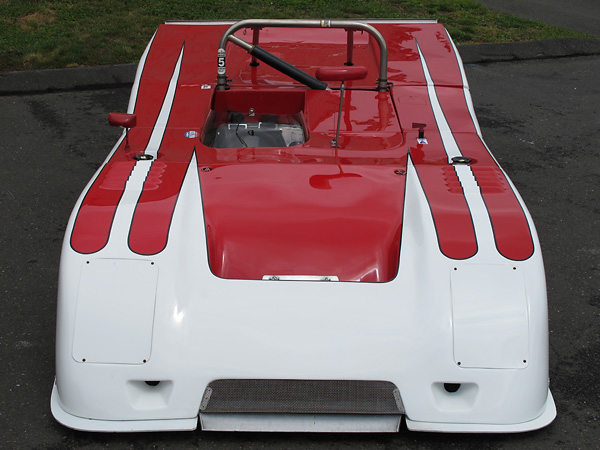
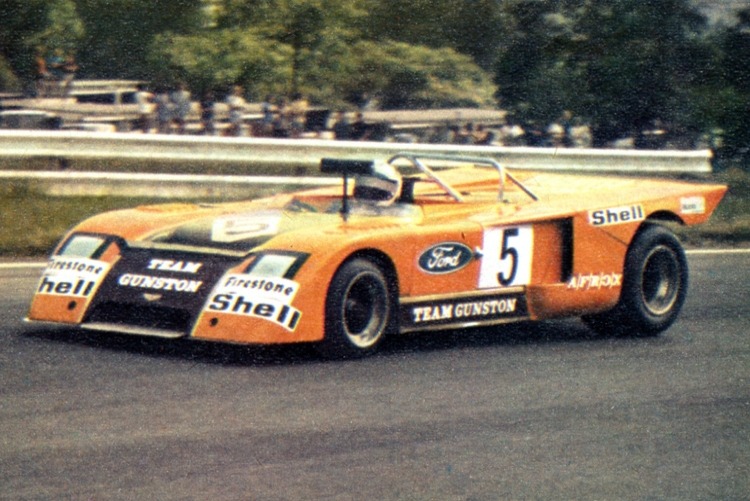
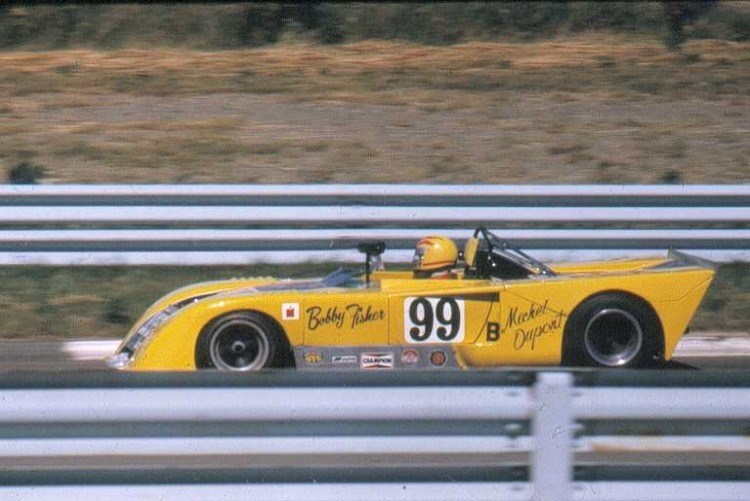
Unlike the torque-rich FVC or the powerful BMW M12, the B21 FVA had a razor-thin powerband. It offered zero low-end grunt; to drive it was to keep the rev counter needle permanently pinned to the right, dancing on the pedals and working the Hewland gearbox relentlessly. However, the lighter engine block (compared to the iron FVC) and the reduced rotational mass meant the car was lighter and even more agile than its bigger brothers. The B21’s longer wheelbase settled the car in fast corners, allowing the FVA driver to carry absurd amounts of entry speed, a necessity to maintain momentum. The bodywork was the standard, wedge-shaped B21 guise—functional, low, and planted—but beneath the skin, the FVA-powered car was a exercise in minimalism. It was a car that won not by accelerating harder than the competition, but by refusing to slow down.
In 1972, the B21 FVA was the weapon of choice for the “class hunters.” While the headline grabbers fought for overall wins in the European 2-Litre Sports Car Championship, the B21 FVA drivers were locked in a vicious duel with the 1.6-litre Abarth 1600 SPs and the smaller-engined Lola T290s. On tight, technical circuits like the short loop at Brands Hatch, Vallelunga, or the tortuous Targa Florio, the B21 FVA could often embarrass the 2.0-litre cars. The chassis’s mechanical grip, combined with the instant throttle response of the Lucas mechanical fuel injection, allowed it to change direction like a single-seater. It was also a favorite in the European Hill Climb Championship, where the FVA’s lack of weight and explosive high-rpm power were perfectly suited to the short, sharp blasts up mountain passes.
However, the B21 FVA was also a swansong. The 1.6-litre class was slowly losing relevance on the international stage as the 2.0-litre formula cemented its grip on sports car racing. The FVA engine, while brilliant, was becoming expensive to maintain against the newer, more robust architectures. Yet, for that 1972 season, the B21 FVA represented the ultimate refinement of the small-displacement sports racer. It was not the fastest car in a straight line, nor the most powerful, but it was perhaps the purest driving experience available on the grid. It required a driver of immense finesse, one who could harmonize with the frantic rhythm of the Formula 2 engine. It stands today as a reminder of a time when engineering diversity allowed different solutions to coexist on the same grid, a high-revving, steel-framed jewel that punched well above its weight.
Brand
Produced from
Portal
Vehicle category
Model line
Predecessor
Sucessor
Brand
Produced from
Portal
Vehicle category
Model line
Model generation
Predecessor
Sucessor
Submodel Overview
By 1972, the golden age of the 2.0-litre sports prototype was reaching a fever pitch of technological escalation. The European championship had evolved into a heavyweight prize-fight between the new, alloy-block Ford Cosworth BDG and the complex BMW M12, engines that were pushing horsepower figures toward the 300 mark. Yet, amidst this “arms race” for outright power, a parallel war was being fought in the 1.6-litre class. This category was the domain of precision, momentum, and stratospheric engine speeds, a place where brute force was secondary to chassis balance. For the privateer who wished to dominate this technical arena, Derek Bennett’s updated B21 chassis, when mated to the legendary Cosworth FVA engine, created a machine of surgical capability: the Chevron B21 FVA.
The B21 was, fundamentally, a reaction to the evolving demands of speed. Bennett’s previous masterpiece, the B19, had been a dominant force, but its short wheelbase made it twitchy on high-speed sweepers. The B21 addressed this with a four-inch wheelbase stretch and a stiffer tubular steel spaceframe. While the factory teams and wealthy privateers stuffed the engine bays of these new cars with the latest 2.0-litre mills, the decision to install the 1.6-litre Cosworth FVA (Four Valve Type A) created a distinct submodel with a unique character. The FVA was automotive royalty; designed by Keith Duckworth for Formula 2, it was the engine that had pioneered the four-valve, gear-driven camshaft architecture that would conquer the world in the DFV. In 1972, it was a veteran unit, but it remained the gold standard for the 1.6-litre class. Displacing 1,598cc and producing around 225 bhp at a screaming 9,500 rpm, it transformed the B21 into a frantic, kinetic instrument that demanded total commitment from its driver.
Unlike the torque-rich FVC or the powerful BMW M12, the B21 FVA had a razor-thin powerband. It offered zero low-end grunt; to drive it was to keep the rev counter needle permanently pinned to the right, dancing on the pedals and working the Hewland gearbox relentlessly. However, the lighter engine block (compared to the iron FVC) and the reduced rotational mass meant the car was lighter and even more agile than its bigger brothers. The B21’s longer wheelbase settled the car in fast corners, allowing the FVA driver to carry absurd amounts of entry speed, a necessity to maintain momentum. The bodywork was the standard, wedge-shaped B21 guise—functional, low, and planted—but beneath the skin, the FVA-powered car was a exercise in minimalism. It was a car that won not by accelerating harder than the competition, but by refusing to slow down.
In 1972, the B21 FVA was the weapon of choice for the “class hunters.” While the headline grabbers fought for overall wins in the European 2-Litre Sports Car Championship, the B21 FVA drivers were locked in a vicious duel with the 1.6-litre Abarth 1600 SPs and the smaller-engined Lola T290s. On tight, technical circuits like the short loop at Brands Hatch, Vallelunga, or the tortuous Targa Florio, the B21 FVA could often embarrass the 2.0-litre cars. The chassis’s mechanical grip, combined with the instant throttle response of the Lucas mechanical fuel injection, allowed it to change direction like a single-seater. It was also a favorite in the European Hill Climb Championship, where the FVA’s lack of weight and explosive high-rpm power were perfectly suited to the short, sharp blasts up mountain passes.
However, the B21 FVA was also a swansong. The 1.6-litre class was slowly losing relevance on the international stage as the 2.0-litre formula cemented its grip on sports car racing. The FVA engine, while brilliant, was becoming expensive to maintain against the newer, more robust architectures. Yet, for that 1972 season, the B21 FVA represented the ultimate refinement of the small-displacement sports racer. It was not the fastest car in a straight line, nor the most powerful, but it was perhaps the purest driving experience available on the grid. It required a driver of immense finesse, one who could harmonize with the frantic rhythm of the Formula 2 engine. It stands today as a reminder of a time when engineering diversity allowed different solutions to coexist on the same grid, a high-revving, steel-framed jewel that punched well above its weight.
Tech Specs
Technical Specifications
Tech Specs
Technical Specifications
Engine
01
03
Internal combustion engine
Configuration
Ford Cosworth FVA, Inline-4
Location
Mid, longitudinally mounted
Construction
Cast iron block, aluminium alloy head
Displacement (cc)
1,596 cc
Displacement (cu in)
97.39 cu in
Compression
-
Bore x Stroke
85.7 mm x 69.1 mm
Valvetrain
4 valves per cylinder, DOHC
Fuel feed
Lucas Fuel Injection
Lubrication
Dry sump
Aspiration
Naturally aspirated
Output
Power (hp)
225 hp
Power (kW)
168 kW
Max power at
9,000 RPM
Torque (Nm)
-
Torque (ft lbs)
-
Max torque at
-
Drivetrain
02
03
Chassis
Type
Tubular spaceframe
Material
Steel and aluminium
Body
Material
Fibreglass
Transmission
Gearbox
5-speed manual
Drive
Rear Wheel Drive
Suspension
Front
Double wishbones, coil springs over dampers, anti-roll bar
Rear
Single top links, twin lower links, twin trailing arms, coil springs over dampers, anti-roll bar
Steering
Type
Rack and pinion
Brakes
Front
Ventilated discs
Rear
Ventilated discs
Wheels
Front
-
Rear
-
Tires
Front
-
Rear
-
Dimensions and performance
03
03
Dimensions
Length (mm)
3,683 mm
Length (in)
145 in
Width (mm)
1,676 mm
Width (in)
66 in
Height (mm)
-
Height (in)
-
Wheelbase (mm)
2,362 mm
Wheelbase (in)
93 in
Weight (kg)
490 kg
Weight (lbs)
1,080 lbs
Performance
Power to weight
0.45 hp/kg
Top speed (km/h)
-
Top speed (mph)
-
0-100 km/h (0-60 mph)
-