
Chevron B36 ROC Chrysler-Simca
Brand
Produced from
Portal
Vehicle category
Model line
Predecessor
Successor
Submodel Overview
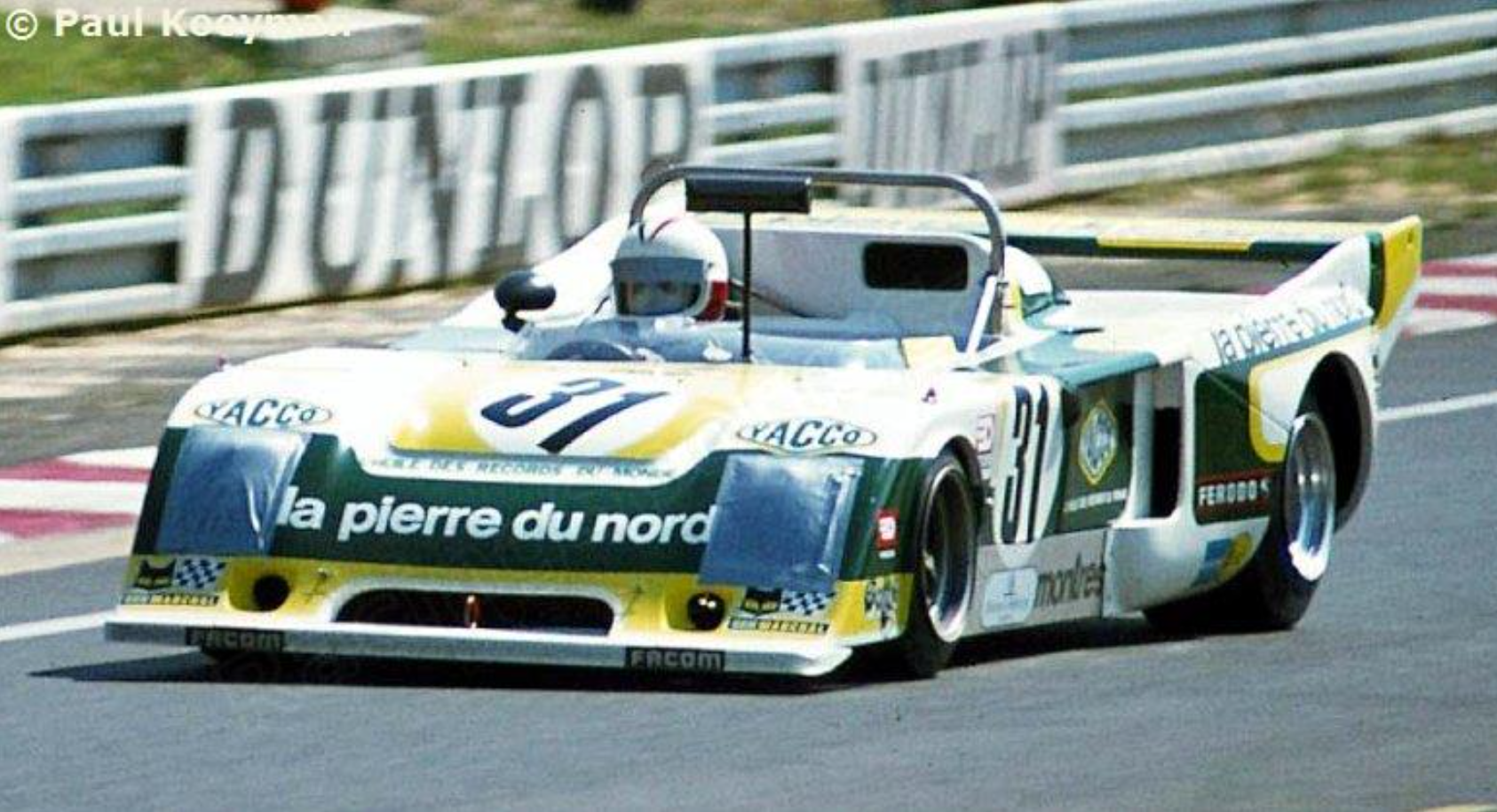
In the mid-1970s, the geopolitical map of sports car racing was often drawn in broad, nationalistic strokes. The Germans had Porsche and BMW; the Italians had Ferrari and Abarth; the British had Lola and Chevron. But in the workshops of Annemasse, France, a unique cross-border alliance was being forged that would disrupt this order with startling effectiveness. This was the domain of Fred Stalder and his Racing Organisation Course (ROC). Stalder, a visionary tuner with a fierce patriotic streak, sought to conquer the 2.0-litre class using French horsepower, but he lacked a domestic chassis capable of harnessing it. His solution was to look across the Channel to Derek Bennett in Bolton. The result was the 1976 Chevron B36 ROC Chrysler-Simca, a machine that combined the ultimate evolution of the British aluminium monocoque with a high-revving Gallic heart, creating a package that would achieve one of the most remarkable giant-killing feats in the history of the 24 Hours of Le Mans.
The B36 chassis was the perfect vessel for Stalder’s ambitions. By 1976, Bennett had refined the B31 concept into the B36, sharpening the aerodynamics with a flatter, more aggressive nose and optimized rear wing struts. It was a stiff, lightweight, and incredibly compliant platform, widely regarded as the best handling customer car in the world. Into this British masterpiece, Stalder installed his own masterpiece: the ROC-Simca engine. Based on the humble cast-iron block of the Chrysler-Simca 180 saloon, Stalder engineered a bespoke 16-valve aluminium cylinder head that transformed the pedestrian commuter engine into a fire-breathing racer. Displacing 1,996cc and fed by Kugelfischer fuel injection, it produced a screaming 290 to 300 bhp at over 9,000 rpm.
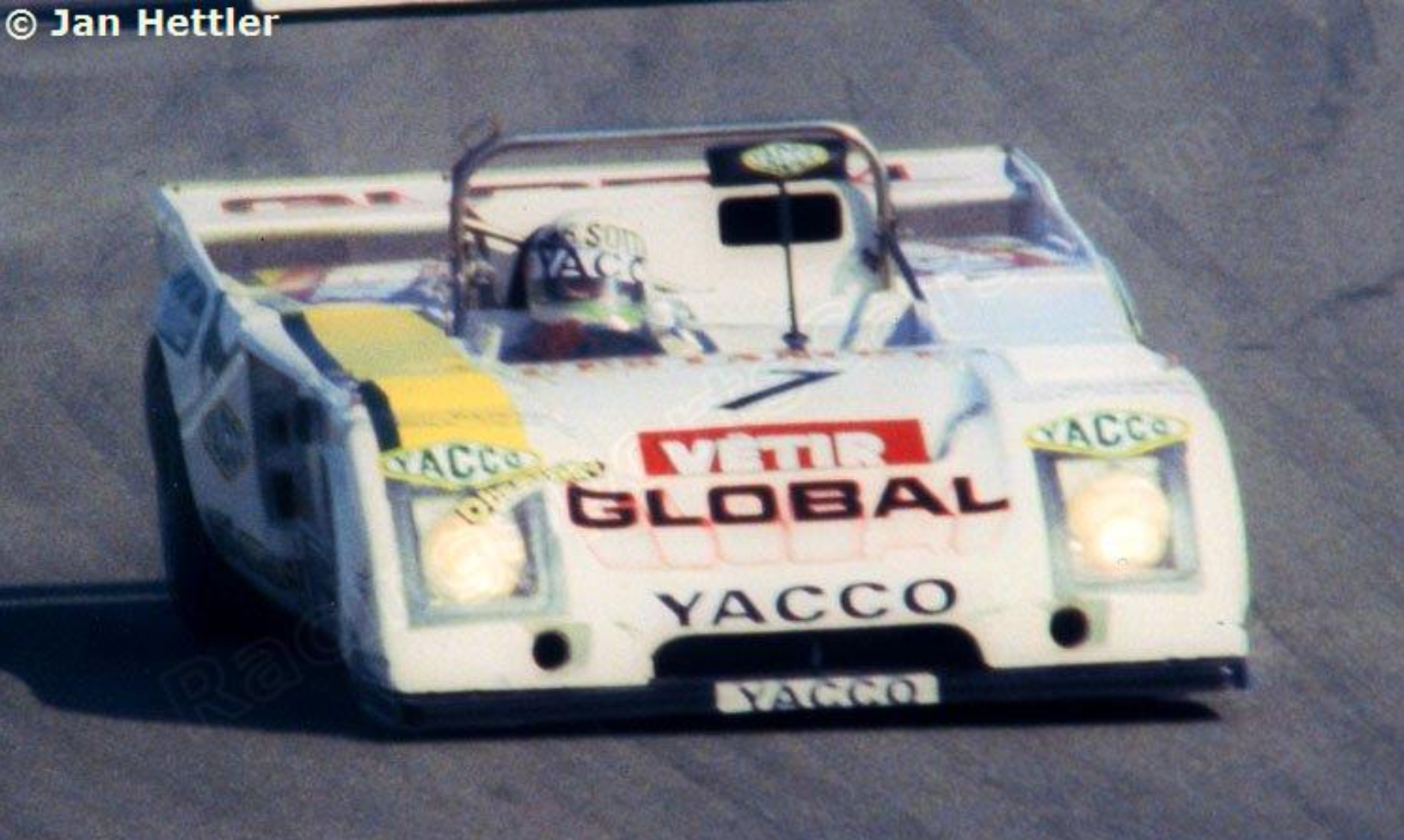
Technically, the B36 ROC was a study in integration. The ROC engine was physically larger and heavier than the Cosworth BDG, requiring specific engine mounts and a revised rear subframe layout within the B36’s engine bay. The weight distribution was shifted slightly rearward compared to the Ford-powered cars, but the B36’s suspension geometry—double wishbones at the front and a multi-link rear—was versatile enough to be tuned around this. The ROC engine delivered its power in a frenetic rush at the top of the rev range, lacking the mid-range torque of a BMW M12 but matching it for peak horsepower. To keep this high-strung engine cool over 24 hours, the ROC cars often featured modified cooling ducts and distinctive engine covers that set them apart visually from their Cosworth-powered brethren.
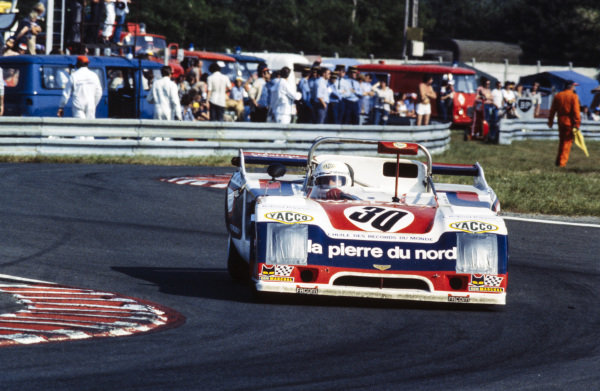
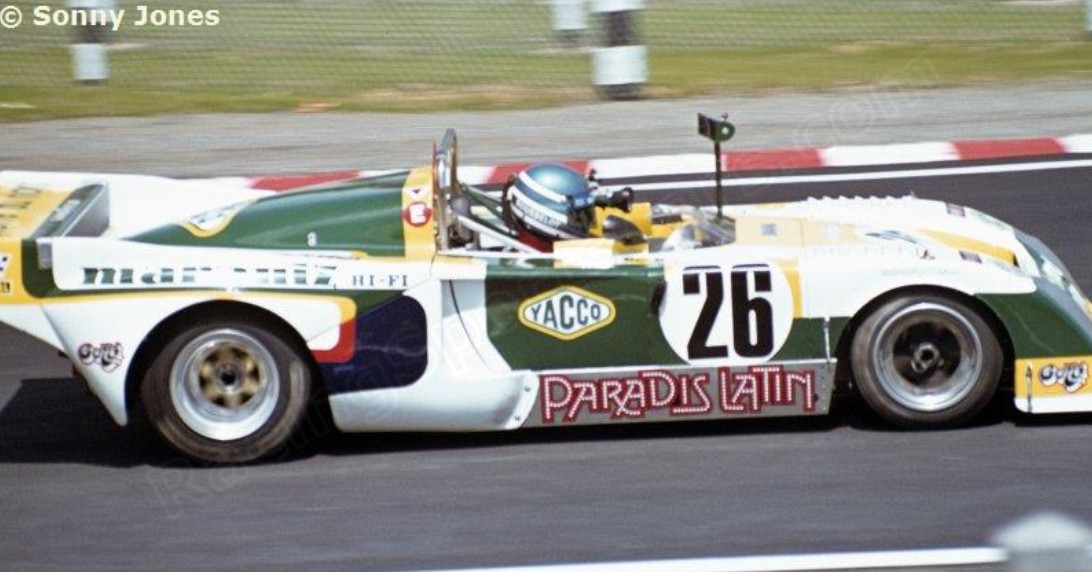
The impact of the B36 ROC was defined by its exploits at the Circuit de la Sarthe. While the car was a dominant force in the French Sportscar Championship, winning titles and beating the lingering Alpine A441s, its global legend was forged at Le Mans. The 1977 24 Hours of Le Mans serves as the car’s defining moment. In a race of relentless attrition that saw factory Porsches and Renault-Alpines crumble, the #26 Chevron B36 ROC, driven by the French trio of Michel Pignard, Albert Dufréne, and Jacques Henry, ran with clockwork precision. They didn’t just survive; they thrived. As the big prototypes failed, the little French-British hybrid climbed the leaderboard. By Sunday afternoon, it crossed the line in an astounding 6th place overall and 1st in the 2.0-litre class. To put this in perspective, a privateer 2.0-litre car had beaten every Porsche 935 and 934 in the field, finishing behind only the factory Martini Porsche 936s and a pair of 935s. It was a performance of David vs. Goliath proportions that vindicated Stalder’s belief in the Simca block and Bennett’s chassis design.
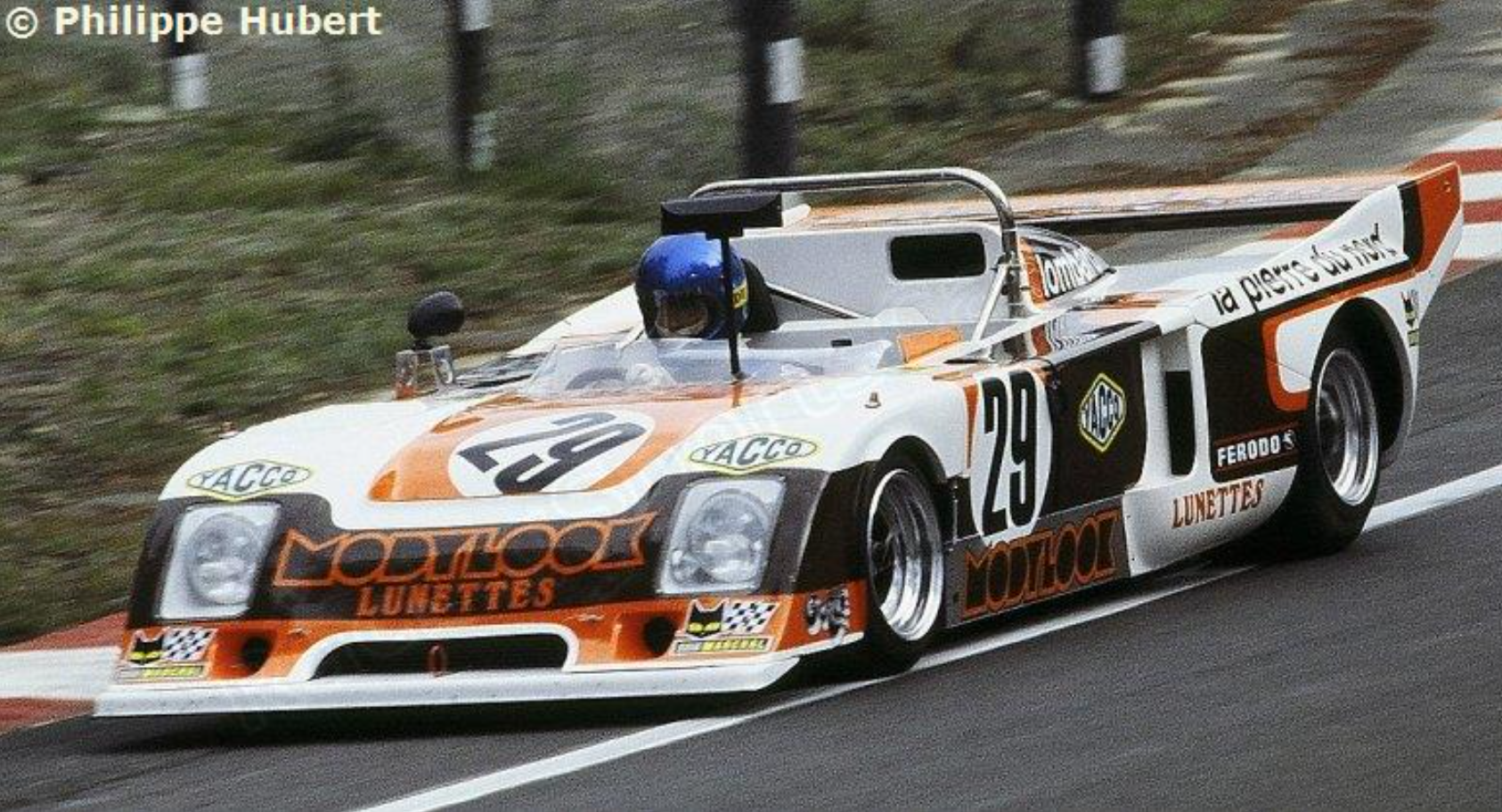
The B36 ROC proved that a “hybrid” privateer effort could defeat factory engineering through a combination of chassis compliance and engine durability. While the ROC engine was notoriously difficult to build and maintain—requiring the touch of Stalder’s own mechanics—when it held together, it offered a power-to-efficiency ratio that was perfectly suited to endurance racing. The B36 ROC continued to be a threat in 1978 and 1979, often the fastest 2.0-litre car in a straight line thanks to the engine’s willingness to rev and the B36’s slippery shape.
The legacy of the Chevron B36 ROC Chrysler-Simca is that of the ultimate Entente Cordiale. It represents a moment when the best of British chassis engineering met the best of French engine tuning to create a world-beater. It remains the high-water mark for ROC as a constructor and stands as one of the most successful iterations of the B36 platform. In the pantheon of motorsport, it is remembered not just as a class winner, but as the little yellow-and-blue car that embarrassed the turbo monsters of Group 5, earning its place as a true legend of Le Mans.
Brand
Produced from
Portal
Vehicle category
Model line
Predecessor
Sucessor
Brand
Produced from
Portal
Vehicle category
Model line
Model generation
Predecessor
Sucessor
Submodel Overview
In the mid-1970s, the geopolitical map of sports car racing was often drawn in broad, nationalistic strokes. The Germans had Porsche and BMW; the Italians had Ferrari and Abarth; the British had Lola and Chevron. But in the workshops of Annemasse, France, a unique cross-border alliance was being forged that would disrupt this order with startling effectiveness. This was the domain of Fred Stalder and his Racing Organisation Course (ROC). Stalder, a visionary tuner with a fierce patriotic streak, sought to conquer the 2.0-litre class using French horsepower, but he lacked a domestic chassis capable of harnessing it. His solution was to look across the Channel to Derek Bennett in Bolton. The result was the 1976 Chevron B36 ROC Chrysler-Simca, a machine that combined the ultimate evolution of the British aluminium monocoque with a high-revving Gallic heart, creating a package that would achieve one of the most remarkable giant-killing feats in the history of the 24 Hours of Le Mans.
The B36 chassis was the perfect vessel for Stalder’s ambitions. By 1976, Bennett had refined the B31 concept into the B36, sharpening the aerodynamics with a flatter, more aggressive nose and optimized rear wing struts. It was a stiff, lightweight, and incredibly compliant platform, widely regarded as the best handling customer car in the world. Into this British masterpiece, Stalder installed his own masterpiece: the ROC-Simca engine. Based on the humble cast-iron block of the Chrysler-Simca 180 saloon, Stalder engineered a bespoke 16-valve aluminium cylinder head that transformed the pedestrian commuter engine into a fire-breathing racer. Displacing 1,996cc and fed by Kugelfischer fuel injection, it produced a screaming 290 to 300 bhp at over 9,000 rpm.
Technically, the B36 ROC was a study in integration. The ROC engine was physically larger and heavier than the Cosworth BDG, requiring specific engine mounts and a revised rear subframe layout within the B36’s engine bay. The weight distribution was shifted slightly rearward compared to the Ford-powered cars, but the B36’s suspension geometry—double wishbones at the front and a multi-link rear—was versatile enough to be tuned around this. The ROC engine delivered its power in a frenetic rush at the top of the rev range, lacking the mid-range torque of a BMW M12 but matching it for peak horsepower. To keep this high-strung engine cool over 24 hours, the ROC cars often featured modified cooling ducts and distinctive engine covers that set them apart visually from their Cosworth-powered brethren.
The impact of the B36 ROC was defined by its exploits at the Circuit de la Sarthe. While the car was a dominant force in the French Sportscar Championship, winning titles and beating the lingering Alpine A441s, its global legend was forged at Le Mans. The 1977 24 Hours of Le Mans serves as the car’s defining moment. In a race of relentless attrition that saw factory Porsches and Renault-Alpines crumble, the #26 Chevron B36 ROC, driven by the French trio of Michel Pignard, Albert Dufréne, and Jacques Henry, ran with clockwork precision. They didn’t just survive; they thrived. As the big prototypes failed, the little French-British hybrid climbed the leaderboard. By Sunday afternoon, it crossed the line in an astounding 6th place overall and 1st in the 2.0-litre class. To put this in perspective, a privateer 2.0-litre car had beaten every Porsche 935 and 934 in the field, finishing behind only the factory Martini Porsche 936s and a pair of 935s. It was a performance of David vs. Goliath proportions that vindicated Stalder’s belief in the Simca block and Bennett’s chassis design.
The B36 ROC proved that a “hybrid” privateer effort could defeat factory engineering through a combination of chassis compliance and engine durability. While the ROC engine was notoriously difficult to build and maintain—requiring the touch of Stalder’s own mechanics—when it held together, it offered a power-to-efficiency ratio that was perfectly suited to endurance racing. The B36 ROC continued to be a threat in 1978 and 1979, often the fastest 2.0-litre car in a straight line thanks to the engine’s willingness to rev and the B36’s slippery shape.
The legacy of the Chevron B36 ROC Chrysler-Simca is that of the ultimate Entente Cordiale. It represents a moment when the best of British chassis engineering met the best of French engine tuning to create a world-beater. It remains the high-water mark for ROC as a constructor and stands as one of the most successful iterations of the B36 platform. In the pantheon of motorsport, it is remembered not just as a class winner, but as the little yellow-and-blue car that embarrassed the turbo monsters of Group 5, earning its place as a true legend of Le Mans.
Tech Specs
Technical Specifications
Tech Specs
Technical Specifications
Engine
01
03
Internal combustion engine
Configuration
ROC Chrysler-Simca, Inline-4
Location
Mid, longitudinally mounted
Construction
-
Displacement (cc)
1,993 cc
Displacement (cu in)
121.6 cu in
Compression
-
Bore x Stroke
92.0 mm x 75.0 mm
Valvetrain
4 valves per cylinder, DOHC
Fuel feed
Fuel Injection
Lubrication
Dry sump
Aspiration
Naturally aspirated
Output
Power (hp)
295 hp
Power (kW)
220 kW
Max power at
9,400 RPM
Torque (Nm)
-
Torque (ft lbs)
-
Max torque at
-
Drivetrain
02
03
Chassis
Type
Monocoque with front and rear subframes
Material
Aluminium
Body
Material
Fibreglass
Transmission
Gearbox
5-speed manual
Drive
Rear Wheel Drive
Suspension
Front
Double wishbones, coil springs over dampers, anti-roll bar
Rear
Single top links, twin lower links, twin trailing arms, coil springs over dampers, anti-roll bar
Steering
Type
Rack and pinion
Brakes
Front
Ventilated discs
Rear
Ventilated discs
Wheels
Front
-
Rear
-
Tires
Front
-
Rear
-
Dimensions and performance
03
03
Dimensions
Length (mm)
-
Length (in)
-
Width (mm)
-
Width (in)
-
Height (mm)
-
Height (in)
-
Wheelbase (mm)
2,400 mm
Wheelbase (in)
94.5 in
Weight (kg)
605 kg
Weight (lbs)
1,333 lbs
Performance
Power to weight
0.49 hp/kg
Top speed (km/h)
-
Top speed (mph)
-
0-100 km/h (0-60 mph)
-