
De Tomaso Pantera Group 4



Brand
Produced from
Portal
Vehicle category
Model line
Predecessor
Successor
Submodel Overview
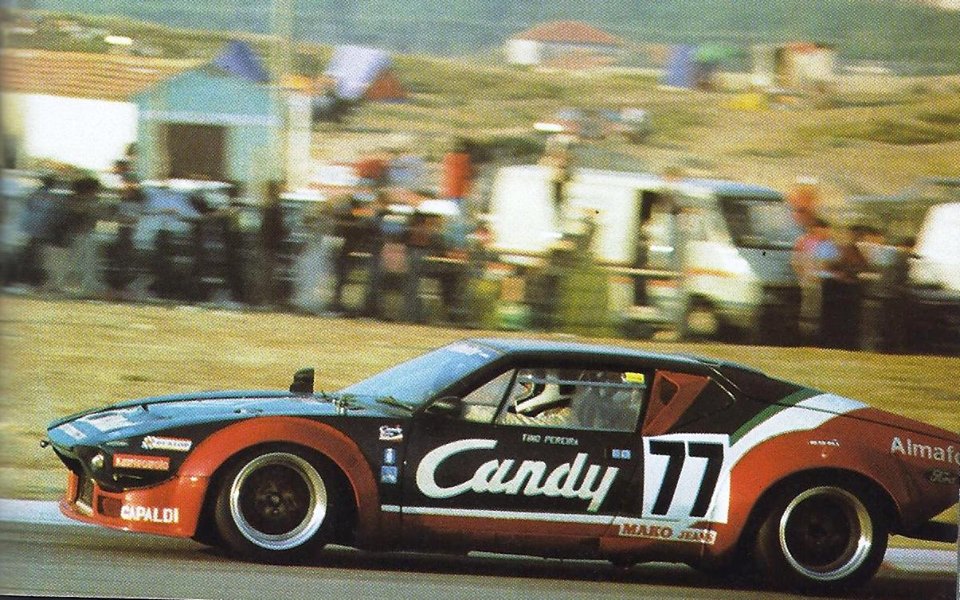
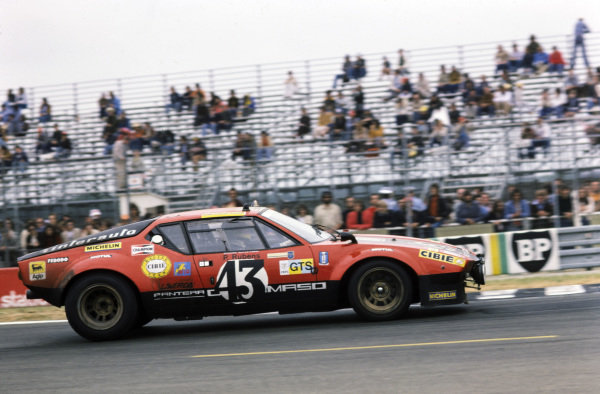
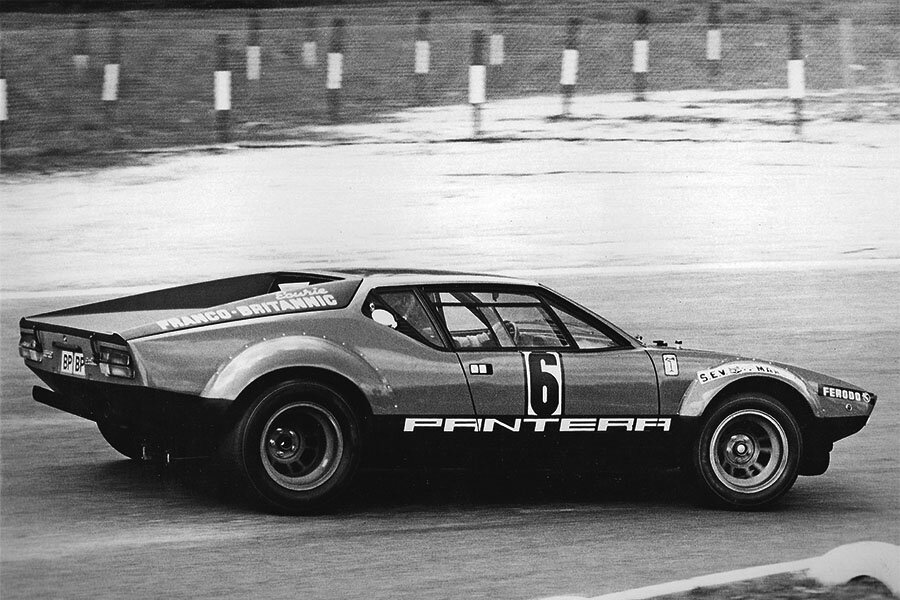
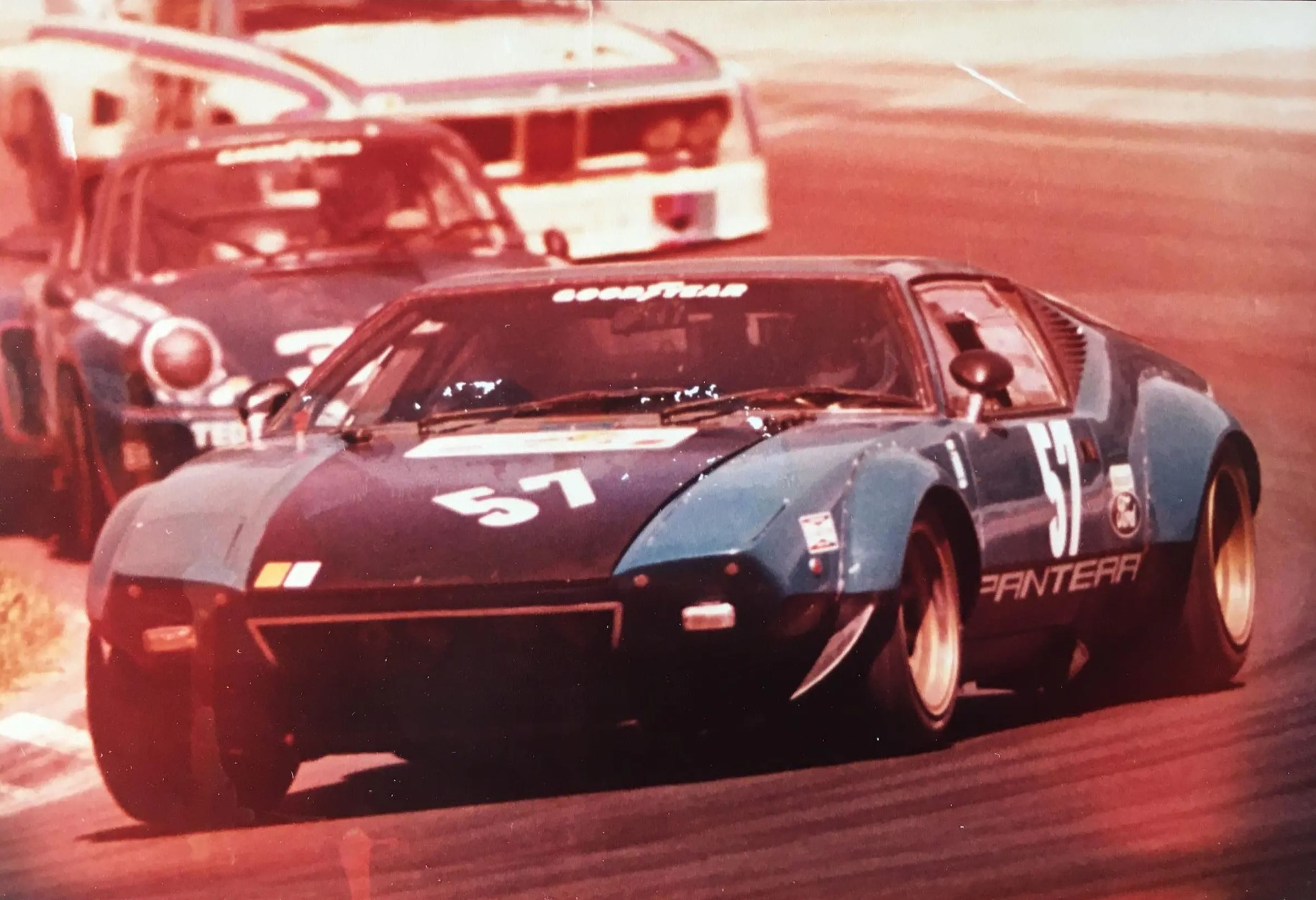
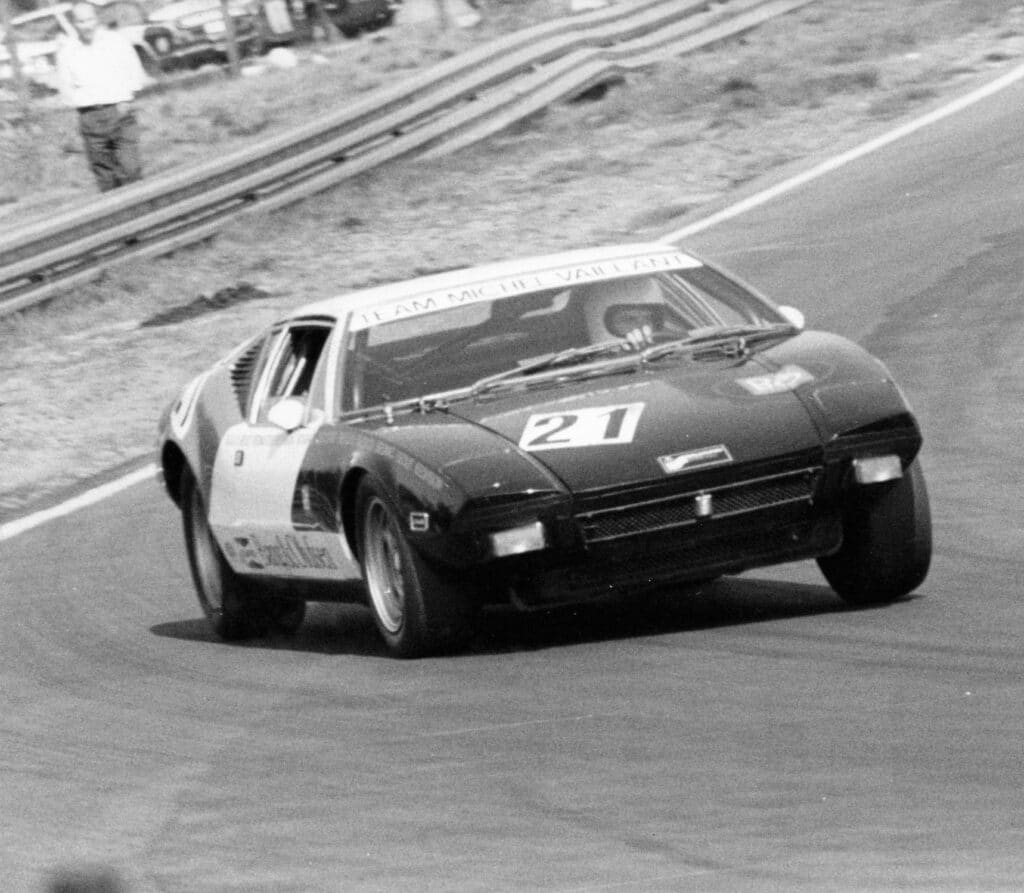
By 1972, the De Tomaso Pantera had already established itself as the most provocative disruptor in the supercar establishment, offering Italian styling and American horsepower for a fraction of the cost of a Ferrari. Yet, Alejandro de Tomaso, a man whose ambition was matched only by his tempestuous nature, knew that street credibility was ultimately forged on the race track. The standard Pantera was a formidable grand tourer, but to challenge the hegemony of the Porsche 911 S/T and the Ferrari 365 GTB/4 Daytona Competizione in the FIA’s GT category, something far more radical was required. The result was the 1972 De Tomaso Pantera Group 4, a machine that stripped away the veneer of civility to reveal a raw, unfiltered instrument of speed. It was a homologation special in the truest sense, a widened, lightened, and stiffened evolution designed to turn the Mulsanne Straight into a drag strip and the banking of Monza into a playground for American torque.
The technical transformation from road car to Group 4 racer was comprehensive and brutal. The first thing that struck observers was the stance. To accommodate massive magnesium Campagnolo wheels—10 inches wide at the front and a staggering 14 inches at the rear—the elegant lines penned by Tom Tjaarda were interrupted by aggressively flared fiberglass wheel arches. These bubble flares became the visual signature of the racing Pantera, a muscular mutation that would later influence the road-going GT5. Under the skin, the factory undertook a ruthless weight-saving program. The steel monocoque chassis was subjected to a drill press, with hundreds of holes bored into the frame rails and non-structural panels—a technique famously dubbed the “gruviera” (Swiss cheese) treatment. This, combined with aluminium doors, lids, and Plexiglas windows, brought the weight down to approximately 1,100 kg, a significant reduction from the road car’s 1,420 kg heft.
However, the soul of the Group 4 was its engine. The standard 351 Cleveland V8 was shipped from Detroit not to Modena, but to the workshops of Bud Moore Engineering in the United States, or tuned in-house by De Tomaso’s own wizards depending on the chassis. The result was a race-prepped monster featuring high-compression forged pistons, aggressive camshafts, and bespoke aluminium cylinder heads. Breathing through four massive Weber 48 IDA carburetors and exhaling through an unrestricted “spaghetti” exhaust system, the engine produced a reliable 500 to 560 bhp. This was not the lazy torque of a street cruiser; it was a violent, high-revving powerplant that required a heavy-duty ZF transaxle and an upgraded cooling system to survive the thermal stress of competition. To stop this missile, the standard Girling brakes were swapped for massive, ventilated Lockheed units, essential for hauling the car down from its 180 mph top speed.
The competition history of the Pantera Group 4 is a saga of blistering speed tempered by mechanical fragility. When the cars arrived at Le Mans in 1972, they were undeniably fast, clocking trap speeds that terrified the Porsche drivers. In the hands of privateers and factory-supported teams, the Pantera proved to be a formidable sprinter. It found particular success in the Italian GT Championship and events like the Giro d’Italia, where the sheer grunt of the V8 allowed it to dominate the hill climb and circuit stages. However, endurance racing exposed the car’s Achilles’ heel: weight and heat. Despite the “Swiss cheese” lightening, the Pantera was still heavier than the 911s, punishing its brakes and tires over long stints. Furthermore, the heat generated by the big V8 in the mid-engine bay often cooked ancillaries, leading to a high rate of attrition. Yet, when they held together, they were spectacular, offering a thunderous V8 soundtrack that stood in stark contrast to the scream of the V12s and the wail of the flat-sixes.
The legacy of the 1972 Pantera Group 4 extends far beyond its trophy cabinet. It was the catalyst for the evolution of the Pantera brand. The aggressive wide-body aesthetic, born out of necessity for racing rubber, proved so popular that it was adopted for the road-going GT5 and GT5-S models, defining the car’s look for the next two decades. Only a handful of genuine factory Group 4 cars were built—estimates vary between 8 and 14—making them exceptionally rare and coveted today. The Group 4 Pantera represents the moment De Tomaso stopped pretending to be a refined gentleman’s carriage and embraced its true nature: a brash, loud, and uncompromising street fighter that forced the European aristocracy to respect American horsepower.
Brand
Produced from
Portal
Vehicle category
Model line
Predecessor
Sucessor
Brand
Produced from
Portal
Vehicle category
Model line
Model generation
Predecessor
Sucessor
Submodel Overview
By 1972, the De Tomaso Pantera had already established itself as the most provocative disruptor in the supercar establishment, offering Italian styling and American horsepower for a fraction of the cost of a Ferrari. Yet, Alejandro de Tomaso, a man whose ambition was matched only by his tempestuous nature, knew that street credibility was ultimately forged on the race track. The standard Pantera was a formidable grand tourer, but to challenge the hegemony of the Porsche 911 S/T and the Ferrari 365 GTB/4 Daytona Competizione in the FIA’s GT category, something far more radical was required. The result was the 1972 De Tomaso Pantera Group 4, a machine that stripped away the veneer of civility to reveal a raw, unfiltered instrument of speed. It was a homologation special in the truest sense, a widened, lightened, and stiffened evolution designed to turn the Mulsanne Straight into a drag strip and the banking of Monza into a playground for American torque.
The technical transformation from road car to Group 4 racer was comprehensive and brutal. The first thing that struck observers was the stance. To accommodate massive magnesium Campagnolo wheels—10 inches wide at the front and a staggering 14 inches at the rear—the elegant lines penned by Tom Tjaarda were interrupted by aggressively flared fiberglass wheel arches. These bubble flares became the visual signature of the racing Pantera, a muscular mutation that would later influence the road-going GT5. Under the skin, the factory undertook a ruthless weight-saving program. The steel monocoque chassis was subjected to a drill press, with hundreds of holes bored into the frame rails and non-structural panels—a technique famously dubbed the “gruviera” (Swiss cheese) treatment. This, combined with aluminium doors, lids, and Plexiglas windows, brought the weight down to approximately 1,100 kg, a significant reduction from the road car’s 1,420 kg heft.
However, the soul of the Group 4 was its engine. The standard 351 Cleveland V8 was shipped from Detroit not to Modena, but to the workshops of Bud Moore Engineering in the United States, or tuned in-house by De Tomaso’s own wizards depending on the chassis. The result was a race-prepped monster featuring high-compression forged pistons, aggressive camshafts, and bespoke aluminium cylinder heads. Breathing through four massive Weber 48 IDA carburetors and exhaling through an unrestricted “spaghetti” exhaust system, the engine produced a reliable 500 to 560 bhp. This was not the lazy torque of a street cruiser; it was a violent, high-revving powerplant that required a heavy-duty ZF transaxle and an upgraded cooling system to survive the thermal stress of competition. To stop this missile, the standard Girling brakes were swapped for massive, ventilated Lockheed units, essential for hauling the car down from its 180 mph top speed.
The competition history of the Pantera Group 4 is a saga of blistering speed tempered by mechanical fragility. When the cars arrived at Le Mans in 1972, they were undeniably fast, clocking trap speeds that terrified the Porsche drivers. In the hands of privateers and factory-supported teams, the Pantera proved to be a formidable sprinter. It found particular success in the Italian GT Championship and events like the Giro d’Italia, where the sheer grunt of the V8 allowed it to dominate the hill climb and circuit stages. However, endurance racing exposed the car’s Achilles’ heel: weight and heat. Despite the “Swiss cheese” lightening, the Pantera was still heavier than the 911s, punishing its brakes and tires over long stints. Furthermore, the heat generated by the big V8 in the mid-engine bay often cooked ancillaries, leading to a high rate of attrition. Yet, when they held together, they were spectacular, offering a thunderous V8 soundtrack that stood in stark contrast to the scream of the V12s and the wail of the flat-sixes.
The legacy of the 1972 Pantera Group 4 extends far beyond its trophy cabinet. It was the catalyst for the evolution of the Pantera brand. The aggressive wide-body aesthetic, born out of necessity for racing rubber, proved so popular that it was adopted for the road-going GT5 and GT5-S models, defining the car’s look for the next two decades. Only a handful of genuine factory Group 4 cars were built—estimates vary between 8 and 14—making them exceptionally rare and coveted today. The Group 4 Pantera represents the moment De Tomaso stopped pretending to be a refined gentleman’s carriage and embraced its true nature: a brash, loud, and uncompromising street fighter that forced the European aristocracy to respect American horsepower.
Tech Specs
Technical Specifications
Tech Specs
Technical Specifications
Engine
01
03
Internal combustion engine
Configuration
Ford 351 Cleveland (Boss 351 prepared), V8 - 90º
Location
Mid, longitudinally mounted
Construction
Cast iron block, Aluminium (Bud Moore) or Cast Iron (4V Closed Chamber) heads
Displacement (cc)
5,763 cc
Displacement (cu in)
351.7 cu in
Compression
12.0:1
Bore x Stroke
101.6 mm x 88.9 mm
Valvetrain
2 valves per cylinder, OHV
Fuel feed
1 x Holley R4779 750 CFM 4-barrel carburetor or 4x Weber 48 IDA
Lubrication
Wet sump
Aspiration
Naturally aspirated
Output
Power (hp)
~500 hp
Power (kW)
~373 kW
Max power at
7,000 RPM
Torque (Nm)
600 Nm
Torque (ft lbs)
443 ft lbs
Max torque at
5,500 RPM
Drivetrain
02
03
Chassis
Type
Monocoque (lightened with drilled holes)
Material
Steel
Body
Material
Steel with Aluminium doors/hood/decklid and Fibreglass wheel arch flares
Transmission
Gearbox
ZF 5DS-25/2, 5-speed manual
Drive
Rear Wheel Drive
Suspension
Front
Independent, double wishbones, coil springs over Koni adjustable dampers, adjustable anti-roll bar
Rear
Independent, double wishbones, coil springs over Koni adjustable dampers, adjustable anti-roll bar
Steering
Type
Rack and pinion
Brakes
Front
Lockheed ventilated discs Ø294 mm, 4-piston calipers
Rear
Lockheed ventilated discs Ø284 mm, 4-piston calipers
Wheels
Front
10" x 15" (Campagnolo Cast Magnesium)
Rear
14" x 15" (Campagnolo Cast Magnesium)
Tires
Front
24.5/10.0-15
Rear
26.5/14.0-15
Dimensions and performance
03
03
Dimensions
Length (mm)
4,270 mm
Length (in)
168.1 in
Width (mm)
1,970 mm
Width (in)
77.6 in
Height (mm)
1,100 mm
Height (in)
43.3 in
Wheelbase (mm)
2,515 mm
Wheelbase (in)
99.0 in
Weight (kg)
1,100 kg
Weight (lbs)
2,425 lbs
Performance
Power to weight
~0.45 hp/kg
Top speed (km/h)
~290 km/h
Top speed (mph)
~180 mph
0-100 km/h (0-60 mph)
~4.3 s