
Ferrari F12tdf ‘tour de france’
Brand
Produced from
Portal
Vehicle category
Model line
Predecessor
Successor
Submodel Overview
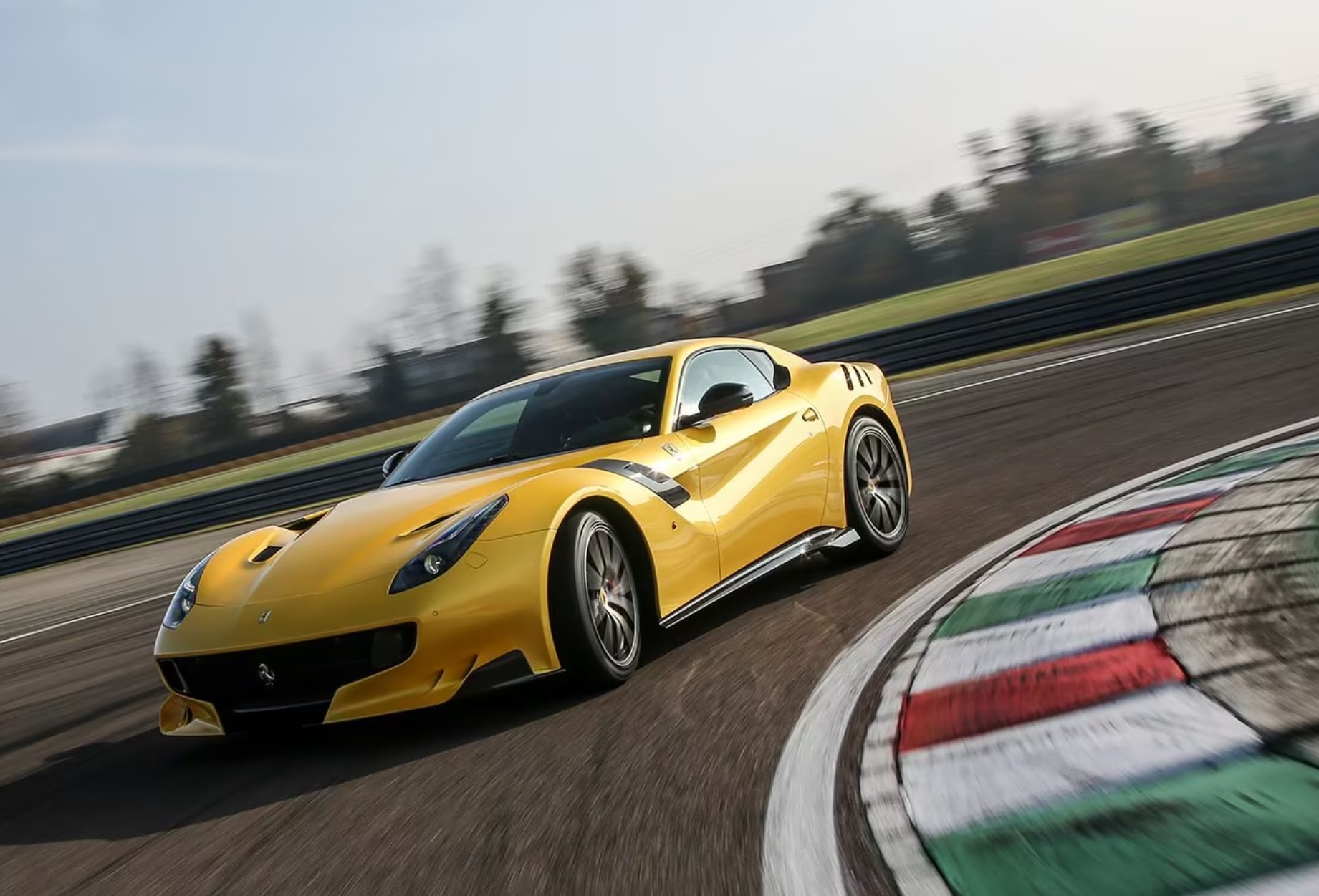
In October 2015, Ferrari unleashed a machine that felt less like a grand tourer and more like a barely contained explosion. The Ferrari F12tdf was not simply a faster version of the acclaimed F12berlinetta; it was a radical reimagining of the front-engine V12 concept, a car named in honor of the legendary Tour de France Automobile endurance races of the 1950s and 60s. This was a brave nomenclature, invoking the spirit of the glorious 250 GT ‘TdF’ that dominated the French roads, and applying it to a modern supercar that was, by all accounts, bordering on the psychotic. While its spiritual predecessor, the 599 GTO, was a brute in a tuxedo, the F12tdf was a race car that had seemingly lost its number plates. It arrived at a time when the Lamborghini Aventador SV was shouting loudly about lap times and aerodynamics, forcing Maranello to prove that the front-mid-engine layout was not just a relic of the past, but the ultimate configuration for driver engagement.
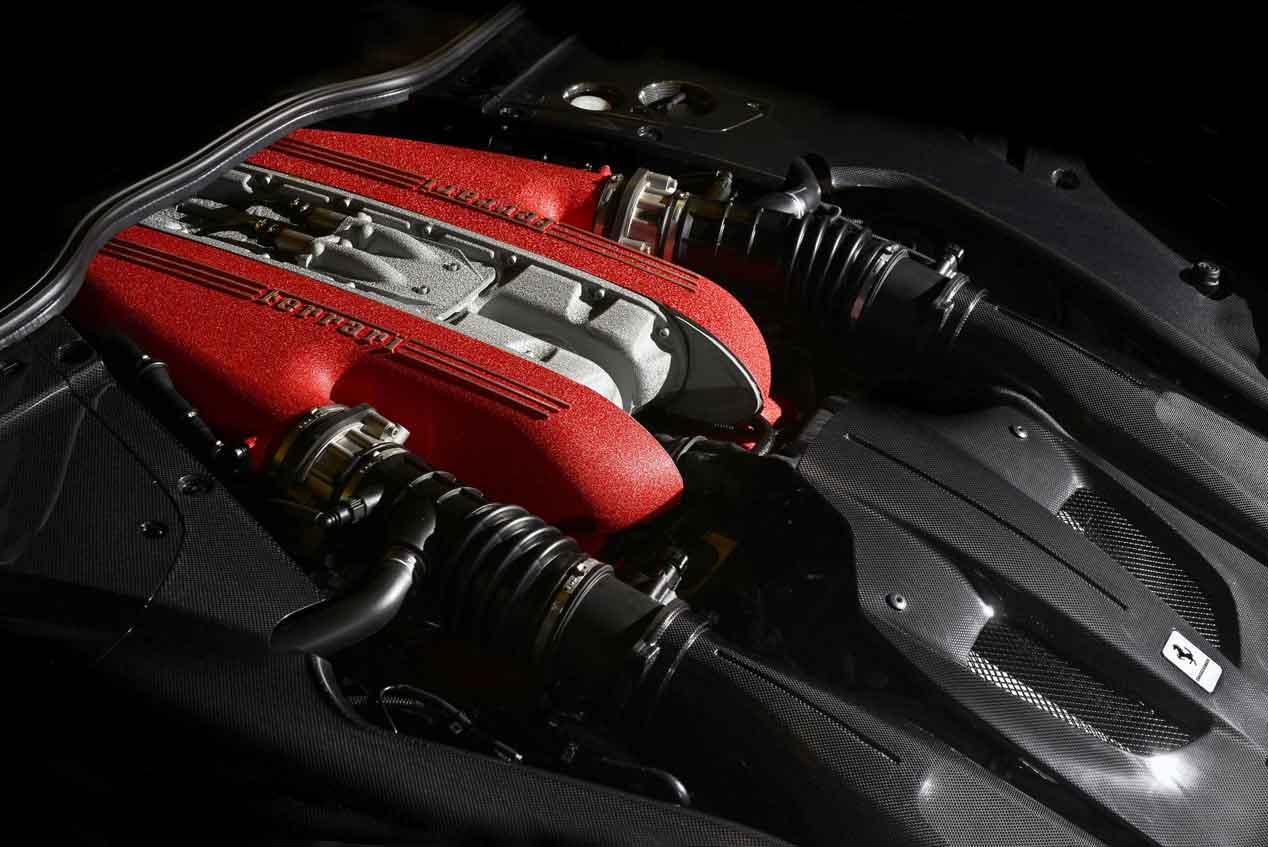
From a technical perspective, the F12tdf was an exercise in obsessiveness. The engineers at Maranello took the already potent 6.3-litre V12 and fitted it with race-derived mechanical tappets and variable-geometry intake trumpets—technology lifted directly from Formula 1. This allowed the redline to soar to a hysterical 8,900 rpm, producing 769 bhp (780 cv) and 520 lb-ft of torque. The transmission, a dual-clutch F1 unit, was re-geared with shorter ratios (6% shorter) and programmed to shift 30% faster on upshifts and 40% faster on downshifts, delivering a relentless, machine-gun assault on the senses. However, the true genius—and terror—of the tdf lay in its chassis dynamics. To eliminate understeer, Ferrari fitted massive 275-section front tires (up from 255). This created a front end with such ferocious bite that the rear axle struggled to keep up. To counter this, Ferrari introduced the Passo Corto Virtuale (Virtual Short Wheelbase), an active rear-wheel steering system. It was a necessary innovation to tame a car that was shed of 110kg of weight and draped in aggressive carbon-fibre aerodynamic aids that generated 230kg of downforce at 124 mph, nearly double that of the standard car.
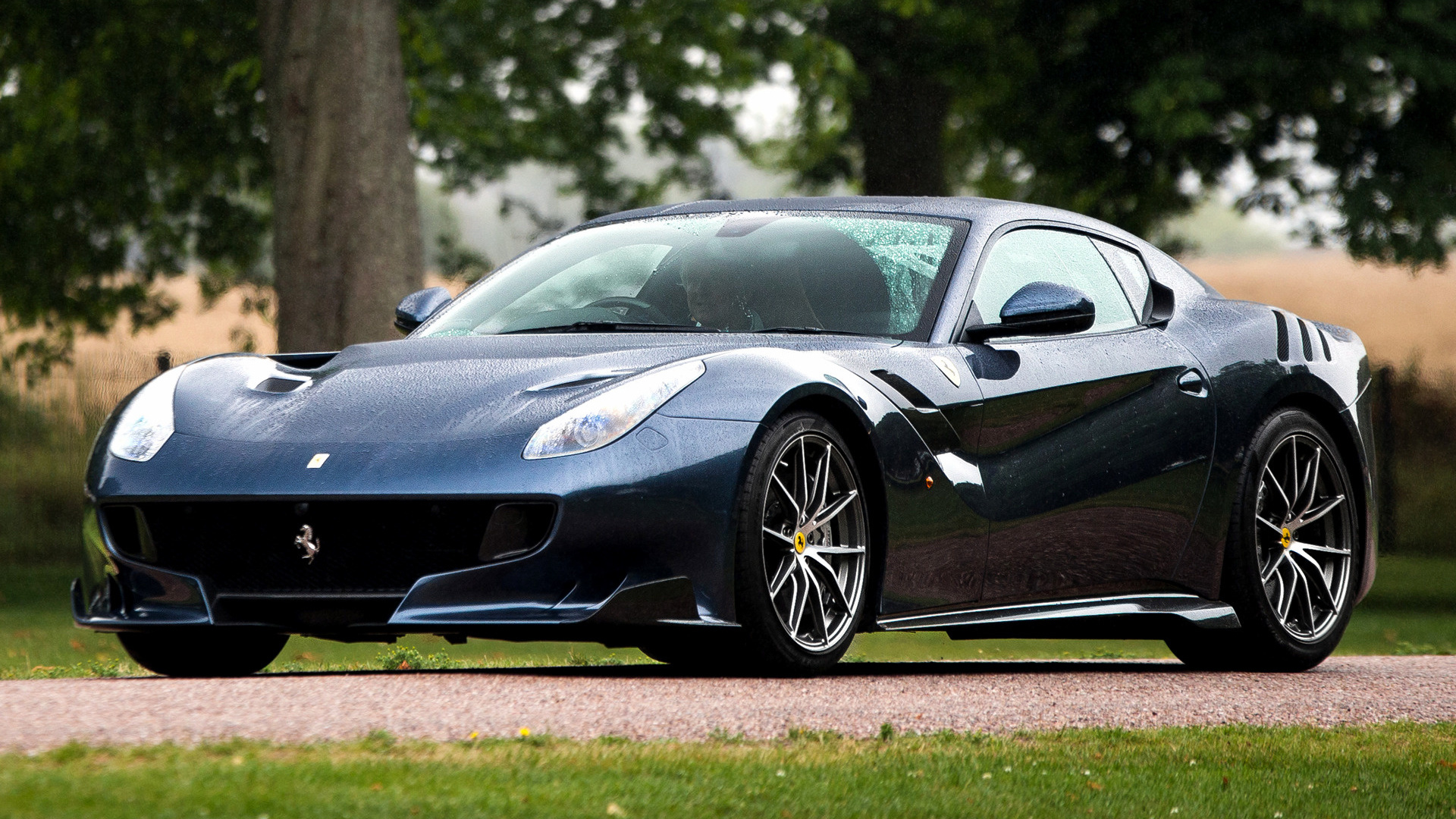
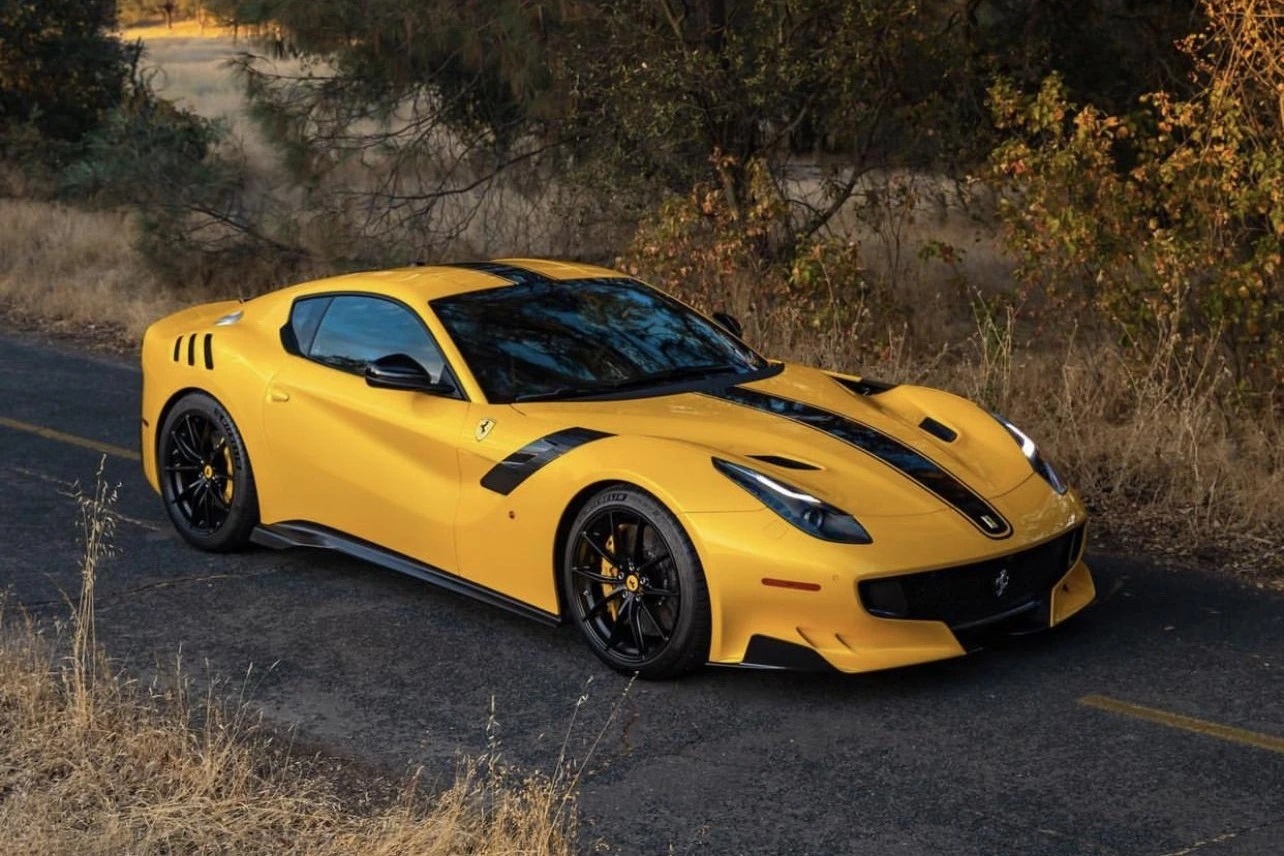
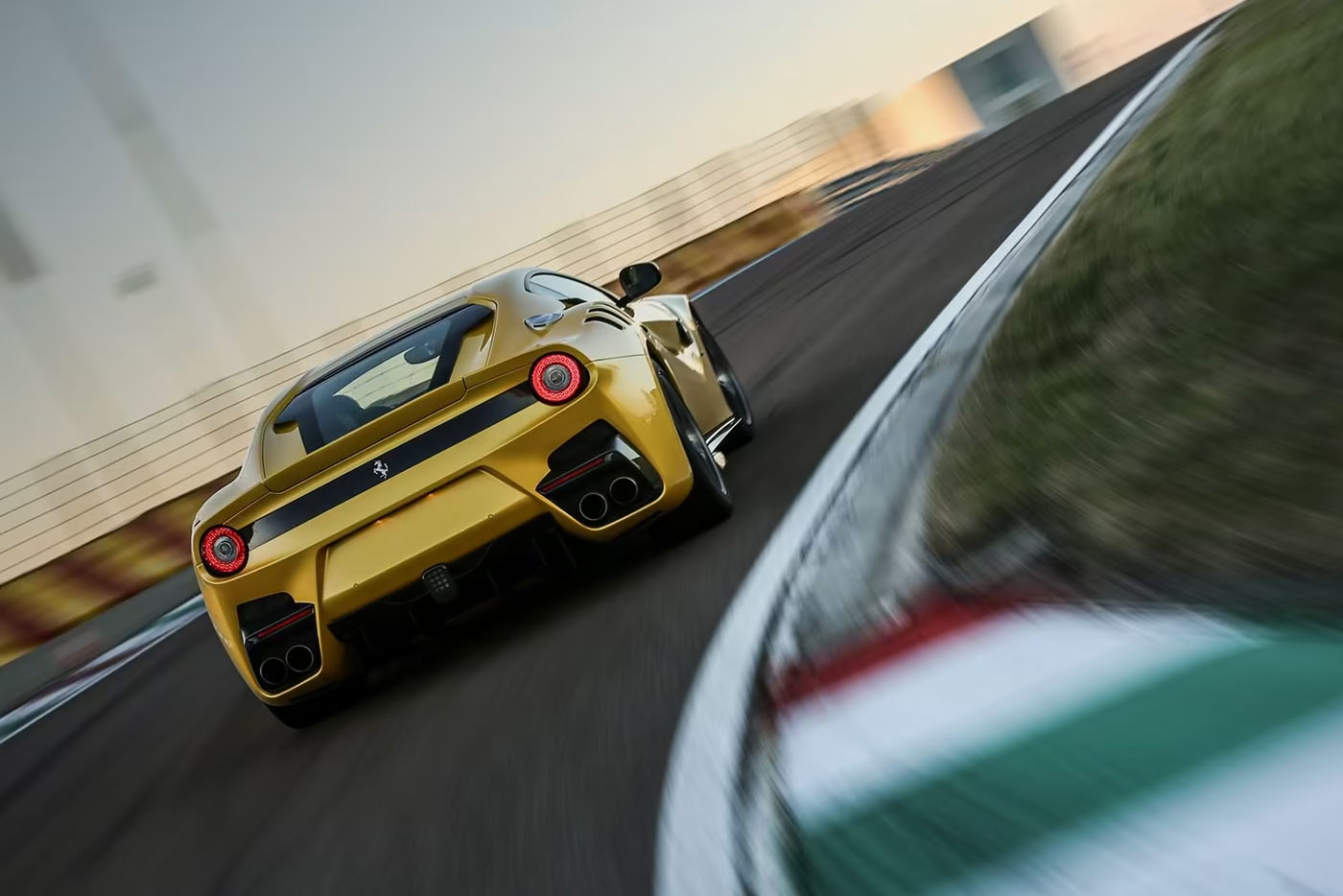
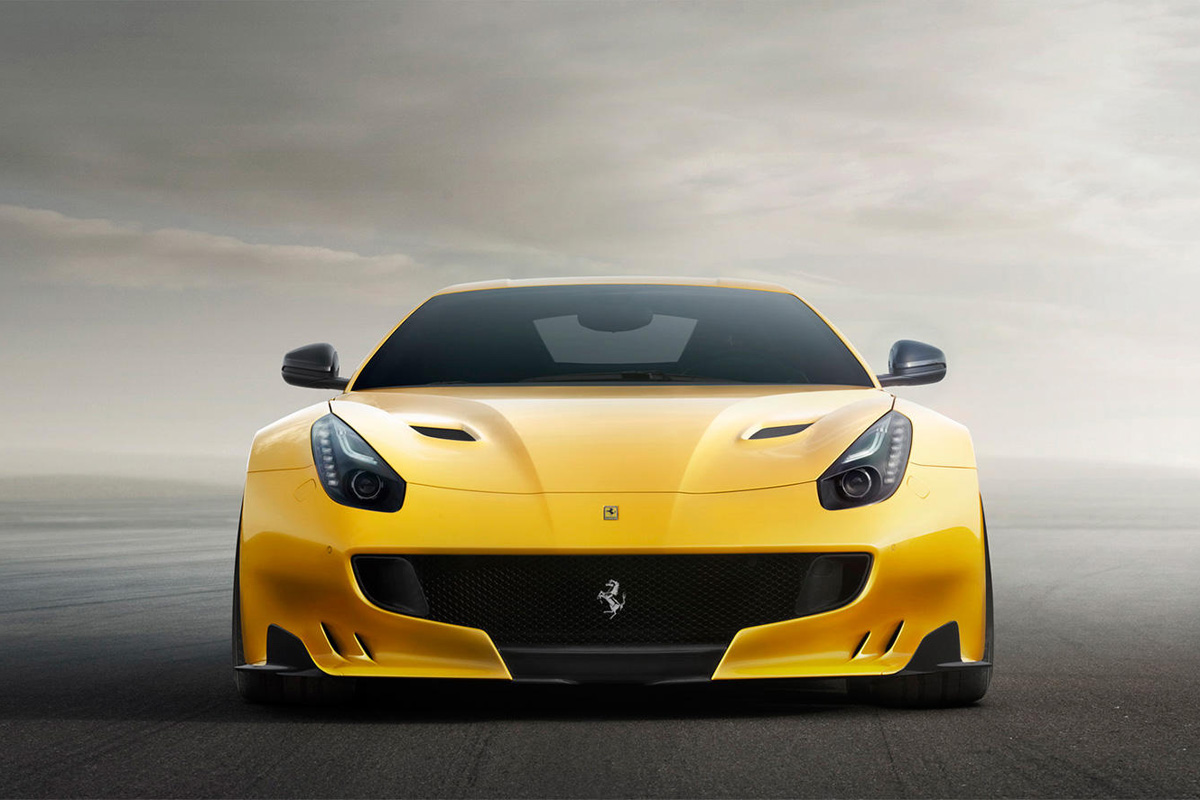
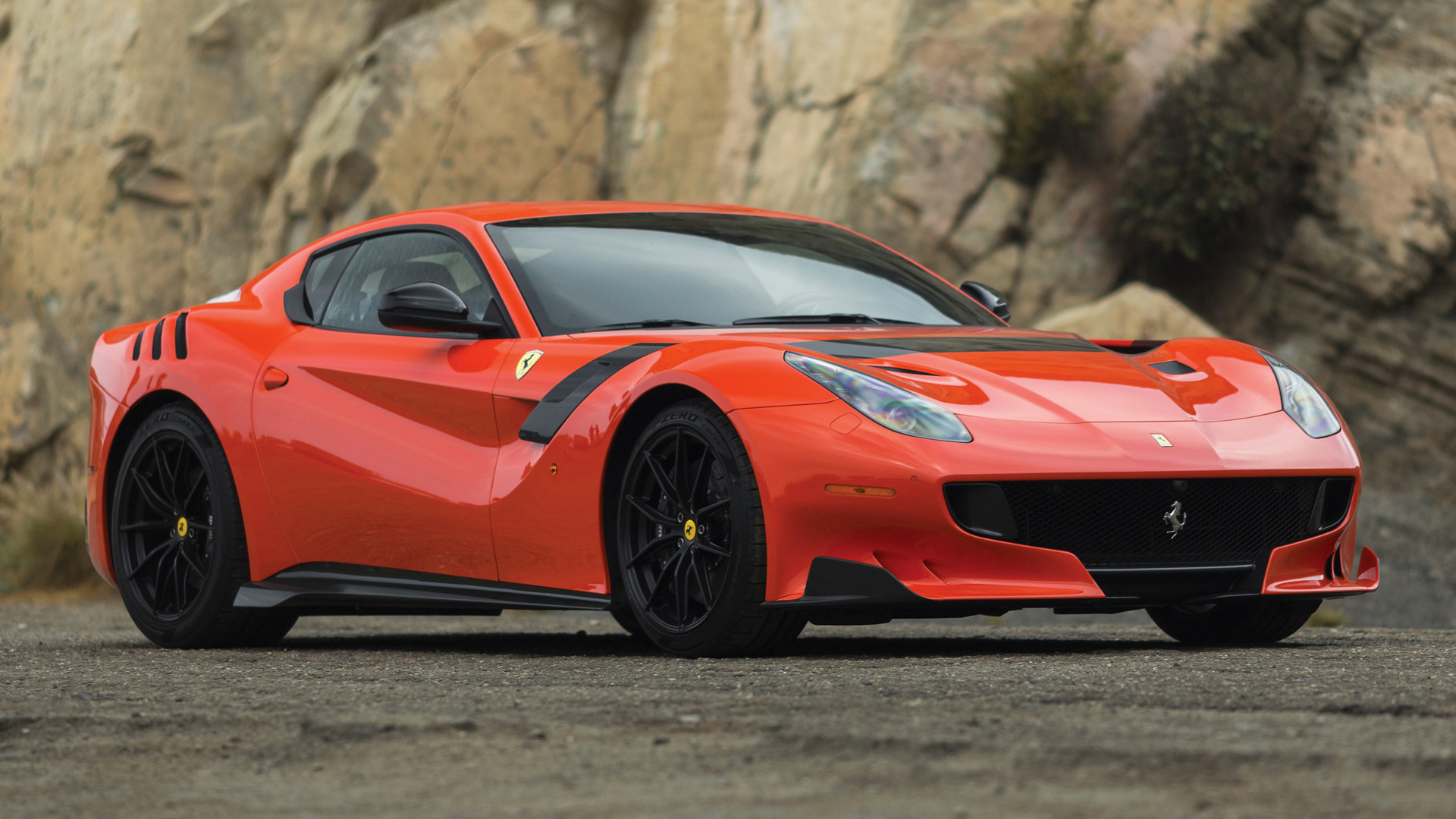
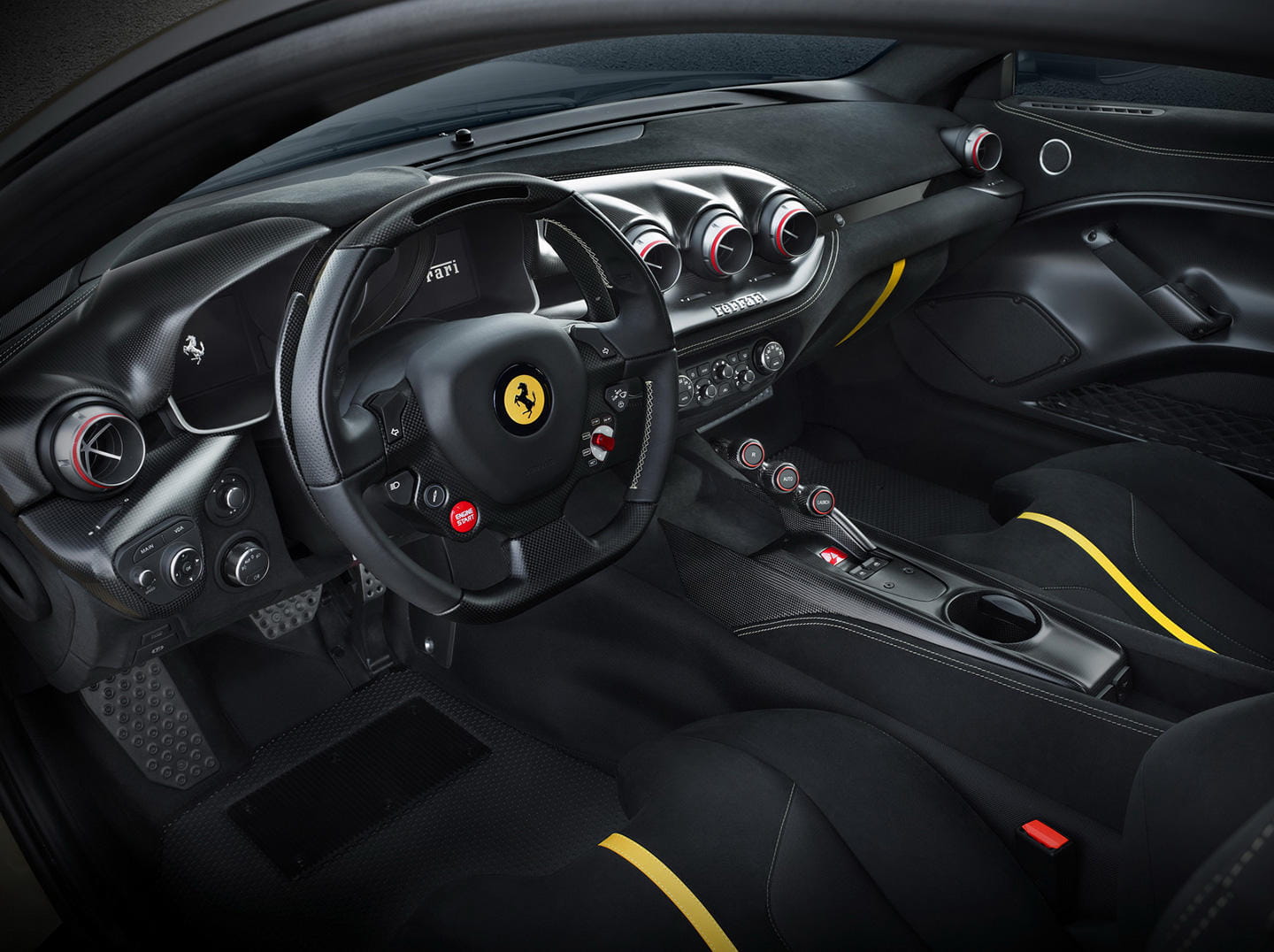
Visually, the F12tdf was a drastic departure from the elegance of the standard Berlinetta. It was a brutalist remix of the original design. The delicate “Aero Bridge” of the front fenders was reworked into bare carbon fiber, the rear fenders were gouged with “shark gill” vents reminiscent of the classic 250s, and the rear spoiler was lengthened and raised. It looked like a car that had been carved by the wind on the Mulsanne Straight. Inside, the luxury was stripped away. The carpets were replaced by patterned aluminium floor plates, the door cards were single sheets of carbon fiber, and the glovebox was deleted entirely to save weight. It was a cockpit that smelled of adhesive and Alcantara, a clear signal that this car was not intended for cruising to the Riviera, but for attacking the Nordschleife.
Upon its release, the F12tdf instantly became a legend, not just for its limited production run of 799 units—which sold out immediately to Ferrari’s most loyal VIP clients—but for its driving characteristics. Early reviews were a mix of awe and genuine fear. The car was described as “spiky” and “hyper-agile,” a machine that rotated so quickly it felt like a mid-engine racer. It demanded total concentration; turn off the Manettino aids, and the tdf would bite the unskilled driver without hesitation. This reputation for danger only fueled its mystique. It was seen as the last of the “wild” Ferraris before the electronics became too intrusive and the particulate filters muted the sound. Commercially, it was a goldmine, with secondary market values doubling the sticker price almost overnight. It became a cultural icon of the “naturally aspirated resistance,” a rolling protest against the turbocharging of the 488 era.
The legacy of the Ferrari F12tdf is secured as one of the greatest automotive achievements of the 21st century. It serves as the bridge between the 599 GTO and the 812 Competizione, yet it possesses a raw, unpolished character that its successor lacks. The 812 Competizione is faster and arguably easier to drive, but the F12tdf offers a sensory overload—a vibration, a noise, and a sharpness—that is unique. It occupies a place in the pantheon alongside the Porsche 911 GT3 RS 4.0 and the McLaren 675LT as a pinnacle of driver-focused engineering. It proved that a front-engine car could be just as sharp, just as fast, and just as thrilling as any mid-engine hypercar. The F12tdf is not just a car named after a race; it is a car that feels like it is constantly competing, a frenetic, screaming masterpiece that represents the very soul of Enzo Ferrari’s “engine-first” philosophy.
Brand
Produced from
Portal
Vehicle category
Model line
Predecessor
Sucessor
Brand
Produced from
Portal
Vehicle category
Model line
Model generation
Predecessor
Sucessor
Submodel Overview
In October 2015, Ferrari unleashed a machine that felt less like a grand tourer and more like a barely contained explosion. The Ferrari F12tdf was not simply a faster version of the acclaimed F12berlinetta; it was a radical reimagining of the front-engine V12 concept, a car named in honor of the legendary Tour de France Automobile endurance races of the 1950s and 60s. This was a brave nomenclature, invoking the spirit of the glorious 250 GT ‘TdF’ that dominated the French roads, and applying it to a modern supercar that was, by all accounts, bordering on the psychotic. While its spiritual predecessor, the 599 GTO, was a brute in a tuxedo, the F12tdf was a race car that had seemingly lost its number plates. It arrived at a time when the Lamborghini Aventador SV was shouting loudly about lap times and aerodynamics, forcing Maranello to prove that the front-mid-engine layout was not just a relic of the past, but the ultimate configuration for driver engagement.
From a technical perspective, the F12tdf was an exercise in obsessiveness. The engineers at Maranello took the already potent 6.3-litre V12 and fitted it with race-derived mechanical tappets and variable-geometry intake trumpets—technology lifted directly from Formula 1. This allowed the redline to soar to a hysterical 8,900 rpm, producing 769 bhp (780 cv) and 520 lb-ft of torque. The transmission, a dual-clutch F1 unit, was re-geared with shorter ratios (6% shorter) and programmed to shift 30% faster on upshifts and 40% faster on downshifts, delivering a relentless, machine-gun assault on the senses. However, the true genius—and terror—of the tdf lay in its chassis dynamics. To eliminate understeer, Ferrari fitted massive 275-section front tires (up from 255). This created a front end with such ferocious bite that the rear axle struggled to keep up. To counter this, Ferrari introduced the Passo Corto Virtuale (Virtual Short Wheelbase), an active rear-wheel steering system. It was a necessary innovation to tame a car that was shed of 110kg of weight and draped in aggressive carbon-fibre aerodynamic aids that generated 230kg of downforce at 124 mph, nearly double that of the standard car.
Visually, the F12tdf was a drastic departure from the elegance of the standard Berlinetta. It was a brutalist remix of the original design. The delicate “Aero Bridge” of the front fenders was reworked into bare carbon fiber, the rear fenders were gouged with “shark gill” vents reminiscent of the classic 250s, and the rear spoiler was lengthened and raised. It looked like a car that had been carved by the wind on the Mulsanne Straight. Inside, the luxury was stripped away. The carpets were replaced by patterned aluminium floor plates, the door cards were single sheets of carbon fiber, and the glovebox was deleted entirely to save weight. It was a cockpit that smelled of adhesive and Alcantara, a clear signal that this car was not intended for cruising to the Riviera, but for attacking the Nordschleife.
Upon its release, the F12tdf instantly became a legend, not just for its limited production run of 799 units—which sold out immediately to Ferrari’s most loyal VIP clients—but for its driving characteristics. Early reviews were a mix of awe and genuine fear. The car was described as “spiky” and “hyper-agile,” a machine that rotated so quickly it felt like a mid-engine racer. It demanded total concentration; turn off the Manettino aids, and the tdf would bite the unskilled driver without hesitation. This reputation for danger only fueled its mystique. It was seen as the last of the “wild” Ferraris before the electronics became too intrusive and the particulate filters muted the sound. Commercially, it was a goldmine, with secondary market values doubling the sticker price almost overnight. It became a cultural icon of the “naturally aspirated resistance,” a rolling protest against the turbocharging of the 488 era.
The legacy of the Ferrari F12tdf is secured as one of the greatest automotive achievements of the 21st century. It serves as the bridge between the 599 GTO and the 812 Competizione, yet it possesses a raw, unpolished character that its successor lacks. The 812 Competizione is faster and arguably easier to drive, but the F12tdf offers a sensory overload—a vibration, a noise, and a sharpness—that is unique. It occupies a place in the pantheon alongside the Porsche 911 GT3 RS 4.0 and the McLaren 675LT as a pinnacle of driver-focused engineering. It proved that a front-engine car could be just as sharp, just as fast, and just as thrilling as any mid-engine hypercar. The F12tdf is not just a car named after a race; it is a car that feels like it is constantly competing, a frenetic, screaming masterpiece that represents the very soul of Enzo Ferrari’s “engine-first” philosophy.
Tech Specs
Technical Specifications
Tech Specs
Technical Specifications
Engine
01
03
Internal combustion engine
Configuration
Ferrari F140 FG, V12 - 65º
Location
Front-mid, longitudinally mounted
Construction
Aluminium alloy block and heads
Displacement (cc)
6,262 cc
Displacement (cu in)
382.1 cu in
Compression
13.5:1
Bore x Stroke
94.0 mm x 75.2 mm
Valvetrain
4 valves per cylinder, DOHC (Variable valve timing)
Fuel feed
High-pressure Gasoline Direct Injection (GDI)
Lubrication
Dry sump
Aspiration
Naturally aspirated (Variable geometry intake trumpets)
Output
Power (hp)
769 hp
Power (kW)
574 kW
Max power at
8,500 RPM
Torque (Nm)
705 Nm
Torque (ft lbs)
520 ft lbs
Max torque at
6,750 RPM
Drivetrain
02
03
Chassis
Type
Spaceframe
Material
Aluminium (12 different alloys used)
Body
Material
Aluminium and Carbon fibre (Bumpers, underbody, door panels)
Transmission
Gearbox
F1 DCT, 7-speed dual-clutch automated manual
Drive
Rear Wheel Drive (with E-Diff 3)
Suspension
Front
Independent, double wishbones, coil springs, SCM-E magnetorheological dampers, anti-roll bar
Rear
Independent, multi-link, coil springs, SCM-E magnetorheological dampers, Virtual Short Wheelbase (PCV - Rear-wheel steering)
Steering
Type
Rack and pinion, hydraulic power assisted
Brakes
Front
Ventilated carbon ceramic discs (CCM) Ø398 mm, 6-piston calipers (LaFerrari derived)
Rear
Ventilated carbon ceramic discs (CCM) Ø360 mm, 4-piston calipers (LaFerrari derived)
Wheels
Front
10" x 20" (Lightweight forged alloy)
Rear
11.5" x 20" (Lightweight forged alloy)
Tires
Front
275/35 ZR20 (Pirelli P Zero Corsa)
Rear
315/35 ZR20 (Pirelli P Zero Corsa)
Dimensions and performance
03
03
Dimensions
Length (mm)
4,656 mm
Length (in)
183.3 in
Width (mm)
1,961 mm
Width (in)
77.2 in
Height (mm)
1,273 mm
Height (in)
50.1 in
Wheelbase (mm)
2,720 mm
Wheelbase (in)
107.1 in
Weight (kg)
1,415 kg
Weight (lbs)
3,120 lbs
Performance
Power to weight
~0.54 hp/kg
Top speed (km/h)
>340 km/h
Top speed (mph)
>211 mph
0-100 km/h (0-60 mph)
2.9 s