
Ford Capri RS 2600 Group 2



Brand
Produced from
Portal
Vehicle category
Model line
Model generation
Predecessor
Successor
Submodel Overview
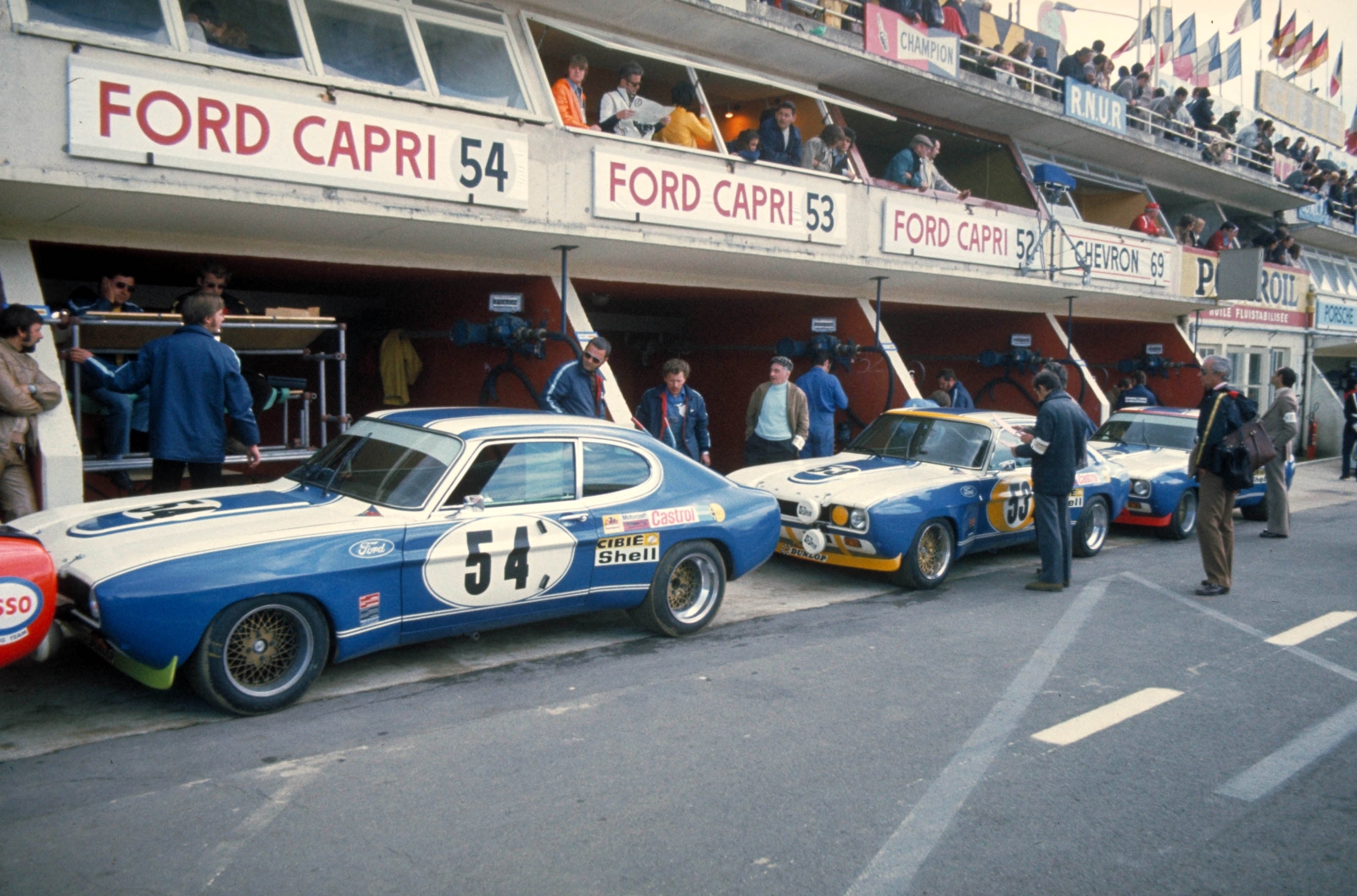
The year 1971 represented a tectonic shift in the hierarchy of European touring car racing, a moment when the blue-collar aspiration of Ford collided violently with the aristocratic engineering of BMW. For years, the Touring Car category had been a playground for nimble Alfas and Lotus Cortinas, but as the 1970s dawned, the displacement wars began. Ford, eager to inject a dose of genuine performance pedigree into its “car you always promised yourself,” unveiled the Capri RS2600. It was a homologation special designed with a singular, ruthless purpose: to destroy the BMW 2800 CS. While the road-going RS2600 was a formidable grand tourer, the Group 2 competition variant was a stripped-out, featherweight brawler that transformed the image of Ford of Europe from a purveyor of family saloons into a dominant force in motorsport. Under the stewardship of Jochen Neerpasch—before his high-profile defection to establish BMW M—the Ford Works team in Cologne turned the Capri into the weapon that would define the European Touring Car Championship (ETCC) for the first half of the decade.
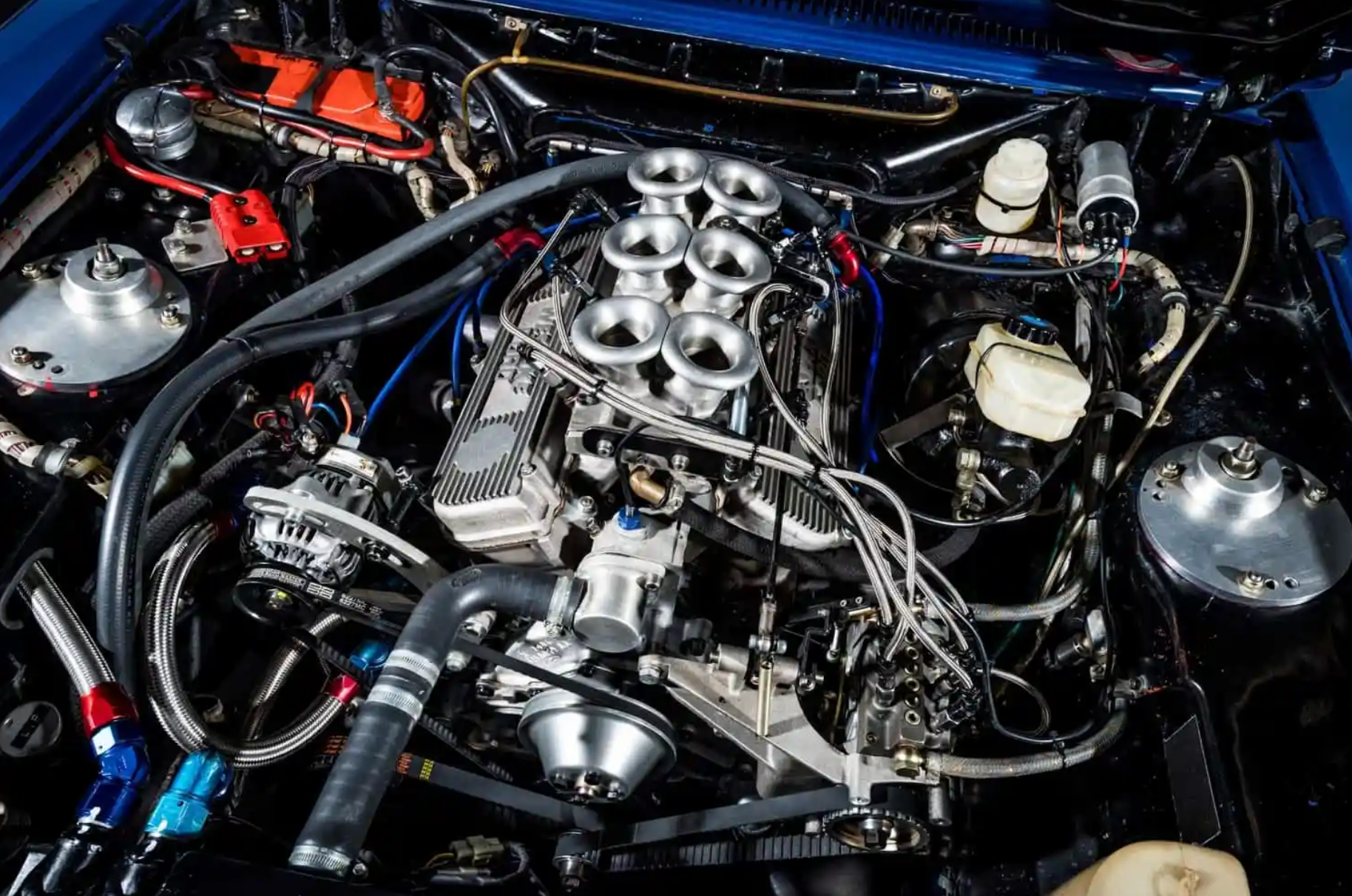
The technical alchemy required to turn a standard Capri into a Group 2 winner was substantial. The heart of the RS2600 was the “Cologne” V6, a cast-iron lump that was robust but hardly exotic in its standard form. However, Ford commissioned the British cylinder head wizard Harry Weslake to work his magic. Weslake created bespoke alloy cylinder heads that transformed the engine’s breathing, coupled with a Kugelfischer mechanical fuel injection system that replaced the standard carburetors. The result was a dry-sumped, 2.9-litre (bored out from 2.6) powerplant that produced a screaming 290 horsepower at 8,500 rpm. This engine was a revelation, offering a broad torque curve that the smaller-displacement BMWs and Alfas could not match.
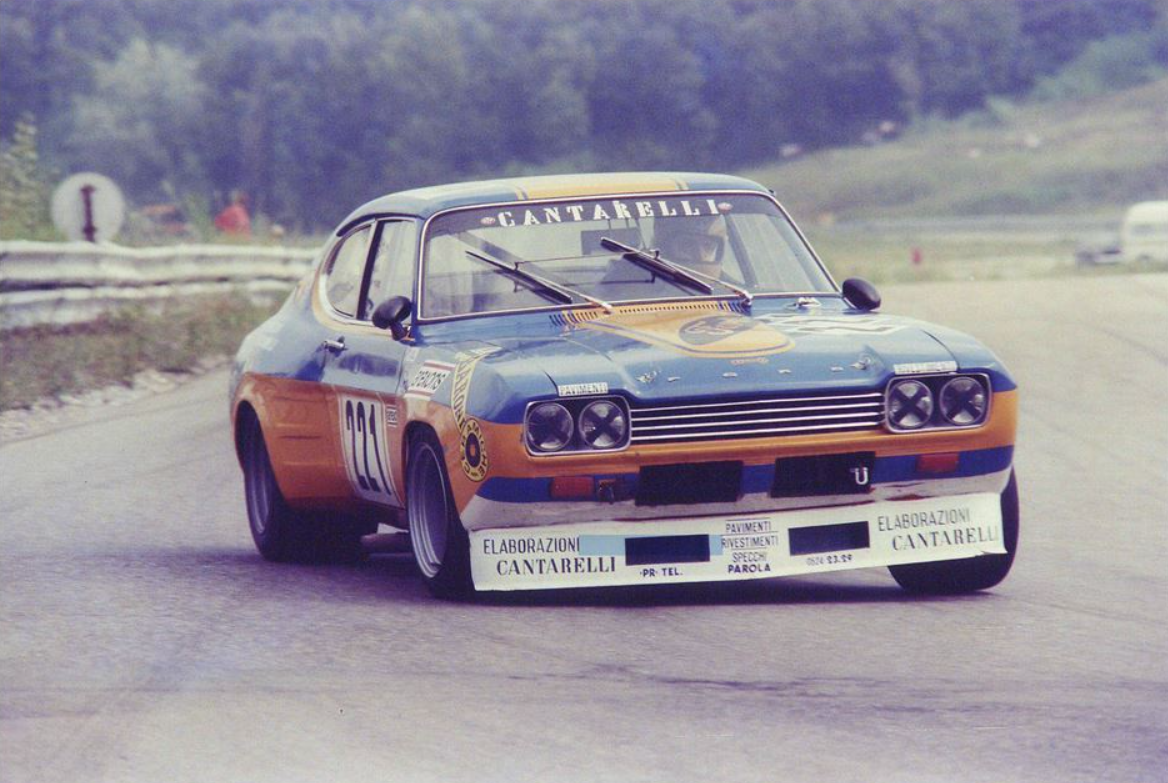
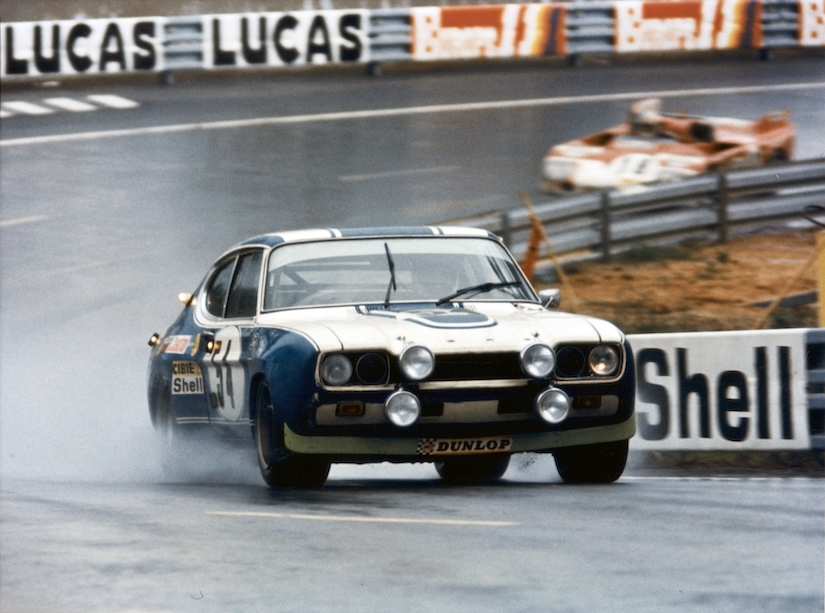
To harness this power, the chassis underwent a radical diet. The steel doors, bonnet, and boot lid were replaced with fiberglass panels, and the glass windows were swapped for Plexiglas, bringing the weight down to a featherlight 900 kg. The suspension retained the MacPherson strut front and live axle rear layout, but it was heavily modified with Bilstein gas dampers, revised geometry, and a Watts linkage at the rear to tame the axle tramp that plagued the road cars. Visually, the Group 2 RS2600 was a thug in a tailored suit; it lacked the gargantuan wings of the later “Batmobile” era, relying instead on flared wheel arches to cover the massive slick tires and a modest front air dam to keep the nose planted at 150 mph.
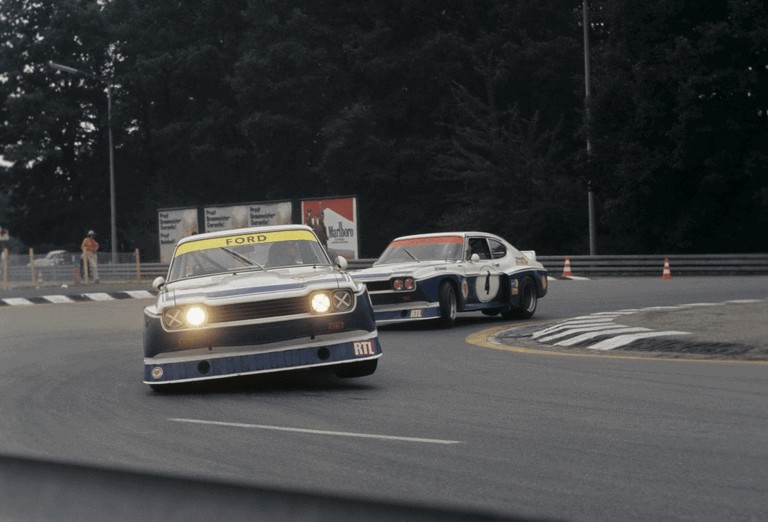
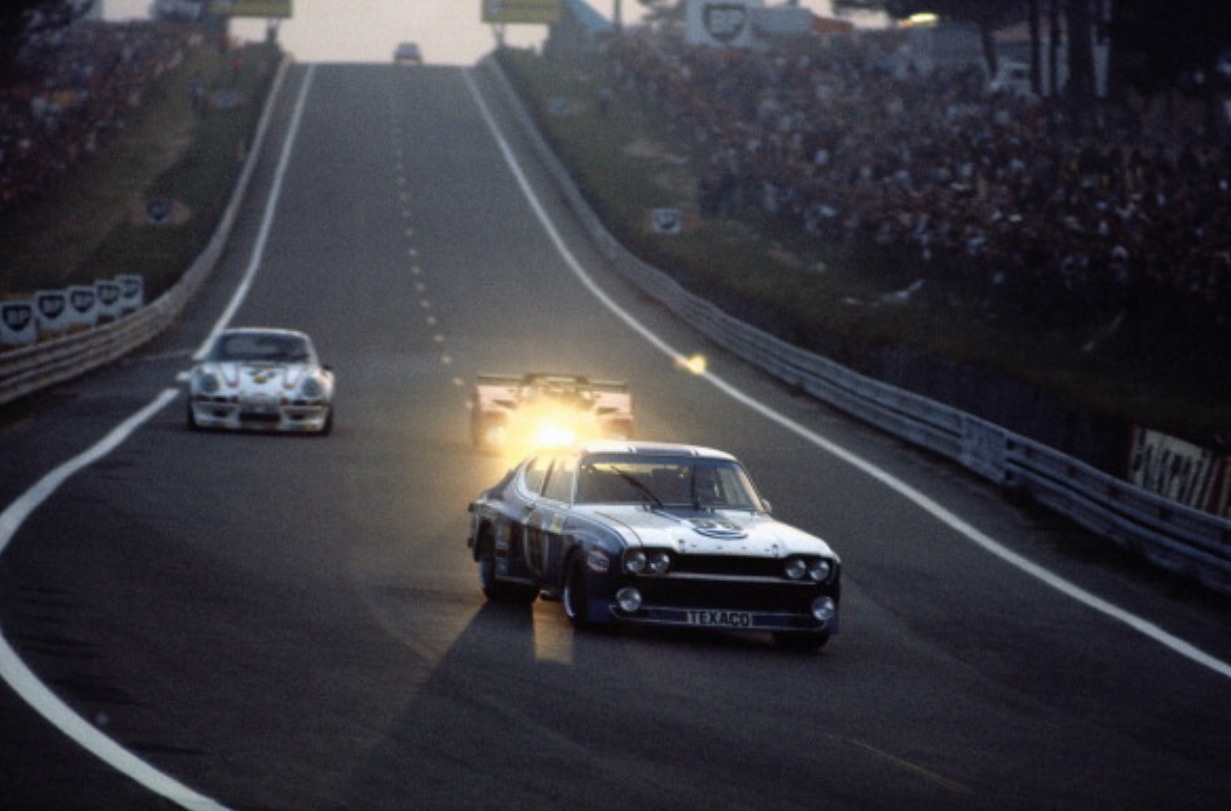
The impact of the RS2600 on the track was absolute. In the 1971 ETCC season, the Ford Works team unleashed a blitzkrieg. Dieter Glemser, driving the factory RS2600, secured the Drivers’ Championship, leaving the BMWs and Alfa Romeos gasping in his wake. The car’s combination of reliability, raw speed, and the brilliant driving of Glemser and his teammate Jochen Mass proved unbeatable. The RS2600 didn’t just win sprints; it dominated endurance events. Its crowning glory came at the 1971 24 Hours of Spa, where Glemser and Alex Soler-Roig took the overall victory, a feat that solidified the Capri’s reputation as a car that could take a beating for twenty-four hours and ask for more. This dominance continued into 1972, with Jochen Mass taking the title and the Capri securing a class win (and 10th overall) at the 24 Hours of Le Mans, proving that a pushrod-based V6 could stand toe-to-toe with the finest machinery Europe had to offer.
The legacy of the 1971 Capri RS2600 Group 2 is foundational. It was the car that forced BMW to respond with the 3.0 CSL, initiating the greatest touring car rivalry of the 1970s. It established the “RS” (Rallye Sport) moniker as a badge of genuine high performance, a lineage that continues to this day. More importantly, it changed the perception of the Capri forever. No longer just a Cortina in a party dress, the RS2600 proved that the Capri was a serious, race-winning thoroughbred. It laid the groundwork for the later, more extreme RS3100 and the turbocharged Zakspeed monsters, but the RS2600 remains the purest expression of the breed—a naturally aspirated, fuel-injected, lightweight giant-killer that taught the aristocracy to respect the Blue Oval.
Brand
Produced from
Portal
Vehicle category
Model line
Predecessor
Sucessor
Brand
Produced from
Portal
Vehicle category
Model line
Model generation
Predecessor
Sucessor
Submodel Overview
The year 1971 represented a tectonic shift in the hierarchy of European touring car racing, a moment when the blue-collar aspiration of Ford collided violently with the aristocratic engineering of BMW. For years, the Touring Car category had been a playground for nimble Alfas and Lotus Cortinas, but as the 1970s dawned, the displacement wars began. Ford, eager to inject a dose of genuine performance pedigree into its “car you always promised yourself,” unveiled the Capri RS2600. It was a homologation special designed with a singular, ruthless purpose: to destroy the BMW 2800 CS. While the road-going RS2600 was a formidable grand tourer, the Group 2 competition variant was a stripped-out, featherweight brawler that transformed the image of Ford of Europe from a purveyor of family saloons into a dominant force in motorsport. Under the stewardship of Jochen Neerpasch—before his high-profile defection to establish BMW M—the Ford Works team in Cologne turned the Capri into the weapon that would define the European Touring Car Championship (ETCC) for the first half of the decade.
The technical alchemy required to turn a standard Capri into a Group 2 winner was substantial. The heart of the RS2600 was the “Cologne” V6, a cast-iron lump that was robust but hardly exotic in its standard form. However, Ford commissioned the British cylinder head wizard Harry Weslake to work his magic. Weslake created bespoke alloy cylinder heads that transformed the engine’s breathing, coupled with a Kugelfischer mechanical fuel injection system that replaced the standard carburetors. The result was a dry-sumped, 2.9-litre (bored out from 2.6) powerplant that produced a screaming 290 horsepower at 8,500 rpm. This engine was a revelation, offering a broad torque curve that the smaller-displacement BMWs and Alfas could not match.
To harness this power, the chassis underwent a radical diet. The steel doors, bonnet, and boot lid were replaced with fiberglass panels, and the glass windows were swapped for Plexiglas, bringing the weight down to a featherlight 900 kg. The suspension retained the MacPherson strut front and live axle rear layout, but it was heavily modified with Bilstein gas dampers, revised geometry, and a Watts linkage at the rear to tame the axle tramp that plagued the road cars. Visually, the Group 2 RS2600 was a thug in a tailored suit; it lacked the gargantuan wings of the later “Batmobile” era, relying instead on flared wheel arches to cover the massive slick tires and a modest front air dam to keep the nose planted at 150 mph.
The impact of the RS2600 on the track was absolute. In the 1971 ETCC season, the Ford Works team unleashed a blitzkrieg. Dieter Glemser, driving the factory RS2600, secured the Drivers’ Championship, leaving the BMWs and Alfa Romeos gasping in his wake. The car’s combination of reliability, raw speed, and the brilliant driving of Glemser and his teammate Jochen Mass proved unbeatable. The RS2600 didn’t just win sprints; it dominated endurance events. Its crowning glory came at the 1971 24 Hours of Spa, where Glemser and Alex Soler-Roig took the overall victory, a feat that solidified the Capri’s reputation as a car that could take a beating for twenty-four hours and ask for more. This dominance continued into 1972, with Jochen Mass taking the title and the Capri securing a class win (and 10th overall) at the 24 Hours of Le Mans, proving that a pushrod-based V6 could stand toe-to-toe with the finest machinery Europe had to offer.
The legacy of the 1971 Capri RS2600 Group 2 is foundational. It was the car that forced BMW to respond with the 3.0 CSL, initiating the greatest touring car rivalry of the 1970s. It established the “RS” (Rallye Sport) moniker as a badge of genuine high performance, a lineage that continues to this day. More importantly, it changed the perception of the Capri forever. No longer just a Cortina in a party dress, the RS2600 proved that the Capri was a serious, race-winning thoroughbred. It laid the groundwork for the later, more extreme RS3100 and the turbocharged Zakspeed monsters, but the RS2600 remains the purest expression of the breed—a naturally aspirated, fuel-injected, lightweight giant-killer that taught the aristocracy to respect the Blue Oval.
Tech Specs
Technical Specifications
Tech Specs
Technical Specifications
Engine
01
03
Internal combustion engine
Configuration
Ford Cologne V6 (Weslake "Works" specification), V6 - 60º
Location
Front, longitudinally mounted
Construction
Cast iron block, Weslake aluminium alloy cylinder heads
Displacement (cc)
2,994 cc
Displacement (cu in)
182.7 cu in
Compression
11.5:1
Bore x Stroke
95.8 mm x 69.0 mm (Bore significantly enlarged from stock 90mm)
Valvetrain
2 valves per cylinder, OHV (Pushrods, racing rockers)
Fuel feed
Kugelfischer mechanical fuel injection
Lubrication
Dry sump
Aspiration
Naturally aspirated
Output
Power (hp)
320 hp
Power (kW)
239 kW
Max power at
7,600 RPM
Torque (Nm)
325 Nm
Torque (ft lbs)
240 ft lbs
Max torque at
5,800 RPM
Drivetrain
02
03
Chassis
Type
Monocoque
Material
Steel
Body
Material
Steel shell with fibreglass hood, boot lid, doors, and wide fender flares
Transmission
Gearbox
ZF 5DS-25/2, 5-speed manual
Drive
Rear Wheel Drive (ZF Limited Slip Differential, 75-90% lock)
Suspension
Front
Independent, MacPherson struts, Bilstein gas dampers, adjustable anti-roll bar, magnesium uprights
Rear
Live axle (Atlas), single leaf springs (composite or steel), trailing arms, Watts linkage, Bilstein gas dampers
Steering
Type
Rack and pinion
Brakes
Front
Ventilated discs Ø298 mm, 4-piston calipers
Rear
Ventilated discs Ø267 mm, 2-piston calipers
Wheels
Front
10" x 16"
Rear
13" x 16"
Tires
Front
265/600-16
Rear
300/625-16
Dimensions and performance
03
03
Dimensions
Length (mm)
4,240 mm
Length (in)
166.9 in
Width (mm)
1,780 mm
Width (in)
70.1 in
Height (mm)
1,160 mm
Height (in)
45.7 in
Wheelbase (mm)
2,560 mm
Wheelbase (in)
100.8 in
Weight (kg)
930 kg
Weight (lbs)
2,050 lbs
Performance
Power to weight
~0.34 hp/kg
Top speed (km/h)
270 km/h
Top speed (mph)
168 mph
0-100 km/h (0-60 mph)
~4.6 s