
Jaguar E-Type ‘Low Drag Coupé’
Brand
Produced from
Portal
Vehicle category
Model line
Model generation
Predecessor
Successor
Submodel Overview
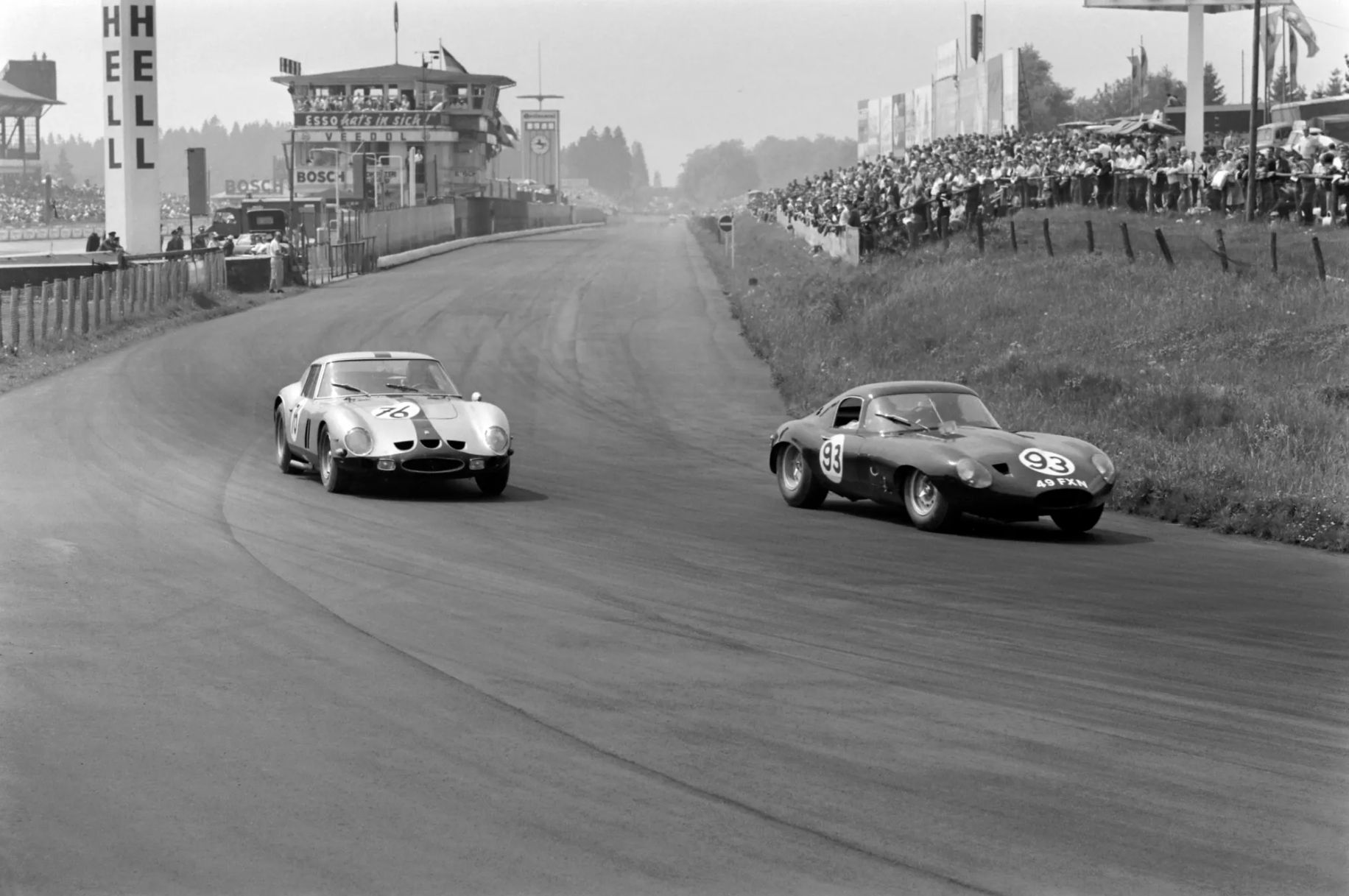
If the standard Jaguar E-Type was a sensation, a cultural hammer blow that redefined the sports car market, the 1963 ‘Low Drag Coupé’ was a pure, mathematical distillation of speed, conceived in the wind tunnel of Malcolm Sayer’s mind and forged in the fires of competition. By 1963, the glorious days of the D-Type’s dominance at Le Mans were fading into memory, and the standard steel-bodied E-Type, for all its beauty, was proving too heavy and aerodynamically inefficient to strictly challenge the new hegemony of the Ferrari 250 GTO on the Mulsanne Straight. Jaguar’s “unofficial” racing department knew that to beat Maranello, they didn’t just need less weight; they needed less air. The result was not a production model, nor truly a single uniform batch of cars, but an ethos of aerodynamic optimization that culminated in arguably the most beautiful and purposeful British GT car ever constructed. The Low Drag Coupé (LDC) was the apotheosis of the E-Type lineage, a machine that shed the road car’s grand touring pretentions to become a screaming, aluminium-skinned missile designed for one singular purpose: to exceed 170 mph and break the Italian stranglehold on endurance racing.
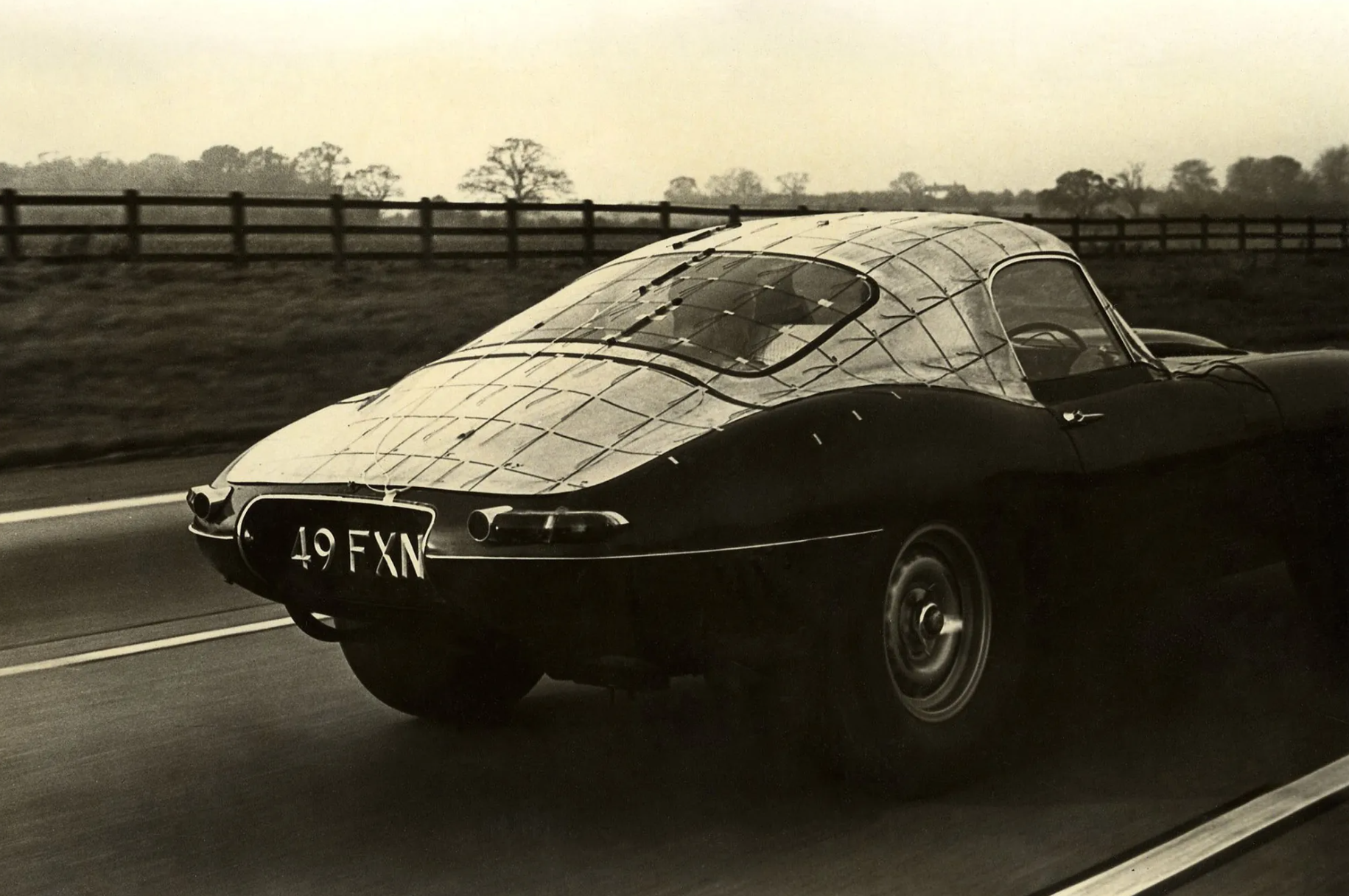
Technically, the Low Drag Coupé was a radical departure from the showroom floor, sharing only its basic footprint and suspension geometry with the road car. The bodywork was the star; constructed entirely from paper-thin aluminium alloy, it was masterminded by Malcolm Sayer, an aerodynamicist who loathed the term “stylist.” Sayer applied complex mathematical curves to smooth the airflow over the cockpit, extending the roofline into a teardrop fastback that integrated seamlessly with the tail. The rear hatch was welded shut, the windscreen was raked more steeply, and the glass was flush-fitting to eliminate turbulence. Beneath this shimmering skin lay a chassis that was a hybrid of art and violence. The standard subframes were retained but stiffened, while the suspension—independent all around—used stiffer torsion bars and specialized dampers to cope with the immense cornering forces generated by the latest Dunlop racing tires.
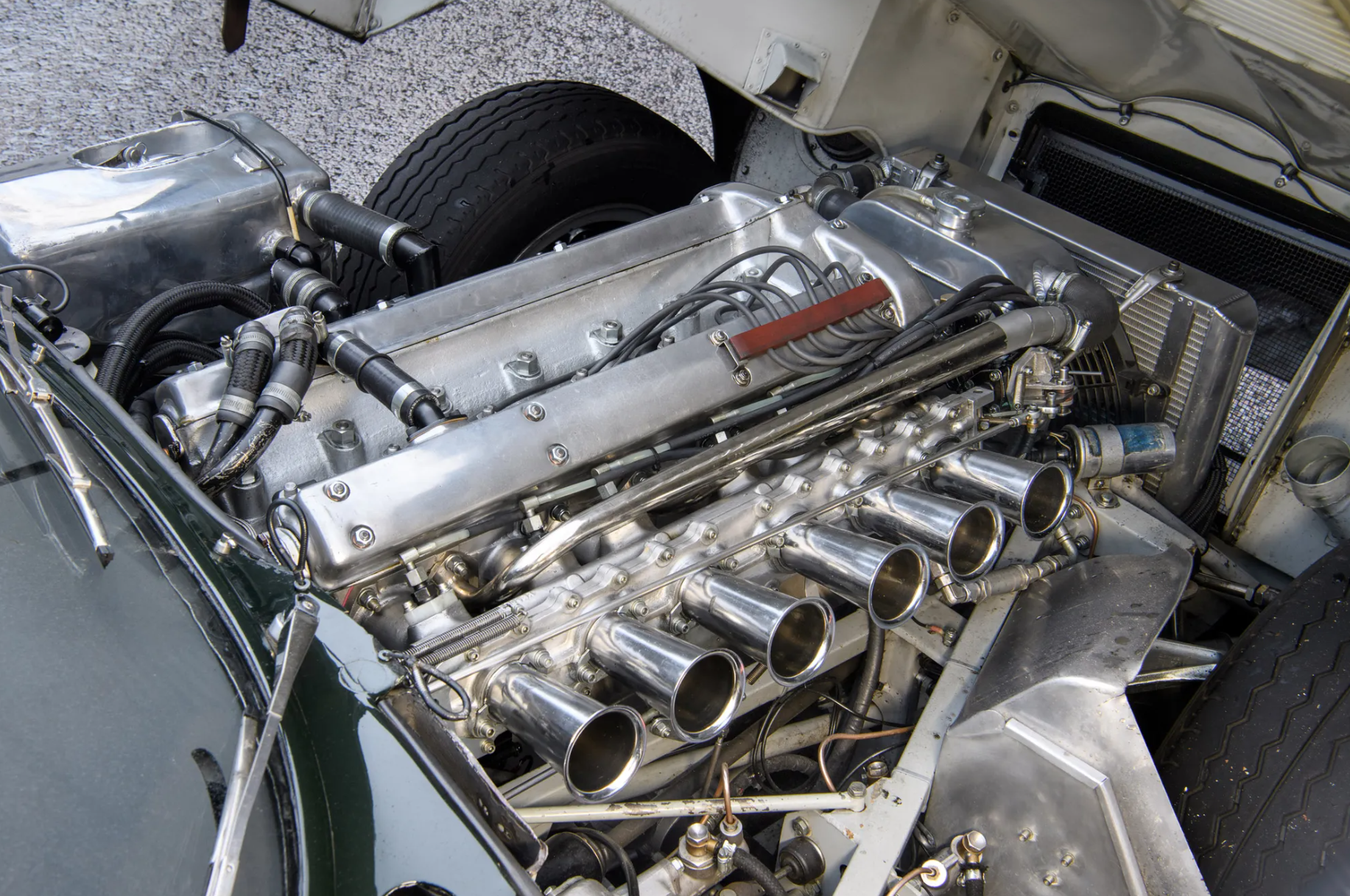
The heart of the Low Drag was the ultimate evolution of the XK straight-six. Displacing 3.8 litres, the engine was fitted with the legendary “Wide Angle” cylinder head, a piece of casting exotica with massive valves and altered port geometry. While standard E-Types made do with SU carburetors, the LDC breathed through a Lucas mechanical fuel injection system, its trumpets often visible through the bonnet scoop. It also utilized a dry-sump lubrication system to prevent oil starvation during high-G cornering. This powerplant produced over 320 brake horsepower—a figure that, when combined with a wet weight of under 1,000 kg, gave the car a power-to-weight ratio that terrified its drivers. Power was routed through a ZF five-speed gearbox (a stronger, more precise unit than the Jaguar Moss box) to a limited-slip differential. The interior was a harsh environment of bare metal, drilled pedals, and heat, a stark contrast to the leather-clad luxury of the road cars.
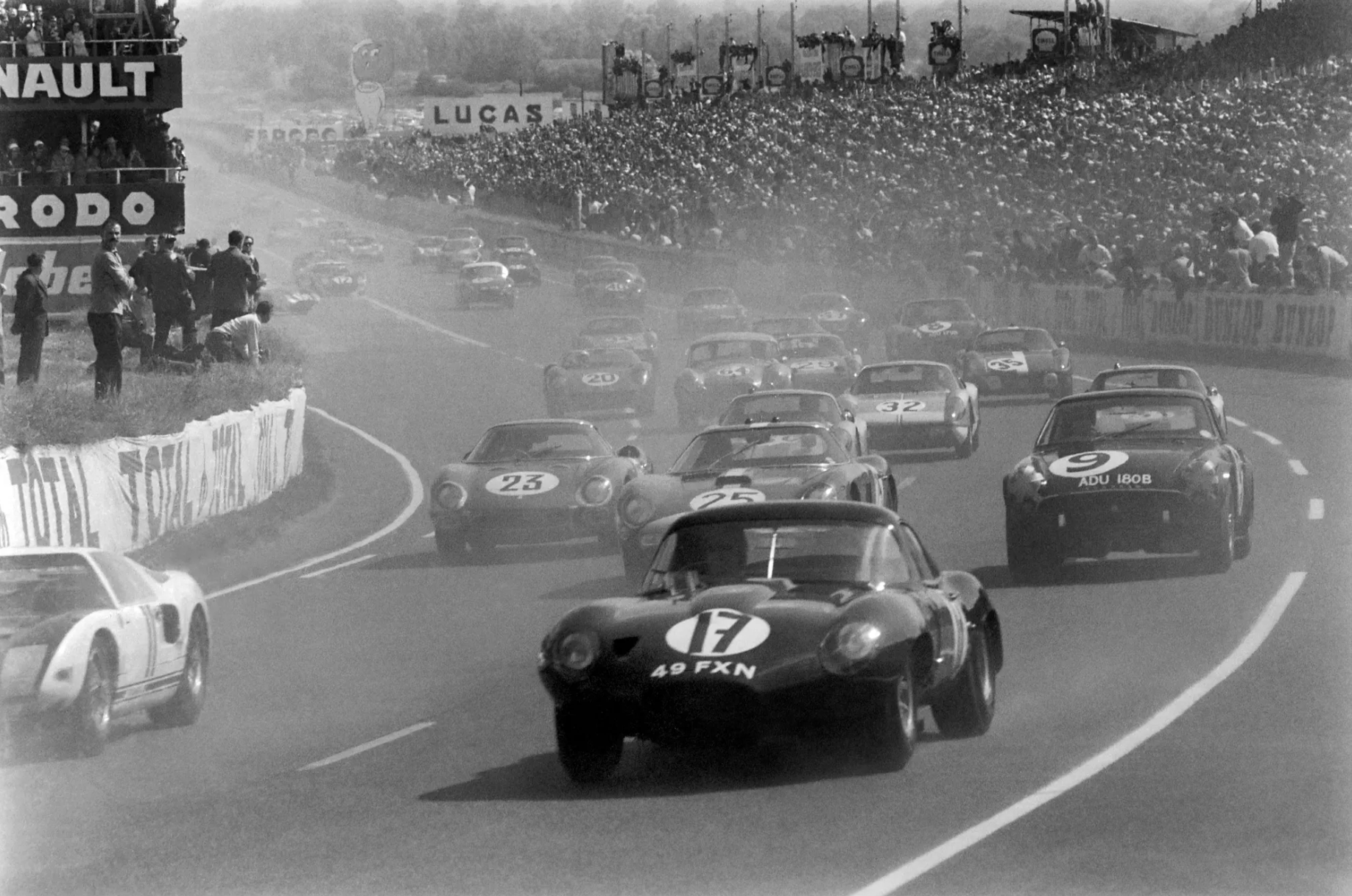
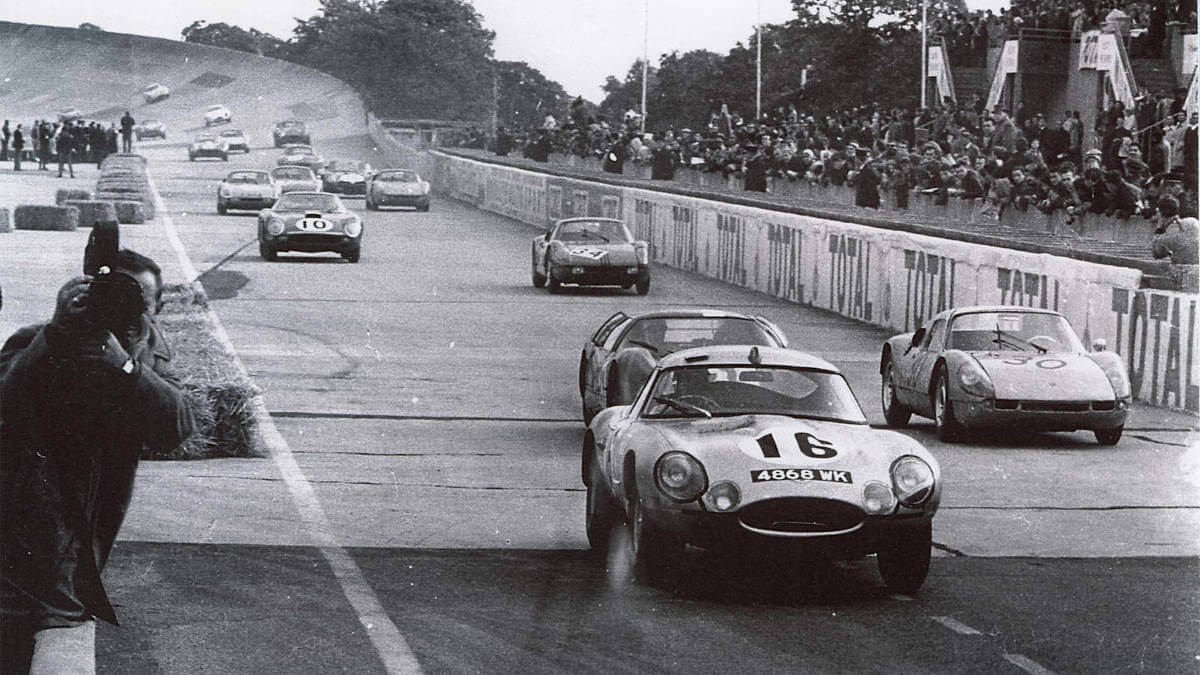
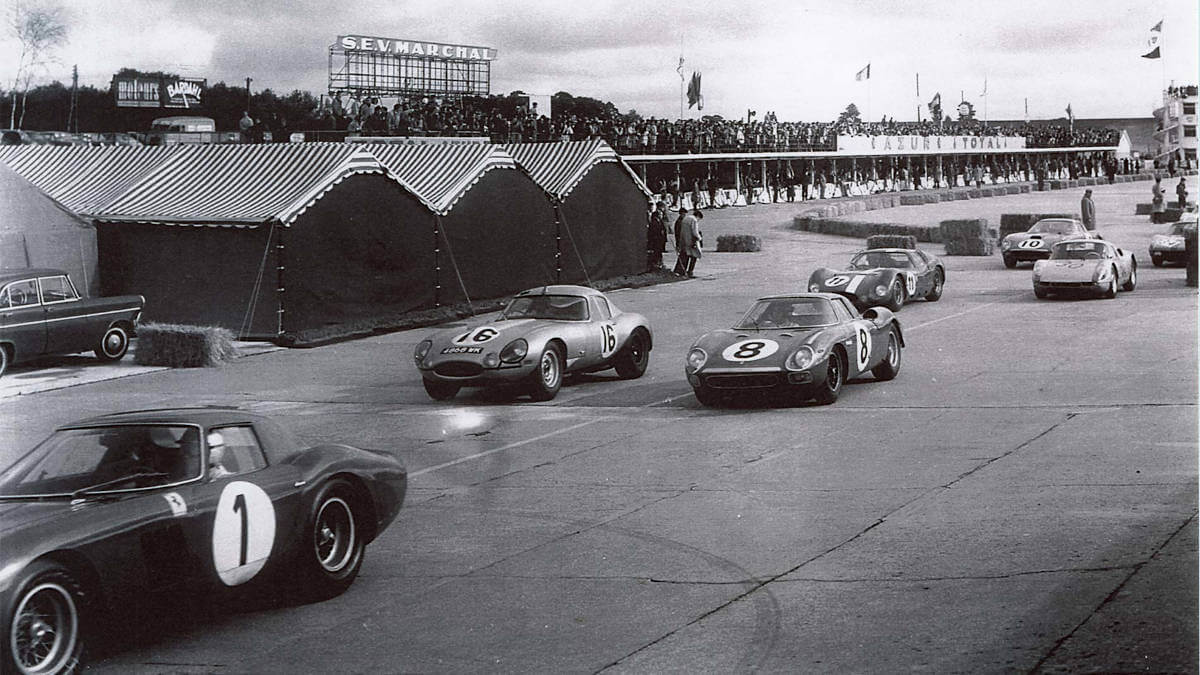
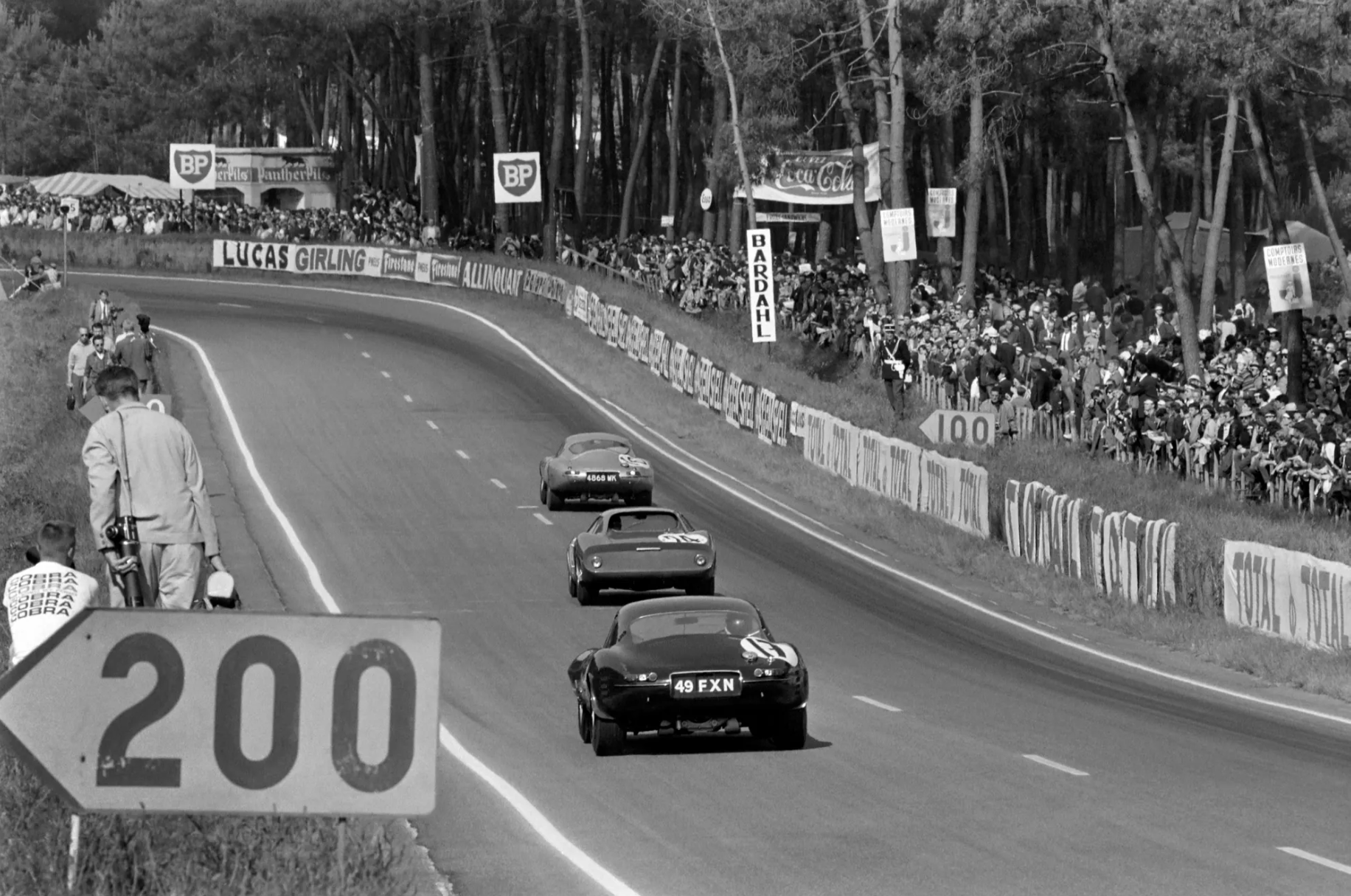
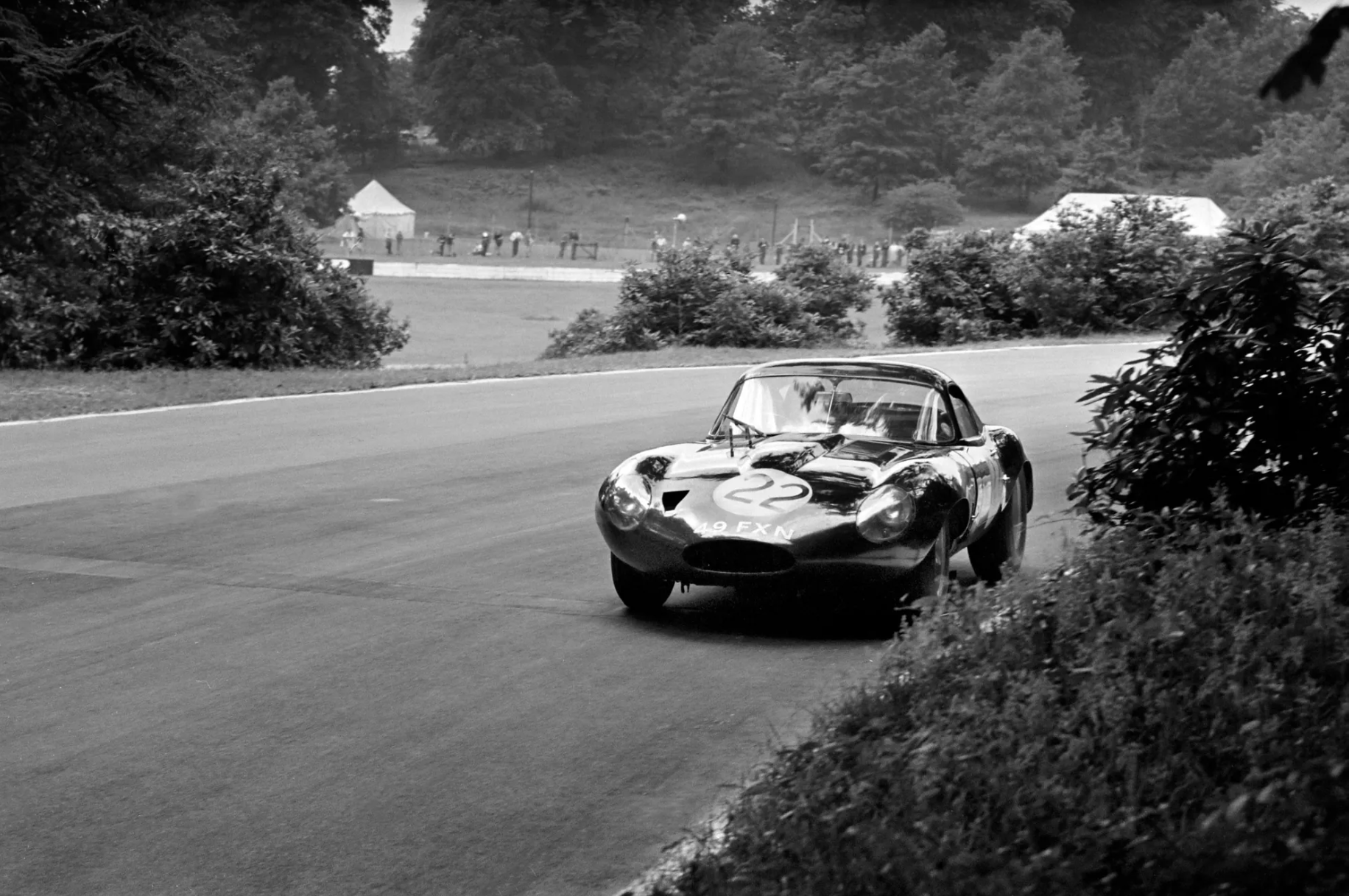
The history of the Low Drag Coupé is a tale of brilliance and tragedy, centered primarily around one specific chassis: 4868 WK. While the factory built a prototype (EC1001), it was the car campaigned by the German Jaguar distributor Peter Lindner and Peter Nöcker that etched the LDC into legend. Modified by the factory to full Low Drag specification for the 1964 season, this car was a spectacle of speed. At the 1964 24 Hours of Le Mans, the Lindner-Nöcker Low Drag showcased terrifying pace, clocking speeds on the straight that rivaled the 4.0-litre Ferraris, although reliability issues forced a retirement. Another famous example, the Lumsden-Sargent car (49 FXN), featured a slightly different, Samir Klat-designed roofline, proving that the pursuit of “low drag” was an evolving science.
However, the story of the Lindner Low Drag ended in catastrophe at Montlhéry in 1964. During a race, the car aquaplaned and collided with a stationary Abarth, killing Peter Lindner and several marshals. The car was impounded and essentially crushed into a block of scrap. For decades, it was assumed lost. In a twist that defies belief, the wreckage was acquired by classic car expert Peter Neumark in 2007. Over 7,000 hours of restoration ensued, where craftsmen unbent the original aluminium panels, finding that 90% of the original metal could be saved. The car was literally resurrected from the dead, restored to its 1964 Le Mans specification, serving as a rolling testament to the bravery of its drivers and the genius of its construction.
The legacy of the Jaguar E-Type Low Drag Coupé is profound, far outstripping the tiny number of cars built. It represents the ultimate “what if” of British motorsport. Had Jaguar officially returned to racing with a full fleet of these cars in 1963, the history of the GT class might have looked very different, potentially denying the Ferrari 250 GTO its legendary status. The Low Drag remains the most coveted of all E-Types, a shape so pure that it has spawned high-end recreations like the Eagle Low Drag GT, proving that Sayer’s mathematics are as aesthetically pleasing today as they were sixty years ago. It stands in the pantheon not just as a race car, but as a piece of industrial sculpture, the final, fleeting moment where the beautiful E-Type became a truly lethal weapon.
Brand
Produced from
Portal
Vehicle category
Model line
Predecessor
Sucessor
Brand
Produced from
Portal
Vehicle category
Model line
Model generation
Predecessor
Sucessor
Submodel Overview
If the standard Jaguar E-Type was a sensation, a cultural hammer blow that redefined the sports car market, the 1963 ‘Low Drag Coupé’ was a pure, mathematical distillation of speed, conceived in the wind tunnel of Malcolm Sayer’s mind and forged in the fires of competition. By 1963, the glorious days of the D-Type’s dominance at Le Mans were fading into memory, and the standard steel-bodied E-Type, for all its beauty, was proving too heavy and aerodynamically inefficient to strictly challenge the new hegemony of the Ferrari 250 GTO on the Mulsanne Straight. Jaguar’s “unofficial” racing department knew that to beat Maranello, they didn’t just need less weight; they needed less air. The result was not a production model, nor truly a single uniform batch of cars, but an ethos of aerodynamic optimization that culminated in arguably the most beautiful and purposeful British GT car ever constructed. The Low Drag Coupé (LDC) was the apotheosis of the E-Type lineage, a machine that shed the road car’s grand touring pretentions to become a screaming, aluminium-skinned missile designed for one singular purpose: to exceed 170 mph and break the Italian stranglehold on endurance racing.
Technically, the Low Drag Coupé was a radical departure from the showroom floor, sharing only its basic footprint and suspension geometry with the road car. The bodywork was the star; constructed entirely from paper-thin aluminium alloy, it was masterminded by Malcolm Sayer, an aerodynamicist who loathed the term “stylist.” Sayer applied complex mathematical curves to smooth the airflow over the cockpit, extending the roofline into a teardrop fastback that integrated seamlessly with the tail. The rear hatch was welded shut, the windscreen was raked more steeply, and the glass was flush-fitting to eliminate turbulence. Beneath this shimmering skin lay a chassis that was a hybrid of art and violence. The standard subframes were retained but stiffened, while the suspension—independent all around—used stiffer torsion bars and specialized dampers to cope with the immense cornering forces generated by the latest Dunlop racing tires.
The heart of the Low Drag was the ultimate evolution of the XK straight-six. Displacing 3.8 litres, the engine was fitted with the legendary “Wide Angle” cylinder head, a piece of casting exotica with massive valves and altered port geometry. While standard E-Types made do with SU carburetors, the LDC breathed through a Lucas mechanical fuel injection system, its trumpets often visible through the bonnet scoop. It also utilized a dry-sump lubrication system to prevent oil starvation during high-G cornering. This powerplant produced over 320 brake horsepower—a figure that, when combined with a wet weight of under 1,000 kg, gave the car a power-to-weight ratio that terrified its drivers. Power was routed through a ZF five-speed gearbox (a stronger, more precise unit than the Jaguar Moss box) to a limited-slip differential. The interior was a harsh environment of bare metal, drilled pedals, and heat, a stark contrast to the leather-clad luxury of the road cars.
The history of the Low Drag Coupé is a tale of brilliance and tragedy, centered primarily around one specific chassis: 4868 WK. While the factory built a prototype (EC1001), it was the car campaigned by the German Jaguar distributor Peter Lindner and Peter Nöcker that etched the LDC into legend. Modified by the factory to full Low Drag specification for the 1964 season, this car was a spectacle of speed. At the 1964 24 Hours of Le Mans, the Lindner-Nöcker Low Drag showcased terrifying pace, clocking speeds on the straight that rivaled the 4.0-litre Ferraris, although reliability issues forced a retirement. Another famous example, the Lumsden-Sargent car (49 FXN), featured a slightly different, Samir Klat-designed roofline, proving that the pursuit of “low drag” was an evolving science.
However, the story of the Lindner Low Drag ended in catastrophe at Montlhéry in 1964. During a race, the car aquaplaned and collided with a stationary Abarth, killing Peter Lindner and several marshals. The car was impounded and essentially crushed into a block of scrap. For decades, it was assumed lost. In a twist that defies belief, the wreckage was acquired by classic car expert Peter Neumark in 2007. Over 7,000 hours of restoration ensued, where craftsmen unbent the original aluminium panels, finding that 90% of the original metal could be saved. The car was literally resurrected from the dead, restored to its 1964 Le Mans specification, serving as a rolling testament to the bravery of its drivers and the genius of its construction.
The legacy of the Jaguar E-Type Low Drag Coupé is profound, far outstripping the tiny number of cars built. It represents the ultimate “what if” of British motorsport. Had Jaguar officially returned to racing with a full fleet of these cars in 1963, the history of the GT class might have looked very different, potentially denying the Ferrari 250 GTO its legendary status. The Low Drag remains the most coveted of all E-Types, a shape so pure that it has spawned high-end recreations like the Eagle Low Drag GT, proving that Sayer’s mathematics are as aesthetically pleasing today as they were sixty years ago. It stands in the pantheon not just as a race car, but as a piece of industrial sculpture, the final, fleeting moment where the beautiful E-Type became a truly lethal weapon.
Tech Specs
Technical Specifications
Tech Specs
Technical Specifications
Engine
01
03
Internal combustion engine
Configuration
Jaguar XK "Wide Angle", Inline-6
Location
Front, longitudinally mounted
Construction
Aluminium alloy block and head
Displacement (cc)
3,781 cc
Displacement (cu in)
230.7 cu in
Compression
10.5:1
Bore x Stroke
87.0 mm x 106.0 mm
Valvetrain
2 valves per cylinder, DOHC (High-lift camshafts)
Fuel feed
Lucas mechanical fuel injection
Lubrication
Dry sump
Aspiration
Naturally aspirated
Output
Power (hp)
335 hp
Power (kW)
250 kW
Max power at
6,500 RPM
Torque (Nm)
380 Nm
Torque (ft lbs)
280 ft lbs
Max torque at
5,000 RPM
Drivetrain
02
03
Chassis
Type
Monocoque tub with front tubular subframe
Material
Aluminium alloy (Riveted and glued)
Body
Material
Aluminium alloy (Special Sayer aerodynamic design)
Transmission
Gearbox
ZF 5-speed manual or Jaguar 4-speed manual
Drive
Rear Wheel Drive (Powr-Lok Limited Slip Differential)
Suspension
Front
Independent, double wishbones, torsion bars, telescopic dampers, anti-roll bar
Rear
Independent, lower wishbones, driveshaft as upper link, radius arms, twin coil springs over dampers
Steering
Type
Rack and pinion
Brakes
Front
Dunlop ventilated discs, multi-piston calipers
Rear
Dunlop discs (Inboard mounted)
Wheels
Front
7.5" x 15"
Rear
8.0" x 15"
Tires
Front
6.00-15
Rear
6.50-15
Dimensions and performance
03
03
Dimensions
Length (mm)
4,450 mm
Length (in)
175.2 in
Width (mm)
1,660 mm
Width (in)
65.4 in
Height (mm)
1,180 mm
Height (in)
46.5 in
Wheelbase (mm)
2,438 mm
Wheelbase (in)
96.0 in
Weight (kg)
965 kg
Weight (lbs)
2,127 lbs
Performance
Power to weight
0.35 hp/kg
Top speed (km/h)
280 km/h
Top speed (mph)
174 mph
0-100 km/h (0-60 mph)
~4.6 s