
Lola T298 BMW M12/7
Brand
Produced from
Portal
Vehicle category
Model line
Predecessor
Successor
Submodel Overview
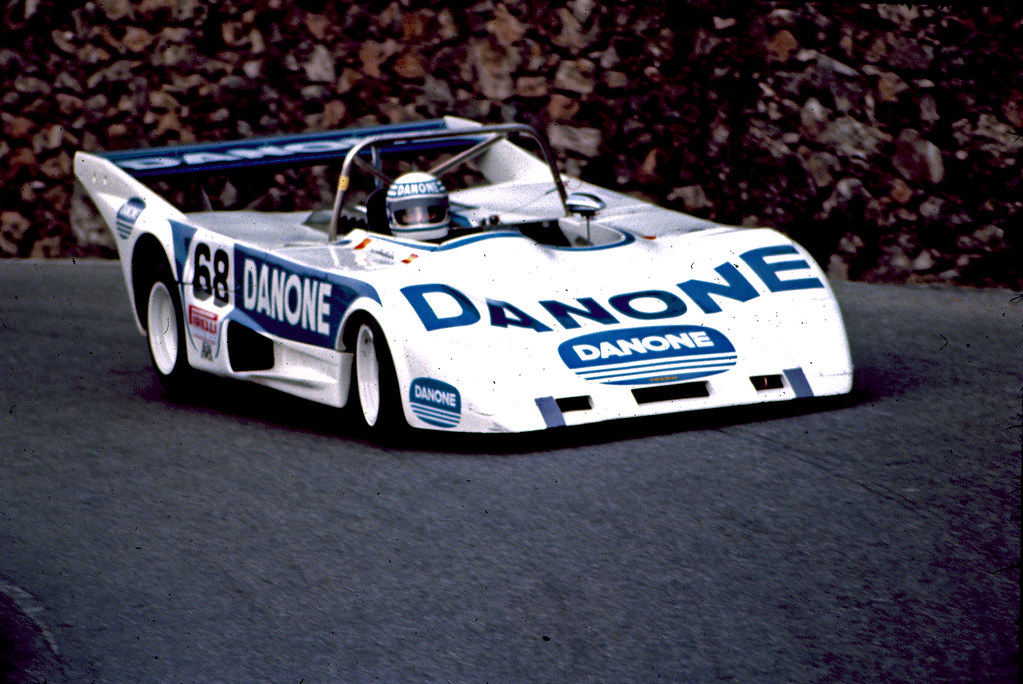
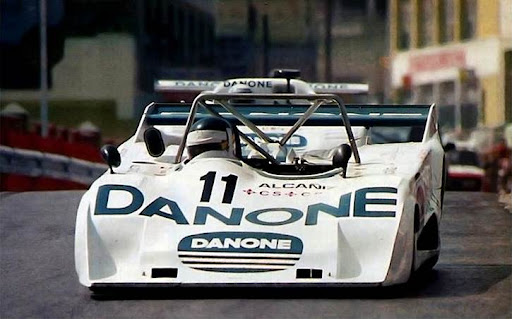
By 1979, the European 2-Litre Sports Car Championship had shed its amateur skin. The days of converted Formula 2 engines rattling tubular frames apart were largely over, replaced by an era of professional precision and aerodynamic sophistication. In this high-stakes arena, where the battle for supremacy was fought between the British “garagistes” and the Italian artisans, the Lola T298 BMW M12/7 stood as the undisputed heavyweight champion. It was the culmination of Eric Broadley’s decade-long refinement of the sports prototype, a machine that represented the perfect trans-European marriage: a razor-sharp, bonded aluminium monocoque from Huntingdon, mated to the finest four-cylinder racing engine ever to emerge from Munich. While its predecessor, the T296, had hinted at this potential, the 1979 specification T298 was the finished article, a car that offered such a compelling blend of speed, stiffness, and reliability that it effectively became the standard currency for any privateer wishing to win at Le Mans or conquer the mountain passes of the continent.
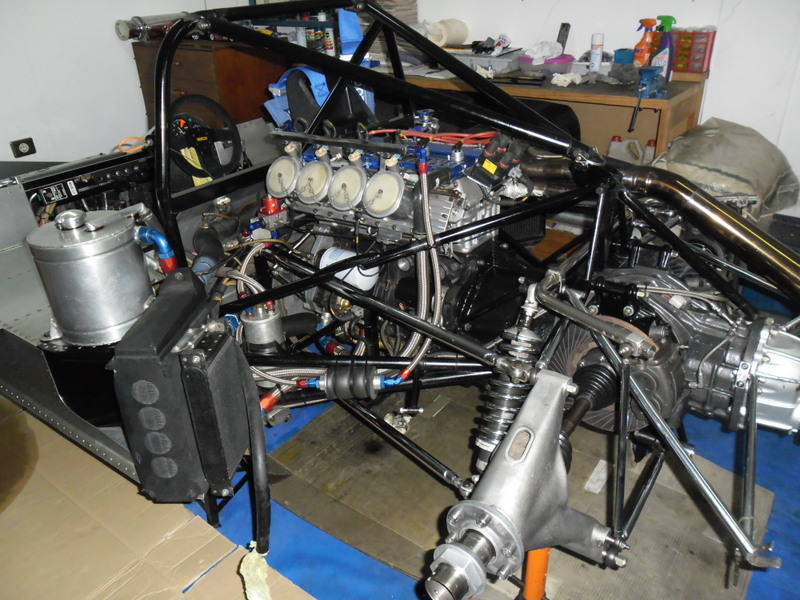
Technically, the T298 was a masterclass in packaging the specific requirements of the BMW powerplant. Unlike the Ford Cosworth FVC, which was light, compact, and vibrated with the ferocity of a pneumatic drill, the BMW M12/7 was a taller, heavier, and smoother unit. Broadley’s engineers optimized the T298’s rear subframe and suspension geometry to handle this different center of gravity and torque characteristic. The chassis was a “bathtub” monocoque, constructed from riveted and bonded aluminium alloy, offering a torsional rigidity that allowed the suspension—double wishbones at the front and a multi-link setup at the rear—to work with surgical precision. The aerodynamic package was sleeker than ever; the nose was a low-drag wedge that sliced through the air, feeding cooling ducts for the front brakes and radiators, while the rear wing was mounted high on central struts, working in clean air to plant the rear Avon slicks.
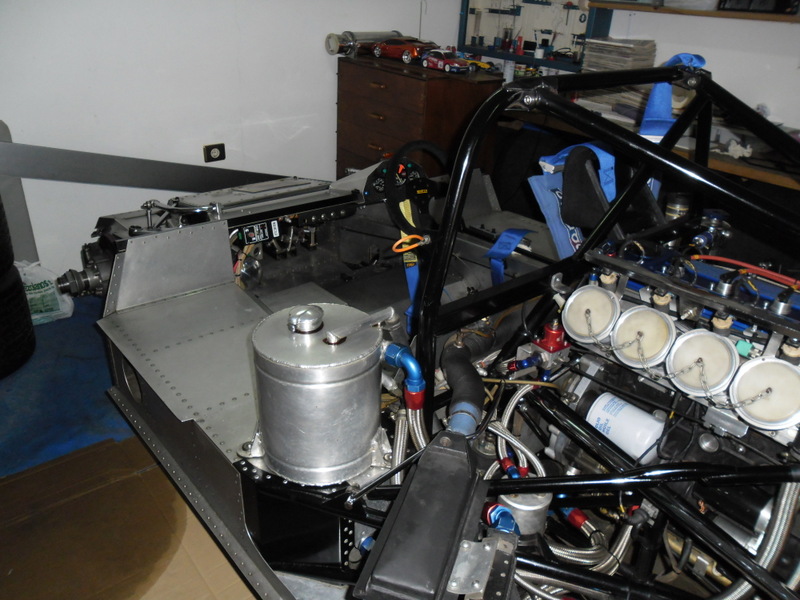
But the soul of this machine was undoubtedly the engine. The BMW M12/7 was the handiwork of Paul Rosche, a 2.0-litre engineering jewel derived from the production block but fitted with a 16-valve cylinder head and Kugelfischer mechanical fuel injection. In 1979 trim, it produced upwards of 300 to 310 brake horsepower at 9,500 rpm. It was a masterpiece of durability. Where the Cosworths were grenades with the pins pulled, the BMW M12 was a sledgehammer—robust, torquey, and possessing a deep, resonant induction roar that became the soundtrack of the 2-litre class. This power was channeled through a Hewland FG400 five-speed transaxle, a gearbox robust enough to handle the German torque without complaining.
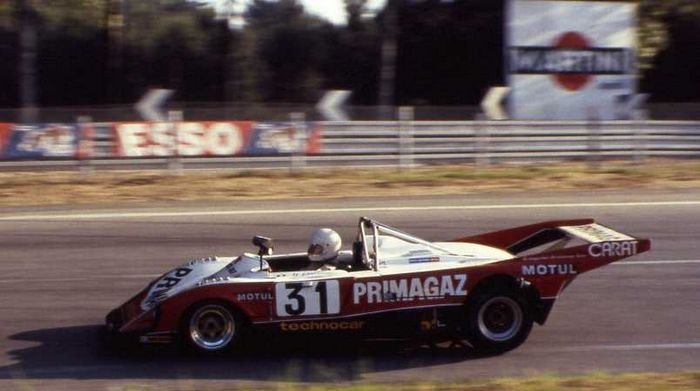
The impact of the Lola-BMW combination was immediate and devastating. In the World Sportscar Championship’s Group 6 (Under 2.0 Litre) category, the T298 became the benchmark. The 1979 season saw a ferocious battle between the Lolas and the Italian Osella PA6s and PA7s. While the Osellas were nimble and quick on tight circuits like Vallelunga, the T298 BMW had the legs on the faster tracks. Its defining moment came at the 1979 24 Hours of Le Mans. In a race of attrition that claimed the sophisticated Porsche 936s, the privateer Lola T298s shone. The French trio of Chevalley, Trisconi, and Koppenwallner took the class victory (and finished an incredible 16th overall), proving that the M12 engine could sing at maximum revs for 24 hours without missing a beat. This reliability made the T298 the darling of the privateer paddock; it was a car that finished races, and in endurance racing, to finish first, you must first finish.
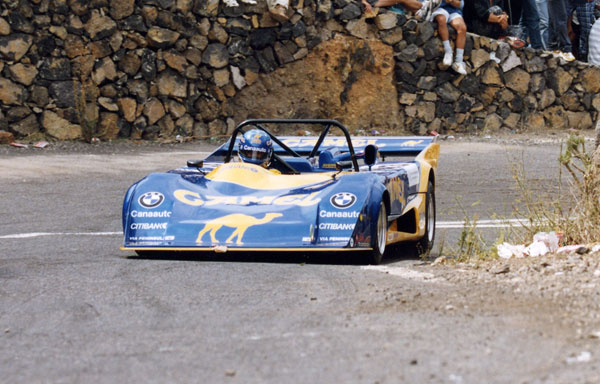
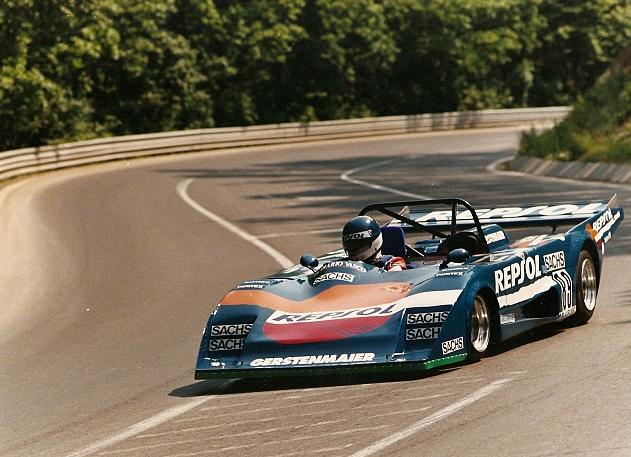
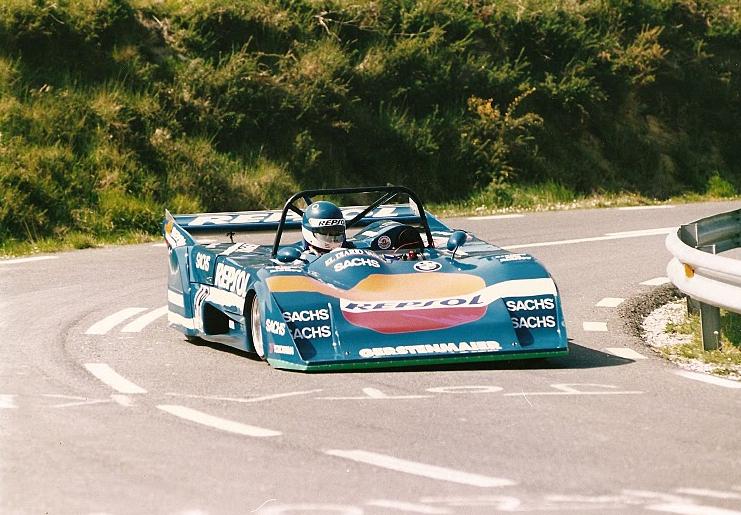
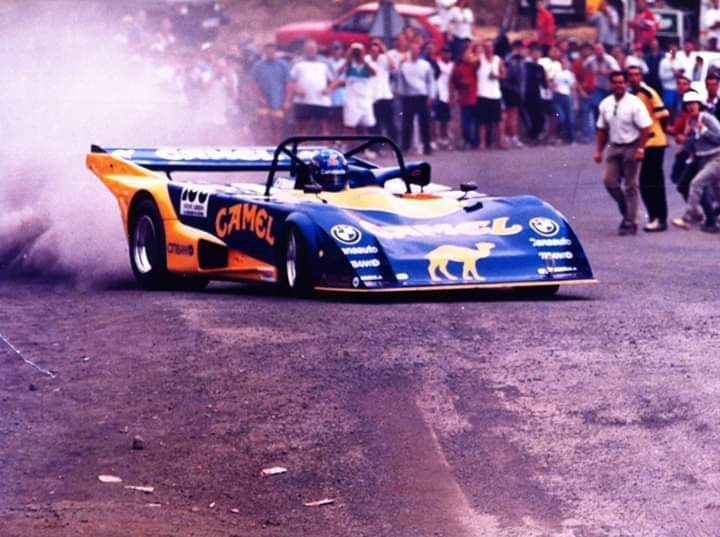
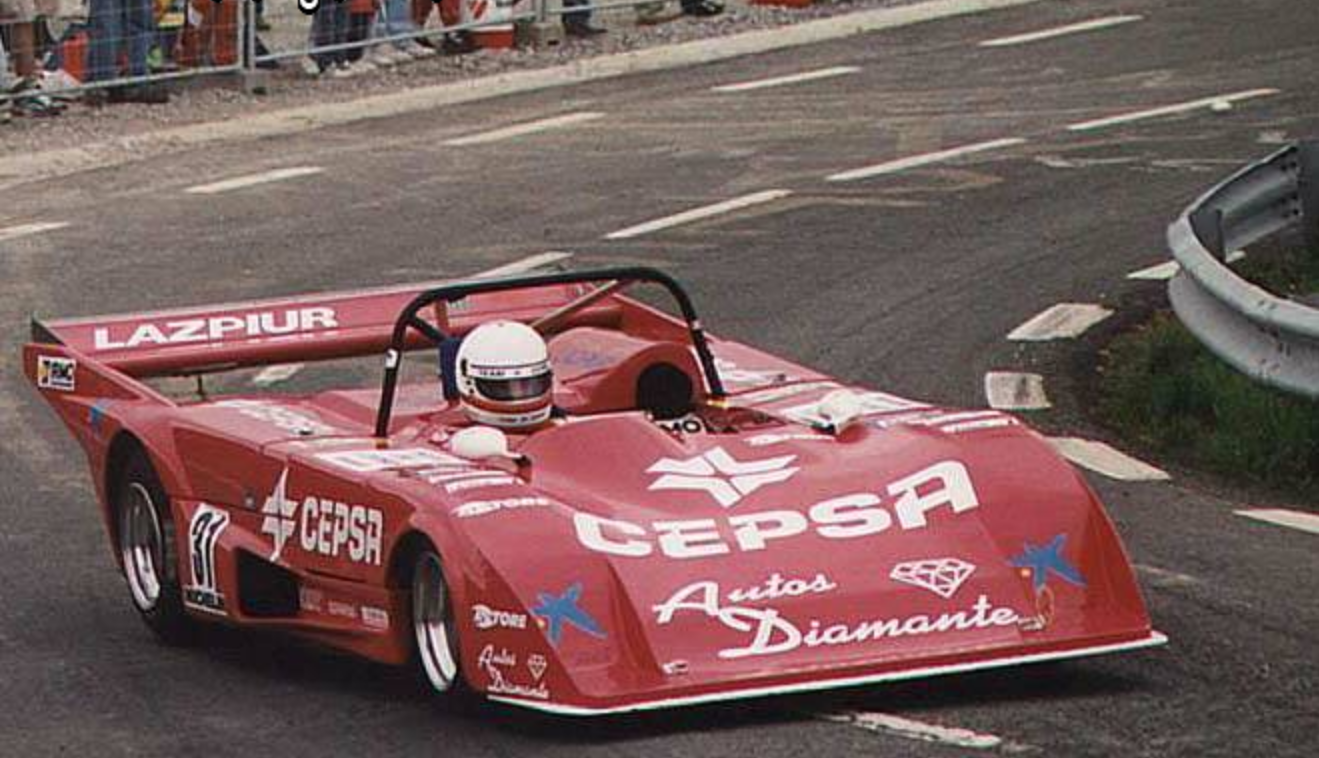
Beyond the circuit, the T298 BMW found a second, perhaps even more violent life in the European Hill Climb Championship. As ground-effect cars like the Lola T600 began to render flat-bottom cars obsolete on the track, the T298 migrated to the mountains. Here, the torque of the BMW engine was a massive asset for punching out of hairpins. Mountain specialists modified the cars with expansive, barn-door rear wings and widened bodywork. In this guise, the T298 BMW terrorized the ascents of Mont-Dore and Saint-Ursanne well into the mid-1980s. Drivers like Jean-Louis Bos used the chassis to set records that stood for years, the echo of the BMW engine bouncing off the canyon walls serving as a warning siren to the competition.
The legacy of the 1979 Lola T298 BMW M12/7 is that of the ultimate conventional sports prototype. It stands as the final peak of the pre-ground effect era, a car that relied on mechanical grip and traditional suspension excellence rather than venturi tunnels. It cemented the Lola-BMW partnership that would later lead to the GTP cars of the 1980s.
Brand
Produced from
Portal
Vehicle category
Model line
Predecessor
Sucessor
Brand
Produced from
Portal
Vehicle category
Model line
Model generation
Predecessor
Sucessor
Submodel Overview
By 1979, the European 2-Litre Sports Car Championship had shed its amateur skin. The days of converted Formula 2 engines rattling tubular frames apart were largely over, replaced by an era of professional precision and aerodynamic sophistication. In this high-stakes arena, where the battle for supremacy was fought between the British “garagistes” and the Italian artisans, the Lola T298 BMW M12/7 stood as the undisputed heavyweight champion. It was the culmination of Eric Broadley’s decade-long refinement of the sports prototype, a machine that represented the perfect trans-European marriage: a razor-sharp, bonded aluminium monocoque from Huntingdon, mated to the finest four-cylinder racing engine ever to emerge from Munich. While its predecessor, the T296, had hinted at this potential, the 1979 specification T298 was the finished article, a car that offered such a compelling blend of speed, stiffness, and reliability that it effectively became the standard currency for any privateer wishing to win at Le Mans or conquer the mountain passes of the continent.
Technically, the T298 was a masterclass in packaging the specific requirements of the BMW powerplant. Unlike the Ford Cosworth FVC, which was light, compact, and vibrated with the ferocity of a pneumatic drill, the BMW M12/7 was a taller, heavier, and smoother unit. Broadley’s engineers optimized the T298’s rear subframe and suspension geometry to handle this different center of gravity and torque characteristic. The chassis was a “bathtub” monocoque, constructed from riveted and bonded aluminium alloy, offering a torsional rigidity that allowed the suspension—double wishbones at the front and a multi-link setup at the rear—to work with surgical precision. The aerodynamic package was sleeker than ever; the nose was a low-drag wedge that sliced through the air, feeding cooling ducts for the front brakes and radiators, while the rear wing was mounted high on central struts, working in clean air to plant the rear Avon slicks.
But the soul of this machine was undoubtedly the engine. The BMW M12/7 was the handiwork of Paul Rosche, a 2.0-litre engineering jewel derived from the production block but fitted with a 16-valve cylinder head and Kugelfischer mechanical fuel injection. In 1979 trim, it produced upwards of 300 to 310 brake horsepower at 9,500 rpm. It was a masterpiece of durability. Where the Cosworths were grenades with the pins pulled, the BMW M12 was a sledgehammer—robust, torquey, and possessing a deep, resonant induction roar that became the soundtrack of the 2-litre class. This power was channeled through a Hewland FG400 five-speed transaxle, a gearbox robust enough to handle the German torque without complaining.
The impact of the Lola-BMW combination was immediate and devastating. In the World Sportscar Championship’s Group 6 (Under 2.0 Litre) category, the T298 became the benchmark. The 1979 season saw a ferocious battle between the Lolas and the Italian Osella PA6s and PA7s. While the Osellas were nimble and quick on tight circuits like Vallelunga, the T298 BMW had the legs on the faster tracks. Its defining moment came at the 1979 24 Hours of Le Mans. In a race of attrition that claimed the sophisticated Porsche 936s, the privateer Lola T298s shone. The French trio of Chevalley, Trisconi, and Koppenwallner took the class victory (and finished an incredible 16th overall), proving that the M12 engine could sing at maximum revs for 24 hours without missing a beat. This reliability made the T298 the darling of the privateer paddock; it was a car that finished races, and in endurance racing, to finish first, you must first finish.
Beyond the circuit, the T298 BMW found a second, perhaps even more violent life in the European Hill Climb Championship. As ground-effect cars like the Lola T600 began to render flat-bottom cars obsolete on the track, the T298 migrated to the mountains. Here, the torque of the BMW engine was a massive asset for punching out of hairpins. Mountain specialists modified the cars with expansive, barn-door rear wings and widened bodywork. In this guise, the T298 BMW terrorized the ascents of Mont-Dore and Saint-Ursanne well into the mid-1980s. Drivers like Jean-Louis Bos used the chassis to set records that stood for years, the echo of the BMW engine bouncing off the canyon walls serving as a warning siren to the competition.
The legacy of the 1979 Lola T298 BMW M12/7 is that of the ultimate conventional sports prototype. It stands as the final peak of the pre-ground effect era, a car that relied on mechanical grip and traditional suspension excellence rather than venturi tunnels. It cemented the Lola-BMW partnership that would later lead to the GTP cars of the 1980s.
Tech Specs
Technical Specifications
Tech Specs
Technical Specifications
Engine
01
03
Internal combustion engine
Configuration
BMW M12/7, Inline-4
Location
Mid, longitudinally mounted
Construction
Cast iron block, Aluminium alloy head
Displacement (cc)
1,991 cc
Displacement (cu in)
121.5 cu in
Compression
12.0:1
Bore x Stroke
89.2 mm x 80.0 mm
Valvetrain
4 valves per cylinder, DOHC
Fuel feed
Kugelfischer mechanical fuel injection
Lubrication
Dry sump
Aspiration
Naturally aspirated
Output
Power (hp)
315 hp
Power (kW)
235 kW
Max power at
9,500 RPM
Torque (Nm)
240 Nm
Torque (ft lbs)
177 ft lbs
Max torque at
7,200 RPM
Drivetrain
02
03
Chassis
Type
monocoque with rear tubular subframe
Material
Aluminium sheet (L72) riveted and bonded
Body
Material
Fibreglass reinforced plastic
Transmission
Gearbox
Hewland FT 200, 5-speed manual
Drive
Rear Wheel Drive (Cam-and-pawl Limited Slip Differential)
Suspension
Front
Independent, double wishbones, coil springs over adjustable dampers, anti-roll bar
Rear
Independent, reversed lower wishbones, top link, twin radius arms, coil springs over adjustable dampers
Steering
Type
Rack and pinion
Brakes
Front
Ventilated discs Ø254 mm, 4-piston calipers (ATE or Lockheed)
Rear
Ventilated discs Ø254 mm, 4-piston calipers (Inboard mounted)
Wheels
Front
10" x 13" (BBS Magnesium)
Rear
14" x 13" or 15" x 13" (BBS Magnesium)
Tires
Front
240/600-13
Rear
330/620-13
Dimensions and performance
03
03
Dimensions
Length (mm)
4,150 mm
Length (in)
163.4 in
Width (mm)
1,980 mm
Width (in)
78.0 in
Height (mm)
920 mm
Height (in)
36.2 in
Wheelbase (mm)
2,340 mm
Wheelbase (in)
92.1 in
Weight (kg)
600 kg
Weight (lbs)
1,323 lbs
Performance
Power to weight
~0.53 hp/kg
Top speed (km/h)
~295 km/h
Top speed (mph)
~183 mph
0-100 km/h (0-60 mph)
~3.2 s