
Lola T70 Mk II Chevrolet 5.9L (359) V8 Spyder
Brand
Produced from
Portal
Vehicle category
Model line
Model generation
Predecessor
Successor
Submodel Overview
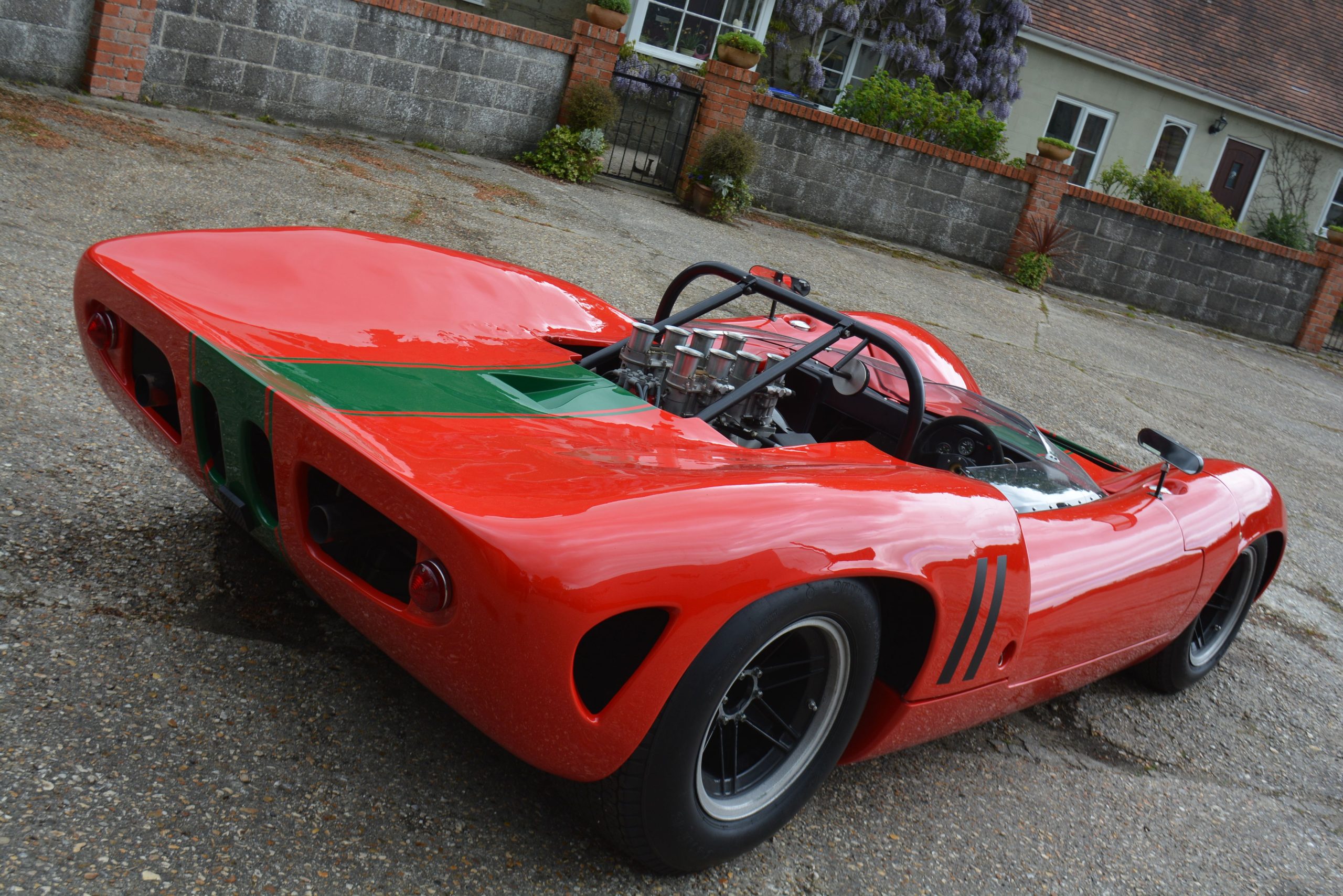
The year 1966 marked a watershed moment in the history of motorsport, the year the rulebook was effectively thrown into a bonfire to ignite the Canadian-American Challenge Cup. In this lawless frontier of “Group 7” racing, where power was unlimited and aerodynamics were unregulated, the Lola T70 Mk II Spyder emerged not just as a contender, but as the inaugural king. While Ford was spending millions to bludgeon Ferrari at Le Mans with the GT40, Eric Broadley in Huntingdon was crafting a sharper, more agile weapon for the sprint races of North America. The T70 Mk II was the direct evolution of the promising but overheating-prone Mk I. It arrived on the grid to face the formidable orange onslaught of the McLaren M1Bs and the technological wizardry of the high-winged Chaparral 2E. Yet, unlike its rivals, the Lola T70 Mk II was not a factory science experiment; it was the ultimate privateer’s tool, a trans-Atlantic handshake between British chassis finesse and American horsepower that would propel John Surtees to the first-ever Can-Am title.
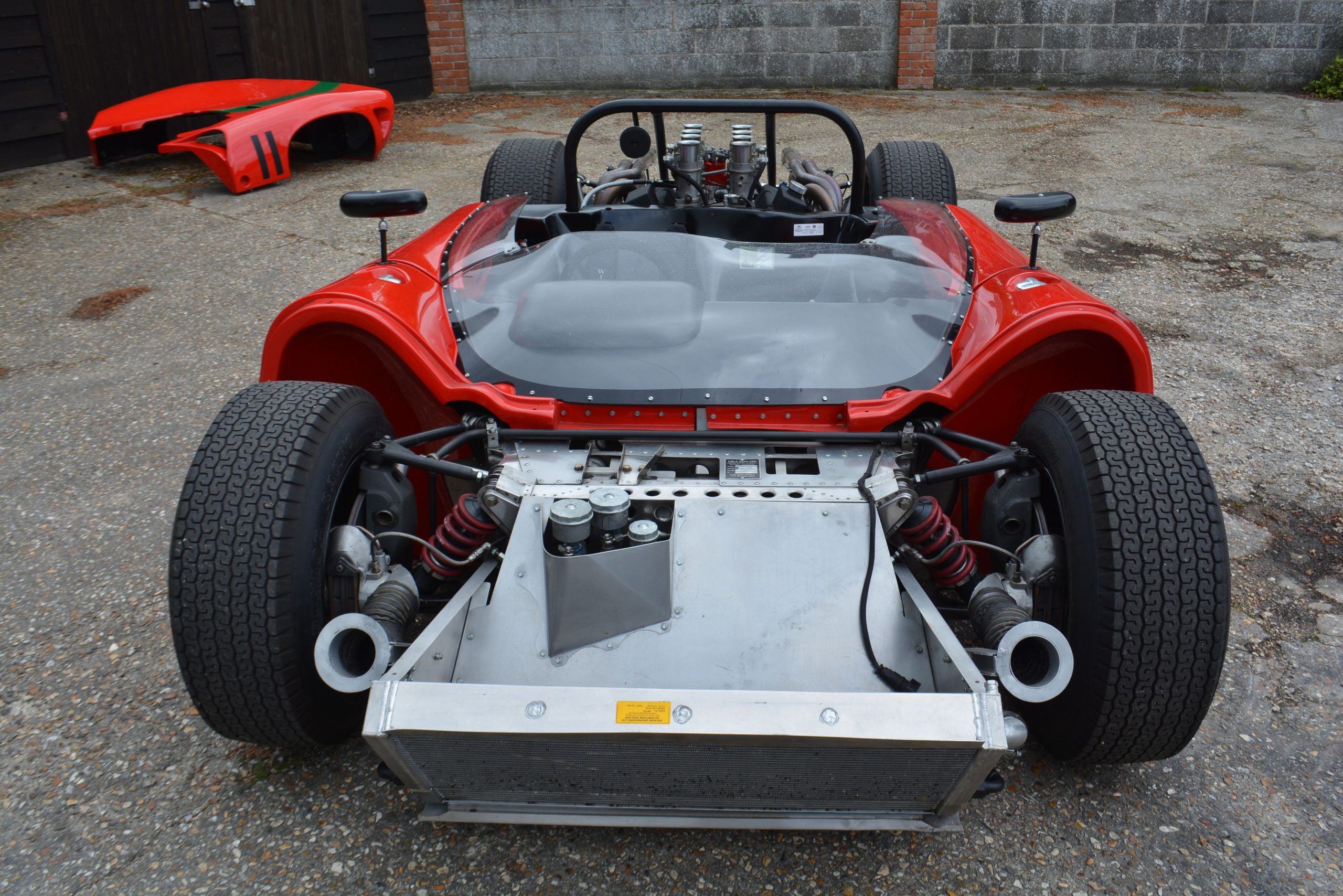
Technically, the T70 Mk II was a masterclass in packaging and traditional engineering perfected. At its core lay Broadley’s signature “full monocoque” chassis, a hybrid construction of polished aluminium sheeting riveted and bonded to steel bulkheads. This “tub” design carried the fuel in the wide sills, keeping the center of gravity impossibly low and offering a torsional rigidity that the tube-framed McLarens of the time struggled to match. The Mk II update specifically addressed the cooling gremlins of its predecessor; the nose was redesigned with a larger “mouth” to feed the front-mounted radiator, utilizing a split-flow design that exited warm air out of the top of the bonnet and over the windscreen, reducing lift in the process.
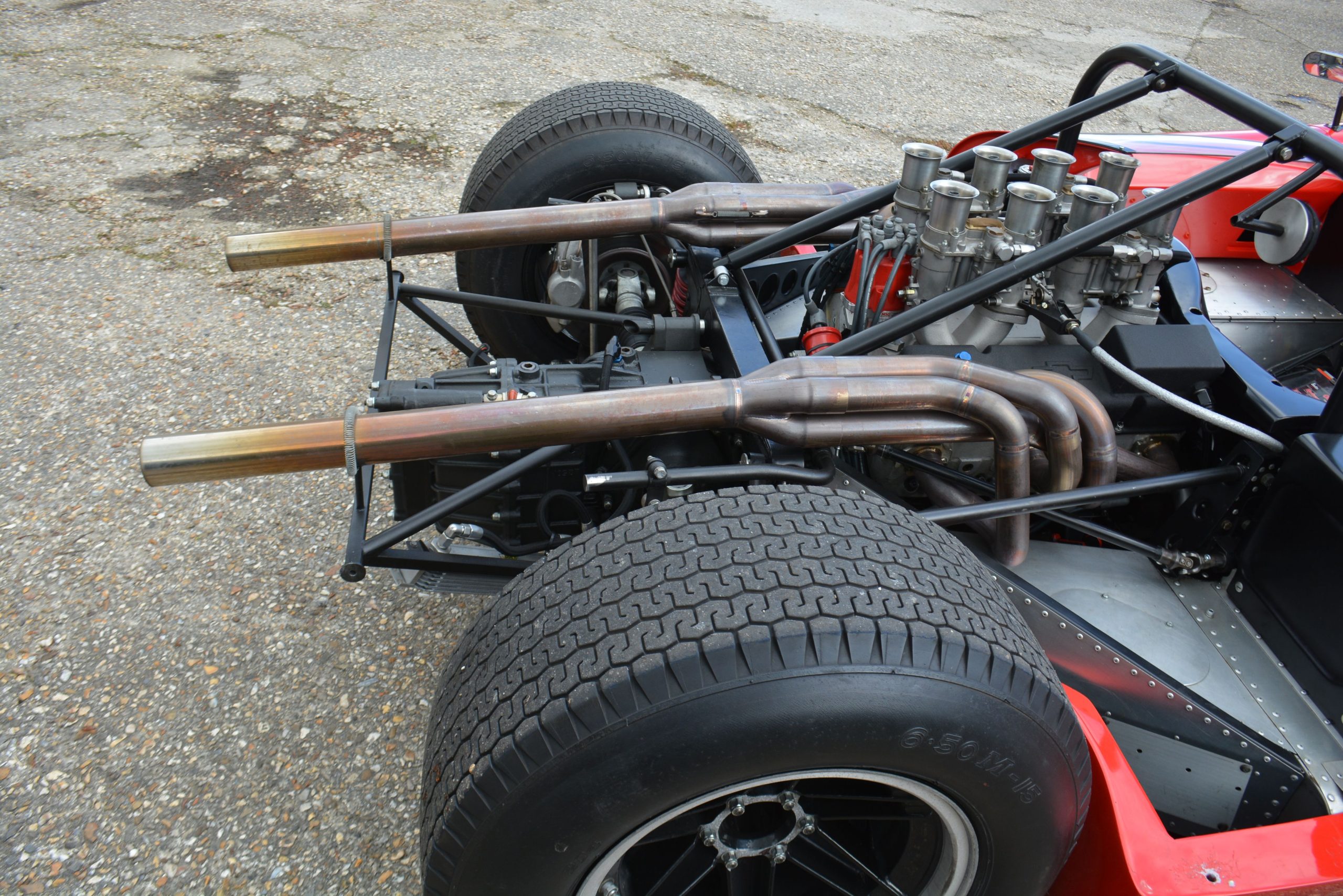
However, the specific soul of this submodel lies in the engine bay behind the driver. While the chassis could accept almost anything, the definitive weapon of choice for the 1966 season was the Chevrolet Small Block V8, bored and stroked to 5.9 litres (359 cubic inches). While later Can-Am seasons would be dominated by 7.0-litre Big Blocks, 1966 was the year of the high-revving Small Block. Prepared by legendary outfits like Traco Engineering in Culver City, these 359ci engines were fed by quartet of Weber 48 IDA downdraught carburettors (or occasionally Lucas mechanical injection), their velocity stacks protruding proudly through the rear deck. Producing approximately 500 to 525 brake horsepower, this engine was a violent, vibrating masterpiece of torque. It was mated to a Hewland LG500 four-speed transaxle, a gearbox built like a bank vault to handle the shock loads of a V8. The suspension featured classic unequal-length wishbones at the front and a sophisticated reversed lower wishbone setup at the rear, controlled by coil-over dampers that struggled to keep the massive Firestone or Goodyear tires in contact with the undulating American tarmac.
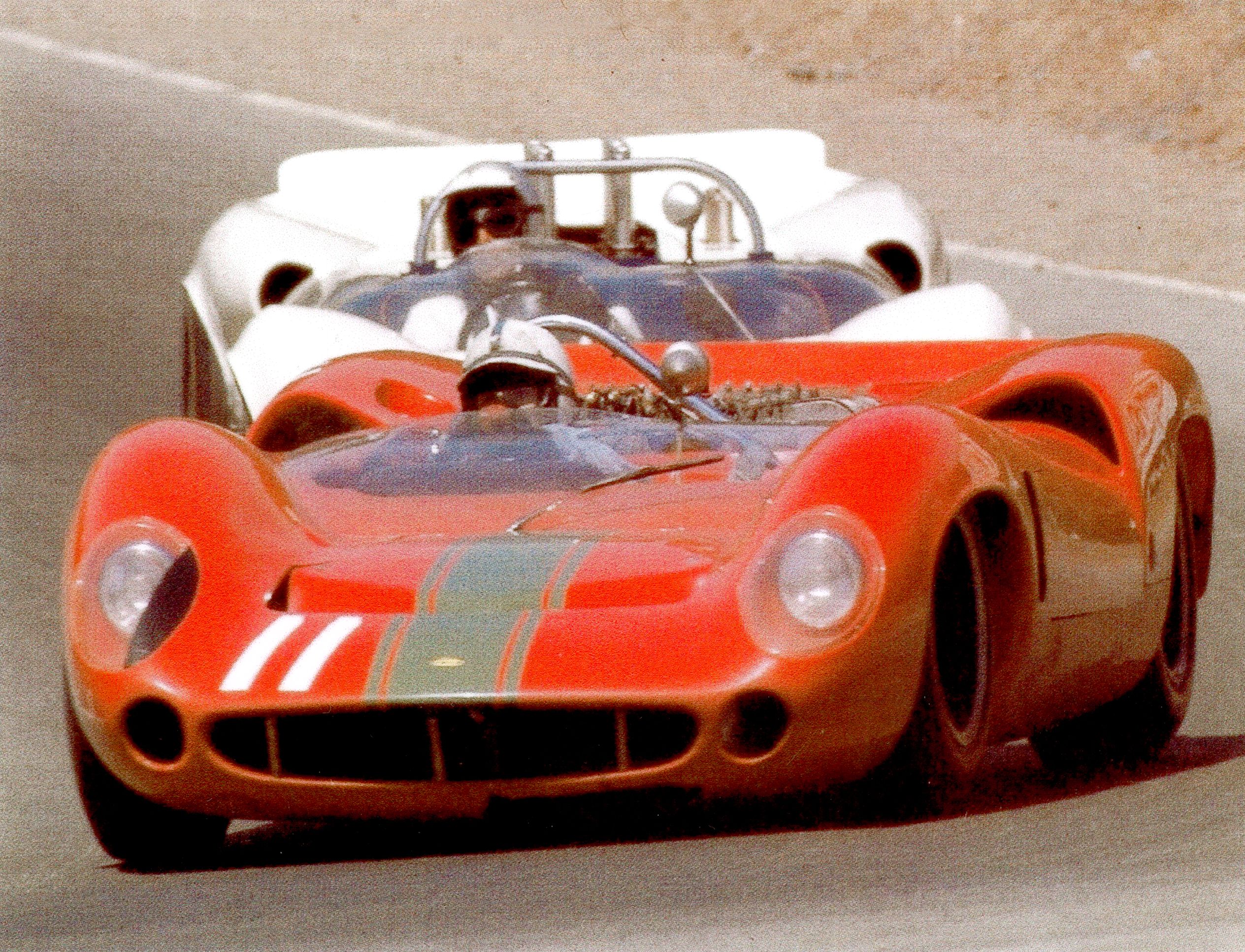
The impact of the T70 Mk II on the 1966 racing season was absolute. This was the car that defined the “Big Banger” era. In the hands of John Surtees—the only man to win World Championships on two wheels and four—the Lola was devastating. Running under the “Team Surtees” banner in a distinctive deep red livery with a white arrow on the nose, Surtees utilized the Mk II’s superior chassis stiffness to out-corner the McLarens and out-drag the Chaparrals. The 1966 Can-Am season was a six-round heavyweight prize fight. Surtees won at St. Jovite, Riverside, and Las Vegas. The victory at Riverside was particularly telling; fighting against the movable-wing Chaparral 2E of Jim Hall, Surtees relied on the mechanical grip of the T70 and the reliability of the Traco-Chevy to take the win. Dan Gurney, piloting a T70 Mk II for All American Racers, also secured a victory at Bridgehampton, proving that the chassis was the class of the field regardless of the driver.
The car’s history is not without its scars. It was a physically demanding beast, known for heavy steering and a cockpit that became a furnace after ten laps. It required a driver of immense physical strength and sensitivity to manage the wheelspin of those 359 cubic inches. Yet, it was commercially successful in a way few race cars are; Broadley sold dozens of chassis to privateers, populating grids across the US, UK, and Europe. It became the gold standard for “run what you brung” racing, appearing in everything from the USRRC to British club events, often modified with increasingly wild wings as aero knowledge progressed.
The legacy of the 1966 Lola T70 Mk II Chevrolet is that of the pioneer. It holds the eternal distinction of being the first Can-Am Championship-winning car. It marked the zenith of Lola’s dominance in North American sports car racing before the McLaren dynasty truly took hold in 1967. More importantly, it established the template for the T70 Mk III Coupe, which would go on to win the 24 Hours of Daytona. The Mk II Spyder represents a moment of purity in motorsport history—a time when a naturally aspirated small-block Chevy, a sheet of aluminium, and a British genius were all you needed to rule the world. Today, the sight of a Mk II Spyder, its velocity stacks shaking at idle and its exhaust note cracking like thunder, is the ultimate evocation of the glorious, unrestricted 1960s.
Brand
Produced from
Portal
Vehicle category
Model line
Predecessor
Sucessor
Brand
Produced from
Portal
Vehicle category
Model line
Model generation
Predecessor
Sucessor
Submodel Overview
The year 1966 marked a watershed moment in the history of motorsport, the year the rulebook was effectively thrown into a bonfire to ignite the Canadian-American Challenge Cup. In this lawless frontier of “Group 7” racing, where power was unlimited and aerodynamics were unregulated, the Lola T70 Mk II Spyder emerged not just as a contender, but as the inaugural king. While Ford was spending millions to bludgeon Ferrari at Le Mans with the GT40, Eric Broadley in Huntingdon was crafting a sharper, more agile weapon for the sprint races of North America. The T70 Mk II was the direct evolution of the promising but overheating-prone Mk I. It arrived on the grid to face the formidable orange onslaught of the McLaren M1Bs and the technological wizardry of the high-winged Chaparral 2E. Yet, unlike its rivals, the Lola T70 Mk II was not a factory science experiment; it was the ultimate privateer’s tool, a trans-Atlantic handshake between British chassis finesse and American horsepower that would propel John Surtees to the first-ever Can-Am title.
Technically, the T70 Mk II was a masterclass in packaging and traditional engineering perfected. At its core lay Broadley’s signature “full monocoque” chassis, a hybrid construction of polished aluminium sheeting riveted and bonded to steel bulkheads. This “tub” design carried the fuel in the wide sills, keeping the center of gravity impossibly low and offering a torsional rigidity that the tube-framed McLarens of the time struggled to match. The Mk II update specifically addressed the cooling gremlins of its predecessor; the nose was redesigned with a larger “mouth” to feed the front-mounted radiator, utilizing a split-flow design that exited warm air out of the top of the bonnet and over the windscreen, reducing lift in the process.
However, the specific soul of this submodel lies in the engine bay behind the driver. While the chassis could accept almost anything, the definitive weapon of choice for the 1966 season was the Chevrolet Small Block V8, bored and stroked to 5.9 litres (359 cubic inches). While later Can-Am seasons would be dominated by 7.0-litre Big Blocks, 1966 was the year of the high-revving Small Block. Prepared by legendary outfits like Traco Engineering in Culver City, these 359ci engines were fed by quartet of Weber 48 IDA downdraught carburettors (or occasionally Lucas mechanical injection), their velocity stacks protruding proudly through the rear deck. Producing approximately 500 to 525 brake horsepower, this engine was a violent, vibrating masterpiece of torque. It was mated to a Hewland LG500 four-speed transaxle, a gearbox built like a bank vault to handle the shock loads of a V8. The suspension featured classic unequal-length wishbones at the front and a sophisticated reversed lower wishbone setup at the rear, controlled by coil-over dampers that struggled to keep the massive Firestone or Goodyear tires in contact with the undulating American tarmac.
The impact of the T70 Mk II on the 1966 racing season was absolute. This was the car that defined the “Big Banger” era. In the hands of John Surtees—the only man to win World Championships on two wheels and four—the Lola was devastating. Running under the “Team Surtees” banner in a distinctive deep red livery with a white arrow on the nose, Surtees utilized the Mk II’s superior chassis stiffness to out-corner the McLarens and out-drag the Chaparrals. The 1966 Can-Am season was a six-round heavyweight prize fight. Surtees won at St. Jovite, Riverside, and Las Vegas. The victory at Riverside was particularly telling; fighting against the movable-wing Chaparral 2E of Jim Hall, Surtees relied on the mechanical grip of the T70 and the reliability of the Traco-Chevy to take the win. Dan Gurney, piloting a T70 Mk II for All American Racers, also secured a victory at Bridgehampton, proving that the chassis was the class of the field regardless of the driver.
The car’s history is not without its scars. It was a physically demanding beast, known for heavy steering and a cockpit that became a furnace after ten laps. It required a driver of immense physical strength and sensitivity to manage the wheelspin of those 359 cubic inches. Yet, it was commercially successful in a way few race cars are; Broadley sold dozens of chassis to privateers, populating grids across the US, UK, and Europe. It became the gold standard for “run what you brung” racing, appearing in everything from the USRRC to British club events, often modified with increasingly wild wings as aero knowledge progressed.
The legacy of the 1966 Lola T70 Mk II Chevrolet is that of the pioneer. It holds the eternal distinction of being the first Can-Am Championship-winning car. It marked the zenith of Lola’s dominance in North American sports car racing before the McLaren dynasty truly took hold in 1967. More importantly, it established the template for the T70 Mk III Coupe, which would go on to win the 24 Hours of Daytona. The Mk II Spyder represents a moment of purity in motorsport history—a time when a naturally aspirated small-block Chevy, a sheet of aluminium, and a British genius were all you needed to rule the world. Today, the sight of a Mk II Spyder, its velocity stacks shaking at idle and its exhaust note cracking like thunder, is the ultimate evocation of the glorious, unrestricted 1960s.
Tech Specs
Technical Specifications
Tech Specs
Technical Specifications
Engine
01
03
Internal combustion engine
Configuration
Chevrolet Small Block (Traco-tuned), V8 - 90º
Location
Mid, longitudinally mounted
Construction
Cast iron block, Aluminium cylinder heads
Displacement (cc)
5,883 cc
Displacement (cu in)
359.0 cu in
Compression
12.5:1
Bore x Stroke
101.6 mm x 90.7 mm
Valvetrain
2 valves per cylinder, OHV (Pushrod)
Fuel feed
Lucas mechanical fuel injection (or 4 x Weber 48 IDA on customer cars)
Lubrication
Dry sump
Aspiration
Naturally aspirated
Output
Power (hp)
550 hp
Power (kW)
410 kW
Max power at
7,000 RPM
Torque (Nm)
610 Nm
Torque (ft lbs)
450 ft lbs
Max torque at
5,500 RPM
Drivetrain
02
03
Chassis
Type
Monocoque
Material
Aluminium and steel
Body
Material
Fibreglass reinforced plastic
Transmission
Gearbox
Hewland LG500, 4-speed manual
Drive
Rear Wheel Drive (Limited Slip Differential)
Suspension
Front
Independent, double wishbones, coil springs over adjustable dampers, anti-roll bar
Rear
Independent, reversed lower wishbones, top links, twin radius arms, coil springs over adjustable dampers
Steering
Type
Rack and pinion
Brakes
Front
Ventilated discs Ø305 mm, 4-piston calipers (Girling)
Rear
Ventilated discs Ø305 mm, 4-piston calipers (Girling)
Wheels
Front
10" x 15" (Lola/Magnesium Cast)
Rear
14" x 15" (Lola/Magnesium Cast)
Tires
Front
5.50/10.50-15
Rear
6.00/14.00-15
Dimensions and performance
03
03
Dimensions
Length (mm)
4,013 mm
Length (in)
158.0 in
Width (mm)
1,854 mm
Width (in)
73.0 in
Height (mm)
813 mm
Height (in)
32.0 in
Wheelbase (mm)
2,413 mm
Wheelbase (in)
95.0 in
Weight (kg)
725 kg
Weight (lbs)
1,598 lbs
Performance
Power to weight
~0.76 hp/kg
Top speed (km/h)
~310 km/h
Top speed (mph)
~193 mph
0-100 km/h (0-60 mph)
~3.2 s