
Lola T70 Mk III Chevrolet 5.7L (350) V8 Spyder
Brand
Produced from
Portal
Vehicle category
Model line
Model generation
Predecessor
Successor
Submodel Overview
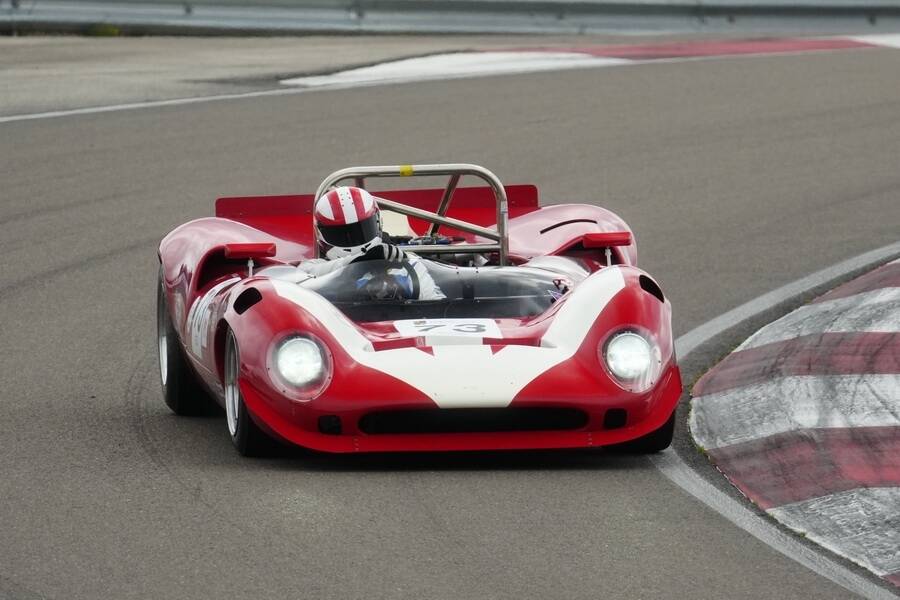
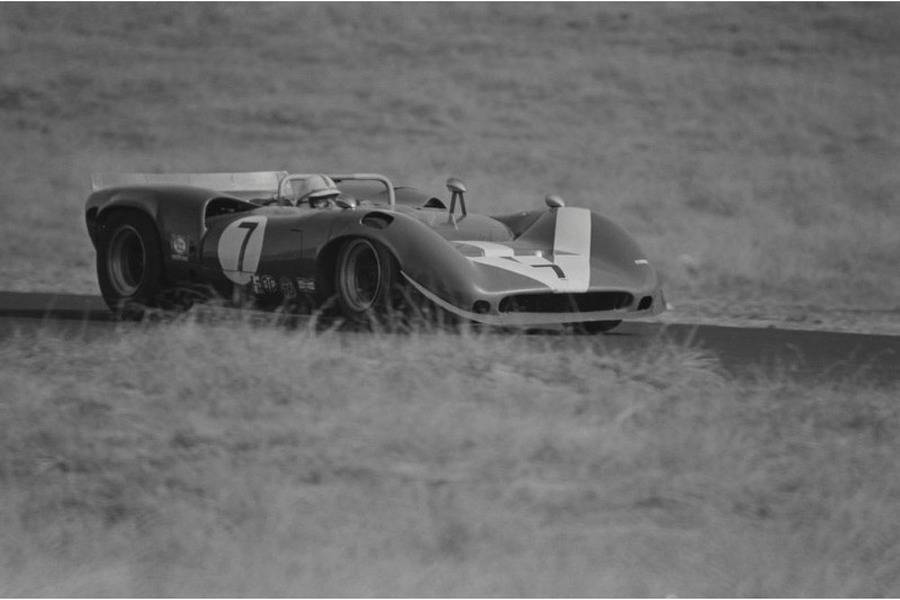
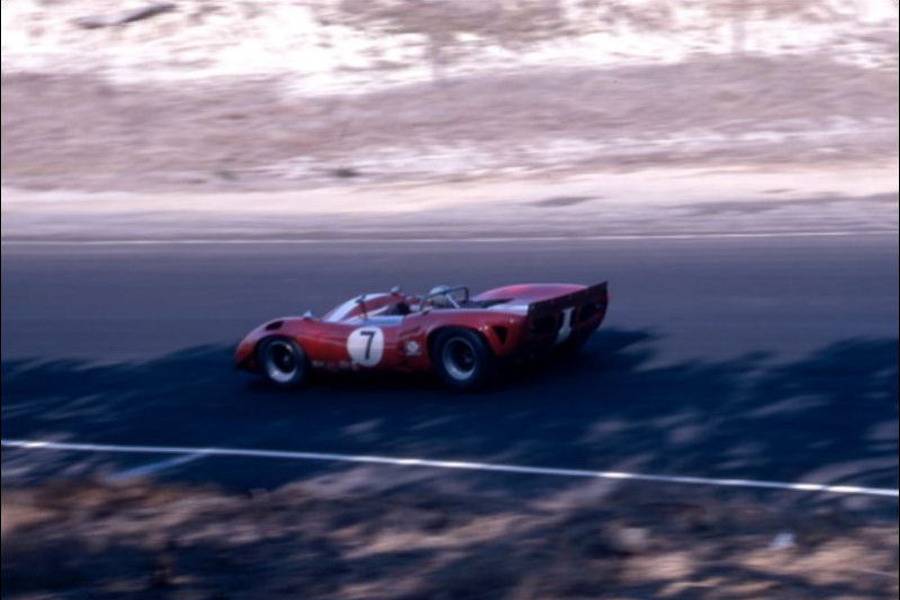
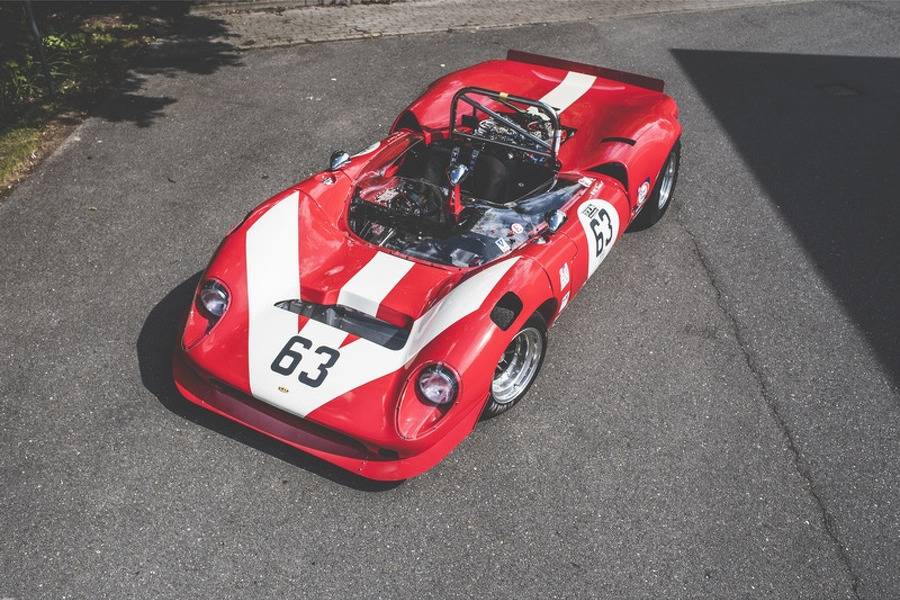
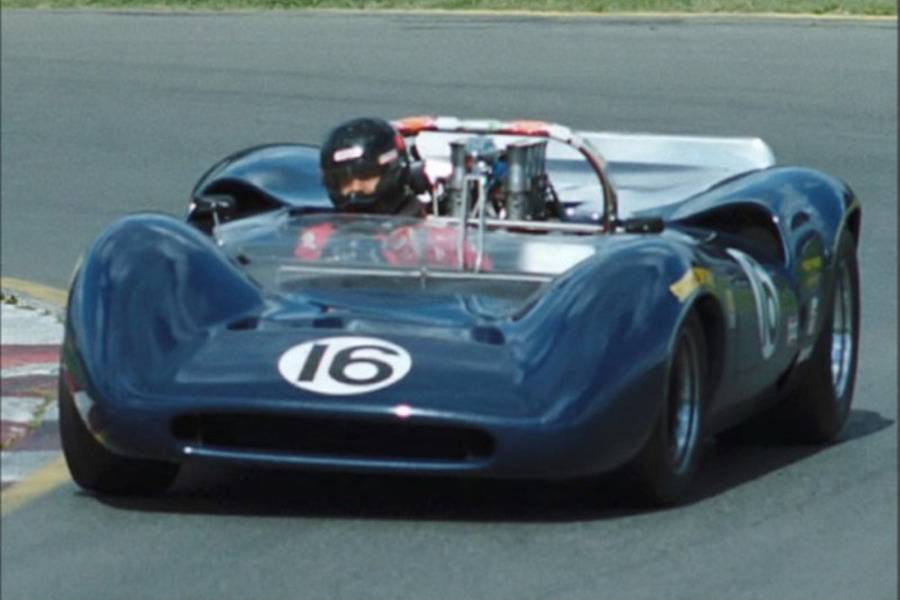
By 1967, the ground beneath the feet of the motorsport establishment was shaking. The Canadian-American Challenge Cup (Can-Am) had exploded into existence a year prior, creating a gladiatorial arena where unlimited power and minimal regulation were the only laws of the land. Lola, under the guidance of the brilliant Eric Broadley, had drawn first blood, securing the inaugural 1966 championship with John Surtees and the T70 Mk II. But in racing, yesterday’s trophy is tomorrow’s paperweight. The 1967 season brought a new threat in the form of the papaya-orange McLaren M6As, machines that prioritized aerodynamic downforce over pure aesthetic beauty. To defend his crown, Broadley unveiled the Lola T70 Mk III Spyder. While its closed-cockpit sibling, the Mk III Coupe, was designed to hunt Ferraris on the Mulsanne Straight, the Spyder was built for a knife fight in a phone booth. It was lighter, sharper, and, when fitted with the high-revving Chevrolet 5.7-litre (350 cubic inch) Small Block V8, it represented the pinnacle of balance before the series descended into the heavy-metal madness of 7.0-litre Big Blocks.
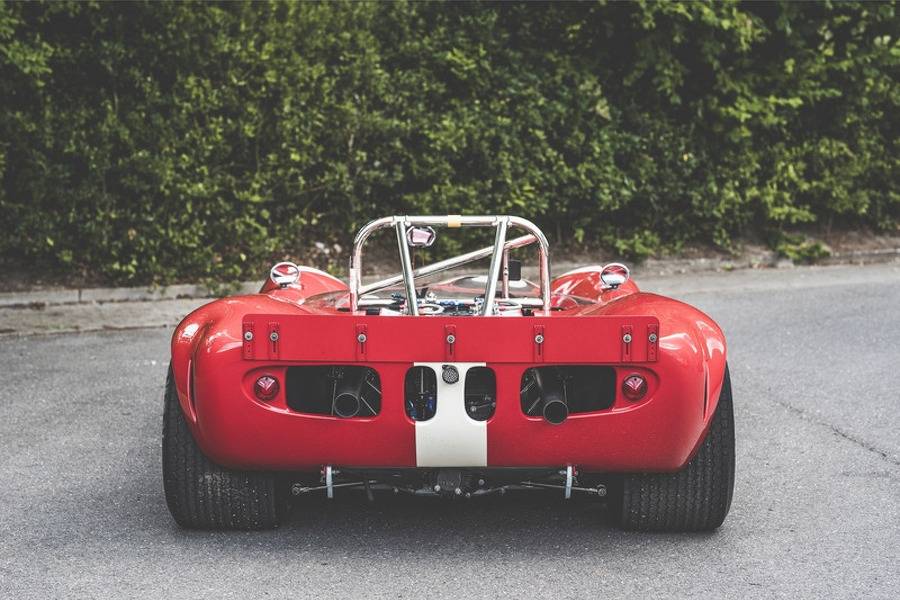
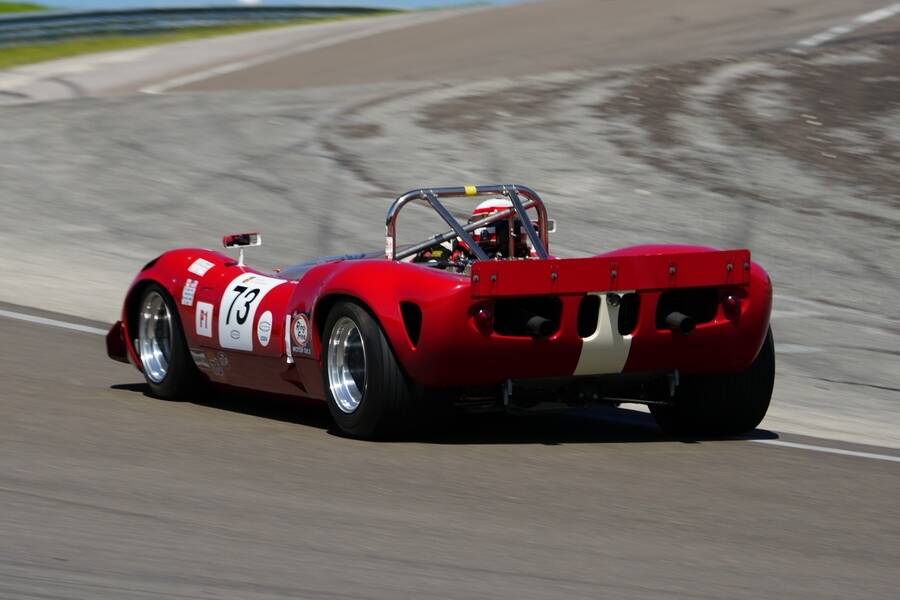
Technically, the Mk III Spyder was a subtle but significant refinement of the championship-winning Mk II. Broadley retained the hybrid monocoque construction—a bathtub of polished aluminium sheeting bonded and riveted to steel bulkheads. This structure was robust and stiff, carrying the fuel in massive side pontoons to keep the center of gravity mere inches off the tarmac. The most visible changes were in the bodywork. The Mk III Spyder adopted a squared-off tail section, moving away from the rounded, organic curves of the Mk II. This “Kamm tail” design was an aerodynamic necessity, reducing drag and managing the turbulent air exiting the rear of the car. The front nose was also revised, with deeper radiator ducting to combat the overheating issues that had plagued earlier models in the stifling heat of Riverside and Las Vegas.
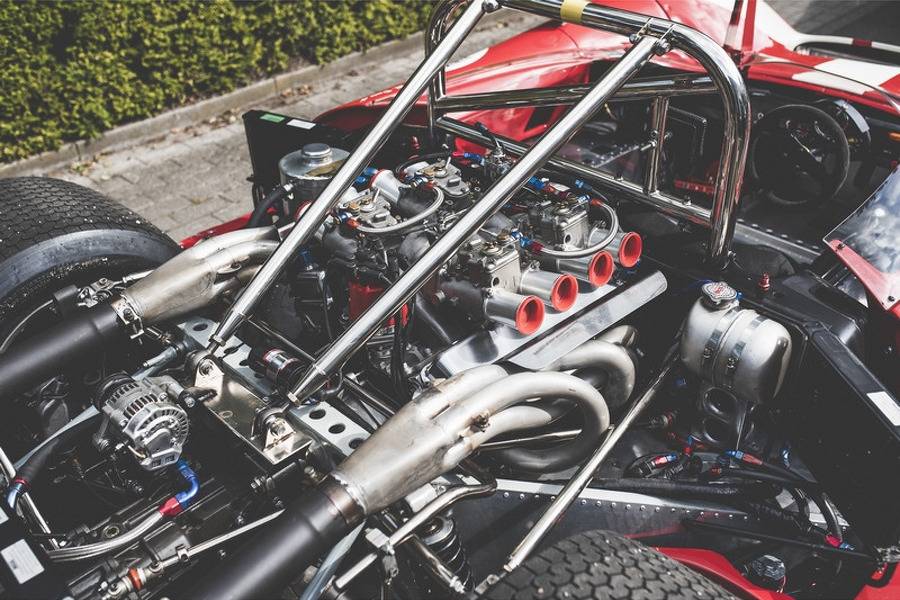
The heart of this specific variant was the Chevrolet Small Block V8. While the temptation in Can-Am was always to go bigger, the 5.7-litre (350ci) engine offered a distinct tactical advantage. Prepared by wizards like Traco Engineering or Al Bartz, these iron-block pushrod engines were significantly lighter than the massive 427ci units that were beginning to appear. Producing roughly 530 to 550 brake horsepower, the Small Block allowed for a better front-to-rear weight distribution. Fed by four Weber 48 IDA downdraught carburetors—their velocity stacks standing tall and proud in the rearview mirror—the engine screamed to 7,500 rpm with a sharp, staccato bark that differed wildly from the thunderous rumble of the Big Blocks. Power was routed through a Hewland LG600 four-speed transaxle, a gearbox strengthened specifically to handle the violence of American torque. The suspension featured unequal-length wishbones and coil-over dampers, with the geometry tweaked to reduce the “squat” under acceleration and “dive” under braking that had made the Mk II a handful at the limit.
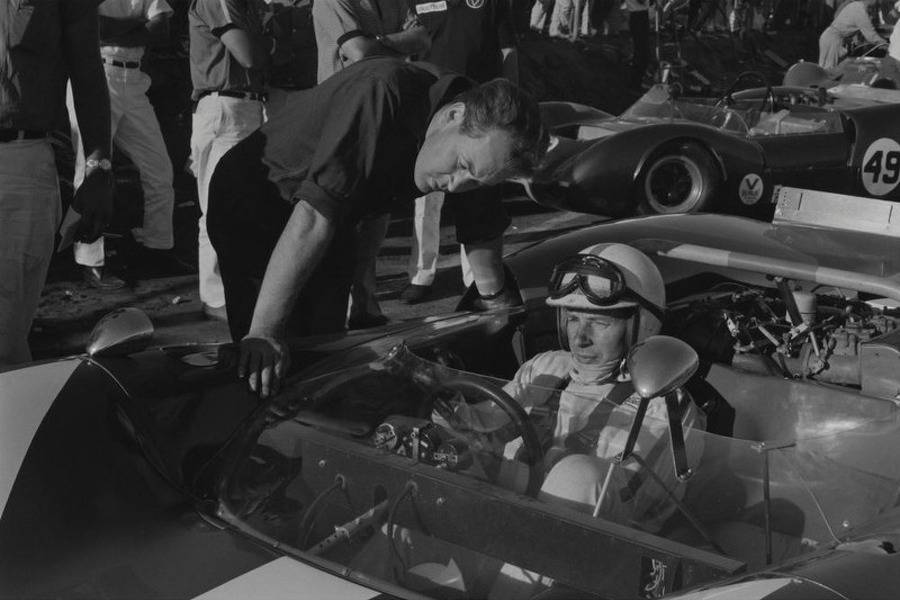
The competitive history of the T70 Mk III Spyder is a tale of heroic defense against the rising McLaren tide. In the 1967 Can-Am season, Team Surtees and privateers fought valiantly. John Surtees managed to secure a victory at the season finale in Las Vegas, proving that the T70 concept still had life. However, the Mk III Spyder’s greatest success arguably came not in Can-Am, but in the United States Road Racing Championship (USRRC). It was here that the legendary partnership of Roger Penske and Mark Donohue utilized the T70 Mk III Spyder to devastating effect. Running the Sunoco-blue Lola with a meticulously prepared 350ci Chevy, Donohue dominated the 1967 USRRC season. The car’s reliability, combined with Donohue’s engineering feedback (“Captain Nice” famously re-engineered suspension components himself), allowed them to crush the opposition, winning six of the eight races. This dominance cemented the T70 Mk III Spyder’s reputation as the ultimate privateer weapon—a car that, when run with professional precision, was unbeatable.
The 1967 Spyder also occupies a unique cultural space as the last of the “pretty” Can-Am cars. By 1968, the relentless pursuit of downforce led to the proliferation of massive high wings and wedge shapes that, while effective, lacked the sensual beauty of the T70. The Mk III Spyder was a machine where the driver was still visible, wrestling with a thin steering wheel, shoulders exposed to the wind, sitting in a bath of heat radiating from the front radiator and the engine inches behind his spine. It was a visceral, analog experience, demanding a physical connection between man and machine that modern aerodynamics would soon dilute.
The legacy of the 1967 Lola T70 Mk III Spyder is secure in the pantheon of motorsport. It was the bridge between the early “run what you brung” specials and the later, purpose-built ground-effect monsters. It gave Mark Donohue his first major sports car championship, launching the Penske dynasty that continues to this day. While it eventually succumbed to the brute force of the McLaren M6A and M8 series in Can-Am, the T70 Spyder remains the benchmark for vintage racing today. In events like the Goodwood Revival or the Monterey Historics, the Mk III Spyder is often the star of the show—not just because it is fast, but because it represents the perfect intersection of British chassis engineering and American hot-rod culture. It is a rolling testament to the era when Eric Broadley and a Chevy Small Block could take on the world, and win.
Brand
Produced from
Portal
Vehicle category
Model line
Predecessor
Sucessor
Brand
Produced from
Portal
Vehicle category
Model line
Model generation
Predecessor
Sucessor
Submodel Overview
By 1967, the ground beneath the feet of the motorsport establishment was shaking. The Canadian-American Challenge Cup (Can-Am) had exploded into existence a year prior, creating a gladiatorial arena where unlimited power and minimal regulation were the only laws of the land. Lola, under the guidance of the brilliant Eric Broadley, had drawn first blood, securing the inaugural 1966 championship with John Surtees and the T70 Mk II. But in racing, yesterday’s trophy is tomorrow’s paperweight. The 1967 season brought a new threat in the form of the papaya-orange McLaren M6As, machines that prioritized aerodynamic downforce over pure aesthetic beauty. To defend his crown, Broadley unveiled the Lola T70 Mk III Spyder. While its closed-cockpit sibling, the Mk III Coupe, was designed to hunt Ferraris on the Mulsanne Straight, the Spyder was built for a knife fight in a phone booth. It was lighter, sharper, and, when fitted with the high-revving Chevrolet 5.7-litre (350 cubic inch) Small Block V8, it represented the pinnacle of balance before the series descended into the heavy-metal madness of 7.0-litre Big Blocks.
Technically, the Mk III Spyder was a subtle but significant refinement of the championship-winning Mk II. Broadley retained the hybrid monocoque construction—a bathtub of polished aluminium sheeting bonded and riveted to steel bulkheads. This structure was robust and stiff, carrying the fuel in massive side pontoons to keep the center of gravity mere inches off the tarmac. The most visible changes were in the bodywork. The Mk III Spyder adopted a squared-off tail section, moving away from the rounded, organic curves of the Mk II. This “Kamm tail” design was an aerodynamic necessity, reducing drag and managing the turbulent air exiting the rear of the car. The front nose was also revised, with deeper radiator ducting to combat the overheating issues that had plagued earlier models in the stifling heat of Riverside and Las Vegas.
The heart of this specific variant was the Chevrolet Small Block V8. While the temptation in Can-Am was always to go bigger, the 5.7-litre (350ci) engine offered a distinct tactical advantage. Prepared by wizards like Traco Engineering or Al Bartz, these iron-block pushrod engines were significantly lighter than the massive 427ci units that were beginning to appear. Producing roughly 530 to 550 brake horsepower, the Small Block allowed for a better front-to-rear weight distribution. Fed by four Weber 48 IDA downdraught carburetors—their velocity stacks standing tall and proud in the rearview mirror—the engine screamed to 7,500 rpm with a sharp, staccato bark that differed wildly from the thunderous rumble of the Big Blocks. Power was routed through a Hewland LG600 four-speed transaxle, a gearbox strengthened specifically to handle the violence of American torque. The suspension featured unequal-length wishbones and coil-over dampers, with the geometry tweaked to reduce the “squat” under acceleration and “dive” under braking that had made the Mk II a handful at the limit.
The competitive history of the T70 Mk III Spyder is a tale of heroic defense against the rising McLaren tide. In the 1967 Can-Am season, Team Surtees and privateers fought valiantly. John Surtees managed to secure a victory at the season finale in Las Vegas, proving that the T70 concept still had life. However, the Mk III Spyder’s greatest success arguably came not in Can-Am, but in the United States Road Racing Championship (USRRC). It was here that the legendary partnership of Roger Penske and Mark Donohue utilized the T70 Mk III Spyder to devastating effect. Running the Sunoco-blue Lola with a meticulously prepared 350ci Chevy, Donohue dominated the 1967 USRRC season. The car’s reliability, combined with Donohue’s engineering feedback (“Captain Nice” famously re-engineered suspension components himself), allowed them to crush the opposition, winning six of the eight races. This dominance cemented the T70 Mk III Spyder’s reputation as the ultimate privateer weapon—a car that, when run with professional precision, was unbeatable.
The 1967 Spyder also occupies a unique cultural space as the last of the “pretty” Can-Am cars. By 1968, the relentless pursuit of downforce led to the proliferation of massive high wings and wedge shapes that, while effective, lacked the sensual beauty of the T70. The Mk III Spyder was a machine where the driver was still visible, wrestling with a thin steering wheel, shoulders exposed to the wind, sitting in a bath of heat radiating from the front radiator and the engine inches behind his spine. It was a visceral, analog experience, demanding a physical connection between man and machine that modern aerodynamics would soon dilute.
The legacy of the 1967 Lola T70 Mk III Spyder is secure in the pantheon of motorsport. It was the bridge between the early “run what you brung” specials and the later, purpose-built ground-effect monsters. It gave Mark Donohue his first major sports car championship, launching the Penske dynasty that continues to this day. While it eventually succumbed to the brute force of the McLaren M6A and M8 series in Can-Am, the T70 Spyder remains the benchmark for vintage racing today. In events like the Goodwood Revival or the Monterey Historics, the Mk III Spyder is often the star of the show—not just because it is fast, but because it represents the perfect intersection of British chassis engineering and American hot-rod culture. It is a rolling testament to the era when Eric Broadley and a Chevy Small Block could take on the world, and win.
Tech Specs
Technical Specifications
Tech Specs
Technical Specifications
Engine
01
03
Internal combustion engine
Configuration
Chevrolet Small Block (Race prepared), V8 - 90º
Location
Mid, longitudinally mounted
Construction
Cast iron block, Aluminium cylinder heads
Displacement (cc)
5,735 cc
Displacement (cu in)
350.0 cu in
Compression
12.0:1
Bore x Stroke
101.6 mm x 88.4 mm
Valvetrain
2 valves per cylinder, OHV (Pushrod)
Fuel feed
Lucas mechanical fuel injection
Lubrication
Dry sump
Aspiration
Naturally aspirated
Output
Power (hp)
540 hp
Power (kW)
403 kW
Max power at
7,200 RPM
Torque (Nm)
590 Nm
Torque (ft lbs)
435 ft lbs
Max torque at
5,500 RPM
Drivetrain
02
03
Chassis
Type
Monocoque
Material
Aluminium (Riveted and bonded L72 sheet)
Body
Material
Fibreglass reinforced plastic
Transmission
Gearbox
Hewland LG600, 5-speed manual (or Hewland LG500 4-speed)
Drive
Rear Wheel Drive (Limited Slip Differential)
Suspension
Front
Independent, double wishbones, coil springs over adjustable dampers, anti-roll bar
Rear
Independent, reversed lower wishbones, top links, twin radius arms, coil springs over adjustable dampers
Steering
Type
Rack and pinion
Brakes
Front
Ventilated discs Ø305 mm, 4-piston calipers (Girling)
Rear
Ventilated discs Ø305 mm, 4-piston calipers (Girling)
Wheels
Front
10" x 15" (Cast Magnesium)
Rear
14" x 15" (Cast Magnesium)
Tires
Front
10.50/15
Rear
14.00/15
Dimensions and performance
03
03
Dimensions
Length (mm)
4,140 mm
Length (in)
163.0 in
Width (mm)
1,880 mm
Width (in)
74.0 in
Height (mm)
800 mm
Height (in)
31.5 in
Wheelbase (mm)
2,413 mm
Wheelbase (in)
95.0 in
Weight (kg)
700 kg
Weight (lbs)
1,543 lbs
Performance
Power to weight
~0.77 hp/kg
Top speed (km/h)
~315 km/h
Top speed (mph)
~196 mph
0-100 km/h (0-60 mph)
~3.0 s