
Lotus 30




Brand
Produced from
Vehicle category
Portal
Model line
Model generation
Predecessor
Sucessor
Model Overview
In the grand, often romanticized narrative of Colin Chapman’s Lotus engineering, there is a tendency to view every creation that rolled out of Cheshunt and later Hethel as a stroke of untouchable genius. The Lotus 25 revolutionized Formula 1 with its monocoque; the Elan redefined the sports car with its backbone chassis; the 72 reshaped aerodynamics. But true motorsport scholarship requires an honest examination of the failures as well as the triumphs, and perhaps no vehicle embodies the duality of Chapman’s brilliance and his perilous hubris quite like the Lotus 30. Introduced in 1964, the Lotus 30 was Chapman’s ambitious, aesthetically stunning, and ultimately terrifying answer to the burgeoning Group 7 sports car category—the class that would eventually mutate into the Can-Am series. It arrived at a time when the “Big Banger” sports racers were shifting from the agile, small-displacement European style to the thunderous, V8-powered American philosophy. The Lotus 19 “Monte Carlo,” its spiritual predecessor, had been a giant-killer, a nimble dancer that could embarrass larger cars. The Lotus 30, however, was tasked with harnessing the raw torque of a 4.7-litre Ford V8, and in trying to apply lightweight principles to heavyweight horsepower, Lotus created one of the most controversial, dangerous, yet hauntingly beautiful machines in racing history.
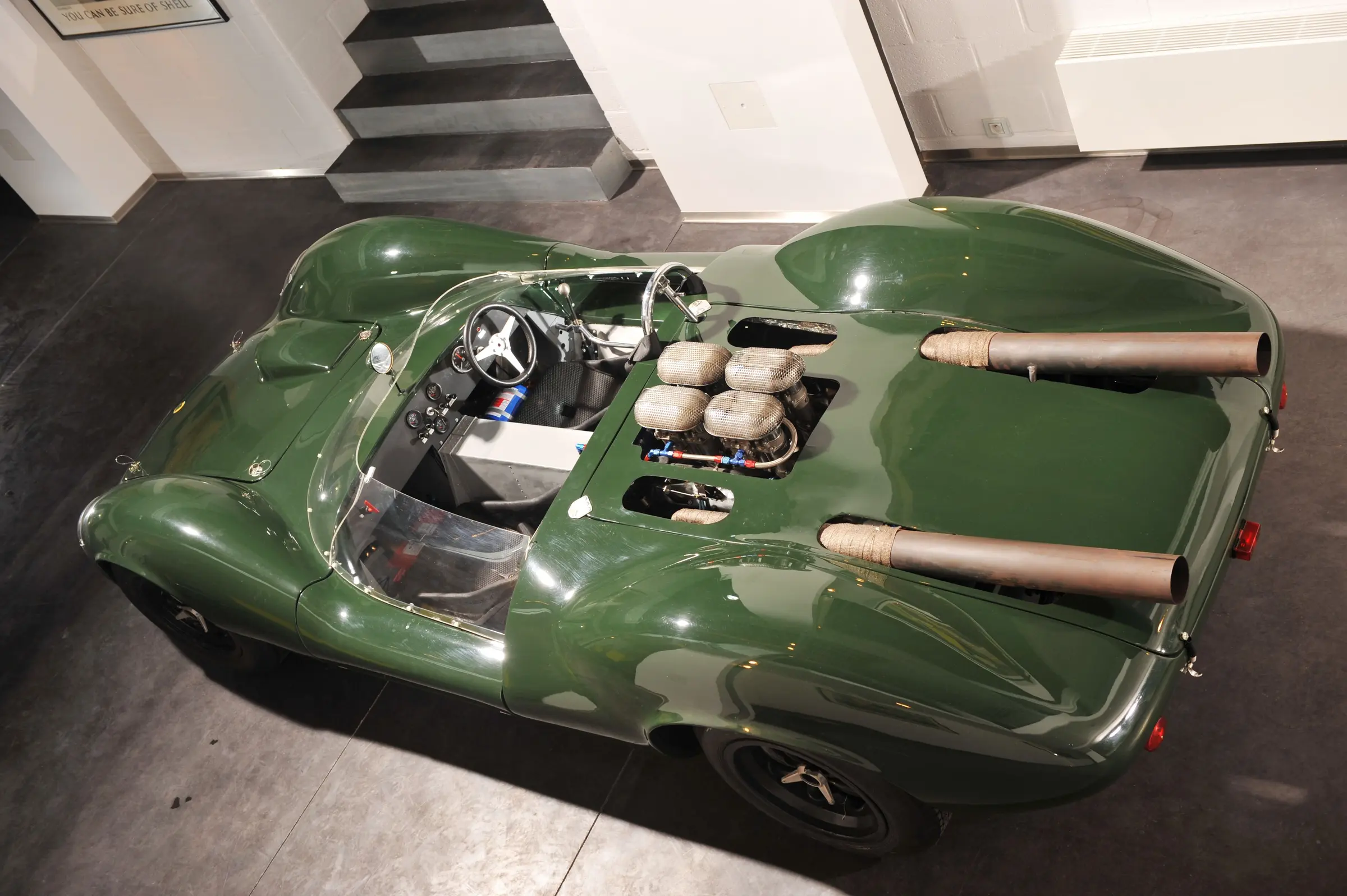
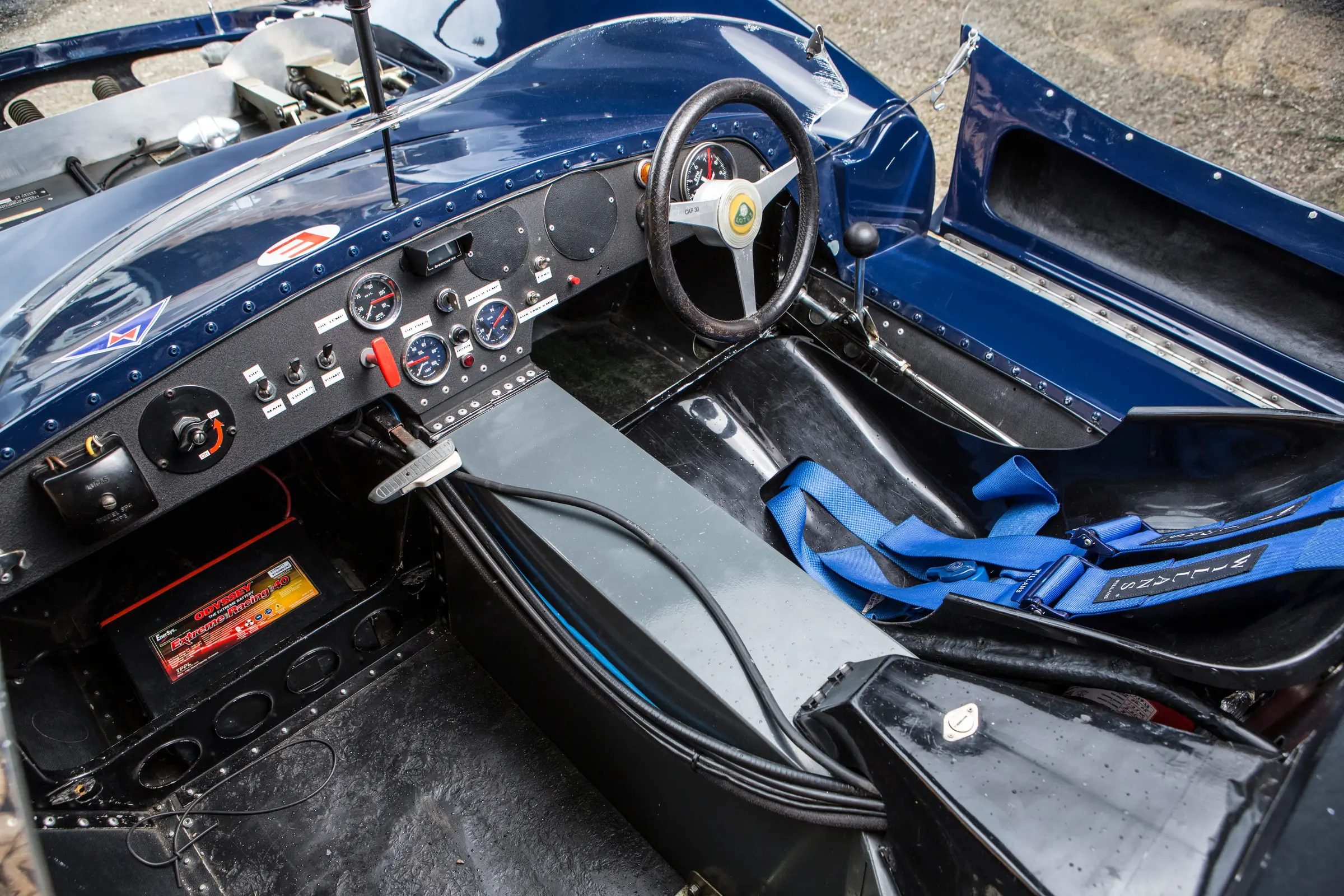
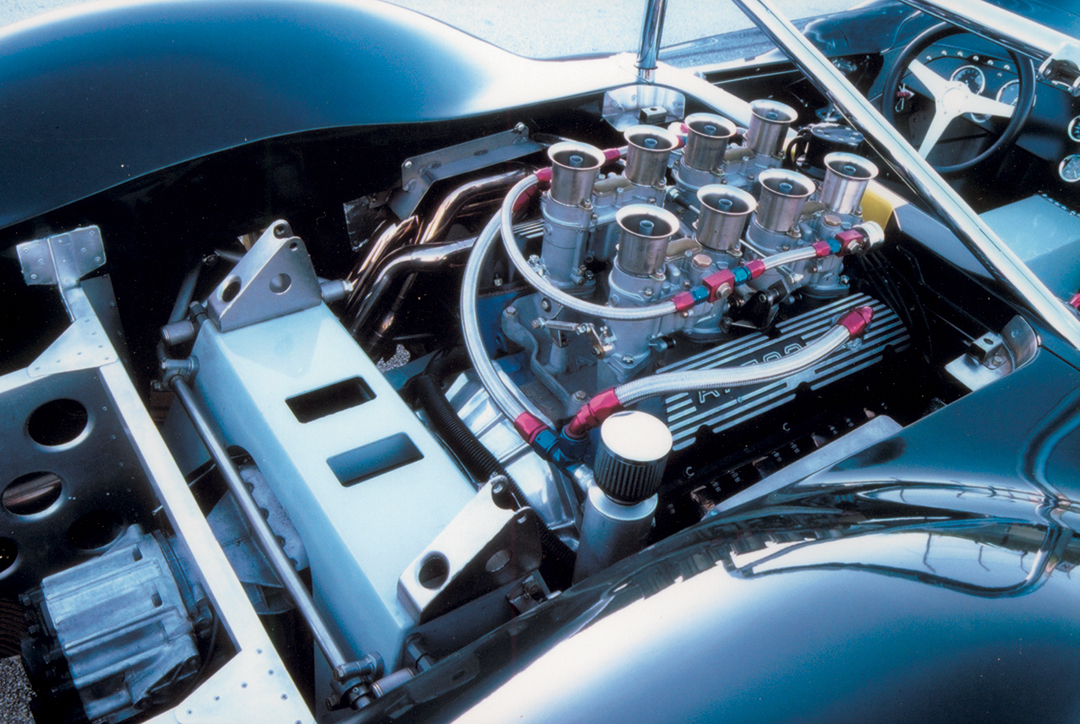
To analyze the Lotus 30 is to look at a piece of engineering that works perfectly in theory but struggles violently in reality. The car was penned by Chapman and Len Terry, and the core concept was to scale up the architecture of the Lotus Elan road car for the race track. The central structural spine was a sheet-steel backbone chassis—essentially a giant “tuning fork” shape. The driver sat in the middle, the engine sat in the fork at the rear, and the suspension hung off the ends. On the lightweight Elan, this provided ample rigidity. On the Lotus 30, tasked with containing a cast-iron Ford 289 cubic inch (4.7-litre) V8 and immense cornering loads, it was woefully inadequate. The chassis was essentially a beam, and under the torque of the V8, it acted like a torsion bar.
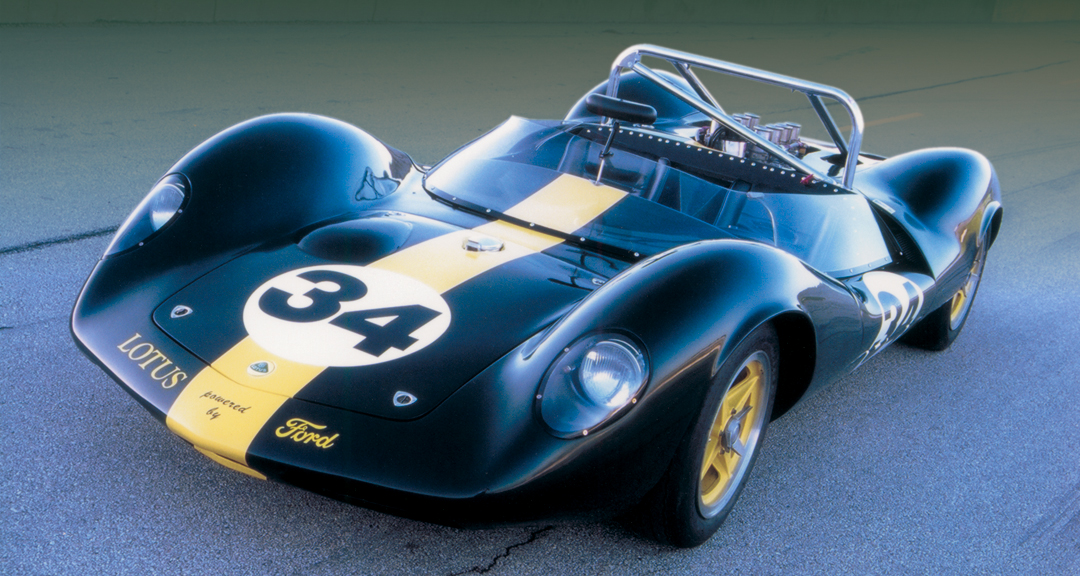
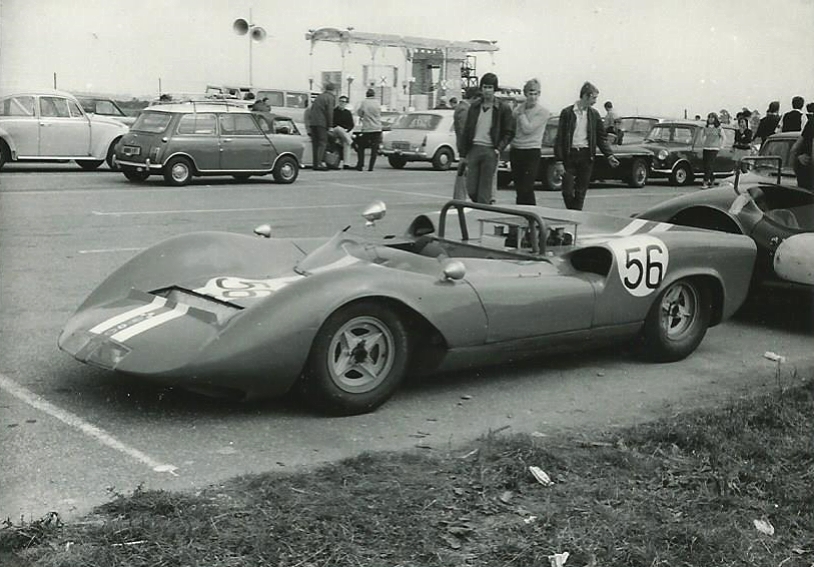
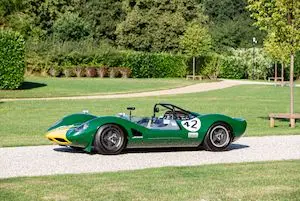
The bodywork, however, was a masterclass in fiberglass sculpture. It was impossibly low, swooping over 13-inch wheels—a rim size chosen by Chapman to lower the center of gravity and reduce frontal area, but which severely limited brake disc size and tire options. The car featured a distinctive ducktail rear spoiler and a shovel-like nose that seemed to vacuum the tarmac. It was, arguably, the most visually arresting sports racer of the mid-60s, sleeker than the brutish Lola T70 and more organic than the angular Chaparrals.
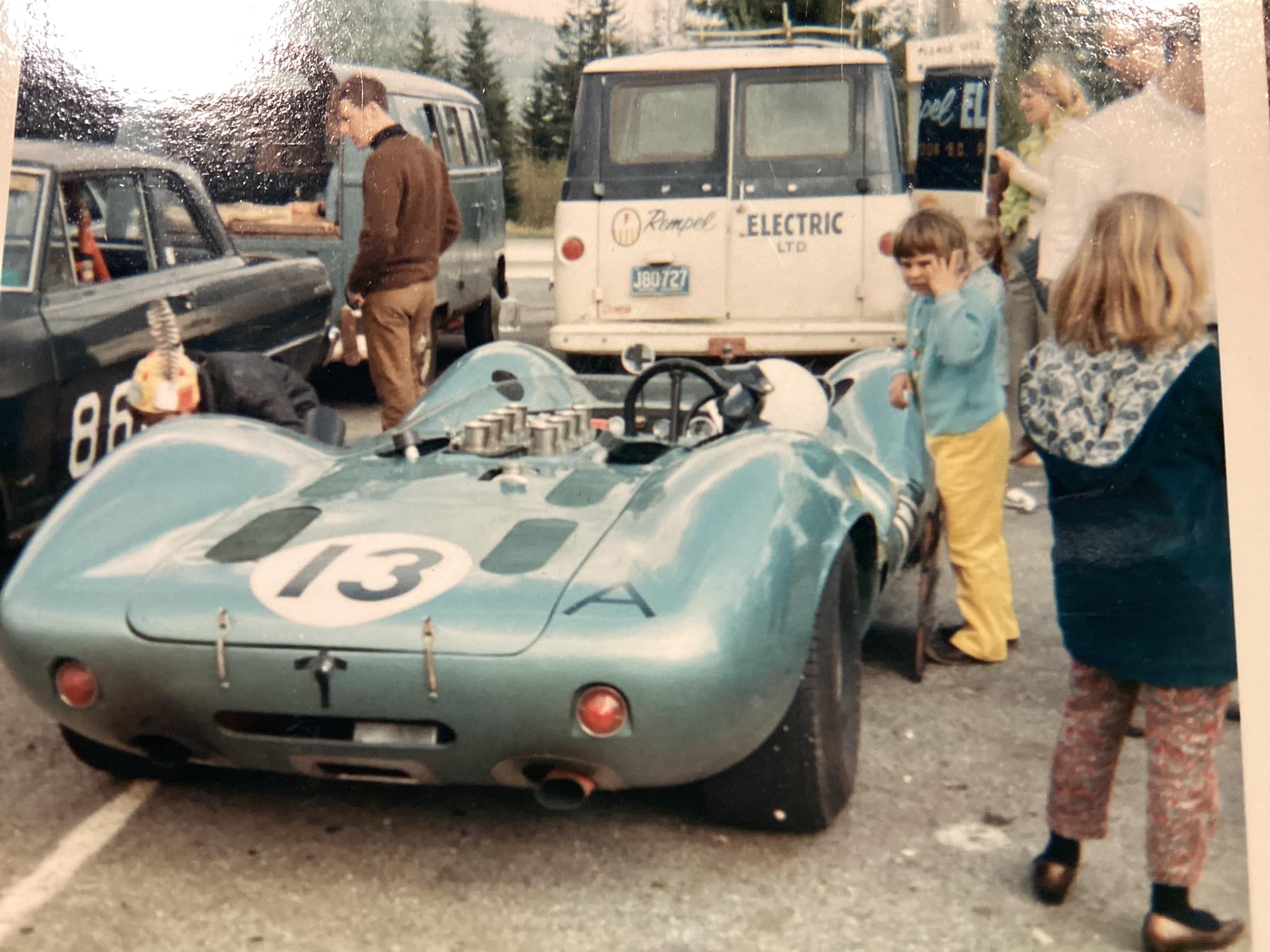
Mechanically, the Lotus 30 was a catalogue of anxieties. The Ford V8, producing roughly 350 to 360 brake horsepower in early tune, was mated to a ZF 5DS20 transaxle. While the powertrain was robust, the vessel containing it was not. The backbone chassis flexed so severely that suspension geometry became a variable rather than a constant. At speed, the rear wheels would steer the car as the chassis twisted, and the suspension pickup points were known to crack or tear away completely. The 13-inch wheels shrouded diminutive Girling disc brakes that would cook themselves within laps of a heavy braking circuit like Riverside or Goodwood. To drive a Lotus 30 fast was not an act of precision; it was an act of faith. You were piloting a vehicle that was effectively hinging in the middle, while sitting in a semi-reclined position, wrestling with heavy steering and fading brakes, all while a Detroit V8 tried to twist the steel spine apart inches behind your head.
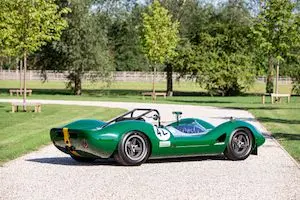
Despite these fundamental flaws, the history of the Lotus 30 is illuminated by the supernatural talent of one man: Jim Clark. If there is a reason the Lotus 30 is remembered with reverence rather than ridicule, it is because Clark managed to do the impossible with it. While other drivers, even talented ones, found the car treacherous and terrifying, Clark could seemingly communicate with the machine’s mechanical poltergeists. In 1964 and 1965, Clark wrestled the Works Lotus 30 (often in the iconic green and yellow livery) to victories that defied logic. He won at Silverstone, Mallroy Park, and Mosport, often with a wheel in the air, the chassis visibly flexing, and the car sliding at impossible angles.
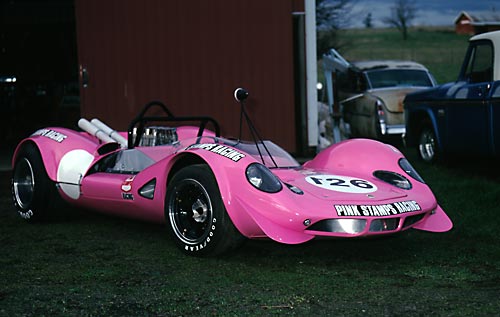
The car’s history is also colorful—quite literally—thanks to the privateers. When it became clear that the Lotus 30 was a fragile thoroughbred, it found a home with teams like Willment Racing. Painted in a garish, unforgettable red and white (and later the famous “Pink Stamps” livery on the subsequent Lotus 40), the car became a fan favorite in the UK. Frank Gardner and other brave souls campaigned the 30 in the Guards Trophy and various British sports car races. However, the results were almost always binary: the car would either be incredibly fast and break, or it would simply break. There were horrific accidents, stemming from component failure—wishbones snapping, wheels detaching, and chassis welds giving up. It earned the moniker “The Widowmaker” in some circles, a dark reputation that shadowed its undeniable speed on the straights.
Its rivalry with the Lola T70 is the defining conflict of its existence. The Lola was everything the Lotus was not: a conventional, stiff, monocoque (or semi-monocoque) tub with standard-sized wheels and adequate brakes. Eric Broadley had built a race car; Colin Chapman had built a theory. The Lola T70 decimated the Lotus 30 in terms of sales and reliability, becoming the privateer standard, while the Lotus 30 remained a curiosity for the brave or the masochistic.
The legacy of the Lotus 30 is inextricably linked to its successor, the Lotus 40, which arrived in 1965. The 40 was essentially a 30 with a larger engine (a 5.3-litre or 5.8-litre Ford) and a slightly beefed-up chassis. It famously prompted American driver Richie Ginther to deliver one of the most savage burns in motorsport history: when asked about the new car, he remarked, “It’s a Lotus 30 with ten more mistakes.” The failure of the 30 and 40 effectively ended Lotus’s serious factory involvement in the “Big Banger” sports car category. Chapman retreated to what he knew best—Formula 1 and Indianapolis—where his lightweight philosophy was better suited.
Yet, in the modern classic car era, the Lotus 30 has been redeemed by nostalgia and modern metallurgy. Today, historic racers can reinforce the chassis, fit better materials, and enjoy what is undeniably one of the most visceral driving experiences on the planet. The shape remains breathtaking, a low-slung testament to 1960s aerodynamics. The Lotus 30 serves as a vital cautionary tale in the pantheon of motorsport: it proved that genius is not infallible, that scaling up a design is fraught with peril, and that a truly great driver like Jim Clark could win in a wheelbarrow if you put an engine in it. It stands as a beautiful, flawed masterpiece, a car that tried to kill its drivers but looked absolutely magnificent while trying.
Portal
Model line
Model generation
Predecessor
Sucessor
Brand
Produced from
Vehicle category
Portal
Model line
Model generation
Predecessor
Sucessor
Model Overview
In the grand, often romanticized narrative of Colin Chapman’s Lotus engineering, there is a tendency to view every creation that rolled out of Cheshunt and later Hethel as a stroke of untouchable genius. The Lotus 25 revolutionized Formula 1 with its monocoque; the Elan redefined the sports car with its backbone chassis; the 72 reshaped aerodynamics. But true motorsport scholarship requires an honest examination of the failures as well as the triumphs, and perhaps no vehicle embodies the duality of Chapman’s brilliance and his perilous hubris quite like the Lotus 30. Introduced in 1964, the Lotus 30 was Chapman’s ambitious, aesthetically stunning, and ultimately terrifying answer to the burgeoning Group 7 sports car category—the class that would eventually mutate into the Can-Am series. It arrived at a time when the “Big Banger” sports racers were shifting from the agile, small-displacement European style to the thunderous, V8-powered American philosophy. The Lotus 19 “Monte Carlo,” its spiritual predecessor, had been a giant-killer, a nimble dancer that could embarrass larger cars. The Lotus 30, however, was tasked with harnessing the raw torque of a 4.7-litre Ford V8, and in trying to apply lightweight principles to heavyweight horsepower, Lotus created one of the most controversial, dangerous, yet hauntingly beautiful machines in racing history.
To analyze the Lotus 30 is to look at a piece of engineering that works perfectly in theory but struggles violently in reality. The car was penned by Chapman and Len Terry, and the core concept was to scale up the architecture of the Lotus Elan road car for the race track. The central structural spine was a sheet-steel backbone chassis—essentially a giant “tuning fork” shape. The driver sat in the middle, the engine sat in the fork at the rear, and the suspension hung off the ends. On the lightweight Elan, this provided ample rigidity. On the Lotus 30, tasked with containing a cast-iron Ford 289 cubic inch (4.7-litre) V8 and immense cornering loads, it was woefully inadequate. The chassis was essentially a beam, and under the torque of the V8, it acted like a torsion bar.
The bodywork, however, was a masterclass in fiberglass sculpture. It was impossibly low, swooping over 13-inch wheels—a rim size chosen by Chapman to lower the center of gravity and reduce frontal area, but which severely limited brake disc size and tire options. The car featured a distinctive ducktail rear spoiler and a shovel-like nose that seemed to vacuum the tarmac. It was, arguably, the most visually arresting sports racer of the mid-60s, sleeker than the brutish Lola T70 and more organic than the angular Chaparrals.
Mechanically, the Lotus 30 was a catalogue of anxieties. The Ford V8, producing roughly 350 to 360 brake horsepower in early tune, was mated to a ZF 5DS20 transaxle. While the powertrain was robust, the vessel containing it was not. The backbone chassis flexed so severely that suspension geometry became a variable rather than a constant. At speed, the rear wheels would steer the car as the chassis twisted, and the suspension pickup points were known to crack or tear away completely. The 13-inch wheels shrouded diminutive Girling disc brakes that would cook themselves within laps of a heavy braking circuit like Riverside or Goodwood. To drive a Lotus 30 fast was not an act of precision; it was an act of faith. You were piloting a vehicle that was effectively hinging in the middle, while sitting in a semi-reclined position, wrestling with heavy steering and fading brakes, all while a Detroit V8 tried to twist the steel spine apart inches behind your head.
Despite these fundamental flaws, the history of the Lotus 30 is illuminated by the supernatural talent of one man: Jim Clark. If there is a reason the Lotus 30 is remembered with reverence rather than ridicule, it is because Clark managed to do the impossible with it. While other drivers, even talented ones, found the car treacherous and terrifying, Clark could seemingly communicate with the machine’s mechanical poltergeists. In 1964 and 1965, Clark wrestled the Works Lotus 30 (often in the iconic green and yellow livery) to victories that defied logic. He won at Silverstone, Mallroy Park, and Mosport, often with a wheel in the air, the chassis visibly flexing, and the car sliding at impossible angles.
The car’s history is also colorful—quite literally—thanks to the privateers. When it became clear that the Lotus 30 was a fragile thoroughbred, it found a home with teams like Willment Racing. Painted in a garish, unforgettable red and white (and later the famous “Pink Stamps” livery on the subsequent Lotus 40), the car became a fan favorite in the UK. Frank Gardner and other brave souls campaigned the 30 in the Guards Trophy and various British sports car races. However, the results were almost always binary: the car would either be incredibly fast and break, or it would simply break. There were horrific accidents, stemming from component failure—wishbones snapping, wheels detaching, and chassis welds giving up. It earned the moniker “The Widowmaker” in some circles, a dark reputation that shadowed its undeniable speed on the straights.
Its rivalry with the Lola T70 is the defining conflict of its existence. The Lola was everything the Lotus was not: a conventional, stiff, monocoque (or semi-monocoque) tub with standard-sized wheels and adequate brakes. Eric Broadley had built a race car; Colin Chapman had built a theory. The Lola T70 decimated the Lotus 30 in terms of sales and reliability, becoming the privateer standard, while the Lotus 30 remained a curiosity for the brave or the masochistic.
The legacy of the Lotus 30 is inextricably linked to its successor, the Lotus 40, which arrived in 1965. The 40 was essentially a 30 with a larger engine (a 5.3-litre or 5.8-litre Ford) and a slightly beefed-up chassis. It famously prompted American driver Richie Ginther to deliver one of the most savage burns in motorsport history: when asked about the new car, he remarked, “It’s a Lotus 30 with ten more mistakes.” The failure of the 30 and 40 effectively ended Lotus’s serious factory involvement in the “Big Banger” sports car category. Chapman retreated to what he knew best—Formula 1 and Indianapolis—where his lightweight philosophy was better suited.
Yet, in the modern classic car era, the Lotus 30 has been redeemed by nostalgia and modern metallurgy. Today, historic racers can reinforce the chassis, fit better materials, and enjoy what is undeniably one of the most visceral driving experiences on the planet. The shape remains breathtaking, a low-slung testament to 1960s aerodynamics. The Lotus 30 serves as a vital cautionary tale in the pantheon of motorsport: it proved that genius is not infallible, that scaling up a design is fraught with peril, and that a truly great driver like Jim Clark could win in a wheelbarrow if you put an engine in it. It stands as a beautiful, flawed masterpiece, a car that tried to kill its drivers but looked absolutely magnificent while trying.
Generations
Model Generations

Submodels