
Alfa Romeo Giulia Srint Speciale (SS)
Brand
Produced from
Portal
Vehicle category
Model line
Predecessor
Successor
Submodel Overview
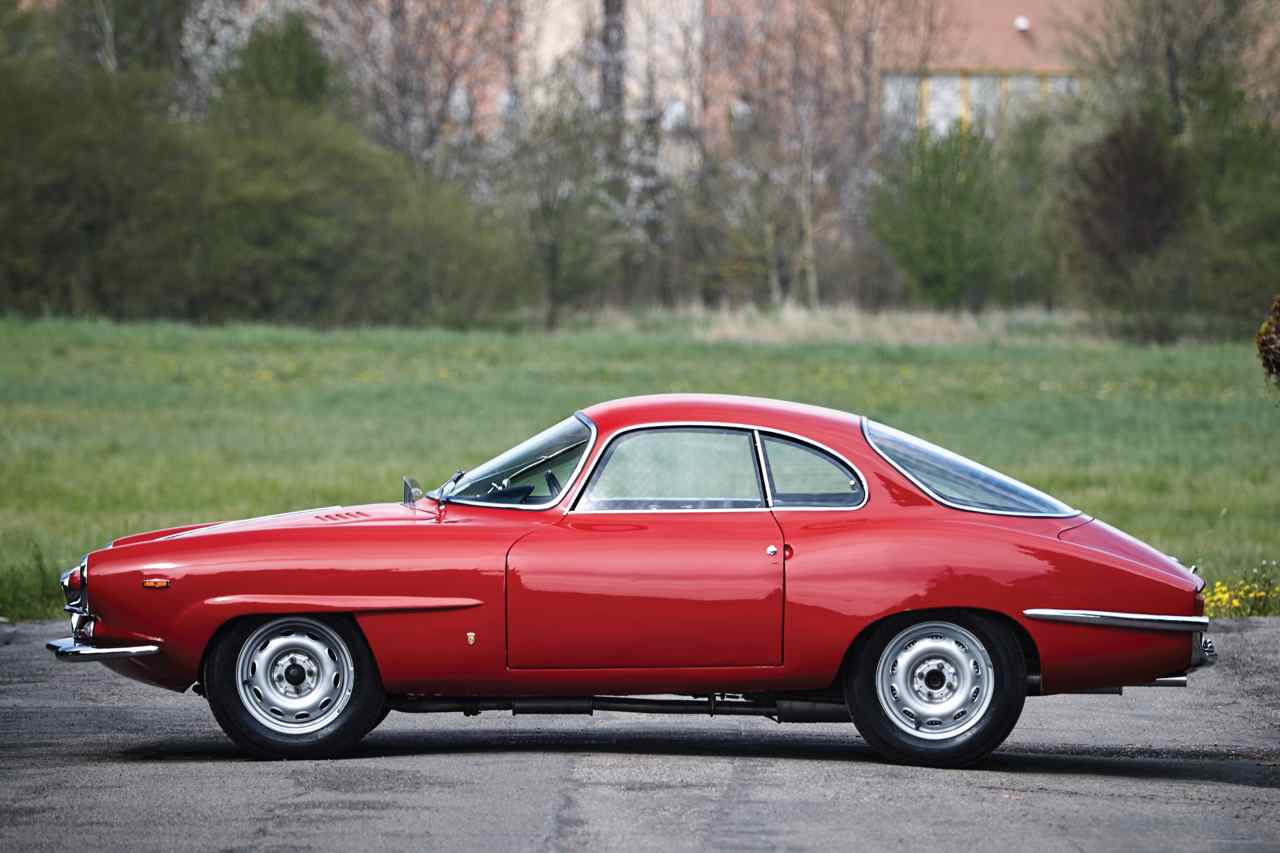
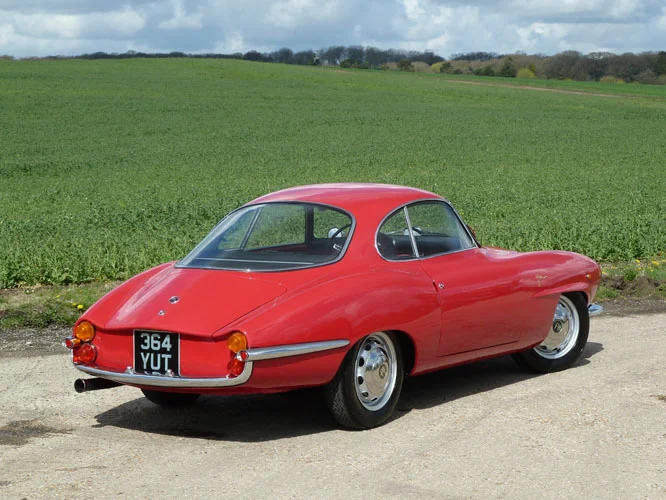
In the intoxicating, high-velocity realm of early 1960s Italian motoring, the pursuit of aerodynamic perfection was becoming an outright obsession. At Carrozzeria Bertone, a fiercely brilliant and eccentric designer named Franco Scaglione had already shocked the globe with his legendary B.A.T. (Berlinetta Aerodinamica Tecnica) concept cars. These studies in drag reduction heavily influenced Alfa Romeo’s desire to build a homologation weapon for the 1.3-liter racing classes, resulting in the 1959 Giulietta Sprint Speciale. However, the sweeping, voluptuous steel bodywork proved slightly too heavy for the racetrack, ultimately losing the motorsport crown to Zagato’s stripped-out SZ. Rather than discarding Scaglione’s breathtaking silhouette, Alfa Romeo pivoted. In 1963, they bestowed the car with the heart of the newly introduced 105-series Giulia, enlarging the displacement and refining the mechanicals to create the 1963 Alfa Romeo Giulia Sprint Speciale (SS). No longer a compromised track-day homologation special, the Giulia SS matured into a sophisticated, high-speed Gran Turismo. It arrived as a gentleman’s express, offering a profoundly glamorous alternative to the Porsche 356 B and the Lancia Flaminia Sport Zagato, perfectly tailored for the sweeping, newly laid asphalt of the Autostrada del Sole.
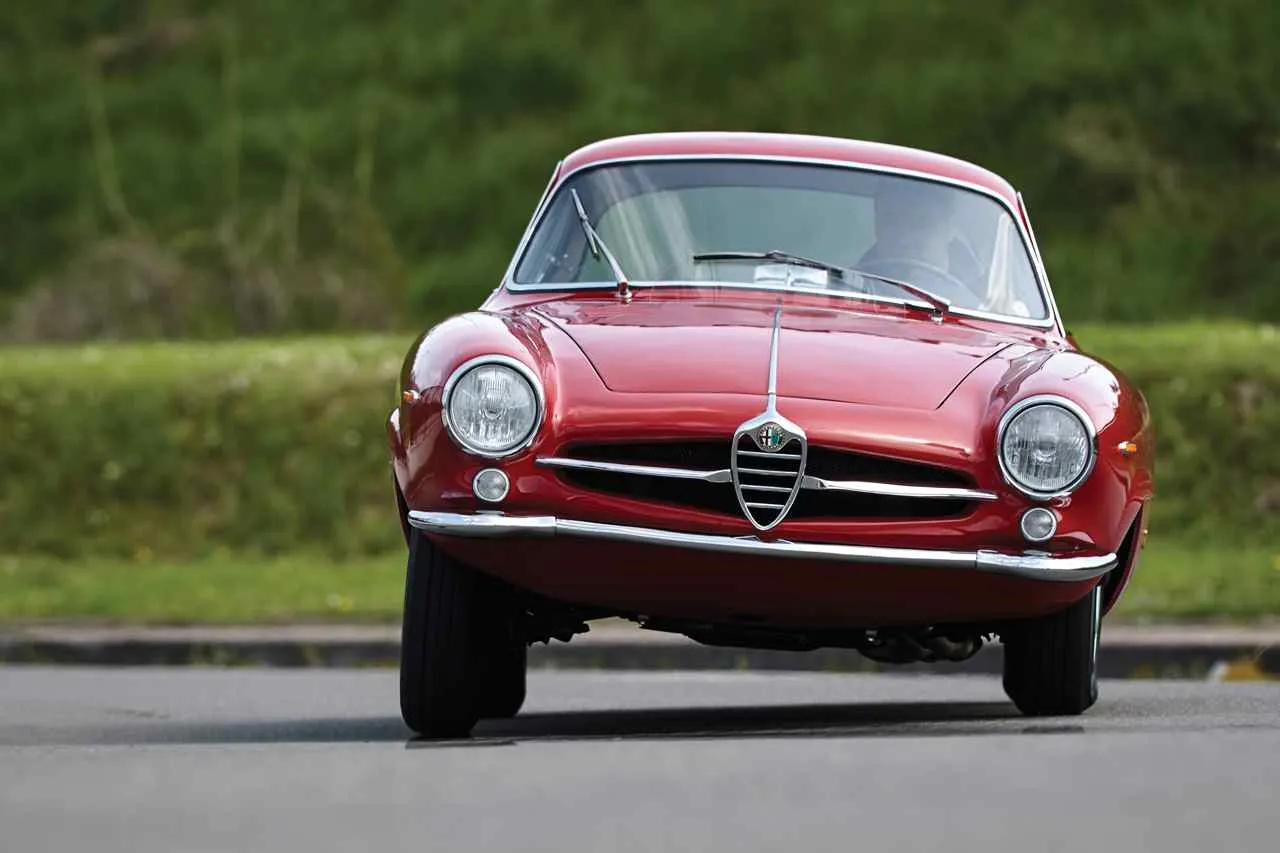
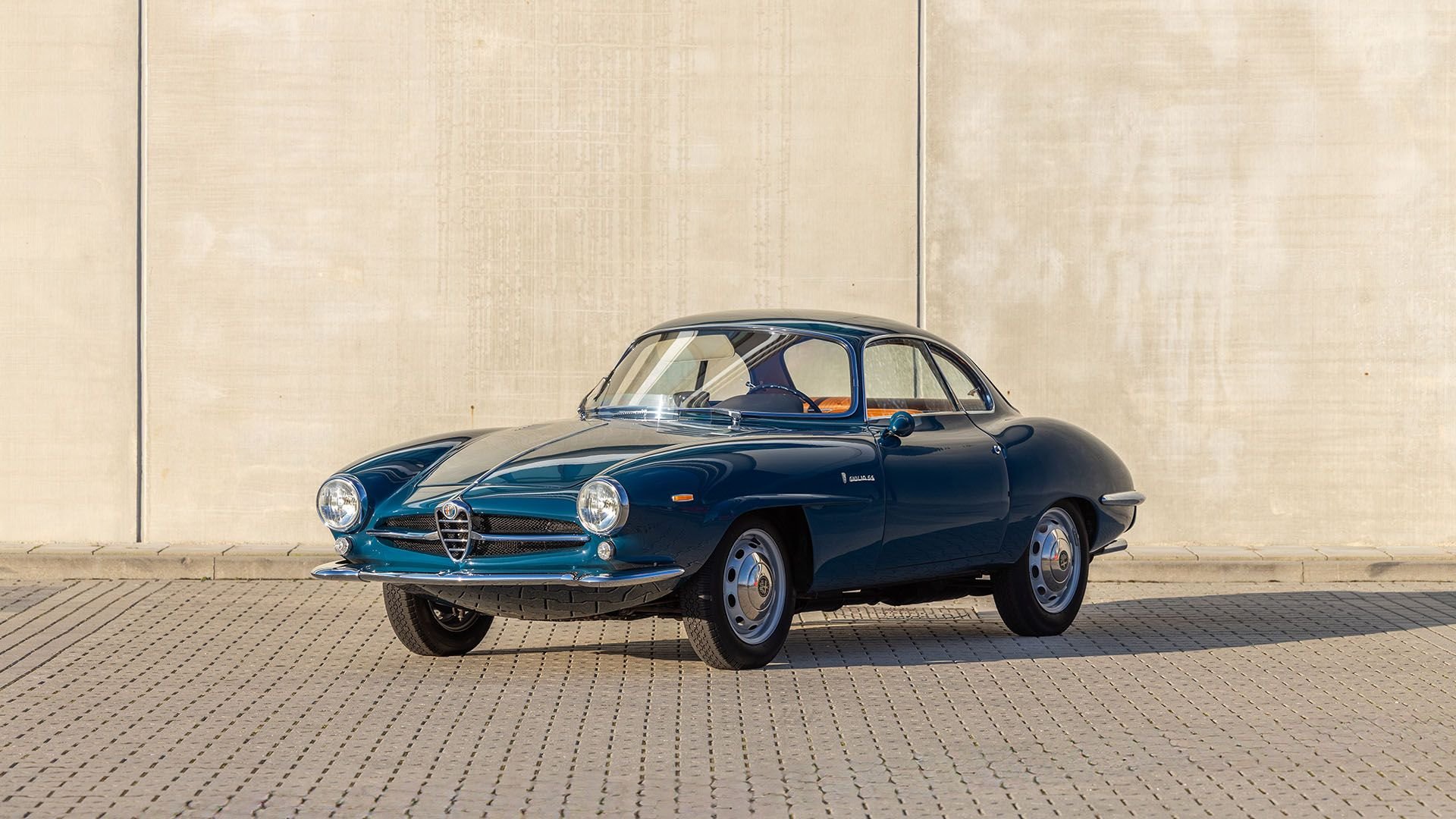
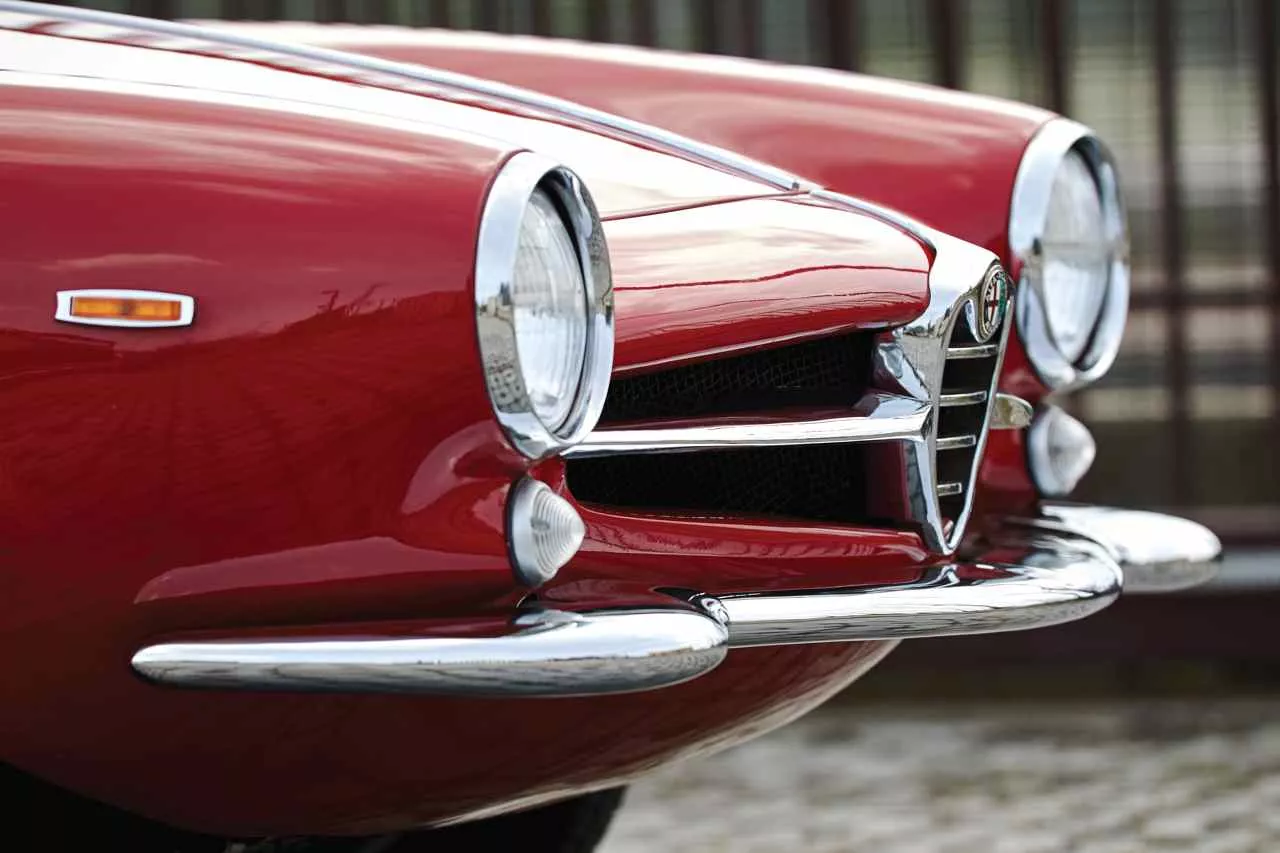
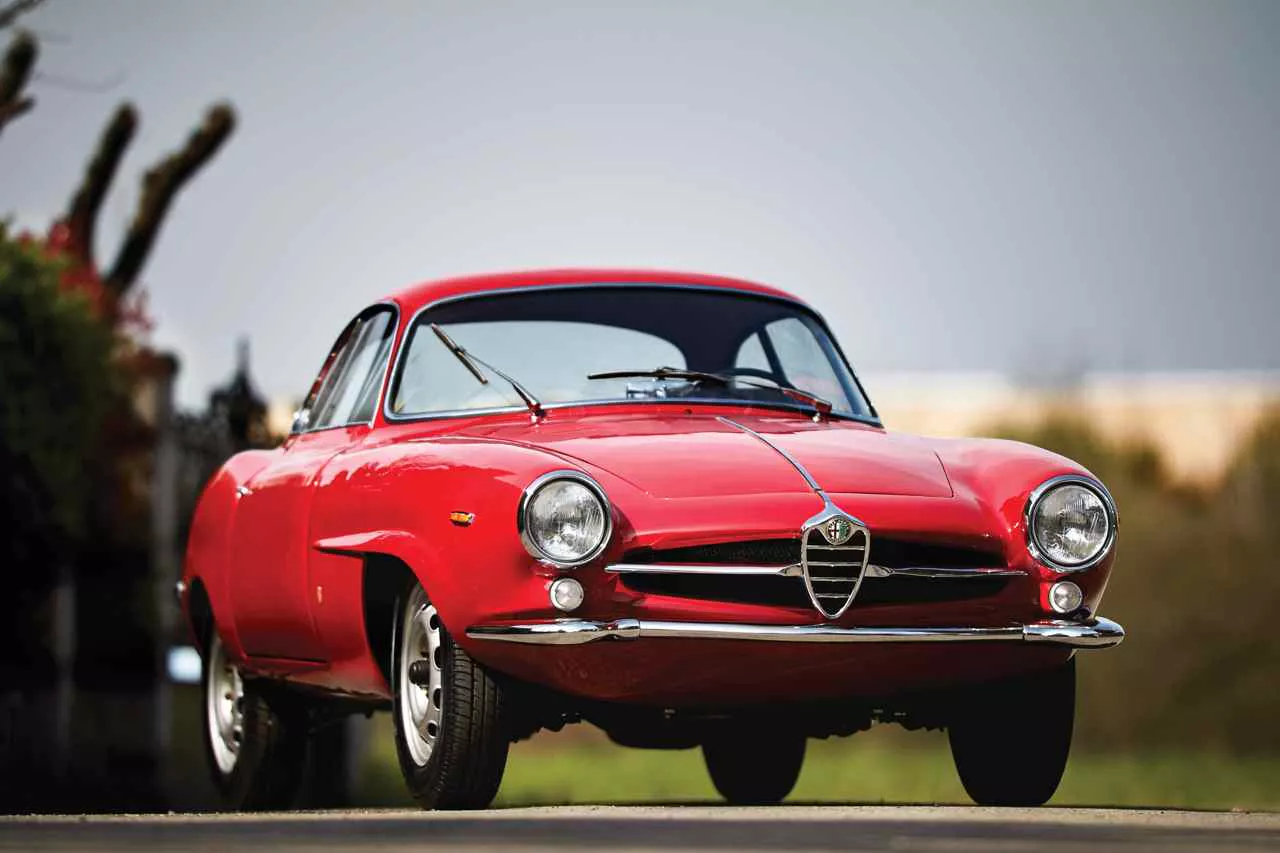
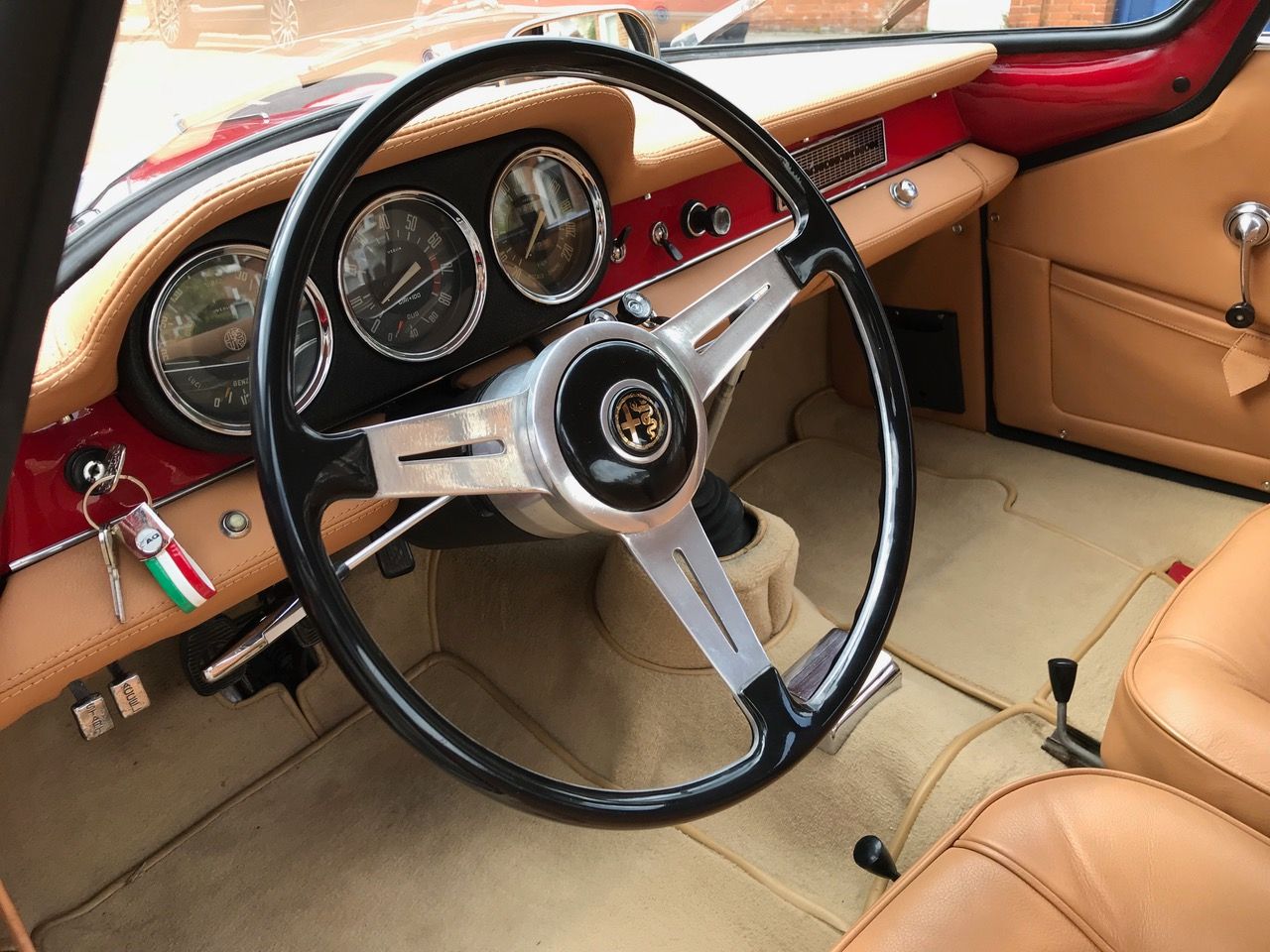
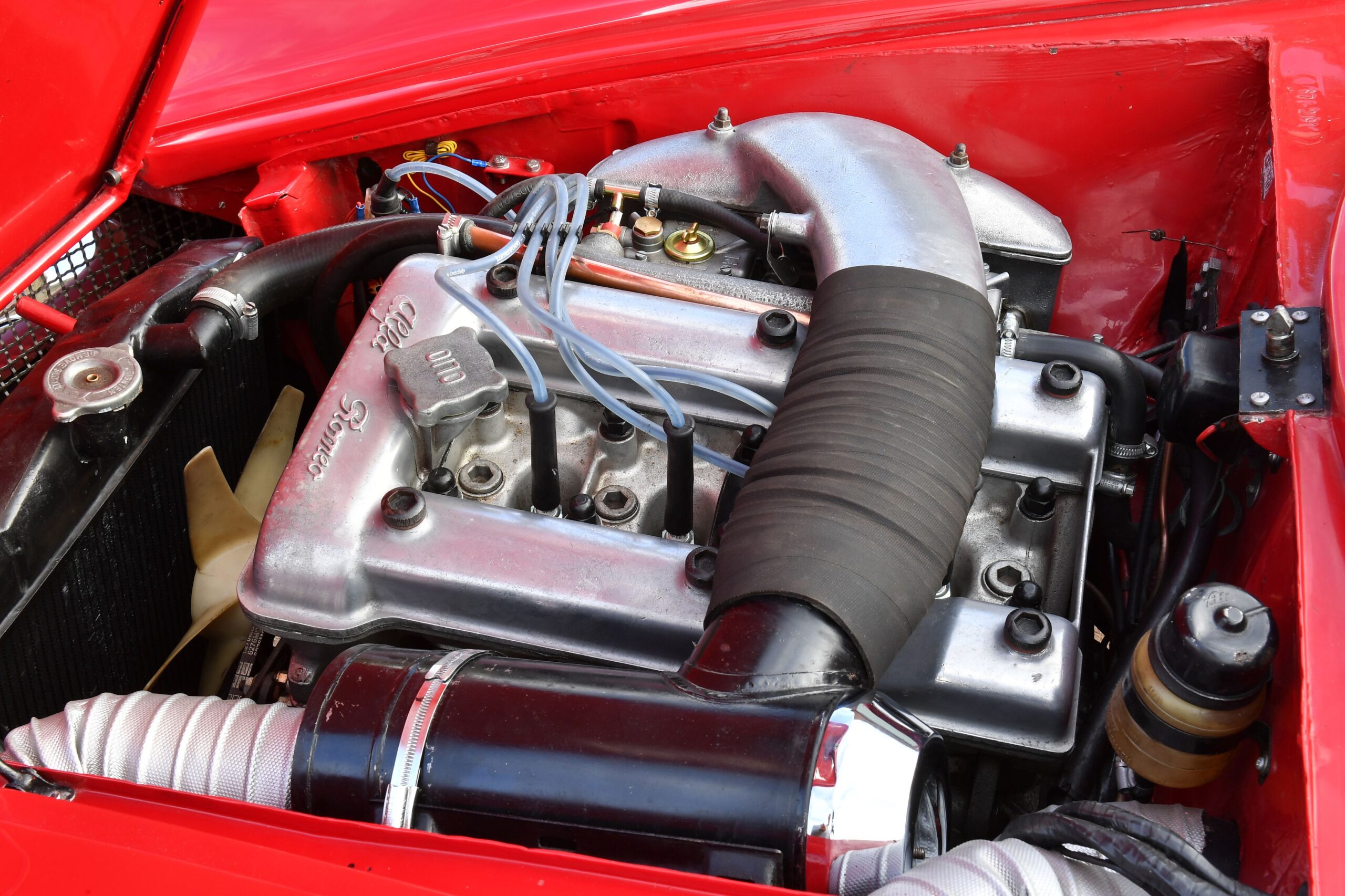
To cast an eye over the Giulia Sprint Speciale is to witness one of the lowest drag coefficients of its era—an astonishing 0.28, a figure that many modern manufacturers still struggle to achieve. Scaglione’s design is a symphony of unbroken, flowing curves. The nose is incredibly low, lacking a traditional bumper, featuring only the iconic Alfa heart shield flanked by delicate “mustache” grilles. To combat the aerodynamic phenomenon of bug-splatter on the steeply raked windscreen at high speeds, a distinct, transparent plexiglass deflector was mounted directly to the cowl. While the body remained visually identical to the outgoing Giulietta SS, the true revolution of the 1963 model resided beneath the alloy hood. Alfa Romeo fitted the legendary 1,570cc Bialbero (twin-cam) inline-four engine. Equipped with high-compression pistons and breathing aggressively through a pair of twin-choke Weber 40 DCOE2 carburettors, this all-alloy jewel produced a robust 112 brake horsepower. Mated to a sublime, fully synchronized five-speed manual gearbox, the Giulia SS possessed long legs, capable of surging past 125 mph with an effortless, raspy mechanical howl. To safely arrest this newfound velocity, Alfa Romeo crucially replaced the Giulietta’s front drum brakes with modern Girling disc brakes, transforming the car’s stopping power. Inside, the cabin reflected its grand touring mission. It was an exercise in tailored Italian opulence, featuring beautifully trimmed leather bucket seats, an intricate, sculpted dashboard with a leather-clad grab handle for the passenger, and a commanding array of Veglia instrumentation that made the driver feel like an aviator piloting a low-flying aircraft.
While its Zagato-bodied brethren (the SZ and the later TZ) handled the dirty, paint-trading work on the racing circuits, the Giulia SS cultivated a different kind of legend. It became the ultimate symbol of La Dolce Vita motoring. It was an extroverted fashion statement, favored by European playboys, actors, and wealthy industrialists who required a vehicle that looked like it was breaking the speed limit while parked outside a Milanese café. It did occasionally see competition, utilized by privateers in high-speed rallies and hillclimbs where its aerodynamic efficiency paid dividends, but its weight meant it was never a dominant track weapon. Instead, its commercial success lay in its exclusivity and road-going prowess. Alfa Romeo produced roughly 1,400 examples of the Giulia SS between 1963 and 1965. It was an incredibly expensive machine to manufacture due to the complex curvature of its body panels and the lead-loading required to achieve its seamless exterior finish, making it a rare and coveted sight even in its heyday.
The legacy of the 1963 Alfa Romeo Giulia Sprint Speciale is profoundly significant, occupying a unique, transitional space in the marque’s illustrious history. It represents the absolute final, glorious chapter of the 101-series architecture, serving as the bridge to the more angular, mass-produced 105-series Giulia Sprints penned by Giorgetto Giugiaro. More importantly, it stands as the crowning production-car achievement of Franco Scaglione’s tenure at Bertone. The Giulia SS proved that mathematical aerodynamic principles did not have to result in clinical, soulless shapes; they could yield teardrop silhouettes of heartbreaking beauty. Today, the Giulia SS is universally revered by collectors as a rolling sculpture. It is celebrated at the world’s finest concours events not for the races it won, but for the sheer, unapologetic romance of its design. It remains an immortal testament to a brief, golden window in Italian automotive history when science, art, and twin-cam horsepower coalesced into absolute perfection.
Brand
Produced from
Portal
Vehicle category
Model line
Predecessor
Sucessor
Brand
Produced from
Portal
Vehicle category
Model line
Model generation
Predecessor
Sucessor
Submodel Overview
In the intoxicating, high-velocity realm of early 1960s Italian motoring, the pursuit of aerodynamic perfection was becoming an outright obsession. At Carrozzeria Bertone, a fiercely brilliant and eccentric designer named Franco Scaglione had already shocked the globe with his legendary B.A.T. (Berlinetta Aerodinamica Tecnica) concept cars. These studies in drag reduction heavily influenced Alfa Romeo’s desire to build a homologation weapon for the 1.3-liter racing classes, resulting in the 1959 Giulietta Sprint Speciale. However, the sweeping, voluptuous steel bodywork proved slightly too heavy for the racetrack, ultimately losing the motorsport crown to Zagato’s stripped-out SZ. Rather than discarding Scaglione’s breathtaking silhouette, Alfa Romeo pivoted. In 1963, they bestowed the car with the heart of the newly introduced 105-series Giulia, enlarging the displacement and refining the mechanicals to create the 1963 Alfa Romeo Giulia Sprint Speciale (SS). No longer a compromised track-day homologation special, the Giulia SS matured into a sophisticated, high-speed Gran Turismo. It arrived as a gentleman’s express, offering a profoundly glamorous alternative to the Porsche 356 B and the Lancia Flaminia Sport Zagato, perfectly tailored for the sweeping, newly laid asphalt of the Autostrada del Sole.
To cast an eye over the Giulia Sprint Speciale is to witness one of the lowest drag coefficients of its era—an astonishing 0.28, a figure that many modern manufacturers still struggle to achieve. Scaglione’s design is a symphony of unbroken, flowing curves. The nose is incredibly low, lacking a traditional bumper, featuring only the iconic Alfa heart shield flanked by delicate “mustache” grilles. To combat the aerodynamic phenomenon of bug-splatter on the steeply raked windscreen at high speeds, a distinct, transparent plexiglass deflector was mounted directly to the cowl. While the body remained visually identical to the outgoing Giulietta SS, the true revolution of the 1963 model resided beneath the alloy hood. Alfa Romeo fitted the legendary 1,570cc Bialbero (twin-cam) inline-four engine. Equipped with high-compression pistons and breathing aggressively through a pair of twin-choke Weber 40 DCOE2 carburettors, this all-alloy jewel produced a robust 112 brake horsepower. Mated to a sublime, fully synchronized five-speed manual gearbox, the Giulia SS possessed long legs, capable of surging past 125 mph with an effortless, raspy mechanical howl. To safely arrest this newfound velocity, Alfa Romeo crucially replaced the Giulietta’s front drum brakes with modern Girling disc brakes, transforming the car’s stopping power. Inside, the cabin reflected its grand touring mission. It was an exercise in tailored Italian opulence, featuring beautifully trimmed leather bucket seats, an intricate, sculpted dashboard with a leather-clad grab handle for the passenger, and a commanding array of Veglia instrumentation that made the driver feel like an aviator piloting a low-flying aircraft.
While its Zagato-bodied brethren (the SZ and the later TZ) handled the dirty, paint-trading work on the racing circuits, the Giulia SS cultivated a different kind of legend. It became the ultimate symbol of La Dolce Vita motoring. It was an extroverted fashion statement, favored by European playboys, actors, and wealthy industrialists who required a vehicle that looked like it was breaking the speed limit while parked outside a Milanese café. It did occasionally see competition, utilized by privateers in high-speed rallies and hillclimbs where its aerodynamic efficiency paid dividends, but its weight meant it was never a dominant track weapon. Instead, its commercial success lay in its exclusivity and road-going prowess. Alfa Romeo produced roughly 1,400 examples of the Giulia SS between 1963 and 1965. It was an incredibly expensive machine to manufacture due to the complex curvature of its body panels and the lead-loading required to achieve its seamless exterior finish, making it a rare and coveted sight even in its heyday.
The legacy of the 1963 Alfa Romeo Giulia Sprint Speciale is profoundly significant, occupying a unique, transitional space in the marque’s illustrious history. It represents the absolute final, glorious chapter of the 101-series architecture, serving as the bridge to the more angular, mass-produced 105-series Giulia Sprints penned by Giorgetto Giugiaro. More importantly, it stands as the crowning production-car achievement of Franco Scaglione’s tenure at Bertone. The Giulia SS proved that mathematical aerodynamic principles did not have to result in clinical, soulless shapes; they could yield teardrop silhouettes of heartbreaking beauty. Today, the Giulia SS is universally revered by collectors as a rolling sculpture. It is celebrated at the world’s finest concours events not for the races it won, but for the sheer, unapologetic romance of its design. It remains an immortal testament to a brief, golden window in Italian automotive history when science, art, and twin-cam horsepower coalesced into absolute perfection.
Tech Specs
Technical Specifications
Tech Specs
Technical Specifications
Engine
01
03
Internal combustion engine
Configuration
Alfa Romeo Twin Cam (Bialbero), Inline-4
Location
Front, longitudinally mounted
Construction
Aluminium alloy block and head
Displacement (cc)
1,570 cc
Displacement (cu in)
95.8 cu in
Compression
9.0:1
Bore x Stroke
78.0 mm x 82.0 mm
Valvetrain
2 valves per cylinder, DOHC
Fuel feed
2 x Weber 40 DCOE2 carburetors
Lubrication
Wet sump
Aspiration
Naturally aspirated
Output
Power (hp)
112 hp
Power (kW)
83 kW
Max power at
6,500 RPM
Torque (Nm)
133 Nm
Torque (ft lbs)
98 ft lbs
Max torque at
4,200 RPM
Drivetrain
02
03
Chassis
Type
Monocoque unibody
Material
Steel
Body
Material
Steel
Transmission
Gearbox
Alfa Romeo, 5-speed manual
Drive
Rear Wheel Drive
Suspension
Front
Independent, double wishbones, coil springs, telescopic dampers, anti-roll bar
Rear
Live axle, trailing arms, upper A-bracket, coil springs, telescopic dampers
Steering
Type
Worm and roller, unassisted
Brakes
Front
Solid discs Ø267 mm (Girling)
Rear
Finned Aluminium Drum brakes Ø254 mm
Wheels
Front
4.5" x 15"
Rear
4.5" x 15"
Tires
Front
155 R15
Rear
155 R15
Dimensions and performance
03
03
Dimensions
Length (mm)
4,120 mm
Length (in)
162.2 in
Width (mm)
1,660 mm
Width (in)
65.4 in
Height (mm)
1,240 mm
Height (in)
48.8 in
Wheelbase (mm)
2,250 mm
Wheelbase (in)
88.6 in
Weight (kg)
950 kg
Weight (lbs)
2,094 lbs
Performance
Power to weight
~0.12 hp/kg
Top speed (km/h)
200 km/h
Top speed (mph)
124 mph
0-100 km/h (0-60 mph)
~10.5 s