Morgan Plus 4
Brand
Produced from
Vehicle category
Portal
Model line
Model generation
Predecessor
Sucessor
Model Overview
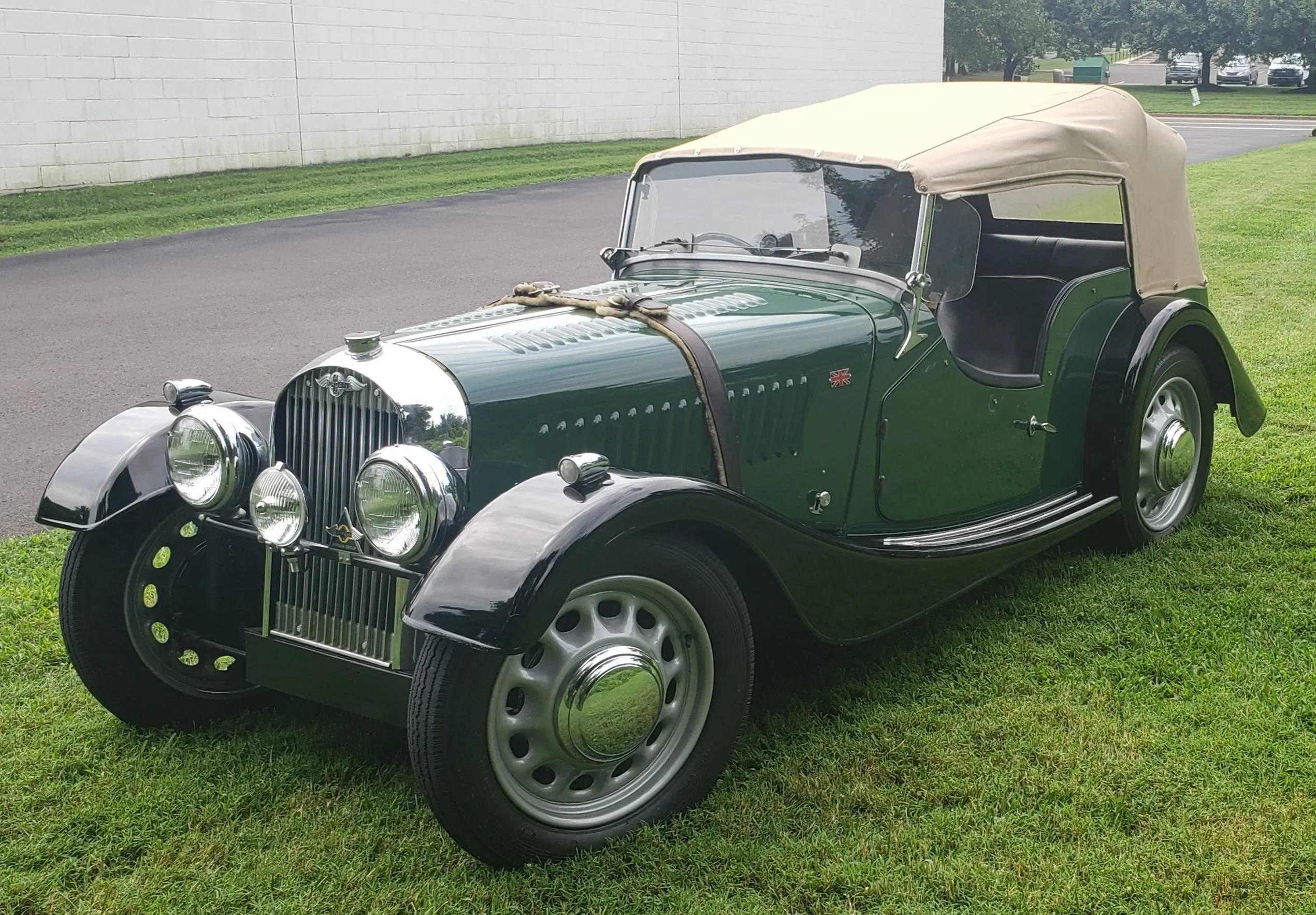
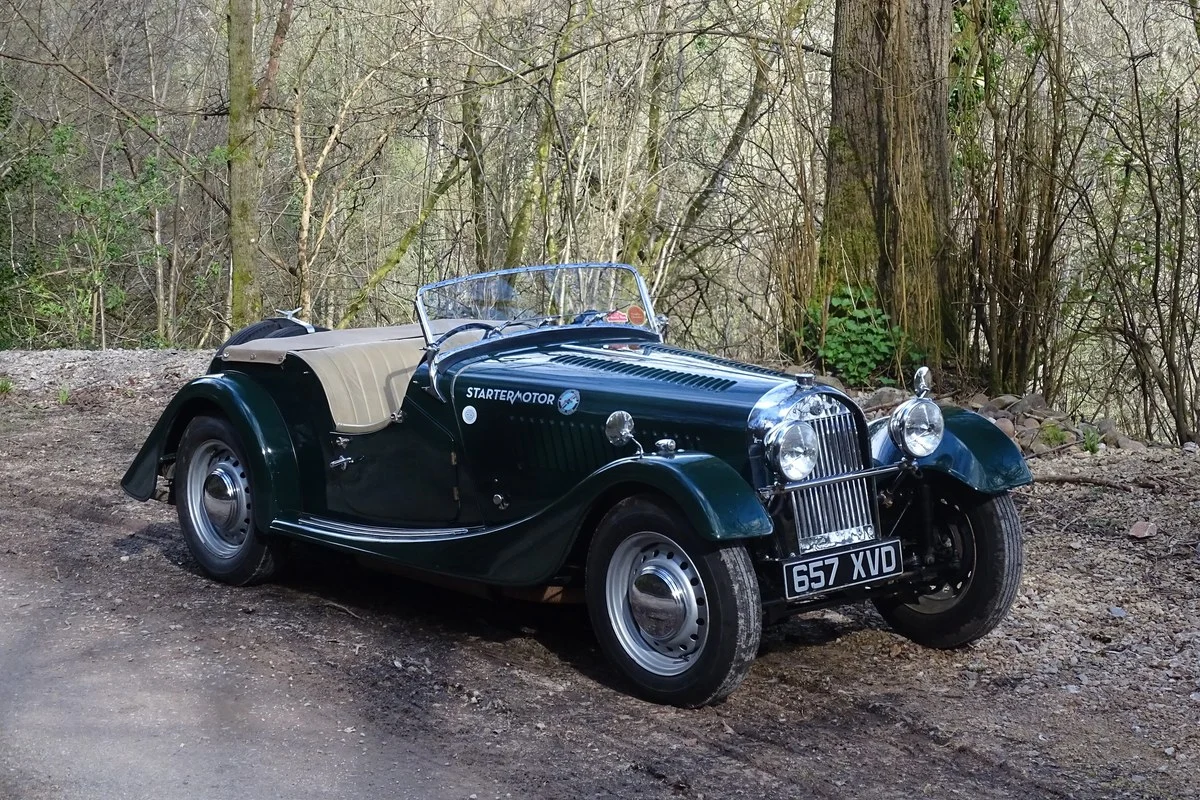
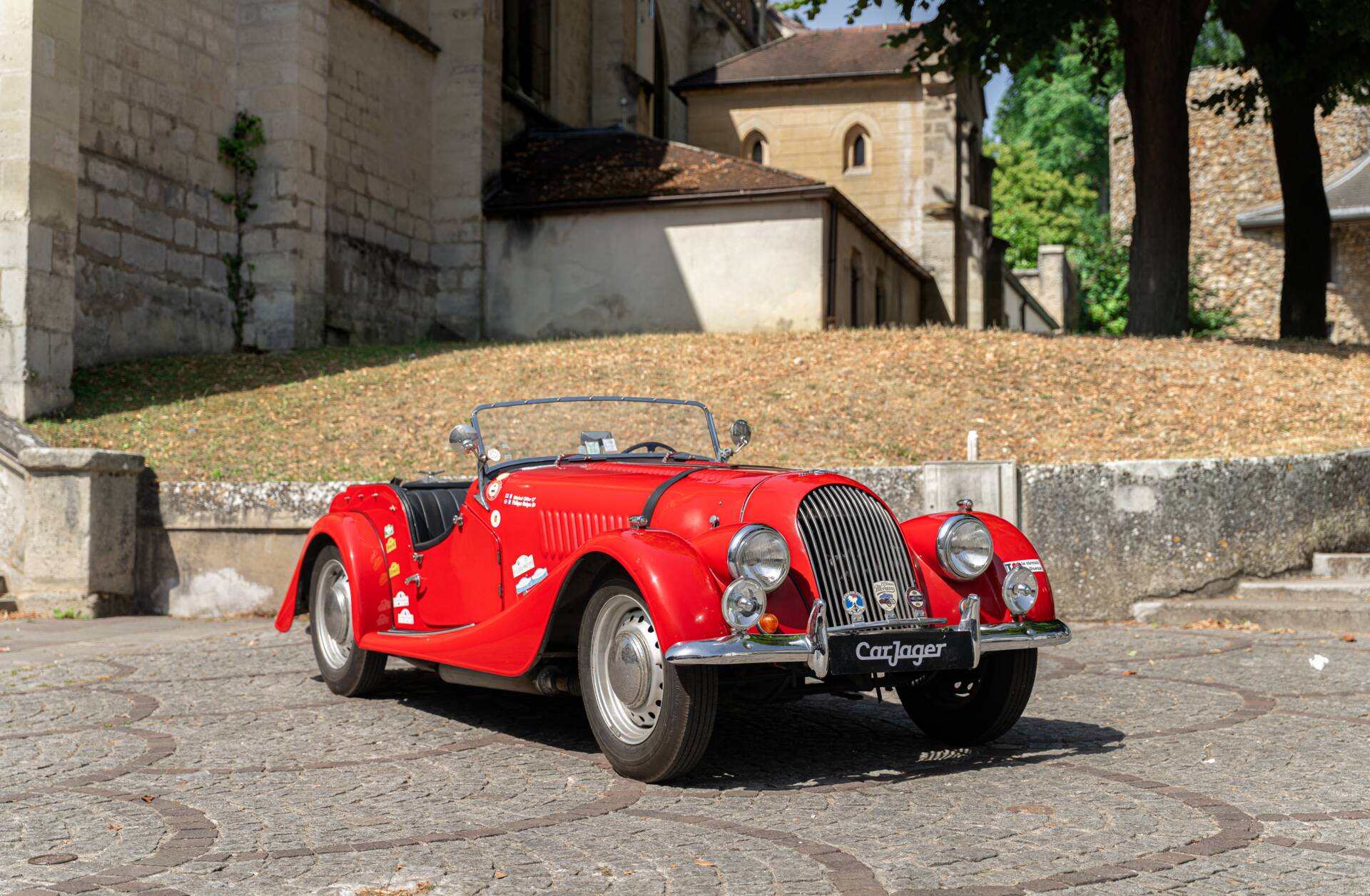
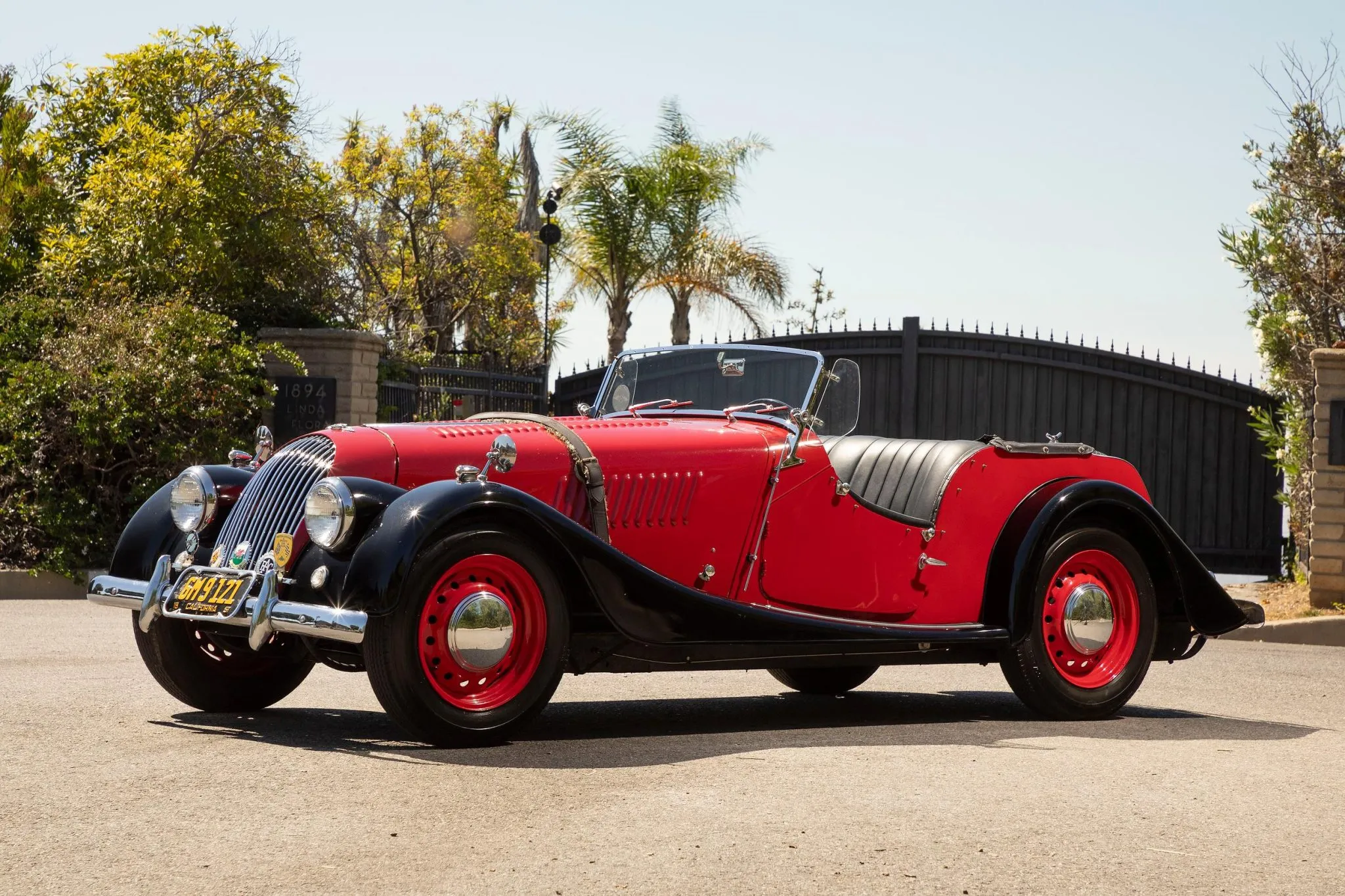
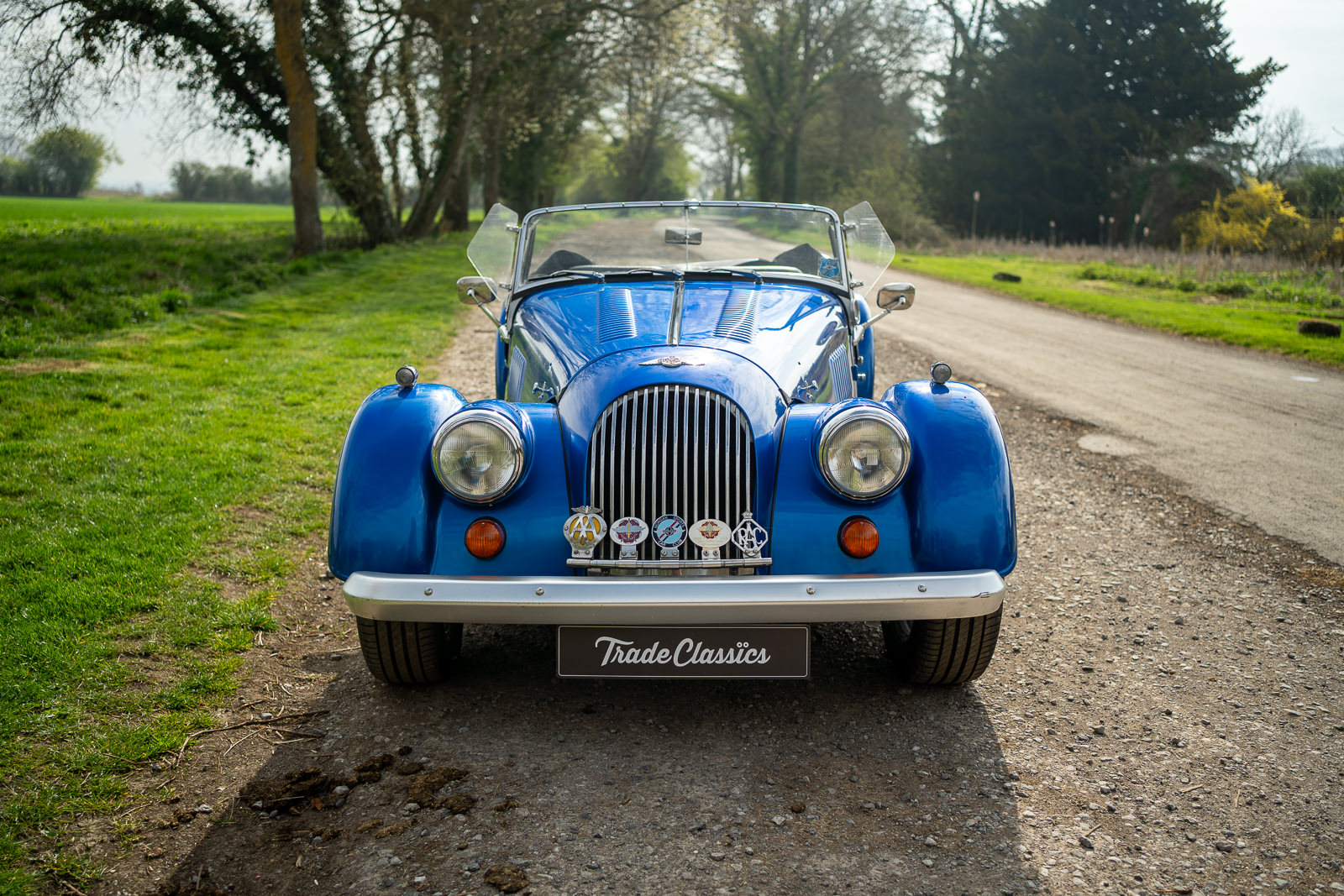
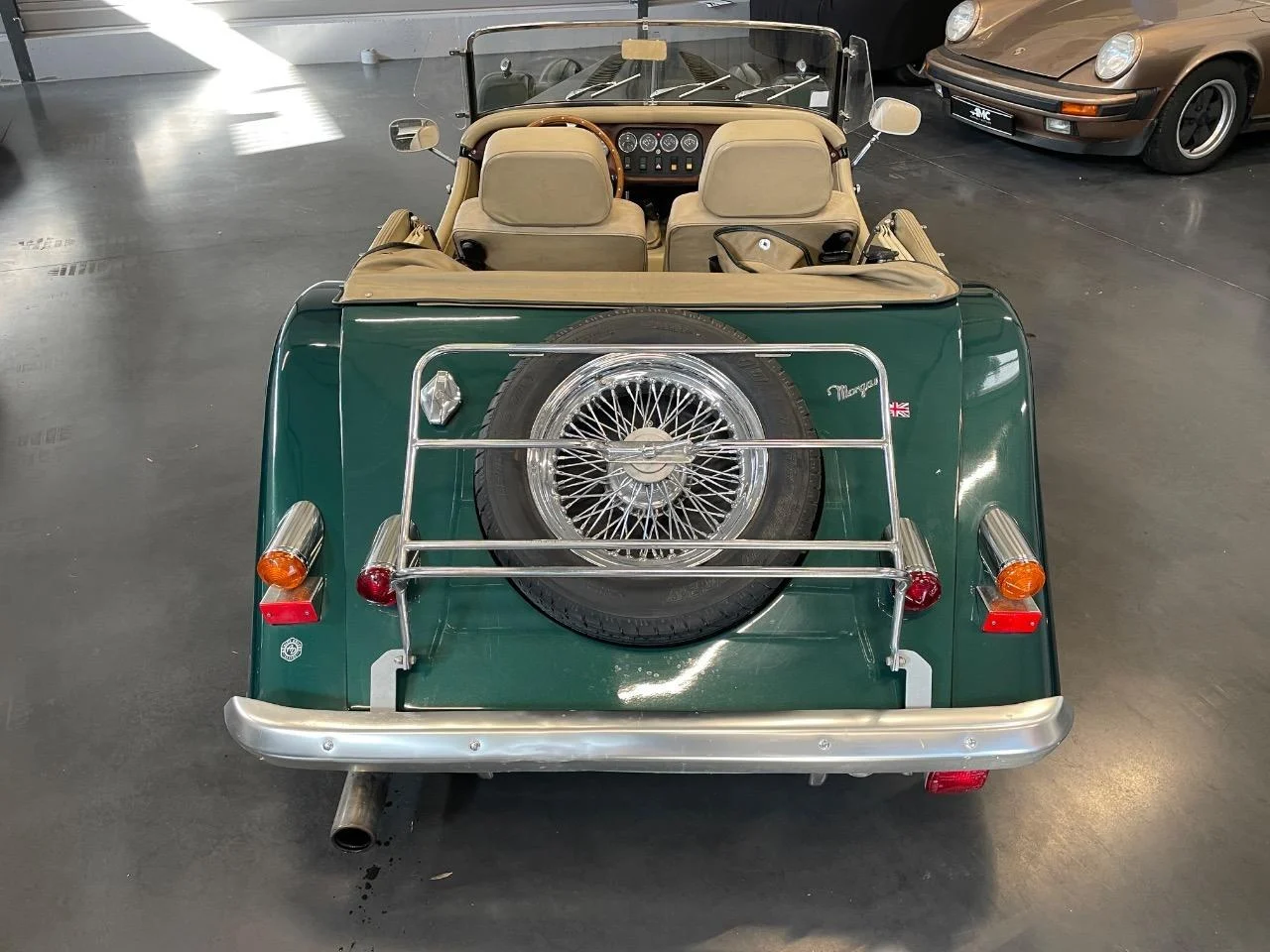
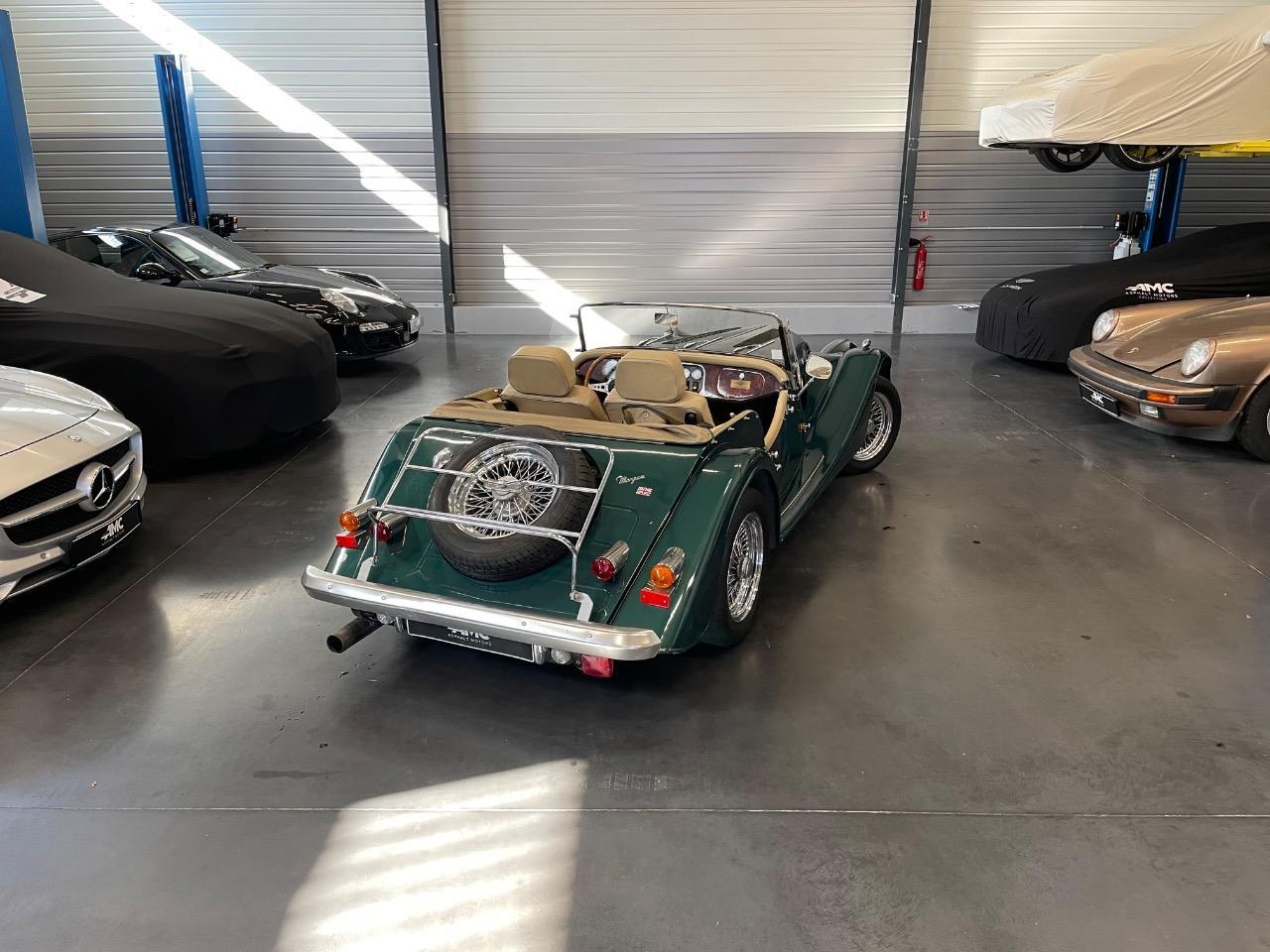
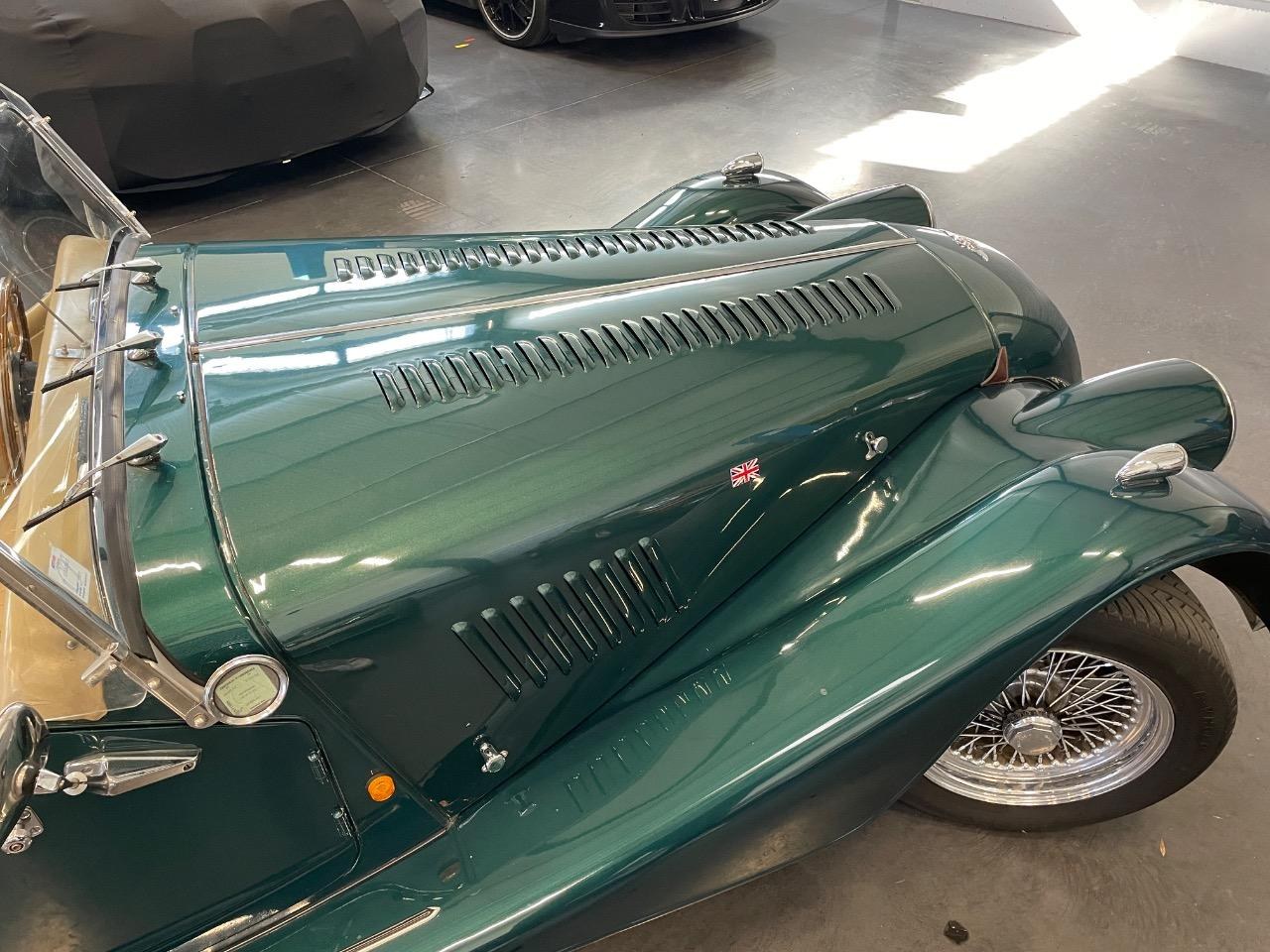
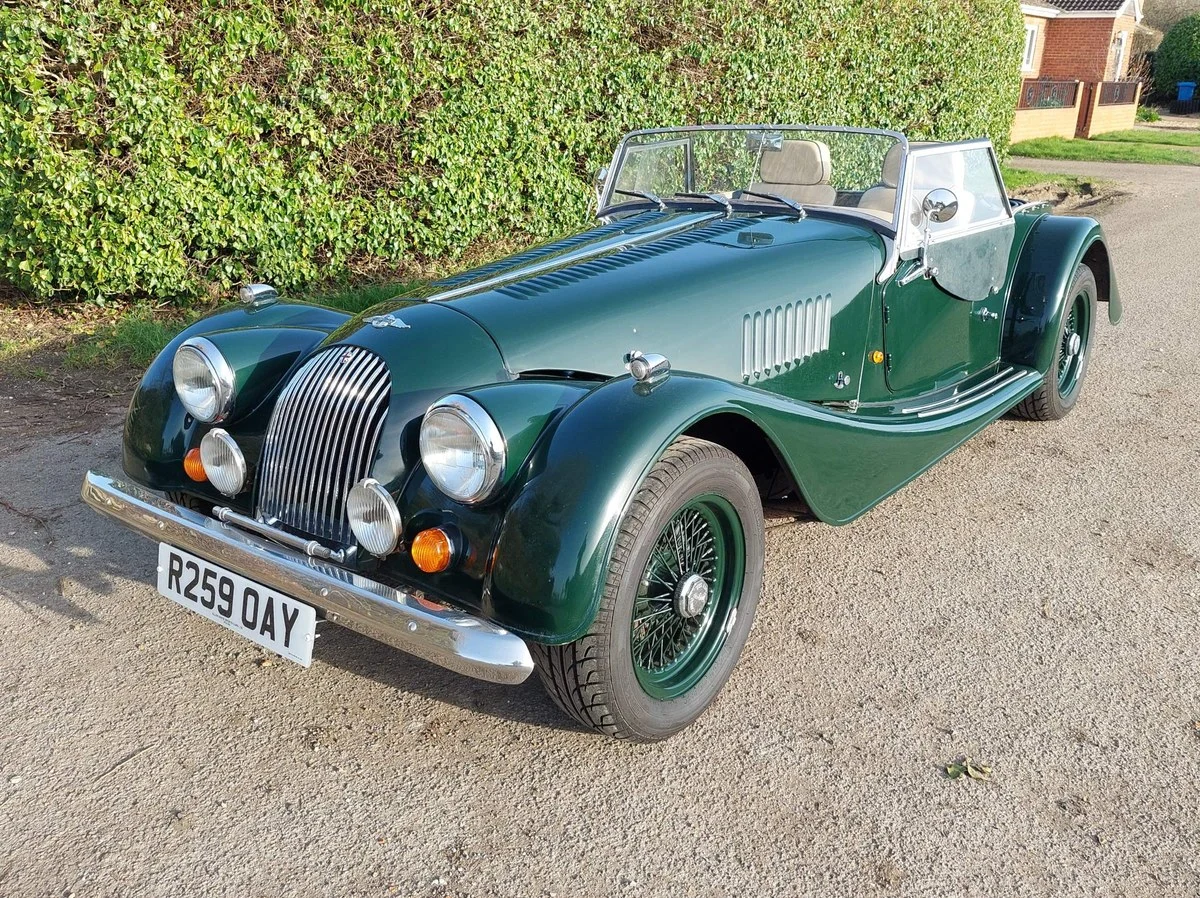
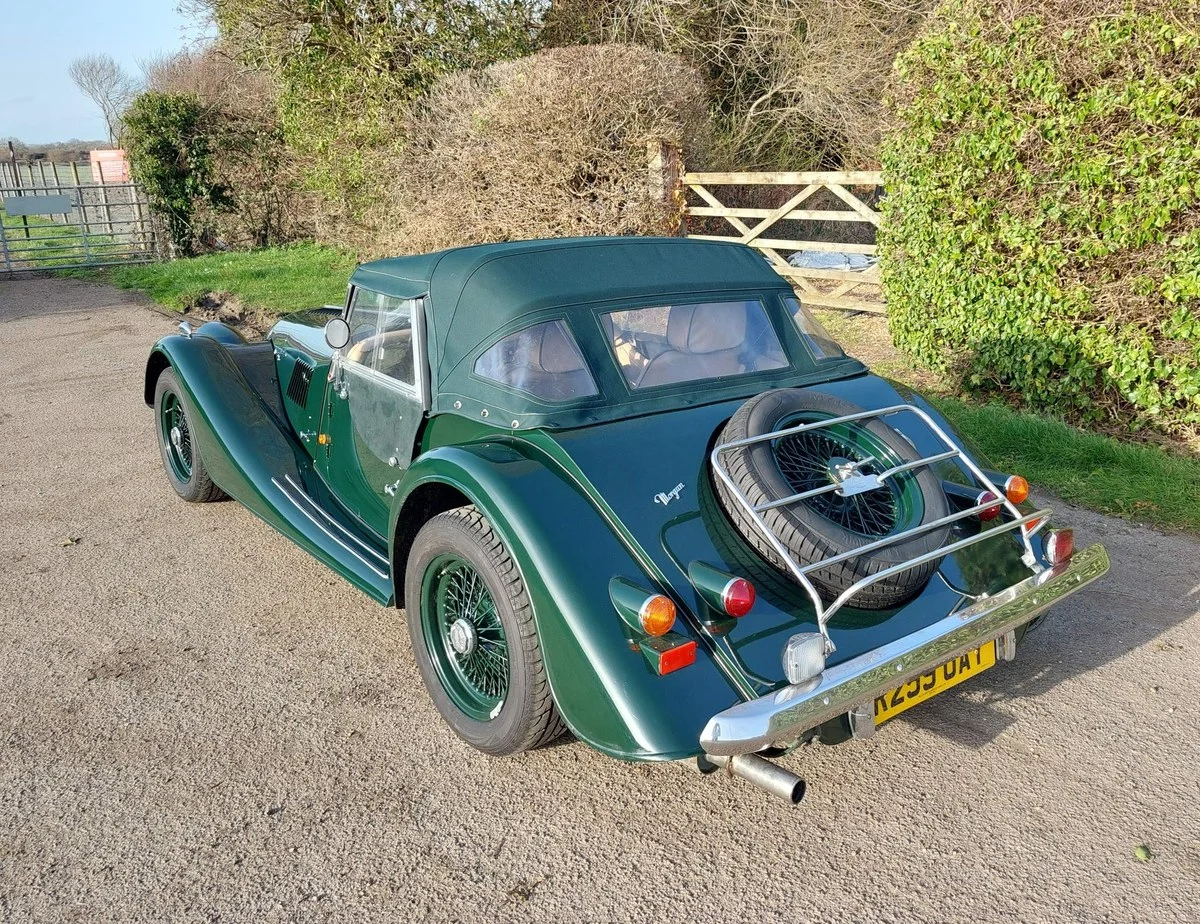
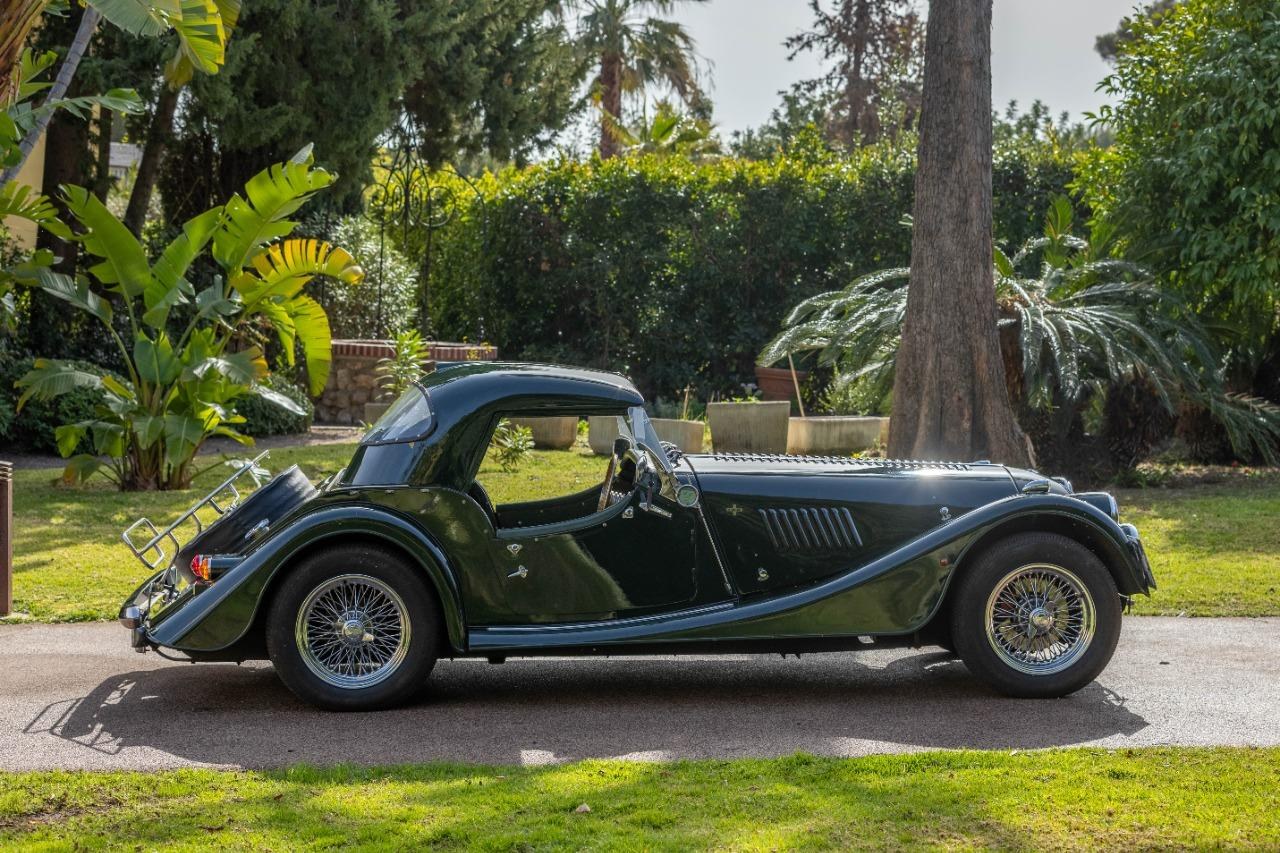
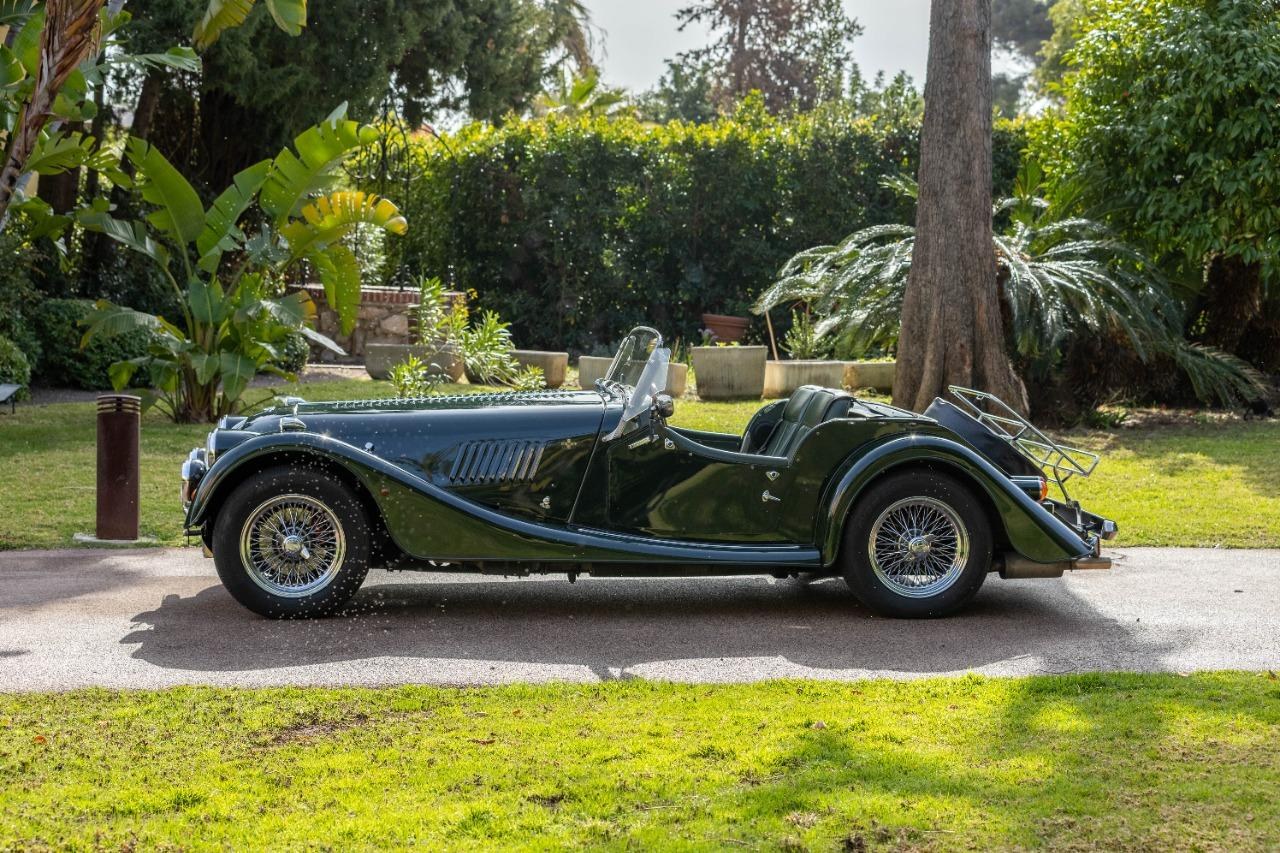
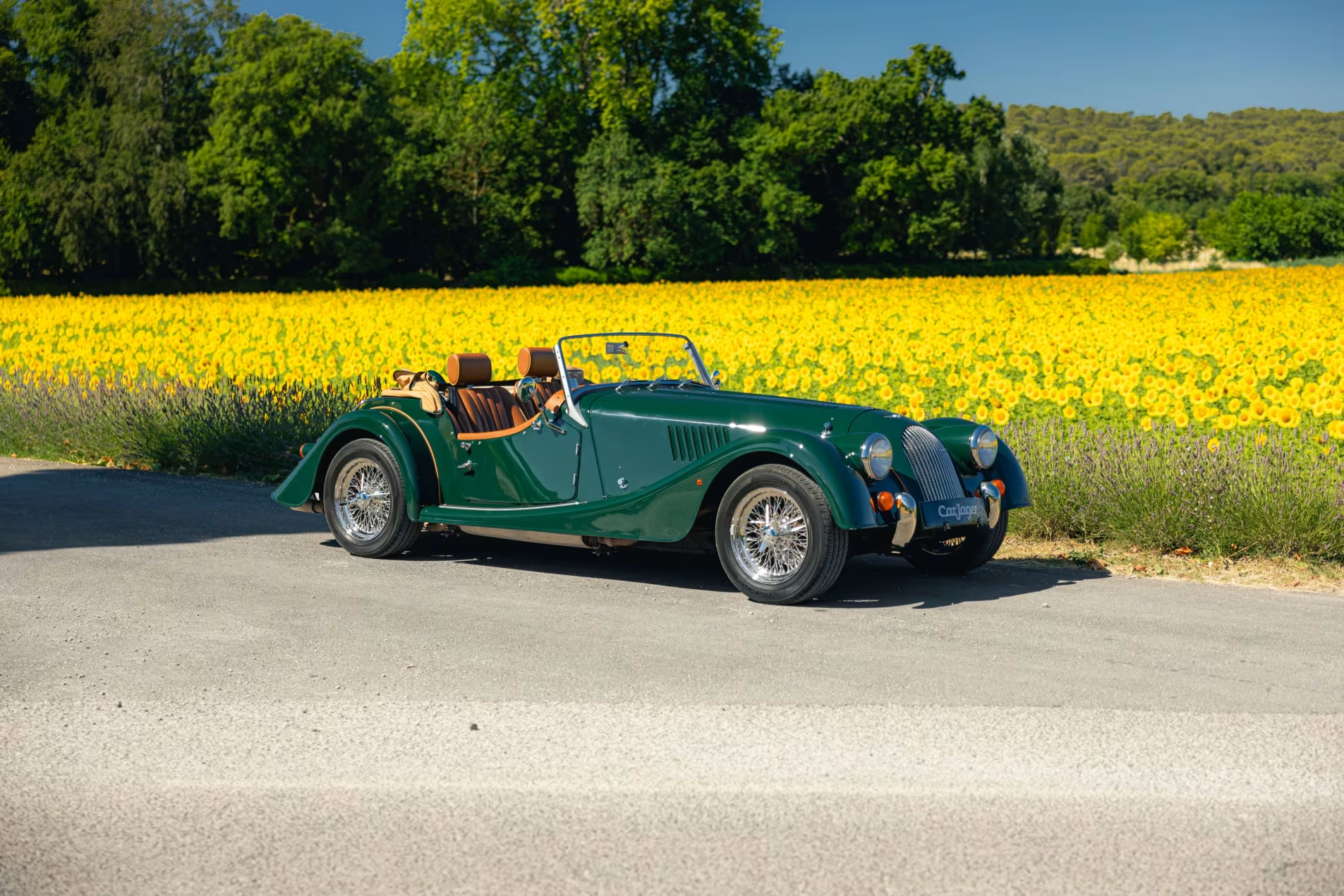
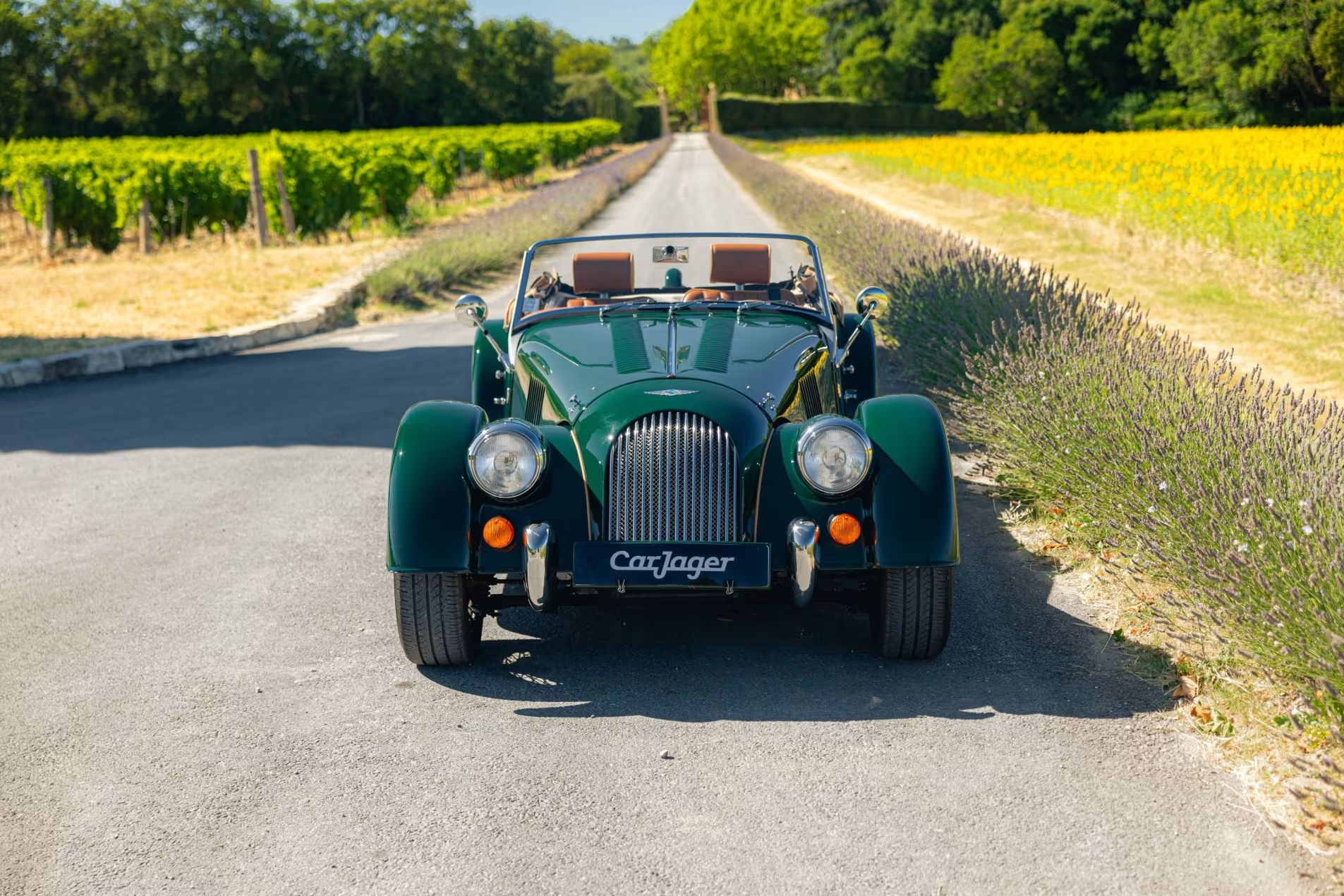
In the austere, rationing-shadowed days of 1950s Britain, the sports car was undergoing a rapid, often clinical evolution. Manufacturers across the continent and the UK were chasing aerodynamic efficiency, enclosing wheels within smooth envelope bodies, and developing complex independent suspensions. But tucked away in the Malvern Hills of Worcestershire, the Morgan Motor Company chose a brilliantly stubborn, beautifully anachronistic path. Their existing 4/4 model had been a charming pre-war survivor, but it sorely lacked the sheer muscularity required to compete on the booming global stage and the lucrative American export market. At the 1950 Earls Court Motor Show, Peter Morgan unveiled the antidote: the Morgan Plus 4. It was a vehicle that unapologetically retained the sweeping, separate-fender styling of the 1930s while packing a significantly larger, more robust punch beneath its center-hinged, louvered bonnet. Entering a fiercely competitive arena, the Plus 4 found itself sparring directly with the MG TD and TF, the Austin-Healey 100, and its eventual engine-donor, the Triumph TR series. Yet, the Morgan offered something profoundly different: an unfiltered, visceral connection to the road that its increasingly refined rivals were already beginning to lose. It was the quintessential traditional British roadster, standing as a defiant monument to pre-war coachbuilding techniques in a rapidly modernizing world.
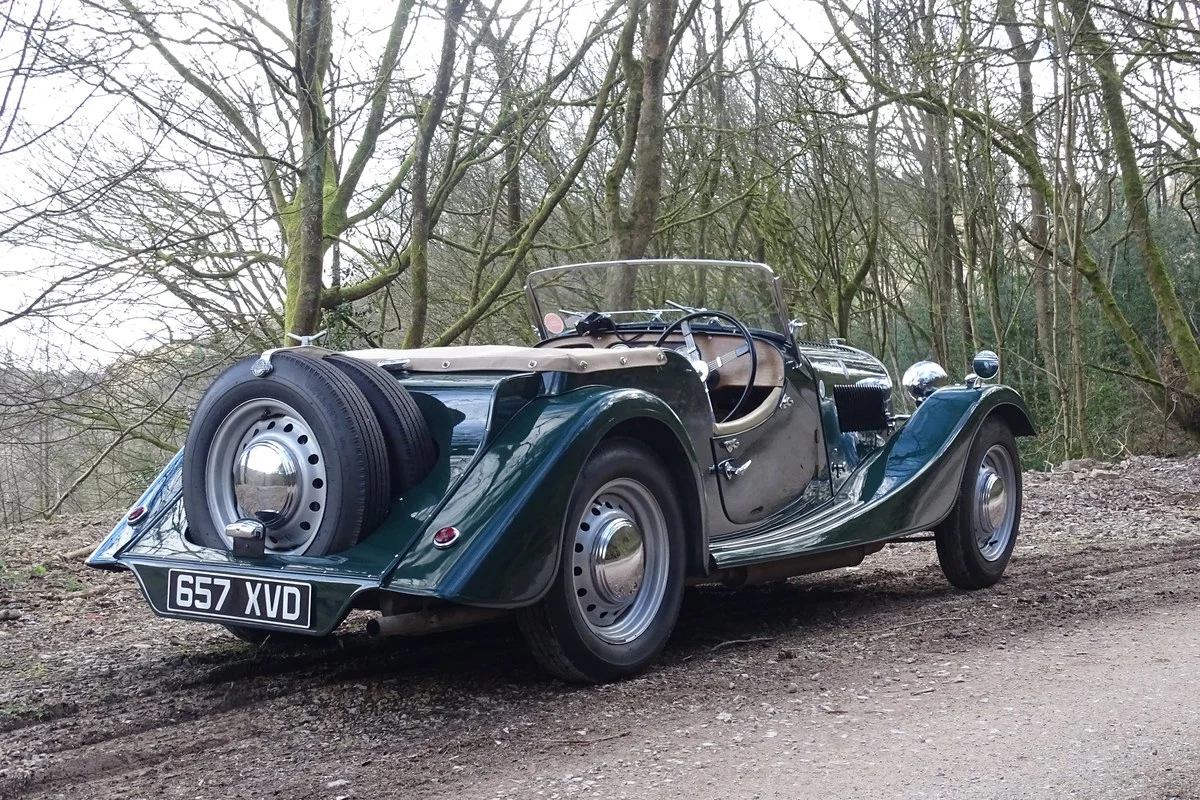
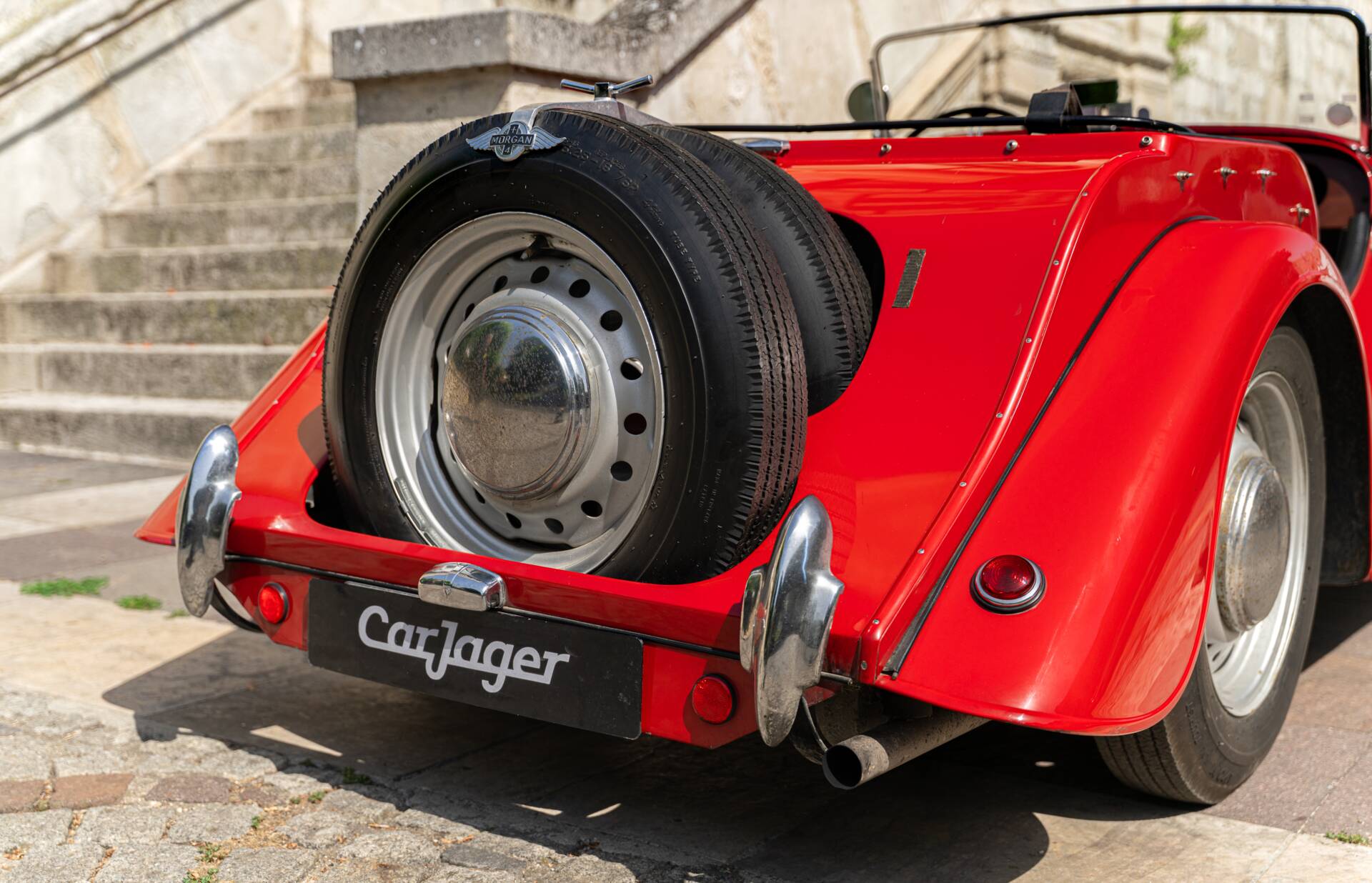
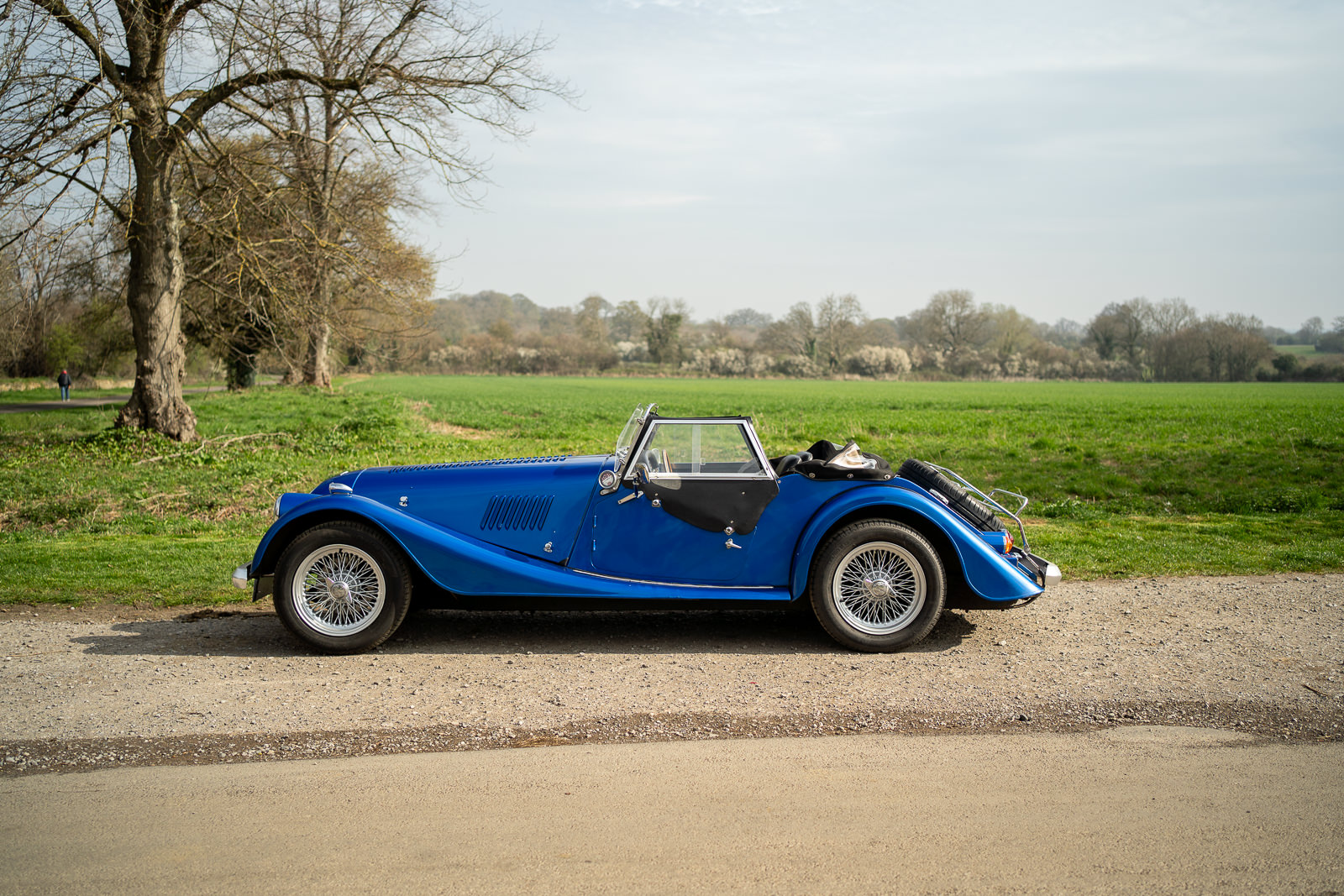
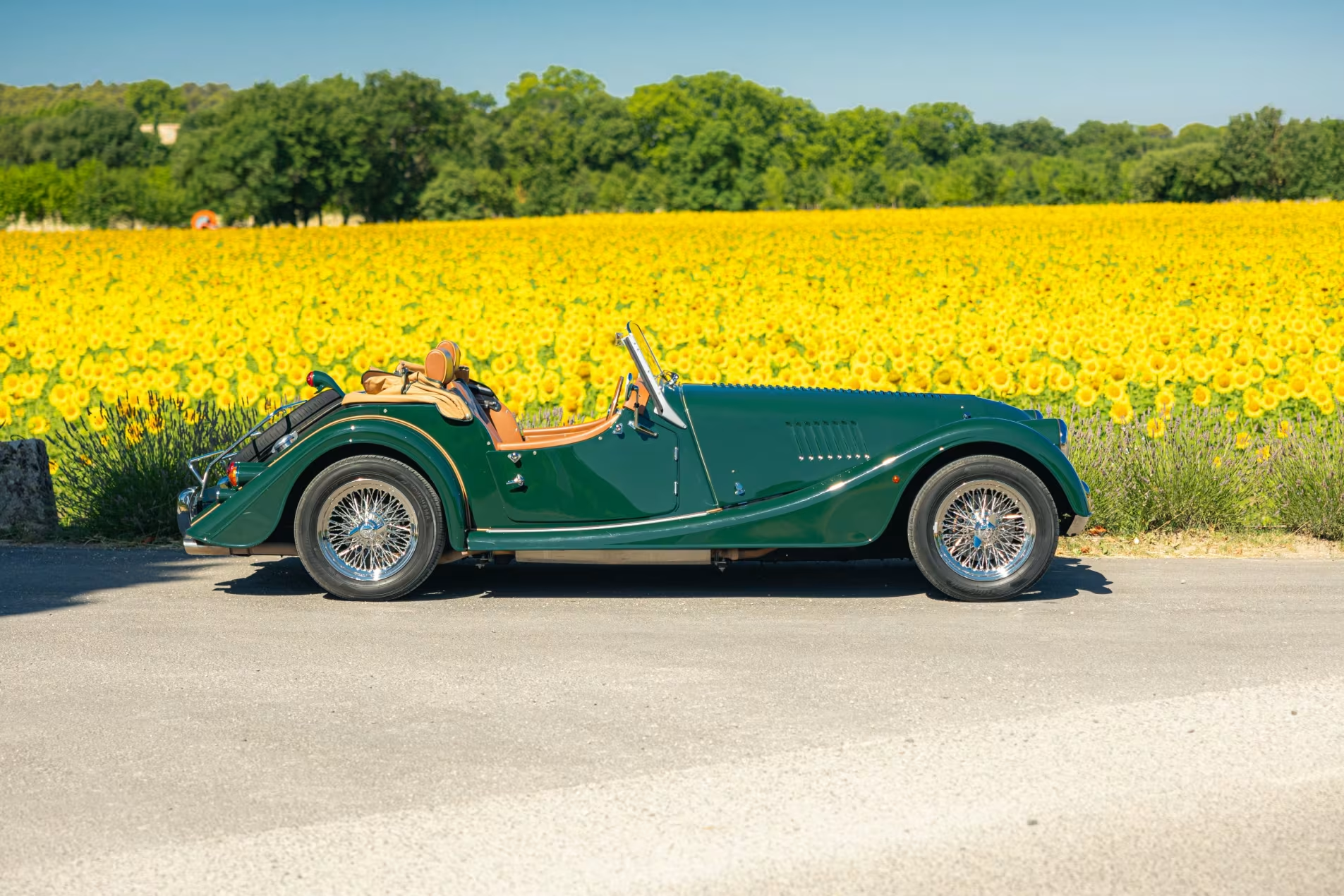
To peer beneath the sensuous, hand-rolled aluminium or steel skin of the Plus 4 is to witness an unbroken lineage of idiosyncratic, yet magnificently effective, engineering. Unlike the monocoque revolution that was sweeping the automotive industry, the Plus 4 relied on a robust steel Z-section ladder frame chassis. Upon this incredibly low-slung skeleton, craftsmen painstakingly shaped an intricate framework of seasoned English ash wood. This traditional coachbuilding technique endowed the car with a unique flexibility, absorbing harsh vibrations while keeping the overall curb weight remarkably low. The suspension was equally anachronistic yet deeply brilliant; at the front, it utilized H.F.S. Morgan’s patented sliding pillar independent suspension, a design dating back to 1909. This setup kept the front wheels perfectly vertical during cornering, offering immense grip and direct feedback, albeit requiring a disciplined regimen of grease gun maintenance from the dedicated owner. At the rear, a live axle suspended on semi-elliptic leaf springs kept the tail honest, translating every nuance of the tarmac directly through the seat of the driver’s trousers.
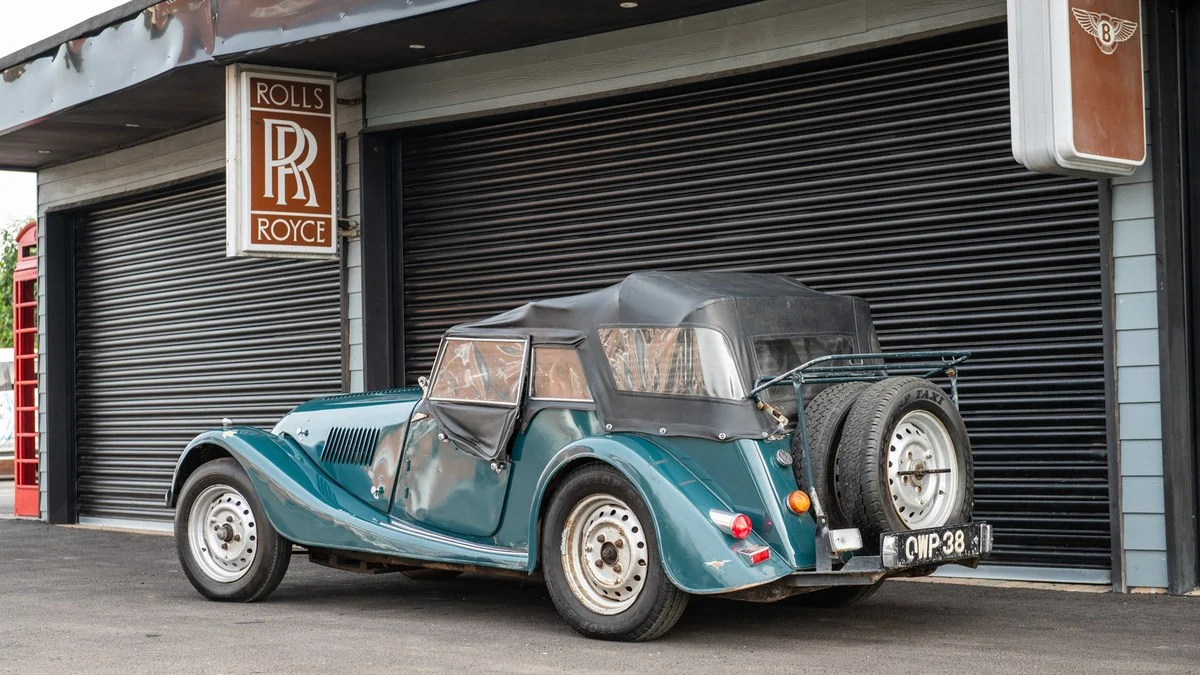
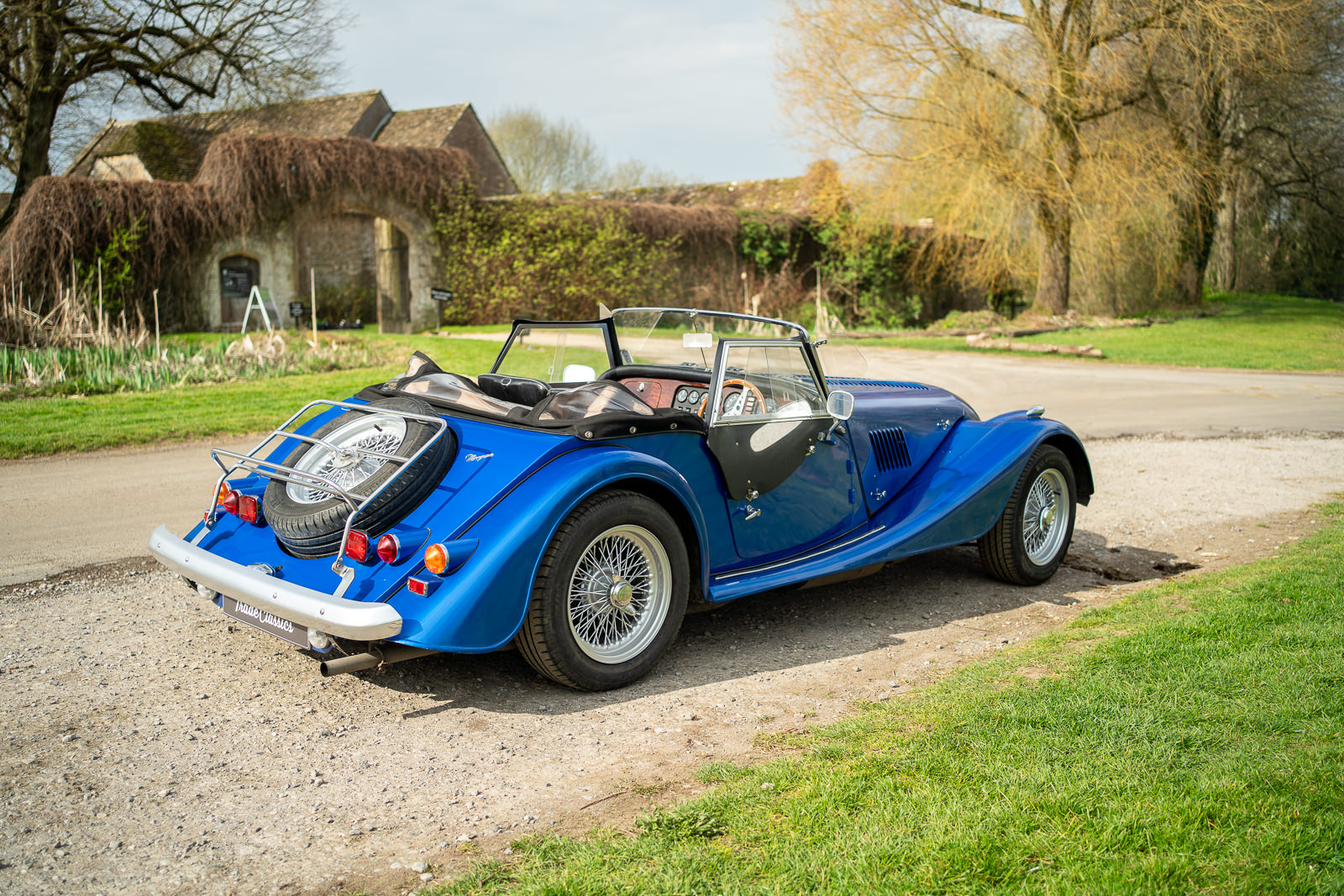
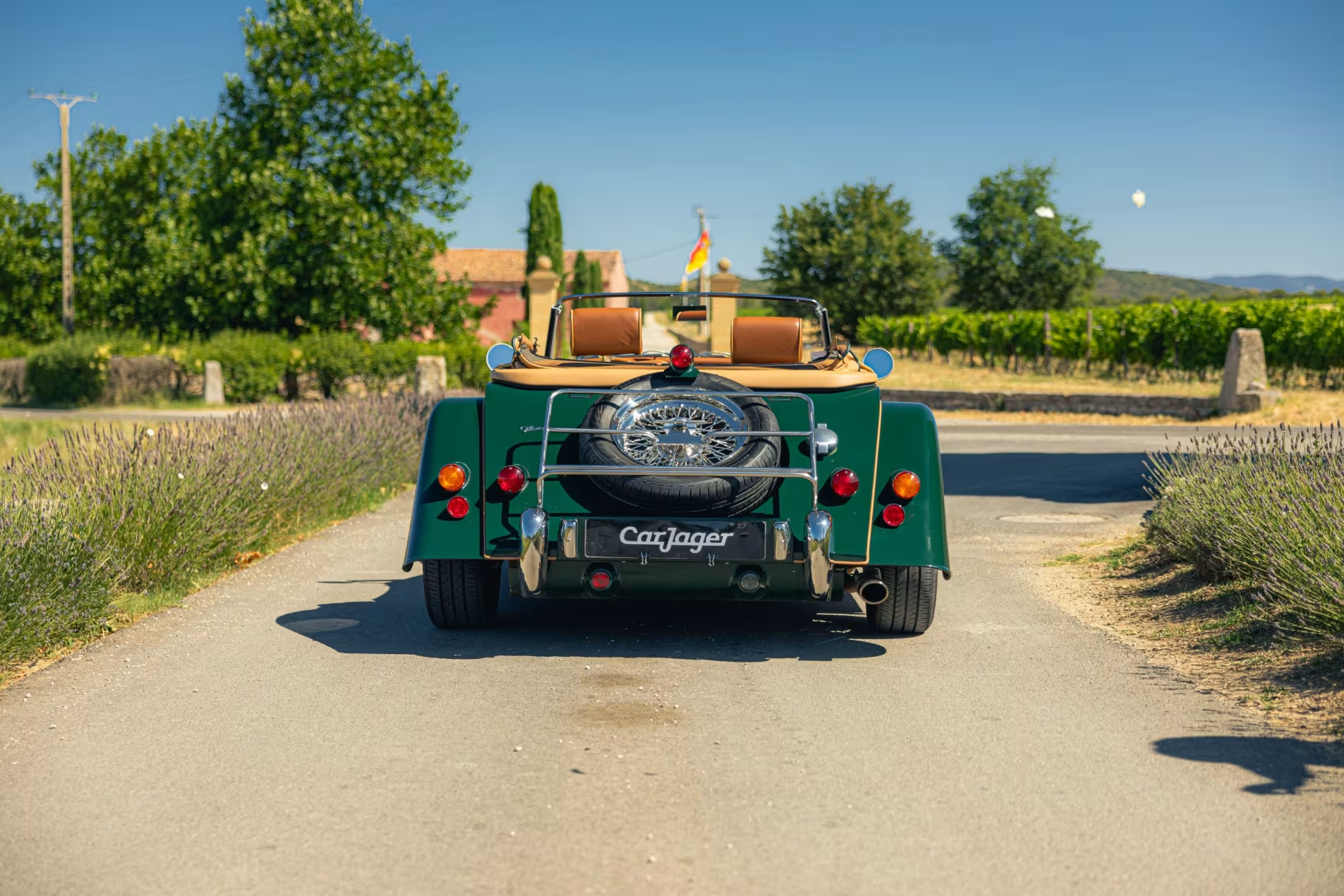
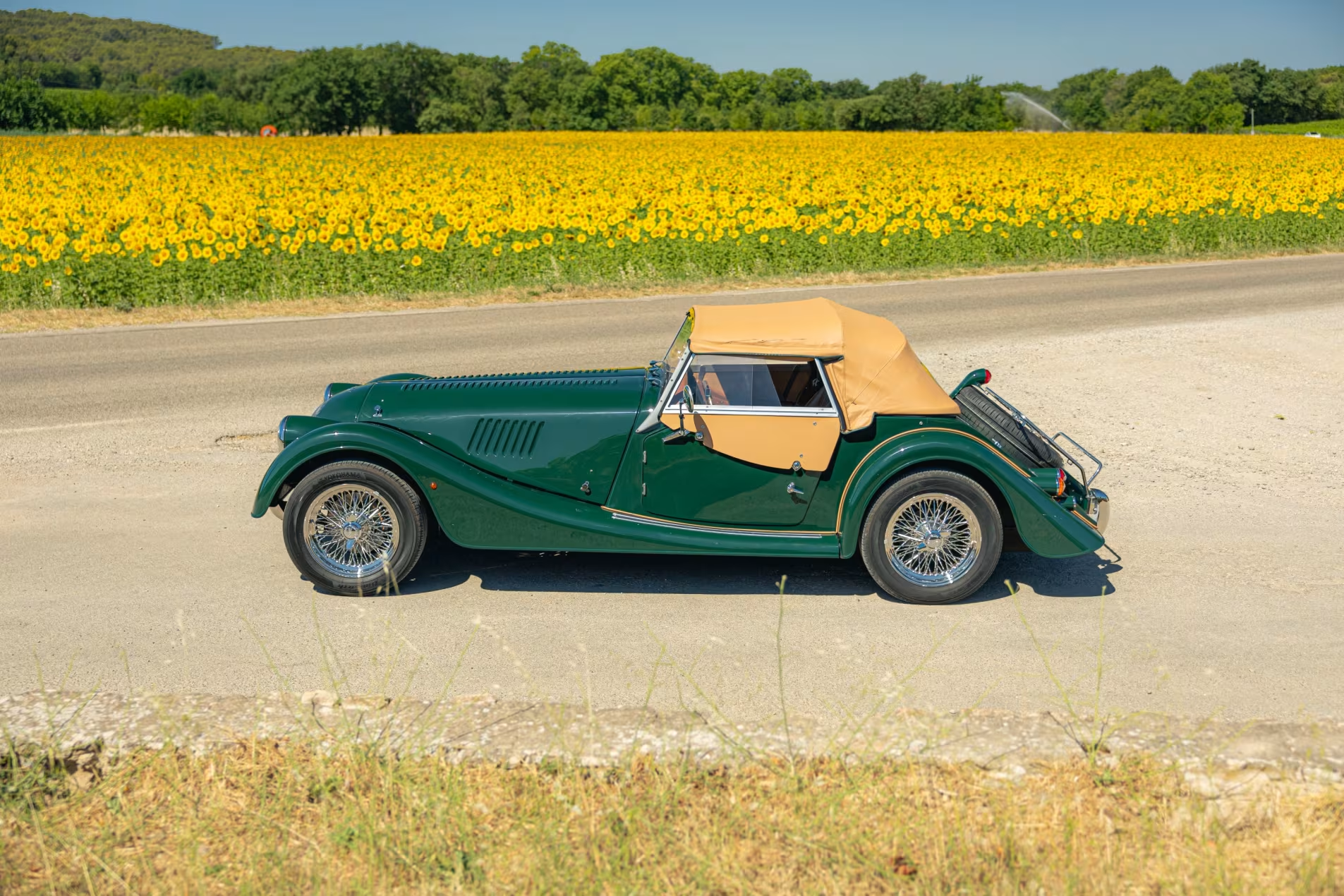
The beating heart of the Plus 4 evolved dramatically across an astonishing seventy-year lifespan, mapped out through distinct generations from Series I to Series III. It initially launched in Phase 1 with a robust 2088cc Standard Vanguard engine, but true sporting immortality was achieved in the Phase 2 era when Morgan adopted the potent powerplants from Triumph. The TR2’s 1991cc engine, and later the TR3 and TR4’s 2138cc units, transformed the lightweight Plus 4 into an absolute rocket ship. Buyers could choose from a variety of distinct submodels tailored to their sporting lifestyle: the stripped-back 2-Seater Roadster with traditional side screens, a more accommodating 4-Seater Roadster for families of a brave disposition, and the highly elegant Drophead Coupe, which featured higher doors, fixed window frames, and a luxurious folding top. Production of the Series I paused in 1969 as Triumph engine supplies dried up, but customer demand refused to die.
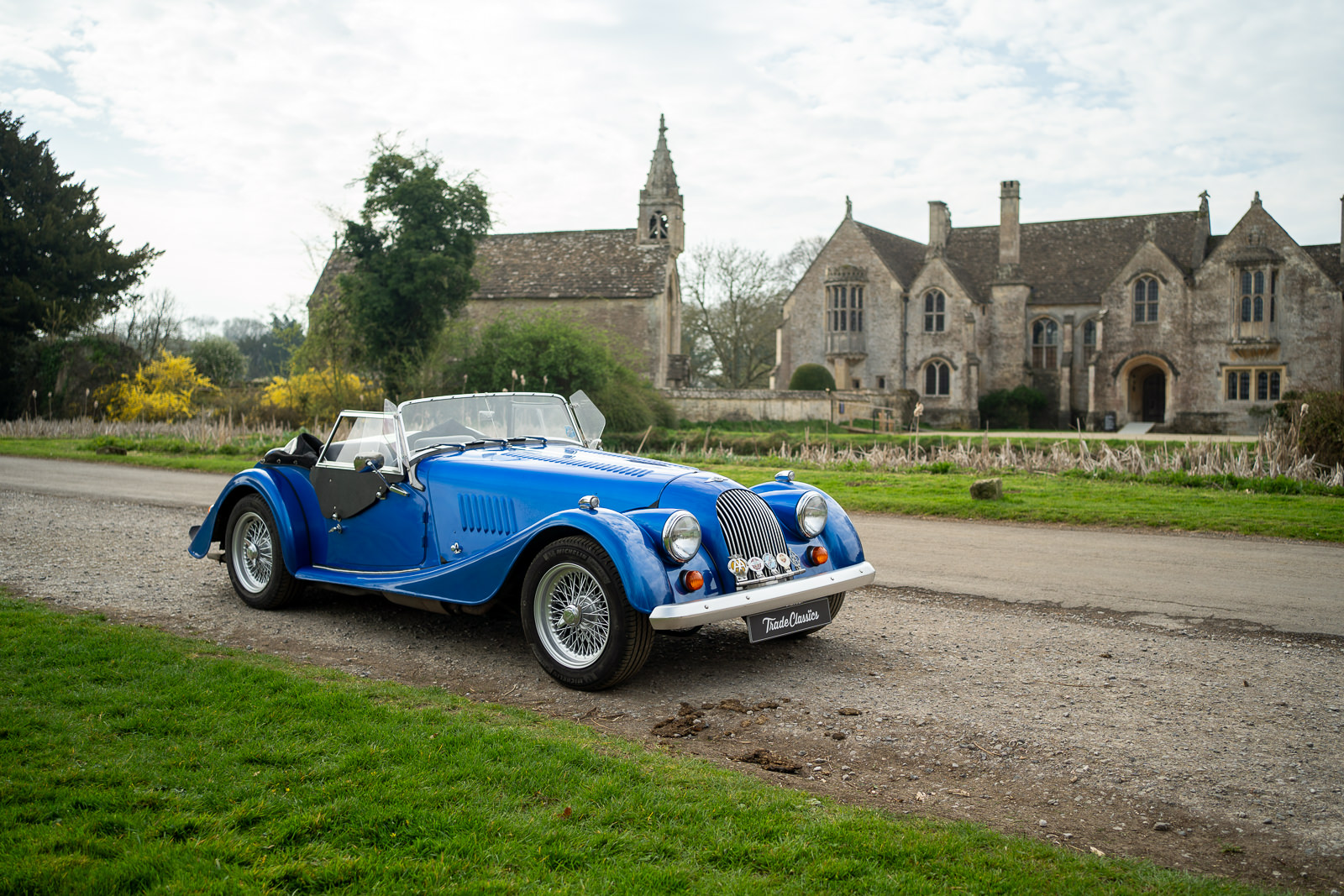
In 1985, the factory resurrected the legend with the Series II, initially utilizing a Fiat twin-cam engine before rapidly switching to Rover’s M16 and T16 powerplants, injecting modern reliability into the vintage silhouette. As the car transitioned into the Series III modern era, it received its most refined mechanical package yet: a 2.0-liter Ford GDI engine paired with a slick-shifting 5-speed manual gearbox sourced from Mazda. This combination created arguably the sweetest-driving Plus 4 in history. Yet, Morgan never lost its appetite for madness. In its later years, the factory unleashed the ultra-exclusive Plus 4 ARP4, featuring a Cosworth-tuned 2.0-liter engine producing 225 horsepower, modern disc brakes, and a revolutionary five-link rear suspension that finally replaced the leaf springs. The lineage culminated in the magnificent 70th Anniversary Edition, featuring a gold-painted chassis, platinum metallic paint, and an active sports exhaust, serving as the ultimate swan song for the traditional steel-chassis Morgan.
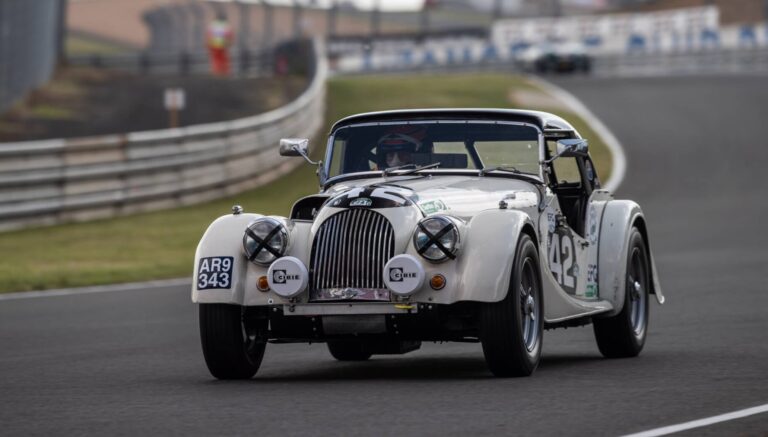
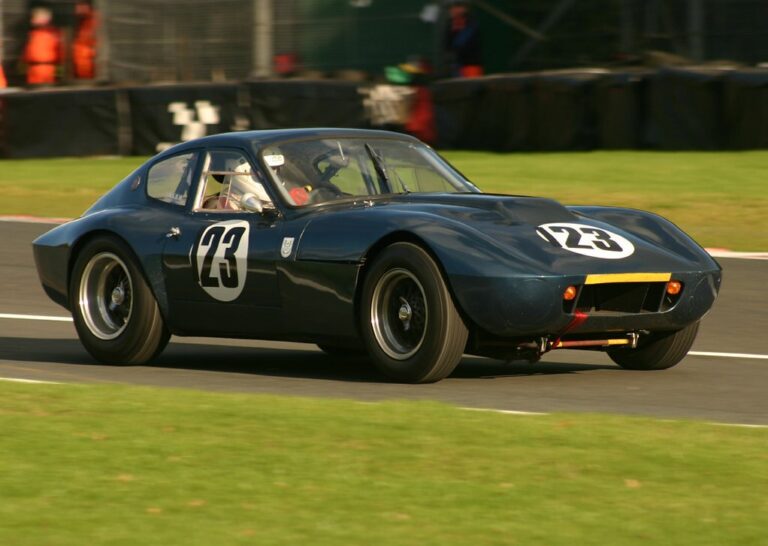
The motorsport pedigree of the Morgan Plus 4 is the stuff of absolute legend, characterized by a giant-killing spirit that routinely humiliated much larger, better-funded factory efforts. While it was a dominant, tail-sliding force in domestic club racing and American SCCA events, its absolute zenith was reached on the grueling global stage of endurance racing. In 1962, the Morgan factory initially refused to officially support a racing effort at the 24 Hours of Le Mans, feeling the car was perhaps too antiquated to survive. Undeterred, independent racers Chris Lawrence and Richard Shepherd-Barron entered a highly tuned, aluminium-bodied Plus 4 Super Sports—famously registered as TOK 258. Powered by a LawrenceTune-fettled Triumph engine and utilizing a specialized aerodynamic hardtop, they not only survived the punishing French marathon but achieved the impossible: winning the 2.0-liter GT class, leaving a trail of broken Porsches and Alfa Romeos in their wake. This monumental victory directly birthed the legendary Plus 4 Super Sports customer submodel, and later the ultra-rare, aerodynamic Morgan Plus 4 SLR, cementing the car’s reputation as a fearsome, rugged track weapon that could take a staggering amount of abuse.
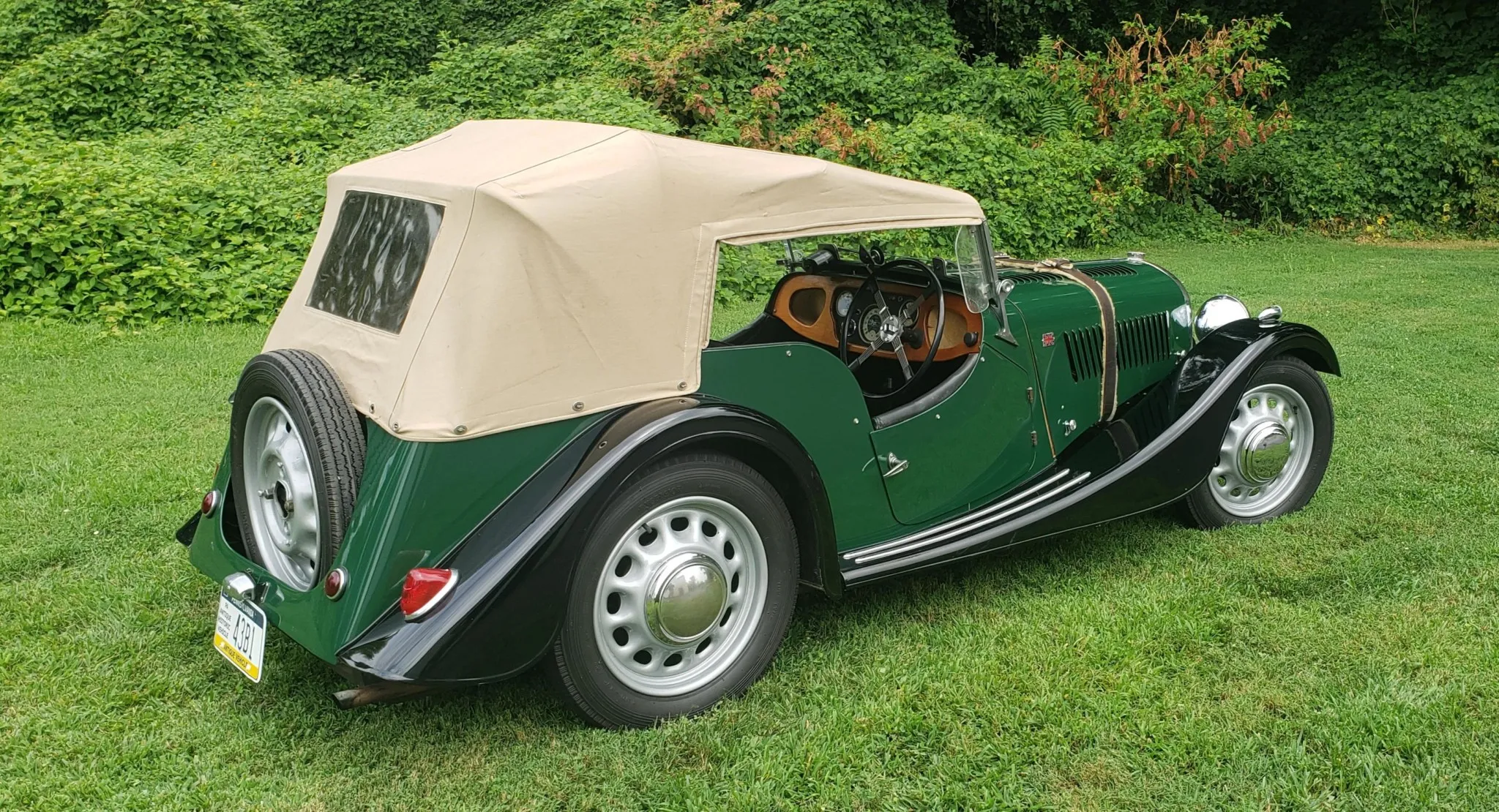
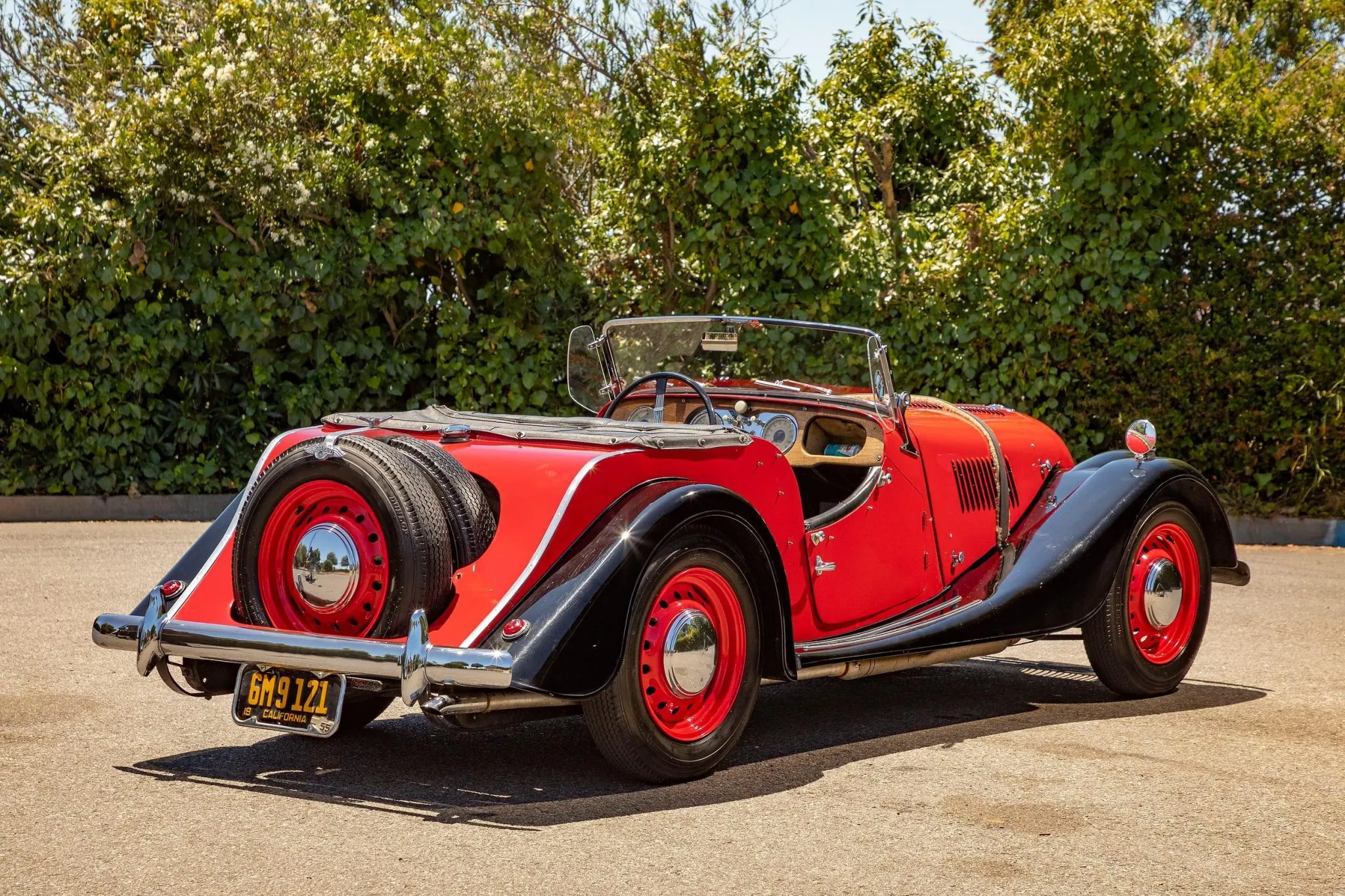
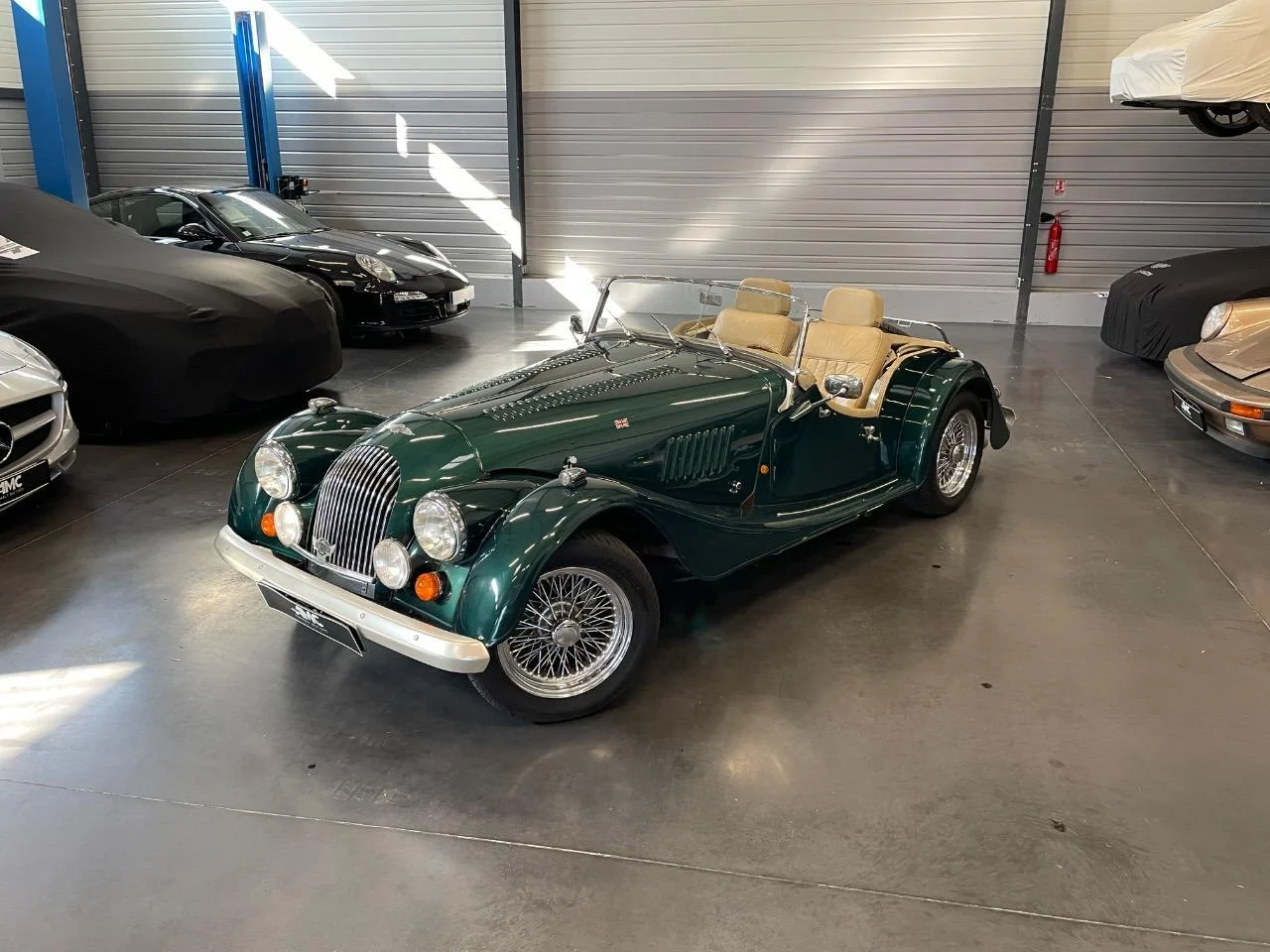
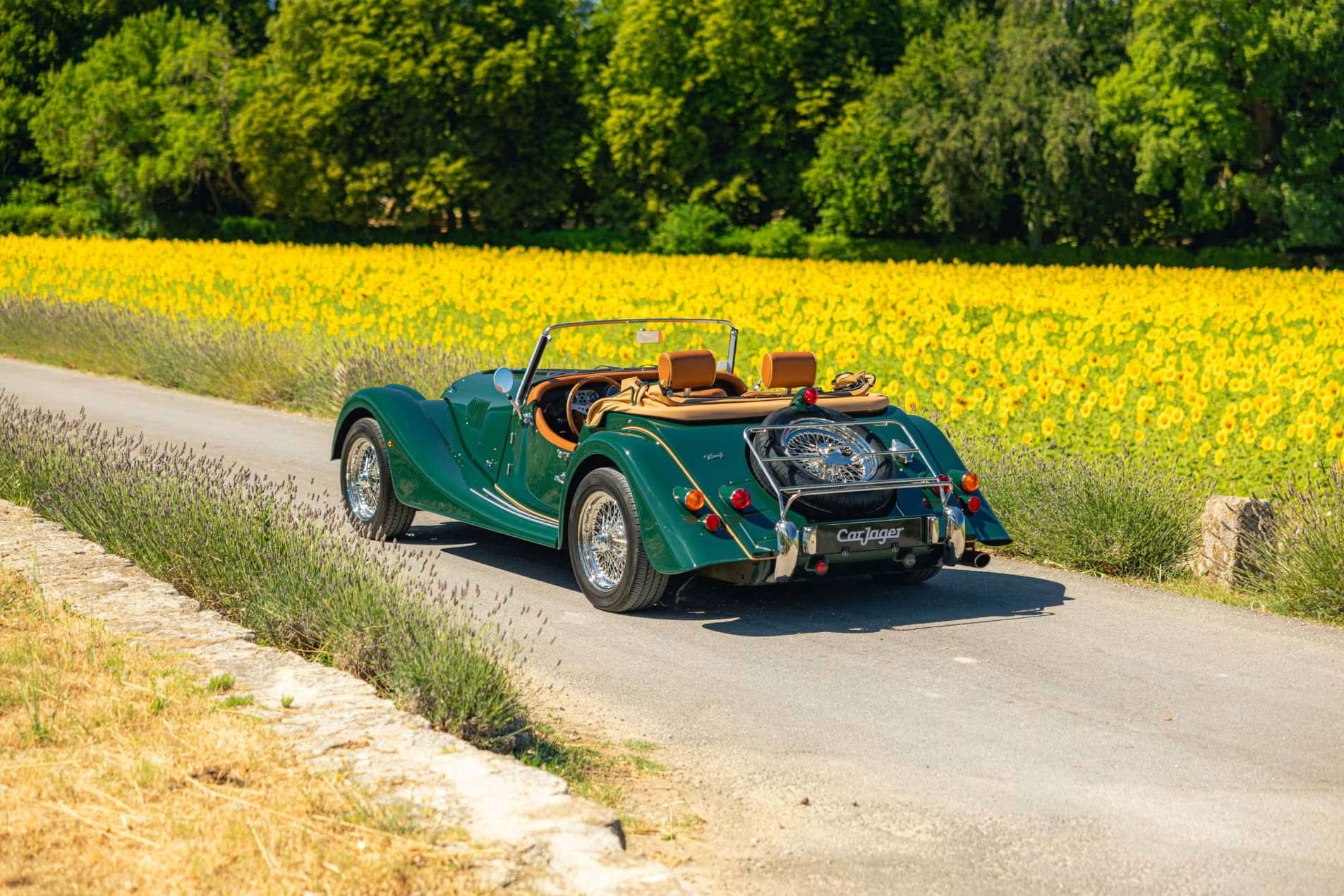
On the street, the commercial success of the Plus 4 was equally astonishing, becoming the absolute bedrock of the Malvern factory. In a world defined by planned obsolescence and computerized detachment, the appeal of a brand-new car built by hand, with a waiting list that routinely stretched from two to ten years, was an anomaly that defied all automotive logic. It became a cultural icon, favored by rock stars, purists, and aristocrats who appreciated its uncompromising nature. Inside, the cabin was a masterclass in bespoke British craftsmanship, wrapping the occupants in a sea of Muirhead leather, polished walnut dash panels, and classic Smiths instrumentation. The driving position was intimate and wind-battered, situated practically over the rear axle, offering a sensory overload of hot oil smells, mechanical whines, and the glorious view of a long, louvered bonnet slicing through a country lane.
The legacy of the 1950 Morgan Plus 4 is utterly sovereign in the pantheon of motoring. When production of the traditional steel-chassis model finally ceased in 2020 after an unbelievable seventy-year run, it held the record as one of the longest-running nameplates in automotive history. It was the crucial, load-bearing pillar that carried the Morgan Motor Company through the darkest days of the British car industry, proving that tradition and craftsmanship hold a timeless, unassailable value. It was eventually replaced by the all-new CX-Generation Plus Four, featuring a bonded aluminium chassis and turbocharged power, but the spirit of the original remains untouched. The classic Morgan Plus 4 stands immortal as the definitive British sports car—an enchanting, ash-framed time machine that allowed generation after generation to experience the raw, unadulterated thrill of the golden age of motoring.
Portal
Model line
Model generation
Predecessor
Sucessor
Brand
Produced from
Vehicle category
Portal
Model line
Model generation
Predecessor
Sucessor
Model Overview
In the austere, rationing-shadowed days of 1950s Britain, the sports car was undergoing a rapid, often clinical evolution. Manufacturers across the continent and the UK were chasing aerodynamic efficiency, enclosing wheels within smooth envelope bodies, and developing complex independent suspensions. But tucked away in the Malvern Hills of Worcestershire, the Morgan Motor Company chose a brilliantly stubborn, beautifully anachronistic path. Their existing 4/4 model had been a charming pre-war survivor, but it sorely lacked the sheer muscularity required to compete on the booming global stage and the lucrative American export market. At the 1950 Earls Court Motor Show, Peter Morgan unveiled the antidote: the Morgan Plus 4. It was a vehicle that unapologetically retained the sweeping, separate-fender styling of the 1930s while packing a significantly larger, more robust punch beneath its center-hinged, louvered bonnet. Entering a fiercely competitive arena, the Plus 4 found itself sparring directly with the MG TD and TF, the Austin-Healey 100, and its eventual engine-donor, the Triumph TR series. Yet, the Morgan offered something profoundly different: an unfiltered, visceral connection to the road that its increasingly refined rivals were already beginning to lose. It was the quintessential traditional British roadster, standing as a defiant monument to pre-war coachbuilding techniques in a rapidly modernizing world.
To peer beneath the sensuous, hand-rolled aluminium or steel skin of the Plus 4 is to witness an unbroken lineage of idiosyncratic, yet magnificently effective, engineering. Unlike the monocoque revolution that was sweeping the automotive industry, the Plus 4 relied on a robust steel Z-section ladder frame chassis. Upon this incredibly low-slung skeleton, craftsmen painstakingly shaped an intricate framework of seasoned English ash wood. This traditional coachbuilding technique endowed the car with a unique flexibility, absorbing harsh vibrations while keeping the overall curb weight remarkably low. The suspension was equally anachronistic yet deeply brilliant; at the front, it utilized H.F.S. Morgan’s patented sliding pillar independent suspension, a design dating back to 1909. This setup kept the front wheels perfectly vertical during cornering, offering immense grip and direct feedback, albeit requiring a disciplined regimen of grease gun maintenance from the dedicated owner. At the rear, a live axle suspended on semi-elliptic leaf springs kept the tail honest, translating every nuance of the tarmac directly through the seat of the driver’s trousers.
The beating heart of the Plus 4 evolved dramatically across an astonishing seventy-year lifespan, mapped out through distinct generations from Series I to Series III. It initially launched in Phase 1 with a robust 2088cc Standard Vanguard engine, but true sporting immortality was achieved in the Phase 2 era when Morgan adopted the potent powerplants from Triumph. The TR2’s 1991cc engine, and later the TR3 and TR4’s 2138cc units, transformed the lightweight Plus 4 into an absolute rocket ship. Buyers could choose from a variety of distinct submodels tailored to their sporting lifestyle: the stripped-back 2-Seater Roadster with traditional side screens, a more accommodating 4-Seater Roadster for families of a brave disposition, and the highly elegant Drophead Coupe, which featured higher doors, fixed window frames, and a luxurious folding top. Production of the Series I paused in 1969 as Triumph engine supplies dried up, but customer demand refused to die.
In 1985, the factory resurrected the legend with the Series II, initially utilizing a Fiat twin-cam engine before rapidly switching to Rover’s M16 and T16 powerplants, injecting modern reliability into the vintage silhouette. As the car transitioned into the Series III modern era, it received its most refined mechanical package yet: a 2.0-liter Ford GDI engine paired with a slick-shifting 5-speed manual gearbox sourced from Mazda. This combination created arguably the sweetest-driving Plus 4 in history. Yet, Morgan never lost its appetite for madness. In its later years, the factory unleashed the ultra-exclusive Plus 4 ARP4, featuring a Cosworth-tuned 2.0-liter engine producing 225 horsepower, modern disc brakes, and a revolutionary five-link rear suspension that finally replaced the leaf springs. The lineage culminated in the magnificent 70th Anniversary Edition, featuring a gold-painted chassis, platinum metallic paint, and an active sports exhaust, serving as the ultimate swan song for the traditional steel-chassis Morgan.
The motorsport pedigree of the Morgan Plus 4 is the stuff of absolute legend, characterized by a giant-killing spirit that routinely humiliated much larger, better-funded factory efforts. While it was a dominant, tail-sliding force in domestic club racing and American SCCA events, its absolute zenith was reached on the grueling global stage of endurance racing. In 1962, the Morgan factory initially refused to officially support a racing effort at the 24 Hours of Le Mans, feeling the car was perhaps too antiquated to survive. Undeterred, independent racers Chris Lawrence and Richard Shepherd-Barron entered a highly tuned, aluminium-bodied Plus 4 Super Sports—famously registered as TOK 258. Powered by a LawrenceTune-fettled Triumph engine and utilizing a specialized aerodynamic hardtop, they not only survived the punishing French marathon but achieved the impossible: winning the 2.0-liter GT class, leaving a trail of broken Porsches and Alfa Romeos in their wake. This monumental victory directly birthed the legendary Plus 4 Super Sports customer submodel, and later the ultra-rare, aerodynamic Morgan Plus 4 SLR, cementing the car’s reputation as a fearsome, rugged track weapon that could take a staggering amount of abuse.
On the street, the commercial success of the Plus 4 was equally astonishing, becoming the absolute bedrock of the Malvern factory. In a world defined by planned obsolescence and computerized detachment, the appeal of a brand-new car built by hand, with a waiting list that routinely stretched from two to ten years, was an anomaly that defied all automotive logic. It became a cultural icon, favored by rock stars, purists, and aristocrats who appreciated its uncompromising nature. Inside, the cabin was a masterclass in bespoke British craftsmanship, wrapping the occupants in a sea of Muirhead leather, polished walnut dash panels, and classic Smiths instrumentation. The driving position was intimate and wind-battered, situated practically over the rear axle, offering a sensory overload of hot oil smells, mechanical whines, and the glorious view of a long, louvered bonnet slicing through a country lane.
The legacy of the 1950 Morgan Plus 4 is utterly sovereign in the pantheon of motoring. When production of the traditional steel-chassis model finally ceased in 2020 after an unbelievable seventy-year run, it held the record as one of the longest-running nameplates in automotive history. It was the crucial, load-bearing pillar that carried the Morgan Motor Company through the darkest days of the British car industry, proving that tradition and craftsmanship hold a timeless, unassailable value. It was eventually replaced by the all-new CX-Generation Plus Four, featuring a bonded aluminium chassis and turbocharged power, but the spirit of the original remains untouched. The classic Morgan Plus 4 stands immortal as the definitive British sports car—an enchanting, ash-framed time machine that allowed generation after generation to experience the raw, unadulterated thrill of the golden age of motoring.
Generations
Model Generations

Submodels