
Nissan
Type
Foundation Year
Founder/s
Country
Headquarters
Brand Overview
In the grand theatre of Japanese automotive history, Toyota is the pragmatic giant, Honda is the precision engineer, and Mazda is the romantic eccentric. But Nissan? Nissan is the warrior. It is a company defined by a deep-seated, almost technocratic obsession with speed and a refusal to be second best. While the brand today is often associated with sensible crossovers, scratching the surface reveals a lineage of tarmac-shredding violence that rivals anything from Stuttgart or Maranello. This is the company that looked at the Porsche 959—the most advanced car of the 1980s—and didn’t just decide to copy it, but to build a machine that would eventually hunt it down and kill it. From the democratization of the sports car with the “Z” to the utter hegemony of the GT-R, Nissan’s story is one of innovation delivered with the force of a sledgehammer.
The roots of this industrial titan go back to the early 20th century with the Kwaishinsha Motor Car Works and the DAT car, but the modern soul of Nissan was forged in a boardroom merger in 1966. Nissan absorbed the Prince Motor Company. Prince was a small, engineering-led firm with a penchant for racing. They brought with them a boxy sedan called the Skyline and a team of fanatical engineers led by Shinichiro Sakurai. This infusion of Prince DNA changed Nissan from a manufacturer of licensed Austin designs into a powerhouse of performance.
The first fruit of this new era was the “Hakosuka” (Boxy Skyline) GT-R of 1969. Powered by the S20 engine—a detuned race engine with dual overhead cams and three Mikuni carburetors—it was a wolf in sheep’s clothing. On the racetracks of Japan, it was unstoppable, securing 50 consecutive victories in touring car racing. A legend was born, but it was a domestic one, whispered about but rarely seen outside the Land of the Rising Sun.
While the Skyline was conquering Japan, Nissan was planning a global coup. In the late 1960s, the sports car market in America was polarized: you either bought a fragile, expensive European roadster or a heavy American muscle car. Enter Yutaka Katayama, known affectionately as “Mr. K”. He was Nissan’s man in America, a maverick who understood that the world needed a reliable, beautiful, and affordable sports car. He fought the conservative executives in Tokyo to build the 240Z. Launched in 1969 under the Datsun badge, it was a revelation. It looked like a Jaguar E-Type, ran like a Swiss watch, and cost the same as a mundane MGB. The “Z-car” didn’t just sell; it changed the perception of Japanese cars forever. It proved they could have soul.
The 1980s brought the turbo era, and Nissan embraced it with a fervor bordering on madness. This was the age of the “Bubble Economy”, where cash was limitless and engineers were given blank checks. Nissan developed HICAS (four-wheel steering) and increasingly potent V6 engines. The 300ZX (Z32), launched in 1989, was a technological tour de force that stunned the automotive press. But the ultimate expression of this technological ambition arrived in 1989 with the revival of a dormant badge. The R32 Skyline GT-R.
To understand the R32 GT-R, you have to understand its purpose. It was not built to be a road car; it was built to win the Group A Touring Car Championship. The engineers looked at the rulebook and reverse-engineered the perfect weapon. They developed the RB26DETT, a 2.6-litre, twin-turbo straight-six designed to handle 600 horsepower in race trim. They mated it to the ATTESA E-TS all-wheel-drive system, a computer-controlled marvel that could send torque to the front wheels the instant the rears lost traction.
The result was a massacre. In the Japanese Touring Car Championship, the R32 GT-R won every single race it entered—29 out of 29. In Australia, it arrived at the Mount Panorama circuit for the Bathurst 1000 and utterly humiliated the Ford Sierra Cosworths and Holden V8s. It was so dominant, so crushingly superior, that the Australian press nicknamed it “Godzilla”—a monster from Japan that had come to destroy everything. The nickname stuck. The R32 didn’t just win; it forced the governing bodies to change the rules and ban it because nobody else could compete.
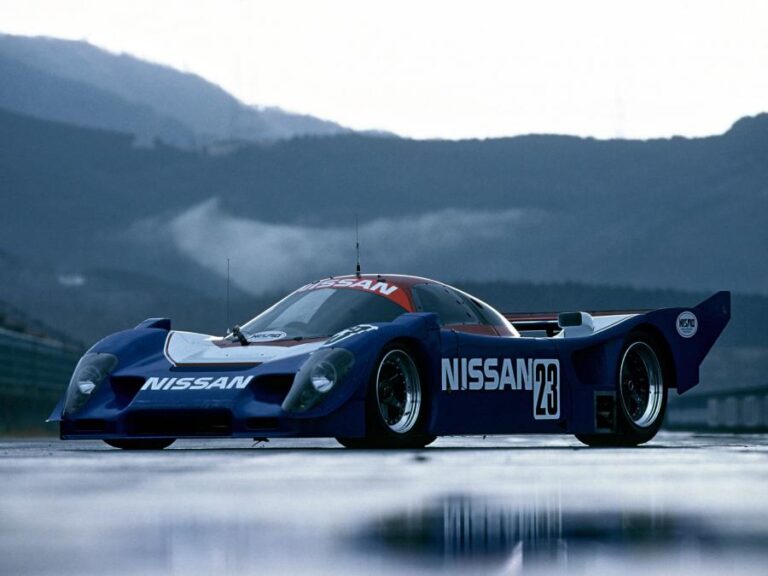
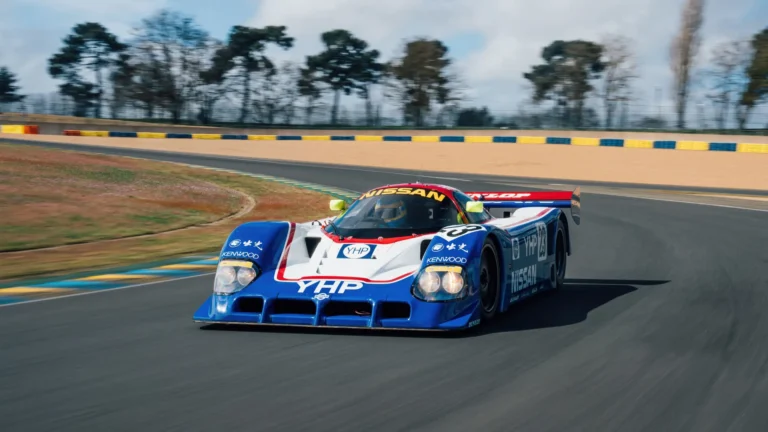
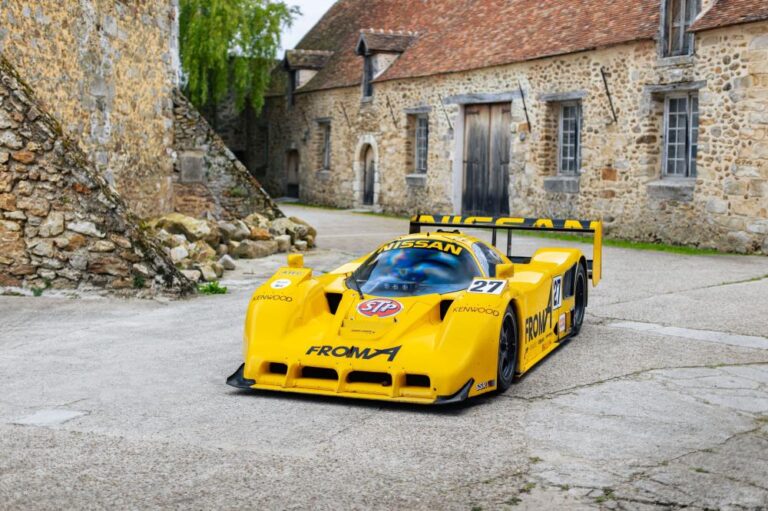
While Godzilla ruled the touring car world, Nissan was waging a different war in America with the GTP ZX-Turbo. In the IMSA championship, against the might of the Porsche 962s, Nissan unleashed a Lola-chassis prototype powered by a heavily turbocharged V6. Driven by Geoff Brabham, the “electramotive” Nissans won four consecutive championships from 1988 to 1991. They were so fast that they famously ended the “Porsche Era” in endurance racing. This culminated in the Group C program and the R90CK, a car that delivered one of the most hair-raising moments in Le Mans history. In 1990, driver Mark Blundell, with the wastegates jammed shut and the engine producing over 1,100 horsepower, wrestled the car to a pole position lap that was six seconds faster than the second-place car. It was a “banzai” lap of pure terror and bravery.
But Nissan’s culture is not just about grip and lap times; it is also about style and slip angle. In the 1990s, the Silvia (S13, S14, and S15) became the icon of a new motorsport: drifting. Light, rear-wheel drive, and blessed with the unburstable SR20DET engine, the Silvia was the paintbrush for a generation of artists who preferred to look out of the side windows. It created a subculture that persists to this day, making the “S-chassis” one of the most coveted platforms in the world.
The modern era has seen the GT-R evolve from a Skyline variant into a standalone supercar killer. The R35 GT-R, launched in 2007, was a digital disruptor. It rewrote the laws of physics, using launch control and sheer computational power to accelerate faster than cars costing three times as much. It became the benchmark for the Nürburgring, sparking a lap-time war that forced Porsche to up its game with the 911 Turbo.
Nissan’s history is a tapestry of daring engineering. From the Prince R380 race car beating the Porsche 906 at the 1966 Japanese Grand Prix, to the homologation-special R390 GT1 built for Le Mans in the late 90s, Nissan has always punched above its weight. It is a brand that combines the mass-market pragmatism of a global giant with the obsessive, niche focus of a race shop. Whether it’s the howl of an RB26 engine at 8,000 rpm, the timeless silhouette of a 240Z, or the tyre smoke of a drifting Silvia, Nissan represents the visceral thrill of Japanese performance. It is innovation, yes, but more importantly, it is innovation that excites.
Type
Foundation Year
Country
Founder/s
Headquarters

Type
Foundation Year
Country
Founder/s
Headquarters
About this brand
In the grand theatre of Japanese automotive history, Toyota is the pragmatic giant, Honda is the precision engineer, and Mazda is the romantic eccentric. But Nissan? Nissan is the warrior. It is a company defined by a deep-seated, almost technocratic obsession with speed and a refusal to be second best. While the brand today is often associated with sensible crossovers, scratching the surface reveals a lineage of tarmac-shredding violence that rivals anything from Stuttgart or Maranello. This is the company that looked at the Porsche 959—the most advanced car of the 1980s—and didn’t just decide to copy it, but to build a machine that would eventually hunt it down and kill it. From the democratization of the sports car with the “Z” to the utter hegemony of the GT-R, Nissan’s story is one of innovation delivered with the force of a sledgehammer.
The roots of this industrial titan go back to the early 20th century with the Kwaishinsha Motor Car Works and the DAT car, but the modern soul of Nissan was forged in a boardroom merger in 1966. Nissan absorbed the Prince Motor Company. Prince was a small, engineering-led firm with a penchant for racing. They brought with them a boxy sedan called the Skyline and a team of fanatical engineers led by Shinichiro Sakurai. This infusion of Prince DNA changed Nissan from a manufacturer of licensed Austin designs into a powerhouse of performance.
The first fruit of this new era was the “Hakosuka” (Boxy Skyline) GT-R of 1969. Powered by the S20 engine—a detuned race engine with dual overhead cams and three Mikuni carburetors—it was a wolf in sheep’s clothing. On the racetracks of Japan, it was unstoppable, securing 50 consecutive victories in touring car racing. A legend was born, but it was a domestic one, whispered about but rarely seen outside the Land of the Rising Sun.
While the Skyline was conquering Japan, Nissan was planning a global coup. In the late 1960s, the sports car market in America was polarized: you either bought a fragile, expensive European roadster or a heavy American muscle car. Enter Yutaka Katayama, known affectionately as “Mr. K”. He was Nissan’s man in America, a maverick who understood that the world needed a reliable, beautiful, and affordable sports car. He fought the conservative executives in Tokyo to build the 240Z. Launched in 1969 under the Datsun badge, it was a revelation. It looked like a Jaguar E-Type, ran like a Swiss watch, and cost the same as a mundane MGB. The “Z-car” didn’t just sell; it changed the perception of Japanese cars forever. It proved they could have soul.
The 1980s brought the turbo era, and Nissan embraced it with a fervor bordering on madness. This was the age of the “Bubble Economy”, where cash was limitless and engineers were given blank checks. Nissan developed HICAS (four-wheel steering) and increasingly potent V6 engines. The 300ZX (Z32), launched in 1989, was a technological tour de force that stunned the automotive press. But the ultimate expression of this technological ambition arrived in 1989 with the revival of a dormant badge. The R32 Skyline GT-R.
To understand the R32 GT-R, you have to understand its purpose. It was not built to be a road car; it was built to win the Group A Touring Car Championship. The engineers looked at the rulebook and reverse-engineered the perfect weapon. They developed the RB26DETT, a 2.6-litre, twin-turbo straight-six designed to handle 600 horsepower in race trim. They mated it to the ATTESA E-TS all-wheel-drive system, a computer-controlled marvel that could send torque to the front wheels the instant the rears lost traction.
The result was a massacre. In the Japanese Touring Car Championship, the R32 GT-R won every single race it entered—29 out of 29. In Australia, it arrived at the Mount Panorama circuit for the Bathurst 1000 and utterly humiliated the Ford Sierra Cosworths and Holden V8s. It was so dominant, so crushingly superior, that the Australian press nicknamed it “Godzilla”—a monster from Japan that had come to destroy everything. The nickname stuck. The R32 didn’t just win; it forced the governing bodies to change the rules and ban it because nobody else could compete.
While Godzilla ruled the touring car world, Nissan was waging a different war in America with the GTP ZX-Turbo. In the IMSA championship, against the might of the Porsche 962s, Nissan unleashed a Lola-chassis prototype powered by a heavily turbocharged V6. Driven by Geoff Brabham, the “electramotive” Nissans won four consecutive championships from 1988 to 1991. They were so fast that they famously ended the “Porsche Era” in endurance racing. This culminated in the Group C program and the R90CK, a car that delivered one of the most hair-raising moments in Le Mans history. In 1990, driver Mark Blundell, with the wastegates jammed shut and the engine producing over 1,100 horsepower, wrestled the car to a pole position lap that was six seconds faster than the second-place car. It was a “banzai” lap of pure terror and bravery.
But Nissan’s culture is not just about grip and lap times; it is also about style and slip angle. In the 1990s, the Silvia (S13, S14, and S15) became the icon of a new motorsport: drifting. Light, rear-wheel drive, and blessed with the unburstable SR20DET engine, the Silvia was the paintbrush for a generation of artists who preferred to look out of the side windows. It created a subculture that persists to this day, making the “S-chassis” one of the most coveted platforms in the world.
The modern era has seen the GT-R evolve from a Skyline variant into a standalone supercar killer. The R35 GT-R, launched in 2007, was a digital disruptor. It rewrote the laws of physics, using launch control and sheer computational power to accelerate faster than cars costing three times as much. It became the benchmark for the Nürburgring, sparking a lap-time war that forced Porsche to up its game with the 911 Turbo.
Nissan’s history is a tapestry of daring engineering. From the Prince R380 race car beating the Porsche 906 at the 1966 Japanese Grand Prix, to the homologation-special R390 GT1 built for Le Mans in the late 90s, Nissan has always punched above its weight. It is a brand that combines the mass-market pragmatism of a global giant with the obsessive, niche focus of a race shop. Whether it’s the howl of an RB26 engine at 8,000 rpm, the timeless silhouette of a 240Z, or the tyre smoke of a drifting Silvia, Nissan represents the visceral thrill of Japanese performance. It is innovation, yes, but more importantly, it is innovation that excites.
Submodels
Latest Variants

Model Lines