
Nissan R90CP
Brand
Produced from
Portal
Vehicle category
Predecessor
Successor
Submodel Overview
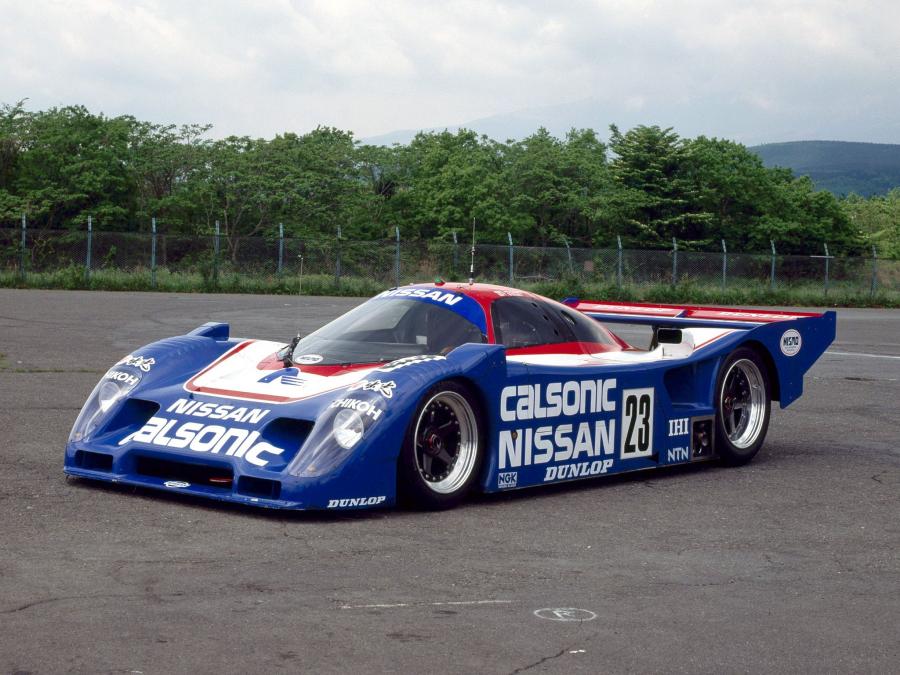
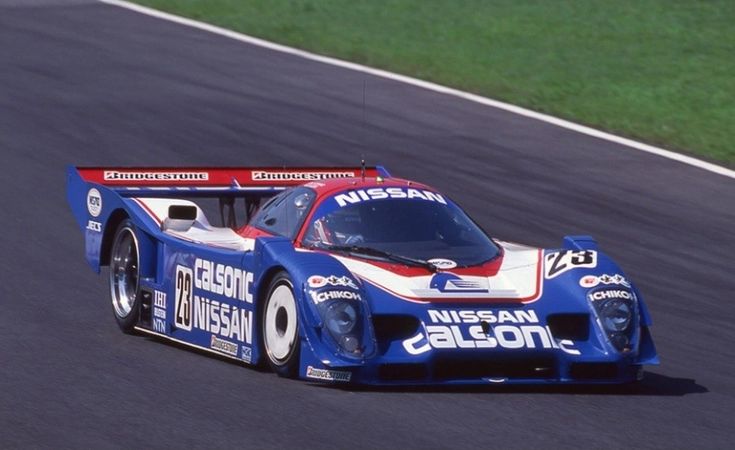
To truly appreciate the engineering poetry and the relentless motorsport philosophy behind the 1990 Nissan R90CP, one must examine the fascinating, high-stakes strategy employed by Nissan at the dawn of the decade. The World Sportscar Championship was in its golden, turbocharged twilight, and Group C prototypes had evolved into ground-hugging fighter jets. Following the promising but fragile R89C campaign, Nissan executives realized that conquering both the domestic Japanese championship and the grueling 24 Hours of Le Mans required a massive, multifaceted assault. In a stroke of bold logistical genius, they split their 1990 development program. While the European effort was handed to Ray Mallock Ltd to create the aggressive, sprint-focused R90CK, the domestic Japanese development was entrusted entirely to Nissan’s motorsport division, Nismo, at their Oppama facility. The resulting creation was the R90CP (the ‘P’ denoting Oppama). It was a machine bred for a completely different kind of warfare, designed to decimate the Toyota 90C-V and the ever-present Porsche 962Cs in the All Japan Sports Prototype Championship (JSPC), while proving that Japanese endurance philosophy could go the distance at La Sarthe.
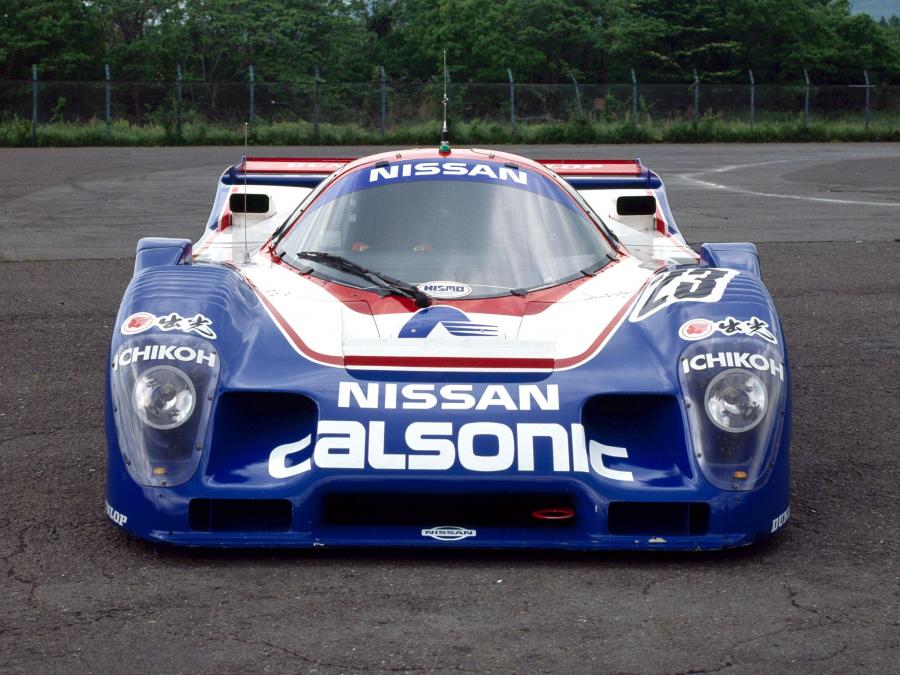
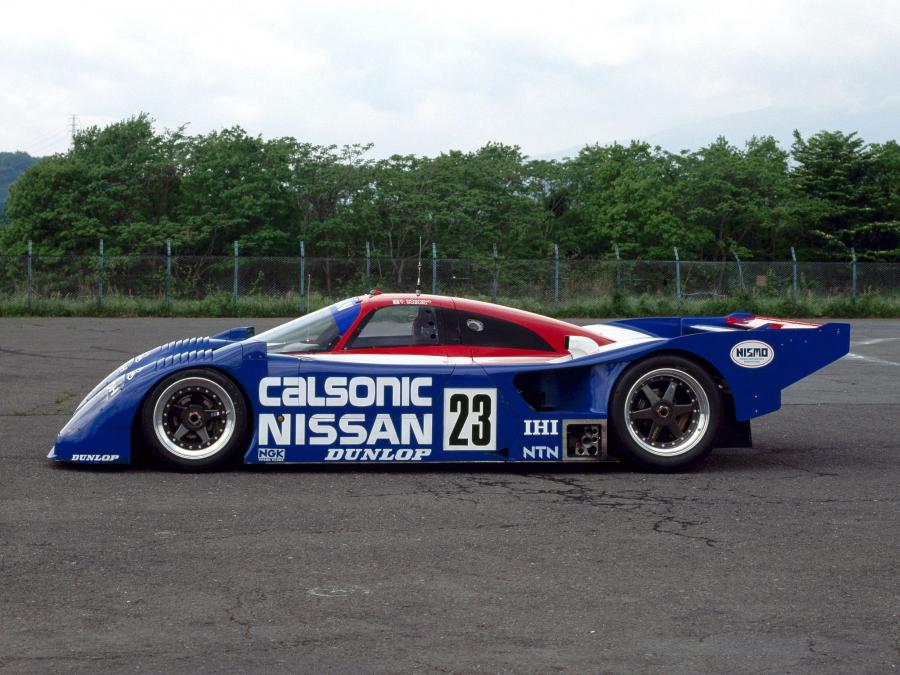
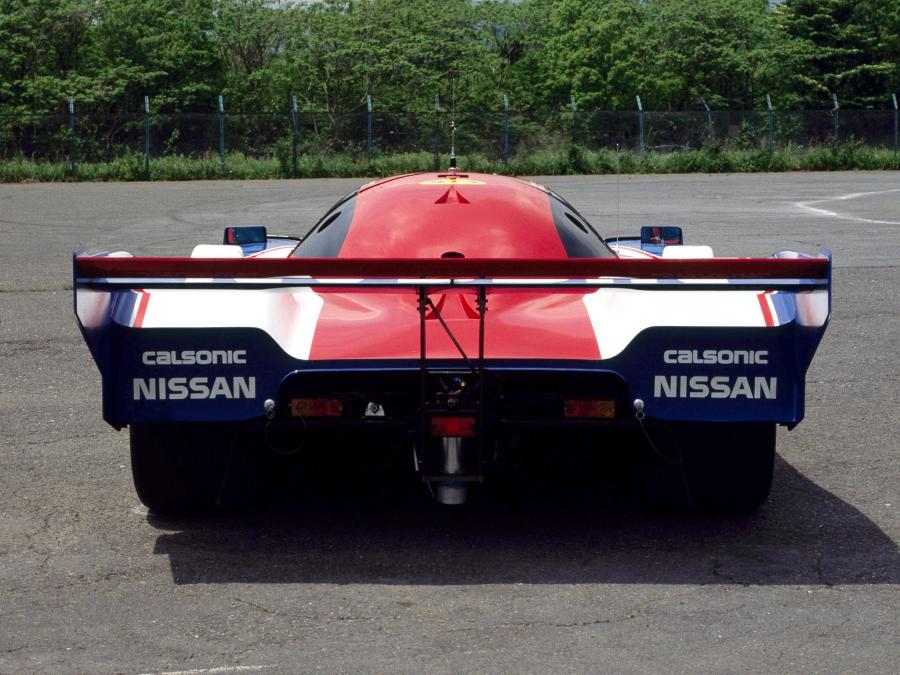
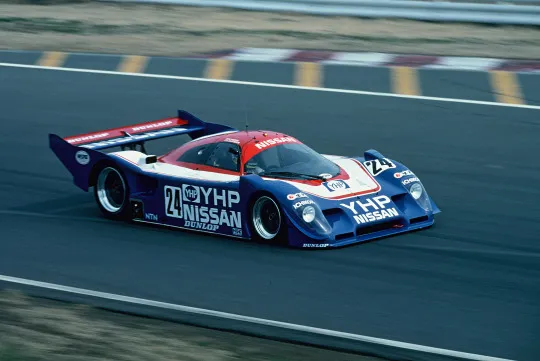
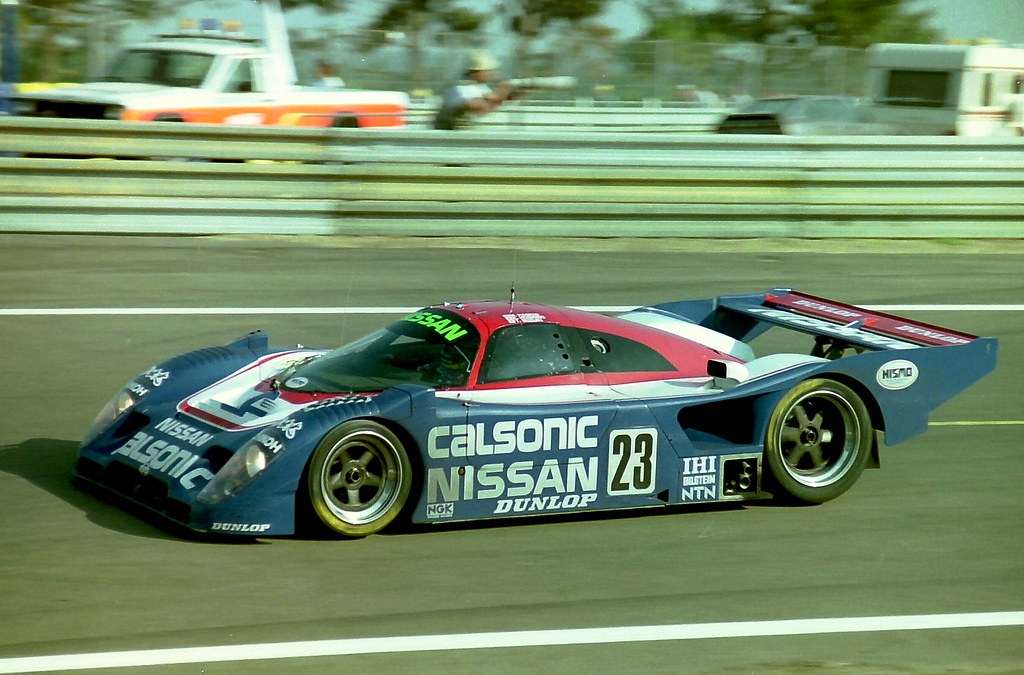
To peel back the iconic, tricolor Calsonic or YHP liveries of the R90CP is to witness a magnificent divergence in aerodynamic ideology. Both the European CK and the Japanese CP shared the same underlying, Lola-derived carbon-kevlar monocoque tub, but Nismo’s engineers completely discarded the European bodywork. Recognizing that the JSPC calendar featured tracks like Fuji Speedway with massive, punishing straights, the Oppama team prioritized low drag and high-speed stability over absolute maximum downforce. The R90CP featured a deeply contoured, rounded nose, covered rear wheels, and remarkably smooth, flowing flanks that allowed it to slice through the air with devastating efficiency. Beneath this slippery carbon-fiber shell beat the same mythical heart that powered its European sibling: the VRH35Z. This 3.5-liter, twin-turbocharged aluminium V8 engine is widely regarded as one of the finest endurance powerplants ever constructed. In race trim, it comfortably delivered over 800 horsepower with a wide, tractable torque band that made it relatively forgiving for the drivers over a long stint. Mated to a specialized five-speed Hewland manual transaxle, the powertrain was a paragon of unburstable Japanese reliability. To arrest this kinetic energy from speeds touching 230 mph, massive carbon brakes were fitted, glowing incandescently through the BBS wheels during heavy braking zones.
The competitive saga of the Nissan R90CP is a tale of clinical, unyielding dominance. In the 1990 All Japan Sports Prototype Championship, it was an absolute juggernaut. Piloted by domestic racing deities like Masahiro Hasemi and Kazuyoshi Hoshino, the R90CP simply broke the will of the opposition. It captured multiple victories, engaging in ferocious, high-boost dogfights with the factory Toyotas and the privateer Porsches, ultimately securing the 1990 JSPC manufacturer’s and driver’s championships for Nissan. However, the most profound chapter of the R90CP’s history was written on French soil during the 1990 24 Hours of Le Mans. While the European R90CK made international headlines by shattering the qualifying record with a terrifying, jammed-wastegate lap, the race itself told a different story. The highly stressed European cars suffered a litany of mechanical heartbreaks and gearbox failures. Meanwhile, the #23 Nismo-entered R90CP, driven by Hasemi, Hoshino, and Toshio Suzuki, executed a masterclass in endurance racing. Prioritizing mechanical sympathy and consistent, blistering lap times over outright sprint speed, the blue, white, and red machine survived the 24-hour marathon to finish fifth overall. It was the highest-placed Japanese car in the race, validating the Oppama team’s low-drag, high-reliability design philosophy on the world’s greatest stage.
The legacy of the 1990 Nissan R90CP represents the absolute bedrock of Nismo’s golden era in prototype racing. It was the crucial evolutionary link that proved Nissan could design and develop world-beating aerodynamic packages entirely in-house. The lessons learned from the CP’s bulletproof reliability and wind-cheating shape were directly carried over into its successors: the R91CP, which would go on to secure a historic, outright victory at the 1992 24 Hours of Daytona, and the terrifying R92CP, which remains one of the fastest and most dominant Group C cars ever to turn a wheel in Japan. The R90CP stands immortal in the pantheon of motorsport not merely as a championship winner, but as the quintessential expression of Japanese endurance engineering—a smooth, howling, twin-turbocharged samurai that conquered its homeland and proudly carried the flag at Le Mans.
Brand
Produced from
Portal
Vehicle category
Predecessor
Sucessor
Brand
Produced from
Portal
Vehicle category
Model generation
Predecessor
Sucessor
Submodel Overview
To truly appreciate the engineering poetry and the relentless motorsport philosophy behind the 1990 Nissan R90CP, one must examine the fascinating, high-stakes strategy employed by Nissan at the dawn of the decade. The World Sportscar Championship was in its golden, turbocharged twilight, and Group C prototypes had evolved into ground-hugging fighter jets. Following the promising but fragile R89C campaign, Nissan executives realized that conquering both the domestic Japanese championship and the grueling 24 Hours of Le Mans required a massive, multifaceted assault. In a stroke of bold logistical genius, they split their 1990 development program. While the European effort was handed to Ray Mallock Ltd to create the aggressive, sprint-focused R90CK, the domestic Japanese development was entrusted entirely to Nissan’s motorsport division, Nismo, at their Oppama facility. The resulting creation was the R90CP (the ‘P’ denoting Oppama). It was a machine bred for a completely different kind of warfare, designed to decimate the Toyota 90C-V and the ever-present Porsche 962Cs in the All Japan Sports Prototype Championship (JSPC), while proving that Japanese endurance philosophy could go the distance at La Sarthe.
To peel back the iconic, tricolor Calsonic or YHP liveries of the R90CP is to witness a magnificent divergence in aerodynamic ideology. Both the European CK and the Japanese CP shared the same underlying, Lola-derived carbon-kevlar monocoque tub, but Nismo’s engineers completely discarded the European bodywork. Recognizing that the JSPC calendar featured tracks like Fuji Speedway with massive, punishing straights, the Oppama team prioritized low drag and high-speed stability over absolute maximum downforce. The R90CP featured a deeply contoured, rounded nose, covered rear wheels, and remarkably smooth, flowing flanks that allowed it to slice through the air with devastating efficiency. Beneath this slippery carbon-fiber shell beat the same mythical heart that powered its European sibling: the VRH35Z. This 3.5-liter, twin-turbocharged aluminium V8 engine is widely regarded as one of the finest endurance powerplants ever constructed. In race trim, it comfortably delivered over 800 horsepower with a wide, tractable torque band that made it relatively forgiving for the drivers over a long stint. Mated to a specialized five-speed Hewland manual transaxle, the powertrain was a paragon of unburstable Japanese reliability. To arrest this kinetic energy from speeds touching 230 mph, massive carbon brakes were fitted, glowing incandescently through the BBS wheels during heavy braking zones.
The competitive saga of the Nissan R90CP is a tale of clinical, unyielding dominance. In the 1990 All Japan Sports Prototype Championship, it was an absolute juggernaut. Piloted by domestic racing deities like Masahiro Hasemi and Kazuyoshi Hoshino, the R90CP simply broke the will of the opposition. It captured multiple victories, engaging in ferocious, high-boost dogfights with the factory Toyotas and the privateer Porsches, ultimately securing the 1990 JSPC manufacturer’s and driver’s championships for Nissan. However, the most profound chapter of the R90CP’s history was written on French soil during the 1990 24 Hours of Le Mans. While the European R90CK made international headlines by shattering the qualifying record with a terrifying, jammed-wastegate lap, the race itself told a different story. The highly stressed European cars suffered a litany of mechanical heartbreaks and gearbox failures. Meanwhile, the #23 Nismo-entered R90CP, driven by Hasemi, Hoshino, and Toshio Suzuki, executed a masterclass in endurance racing. Prioritizing mechanical sympathy and consistent, blistering lap times over outright sprint speed, the blue, white, and red machine survived the 24-hour marathon to finish fifth overall. It was the highest-placed Japanese car in the race, validating the Oppama team’s low-drag, high-reliability design philosophy on the world’s greatest stage.
The legacy of the 1990 Nissan R90CP represents the absolute bedrock of Nismo’s golden era in prototype racing. It was the crucial evolutionary link that proved Nissan could design and develop world-beating aerodynamic packages entirely in-house. The lessons learned from the CP’s bulletproof reliability and wind-cheating shape were directly carried over into its successors: the R91CP, which would go on to secure a historic, outright victory at the 1992 24 Hours of Daytona, and the terrifying R92CP, which remains one of the fastest and most dominant Group C cars ever to turn a wheel in Japan. The R90CP stands immortal in the pantheon of motorsport not merely as a championship winner, but as the quintessential expression of Japanese endurance engineering—a smooth, howling, twin-turbocharged samurai that conquered its homeland and proudly carried the flag at Le Mans.
Tech Specs
Technical Specifications
Tech Specs
Technical Specifications
Engine
01
03
Internal combustion engine
Configuration
Nissan VRH35Z, V8 - 90º
Location
Mid, longitudinally mounted
Construction
Aluminium alloy block and heads
Displacement (cc)
3,496 cc
Displacement (cu in)
213.3 cu in
Compression
8.5:1
Bore x Stroke
85.0 mm x 77.0 mm
Valvetrain
4 valves per cylinder, DOHC
Fuel feed
Nissan ECCS electronic fuel injection
Lubrication
Dry sump
Aspiration
Twin-Turbocharged (2 x IHI turbochargers)
Output
Power (hp)
800 hp
Power (kW)
596 kW
Max power at
7,600 RPM
Torque (Nm)
784 Nm
Torque (ft lbs)
578 ft lbs
Max torque at
5,600 RPM
Drivetrain
02
03
Chassis
Type
Monocoque unibody
Material
Carbon fibre composite and aluminium honeycomb
Body
Material
Carbon fibre and Kevlar composite
Transmission
Gearbox
Nissan 5-speed manual
Drive
Rear Wheel Drive (Limited Slip Differential)
Suspension
Front
Independent, double wishbones, pushrod-actuated coil springs over dampers, anti-roll bar
Rear
Independent, double wishbones, pushrod-actuated coil springs over dampers, anti-roll bar
Steering
Type
Rack and pinion, power assisted
Brakes
Front
Ventilated carbon ceramic discs Ø356 mm (14 in), 6-piston AP Racing calipers
Rear
Ventilated carbon ceramic discs Ø356 mm (14 in), 6-piston AP Racing calipers
Wheels
Front
13" x 17" (Volk Racing / Rays Engineering Magnesium alloy)
Rear
14.5" x 18" (Volk Racing / Rays Engineering Magnesium alloy)
Tires
Front
25.5/27.0-17
Rear
28.5/31.0-18
Dimensions and performance
03
03
Dimensions
Length (mm)
4,800 mm
Length (in)
189.0 in
Width (mm)
2,000 mm
Width (in)
78.7 in
Height (mm)
1,000 mm
Height (in)
39.4 in
Wheelbase (mm)
2,779 mm
Wheelbase (in)
109.4 in
Weight (kg)
900 kg
Weight (lbs)
1,984 lbs
Performance
Power to weight
~0.88 hp/kg
Top speed (km/h)
~350 km/h
Top speed (mph)
~217 mph
0-100 km/h (0-60 mph)
~2.8 s