
Osella PA5 BMW
Submodel Overview
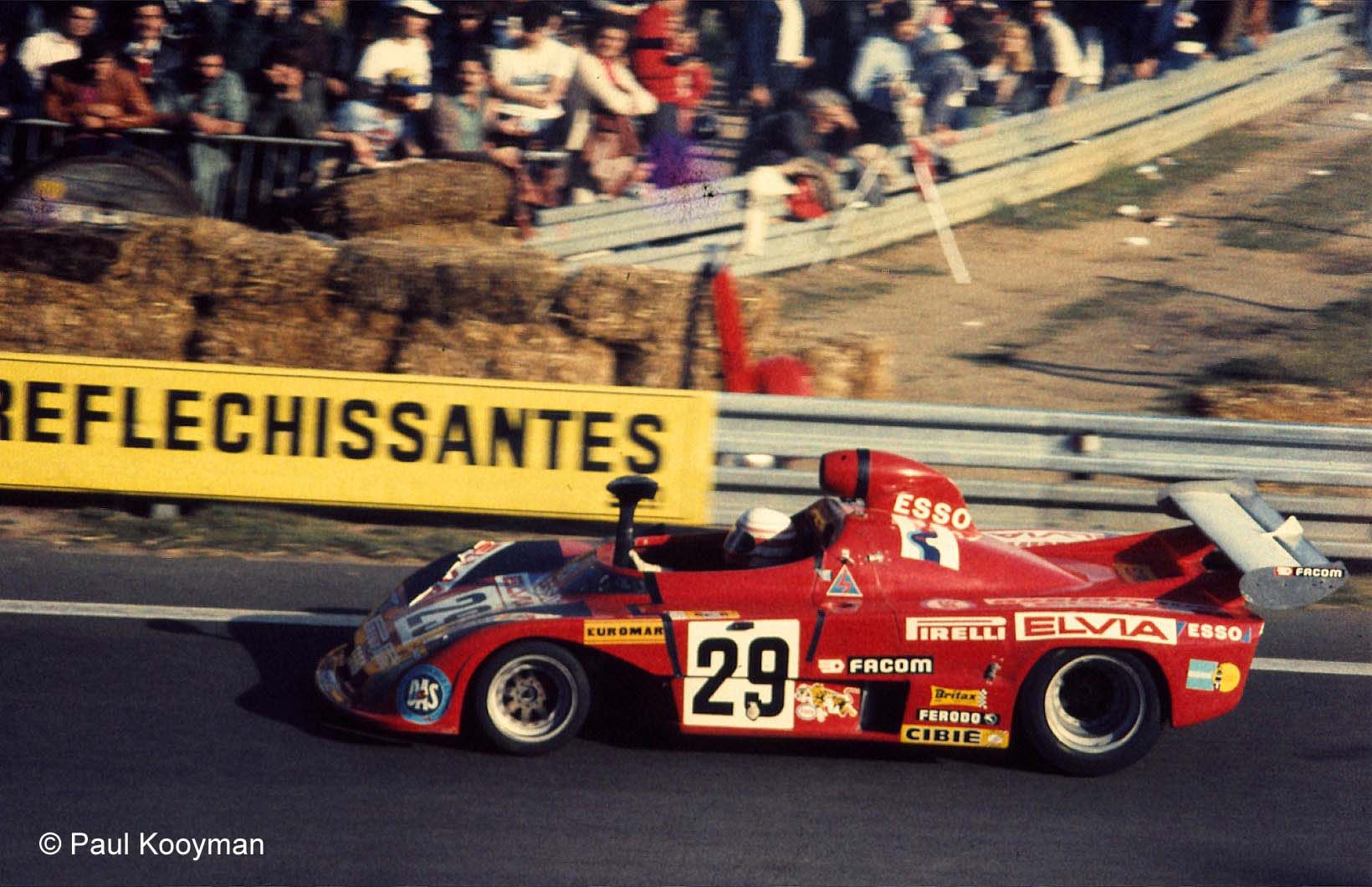
To truly appreciate the 1977 Osella PA5 BMW, one must transport themselves back to the intoxicating, highly specialized world of late 1970s Group 6 sports car racing. While the colossal Porsche 936s and Renault Alpines were waging a high-profile, turbocharged war for overall victories at Le Mans, a ferociously competitive, closely fought battle was raging in the 2.0-liter class. This was the realm of the “garagistes” and artisan constructors, a category defined by agility, featherweight chassis, and screaming, high-revving naturally aspirated engines. In Volpiano, Italy, Enzo Osella had been steadily refining his craft since taking over Abarth’s racing operations earlier in the decade. The Osella PA (Prototipi Abarth) lineage had evolved rapidly, with the PA4 of 1976 showing immense promise. However, it was the arrival of the 1977 Osella PA5 that cemented the Italian constructor’s reputation as a master of the 2-liter barchetta. Arriving on the grid to face a formidable British armada—namely the incredibly successful Chevron B36 and the ubiquitous Lola T296—the PA5 was Osella’s definitive answer. It was a perfectly proportioned, razor-sharp weapon that combined Italian aerodynamic flair with the most potent German heart available, creating a trans-alpine alliance that would dominate circuits and hillclimbs across Europe.
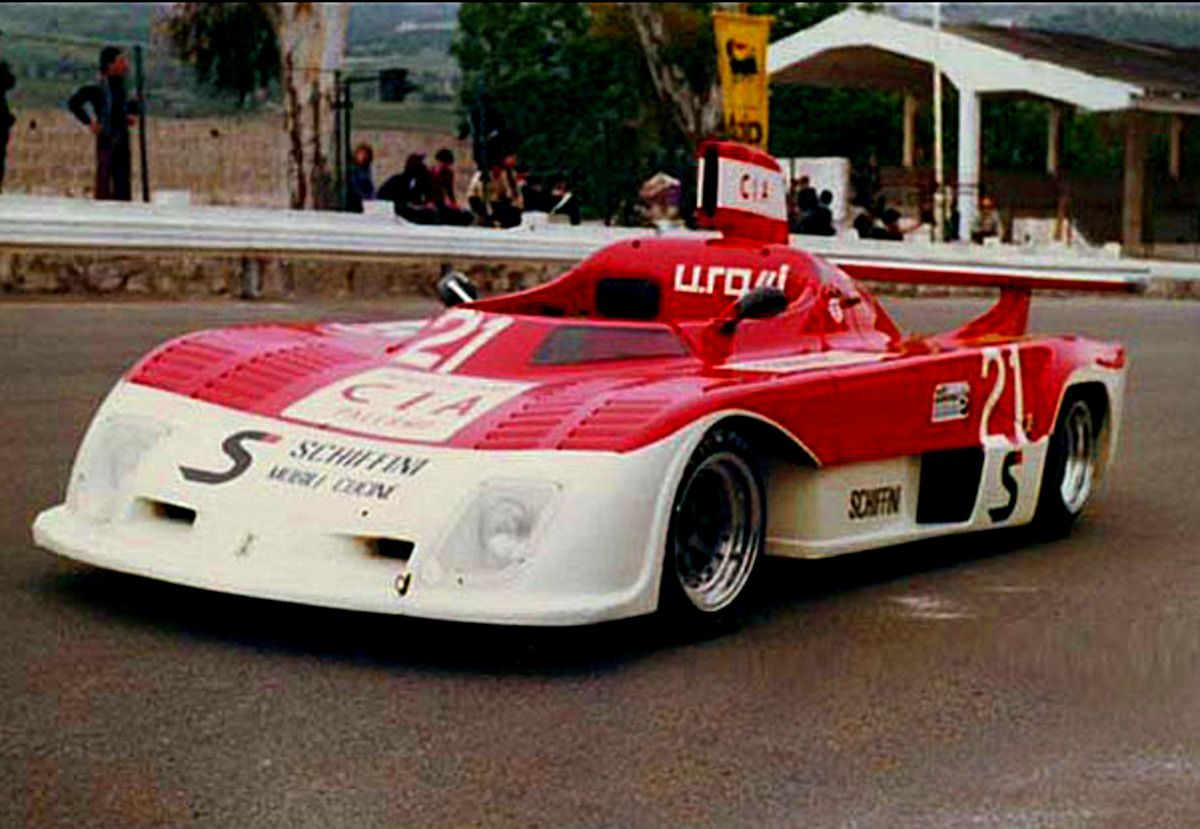
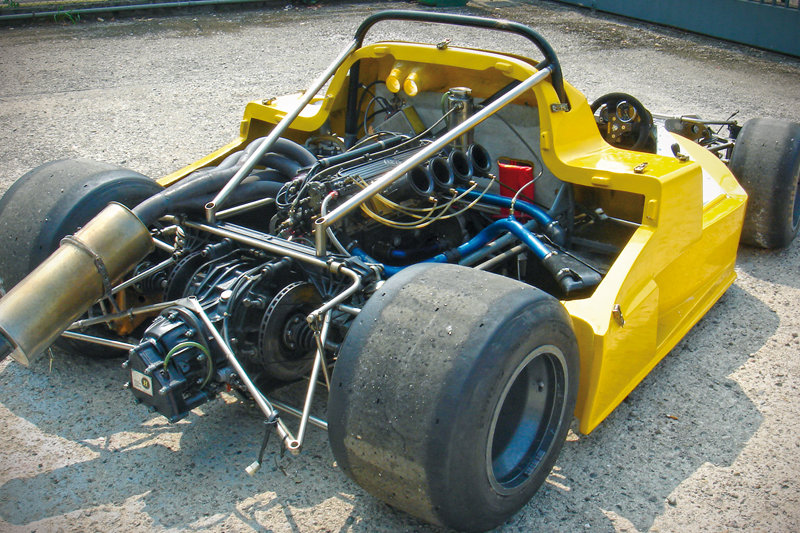
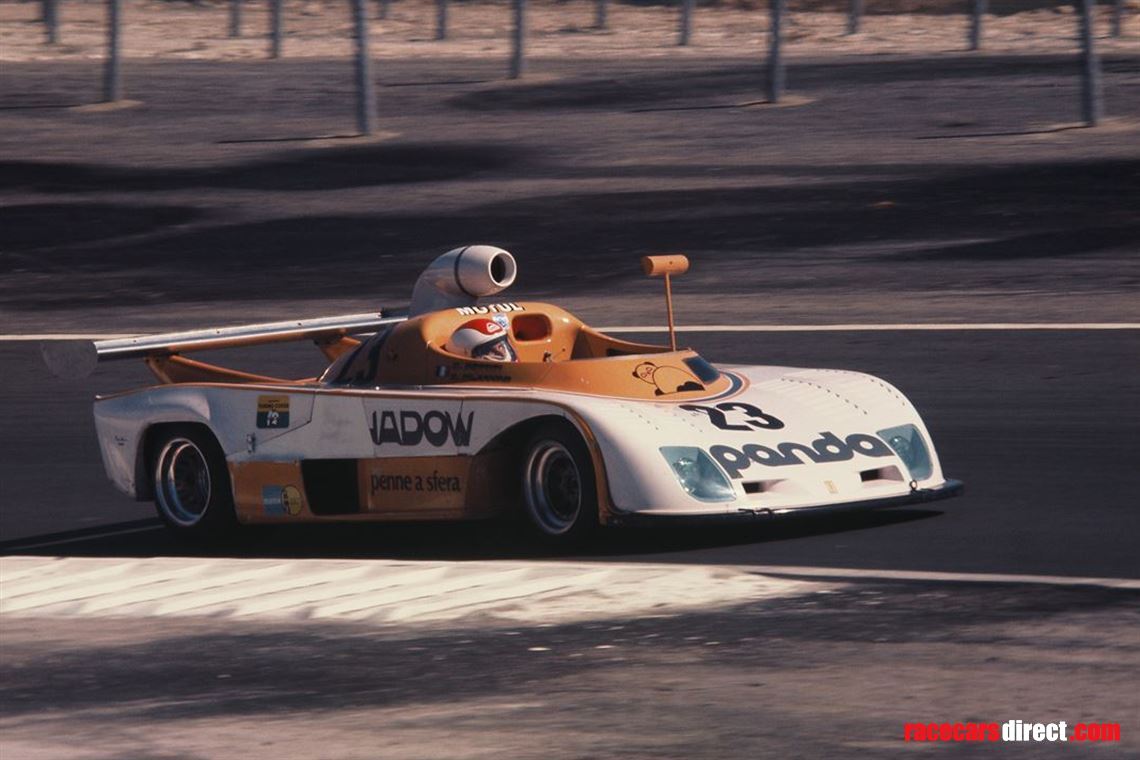
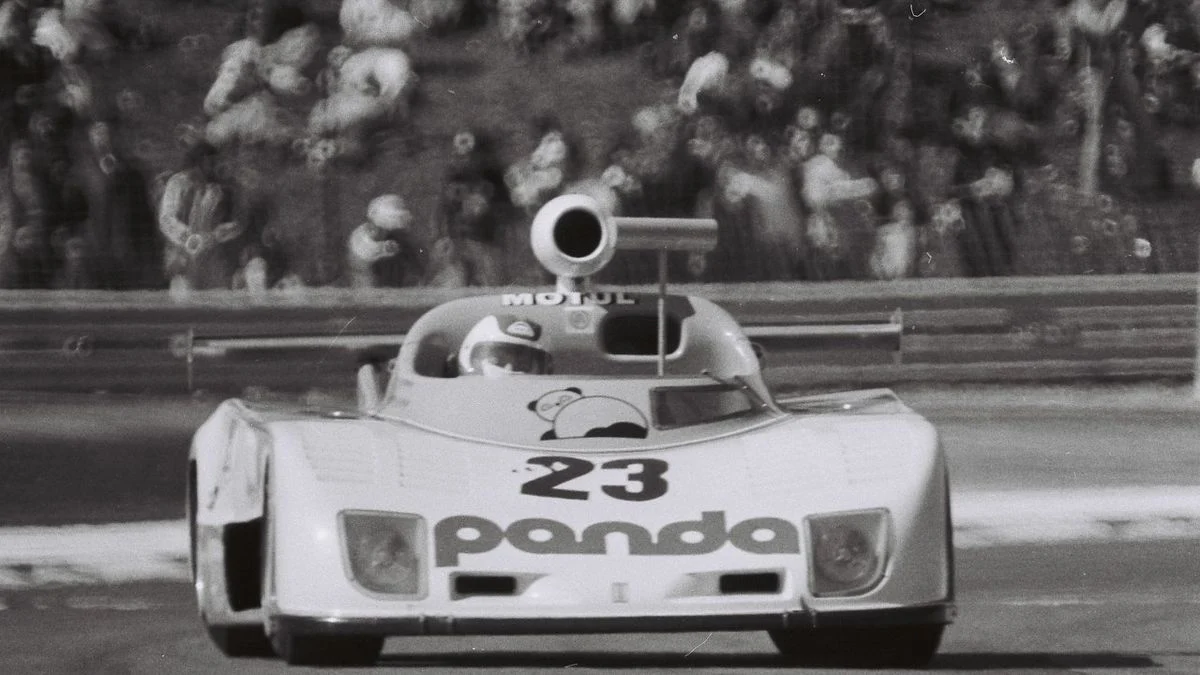
To peel away the gossamer-thin fiberglass bodywork of the PA5 is to reveal a masterclass in pragmatic, late-1970s race car engineering. Osella eschewed the complex aluminium monocoques that some rivals were experimenting with, relying instead on a beautifully fabricated, immensely rigid tubular steel spaceframe, reinforced with riveted aluminium panels. This traditional approach allowed for rapid repairs and straightforward setup changes, a vital characteristic for privateer teams. The exterior design was a kinetic sculpture shaped by the pursuit of downforce. The PA5 featured a distinctive, wedge-shaped front profile with a low, gaping radiator intake, flowing into sweeping, heavily louvered front fenders designed to extract turbulent air from the wheel wells. At the rear, a massive, full-width wing sat atop tall struts, planting the wide rear slick tires into the tarmac. Yet, the absolute soul of this specific submodel was its engine: the legendary 2.0-liter BMW M12/7. Designed by Paul Rosche, this iron-block, aluminium-head, twin-cam inline-four had been proven in Formula 2. Breathing through a precise Kugelfischer mechanical fuel injection system and a bundle-of-snakes exhaust header, it produced an astonishing 300 brake horsepower at a shrieking 9,000 rpm. Mated to a robust five-speed Hewland FT200 manual transaxle, the powertrain provided an explosive, linear delivery that demanded absolute commitment from the driver. Unassisted rack-and-pinion steering and massive Lockheed ventilated disc brakes mounted inboard at the rear ensured the sub-600-kilogram prototype danced through corners with scalpel-like precision. Inside the claustrophobic, right-hand-drive cockpit, luxury was nonexistent; the driver was presented only with a tiny Momo steering wheel, a stark aluminium dash housing vital Smiths gauges, and the exposed linkage of the gear shifter, immersing them entirely in a symphony of mechanical violence.
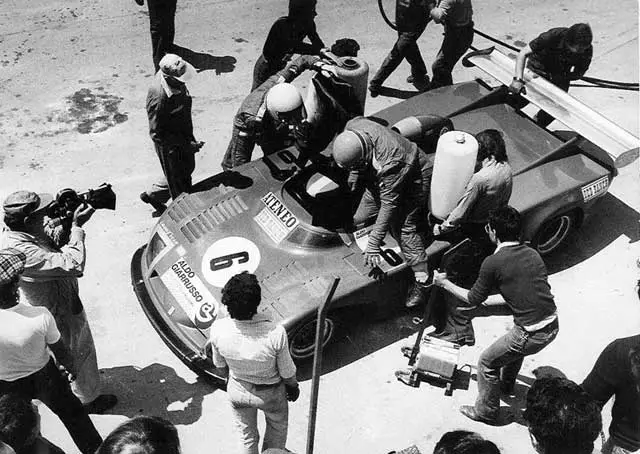
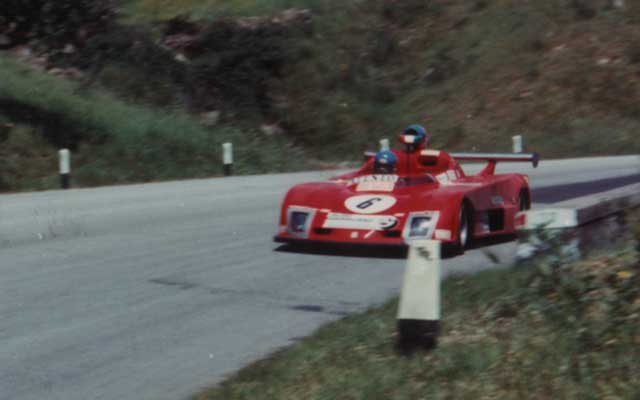
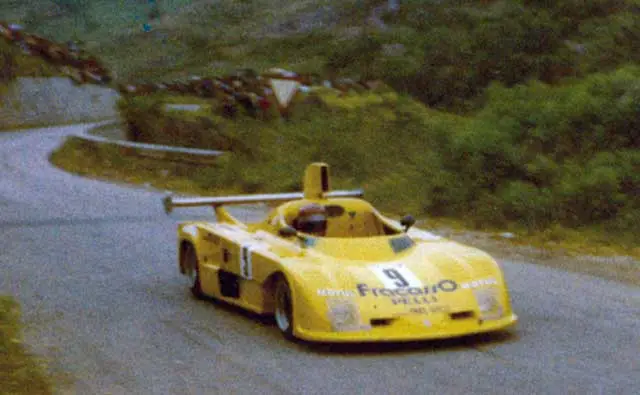
The competitive history of the Osella PA5 BMW is written in the annals of the World Championship for Makes and the European Sportscar Championship. In 1977, the car proved devastatingly effective. Driven by Italian maestro Giorgio Francia, the factory-backed PA5 frequently humiliated the British Chevrons and Lolas. The car’s supreme balance and the sheer grunt of the BMW engine allowed it to dominate the 2.0-liter class, famously securing overall victories in shorter European championship sprint events where the larger displacement cars struggled with agility. The PA5 was practically unbeatable at the Coppa Florio held at Vallelunga, and it took a spectacular victory at the Autodromo di Pergusa in Enna. Beyond the factory efforts, the PA5 became the absolute darling of the European privateer elite. Furthermore, the legendary female racer Lella Lombardi famously campaigned Osella chassis during this era, adding to the marque’s romantic motorsport lore. However, the PA5’s reach extended far beyond traditional circuit racing. It became the ultimate weapon in the fiercely contested European Hill Climb Championship. Its explosive power-to-weight ratio, immediate throttle response, and incredible mechanical grip allowed daring pilots to conquer mountain passes from Trento-Bondone to Mont-Dore, establishing a hillclimb dominance for Osella that would endure for decades.
The legacy of the 1977 Osella PA5 BMW is firmly secured as one of the absolute pinnacles of the 2-liter Group 6 era. It was the crucial evolutionary step that validated Enzo Osella’s engineering prowess, providing the financial stability and reputation that eventually allowed the small Volpiano outfit to graduate to Formula 2 and, ultimately, Formula 1. The PA5 proved that an artisanal Italian chassis, when paired with the ruthless efficiency of a Bavarian Formula 2 engine, could conquer the world. Today, the surviving PA5 BMWs are fiercely coveted unicorns in the historic racing community. They are frequent, front-running stars in grids like Peter Auto’s Classic Endurance Racing (CER), where their screaming 9,000-rpm soundtrack and flame-spitting exhausts continue to captivate crowds. The Osella PA5 stands immortal as a quintessential expression of late-70s motorsport—a visceral, untamed barchetta that perfectly encapsulates the danger, romance, and unadulterated speed of a golden era.
Brand
Produced from
Portal
Vehicle category
Model generation
Predecessor
Sucessor
Submodel Overview
To truly appreciate the 1977 Osella PA5 BMW, one must transport themselves back to the intoxicating, highly specialized world of late 1970s Group 6 sports car racing. While the colossal Porsche 936s and Renault Alpines were waging a high-profile, turbocharged war for overall victories at Le Mans, a ferociously competitive, closely fought battle was raging in the 2.0-liter class. This was the realm of the “garagistes” and artisan constructors, a category defined by agility, featherweight chassis, and screaming, high-revving naturally aspirated engines. In Volpiano, Italy, Enzo Osella had been steadily refining his craft since taking over Abarth’s racing operations earlier in the decade. The Osella PA (Prototipi Abarth) lineage had evolved rapidly, with the PA4 of 1976 showing immense promise. However, it was the arrival of the 1977 Osella PA5 that cemented the Italian constructor’s reputation as a master of the 2-liter barchetta. Arriving on the grid to face a formidable British armada—namely the incredibly successful Chevron B36 and the ubiquitous Lola T296—the PA5 was Osella’s definitive answer. It was a perfectly proportioned, razor-sharp weapon that combined Italian aerodynamic flair with the most potent German heart available, creating a trans-alpine alliance that would dominate circuits and hillclimbs across Europe.
To peel away the gossamer-thin fiberglass bodywork of the PA5 is to reveal a masterclass in pragmatic, late-1970s race car engineering. Osella eschewed the complex aluminium monocoques that some rivals were experimenting with, relying instead on a beautifully fabricated, immensely rigid tubular steel spaceframe, reinforced with riveted aluminium panels. This traditional approach allowed for rapid repairs and straightforward setup changes, a vital characteristic for privateer teams. The exterior design was a kinetic sculpture shaped by the pursuit of downforce. The PA5 featured a distinctive, wedge-shaped front profile with a low, gaping radiator intake, flowing into sweeping, heavily louvered front fenders designed to extract turbulent air from the wheel wells. At the rear, a massive, full-width wing sat atop tall struts, planting the wide rear slick tires into the tarmac. Yet, the absolute soul of this specific submodel was its engine: the legendary 2.0-liter BMW M12/7. Designed by Paul Rosche, this iron-block, aluminium-head, twin-cam inline-four had been proven in Formula 2. Breathing through a precise Kugelfischer mechanical fuel injection system and a bundle-of-snakes exhaust header, it produced an astonishing 300 brake horsepower at a shrieking 9,000 rpm. Mated to a robust five-speed Hewland FT200 manual transaxle, the powertrain provided an explosive, linear delivery that demanded absolute commitment from the driver. Unassisted rack-and-pinion steering and massive Lockheed ventilated disc brakes mounted inboard at the rear ensured the sub-600-kilogram prototype danced through corners with scalpel-like precision. Inside the claustrophobic, right-hand-drive cockpit, luxury was nonexistent; the driver was presented only with a tiny Momo steering wheel, a stark aluminium dash housing vital Smiths gauges, and the exposed linkage of the gear shifter, immersing them entirely in a symphony of mechanical violence.
The competitive history of the Osella PA5 BMW is written in the annals of the World Championship for Makes and the European Sportscar Championship. In 1977, the car proved devastatingly effective. Driven by Italian maestro Giorgio Francia, the factory-backed PA5 frequently humiliated the British Chevrons and Lolas. The car’s supreme balance and the sheer grunt of the BMW engine allowed it to dominate the 2.0-liter class, famously securing overall victories in shorter European championship sprint events where the larger displacement cars struggled with agility. The PA5 was practically unbeatable at the Coppa Florio held at Vallelunga, and it took a spectacular victory at the Autodromo di Pergusa in Enna. Beyond the factory efforts, the PA5 became the absolute darling of the European privateer elite. Furthermore, the legendary female racer Lella Lombardi famously campaigned Osella chassis during this era, adding to the marque’s romantic motorsport lore. However, the PA5’s reach extended far beyond traditional circuit racing. It became the ultimate weapon in the fiercely contested European Hill Climb Championship. Its explosive power-to-weight ratio, immediate throttle response, and incredible mechanical grip allowed daring pilots to conquer mountain passes from Trento-Bondone to Mont-Dore, establishing a hillclimb dominance for Osella that would endure for decades.
The legacy of the 1977 Osella PA5 BMW is firmly secured as one of the absolute pinnacles of the 2-liter Group 6 era. It was the crucial evolutionary step that validated Enzo Osella’s engineering prowess, providing the financial stability and reputation that eventually allowed the small Volpiano outfit to graduate to Formula 2 and, ultimately, Formula 1. The PA5 proved that an artisanal Italian chassis, when paired with the ruthless efficiency of a Bavarian Formula 2 engine, could conquer the world. Today, the surviving PA5 BMWs are fiercely coveted unicorns in the historic racing community. They are frequent, front-running stars in grids like Peter Auto’s Classic Endurance Racing (CER), where their screaming 9,000-rpm soundtrack and flame-spitting exhausts continue to captivate crowds. The Osella PA5 stands immortal as a quintessential expression of late-70s motorsport—a visceral, untamed barchetta that perfectly encapsulates the danger, romance, and unadulterated speed of a golden era.
Tech Specs
Technical Specifications
Tech Specs
Technical Specifications
Engine
01
03
Internal combustion engine
Configuration
BMW M12/7, Inline-4
Location
Mid, longitudinally mounted
Construction
Cast iron block and Aluminium alloy head
Displacement (cc)
1,999 cc
Displacement (cu in)
122.0 cu in
Compression
11.5:1
Bore x Stroke
89.2 mm x 80.0 mm
Valvetrain
4 valves per cylinder, DOHC
Fuel feed
Kugelfischer mechanical fuel injection
Lubrication
Dry sump
Aspiration
Naturally aspirated
Output
Power (hp)
300 hp
Power (kW)
224 kW
Max power at
9,200 RPM
Torque (Nm)
235 Nm
Torque (ft lbs)
173 ft lbs
Max torque at
6,500 RPM
Drivetrain
02
03
Chassis
Type
Tubular spaceframe reinforced with riveted panels
Material
Steel and Aluminium
Body
Material
Fibreglass
Transmission
Gearbox
Hewland FT200, 5-speed manual
Drive
Rear Wheel Drive (Limited Slip Differential)
Suspension
Front
Independent, double wishbones, coil springs over telescopic dampers, anti-roll bar
Rear
Independent, single top links, lower reversed wishbones, twin trailing arms, coil springs over telescopic dampers, anti-roll bar
Steering
Type
Rack and pinion, unassisted
Brakes
Front
Ventilated steel discs Ø267 mm, 4-piston Lockheed calipers
Rear
Ventilated steel discs Ø267 mm, 4-piston Lockheed calipers (Inboard mounted)
Wheels
Front
10" x 13" (Cast Magnesium alloy)
Rear
14" x 13" (Cast Magnesium alloy)
Tires
Front
9.0/20.0-13
Rear
13.0/22.0-13
Dimensions and performance
03
03
Dimensions
Length (mm)
~3,900 mm
Length (in)
~153.5 in
Width (mm)
1,850 mm
Width (in)
72.8 in
Height (mm)
~950 mm
Height (in)
~37.4 in
Wheelbase (mm)
2,300 mm
Wheelbase (in)
90.6 in
Weight (kg)
575 kg
Weight (lbs)
1,268 lbs
Performance
Power to weight
0.52 hp/kg
Top speed (km/h)
~280 km/h
Top speed (mph)
~174 mph
0-100 km/h (0-60 mph)
~3.3 s