Porsche 356
Brand
Produced from
Vehicle category
Portal
Model line
Model generation
Predecessor
Sucessor
Model Overview
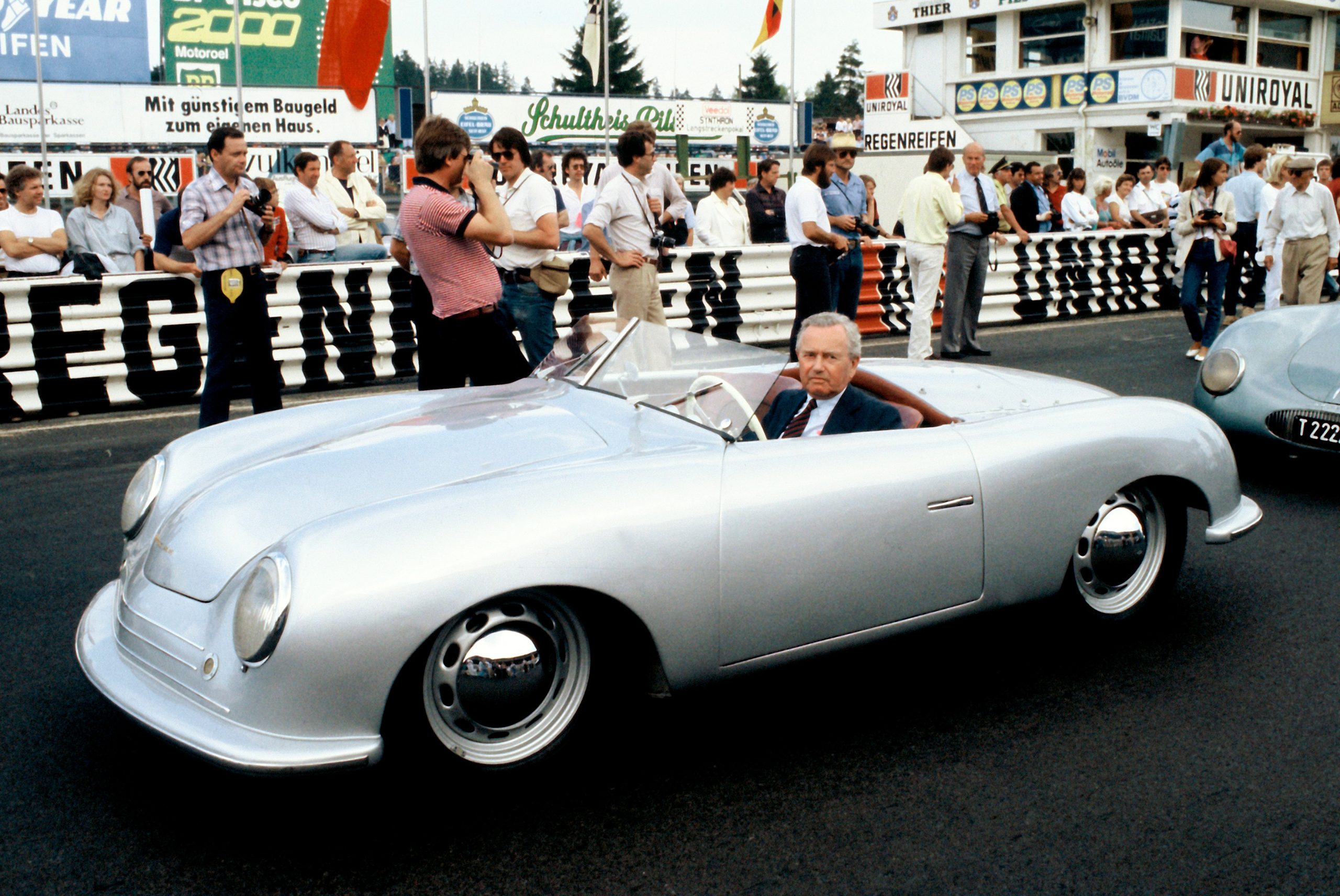
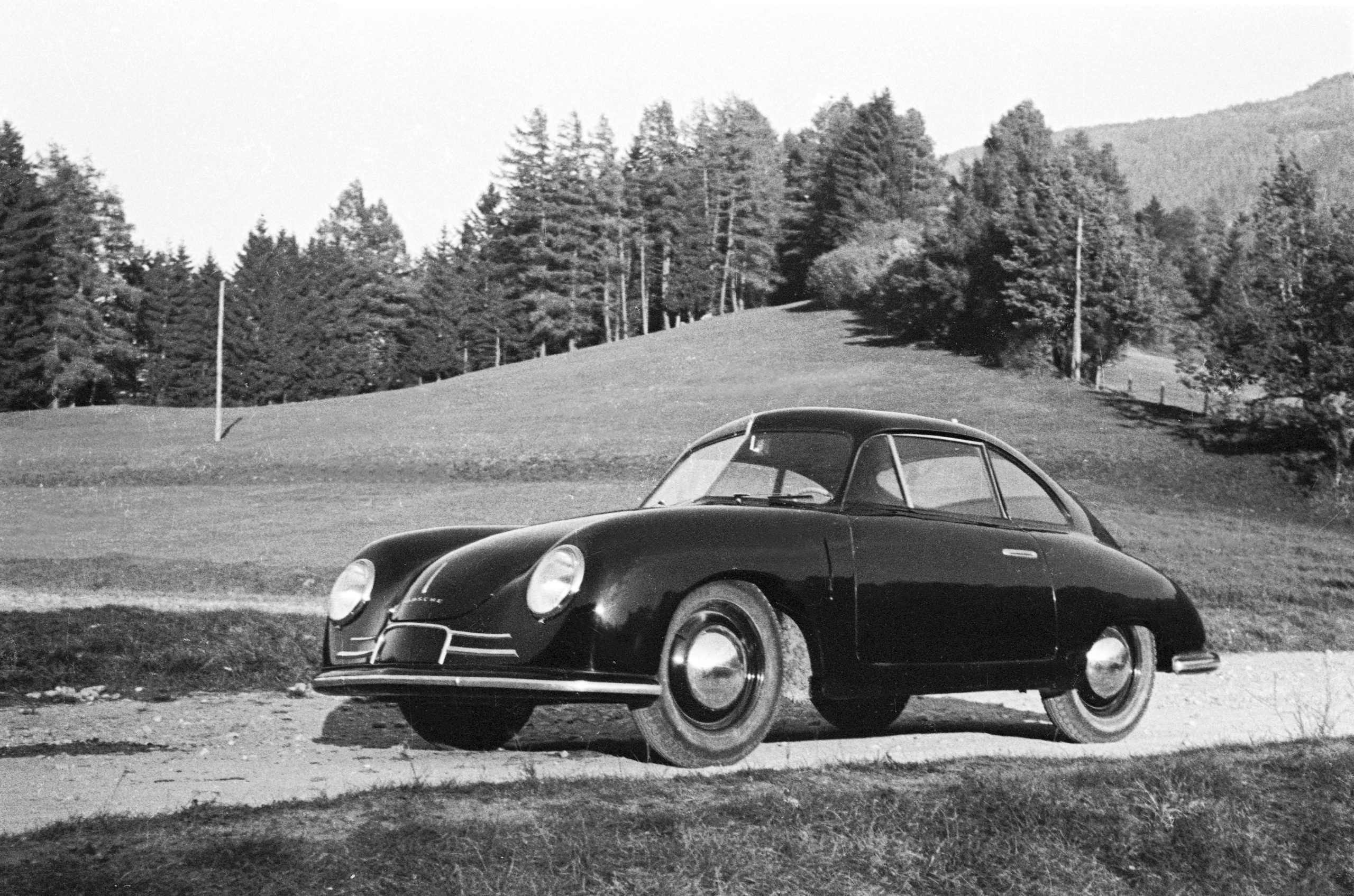
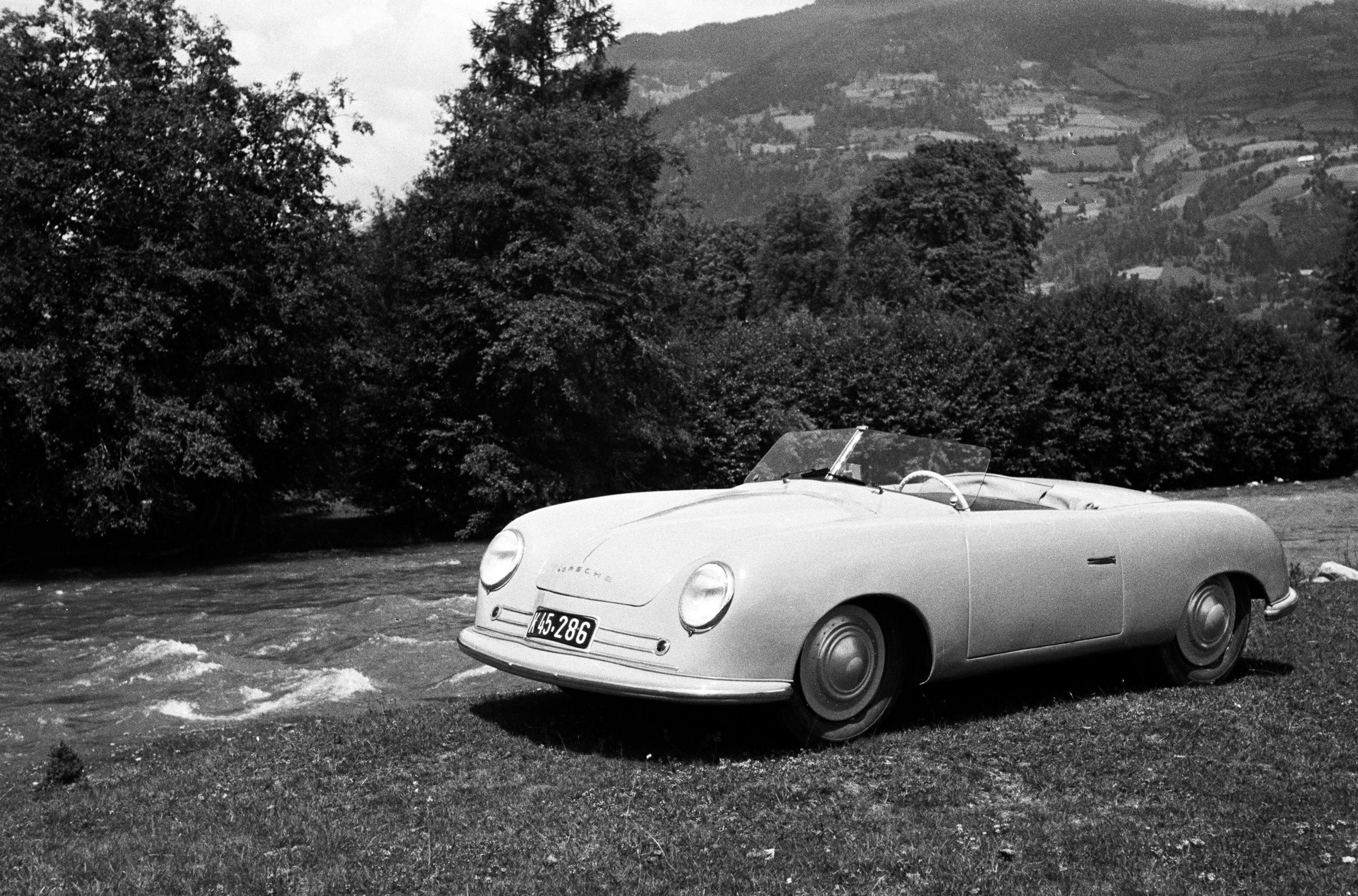
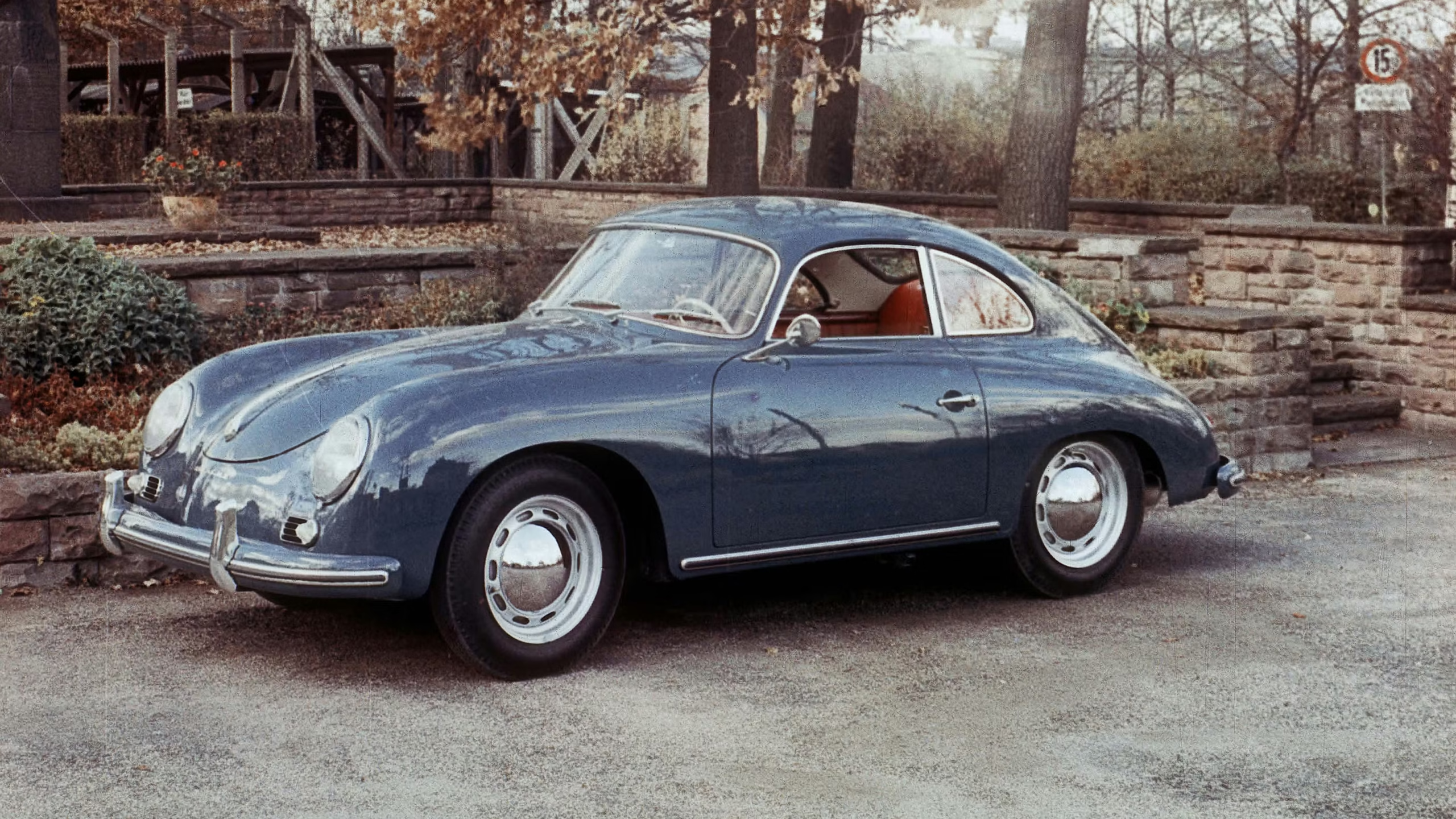
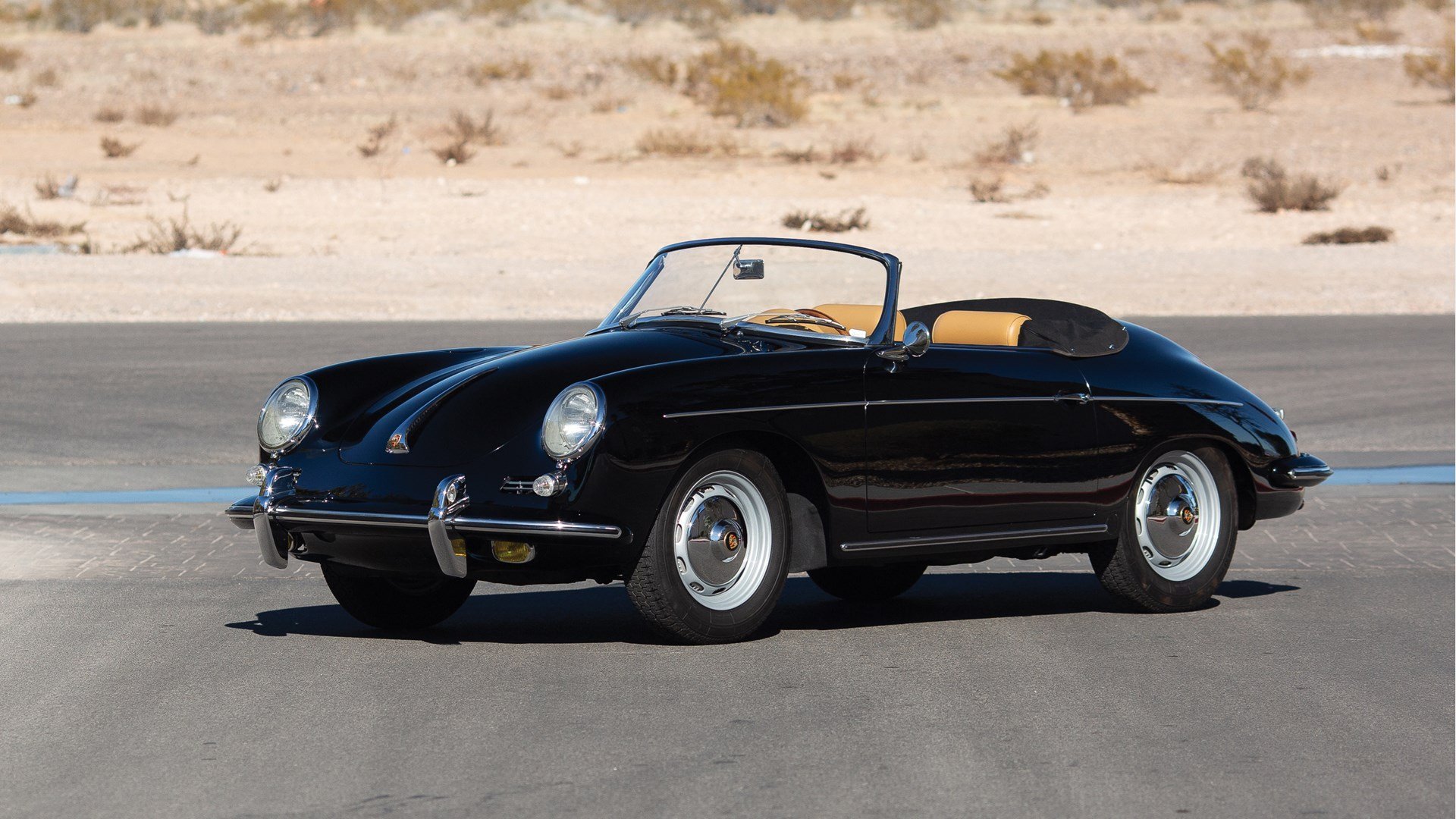
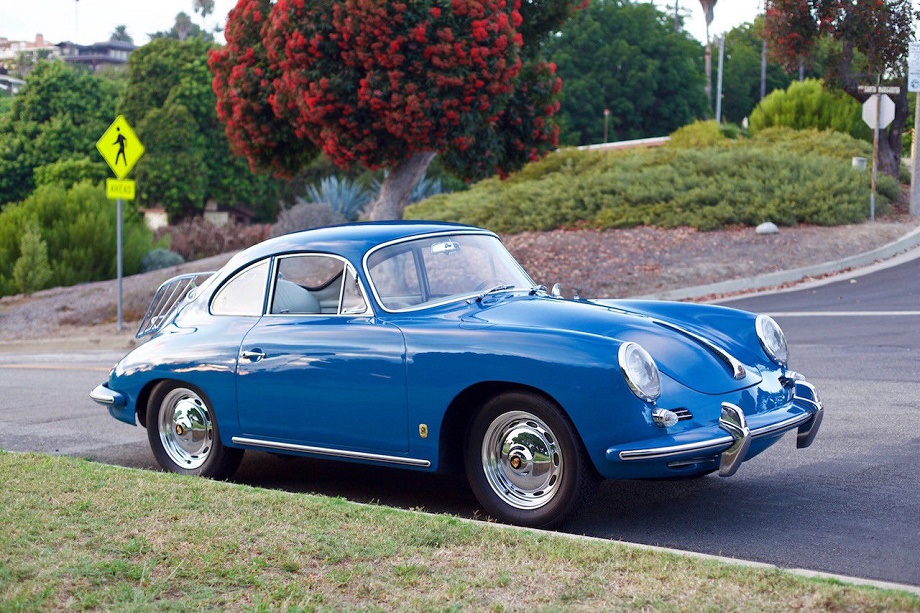
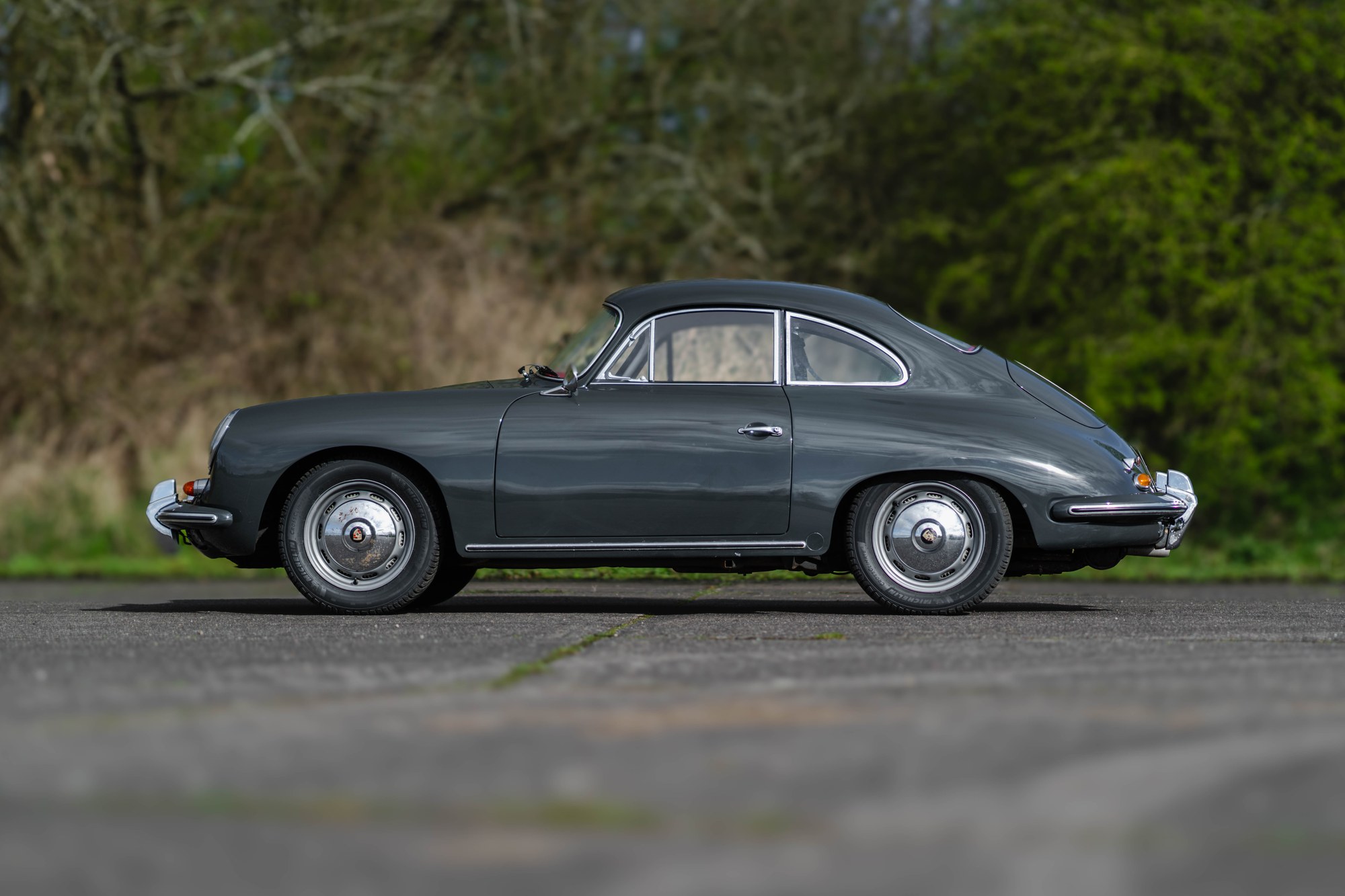
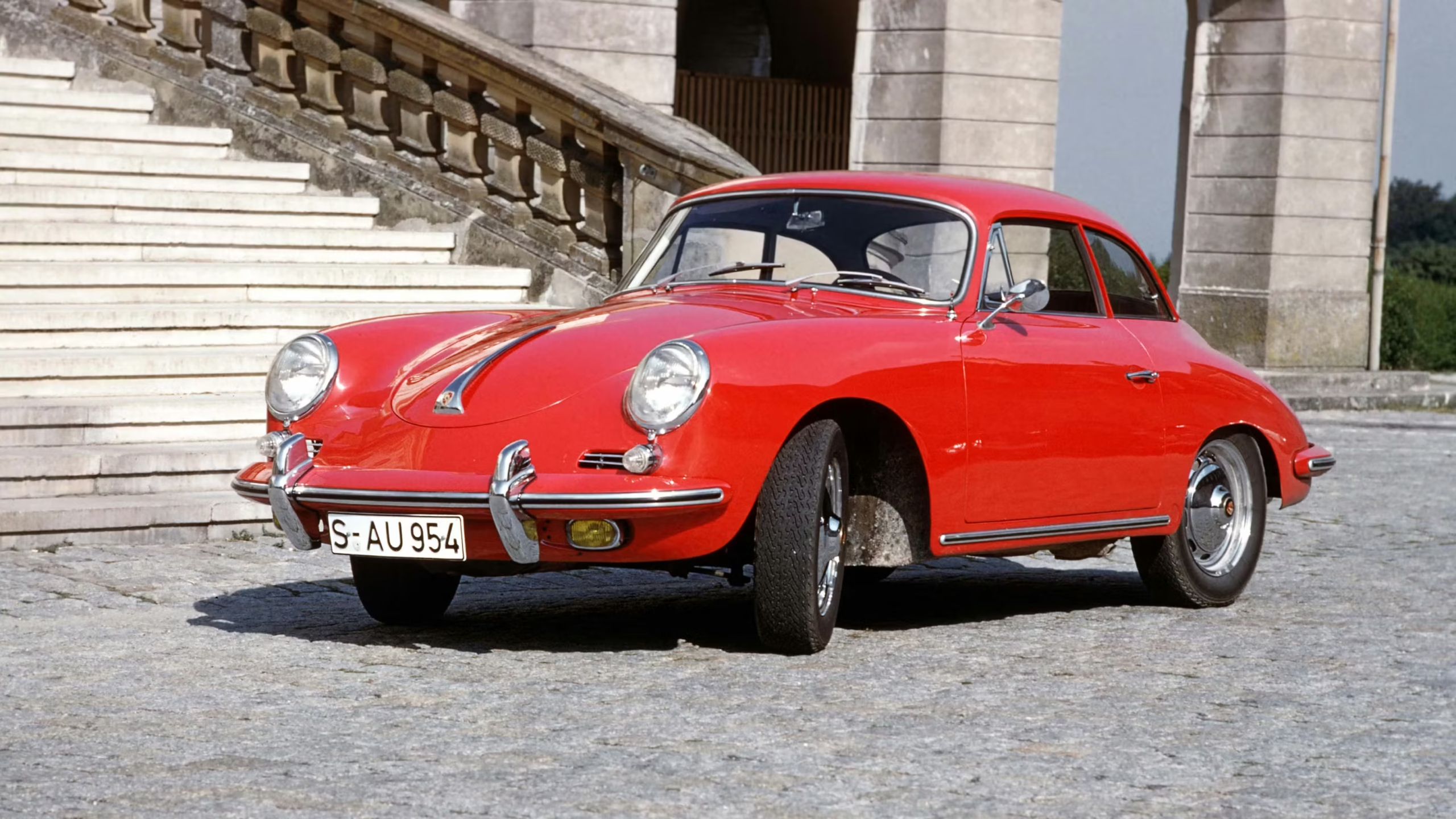
In the austere, rationing-shadowed days of 1948, the European sports car landscape was dominated by the ghosts of pre-war giants and the heavy, traditional architectures of front-engined roadsters. Against this backdrop of long-bonneted British MGs and brutish Jaguars, a profound automotive revolution was quietly being forged in a rudimentary sawmill in Gmünd, Austria. Ferry Porsche, son of the legendary engineering patriarch Professor Ferdinand Porsche, famously declared that he could not find the sports car of his dreams, and so he decided to build it himself. The result was the Porsche 356, a vehicle that not only launched one of the most revered marques in the history of motorsport but completely rewrote the rulebook on how to extract maximum performance from minimal displacement. Rooted in the pre-war Volkswagen Beetle design conceived by his father, the 356 adopted the rear-engine, rear-wheel-drive layout, but elevated it to a high-performance art form. Through its incredibly long and fruitful evolutionary lifespan—spanning the early “Pre-A” Gmünd aluminium cars, the refined 356 A, the modernized 356 B, and the ultimate 356 C—it faced off against a formidable array of rivals, from the rawness of the Triumph TR series and the MG T-types to the sophisticated elegance of the Alfa Romeo Giulietta and the Mercedes-Benz 190 SL. Yet, the Porsche 356 offered something entirely different: a surgical, wind-cheating efficiency that allowed it to humble cars with twice its horsepower.
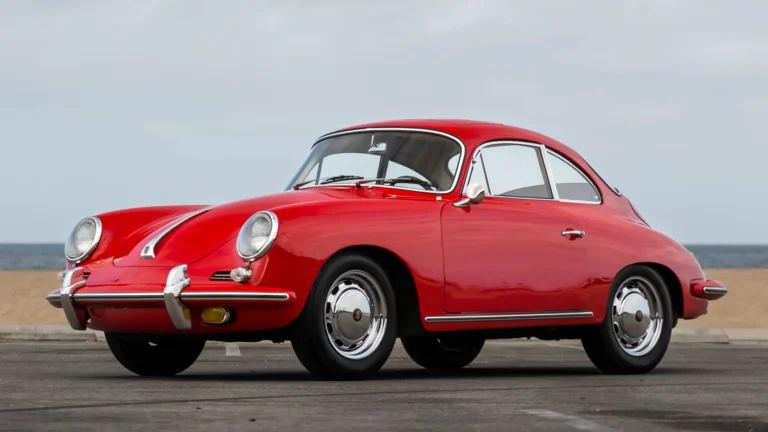
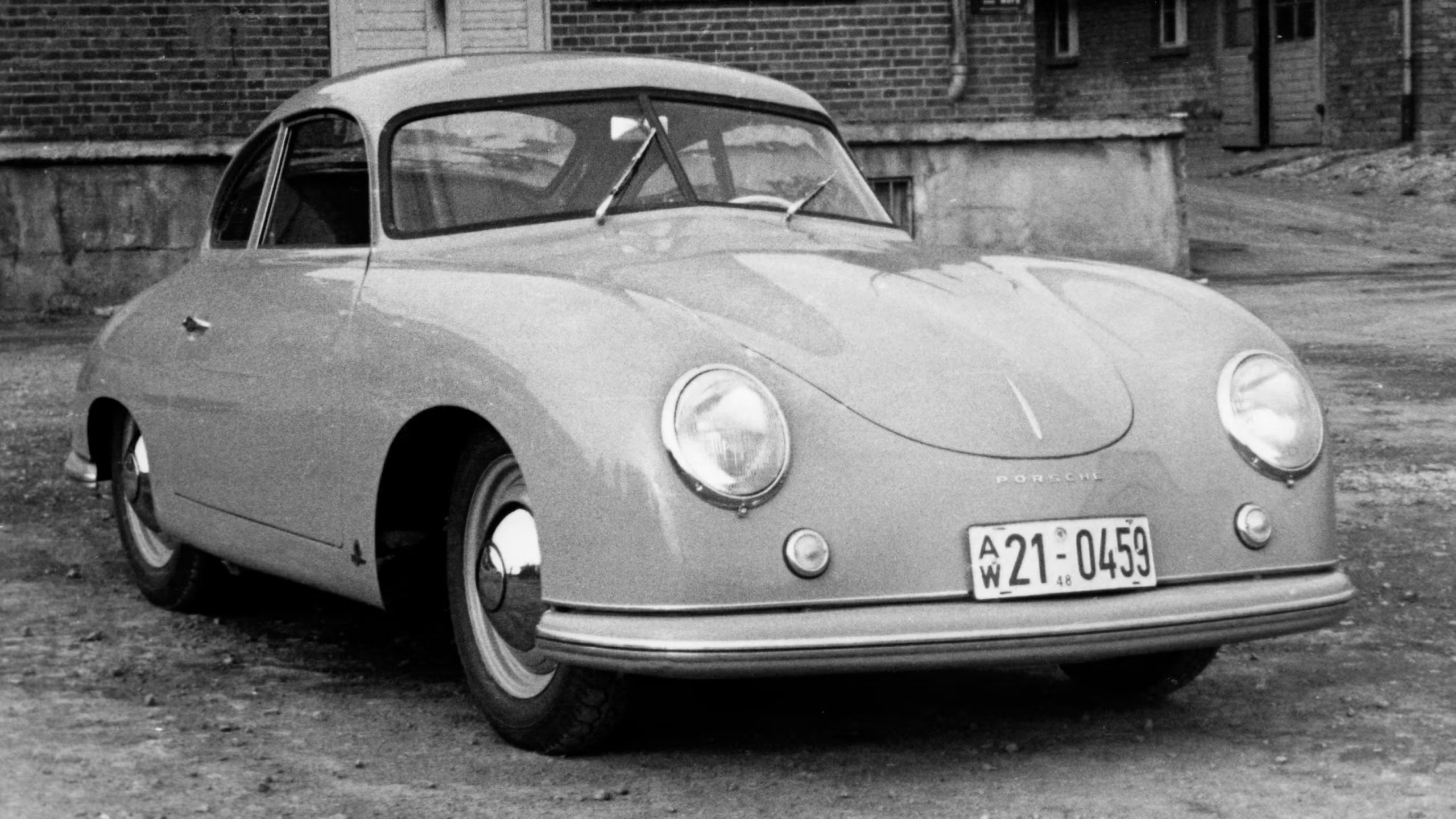
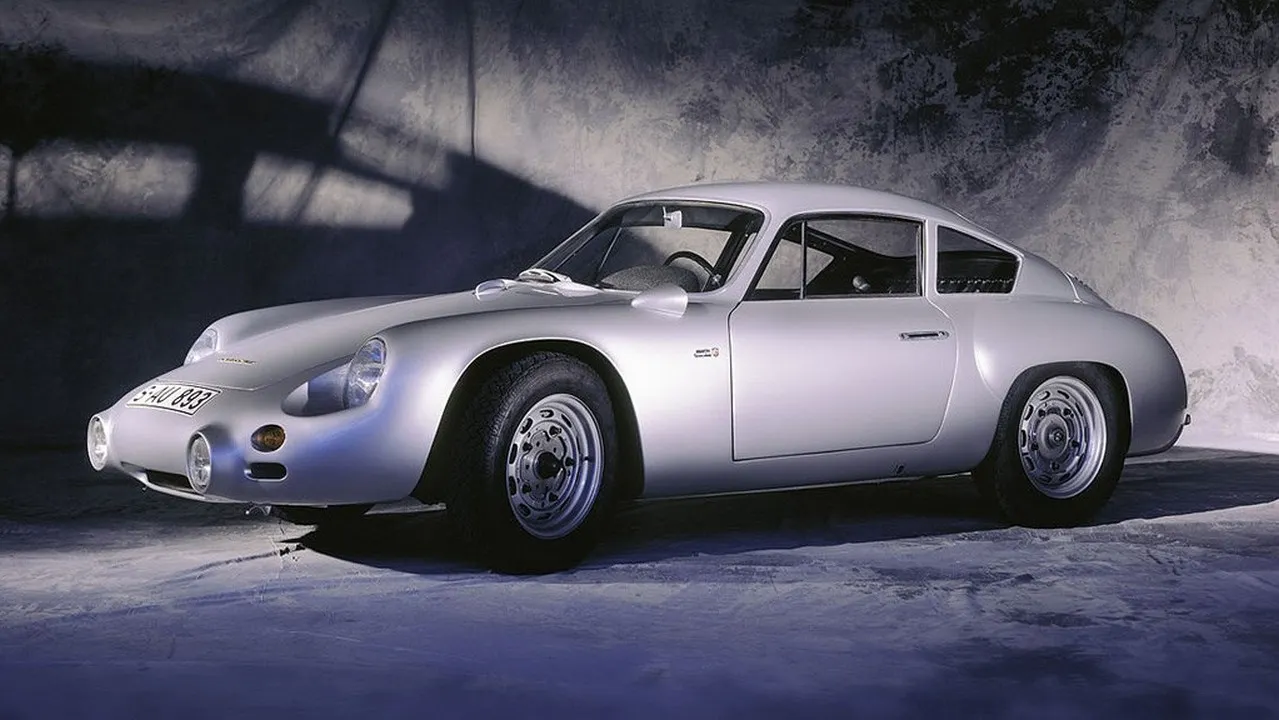
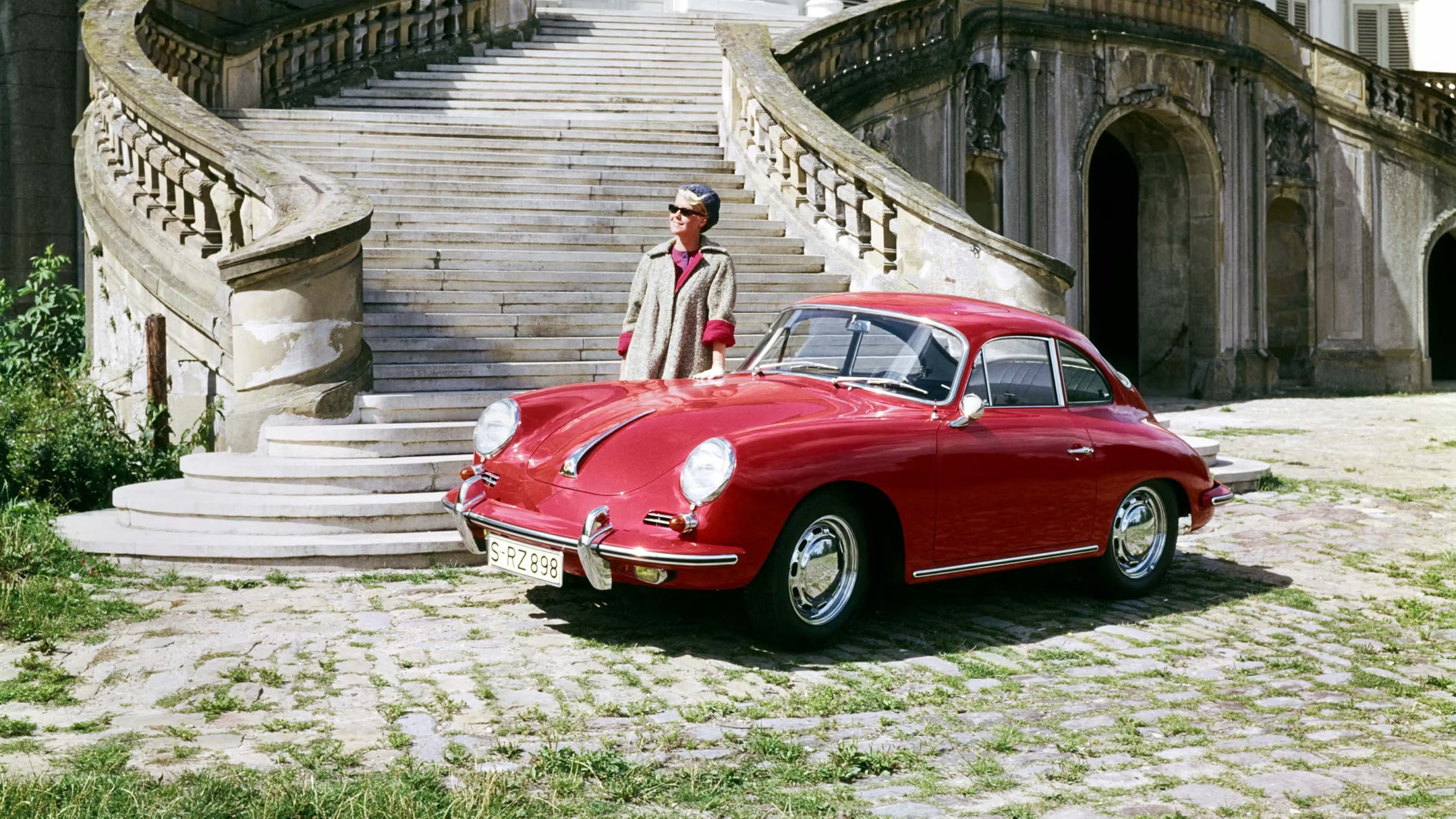
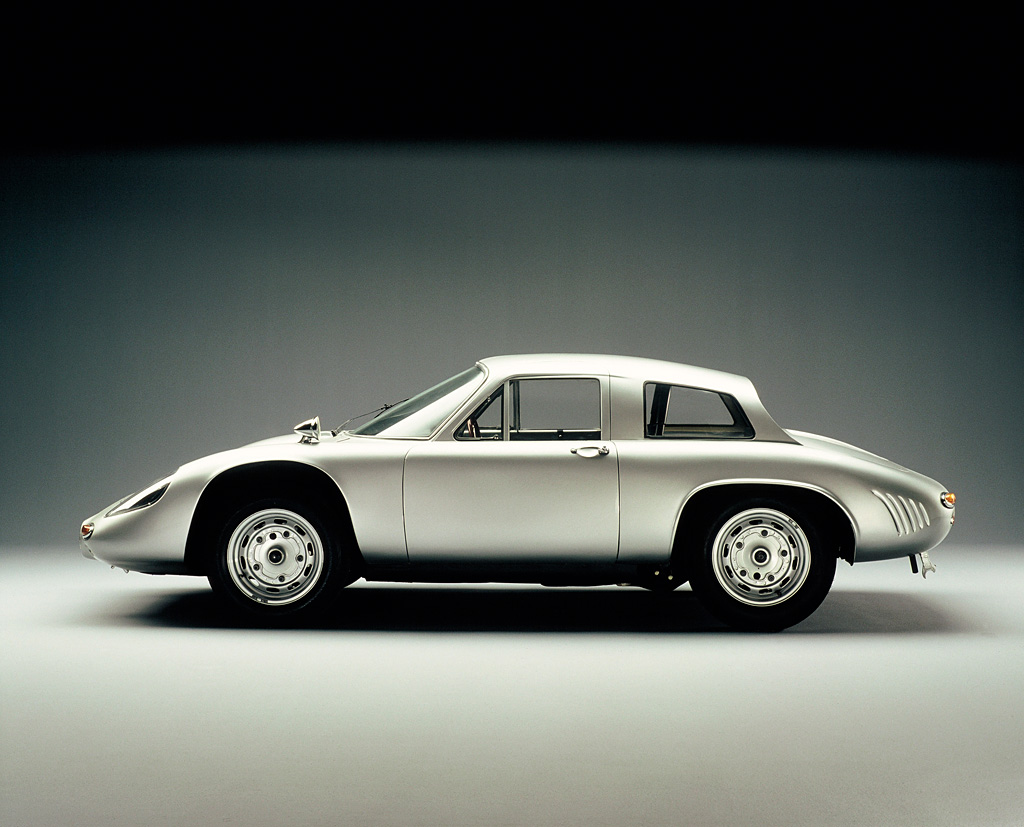
To examine the anatomy of the 356 is to witness a masterclass in pragmatic, evolutionary engineering. Its exterior, penned by the brilliant Erwin Komenda, was a stark departure from the upright, chrome-laden designs of the era. Characterized by its flowing, teardrop profile—affectionately likened to an inverted bathtub—the 356 was a triumph of aerodynamics. Early Gmünd cars were hand-beaten from aluminium, but as production relocated to Stuttgart, Porsche partnered with coachbuilder Reutter to produce the cars in stamped steel, increasing structural rigidity. Beneath the curvaceous rear engine lid sat the beating heart of the 356: the air-cooled flat-four boxer engine. In its earliest iterations, this was a humble 1.1-liter Volkswagen-derived unit producing a mere 40 horsepower. However, Porsche’s engineers subjected it to a relentless program of refinement, increasing displacement, altering cylinder heads, and fitting dual carburetors.
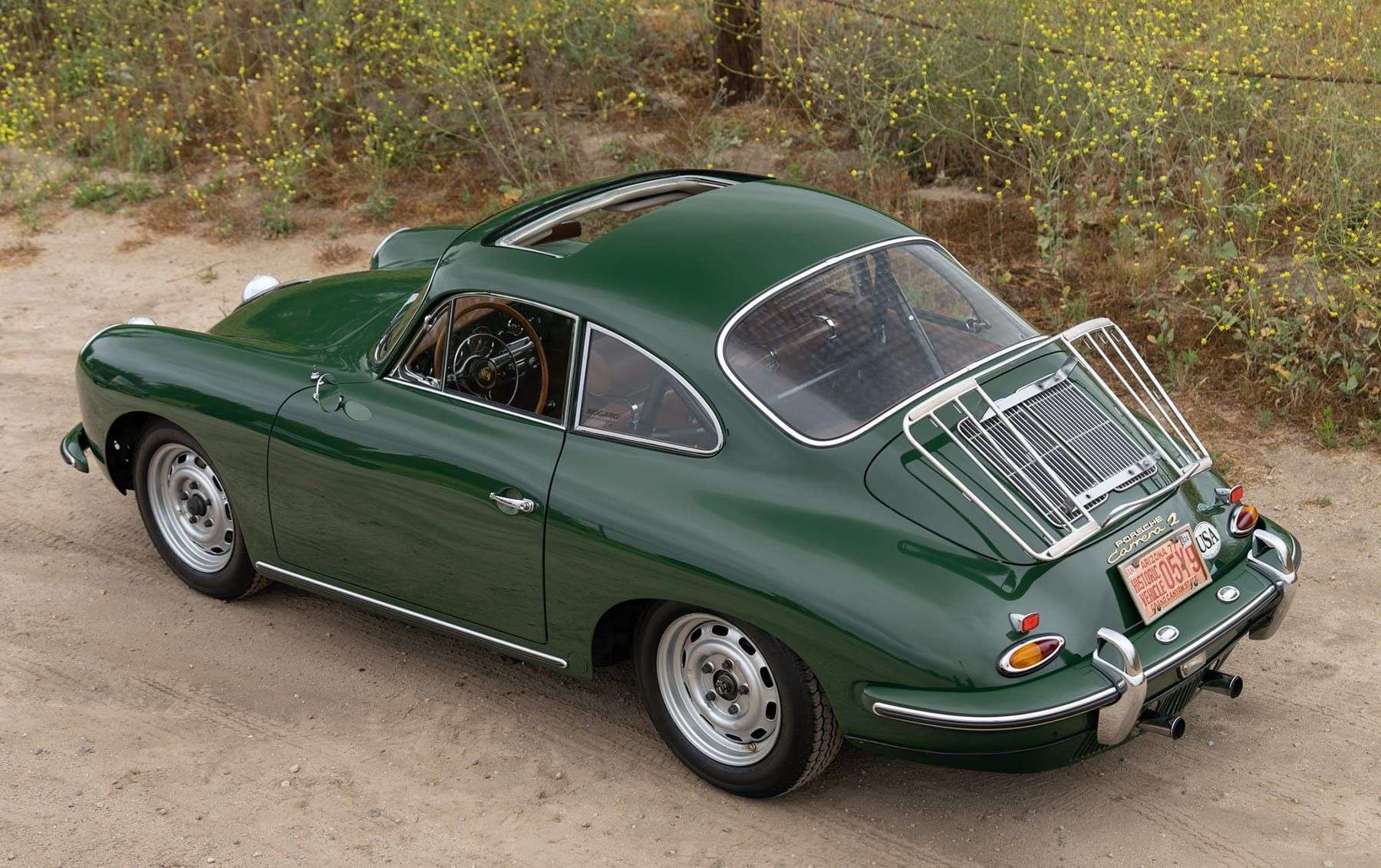
The mechanical zenith of the 356 lineage arrived with the legendary “Carrera” models, powered by the Type 547 engine designed by Dr. Ernst Fuhrmann. This 1.5-liter (and later 2.0-liter) four-cam masterpiece was a watchmaker’s nightmare of bevel gears and shafts, producing a staggering 130 horsepower and a ferocious, mechanical shriek that became the terror of the 2.0-liter racing classes. The chassis was equally idiosyncratic, utilizing a stamped steel unibody suspended by torsion bars and trailing arms at the front, and a swing-axle arrangement at the rear. This setup endowed the 356 with a unique, highly communicative handling character. In the hands of a novice, the rear-weight bias and swing axles could induce snap oversteer, but a skilled driver could use trailing-throttle oversteer to pivot the lightweight car through apexes with devastating speed. Stopping power evolved in tandem with the engines, progressing from heavily finned aluminium drum brakes to the highly effective four-wheel disc brakes introduced on the final 356 C iteration in 1963. Inside, the cabin was a beautifully spartan environment. The driver faced a painted metal dashboard dominated by a trio of large, legible VDO gauges—with the tachometer rightfully placed dead center—and a large-diameter, thin-rimmed steering wheel that transmitted every nuance of the tarmac directly to the driver’s palms.
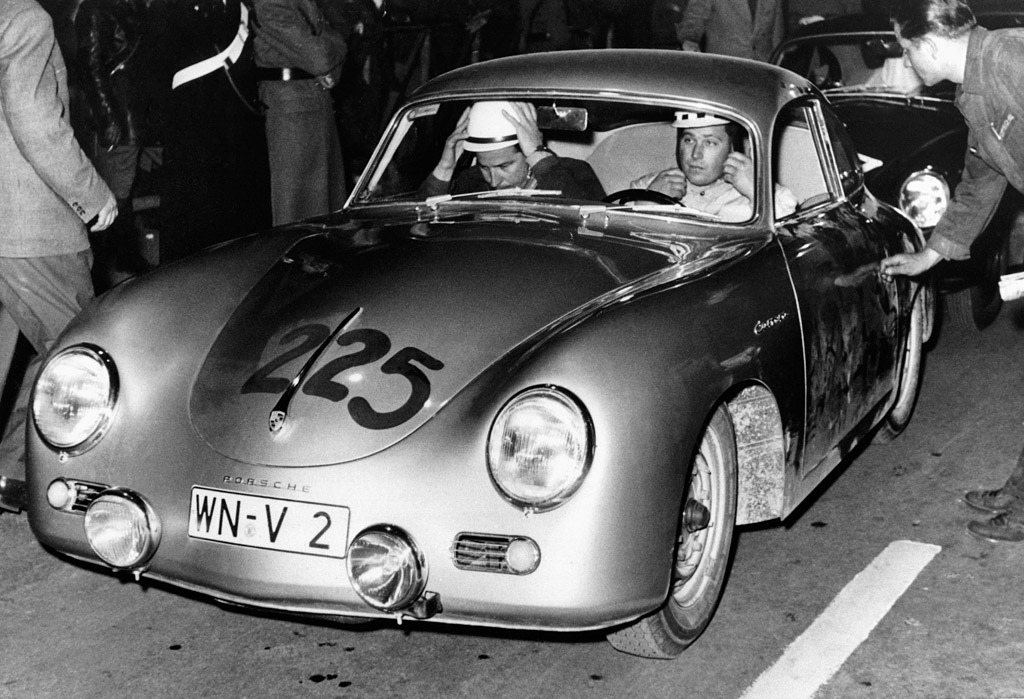
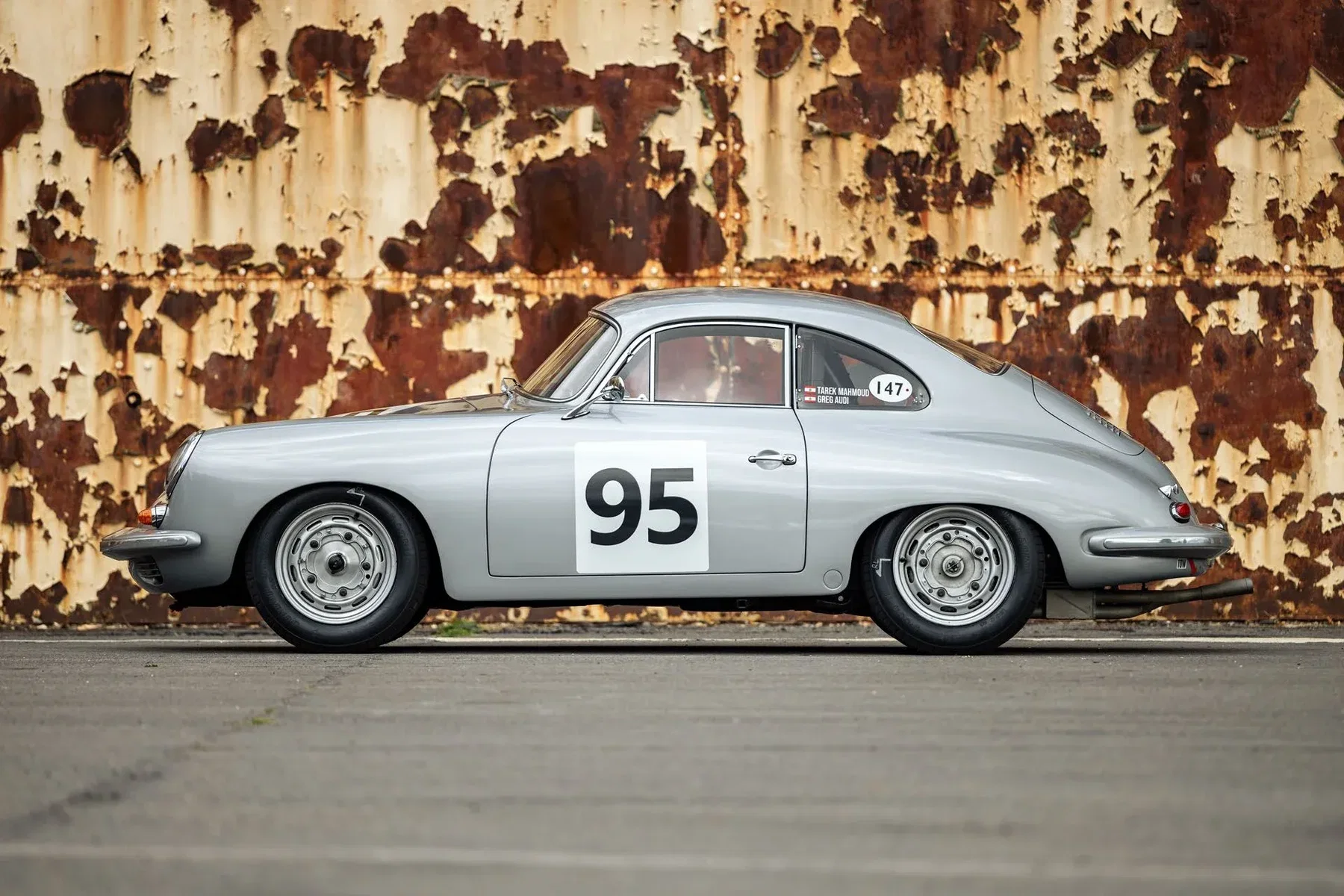
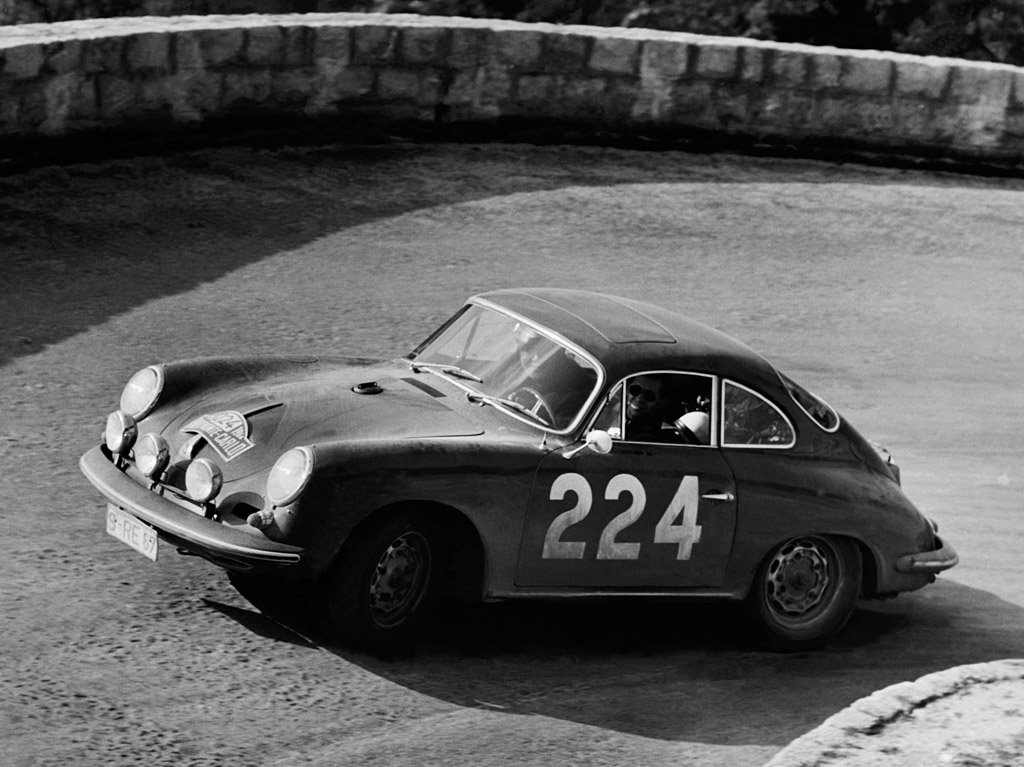
The impact of the Porsche 356 on the global motorsport stage was immediate and utterly disproportionate to its diminutive size. The car earned a mythical “giant-killer” reputation by consistently outlasting and out-cornering vastly more powerful machinery. As early as 1951, a lightweight aluminium 356 SL secured a stunning class victory at the 24 Hours of Le Mans, cementing Porsche’s reputation for unburstable endurance reliability. But it was on the grueling, treacherous roads of the Carrera Panamericana in Mexico that the 356 forged its immortal legend. The four-cam 356s dominated their class in this lethal multi-day road race, leading Porsche to adopt the ‘Carrera’ moniker for its highest-performance models—a tradition that proudly continues today. The 356 was equally dominant in the Mille Miglia, the Targa Florio, and the grueling Liège-Rome-Liège rally, proving that an air-cooled, rear-engined car could survive the most punishing environments on earth.
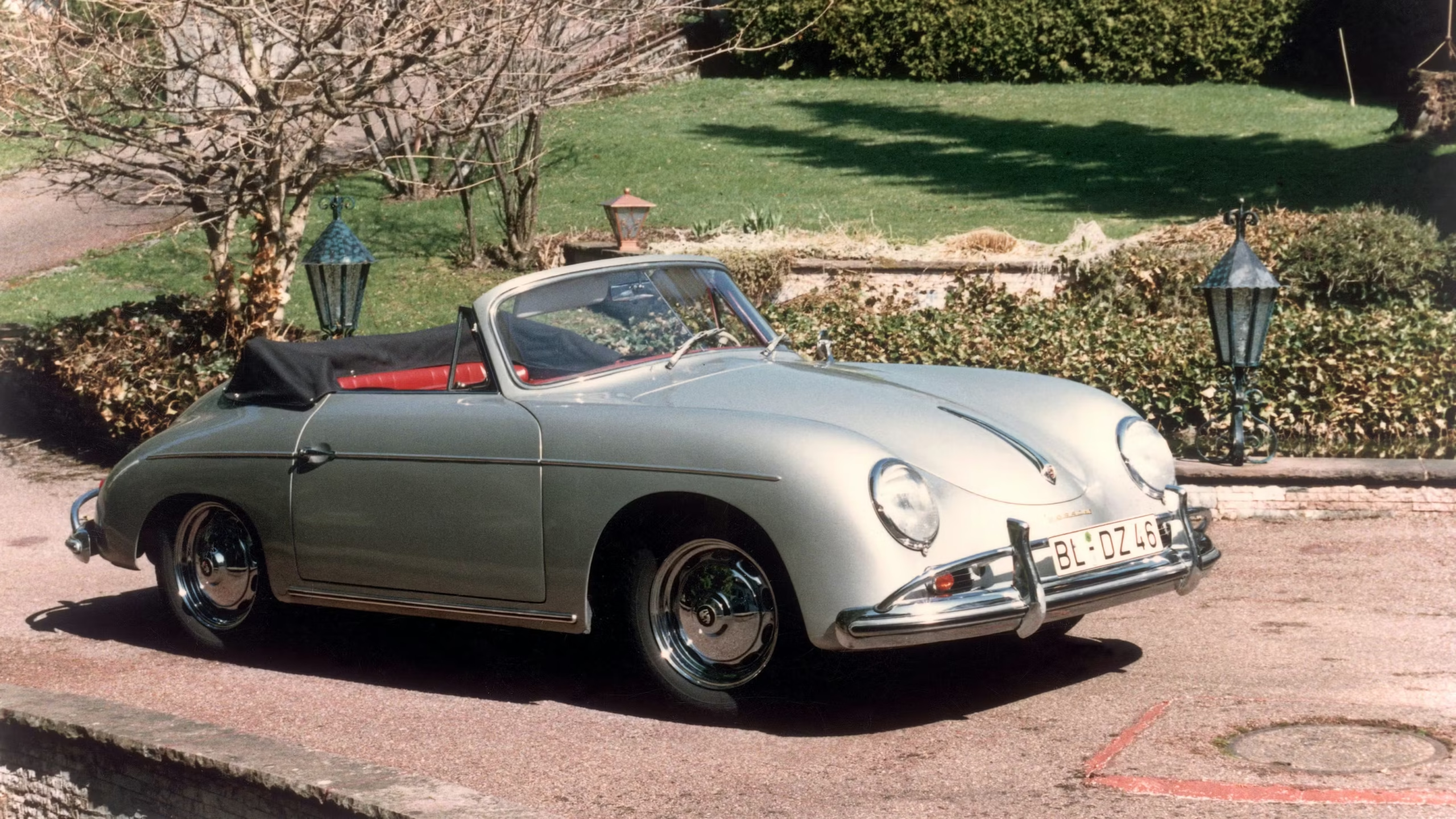
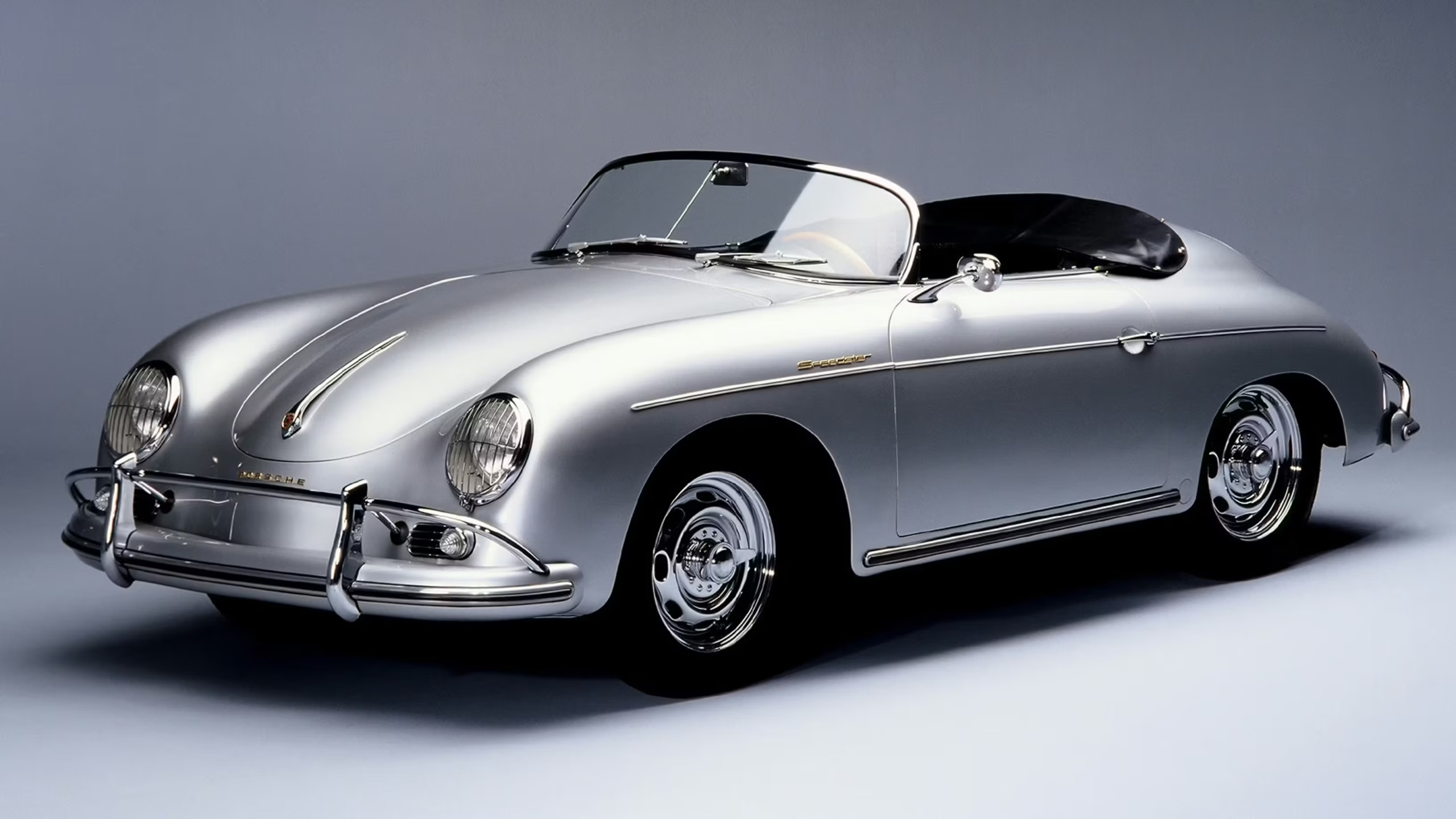
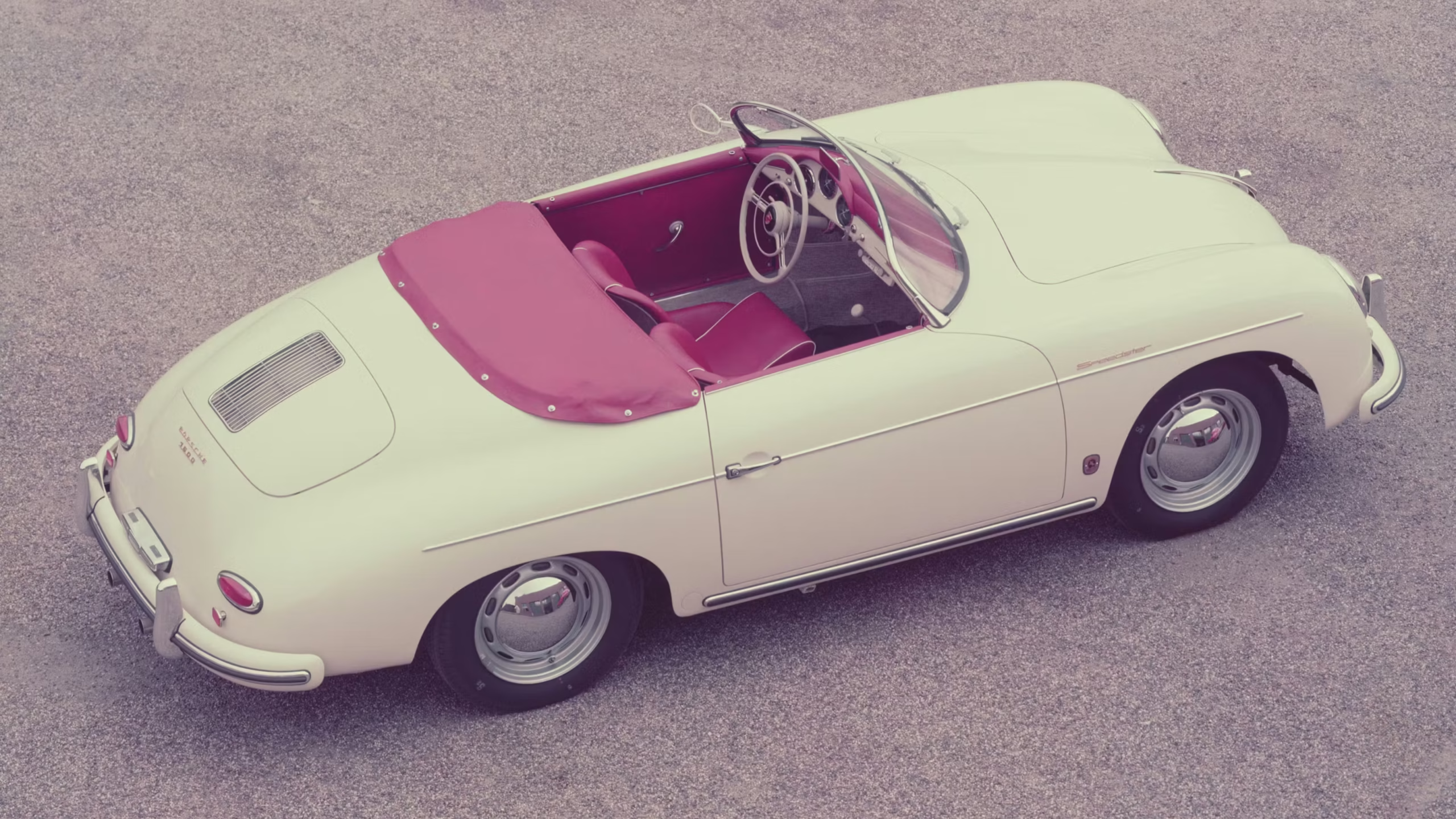
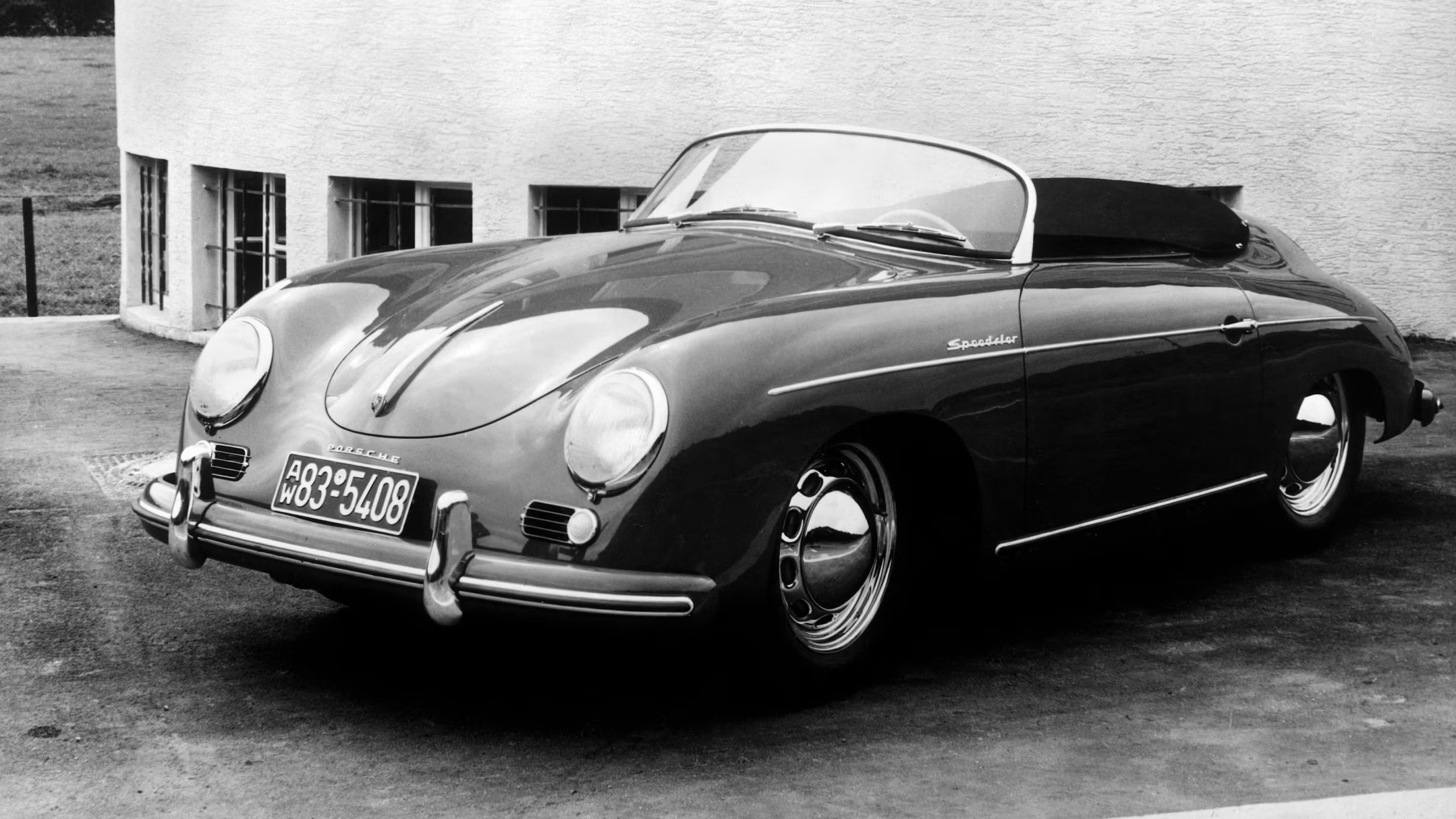
Commercially, the 356 was a slow burn that erupted into a global phenomenon, largely thanks to the American market. Max Hoffman, the legendary Austrian-born importer operating out of New York, convinced Ferry Porsche that a stripped-down, lower-cost version of the 356 was needed to combat the influx of cheap British roadsters. The result was the 356 Speedster, featuring a cut-down, raked windshield, minimal weather protection, and bucket seats. Introduced in late 1954, the Speedster was a sensation, becoming the quintessential Californian sports car and the weapon of choice for amateur racers in the Sports Car Club of America (SCCA). The cultural repercussion of the 356 was immense. It became the darling of Hollywood royalty; James Dean famously cut his teeth racing a 356 Speedster before acquiring his ill-fated 550 Spyder, and Janis Joplin would later cruise in her psychedelically painted 356 C Cabriolet, embedding the car into the very fabric of American pop culture.
The legacy of the Porsche 356 is nothing less than the foundational DNA of the entire Porsche brand. When the final 356 C rolled off the Zuffenhausen assembly line in 1965, over 76,000 units had been built, transforming a tiny, post-war engineering firm into a global sports car powerhouse. It was succeeded by the six-cylinder 901—which soon became the immortal 911—a car that directly inherited the 356’s rear-engine layout, its aerodynamic philosophy, and its unyielding commitment to motorsport. Today, the Porsche 356 sits at the very summit of the classic car pantheon. It is revered not merely as a beautiful antique, but as a visceral, highly usable driving machine that proved to the world that lightweight efficiency, surgical steering, and aerodynamic purity could defeat brute force. Whether in the form of an early “bent-window” Pre-A coupe, an elemental Speedster, or a disc-braked 356 C, the original Porsche remains a perfectly judged masterpiece of mid-century engineering.
Portal
Model line
Model generation
Predecessor
Sucessor
Brand
Produced from
Vehicle category
Portal
Model line
Model generation
Predecessor
Sucessor
Model Overview
In the austere, rationing-shadowed days of 1948, the European sports car landscape was dominated by the ghosts of pre-war giants and the heavy, traditional architectures of front-engined roadsters. Against this backdrop of long-bonneted British MGs and brutish Jaguars, a profound automotive revolution was quietly being forged in a rudimentary sawmill in Gmünd, Austria. Ferry Porsche, son of the legendary engineering patriarch Professor Ferdinand Porsche, famously declared that he could not find the sports car of his dreams, and so he decided to build it himself. The result was the Porsche 356, a vehicle that not only launched one of the most revered marques in the history of motorsport but completely rewrote the rulebook on how to extract maximum performance from minimal displacement. Rooted in the pre-war Volkswagen Beetle design conceived by his father, the 356 adopted the rear-engine, rear-wheel-drive layout, but elevated it to a high-performance art form. Through its incredibly long and fruitful evolutionary lifespan—spanning the early “Pre-A” Gmünd aluminium cars, the refined 356 A, the modernized 356 B, and the ultimate 356 C—it faced off against a formidable array of rivals, from the rawness of the Triumph TR series and the MG T-types to the sophisticated elegance of the Alfa Romeo Giulietta and the Mercedes-Benz 190 SL. Yet, the Porsche 356 offered something entirely different: a surgical, wind-cheating efficiency that allowed it to humble cars with twice its horsepower.
To examine the anatomy of the 356 is to witness a masterclass in pragmatic, evolutionary engineering. Its exterior, penned by the brilliant Erwin Komenda, was a stark departure from the upright, chrome-laden designs of the era. Characterized by its flowing, teardrop profile—affectionately likened to an inverted bathtub—the 356 was a triumph of aerodynamics. Early Gmünd cars were hand-beaten from aluminium, but as production relocated to Stuttgart, Porsche partnered with coachbuilder Reutter to produce the cars in stamped steel, increasing structural rigidity. Beneath the curvaceous rear engine lid sat the beating heart of the 356: the air-cooled flat-four boxer engine. In its earliest iterations, this was a humble 1.1-liter Volkswagen-derived unit producing a mere 40 horsepower. However, Porsche’s engineers subjected it to a relentless program of refinement, increasing displacement, altering cylinder heads, and fitting dual carburetors.
The mechanical zenith of the 356 lineage arrived with the legendary “Carrera” models, powered by the Type 547 engine designed by Dr. Ernst Fuhrmann. This 1.5-liter (and later 2.0-liter) four-cam masterpiece was a watchmaker’s nightmare of bevel gears and shafts, producing a staggering 130 horsepower and a ferocious, mechanical shriek that became the terror of the 2.0-liter racing classes. The chassis was equally idiosyncratic, utilizing a stamped steel unibody suspended by torsion bars and trailing arms at the front, and a swing-axle arrangement at the rear. This setup endowed the 356 with a unique, highly communicative handling character. In the hands of a novice, the rear-weight bias and swing axles could induce snap oversteer, but a skilled driver could use trailing-throttle oversteer to pivot the lightweight car through apexes with devastating speed. Stopping power evolved in tandem with the engines, progressing from heavily finned aluminium drum brakes to the highly effective four-wheel disc brakes introduced on the final 356 C iteration in 1963. Inside, the cabin was a beautifully spartan environment. The driver faced a painted metal dashboard dominated by a trio of large, legible VDO gauges—with the tachometer rightfully placed dead center—and a large-diameter, thin-rimmed steering wheel that transmitted every nuance of the tarmac directly to the driver’s palms.
The impact of the Porsche 356 on the global motorsport stage was immediate and utterly disproportionate to its diminutive size. The car earned a mythical “giant-killer” reputation by consistently outlasting and out-cornering vastly more powerful machinery. As early as 1951, a lightweight aluminium 356 SL secured a stunning class victory at the 24 Hours of Le Mans, cementing Porsche’s reputation for unburstable endurance reliability. But it was on the grueling, treacherous roads of the Carrera Panamericana in Mexico that the 356 forged its immortal legend. The four-cam 356s dominated their class in this lethal multi-day road race, leading Porsche to adopt the ‘Carrera’ moniker for its highest-performance models—a tradition that proudly continues today. The 356 was equally dominant in the Mille Miglia, the Targa Florio, and the grueling Liège-Rome-Liège rally, proving that an air-cooled, rear-engined car could survive the most punishing environments on earth.
Commercially, the 356 was a slow burn that erupted into a global phenomenon, largely thanks to the American market. Max Hoffman, the legendary Austrian-born importer operating out of New York, convinced Ferry Porsche that a stripped-down, lower-cost version of the 356 was needed to combat the influx of cheap British roadsters. The result was the 356 Speedster, featuring a cut-down, raked windshield, minimal weather protection, and bucket seats. Introduced in late 1954, the Speedster was a sensation, becoming the quintessential Californian sports car and the weapon of choice for amateur racers in the Sports Car Club of America (SCCA). The cultural repercussion of the 356 was immense. It became the darling of Hollywood royalty; James Dean famously cut his teeth racing a 356 Speedster before acquiring his ill-fated 550 Spyder, and Janis Joplin would later cruise in her psychedelically painted 356 C Cabriolet, embedding the car into the very fabric of American pop culture.
The legacy of the Porsche 356 is nothing less than the foundational DNA of the entire Porsche brand. When the final 356 C rolled off the Zuffenhausen assembly line in 1965, over 76,000 units had been built, transforming a tiny, post-war engineering firm into a global sports car powerhouse. It was succeeded by the six-cylinder 901—which soon became the immortal 911—a car that directly inherited the 356’s rear-engine layout, its aerodynamic philosophy, and its unyielding commitment to motorsport. Today, the Porsche 356 sits at the very summit of the classic car pantheon. It is revered not merely as a beautiful antique, but as a visceral, highly usable driving machine that proved to the world that lightweight efficiency, surgical steering, and aerodynamic purity could defeat brute force. Whether in the form of an early “bent-window” Pre-A coupe, an elemental Speedster, or a disc-braked 356 C, the original Porsche remains a perfectly judged masterpiece of mid-century engineering.
Generations
Model Generations
Submodels