
Austin-Healey 3000 Mk I (BN7)
Brand
Produced from
Portal
Vehicle category
Model line
Model generation
Predecessor
Successor
Submodel Overview
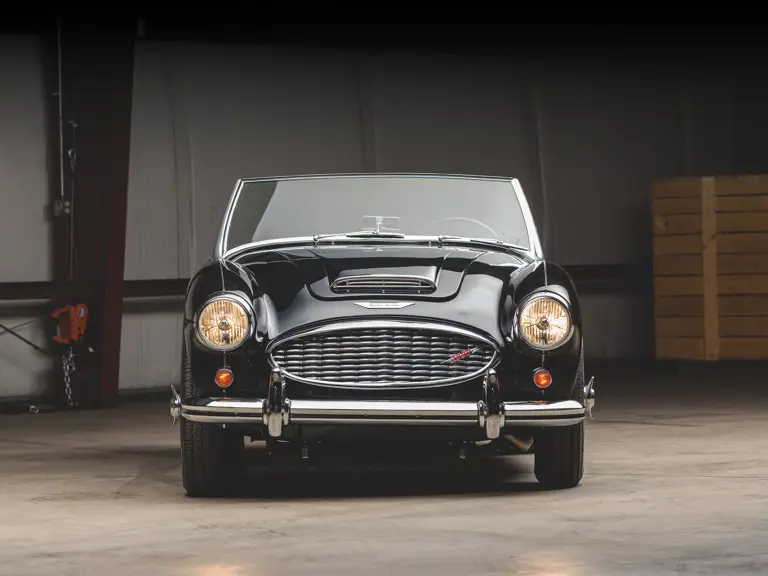
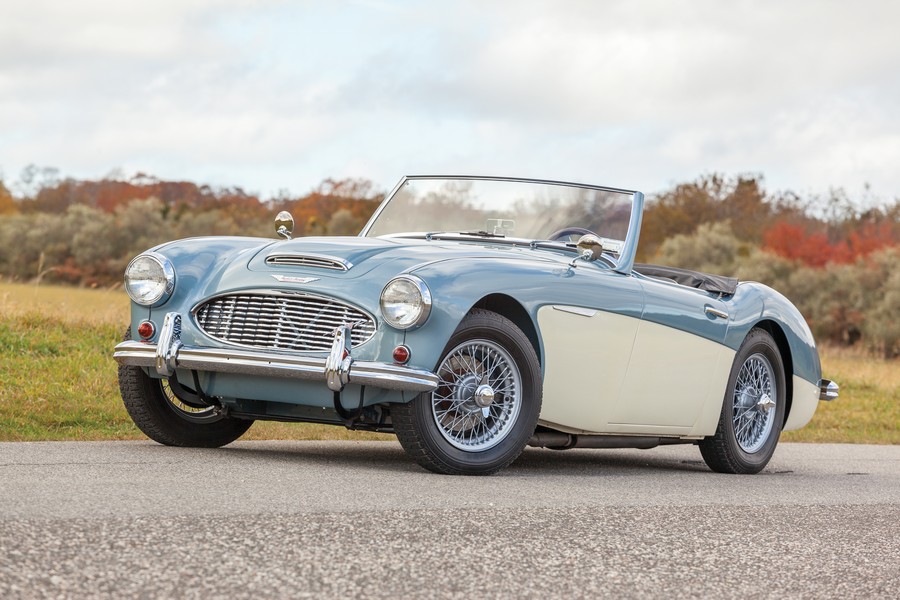
At the twilight of the 1950s, the British sports car industry was enjoying a golden, sun-drenched renaissance, fueled almost entirely by the insatiable appetite of the American export market. The mantra was simple: build them beautiful, build them rugged, and give them enough torque to cruise down sweeping coastal highways. Donald Healey’s brilliant original creation, the four-cylinder Austin-Healey 100, had already evolved into the six-cylinder 100-6, but the latter initially suffered from a reputation of being slightly asthmatic, struggling to haul its heavier chassis with the verve buyers demanded. The definitive answer thundered out of the Abingdon factory in 1959: the Austin-Healey 3000 Mk I. To the absolute purist, the most coveted iteration of this new beast was the BN7—the pure, unadulterated two-seater roadster, built alongside the slightly compromised BT7 2+2 model. The BN7 stepped into a fiercely contested arena, trading blows with the rugged, cheaper Triumph TR3A, the archaic but charming Morgan Plus 4, and the vastly more expensive, aristocratic Jaguar XK150. Yet, the Healey carved out its own unique territory; it was the quintessential “hairy-chested” brute, a sports car that required physical commitment but rewarded the driver with a baritone symphony and magnificent, tail-sliding thrills.
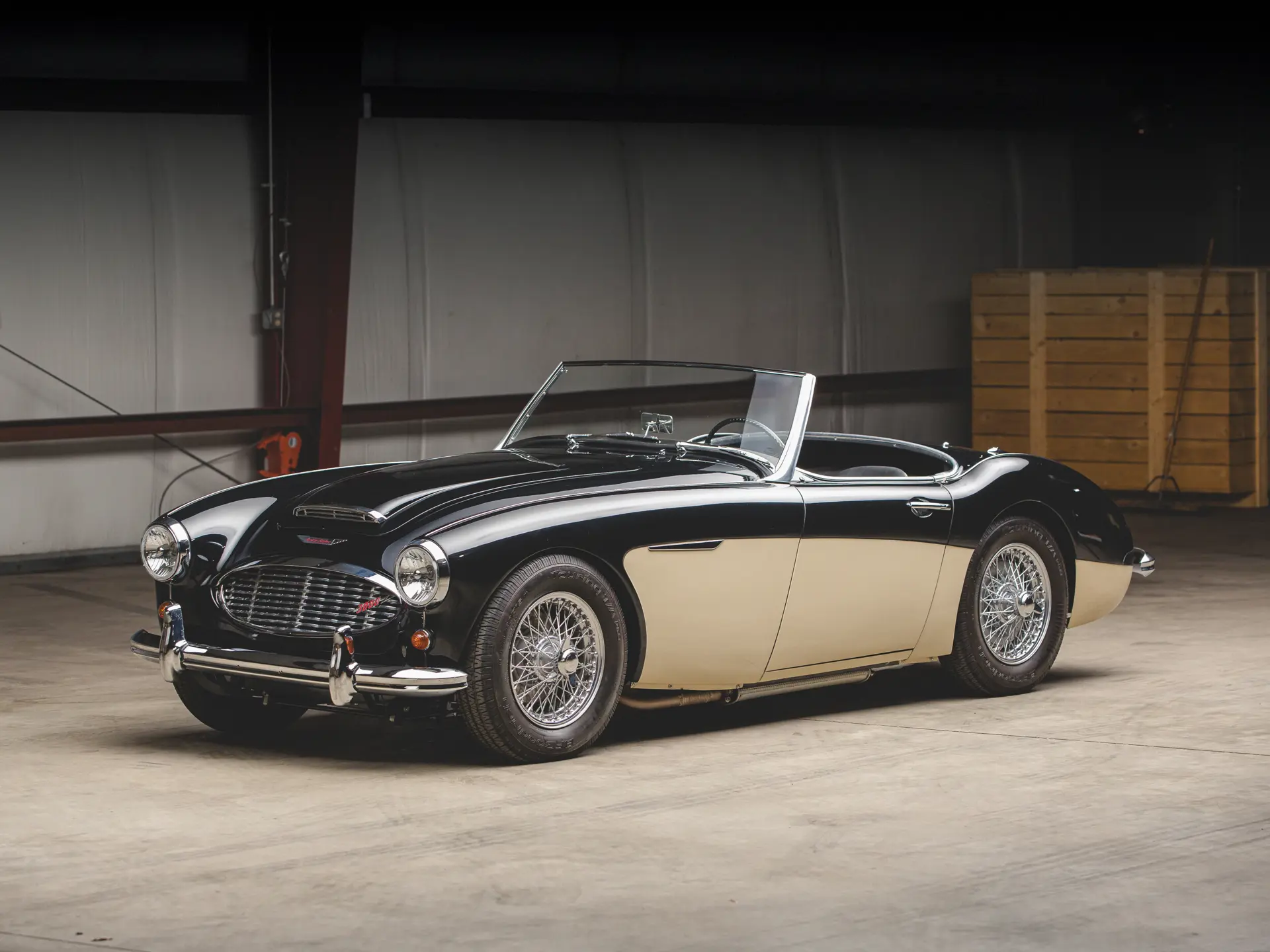
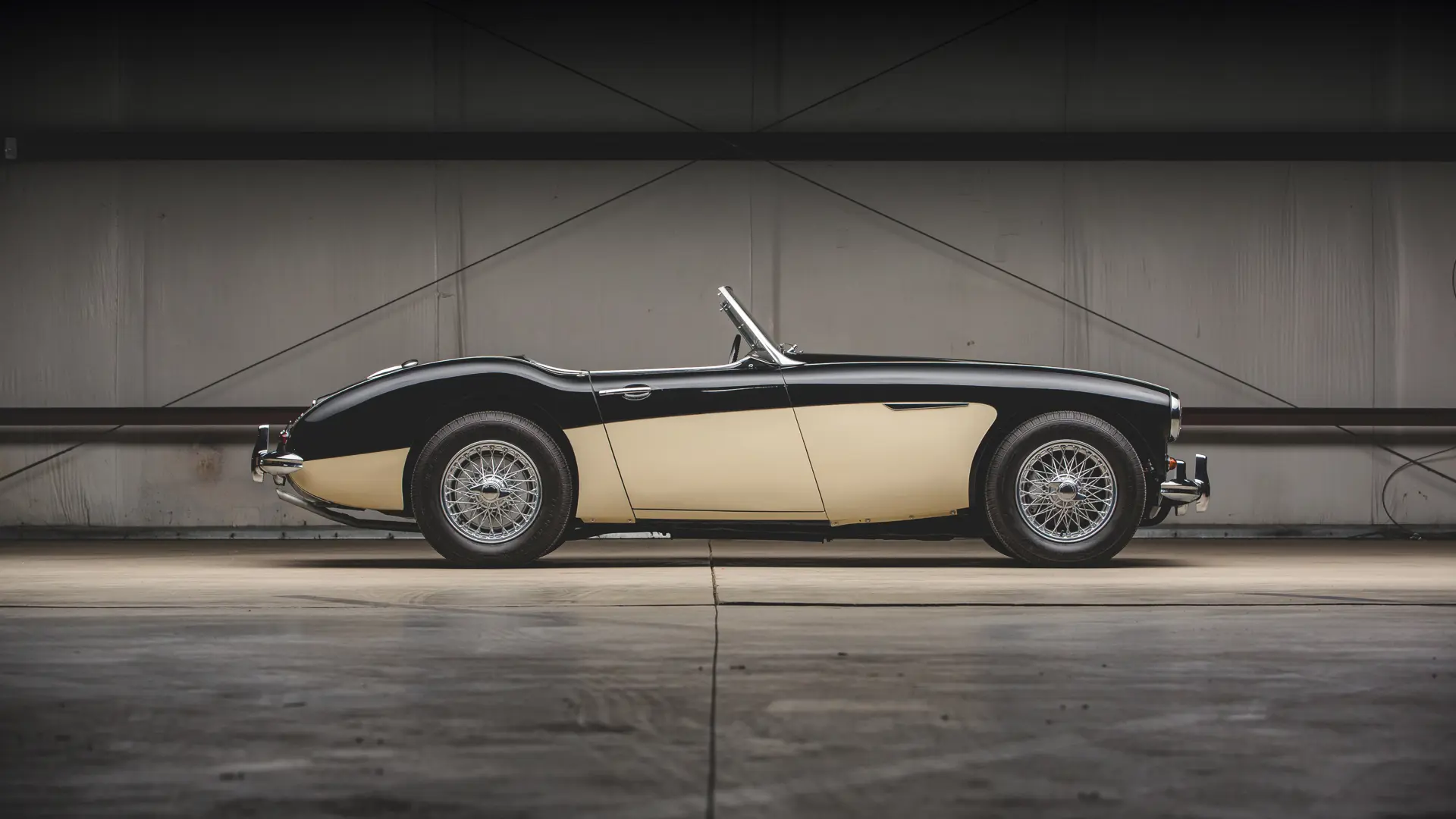
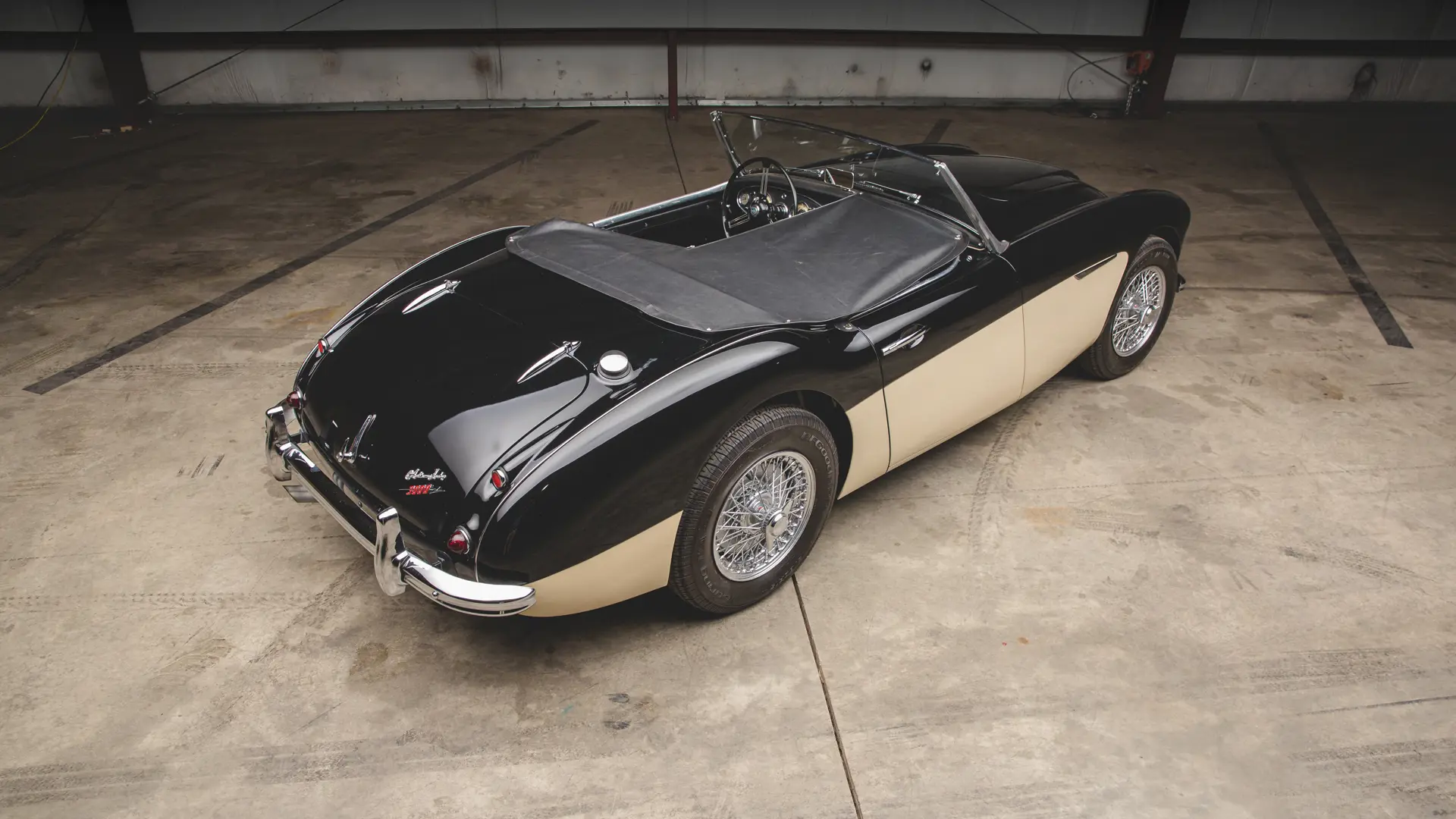
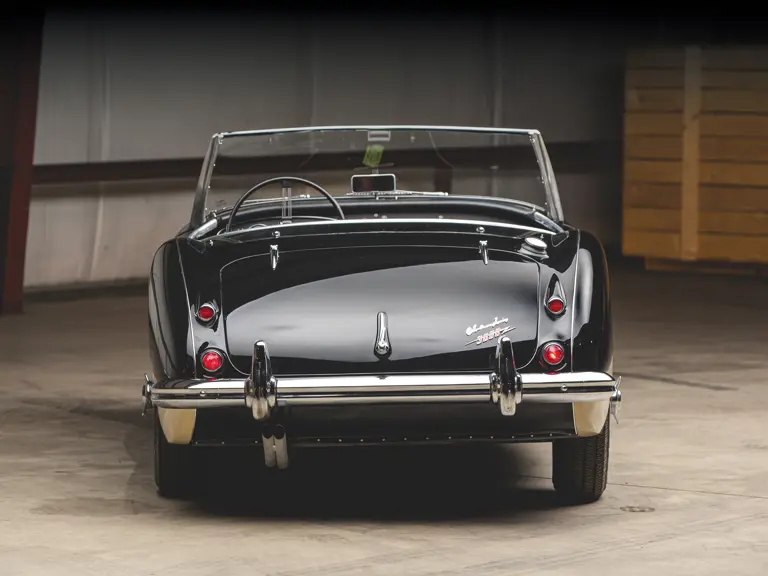
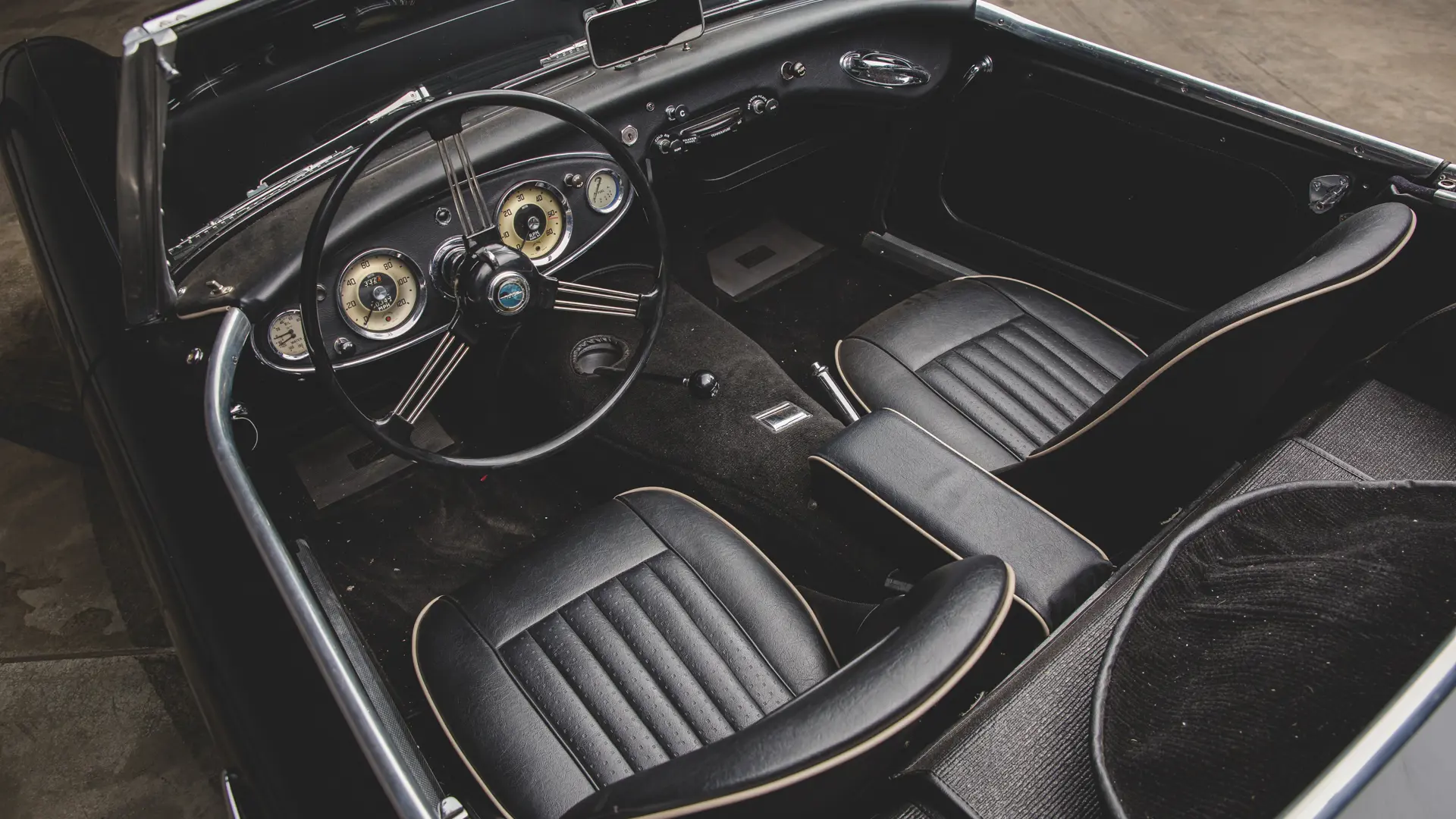
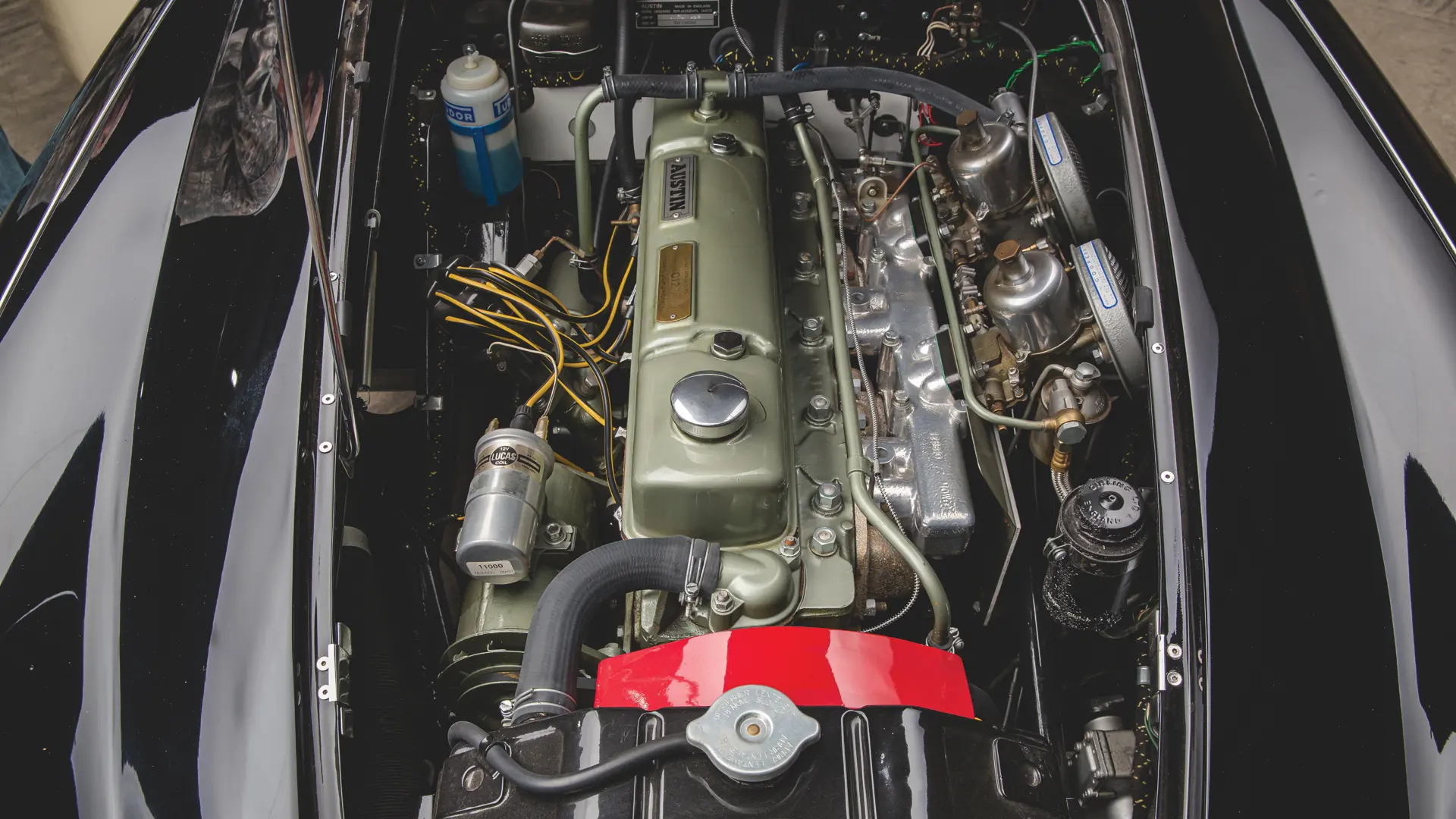
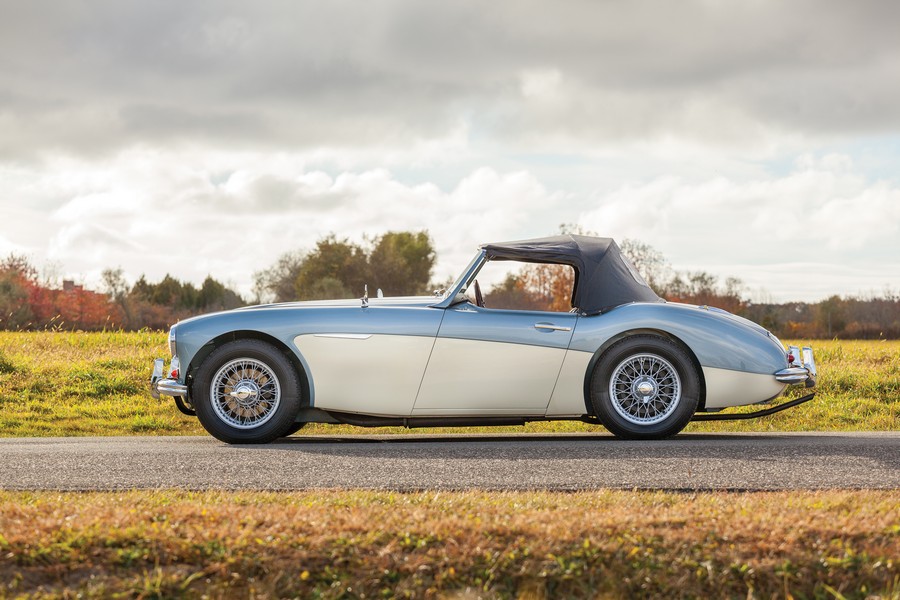
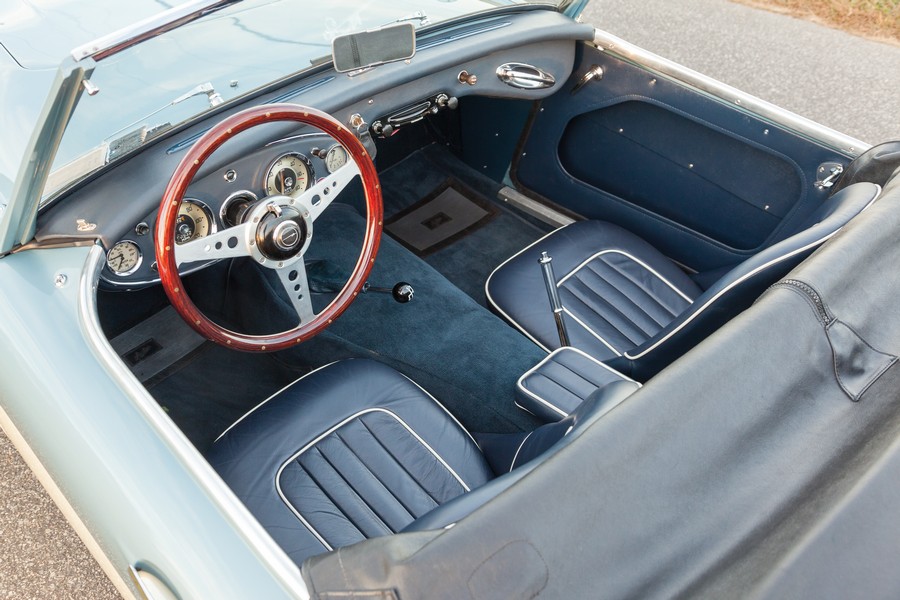
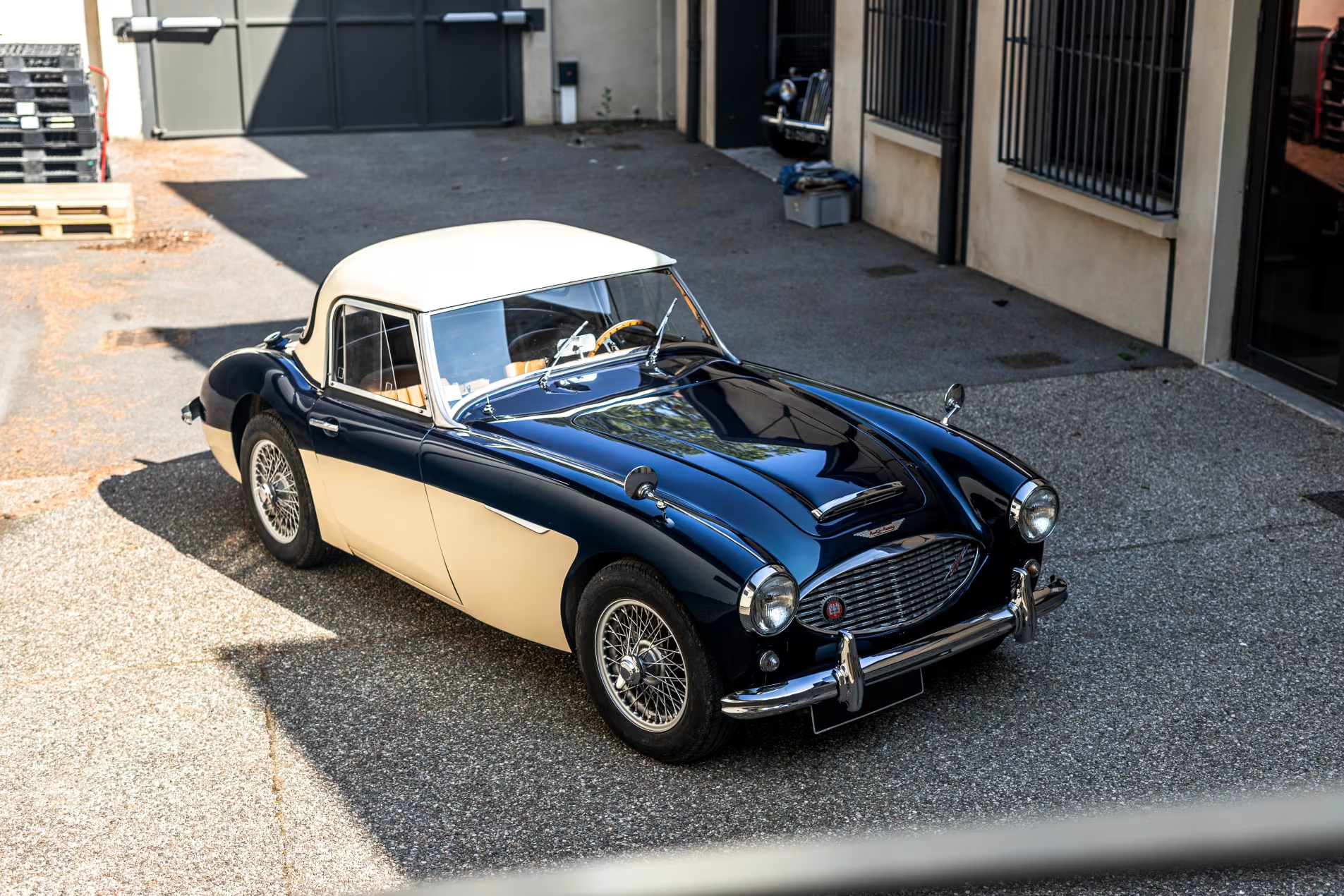
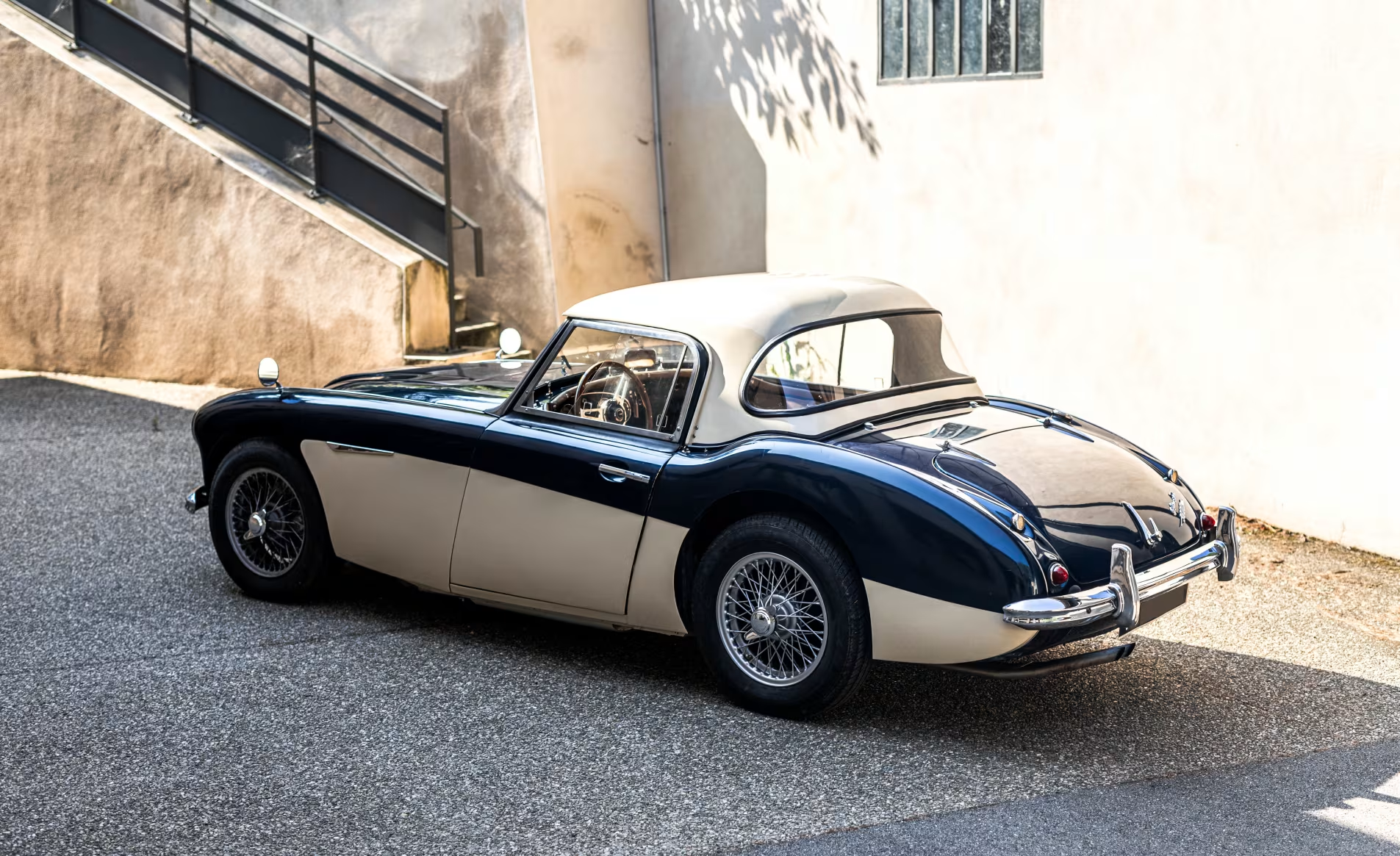
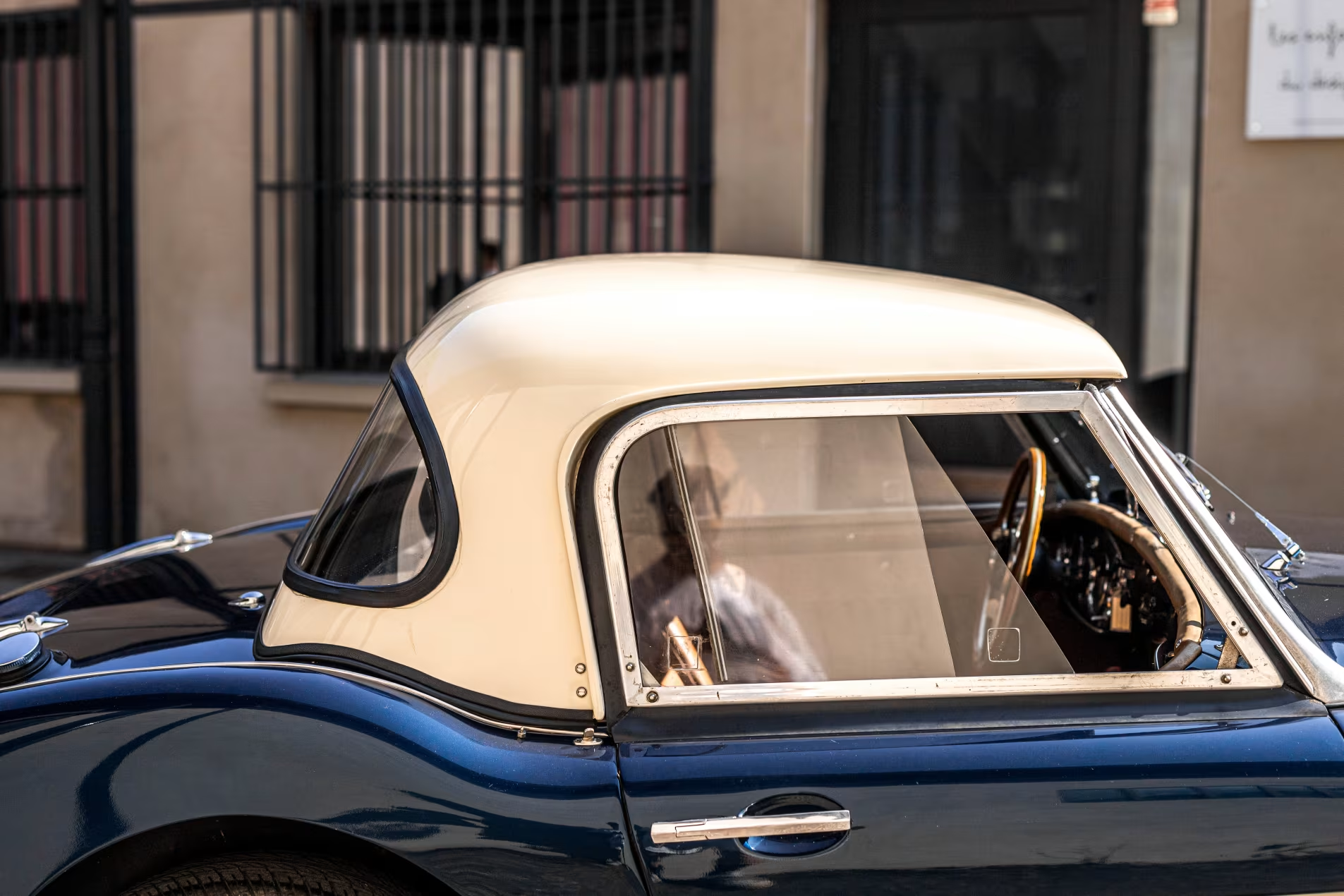
To walk around a 1959 Austin-Healey 3000 Mk I BN7 is to admire one of the most enduring, muscular shapes in automotive history. Penned by the brilliant Gerry Coker for the original 100, the sweeping, curvaceous lines were retained, often accentuated by the era’s signature two-tone paintwork dividing the flanks. However, the true revolution lay hidden beneath that long, louvered bonnet. The BMC C-Series inline-six engine was bored out to a substantial 2,912cc, officially earning the car its ‘3000’ moniker. Breathing deeply through twin SU HD6 carburetors, this heavy, iron-block leviathan produced 124 brake horsepower and, crucially, a tidal wave of low-end torque. To harness this newfound velocity, the Abingdon engineers bestowed the 3000 with a transformative upgrade: Girling disc brakes on the front wheels, replacing the fade-prone drums of the 100-6. The chassis remained a traditional, heavy-duty steel ladder frame, suspended by independent coil springs at the front and a live rear axle on semi-elliptic leaf springs. The BN7 is particularly celebrated for its interior proportions; by shunning the tiny, virtually useless rear jump seats of the BT7, the BN7 offered a more intimate, focused cockpit and a larger rear parcel shelf for long-distance touring luggage. The driver sat low, wrestling a large wire-spoked steering wheel, staring past a beautiful array of Smiths instrumentation, fully immersed in the smell of hot oil, leather, and exhaust fumes.
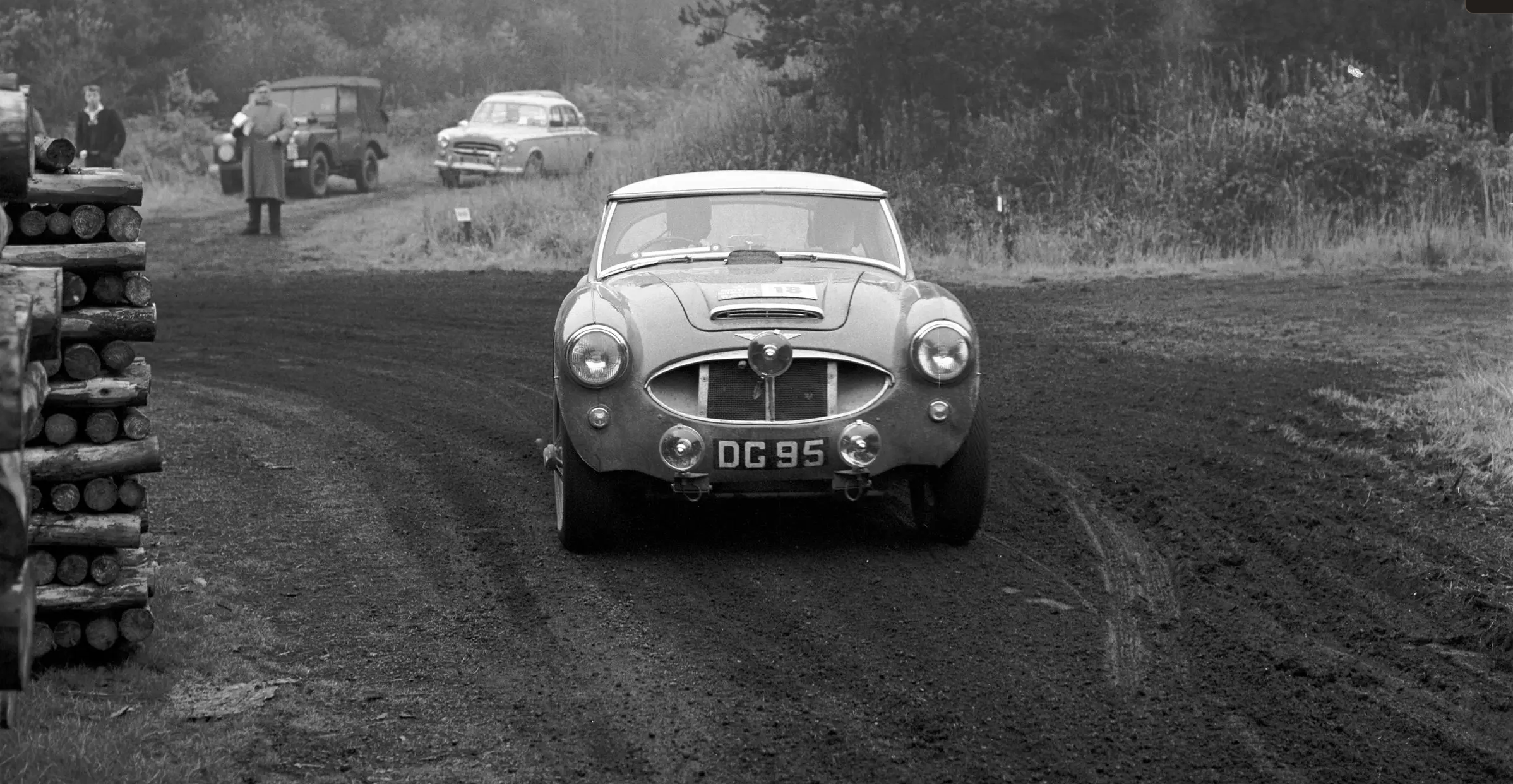
The impact of the 3000 Mk I was immediate and profound. Commercially, it was exactly what the American market desired, flying out of stateside showrooms and cementing the ‘Big Healey’ as an icon of transatlantic motoring culture. But the car’s most romantic and enduring legend was forged far from the sunlit boulevards of California, deep in the mud, snow, and gravel of the European rally circuit. Prepared by the legendary BMC Competitions Department under Marcus Chambers, the heavy, seemingly cumbersome 3000 was transformed into a devastatingly effective rally weapon. The BN7’s raw torque, robust construction, and predictable oversteer made it a fearsome competitor on loose surfaces. It was in the hands of incredibly brave drivers like Pat Moss—sister of Stirling Moss—that the Big Healey achieved immortality. Moss famously wrestled a 3000 to an outright, punishing victory in the grueling Liège-Rome-Liège rally. It was a machine that demanded immense physical strength to pilot at the ragged edge, requiring the driver to steer the rear wheels with the throttle while battling the heavy, unassisted steering through treacherous Alpine passes.
The legacy of the 1959 Austin-Healey 3000 Mk I BN7 is that of the ultimate, elemental British roadster. While it was succeeded in 1961 by the triple-carburetor Mk II and eventually the heavily civilized, roll-up window Mk III, the BN7 remains the sweet spot for many serious enthusiasts. It represents the perfect mechanical intersection: retaining the pure, wind-in-the-hair, side-screen roadster ethos of the 1950s, whilst benefiting from the vital 3.0-liter engine and disc-brake upgrades that made the car genuinely fast and safe. With less than 3,000 examples of the BN7 produced compared to the more popular BT7, it is a rare and highly prized jewel today.
Brand
Produced from
Portal
Vehicle category
Model line
Model generation
Predecessor
Sucessor
Brand
Produced from
Portal
Vehicle category
Model line
Model generation
Predecessor
Sucessor
Submodel Overview
At the twilight of the 1950s, the British sports car industry was enjoying a golden, sun-drenched renaissance, fueled almost entirely by the insatiable appetite of the American export market. The mantra was simple: build them beautiful, build them rugged, and give them enough torque to cruise down sweeping coastal highways. Donald Healey’s brilliant original creation, the four-cylinder Austin-Healey 100, had already evolved into the six-cylinder 100-6, but the latter initially suffered from a reputation of being slightly asthmatic, struggling to haul its heavier chassis with the verve buyers demanded. The definitive answer thundered out of the Abingdon factory in 1959: the Austin-Healey 3000 Mk I. To the absolute purist, the most coveted iteration of this new beast was the BN7—the pure, unadulterated two-seater roadster, built alongside the slightly compromised BT7 2+2 model. The BN7 stepped into a fiercely contested arena, trading blows with the rugged, cheaper Triumph TR3A, the archaic but charming Morgan Plus 4, and the vastly more expensive, aristocratic Jaguar XK150. Yet, the Healey carved out its own unique territory; it was the quintessential “hairy-chested” brute, a sports car that required physical commitment but rewarded the driver with a baritone symphony and magnificent, tail-sliding thrills.
To walk around a 1959 Austin-Healey 3000 Mk I BN7 is to admire one of the most enduring, muscular shapes in automotive history. Penned by the brilliant Gerry Coker for the original 100, the sweeping, curvaceous lines were retained, often accentuated by the era’s signature two-tone paintwork dividing the flanks. However, the true revolution lay hidden beneath that long, louvered bonnet. The BMC C-Series inline-six engine was bored out to a substantial 2,912cc, officially earning the car its ‘3000’ moniker. Breathing deeply through twin SU HD6 carburetors, this heavy, iron-block leviathan produced 124 brake horsepower and, crucially, a tidal wave of low-end torque. To harness this newfound velocity, the Abingdon engineers bestowed the 3000 with a transformative upgrade: Girling disc brakes on the front wheels, replacing the fade-prone drums of the 100-6. The chassis remained a traditional, heavy-duty steel ladder frame, suspended by independent coil springs at the front and a live rear axle on semi-elliptic leaf springs. The BN7 is particularly celebrated for its interior proportions; by shunning the tiny, virtually useless rear jump seats of the BT7, the BN7 offered a more intimate, focused cockpit and a larger rear parcel shelf for long-distance touring luggage. The driver sat low, wrestling a large wire-spoked steering wheel, staring past a beautiful array of Smiths instrumentation, fully immersed in the smell of hot oil, leather, and exhaust fumes.
The impact of the 3000 Mk I was immediate and profound. Commercially, it was exactly what the American market desired, flying out of stateside showrooms and cementing the ‘Big Healey’ as an icon of transatlantic motoring culture. But the car’s most romantic and enduring legend was forged far from the sunlit boulevards of California, deep in the mud, snow, and gravel of the European rally circuit. Prepared by the legendary BMC Competitions Department under Marcus Chambers, the heavy, seemingly cumbersome 3000 was transformed into a devastatingly effective rally weapon. The BN7’s raw torque, robust construction, and predictable oversteer made it a fearsome competitor on loose surfaces. It was in the hands of incredibly brave drivers like Pat Moss—sister of Stirling Moss—that the Big Healey achieved immortality. Moss famously wrestled a 3000 to an outright, punishing victory in the grueling Liège-Rome-Liège rally. It was a machine that demanded immense physical strength to pilot at the ragged edge, requiring the driver to steer the rear wheels with the throttle while battling the heavy, unassisted steering through treacherous Alpine passes.
The legacy of the 1959 Austin-Healey 3000 Mk I BN7 is that of the ultimate, elemental British roadster. While it was succeeded in 1961 by the triple-carburetor Mk II and eventually the heavily civilized, roll-up window Mk III, the BN7 remains the sweet spot for many serious enthusiasts. It represents the perfect mechanical intersection: retaining the pure, wind-in-the-hair, side-screen roadster ethos of the 1950s, whilst benefiting from the vital 3.0-liter engine and disc-brake upgrades that made the car genuinely fast and safe. With less than 3,000 examples of the BN7 produced compared to the more popular BT7, it is a rare and highly prized jewel today.
Tech Specs
Technical Specifications
Tech Specs
Technical Specifications
Engine
01
03
Internal combustion engine
Configuration
BMC C-Series, Inline-6
Location
Front, longitudinally mounted
Construction
Cast iron block and head
Displacement (cc)
2,912 cc
Displacement (cu in)
177.7 cu in
Compression
9.0:1
Bore x Stroke
83.36 mm x 88.9 mm
Valvetrain
2 valves per cylinder, OHV
Fuel feed
2 x SU HD6 carburetors
Lubrication
Wet sump
Aspiration
Naturally aspirated
Output
Power (hp)
124 hp
Power (kW)
92 kW
Max power at
4,600 RPM
Torque (Nm)
226 Nm
Torque (ft lbs)
167 ft lbs
Max torque at
2,700 RPM
Drivetrain
02
03
Chassis
Type
Separate ladder frame
Material
Steel
Body
Material
Steel with Aluminium bonnet and boot lid
Transmission
Gearbox
BMC 4-speed manual
Drive
Rear Wheel Drive
Suspension
Front
Independent, unequal length wishbones, coil springs, lever-arm shock absorbers, anti-roll bar
Rear
Live axle, semi-elliptic leaf springs, Panhard rod, lever-arm shock absorbers
Steering
Type
Cam and peg, unassisted
Brakes
Front
Solid discs Ø292 mm (Girling)
Rear
Drum brakes Ø279 mm (Girling)
Wheels
Front
4.5" x 15"
Rear
4.5" x 15"
Tires
Front
5.90-15
Rear
5.90-15
Dimensions and performance
03
03
Dimensions
Length (mm)
4,000 mm
Length (in)
157.5 in
Width (mm)
1,524 mm
Width (in)
60.0 in
Height (mm)
1,245 mm
Height (in)
49.0 in
Wheelbase (mm)
2,337 mm
Wheelbase (in)
92.0 in
Weight (kg)
~1,080 kg
Weight (lbs)
~2,381 l lbs
Performance
Power to weight
~0.11 hp/kg
Top speed (km/h)
185 km/h
Top speed (mph)
115 mph
0-100 km/h (0-60 mph)
11.4 s