Renault
Type
Foundation Year
Founder/s
Country
Headquarters
Brand Overview
On Christmas Eve 1898, twenty-one-year-old Louis Renault steered a bespoke voiturette up the precipitous cobbles of the Rue Lepic in Montmartre. Against sceptical bets in the biting Paris chill, the diminutive machine ascended the punishing thirteen-per-cent incline, propelled by a 273 cc (16.7 cu in) single-cylinder De Dion-Bouton engine and an audacious mechanical revelation: a direct-drive three-speed gearbox. By dawn, Louis pocketed a dozen firm orders; within weeks, alongside brothers Marcel and Fernand, he established Société Renault Frères in Billancourt. Motor sport became the company’s vital spark. Marcel Renault steered their featherweight Type K to outright victory in the 1902 Paris-Vienna race, outclassing gargantuan machinery. Yet triumph walked with tragedy; Marcel perished following a catastrophic accident in the brutal 1903 Paris-Madrid trial, prompting Louis to cease driving competitively and focus his intellect on engineering supremacy.
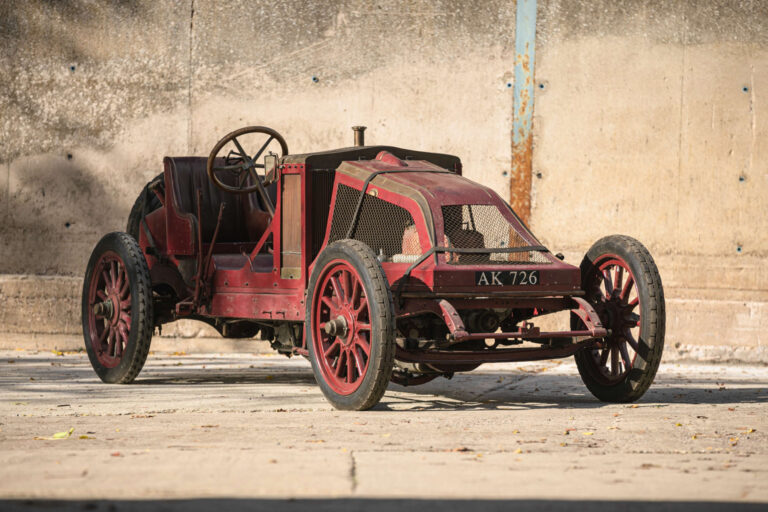
That obsession bore monumental fruit on the closed-circuit tar roads of Sarthe in June 1906. At the inaugural Grand Prix de l’Automobile Club de France, Hungarian driver Ferenc Szisz guided the crimson Renault AK 90CV across 1238.0 kilometres (769.3 miles) over two gruelling days. Displacing a colossal 13.0 litres (793.3 cu in), the thumping four-cylinder powerplant delivered a reliable 67 kW (90 bhp) through heavy wooden artillery wheels. The engine’s deafening staccato shook the grandstands, while Szisz outlasted rivals thanks to Michelin’s innovative detachable wheel rims. Szisz finished victorious at an astonishing average speed of 101.2 km/h (62.9 mph), engraving the diamond emblem into the foundations of Grand Prix history.
Between the world wars, ambition shifted to raw velocity. At the banked concrete bowl of Montlhéry in 1926, the streamlined Renault 40CV NM single-seater—an aerodynamic leviathan powered by a silken 9.1-litre (555.3 cu in) straight-six engine—hissed around the perimeter for twenty-four uninterrupted hours. Serviced by a fiercely drilled pit crew executing tyre changes in a mere fifty seconds, it covered 4167.6 kilometres (2589.6 miles) at a staggering average of 173.6 km/h (107.9 mph), shattering world endurance records and confirming Billancourt’s mechanical integrity.
The aftermath of the Second World War brought nationalisation under the Régie Renault banner. Engineers covertly developed the diminutive 4CV, a rear-engined people’s car whose 747 cc (45.6 cu in) inline-four became an unexpected sporting hero. This democratisation of speed culminated via Amédée Gordini—”Le Sorcier”, who forged a generation of French racers. Clothed in vibrant French Racing Blue, the R8 Gordini, with its crossflow cylinder head and raucous twin-Weber carburettors, demanded extreme commitment. It danced precariously on rear swing-axles, teaching pilots how to pitch an 850 kg (1874 lbs) saloon into beautiful four-wheel oversteer across European mountain passes.
By the mid-1970s, Renault pursued what the Formula One establishment deemed impossible. Exploiting an obscure rule permitting 1.5-litre (91.5 cu in) forced induction against 3.0-litre (183.1 cu in) atmospheric engines, Bernard Dudot crafted the Renault-Gordini EF1: an 86-degree turbocharged V6. When the bright yellow RS01 appeared at Silverstone in 1977 driven by Jean-Pierre Jabouille, British pit lanes erupted in mockery, christening it the “Yellow Teapot”, as it frequently halted in plumes of turbocharger steam. It was also the first Grand Prix machine to use radial tyres, supplied by Michelin.
Laughter swiftly gave way to dread. Renault refined its Garrett turbos, resolved throttle lag, and embraced ground-effect aerodynamics. On 1 July 1979 at Dijon-Prenois, Jabouille drove the twin-turbo RS10, producing a ferocious 373 kW (500 bhp) at 11000 rpm, to a historic maiden Grand Prix victory. The triumph was nearly eclipsed by René Arnoux’s savage, wheel-banging duel against Gilles Villeneuve’s Ferrari for second. Chattering wastegates signalled a revolution; within four years, naturally aspirated engines were rendered obsolete as boost soared past 4.0 bar, unleashing over 745 kW (1000 bhp) from volatile V6 blocks.
That competition-bred turbo mastery transferred to the World Rally Championship. In 1980, Renault took the front-wheel-drive 5 supermini, sliced it open, and installed a 1.4-litre (85.2 cu in) turbocharged engine amidships, driving flared rear wheels. The Renault 5 Turbo was a pugnacious monster delivering 118 kW (158 bhp) in road trim and dramatically more in Maxi specification. In the treacherous snow of the 1981 Monte Carlo Rally, virtuoso Jean Ragnotti wrung every ounce of traction from the hatchback, out-driving all-wheel-drive rivals to seize an immortal victory.
When turbocharging was outlawed for 1989, Renault pivoted to conquer the naturally aspirated era. Dudot designed a jewel-like 3.5-litre (213.6 cu in) 67-degree V10 with ground-breaking pneumatic valve return systems, eliminating mechanical valve float at astronomical speeds. Supplying Williams, the Renault RS V10 became the undisputed benchmark of the 1990s. The shrieking powerplant propelled Nigel Mansell, Alain Prost, Damon Hill, and Jacques Villeneuve to world titles, winning six consecutive Constructors’ Championships between 1992 and 1997.
Renault returned as a works outfit in the 2000s, weaponizing aerodynamic genius and a wide-angle RS25 V10 engine that revved past 19000 rpm with a spine-tingling howl. In 2005 and 2006, Fernando Alonso harnessed this relentless grip to claim consecutive Drivers’ and Constructors’ crowns. From the pioneering cobbles of Montmartre to the screech of 10-cylinder symphonies, the marque from Billancourt remains an authentic crucible of unyielding, defiant automotive passion.
Type
Foundation Year
Country
Founder/s
Headquarters

Type
Foundation Year
Country
Founder/s
Headquarters
About this brand
On Christmas Eve 1898, twenty-one-year-old Louis Renault steered a bespoke voiturette up the precipitous cobbles of the Rue Lepic in Montmartre. Against sceptical bets in the biting Paris chill, the diminutive machine ascended the punishing thirteen-per-cent incline, propelled by a 273 cc (16.7 cu in) single-cylinder De Dion-Bouton engine and an audacious mechanical revelation: a direct-drive three-speed gearbox. By dawn, Louis pocketed a dozen firm orders; within weeks, alongside brothers Marcel and Fernand, he established Société Renault Frères in Billancourt. Motor sport became the company’s vital spark. Marcel Renault steered their featherweight Type K to outright victory in the 1902 Paris-Vienna race, outclassing gargantuan machinery. Yet triumph walked with tragedy; Marcel perished following a catastrophic accident in the brutal 1903 Paris-Madrid trial, prompting Louis to cease driving competitively and focus his intellect on engineering supremacy.
That obsession bore monumental fruit on the closed-circuit tar roads of Sarthe in June 1906. At the inaugural Grand Prix de l’Automobile Club de France, Hungarian driver Ferenc Szisz guided the crimson Renault AK 90CV across 1238.0 kilometres (769.3 miles) over two gruelling days. Displacing a colossal 13.0 litres (793.3 cu in), the thumping four-cylinder powerplant delivered a reliable 67 kW (90 bhp) through heavy wooden artillery wheels. The engine’s deafening staccato shook the grandstands, while Szisz outlasted rivals thanks to Michelin’s innovative detachable wheel rims. Szisz finished victorious at an astonishing average speed of 101.2 km/h (62.9 mph), engraving the diamond emblem into the foundations of Grand Prix history.
Between the world wars, ambition shifted to raw velocity. At the banked concrete bowl of Montlhéry in 1926, the streamlined Renault 40CV NM single-seater—an aerodynamic leviathan powered by a silken 9.1-litre (555.3 cu in) straight-six engine—hissed around the perimeter for twenty-four uninterrupted hours. Serviced by a fiercely drilled pit crew executing tyre changes in a mere fifty seconds, it covered 4167.6 kilometres (2589.6 miles) at a staggering average of 173.6 km/h (107.9 mph), shattering world endurance records and confirming Billancourt’s mechanical integrity.
The aftermath of the Second World War brought nationalisation under the Régie Renault banner. Engineers covertly developed the diminutive 4CV, a rear-engined people’s car whose 747 cc (45.6 cu in) inline-four became an unexpected sporting hero. This democratisation of speed culminated via Amédée Gordini—”Le Sorcier”, who forged a generation of French racers. Clothed in vibrant French Racing Blue, the R8 Gordini, with its crossflow cylinder head and raucous twin-Weber carburettors, demanded extreme commitment. It danced precariously on rear swing-axles, teaching pilots how to pitch an 850 kg (1874 lbs) saloon into beautiful four-wheel oversteer across European mountain passes.
By the mid-1970s, Renault pursued what the Formula One establishment deemed impossible. Exploiting an obscure rule permitting 1.5-litre (91.5 cu in) forced induction against 3.0-litre (183.1 cu in) atmospheric engines, Bernard Dudot crafted the Renault-Gordini EF1: an 86-degree turbocharged V6. When the bright yellow RS01 appeared at Silverstone in 1977 driven by Jean-Pierre Jabouille, British pit lanes erupted in mockery, christening it the “Yellow Teapot”, as it frequently halted in plumes of turbocharger steam. It was also the first Grand Prix machine to use radial tyres, supplied by Michelin.
Laughter swiftly gave way to dread. Renault refined its Garrett turbos, resolved throttle lag, and embraced ground-effect aerodynamics. On 1 July 1979 at Dijon-Prenois, Jabouille drove the twin-turbo RS10, producing a ferocious 373 kW (500 bhp) at 11000 rpm, to a historic maiden Grand Prix victory. The triumph was nearly eclipsed by René Arnoux’s savage, wheel-banging duel against Gilles Villeneuve’s Ferrari for second. Chattering wastegates signalled a revolution; within four years, naturally aspirated engines were rendered obsolete as boost soared past 4.0 bar, unleashing over 745 kW (1000 bhp) from volatile V6 blocks.
That competition-bred turbo mastery transferred to the World Rally Championship. In 1980, Renault took the front-wheel-drive 5 supermini, sliced it open, and installed a 1.4-litre (85.2 cu in) turbocharged engine amidships, driving flared rear wheels. The Renault 5 Turbo was a pugnacious monster delivering 118 kW (158 bhp) in road trim and dramatically more in Maxi specification. In the treacherous snow of the 1981 Monte Carlo Rally, virtuoso Jean Ragnotti wrung every ounce of traction from the hatchback, out-driving all-wheel-drive rivals to seize an immortal victory.
When turbocharging was outlawed for 1989, Renault pivoted to conquer the naturally aspirated era. Dudot designed a jewel-like 3.5-litre (213.6 cu in) 67-degree V10 with ground-breaking pneumatic valve return systems, eliminating mechanical valve float at astronomical speeds. Supplying Williams, the Renault RS V10 became the undisputed benchmark of the 1990s. The shrieking powerplant propelled Nigel Mansell, Alain Prost, Damon Hill, and Jacques Villeneuve to world titles, winning six consecutive Constructors’ Championships between 1992 and 1997.
Renault returned as a works outfit in the 2000s, weaponizing aerodynamic genius and a wide-angle RS25 V10 engine that revved past 19000 rpm with a spine-tingling howl. In 2005 and 2006, Fernando Alonso harnessed this relentless grip to claim consecutive Drivers’ and Constructors’ crowns. From the pioneering cobbles of Montmartre to the screech of 10-cylinder symphonies, the marque from Billancourt remains an authentic crucible of unyielding, defiant automotive passion.
Submodels
Latest Variants

Model Lines