
Austin Healey 3000 Mk II (BN7)
Brand
Produced from
Portal
Vehicle category
Model line
Model generation
Predecessor
Successor
Submodel Overview
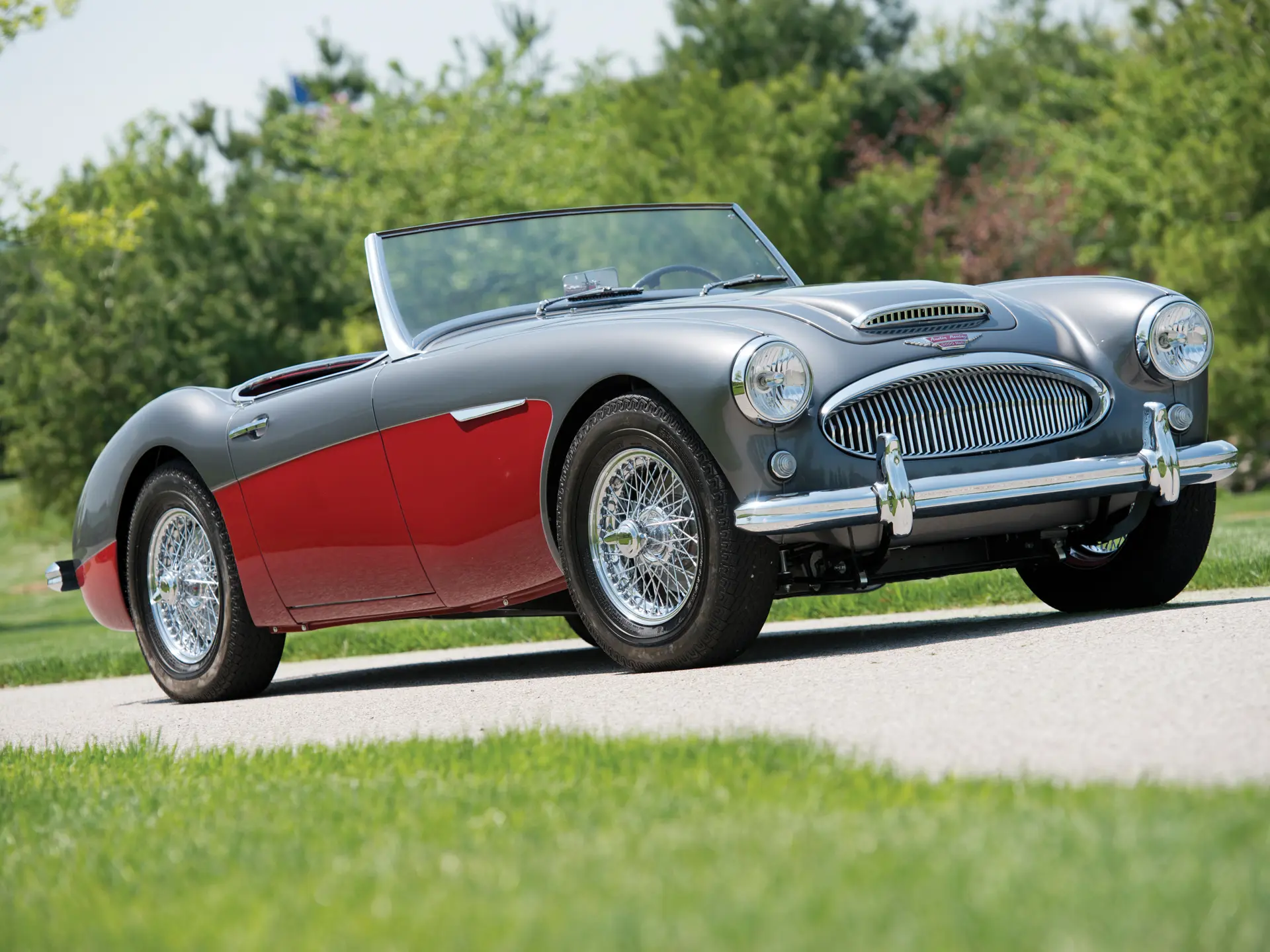
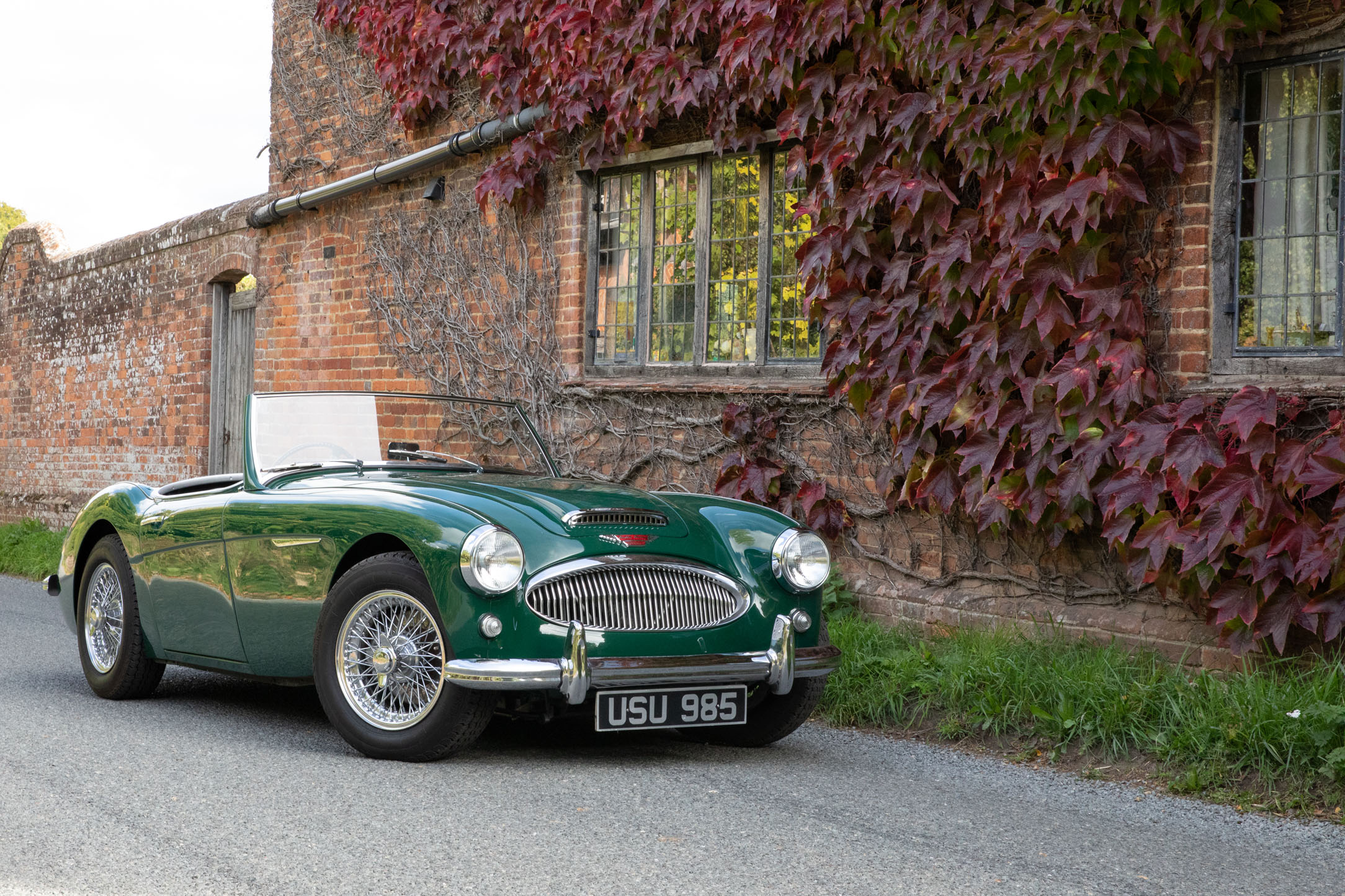
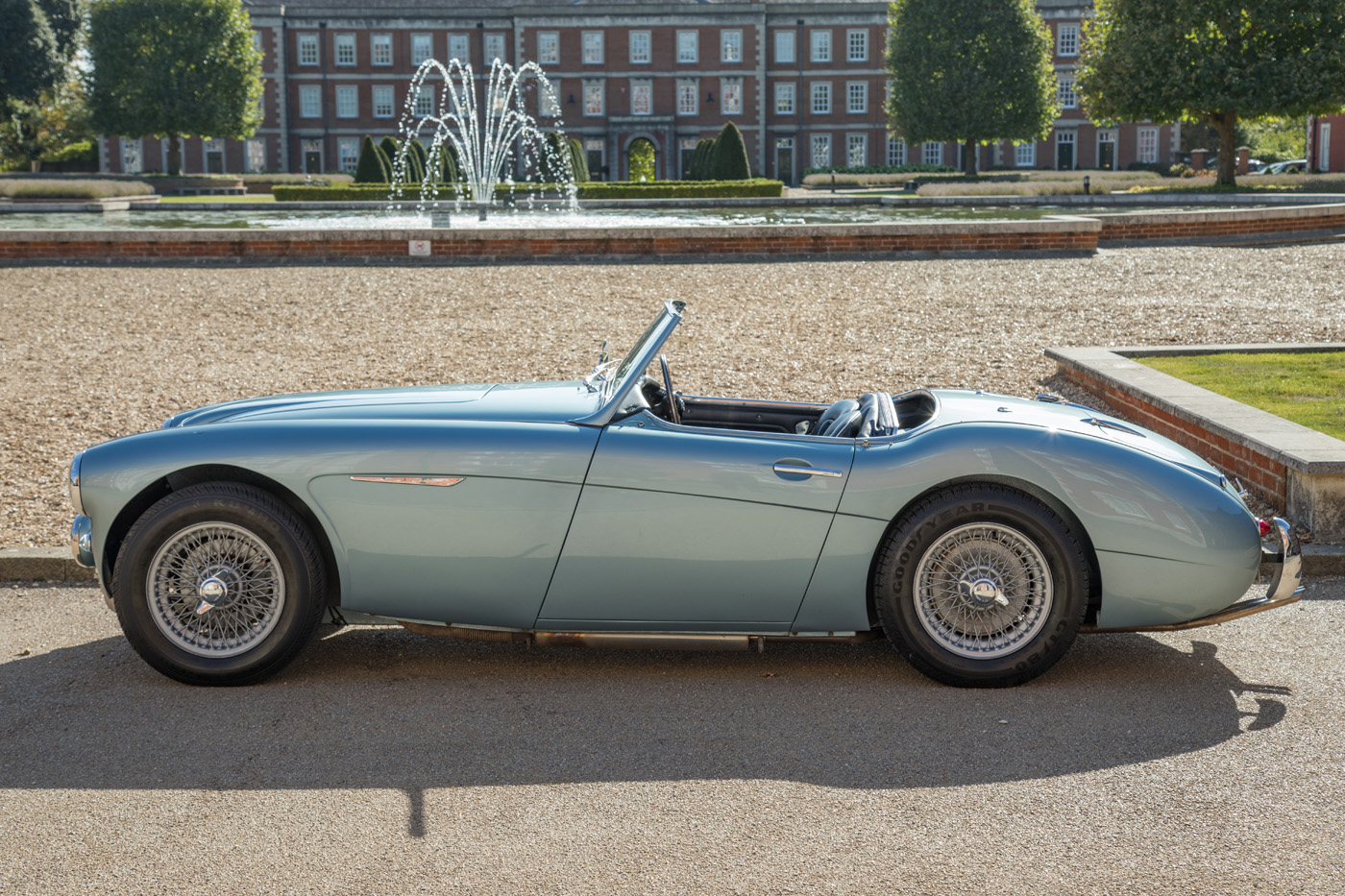
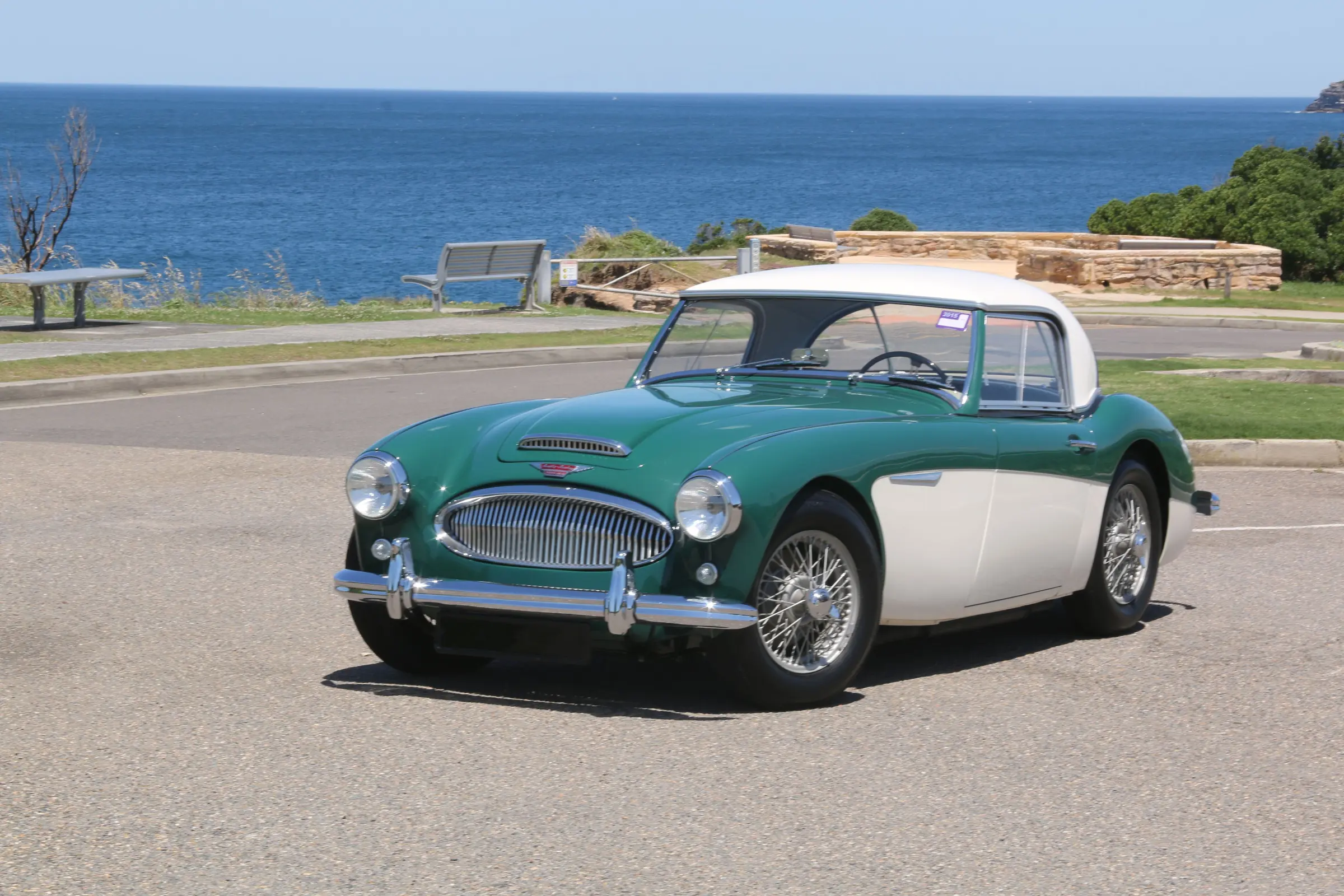
The year 1961 was a watershed moment for the British sports car industry. Jaguar had just dropped the atomic bomb that was the E-Type, and Triumph was preparing to unleash the sharp-suited, Michelotti-penned TR4. Over at Abingdon, the British Motor Corporation realized that their beloved Austin-Healey 3000 needed a shot of adrenaline to remain a formidable contender in the lucrative American export market and on the grueling European rally stages. The answer was the Austin-Healey 3000 Mark II. However, within this generation lies a specific, fleeting, and highly coveted submodel that represents the absolute purist peak of the lineage: the two-seater BN7. While the vast majority of buyers opted for the more practical BT7 2+2 variant, the BN7 was a strict, uncompromised roadster. It was the final chapter in Donald Healey’s original two-seater vision, an elemental bruiser that traded passenger comfort for an aggressive, truncated rear deck and a lighter curb weight. Produced for scarcely a year between March 1961 and March 1962, the Mk II BN7 arrived to fight the Chevrolet Corvette C1 on the boulevards of California and the Morgan Plus 4 on the B-roads of Britain, armed with a mechanical upgrade that would become the stuff of both legend and infamy.
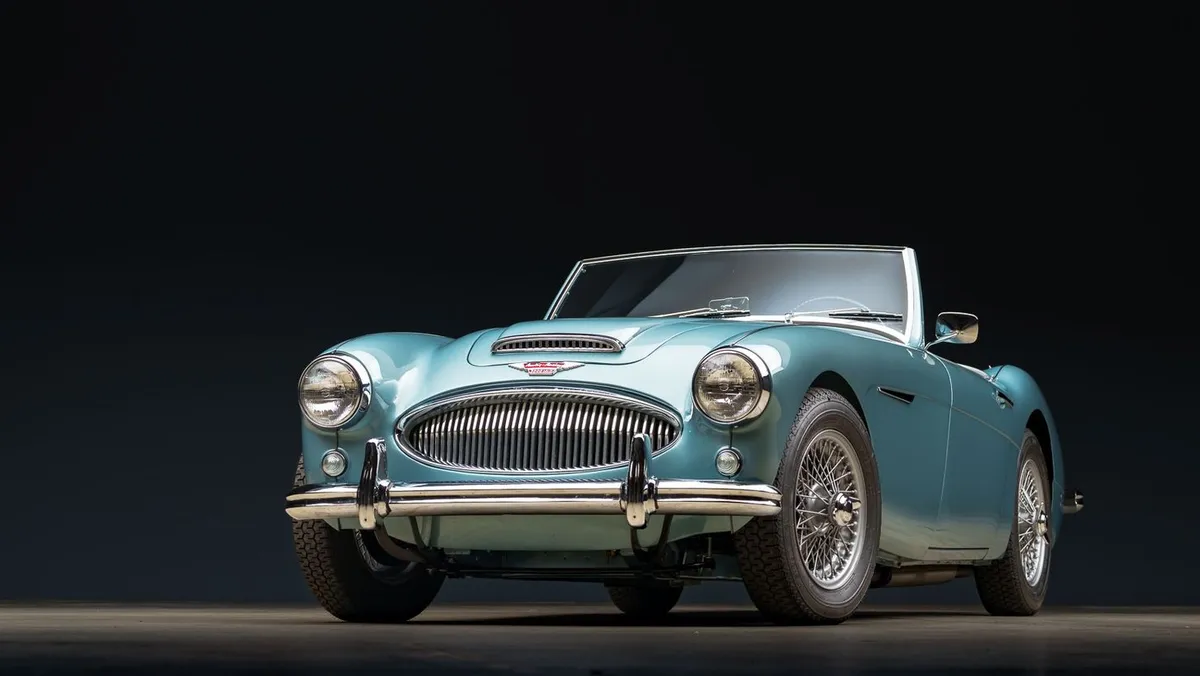
To lift the long, louvered bonnet of the Mk II BN7 is to witness the absolute mechanical centerpiece of this specific generation: a bank of three SU HS4 carburetors. The 2,912cc C-Series inline-six engine had been carried over from the Mark I, but BMC’s Competitions Department desperately needed better high-rpm breathing to keep the works rally cars competitive against the rising threat of Porsche and Alfa Romeo. The solution was to homologate the triple-carburetor setup on the production cars. This modification bumped the street car’s output to a very healthy 132 brake horsepower and 167 lb-ft of torque. When the throttle was pinned, those three carburetors inhaled with a deep, percussive roar that sounded like tearing calico, propelling the BN7 to 60 mph in under 11 seconds. Aesthetically, the Mk II was subtly refined; Gerry Coker’s masterful sweeping lines were retained, but the front fascia was modernized with a new grille featuring vertical bars instead of horizontal slats. Beneath the skin, the chassis remained a heavy, traditional ladder-frame setup equipped with independent front coil springs, a live rear axle on leaf springs, and Girling disc brakes at the front. Inside, the BN7 was unashamedly archaic. It retained the traditional, drafty side-screens and the complex, knuckle-busting fold-away weather gear. There were no roll-up windows or wrap-around windscreens here; the driver sat low, gripping a large steering wheel, immersed entirely in the elements and the mechanical symphony of the straight-six.
On the street, the BN7 Mk II’s history is defined by its magnificent rarity and its notoriously temperamental nature. Out of over 5,000 early Mark IIs built, a mere 355 were the BN7 two-seater variant. The American market, which consumed over 90 percent of Healey production, overwhelmingly preferred the 2+2 configuration for insurance purposes and perceived practicality. Thus, the BN7 became the connoisseur’s choice, bought by weekend club racers who wanted the lightest, stiffest shell available to exploit the new triple-carburetor power. However, that power came with a heavy caveat. Balancing and tuning three SU carburetors proved to be an absolute nightmare for the average local mechanic. While factory-trained BMC mechanics could make the setup sing flawlessly, the average owner often suffered from rough idling, poor fuel economy, and fouled spark plugs. This tuning headache was so pronounced that BMC executives executed a rapid mid-cycle pivot, replacing the early Mk II (BN7 and BT7) with the BJ7 in 1962, which reverted to a much friendlier twin-carburetor setup and finally introduced roll-up windows, simultaneously killing off the two-seater body style forever.
The legacy of the Austin-Healey 3000 Mk II BN7 is uniquely exalted among collectors and driving purists. It is the holy grail of the “Big Healey” lineage. It marks the exact inflection point in the model’s history—the final moment before the sports car yielded to the grand tourer. After the BN7, all subsequent Healeys (the BJ7 and the luxurious Mk III BJ8) were heavier 2+2s equipped with modern conveniences that diluted the raw, wind-in-the-teeth roadster ethos. The BN7 Mk II possesses the beautiful, uncorrupted early body lines, the traditional side-screens, and the glorious, race-bred fury of the triple-carburetor engine. It is the ultimate expression of the hairy-chested British sports car, an incredibly rare, demanding, and utterly rewarding machine that represents the brilliant, brutal twilight of the traditional two-seater Austin-Healey.
Brand
Produced from
Portal
Vehicle category
Model line
Predecessor
Sucessor
Brand
Produced from
Portal
Vehicle category
Model line
Model generation
Predecessor
Sucessor
Submodel Overview
The year 1961 was a watershed moment for the British sports car industry. Jaguar had just dropped the atomic bomb that was the E-Type, and Triumph was preparing to unleash the sharp-suited, Michelotti-penned TR4. Over at Abingdon, the British Motor Corporation realized that their beloved Austin-Healey 3000 needed a shot of adrenaline to remain a formidable contender in the lucrative American export market and on the grueling European rally stages. The answer was the Austin-Healey 3000 Mark II. However, within this generation lies a specific, fleeting, and highly coveted submodel that represents the absolute purist peak of the lineage: the two-seater BN7. While the vast majority of buyers opted for the more practical BT7 2+2 variant, the BN7 was a strict, uncompromised roadster. It was the final chapter in Donald Healey’s original two-seater vision, an elemental bruiser that traded passenger comfort for an aggressive, truncated rear deck and a lighter curb weight. Produced for scarcely a year between March 1961 and March 1962, the Mk II BN7 arrived to fight the Chevrolet Corvette C1 on the boulevards of California and the Morgan Plus 4 on the B-roads of Britain, armed with a mechanical upgrade that would become the stuff of both legend and infamy.
To lift the long, louvered bonnet of the Mk II BN7 is to witness the absolute mechanical centerpiece of this specific generation: a bank of three SU HS4 carburetors. The 2,912cc C-Series inline-six engine had been carried over from the Mark I, but BMC’s Competitions Department desperately needed better high-rpm breathing to keep the works rally cars competitive against the rising threat of Porsche and Alfa Romeo. The solution was to homologate the triple-carburetor setup on the production cars. This modification bumped the street car’s output to a very healthy 132 brake horsepower and 167 lb-ft of torque. When the throttle was pinned, those three carburetors inhaled with a deep, percussive roar that sounded like tearing calico, propelling the BN7 to 60 mph in under 11 seconds. Aesthetically, the Mk II was subtly refined; Gerry Coker’s masterful sweeping lines were retained, but the front fascia was modernized with a new grille featuring vertical bars instead of horizontal slats. Beneath the skin, the chassis remained a heavy, traditional ladder-frame setup equipped with independent front coil springs, a live rear axle on leaf springs, and Girling disc brakes at the front. Inside, the BN7 was unashamedly archaic. It retained the traditional, drafty side-screens and the complex, knuckle-busting fold-away weather gear. There were no roll-up windows or wrap-around windscreens here; the driver sat low, gripping a large steering wheel, immersed entirely in the elements and the mechanical symphony of the straight-six.
On the street, the BN7 Mk II’s history is defined by its magnificent rarity and its notoriously temperamental nature. Out of over 5,000 early Mark IIs built, a mere 355 were the BN7 two-seater variant. The American market, which consumed over 90 percent of Healey production, overwhelmingly preferred the 2+2 configuration for insurance purposes and perceived practicality. Thus, the BN7 became the connoisseur’s choice, bought by weekend club racers who wanted the lightest, stiffest shell available to exploit the new triple-carburetor power. However, that power came with a heavy caveat. Balancing and tuning three SU carburetors proved to be an absolute nightmare for the average local mechanic. While factory-trained BMC mechanics could make the setup sing flawlessly, the average owner often suffered from rough idling, poor fuel economy, and fouled spark plugs. This tuning headache was so pronounced that BMC executives executed a rapid mid-cycle pivot, replacing the early Mk II (BN7 and BT7) with the BJ7 in 1962, which reverted to a much friendlier twin-carburetor setup and finally introduced roll-up windows, simultaneously killing off the two-seater body style forever.
The legacy of the Austin-Healey 3000 Mk II BN7 is uniquely exalted among collectors and driving purists. It is the holy grail of the “Big Healey” lineage. It marks the exact inflection point in the model’s history—the final moment before the sports car yielded to the grand tourer. After the BN7, all subsequent Healeys (the BJ7 and the luxurious Mk III BJ8) were heavier 2+2s equipped with modern conveniences that diluted the raw, wind-in-the-teeth roadster ethos. The BN7 Mk II possesses the beautiful, uncorrupted early body lines, the traditional side-screens, and the glorious, race-bred fury of the triple-carburetor engine. It is the ultimate expression of the hairy-chested British sports car, an incredibly rare, demanding, and utterly rewarding machine that represents the brilliant, brutal twilight of the traditional two-seater Austin-Healey.
Tech Specs
Technical Specifications
Tech Specs
Technical Specifications
Engine
01
03
Internal combustion engine
Configuration
Inline-6
Location
Front, longitudinally mounted
Construction
Cast-iron block and aluminium alloy head
Displacement (cc)
2,901 cc
Displacement (cu in)
177 cu in
Compression
9.0:1
Bore x Stroke
83.36 mm x 88.9 mm
Valvetrain
2 valves per cylinder, OHV
Fuel feed
3 SU Carburettors
Lubrication
Wet sump
Aspiration
Naturally aspirated
Output
Power (hp)
132 hp
Power (kW)
99 kW
Max power at
4,750 RPM
Torque (Nm)
226 Nm
Torque (ft lbs)
166 ft lbs
Max torque at
4,750 RPM
Drivetrain
02
03
Chassis
Type
Tubular spaceframe
Material
Steel
Body
Material
Aluminium panels
Transmission
Gearbox
6-speed sequential
Drive
Front Wheel Drive
Suspension
Front
Coil springs over shock absorbers, anti-roll bar
Rear
Rigid axle, semi-elliptic leaf springs, shock absorbers
Steering
Type
Cam-and-peg
Brakes
Front
Discs
Rear
Drums
Wheels
Front
-
Rear
-
Tires
Front
-
Rear
-
Dimensions and performance
03
03
Dimensions
Length (mm)
4,001 mm
Length (in)
157 in
Width (mm)
1,537 mm
Width (in)
60.5 in
Height (mm)
1,270 mm
Height (in)
50 in
Wheelbase (mm)
2,337 mm
Wheelbase (in)
92 in
Weight (kg)
1,158 kg
Weight (lbs)
2,553 lbs
Performance
Power to weight
0.11 hp/kg
Top speed (km/h)
185 km/h
Top speed (mph)
115 mph
0-100 km/h (0-60 mph)
11 s