
Ford Cortina Lotus Group 2
Brand
Produced from
Portal
Model line
Model generation
Predecessor
Successor
Submodel Overview
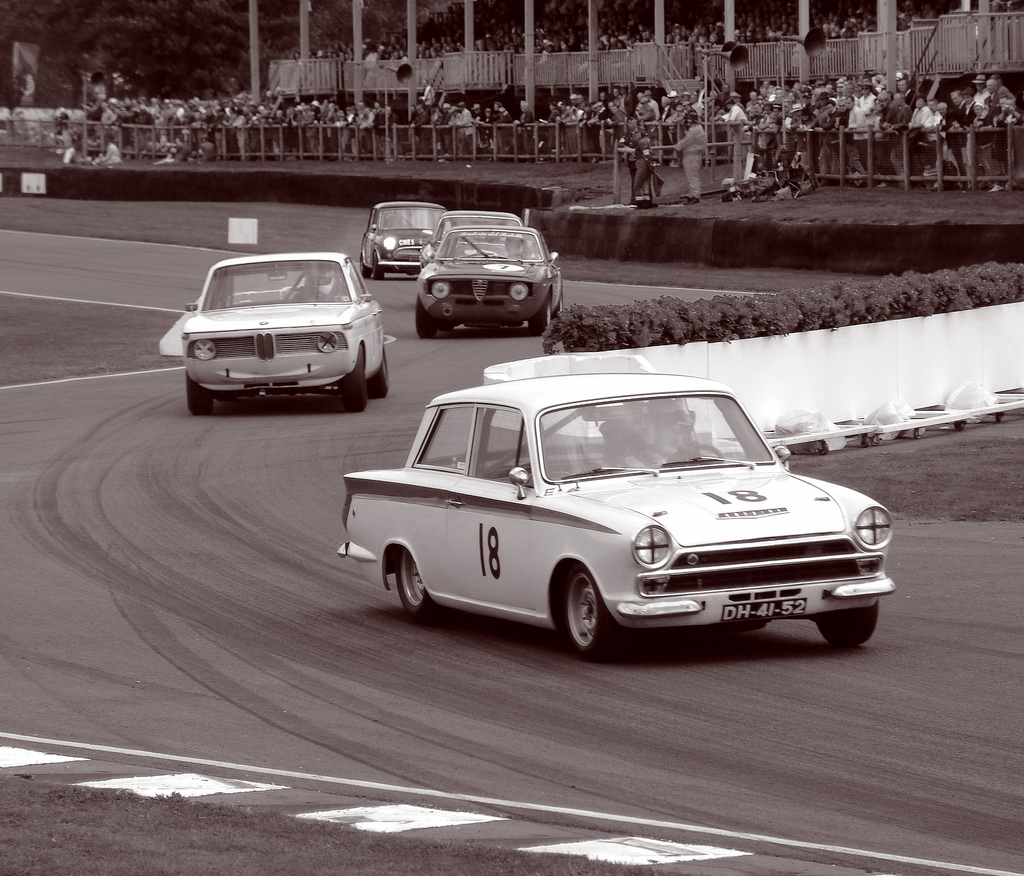
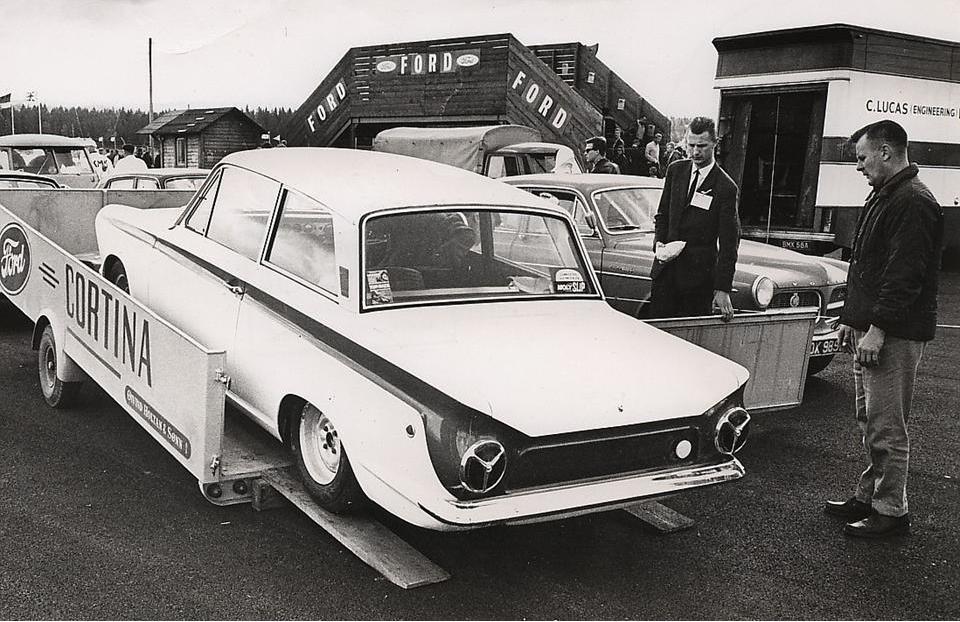
The arrival of the 1963 Ford Cortina Lotus Group 2 was not merely the launch of a new racing saloon; it was a cultural collision that permanently altered the DNA of motorsport. It represented the moment when the pragmatic, mass-production might of Dagenham shook hands with the obsessive, lightweight engineering genius of Cheshunt. Before this machine emerged, touring car racing was a polarized affair, dominated either by lumbering, large-displacement Jaguars and American V8s or the frenetic, buzzing swarm of Mini Coopers. The Lotus Cortina—homologated as the “Consul Cortina Sports Special”—bridged this divide with terrifying effectiveness. It took the silhouette of Britain’s favourite sales rep saloon and injected it with the soul of a Formula 1 car, creating a vehicle that was accessible enough to be recognized by the public, yet exotic enough to be driven by World Champions. Its direct rivals, the sophisticated Alfa Romeo Giulia Ti Super and the steadfast BMW 1800 TiSA, were formidable, but neither possessed the sheer star power or the visual drama of the Ford.
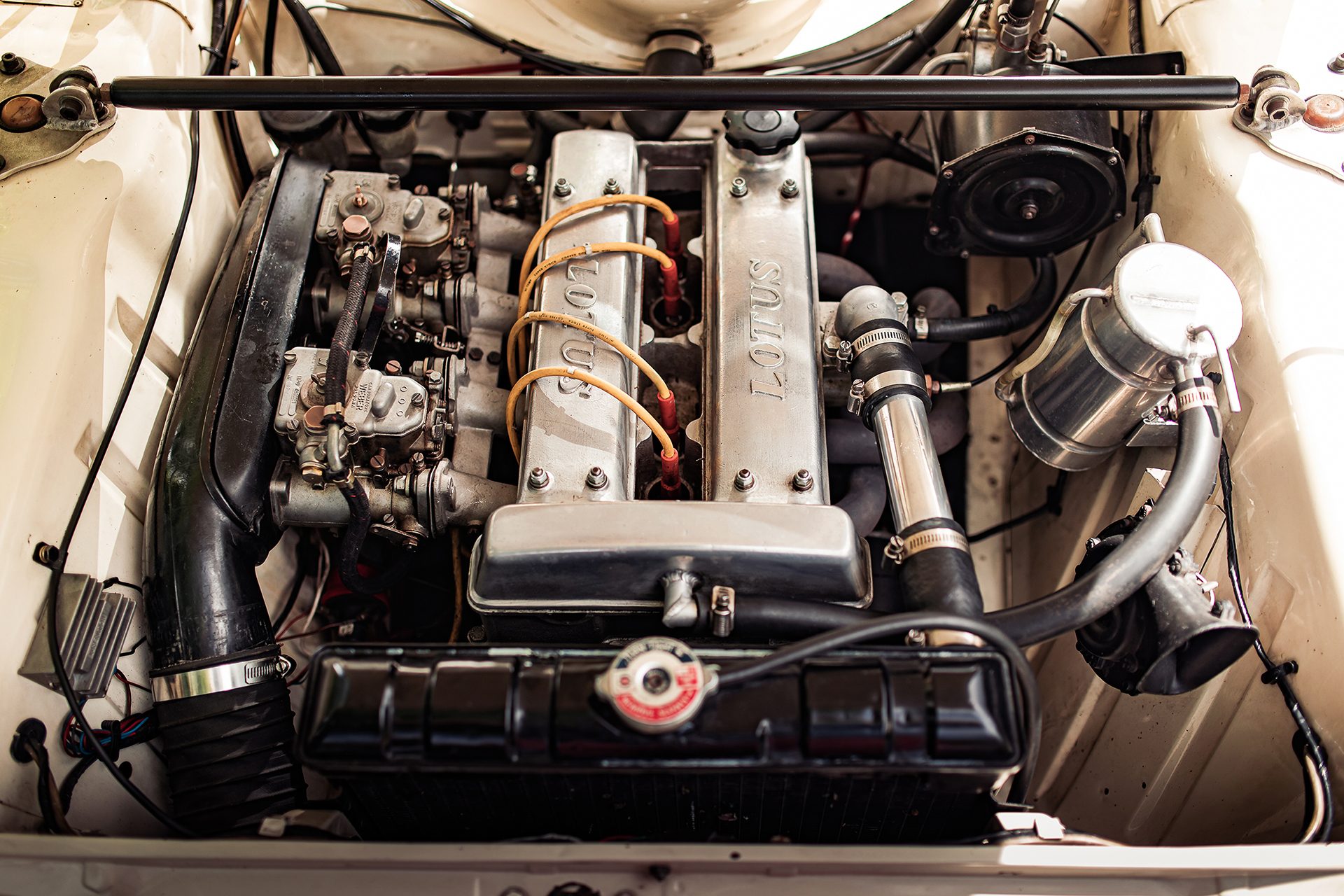
To create this Group 2 weapon, Colin Chapman’s Lotus engineers took the standard two-door Cortina shell and subjected it to a rigorous diet and a radical transplant. The steel doors, bonnet, and boot lid were replaced with featherweight aluminium alloy panels, a modification specific to the early homologation cars that is highly prized today. Under the hood sat the defining masterpiece of the era: the 1,558cc Lotus Twin Cam engine. Based on a Ford block but topped with a Harry Mundy-designed dual-overhead-cam cylinder head, this engine breathed through twin Weber 40 DCOE carburettors. In race trim, with Cosworth tuning, it punched out over 145 bhp at a screaming 7,500 rpm. This power was fed through the close-ratio gearbox of the Lotus Elan to a rear end that was unique to the Type 28. The standard leaf springs were discarded in favor of coil springs and trailing arms, located by an A-bracket bolted to the differential casing. This setup was notoriously fragile but geometrically superior, allowing the car to find traction where others found only wheelspin.
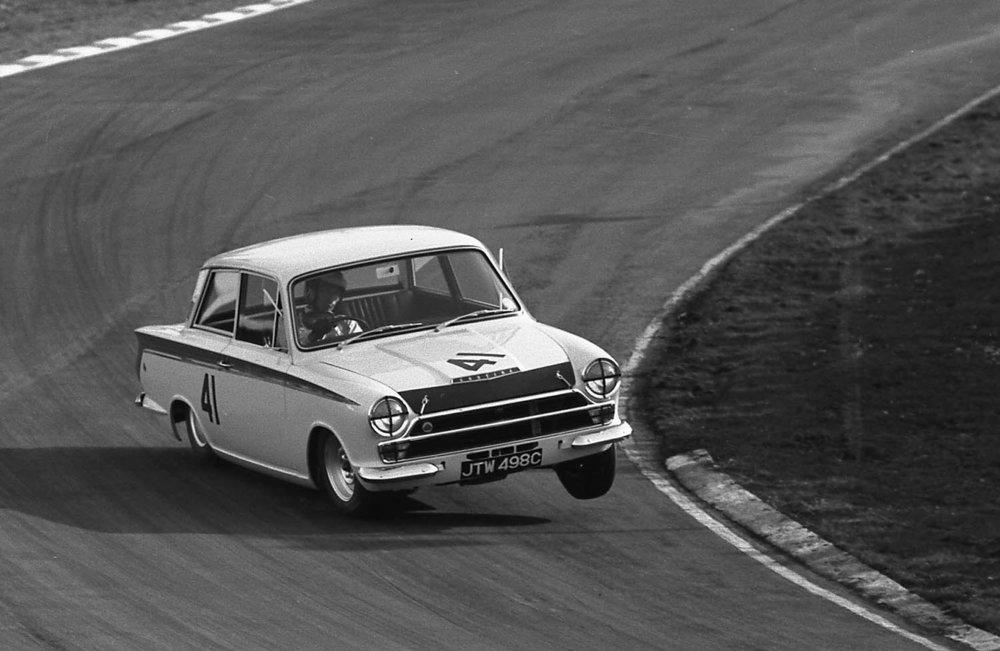
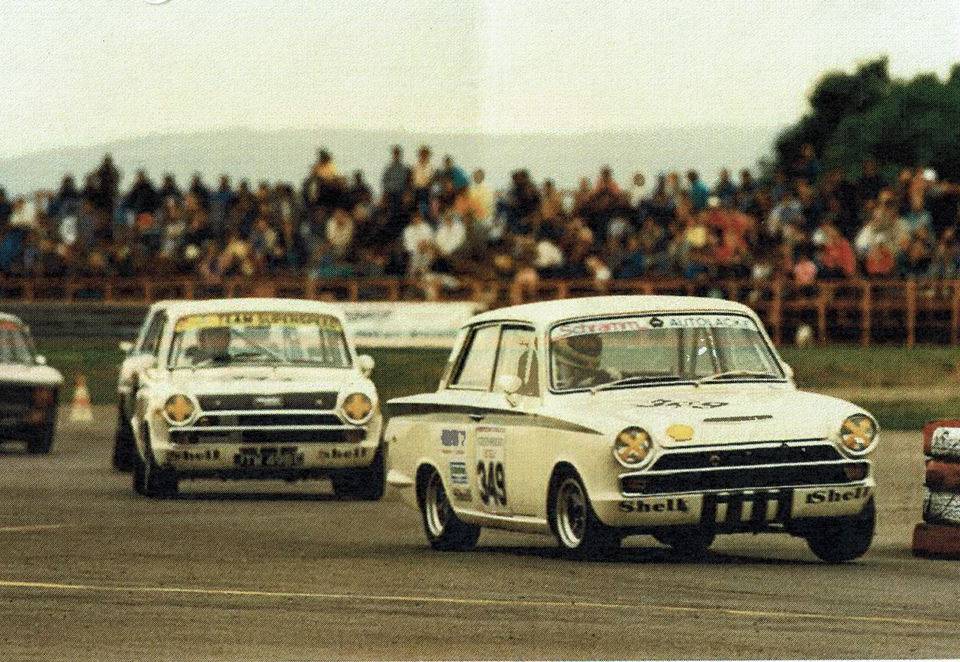
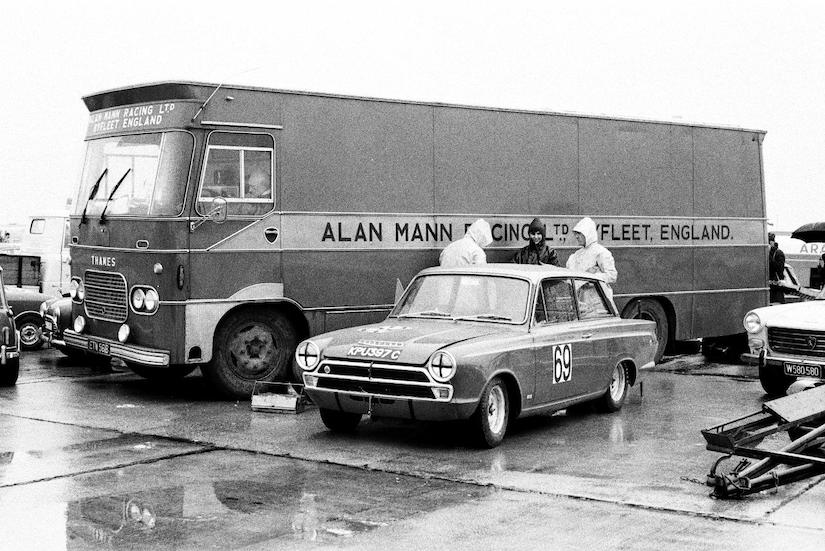
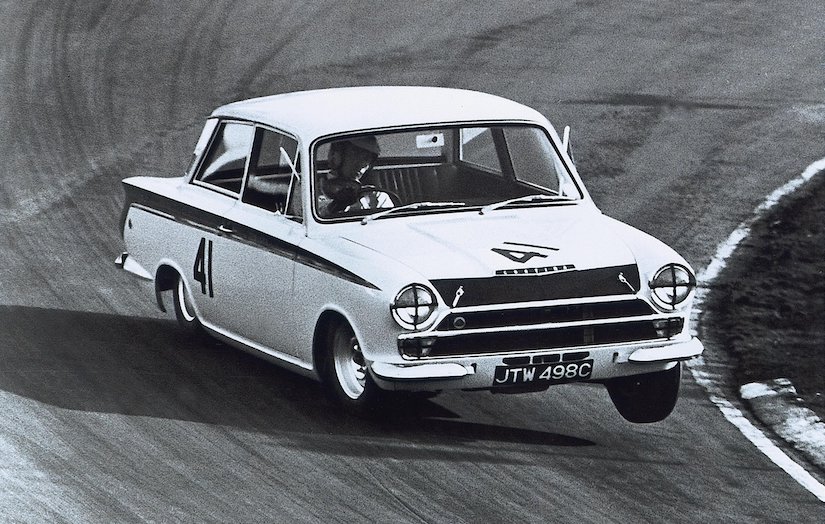
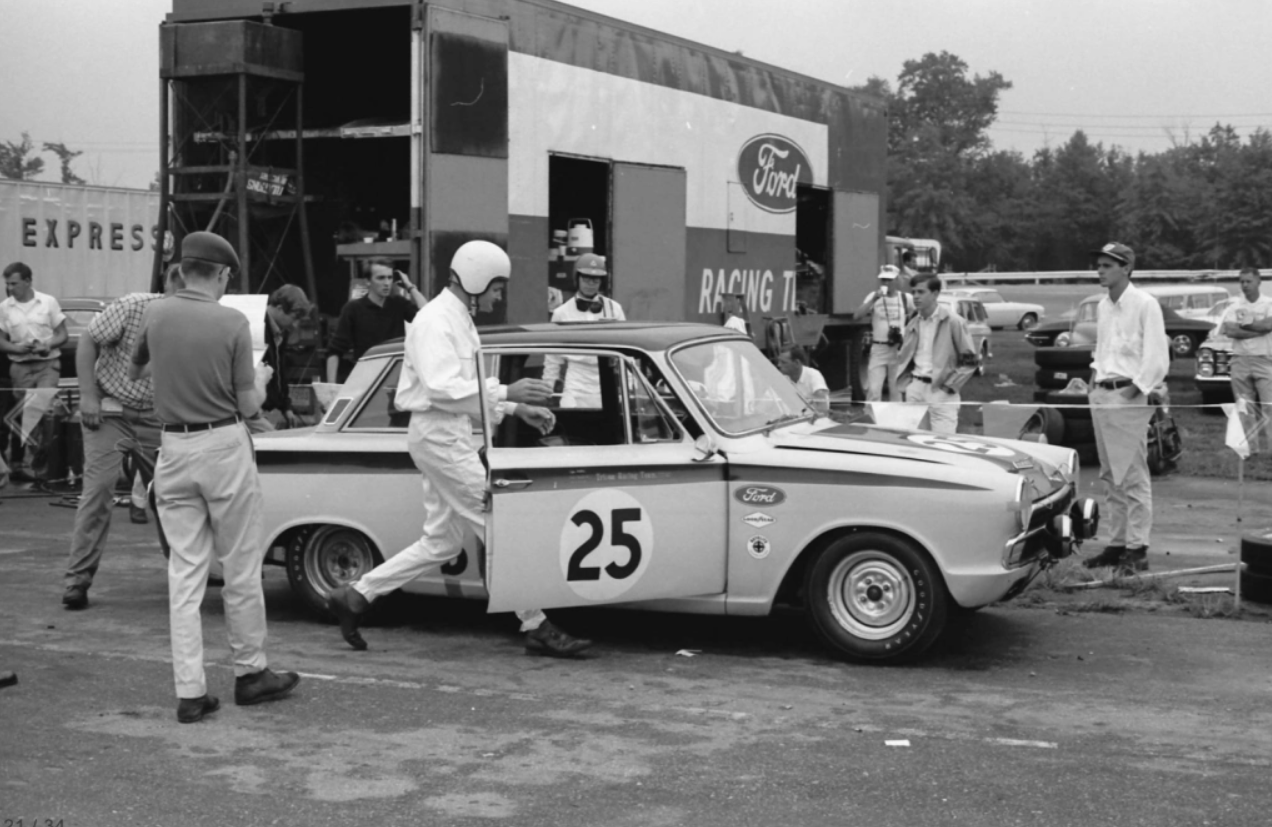
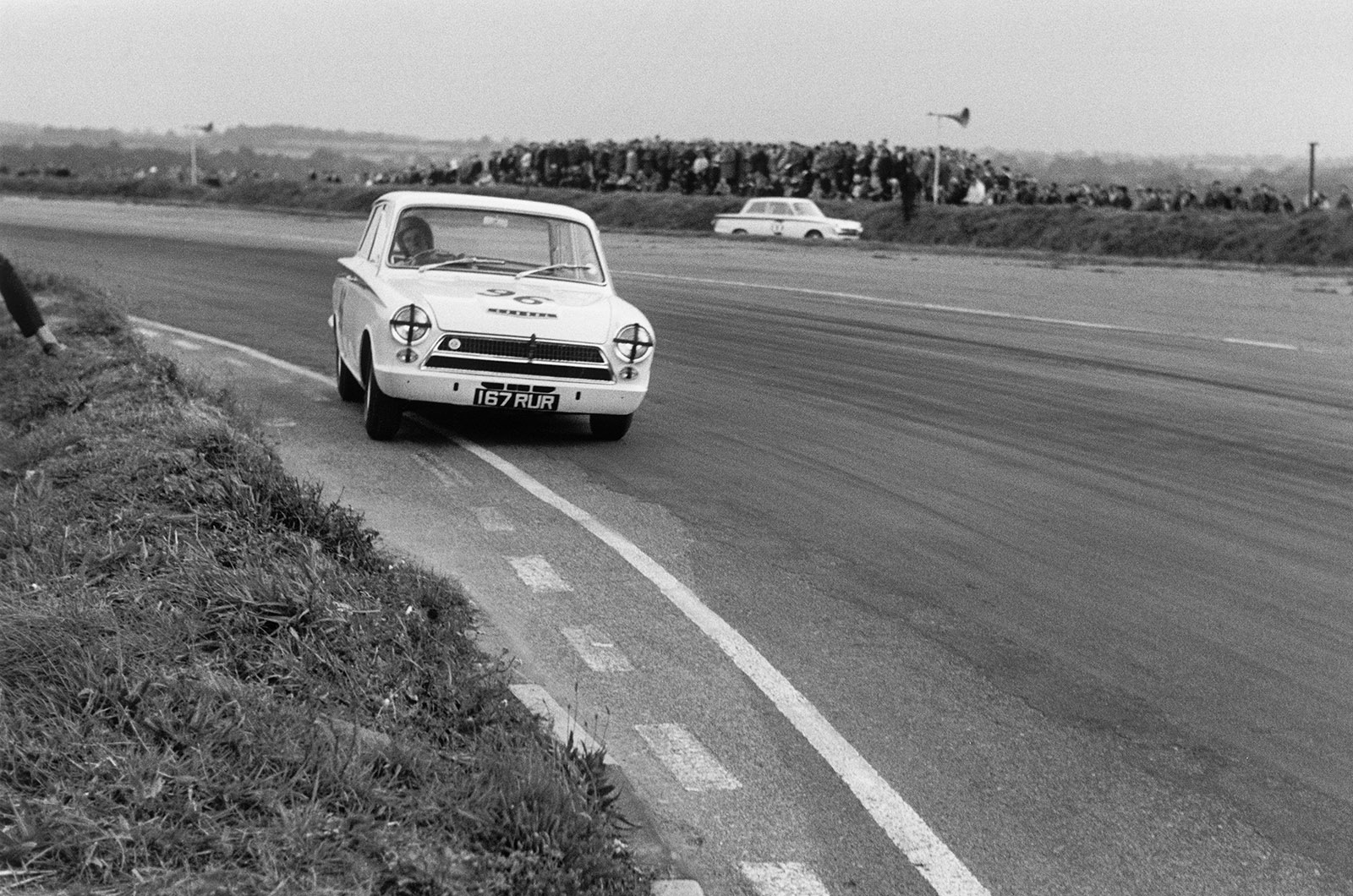
The competition history of the Cortina Lotus Group 2 is a montage of tire smoke, glorious induction roar, and gravity-defying cornering attitudes. In the hands of the legendary Jim Clark, the car transcended mechanical function to become a ballet partner. Clark’s signature driving style—cornering with the inside front wheel dangled a foot in the air while the rear end squatted and gripped—became the enduring image of 1960s touring car racing. The car dominated the British Saloon Car Championship (BSCC) in 1964, securing the title for Clark and proving that a four-cylinder car could humiliate the 7.0-liter Ford Galaxies on tight circuits like Crystal Palace or Brands Hatch. On the continent, under the banner of Alan Mann Racing (painted in iconic red and gold), the Cortina conquered the European Touring Car Championship in 1965 with Sir John Whitmore, winning virtually every race it entered. It wasn’t just a circuit racer; the car’s rugged shell allowed it to compete in rallies, finding success in the Alpine and RAC rallies, proving that its fragile rear suspension could, with modification, handle the roughest terrain.
The legacy of the 1963 Cortina Lotus Group 2 is foundational. It established the blueprint for the “Fast Ford,” a lineage that runs directly through the Escort RS1600, the Sierra Cosworth, and the Focus RS. It democratized high-performance engineering, proving that a family sedan could share DNA with a Grand Prix winner. While later versions reverted to leaf springs and steel panels to cut costs and improve reliability, the purity of the early A-frame, alloy-bodied Group 2 cars remains the zenith of the breed. It stands in the pantheon of automobilia as the ultimate “Q-car,” a white-and-green wolf in sheep’s clothing that taught the world to respect the Blue Oval.
Brand
Produced from
Portal
Model line
Predecessor
Sucessor
Brand
Produced from
Portal
Model line
Model generation
Predecessor
Sucessor
Submodel Overview
The arrival of the 1963 Ford Cortina Lotus Group 2 was not merely the launch of a new racing saloon; it was a cultural collision that permanently altered the DNA of motorsport. It represented the moment when the pragmatic, mass-production might of Dagenham shook hands with the obsessive, lightweight engineering genius of Cheshunt. Before this machine emerged, touring car racing was a polarized affair, dominated either by lumbering, large-displacement Jaguars and American V8s or the frenetic, buzzing swarm of Mini Coopers. The Lotus Cortina—homologated as the “Consul Cortina Sports Special”—bridged this divide with terrifying effectiveness. It took the silhouette of Britain’s favourite sales rep saloon and injected it with the soul of a Formula 1 car, creating a vehicle that was accessible enough to be recognized by the public, yet exotic enough to be driven by World Champions. Its direct rivals, the sophisticated Alfa Romeo Giulia Ti Super and the steadfast BMW 1800 TiSA, were formidable, but neither possessed the sheer star power or the visual drama of the Ford.
To create this Group 2 weapon, Colin Chapman’s Lotus engineers took the standard two-door Cortina shell and subjected it to a rigorous diet and a radical transplant. The steel doors, bonnet, and boot lid were replaced with featherweight aluminium alloy panels, a modification specific to the early homologation cars that is highly prized today. Under the hood sat the defining masterpiece of the era: the 1,558cc Lotus Twin Cam engine. Based on a Ford block but topped with a Harry Mundy-designed dual-overhead-cam cylinder head, this engine breathed through twin Weber 40 DCOE carburettors. In race trim, with Cosworth tuning, it punched out over 145 bhp at a screaming 7,500 rpm. This power was fed through the close-ratio gearbox of the Lotus Elan to a rear end that was unique to the Type 28. The standard leaf springs were discarded in favor of coil springs and trailing arms, located by an A-bracket bolted to the differential casing. This setup was notoriously fragile but geometrically superior, allowing the car to find traction where others found only wheelspin.
The competition history of the Cortina Lotus Group 2 is a montage of tire smoke, glorious induction roar, and gravity-defying cornering attitudes. In the hands of the legendary Jim Clark, the car transcended mechanical function to become a ballet partner. Clark’s signature driving style—cornering with the inside front wheel dangled a foot in the air while the rear end squatted and gripped—became the enduring image of 1960s touring car racing. The car dominated the British Saloon Car Championship (BSCC) in 1964, securing the title for Clark and proving that a four-cylinder car could humiliate the 7.0-liter Ford Galaxies on tight circuits like Crystal Palace or Brands Hatch. On the continent, under the banner of Alan Mann Racing (painted in iconic red and gold), the Cortina conquered the European Touring Car Championship in 1965 with Sir John Whitmore, winning virtually every race it entered. It wasn’t just a circuit racer; the car’s rugged shell allowed it to compete in rallies, finding success in the Alpine and RAC rallies, proving that its fragile rear suspension could, with modification, handle the roughest terrain.
The legacy of the 1963 Cortina Lotus Group 2 is foundational. It established the blueprint for the “Fast Ford,” a lineage that runs directly through the Escort RS1600, the Sierra Cosworth, and the Focus RS. It democratized high-performance engineering, proving that a family sedan could share DNA with a Grand Prix winner. While later versions reverted to leaf springs and steel panels to cut costs and improve reliability, the purity of the early A-frame, alloy-bodied Group 2 cars remains the zenith of the breed. It stands in the pantheon of automobilia as the ultimate “Q-car,” a white-and-green wolf in sheep’s clothing that taught the world to respect the Blue Oval.
Tech Specs
Technical Specifications
Tech Specs
Technical Specifications
Engine
01
03
Internal combustion engine
Configuration
Lotus-Ford Twin Cam, Inline-4
Location
Front, longitudinally mounted
Construction
Cast iron block (Ford 116E), Aluminium alloy head (Lotus)
Displacement (cc)
1,558 cc
Displacement (cu in)
95.1 cu in
Compression
11.5:1
Bore x Stroke
82.55 mm x 72.75 mm
Valvetrain
2 valves per cylinder, DOHC (Chain driven)
Fuel feed
2 x Weber 45 DCOE carburetors
Lubrication
Wet sump (Baffled for racing)
Aspiration
Naturally aspirated
Output
Power (hp)
150 hp
Power (kW)
~110 kW
Max power at
7,000 RPM
Torque (Nm)
~165 Nm
Torque (ft lbs)
~122 ft lbs
Max torque at
5,500 RPM
Drivetrain
02
03
Chassis
Type
Monocoque unibody
Material
Steel
Body
Material
Steel shell with Aluminium opening panels (Doors, Bonnet, Boot lid)
Transmission
Gearbox
Ford/Lotus Elan, 4-speed manual
Drive
Rear Wheel Drive (Limited Slip Differential)
Suspension
Front
Independent, MacPherson struts, coil springs, anti-roll bar, adjustable dampers
Rear
Live axle, A-bracket (A-frame) location, trailing arms, coil springs, telescopic dampers
Steering
Type
Recirculating ball (Burman) - Often replaced with Rack and Pinion in later evolutions
Brakes
Front
Girling solid discs Ø241 mm (9.5 in), 3-piston calipers
Rear
Drum brakes Ø229 mm (9.0 in)
Wheels
Front
5.5" x 13" (Steel or Magnesium Minilite)
Rear
5.5" x 13" (Steel or Magnesium Minilite)
Tires
Front
165/80 R13
Rear
165/80 R13
Dimensions and performance
03
03
Dimensions
Length (mm)
4,267 mm
Length (in)
168.0 in
Width (mm)
1,588 mm
Width (in)
62.5 in
Height (mm)
1,370 mm
Height (in)
53.9 in
Wheelbase (mm)
2,489 mm
Wheelbase (in)
98.0 in
Weight (kg)
750 kg
Weight (lbs)
1,653 lbs
Performance
Power to weight
~0.20 hp/kg
Top speed (km/h)
200 km/h
Top speed (mph)
124 mph
0-100 km/h (0-60 mph)
~7.5 s