
Crosslé 9S BMW M10
Brand
Produced from
Portal
Vehicle category
Model line
Predecessor
Successor
Submodel Overview
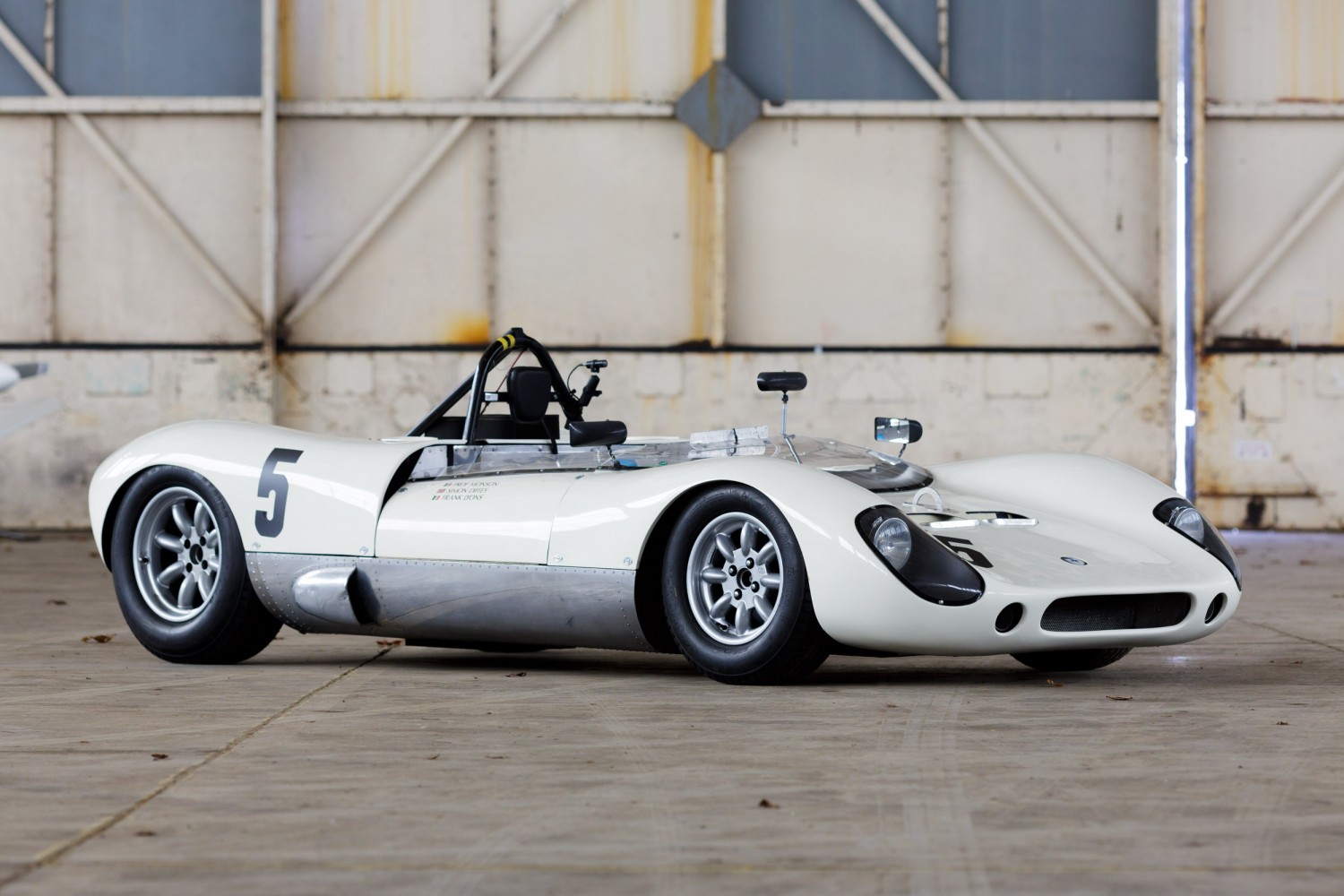
In the mid-1960s, the 2.0-litre sports car class was the crucible of European motorsport, a fiercely contested proving ground where the established hierarchy of Porsche and Abarth faced a rising tide of British “garagiste” ingenuity. Amidst this technological arms race, a small constructor from Holywood, Northern Ireland, unveiled a machine that would become a legend not just for its speed, but for its sheer, undeniable beauty. This was the Crosslé 9S. While the Lotus Twin Cam-powered versions were nimble scalpels, the definitive weapon in John Crosslé’s arsenal was the 1966 Crosslé 9S BMW M10. It was a car that combined the robust, torque-rich heart of Bavaria with the compliant, road-racing soul of Ulster, creating a package that punched spectacularly above its weight.
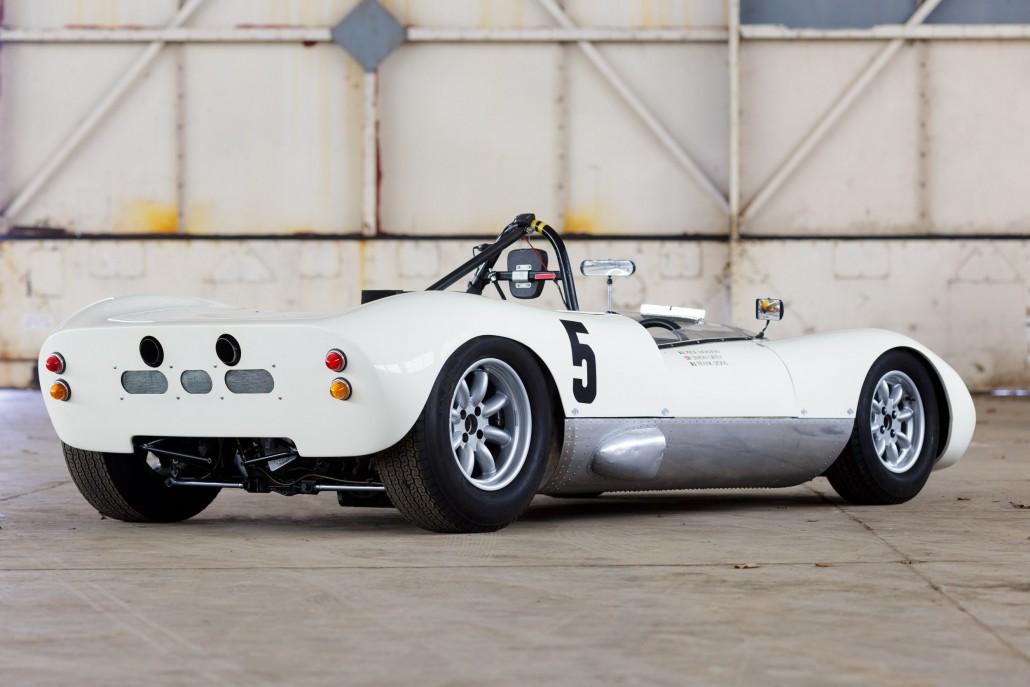
The 9S was born into a world dominated by the Lotus 23B, a car of fragile brilliance. John Crosslé, a pragmatic engineer who cut his teeth on the unforgiving, bumpy road circuits of Ireland, believed he could build something better: a car that was just as fast, but infinitely stronger. The chassis of the 9S was a testament to this philosophy. It was a complex, bronze-welded tubular steel spaceframe, a work of structural art that offered significantly more torsional rigidity than the Lotus “bathtub”. This robust skeleton was clothed in a fibreglass body of breathtaking elegance. With its voluptuous wheel arches, low-slung nose, and sweeping Kamm tail, it eschewed the brutalist function of later prototypes for a fluid, organic shape that remains one of the most aesthetically pleasing designs of the era.
The decision to install the BMW M10 engine was a masterstroke of foresight. In 1966, the M10 was relatively new to the sports car scene, having made its name in the “Neue Klasse” saloons. However, Crosslé recognized its potential as a racing unit. Tilted over at 30 degrees to fit beneath the 9S’s low rear deck, the 2.0-litre (1,990cc) four-cylinder engine was a revelation. Tuned with high-compression pistons, a hotter camshaft, and fed by twin Weber 45 DCOE carburettors (or occasionally Kugelfischer injection in later evolutions), it produced a reliable 170 to 190 bhp. This was more than the Twin Cams and, crucially, it delivered a mountain of mid-range torque. Mated to a robust Hewland MK9 or FT200 transaxle, this powertrain turned the 550kg 9S from a momentum car into a power car. It could haul itself out of tight hairpins with a ferocity that left smaller-engined rivals gasping, yet it possessed the reliability to run flat-out for hours without the fragility associated with highly strung Formula 2-derived units.
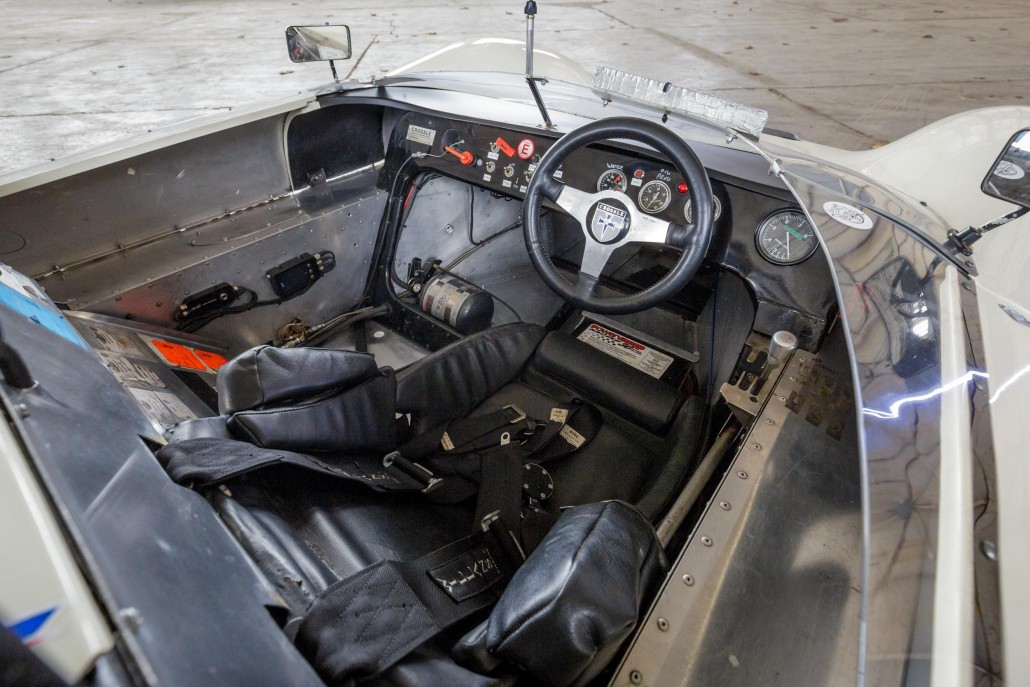
On the track, the Crosslé 9S BMW was a giant-killer. Its primary stomping grounds were the road circuits of Ireland and the club tracks of the UK, where the tarmac was rarely smooth. Here, the 9S’s sophisticated double-wishbone suspension and stiff chassis allowed it to absorb bumps that would unsettle a Porsche 906. In the hands of local legend Tommy Reid, the BMW-powered 9S was practically invincible. Reid decimated the opposition in the 1966 and 1967 seasons, setting lap records at Kirkistown and Bishopscourt that would stand for years. The car’s balance was sublime; it was a machine that could be drifted with precision, its chassis communicating every nuances of grip to the driver. While budget constraints prevented a full-scale assault on the European 2-Litre Championship against the factory teams, the 9S BMW proved on numerous occasions that it had the pace to run with the best in the world. It was a car that could be towed to the track on an open trailer, win the feature race against purpose-built prototypes, and be ready to do it all again the following weekend.
The legacy of the Crosslé 9S BMW M10 is enduring. It represents the high-water mark of the 1960s “Clubman” racer—a car built by a small team with a big heart and even bigger talent. It proved that the M10 engine was not just for touring cars, but a viable powerplant for a mid-engined sports racer. Today, the 9S BMW is more popular than ever. The “Continuation” cars built by the Crosslé factory in recent years often favour this engine specification for historic racing, validating John Crosslé’s original vision. To see and hear a 9S BMW today, sliding through a corner with its induction roar echoing off the barriers, is to witness the perfect synthesis of Irish chassis engineering and German motive power. It is a timeless icon, a car that remains as fast and as beautiful as the day it first rolled out of the Holywood workshops.
Brand
Produced from
Portal
Vehicle category
Model line
Predecessor
Sucessor
Brand
Produced from
Portal
Vehicle category
Model line
Model generation
Predecessor
Sucessor
Submodel Overview
In the mid-1960s, the 2.0-litre sports car class was the crucible of European motorsport, a fiercely contested proving ground where the established hierarchy of Porsche and Abarth faced a rising tide of British “garagiste” ingenuity. Amidst this technological arms race, a small constructor from Holywood, Northern Ireland, unveiled a machine that would become a legend not just for its speed, but for its sheer, undeniable beauty. This was the Crosslé 9S. While the Lotus Twin Cam-powered versions were nimble scalpels, the definitive weapon in John Crosslé’s arsenal was the 1966 Crosslé 9S BMW M10. It was a car that combined the robust, torque-rich heart of Bavaria with the compliant, road-racing soul of Ulster, creating a package that punched spectacularly above its weight.
The 9S was born into a world dominated by the Lotus 23B, a car of fragile brilliance. John Crosslé, a pragmatic engineer who cut his teeth on the unforgiving, bumpy road circuits of Ireland, believed he could build something better: a car that was just as fast, but infinitely stronger. The chassis of the 9S was a testament to this philosophy. It was a complex, bronze-welded tubular steel spaceframe, a work of structural art that offered significantly more torsional rigidity than the Lotus “bathtub”. This robust skeleton was clothed in a fibreglass body of breathtaking elegance. With its voluptuous wheel arches, low-slung nose, and sweeping Kamm tail, it eschewed the brutalist function of later prototypes for a fluid, organic shape that remains one of the most aesthetically pleasing designs of the era.
The decision to install the BMW M10 engine was a masterstroke of foresight. In 1966, the M10 was relatively new to the sports car scene, having made its name in the “Neue Klasse” saloons. However, Crosslé recognized its potential as a racing unit. Tilted over at 30 degrees to fit beneath the 9S’s low rear deck, the 2.0-litre (1,990cc) four-cylinder engine was a revelation. Tuned with high-compression pistons, a hotter camshaft, and fed by twin Weber 45 DCOE carburettors (or occasionally Kugelfischer injection in later evolutions), it produced a reliable 170 to 190 bhp. This was more than the Twin Cams and, crucially, it delivered a mountain of mid-range torque. Mated to a robust Hewland MK9 or FT200 transaxle, this powertrain turned the 550kg 9S from a momentum car into a power car. It could haul itself out of tight hairpins with a ferocity that left smaller-engined rivals gasping, yet it possessed the reliability to run flat-out for hours without the fragility associated with highly strung Formula 2-derived units.
On the track, the Crosslé 9S BMW was a giant-killer. Its primary stomping grounds were the road circuits of Ireland and the club tracks of the UK, where the tarmac was rarely smooth. Here, the 9S’s sophisticated double-wishbone suspension and stiff chassis allowed it to absorb bumps that would unsettle a Porsche 906. In the hands of local legend Tommy Reid, the BMW-powered 9S was practically invincible. Reid decimated the opposition in the 1966 and 1967 seasons, setting lap records at Kirkistown and Bishopscourt that would stand for years. The car’s balance was sublime; it was a machine that could be drifted with precision, its chassis communicating every nuances of grip to the driver. While budget constraints prevented a full-scale assault on the European 2-Litre Championship against the factory teams, the 9S BMW proved on numerous occasions that it had the pace to run with the best in the world. It was a car that could be towed to the track on an open trailer, win the feature race against purpose-built prototypes, and be ready to do it all again the following weekend.
The legacy of the Crosslé 9S BMW M10 is enduring. It represents the high-water mark of the 1960s “Clubman” racer—a car built by a small team with a big heart and even bigger talent. It proved that the M10 engine was not just for touring cars, but a viable powerplant for a mid-engined sports racer. Today, the 9S BMW is more popular than ever. The “Continuation” cars built by the Crosslé factory in recent years often favour this engine specification for historic racing, validating John Crosslé’s original vision. To see and hear a 9S BMW today, sliding through a corner with its induction roar echoing off the barriers, is to witness the perfect synthesis of Irish chassis engineering and German motive power. It is a timeless icon, a car that remains as fast and as beautiful as the day it first rolled out of the Holywood workshops.
Tech Specs
Technical Specifications
Tech Specs
Technical Specifications
Engine
01
03
Internal combustion engine
Configuration
BMW M10, Inline-4
Location
Mid, longitudinally mounted
Construction
Cast iron block, aluminium head
Displacement (cc)
1,990 cc
Displacement (cu in)
121.4 cu in
Compression
12.0:1
Bore x Stroke
89.0 mm x 80.0 mm
Valvetrain
2 valves per cylinder, SOHC
Fuel feed
2 x Weber 45 DCOE Carburetors or Kugelfischer mechanical injection
Lubrication
Dry sump
Aspiration
Naturally aspirated
Output
Power (hp)
~195 hp
Power (kW)
~145 kW
Max power at
7,500 RPM
Torque (Nm)
~210 Nm
Torque (ft lbs)
~155 ft lbs
Max torque at
8,800 RPM
Drivetrain
02
03
Chassis
Type
Multi-tubular spaceframe
Material
Nickel-bronze welded steel tubing
Body
Material
Fibreglass
Transmission
Gearbox
Hewland FT200, 5-speed manual
Drive
Rear Wheel Drive
Suspension
Front
Double wishbones, coil springs over adjustable dampers, anti-roll bar
Rear
Reversed lower wishbones, top links, twin radius arms, coil springs over adjustable dampers
Steering
Type
Rack and pinion
Brakes
Front
Girling ventilated discs
Rear
Girling ventilated discs
Wheels
Front
8" x 13"
Rear
10" x 13"
Tires
Front
20.0/8.0-13
Rear
22.0/10.0-13
Dimensions and performance
03
03
Dimensions
Length (mm)
3,580 mm
Length (in)
140.9 in
Width (mm)
1,600 mm
Width (in)
63.0 in
Height (mm)
965 mm
Height (in)
38.0 in
Wheelbase (mm)
2,286 mm
Wheelbase (in)
90.0 in
Weight (kg)
550 kg
Weight (lbs)
1,212 lbs
Performance
Power to weight
~0.35 hp/kg
Top speed (km/h)
250 km/h
Top speed (mph)
155 mph
0-100 km/h (0-60 mph)
~3.8 s