Ford Escort RS 1600 Group 2




Brand
Produced from
Portal
Vehicle category
Model line
Model generation
Predecessor
Successor
Submodel Overview
If the Ford Escort Twin Cam was the opening salvo in Ford’s assault on the world of motorsport, the 1970 Escort RS 1600 was the nuclear option. By the turn of the decade, the competition department at Boreham, led by the visionary Stuart Turner, realized that the Lotus-sourced Twin Cam engine—while characterful—was reaching the limit of its development potential. It was fragile at the limit and lacked the breathing capacity to dominate the coming decade. Ford needed a heart transplant for its humble saloon, something that could withstand the brutality of the East African Safari and the high-rpm demands of the European Touring Car Championship. The answer lay in a handshake between Ford and Keith Duckworth of Cosworth. The result was the RS 1600, the first car to wear the legendary “RS” (Rallye Sport) badge, and the genesis of a dynasty that would redefine the concept of the performance family car. It was a machine born in the dedicated Advanced Vehicle Operations (AVO) facility in Aveley, a homologation special that looked like a shopping car but went like a Formula 2 racer.
The defining characteristic of the RS 1600 was undoubtedly its engine. Under the bonnet sat the Cosworth BDA (Belt Drive A-series). To create this masterpiece, Duckworth took the robust Ford Kent block and topped it with a 16-valve, aluminum alloy cylinder head derived from his FVA Formula 2 engine. It was a jewel of engineering. While the road cars produced a frantic 115 bhp from 1,601cc, the Group 2 competition variants were a different species entirely. In race and rally trim, the BDA was bored and stroked—eventually reaching 1.8 and 2.0 litres—and fitted with Lucas mechanical fuel injection or twin Weber 45 DCOE carburetors. These engines could scream to 9,000 rpm, producing upwards of 240 bhp with a jagged, metallic induction roar that became the soundtrack of 1970s motorsport.
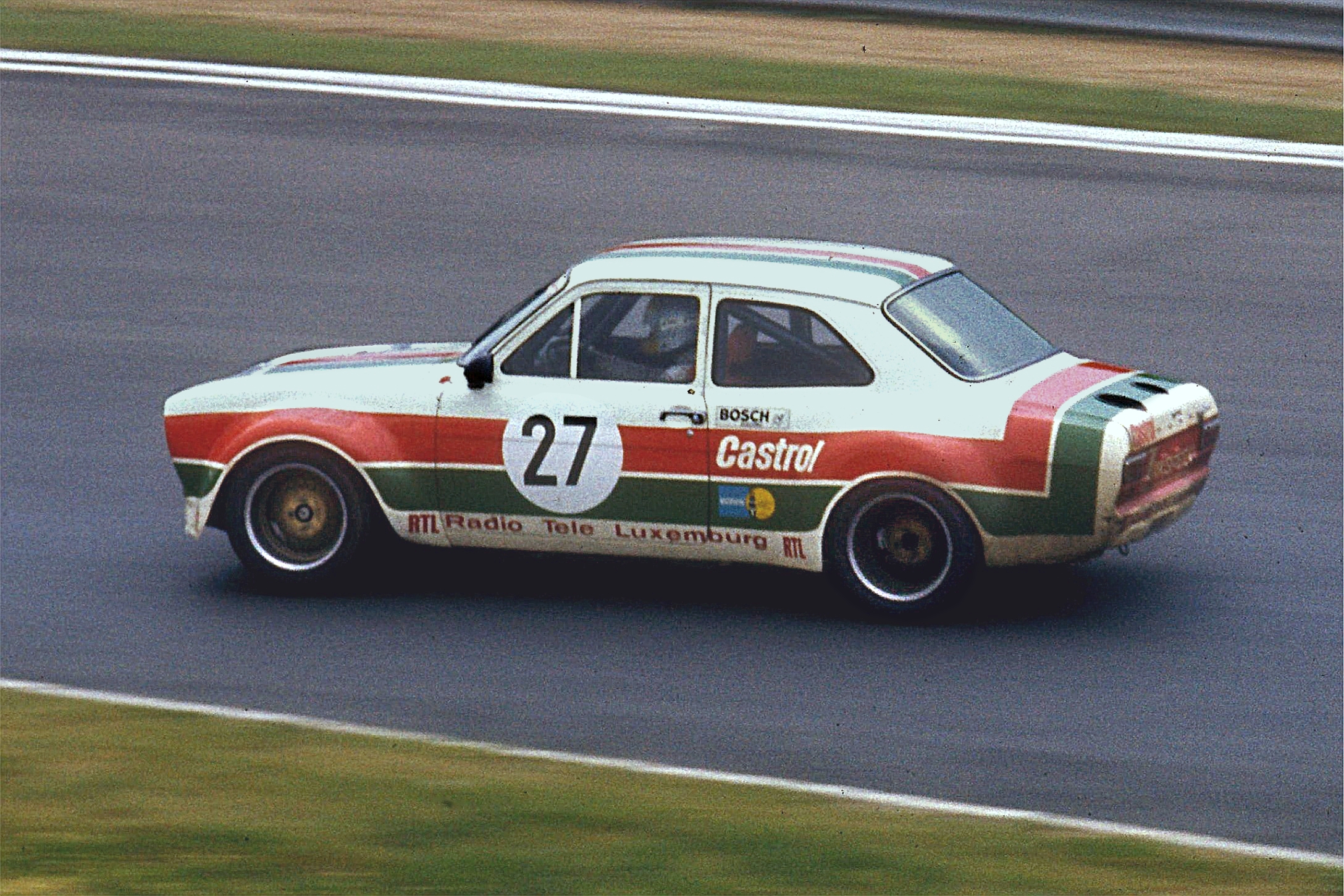
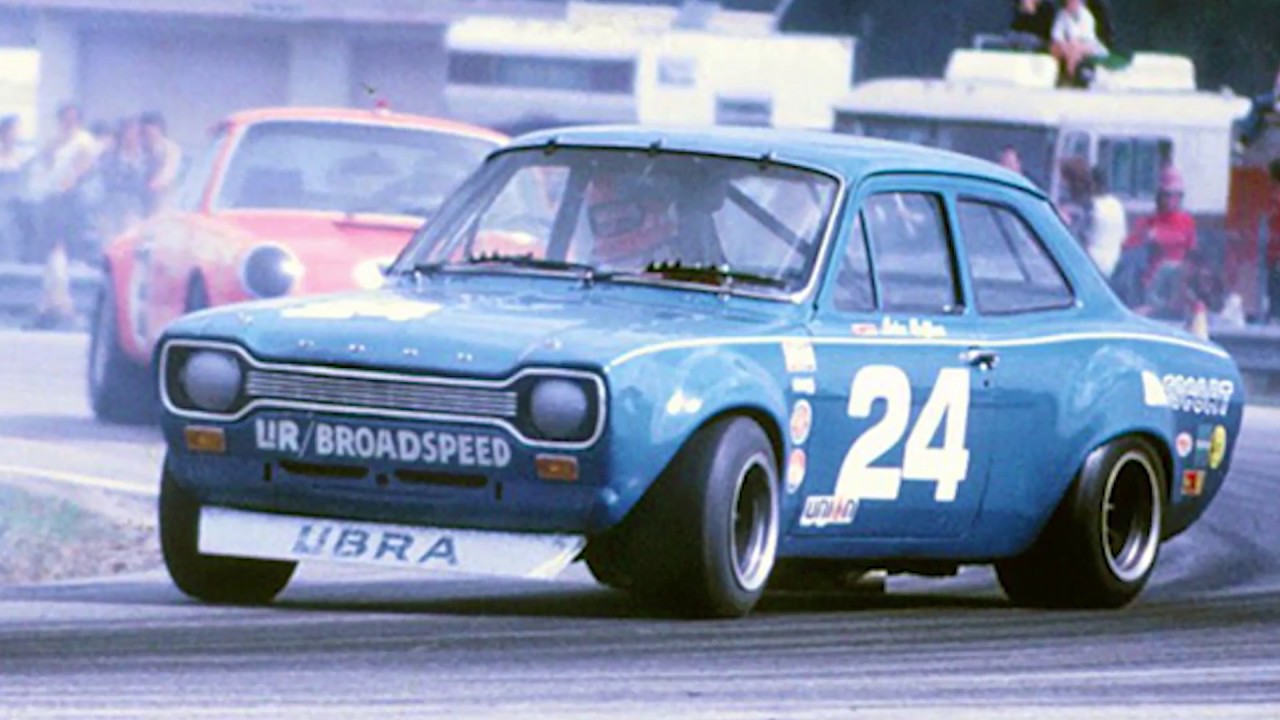
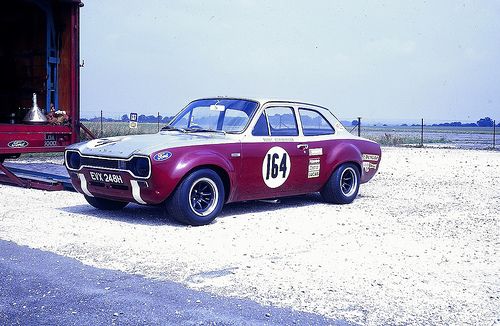
To house this exotic powerplant, the Escort’s chassis was significantly uprated. The Group 2 specification cars are instantly recognizable by their “bubble arches”—wide, bulbous fender flares riveted or bonded to the body to accommodate massive slick tires for tarmac or wide knobblies for gravel. Underneath, the suspension was stiffened and strengthened. The rear leaf springs were often supplemented or replaced by a sophisticated multi-link setup (the “5-link” or “4-link” with Watts linkage) to locate the Atlas rear axle, preventing it from twisting under the BDA’s torque. Turreted rear shock absorbers poked through into the boot, and braking was handled by large ventilated discs. It was a rugged, mechanical, and deeply physical car to drive, requiring a heavy hand on the unassisted steering and a precise right foot to manage the pendulum effect of the rear end.
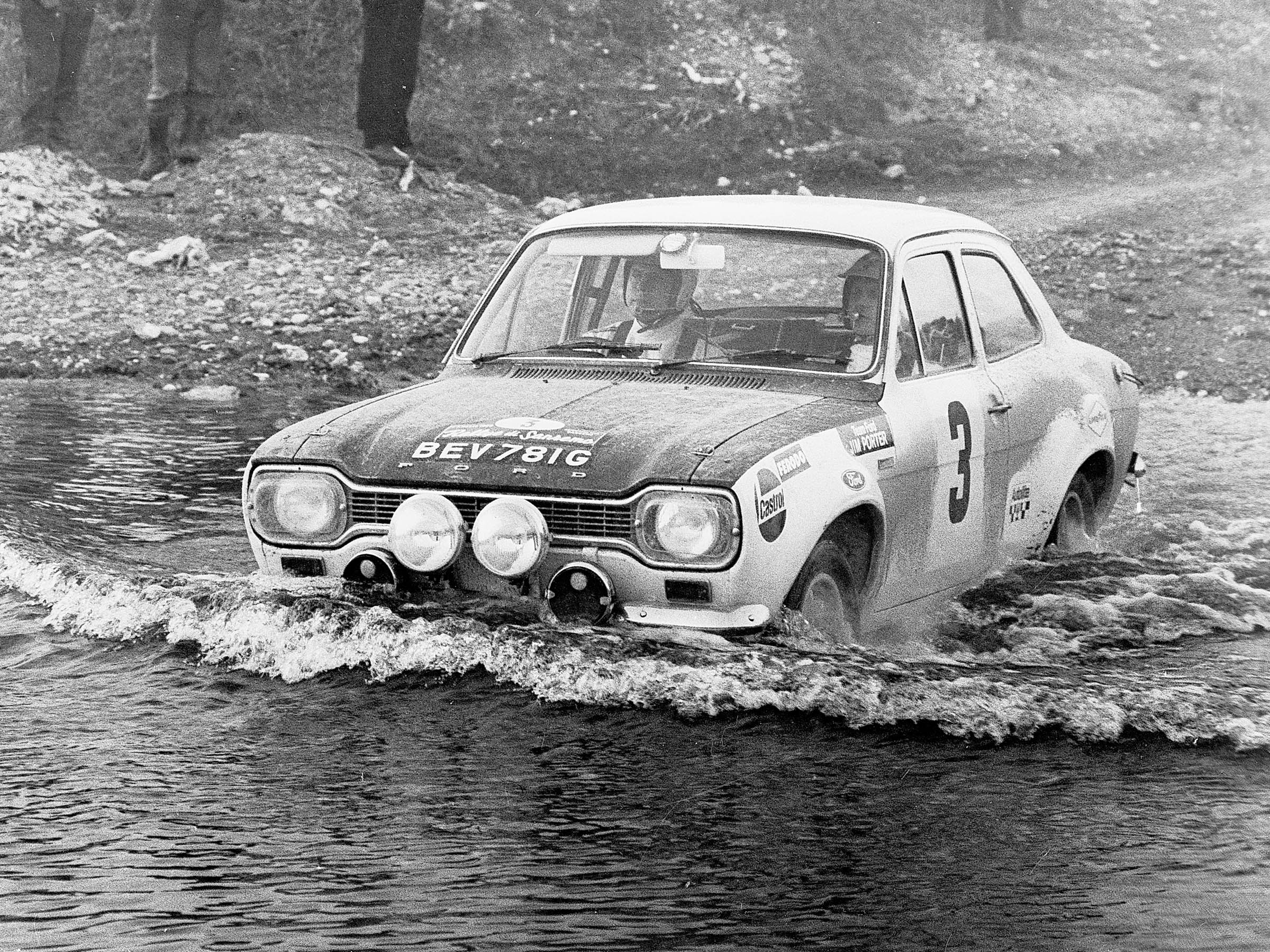
The impact of the RS 1600 on rallying was immediate and profound. It transformed the Escort from a class contender into an outright winner. The pivotal moment came at the 1972 East African Safari Rally. Conventional wisdom held that the high-strung, 16-valve Cosworth engine was too complex and fragile for the dust and heat of Kenya. Hannu Mikkola proved the doubters wrong, piloting the RS 1600 to a historic victory. This win validated the BDA engine’s durability and cemented the Escort’s reputation as the toughest car in the world. On the home front, Roger Clark became a national hero in his Esso Uniflo-liveried RS 1600, winning the RAC Rally in 1972 and proving that a British-built car could defeat the Scandinavian specialists in the forests. The RS 1600 didn’t just win; it dominated. It was the car of choice for privateers and factory teams alike, creating a depth of field in rallying that hasn’t been seen since.
Beyond the special stages, the RS 1600 Group 2 also found success in touring car racing. In the European Touring Car Championship, it battled the Alfa Romeo GTAms and BMW 2002s. While aerodynamics were the enemy of the brick-shaped Escort on high-speed circuits, its agility and power-to-weight ratio made it a giant-killer on tight, technical tracks like the Nürburgring or Crystal Palace. The sight of a bubble-arched Escort, inside front wheel clawing at the air, drifting through a corner at an impossible angle, became the definitive image of 70s saloon racing.
The legacy of the 1970 Escort RS 1600 is monumental. It was the first “Fast Ford” to truly utilize Cosworth power in a road-going chassis, establishing a partnership that would later give us the Sierra and Escort RS Cosworths of the 1990s. It bridged the gap between the amateur clubman and the professional works driver; you could buy an RS 1600 on a Monday and, with the help of the Ford Rallye Sport parts catalogue, turn it into a Group 2 winner by Friday. It was the grandfather of the hot hatch, even if it drove the “wrong” wheels. Today, a genuine AVO-built RS 1600 is a blue-chip collector’s item, revered not just for its rarity, but because it represents the moment Ford stopped merely participating in motorsport and started writing the history books.
Brand
Produced from
Portal
Vehicle category
Model line
Predecessor
Sucessor
Brand
Produced from
Portal
Vehicle category
Model line
Model generation
Predecessor
Sucessor
Submodel Overview
If the Ford Escort Twin Cam was the opening salvo in Ford’s assault on the world of motorsport, the 1970 Escort RS 1600 was the nuclear option. By the turn of the decade, the competition department at Boreham, led by the visionary Stuart Turner, realized that the Lotus-sourced Twin Cam engine—while characterful—was reaching the limit of its development potential. It was fragile at the limit and lacked the breathing capacity to dominate the coming decade. Ford needed a heart transplant for its humble saloon, something that could withstand the brutality of the East African Safari and the high-rpm demands of the European Touring Car Championship. The answer lay in a handshake between Ford and Keith Duckworth of Cosworth. The result was the RS 1600, the first car to wear the legendary “RS” (Rallye Sport) badge, and the genesis of a dynasty that would redefine the concept of the performance family car. It was a machine born in the dedicated Advanced Vehicle Operations (AVO) facility in Aveley, a homologation special that looked like a shopping car but went like a Formula 2 racer.
The defining characteristic of the RS 1600 was undoubtedly its engine. Under the bonnet sat the Cosworth BDA (Belt Drive A-series). To create this masterpiece, Duckworth took the robust Ford Kent block and topped it with a 16-valve, aluminum alloy cylinder head derived from his FVA Formula 2 engine. It was a jewel of engineering. While the road cars produced a frantic 115 bhp from 1,601cc, the Group 2 competition variants were a different species entirely. In race and rally trim, the BDA was bored and stroked—eventually reaching 1.8 and 2.0 litres—and fitted with Lucas mechanical fuel injection or twin Weber 45 DCOE carburetors. These engines could scream to 9,000 rpm, producing upwards of 240 bhp with a jagged, metallic induction roar that became the soundtrack of 1970s motorsport.
To house this exotic powerplant, the Escort’s chassis was significantly uprated. The Group 2 specification cars are instantly recognizable by their “bubble arches”—wide, bulbous fender flares riveted or bonded to the body to accommodate massive slick tires for tarmac or wide knobblies for gravel. Underneath, the suspension was stiffened and strengthened. The rear leaf springs were often supplemented or replaced by a sophisticated multi-link setup (the “5-link” or “4-link” with Watts linkage) to locate the Atlas rear axle, preventing it from twisting under the BDA’s torque. Turreted rear shock absorbers poked through into the boot, and braking was handled by large ventilated discs. It was a rugged, mechanical, and deeply physical car to drive, requiring a heavy hand on the unassisted steering and a precise right foot to manage the pendulum effect of the rear end.
The impact of the RS 1600 on rallying was immediate and profound. It transformed the Escort from a class contender into an outright winner. The pivotal moment came at the 1972 East African Safari Rally. Conventional wisdom held that the high-strung, 16-valve Cosworth engine was too complex and fragile for the dust and heat of Kenya. Hannu Mikkola proved the doubters wrong, piloting the RS 1600 to a historic victory. This win validated the BDA engine’s durability and cemented the Escort’s reputation as the toughest car in the world. On the home front, Roger Clark became a national hero in his Esso Uniflo-liveried RS 1600, winning the RAC Rally in 1972 and proving that a British-built car could defeat the Scandinavian specialists in the forests. The RS 1600 didn’t just win; it dominated. It was the car of choice for privateers and factory teams alike, creating a depth of field in rallying that hasn’t been seen since.
Beyond the special stages, the RS 1600 Group 2 also found success in touring car racing. In the European Touring Car Championship, it battled the Alfa Romeo GTAms and BMW 2002s. While aerodynamics were the enemy of the brick-shaped Escort on high-speed circuits, its agility and power-to-weight ratio made it a giant-killer on tight, technical tracks like the Nürburgring or Crystal Palace. The sight of a bubble-arched Escort, inside front wheel clawing at the air, drifting through a corner at an impossible angle, became the definitive image of 70s saloon racing.
The legacy of the 1970 Escort RS 1600 is monumental. It was the first “Fast Ford” to truly utilize Cosworth power in a road-going chassis, establishing a partnership that would later give us the Sierra and Escort RS Cosworths of the 1990s. It bridged the gap between the amateur clubman and the professional works driver; you could buy an RS 1600 on a Monday and, with the help of the Ford Rallye Sport parts catalogue, turn it into a Group 2 winner by Friday. It was the grandfather of the hot hatch, even if it drove the “wrong” wheels. Today, a genuine AVO-built RS 1600 is a blue-chip collector’s item, revered not just for its rarity, but because it represents the moment Ford stopped merely participating in motorsport and started writing the history books.
Tech Specs
Technical Specifications
Tech Specs
Technical Specifications
Engine
01
03
Internal combustion engine
Configuration
Ford-Cosworth BDA, Inline-4
Location
Front, longitudinally mounted
Construction
Cast iron block (Type 711M), Aluminium alloy head
Displacement (cc)
1,601 cc
Displacement (cu in)
97.7 cu in
Compression
11.5:1
Bore x Stroke
81.0 mm x 77.6 mm
Valvetrain
4 valves per cylinder, DOHC (Belt driven)
Fuel feed
2 x Weber 45 DCOE carburetors
Lubrication
Dry sump
Aspiration
Naturally aspirated
Output
Power (hp)
205 hp
Power (kW)
153 kW
Max power at
8,000 RPM
Torque (Nm)
190 Nm
Torque (ft lbs)
140 ft lbs
Max torque at
6,000 RPM
Drivetrain
02
03
Chassis
Type
Monocoque(Reinforced "Type 49" shell)
Material
Steel
Body
Material
Steel with fibreglass arch extensions
Transmission
Gearbox
ZF, 5-speed manual
Drive
Rear Wheel Drive (Limited Slip Differential)
Suspension
Front
Independent, MacPherson struts, Bilstein dampers, anti-roll bar
Rear
Live axle (Atlas), 4-link location + Panhard rod, coil springs
Steering
Type
Rack and pinion
Brakes
Front
Ventilated discs Ø266 mm, 4-piston calipers
Rear
Solid discs Ø264 mm
Wheels
Front
8" x 13"
Rear
8" x 13"
Tires
Front
205/60 R13
Rear
205/60 R13
Dimensions and performance
03
03
Dimensions
Length (mm)
3,980 mm
Length (in)
156.7 in
Width (mm)
1,660 mm
Width (in)
65.4 in
Height (mm)
1,350 mm
Height (in)
53.1 in
Wheelbase (mm)
2,400 mm
Wheelbase (in)
94.5 in
Weight (kg)
840 kg
Weight (lbs)
1,852 lbs
Performance
Power to weight
~0.24 hp/kg
Top speed (km/h)
185 km/h
Top speed (mph)
115 mph
0-100 km/h (0-60 mph)
~6.3 s