
Lola T212 Ford Cosworth FVC
Brand
Produced from
Portal
Vehicle category
Model line
Predecessor
Successor
Submodel Overview
In the pantheon of sports prototype racing, 1971 stands as a watershed moment, a year when the philosophy of speed began to shift from the brute force of displacement to the intricate science of chassis dynamics and power-to-weight efficiency. At the epicenter of this seismic change was the European 2-Litre Sports Car Championship, a series that had rapidly evolved into the premier battleground for the continent’s finest privateers and future Formula 1 stars. While the grids were populated by a kaleidoscope of machinery, the narrative of the season was defined by a single, gladiatorial duel: the tubular-framed artistry of the Chevron B19 versus the monocoque rigidity of the Lola T212. The T212 was not merely a sequel to the successful T210; it was Eric Broadley’s manifesto on the future of race car construction. In an era when many designers still clung to the forgiveness of spaceframes, Broadley doubled down on the “bathtub” aluminium tub, creating a machine that was stiffer, sharper, and—when paired with the screaming Ford Cosworth FVC engine—capable of surgical precision on Europe’s most demanding circuits.
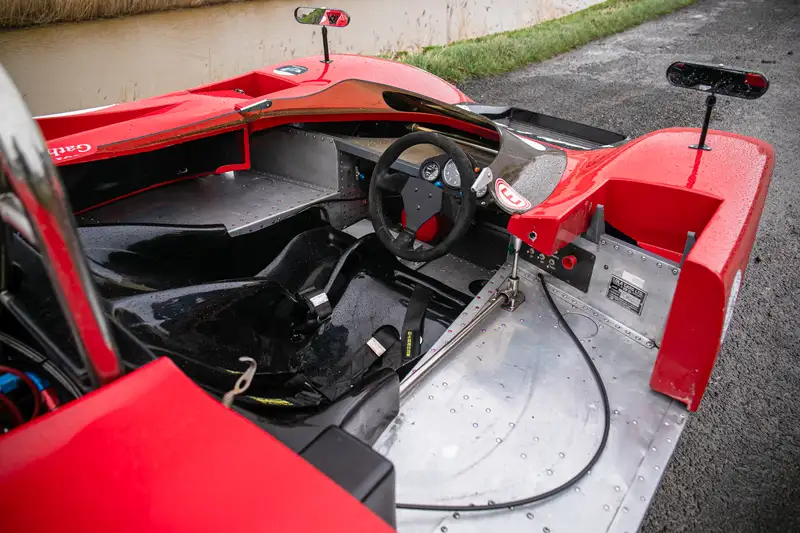
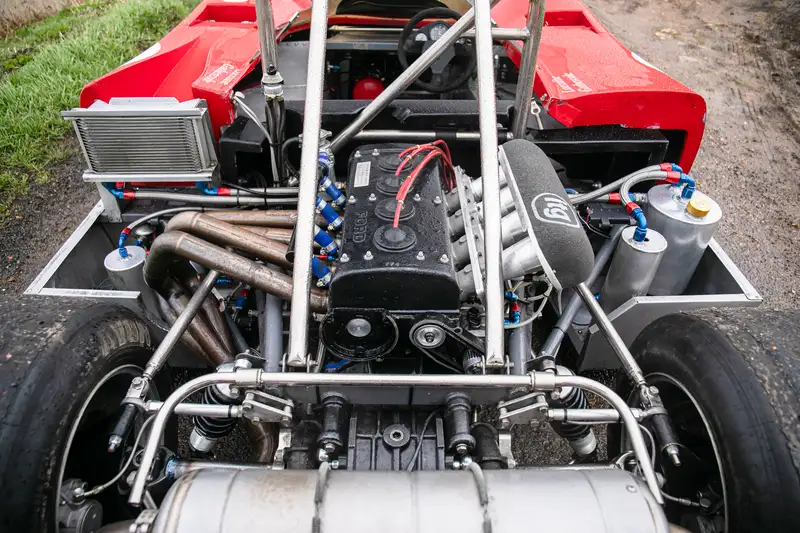
Technically, the 1971 T212 was a marvel of packaging, a car that seemed to shrink-wrap around its mechanical components. The defining characteristic was its bonded and riveted aluminium alloy monocoque chassis. Unlike the steel tubes of its arch-rival, the Chevron, the Lola’s tub acted as a singular, immensely rigid structure. This stiffness allowed the suspension—double wishbones at the front and a sophisticated multi-link rear setup with reversed lower wishbones—to maintain optimal geometry under the immense cornering loads generated by the newly widening slick tires. However, the soul of this specific model was the engine. While the chassis could technically host a variety of powerplants, the definitive 1971 specification was the Ford Cosworth FVC. This 1,790cc inline-four was a purebred racing engine, featuring a gear-driven double overhead camshaft and four valves per cylinder. Producing approximately 275 brake horsepower at a stratospheric 9,000 rpm, the FVC was a masterpiece of high-revving violence. It lacked the low-end torque of larger engines, forcing the driver to dance on the pedals and keep the needle in the upper quadrant of the tachometer, harnessing a power band that was as narrow as it was explosive.
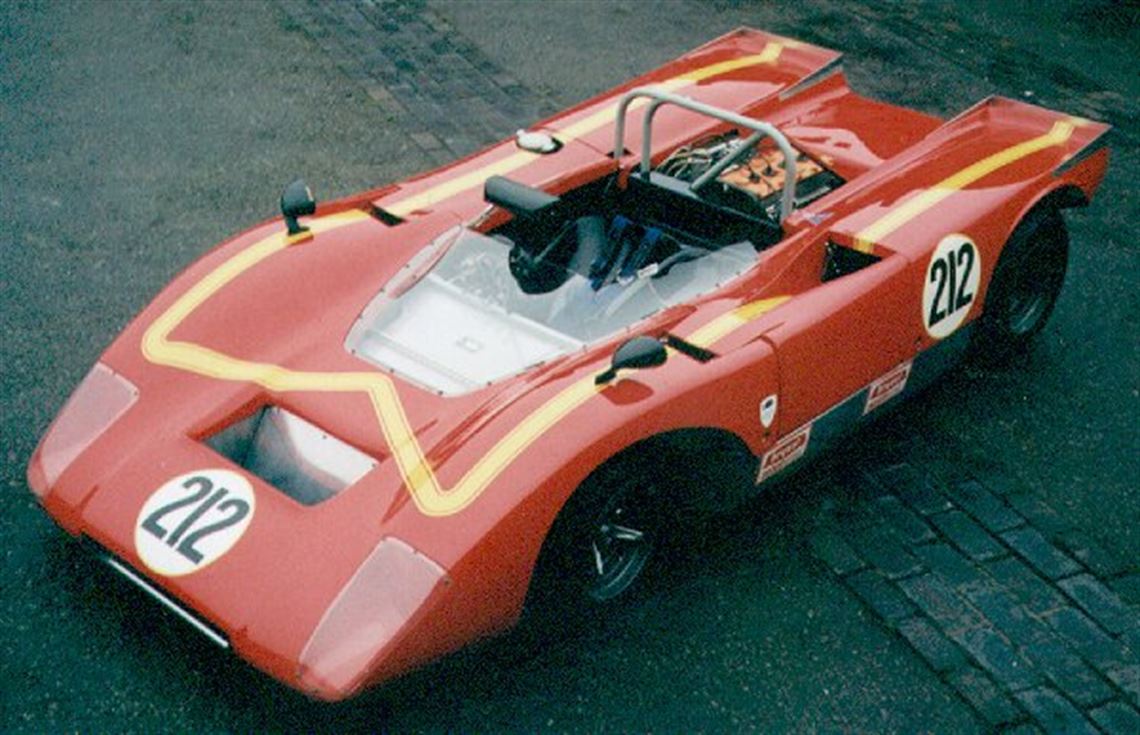
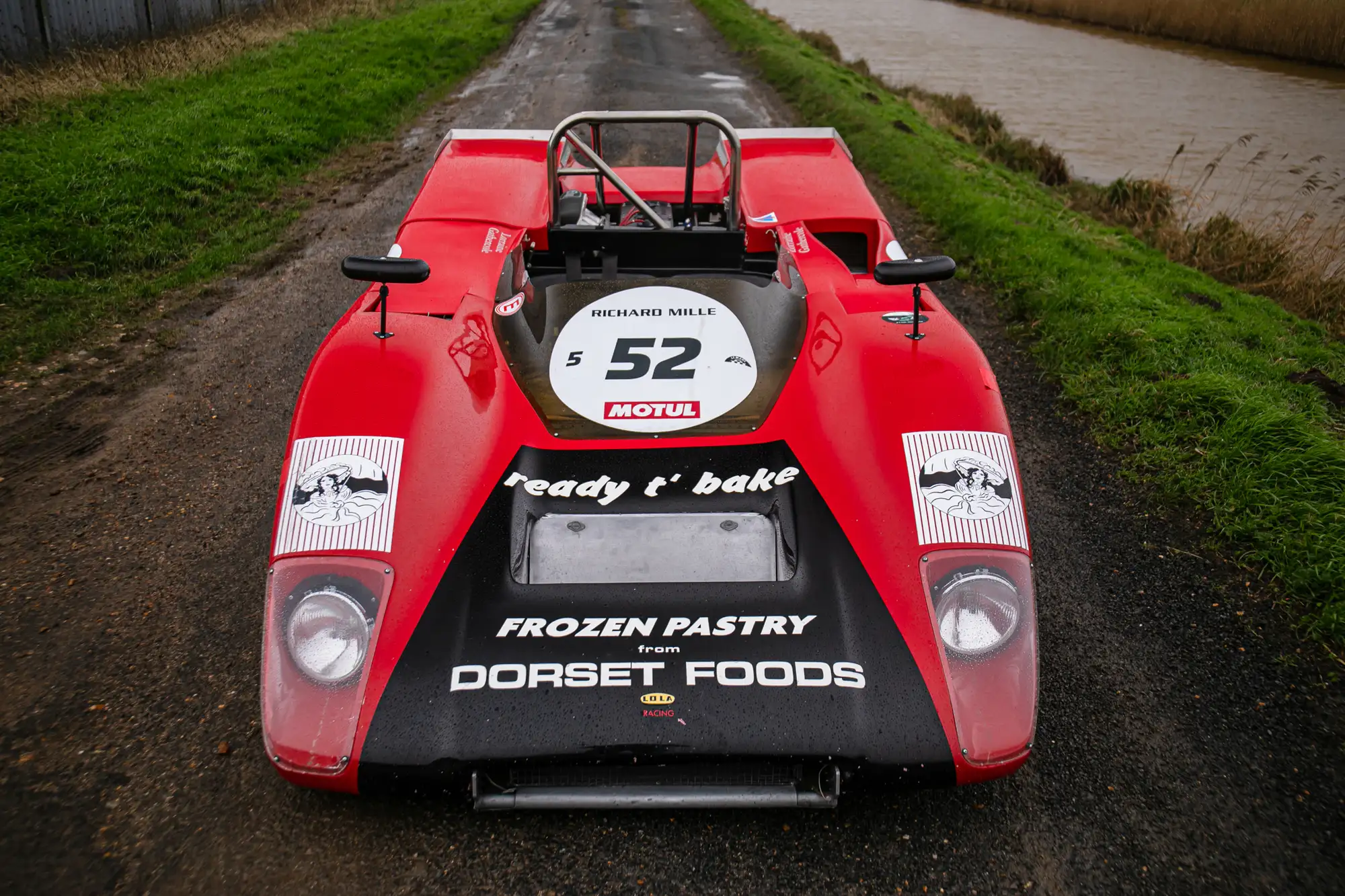
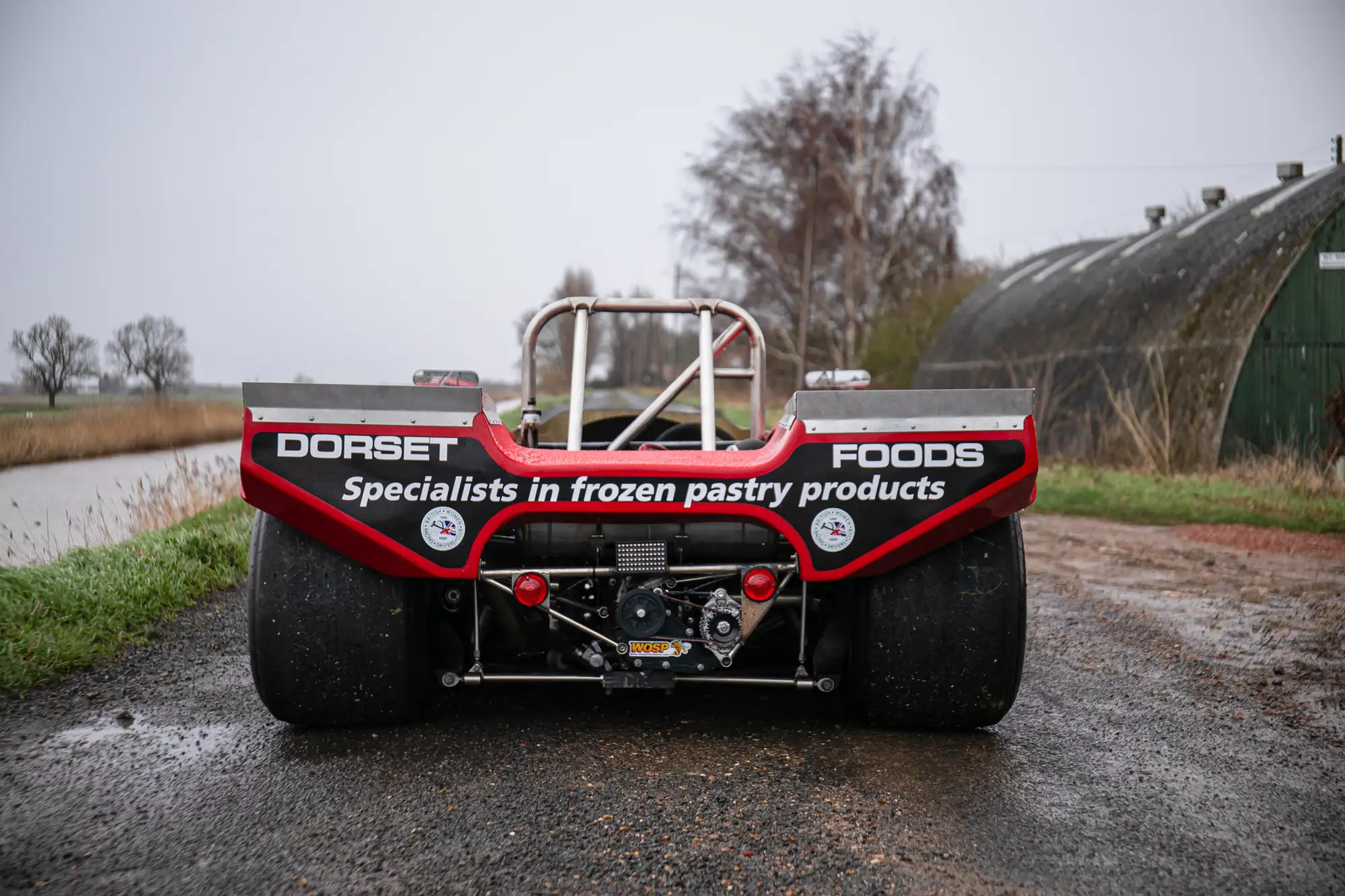
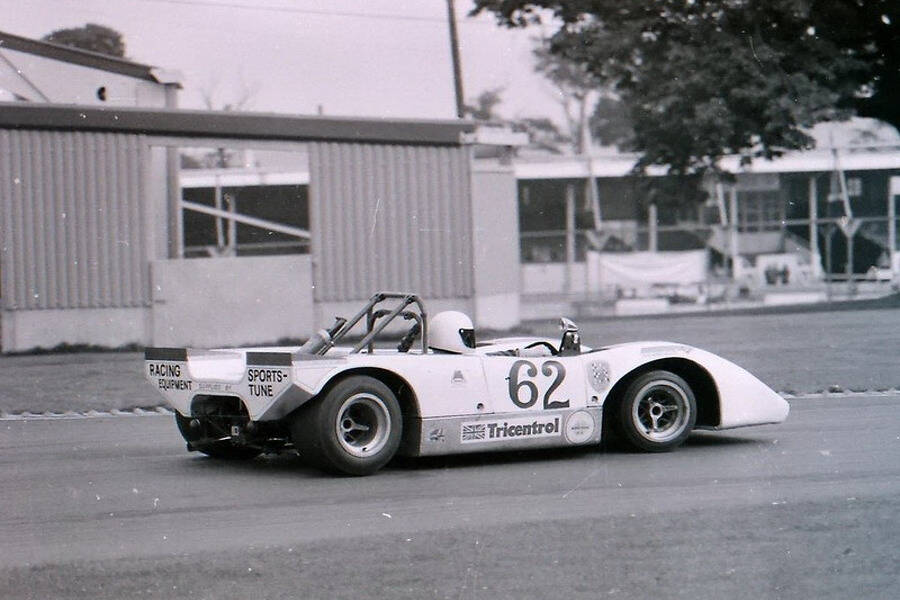
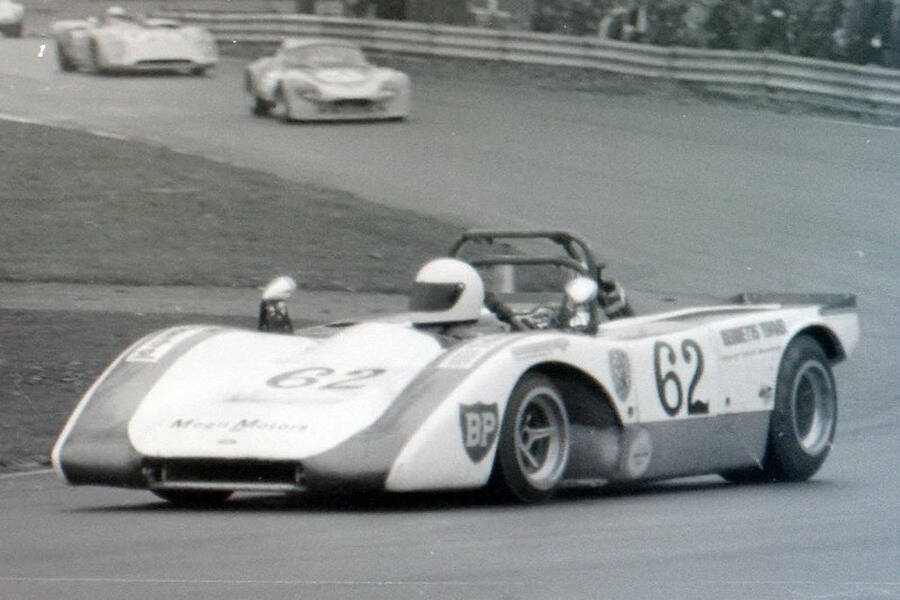
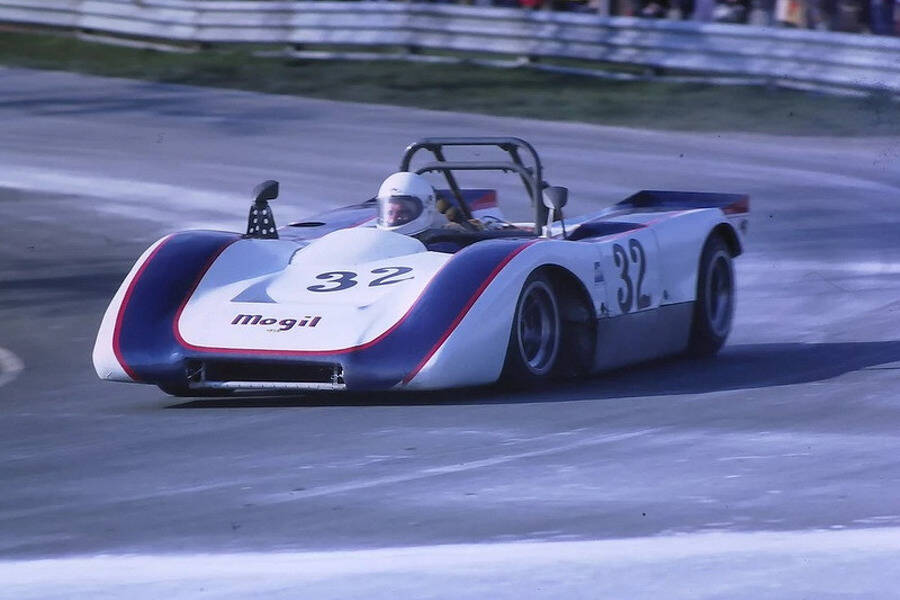
Visually, the T212 Ford Cosworth FVC was the swan song of the “organic” era of Lola design. Before the arrival of the shovel-nosed T290 in 1972, the T212 retained the sensuous, curvaceous lines of the 1960s. The nose was rounded and low, feeding a small radiator duct, while the rear deck integrated a subtle spoiler lip to manage airflow without the need for a separate wing. Weighing in at a featherweight 550 kilograms, the car had a power-to-weight ratio that rivaled contemporary Formula 1 machinery. However, this performance came at a cost. The Cosworth FVC was a notorious source of high-frequency vibration. Bolted directly to the stiff monocoque, the engine turned the cockpit into a resonance chamber, numbing the driver’s hands and frequently vibrating bolts loose, turning post-race maintenance into a forensic exercise of checking every fastener on the vehicle.
The competitive history of the 1971 Lola T212 Ford Cosworth FVC is inextricably linked to the rise of Dr. Helmut Marko. Campaigning for Ecurie Bonnier, the privateer outfit run by the legendary Jo Bonnier, Marko utilized the T212 to wage a relentless war against the numerical superiority of the Chevrons. The 1971 season was a classic “quality vs. quantity” battle. While the Chevrons were easier to drive on bumpy tracks, the Lola T212 FVC was untouchable on high-speed, technical circuits where chassis precision was paramount. Marko’s victory at the Auvergne Trophy at Clermont-Ferrand remains the car’s defining moment. On a terrifying, twisting circuit lined with volcanic rock, the T212’s superior stiffness allowed Marko to thread the needle with millimetre perfection, defeating the field and setting the stage for his championship run. The car also proved its mettle at the Targa Florio, where its agility allowed it to harass the factory Alfa Romeo T33/3s and Porsche 908s through the Sicilian mountains, proving that on public roads, a lightweight 2-litre car was often faster than a heavyweight prototype.
Ultimately, Helmut Marko secured the 1971 European 2-Litre Drivers’ Championship in the T212, validating Broadley’s monocoque philosophy. The car’s success was not just in the trophies it won, but in the message it sent: the future belonged to stiffness and aerodynamics. The T212 FVC was the pinnacle of the “driver’s car”—unassisted, raw, hot, and loud. It required a physical commitment that modern drivers can scarcely imagine, sitting in a bath of heat with an unmuffled racing engine screaming inches from their spine.
The legacy of the Lola T212 Ford Cosworth FVC is that of a bridge between worlds. It stands as the final, beautiful sunset of the 1960s aesthetic before the brutalist, functionalist “wedge” era took over. It was the machine that cemented the relationship between Lola and the customer champion, proving that a privateer could buy a car off the shelf in Huntingdon and beat the best in Europe. Today, in the world of historic motorsport, the T212 FVC is revered not just for its beauty, but for its driving dynamics. It remains a benchmark for chassis balance, a car that rewards finesse and bravery in equal measure, and a rolling monument to the year when a small British spyder and an Austrian law graduate conquered the continent.
Brand
Produced from
Portal
Vehicle category
Model line
Predecessor
Sucessor
Brand
Produced from
Portal
Vehicle category
Model line
Model generation
Predecessor
Sucessor
Submodel Overview
In the pantheon of sports prototype racing, 1971 stands as a watershed moment, a year when the philosophy of speed began to shift from the brute force of displacement to the intricate science of chassis dynamics and power-to-weight efficiency. At the epicenter of this seismic change was the European 2-Litre Sports Car Championship, a series that had rapidly evolved into the premier battleground for the continent’s finest privateers and future Formula 1 stars. While the grids were populated by a kaleidoscope of machinery, the narrative of the season was defined by a single, gladiatorial duel: the tubular-framed artistry of the Chevron B19 versus the monocoque rigidity of the Lola T212. The T212 was not merely a sequel to the successful T210; it was Eric Broadley’s manifesto on the future of race car construction. In an era when many designers still clung to the forgiveness of spaceframes, Broadley doubled down on the “bathtub” aluminium tub, creating a machine that was stiffer, sharper, and—when paired with the screaming Ford Cosworth FVC engine—capable of surgical precision on Europe’s most demanding circuits.
Technically, the 1971 T212 was a marvel of packaging, a car that seemed to shrink-wrap around its mechanical components. The defining characteristic was its bonded and riveted aluminium alloy monocoque chassis. Unlike the steel tubes of its arch-rival, the Chevron, the Lola’s tub acted as a singular, immensely rigid structure. This stiffness allowed the suspension—double wishbones at the front and a sophisticated multi-link rear setup with reversed lower wishbones—to maintain optimal geometry under the immense cornering loads generated by the newly widening slick tires. However, the soul of this specific model was the engine. While the chassis could technically host a variety of powerplants, the definitive 1971 specification was the Ford Cosworth FVC. This 1,790cc inline-four was a purebred racing engine, featuring a gear-driven double overhead camshaft and four valves per cylinder. Producing approximately 275 brake horsepower at a stratospheric 9,000 rpm, the FVC was a masterpiece of high-revving violence. It lacked the low-end torque of larger engines, forcing the driver to dance on the pedals and keep the needle in the upper quadrant of the tachometer, harnessing a power band that was as narrow as it was explosive.
Visually, the T212 Ford Cosworth FVC was the swan song of the “organic” era of Lola design. Before the arrival of the shovel-nosed T290 in 1972, the T212 retained the sensuous, curvaceous lines of the 1960s. The nose was rounded and low, feeding a small radiator duct, while the rear deck integrated a subtle spoiler lip to manage airflow without the need for a separate wing. Weighing in at a featherweight 550 kilograms, the car had a power-to-weight ratio that rivaled contemporary Formula 1 machinery. However, this performance came at a cost. The Cosworth FVC was a notorious source of high-frequency vibration. Bolted directly to the stiff monocoque, the engine turned the cockpit into a resonance chamber, numbing the driver’s hands and frequently vibrating bolts loose, turning post-race maintenance into a forensic exercise of checking every fastener on the vehicle.
The competitive history of the 1971 Lola T212 Ford Cosworth FVC is inextricably linked to the rise of Dr. Helmut Marko. Campaigning for Ecurie Bonnier, the privateer outfit run by the legendary Jo Bonnier, Marko utilized the T212 to wage a relentless war against the numerical superiority of the Chevrons. The 1971 season was a classic “quality vs. quantity” battle. While the Chevrons were easier to drive on bumpy tracks, the Lola T212 FVC was untouchable on high-speed, technical circuits where chassis precision was paramount. Marko’s victory at the Auvergne Trophy at Clermont-Ferrand remains the car’s defining moment. On a terrifying, twisting circuit lined with volcanic rock, the T212’s superior stiffness allowed Marko to thread the needle with millimetre perfection, defeating the field and setting the stage for his championship run. The car also proved its mettle at the Targa Florio, where its agility allowed it to harass the factory Alfa Romeo T33/3s and Porsche 908s through the Sicilian mountains, proving that on public roads, a lightweight 2-litre car was often faster than a heavyweight prototype.
Ultimately, Helmut Marko secured the 1971 European 2-Litre Drivers’ Championship in the T212, validating Broadley’s monocoque philosophy. The car’s success was not just in the trophies it won, but in the message it sent: the future belonged to stiffness and aerodynamics. The T212 FVC was the pinnacle of the “driver’s car”—unassisted, raw, hot, and loud. It required a physical commitment that modern drivers can scarcely imagine, sitting in a bath of heat with an unmuffled racing engine screaming inches from their spine.
The legacy of the Lola T212 Ford Cosworth FVC is that of a bridge between worlds. It stands as the final, beautiful sunset of the 1960s aesthetic before the brutalist, functionalist “wedge” era took over. It was the machine that cemented the relationship between Lola and the customer champion, proving that a privateer could buy a car off the shelf in Huntingdon and beat the best in Europe. Today, in the world of historic motorsport, the T212 FVC is revered not just for its beauty, but for its driving dynamics. It remains a benchmark for chassis balance, a car that rewards finesse and bravery in equal measure, and a rolling monument to the year when a small British spyder and an Austrian law graduate conquered the continent.
Tech Specs
Technical Specifications
Tech Specs
Technical Specifications
Engine
01
03
Internal combustion engine
Configuration
Ford Cosworth FVC, Inline-4
Location
Mid, longitudinally mounted
Construction
Aluminium block and head
Displacement (cc)
1,790 cc
Displacement (cu in)
109.2 cu in
Compression
12.0:1
Bore x Stroke
85.7 mm x 77.6 mm
Valvetrain
4 valves per cylinder, DOHC
Fuel feed
Lucas mechanical fuel injection
Lubrication
Dry sump
Aspiration
Naturally aspirated
Output
Power (hp)
~245 hp
Power (kW)
~183 kW
Max power at
9,000 RPM
Torque (Nm)
200 Nm
Torque (ft lbs)
147.5 ft lbs
Max torque at
7,000 RPM
Drivetrain
02
03
Chassis
Type
Monocoque with rear tubular subframe
Material
Aluminium sheet (L72) riveted and bonded
Body
Material
Fibreglass
Transmission
Gearbox
Hewland FT 200, 5-speed manual
Drive
Rear Wheel Drive (Limited Slip Differential)
Suspension
Front
Independent, double wishbones, coil springs over adjustable dampers, anti-roll bar
Rear
Independent, reversed lower wishbones, top link, twin radius arms, coil springs over adjustable dampers, anti-roll bar
Steering
Type
Rack and pinion
Brakes
Front
Ventilated discs Ø254 mm, 4-piston calipers (Girling)
Rear
Ventilated discs Ø254 mm, 4-piston calipers (Girling)
Wheels
Front
10" x 13" (Magnesium)
Rear
14" x 13" (Magnesium)
Tires
Front
4.75/10.00-13
Rear
6.00/13.50-13
Dimensions and performance
03
03
Dimensions
Length (mm)
3,683 mm
Length (in)
145.0 in
Width (mm)
1,803 mm
Width (in)
71.0 in
Height (mm)
914 mm
Height (in)
36.0 in
Wheelbase (mm)
2,286 mm
Wheelbase (in)
90.0 in
Weight (kg)
580 kg
Weight (lbs)
1,279 lbs
Performance
Power to weight
~0.42 hp/kg
Top speed (km/h)
~270 km/h
Top speed (mph)
~168 mph
0-100 km/h (0-60 mph)
~3.5 s