Argo JM19 Porsche
Brand
Produced from
Portal
Vehicle category
Model line
Model generation
Predecessor
Sucessor
About this submodel
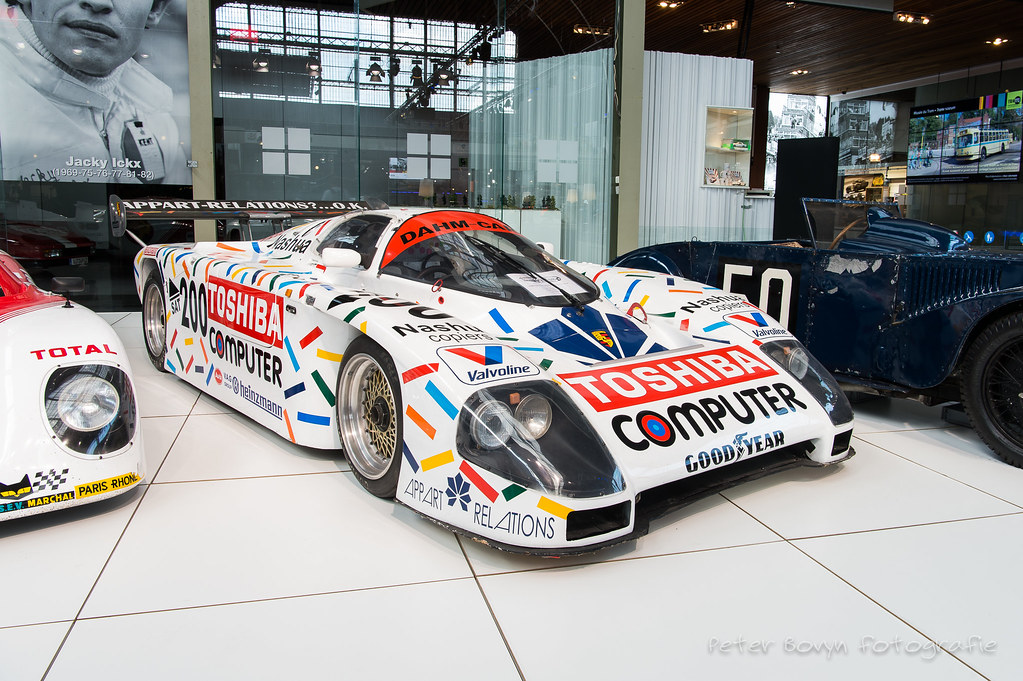
The Argo JM19 was the consummate chassis-for-hire of the 1980s prototype scene, a brilliantly adaptable platform that attracted a wild variety of engine partners. But for pure endurance pedigree, nothing could top the 1987 Argo JM19 Porsche. This submodel represented a privateer’s dream: combining the proven, lightweight British Argo monocoque with the most dominant engine in sports car racing history.
This variant, campaigned by privateer outfits like Dahm Cars Racing for the 24 Hours of Le Mans, ditched the high-strung rotaries and fragile, small-capacity turbos. In their place, it adopted a version of Porsche’s legendary air-cooled, turbocharged flat-six. This was the bulletproof heart of the dominant 956 and 962, an engine forged in the fires of La Sarthe and Daytona.
While it was often a 3.2-liter, twin-turbo setup, its true strength wasn’t just raw power—it was reliability. This was the engine that finished races. The mechanical symphony was pure Stuttgart: a deep, throaty, air-cooled thrum overlaid with the menacing whine of turbochargers. For the privateer teams taking on the grueling 24-hour classics, the JM19-Porsche was the smart choice, a blend of British agility and German stamina built to go the distance.
Brand
Produced from
Portal
Vehicle category
Model line
Model generation
Predecessor
Sucessor
Brand
Produced from
Portal
Vehicle category
Model line
Model generation
Predecessor
Sucessor
About this submodel
The Argo JM19 was the consummate chassis-for-hire of the 1980s prototype scene, a brilliantly adaptable platform that attracted a wild variety of engine partners. But for pure endurance pedigree, nothing could top the 1987 Argo JM19 Porsche. This submodel represented a privateer’s dream: combining the proven, lightweight British Argo monocoque with the most dominant engine in sports car racing history.
This variant, campaigned by privateer outfits like Dahm Cars Racing for the 24 Hours of Le Mans, ditched the high-strung rotaries and fragile, small-capacity turbos. In their place, it adopted a version of Porsche’s legendary air-cooled, turbocharged flat-six. This was the bulletproof heart of the dominant 956 and 962, an engine forged in the fires of La Sarthe and Daytona.
While it was often a 3.2-liter, twin-turbo setup, its true strength wasn’t just raw power—it was reliability. This was the engine that finished races. The mechanical symphony was pure Stuttgart: a deep, throaty, air-cooled thrum overlaid with the menacing whine of turbochargers. For the privateer teams taking on the grueling 24-hour classics, the JM19-Porsche was the smart choice, a blend of British agility and German stamina built to go the distance.
Tech Specs
Discover the technical specifications
Tech Specs
Discover the technical specifications
Engine
01
03
Internal combustion engine
Configuration
Porsche Type 930 Flat-6
Location
Mid, longitudinally mounted
Construction
-
Displacement (cc)
3,164 cc
Displacement (cu in)
193 cu in
Compression
-
Bore x Stroke
-
Valvetrain
4 valves per cylinder, DOHC
Fuel feed
Fuel Injection
Lubrication
-
Aspiration
Turbocharged
Output
Power (hp)
-
Power (kW)
-
Max power at
-
Torque (Nm)
-
Torque (ft lbs)
-
Max torque at
-
Drivetrain
02
03
Chassis
Type
Monocoque unibody
Material
Aluminium honeycomb
Body
Material
Carbon fibre
Transmission
Gearbox
5-speed gearbox
Drive
Rear Wheel Drive
Suspension
Front
Double wishbones, coil springs over dampers, anti-roll bar
Rear
Double wishbones, coil springs over dampers, anti-roll bar
Steering
Type
Rack and pinion
Brakes
Front
Ventilated discs
Rear
Ventilated discs
Wheels
Front
-
Rear
-
Tires
Front
-
Rear
-
Dimensions and performance
03
03
Dimensions
Lenght (mm)
-
Lenght (in)
-
Width (mm)
-
Width (in)
-
Height (mm)
-
Height (in)
-
Wheelbase (mm)
-
Wheelbase (in)
-
Weight (kg)
-
Weight (lbs)
-
Performance
Power to weight
-
Top speed (km/h)
-
Top speed (mph)
-
0-100 km/h (0-60 mph)
-
Submodels
Other variants of this model
Submodels