Argo JM19D Chevrolet
Brand
Produced from
Portal
Vehicle category
Model line
Model generation
Predecessor
Sucessor
About this submodel
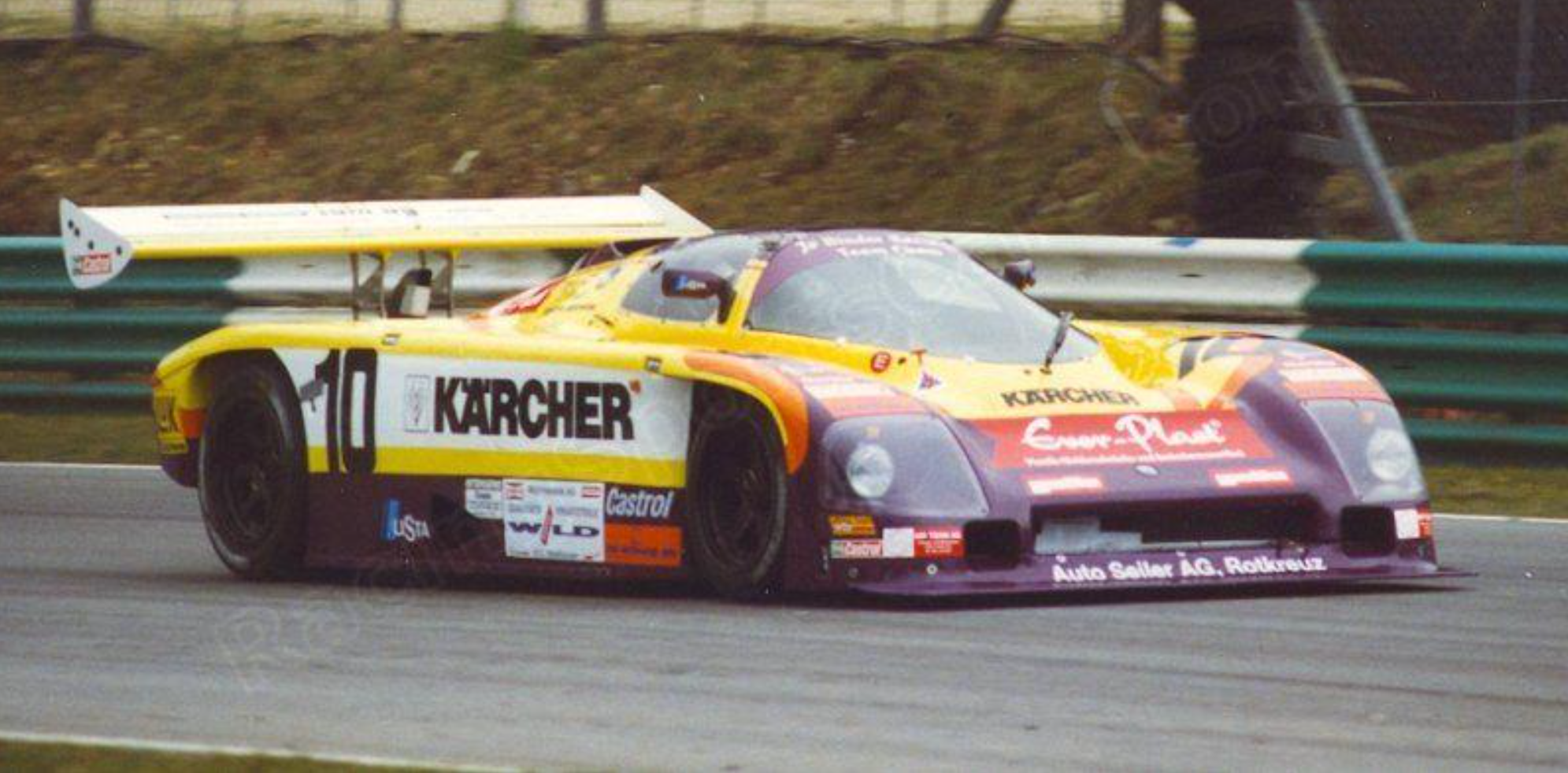
A great chassis never dies; it just finds new, angrier engines. By the mid-1990s, the original Group C2 and IMSA Lights categories that the Argo JM19 was built for were long gone. But in series like Interserie and open sports car racing, the 1996 JM19D evolution lived on, and it did so with the most visceral soundtrack imaginable: American V8 thunder.
This was a ‘run-what-ya-brung’ special, a beautiful Frankenstein of high-tech European aerodynamics and brutal, low-tech American iron. Gone were the small-capacity, high-strung Cosworths or fragile, exotic turbos. In their place was a rumbling, torque-rich Chevrolet small-block V8, likely displacing 5.7 liters or more. This was a powertrain swap that completely changed the car’s character.
It was no longer a lightweight, high-RPM scalpel. It was a sledgehammer. The lightweight aluminum monocoque and sophisticated ground effects were now mated to an engine that provided a relentless, instantaneous wallop of torque at any RPM. The sound was no longer a refined wail; it was a guttural, ground-shaking NASCAR roar. This car was a gladiator, a testament to the JM19’s brilliant design, proving its relevance and raw speed by adopting a big-bore V8 heart long after its contemporaries had retired.
Brand
Produced from
Portal
Vehicle category
Model line
Model generation
Predecessor
Sucessor
Brand
Produced from
Portal
Vehicle category
Model line
Model generation
Predecessor
Sucessor
About this submodel
A great chassis never dies; it just finds new, angrier engines. By the mid-1990s, the original Group C2 and IMSA Lights categories that the Argo JM19 was built for were long gone. But in series like Interserie and open sports car racing, the 1996 JM19D evolution lived on, and it did so with the most visceral soundtrack imaginable: American V8 thunder.
This was a ‘run-what-ya-brung’ special, a beautiful Frankenstein of high-tech European aerodynamics and brutal, low-tech American iron. Gone were the small-capacity, high-strung Cosworths or fragile, exotic turbos. In their place was a rumbling, torque-rich Chevrolet small-block V8, likely displacing 5.7 liters or more. This was a powertrain swap that completely changed the car’s character.
It was no longer a lightweight, high-RPM scalpel. It was a sledgehammer. The lightweight aluminum monocoque and sophisticated ground effects were now mated to an engine that provided a relentless, instantaneous wallop of torque at any RPM. The sound was no longer a refined wail; it was a guttural, ground-shaking NASCAR roar. This car was a gladiator, a testament to the JM19’s brilliant design, proving its relevance and raw speed by adopting a big-bore V8 heart long after its contemporaries had retired.
Tech Specs
Discover the technical specifications
Tech Specs
Discover the technical specifications
Engine
01
03
Internal combustion engine
Configuration
Chevrolet, V8
Location
Mid, longitudinally mounted
Construction
Aluminium alloy block and head
Displacement (cc)
5,900 cc
Displacement (cu in)
360 cu in
Compression
-
Bore x Stroke
-
Valvetrain
-
Fuel feed
Fuel Injection
Lubrication
Dry sump
Aspiration
Naturally aspirated
Output
Power (hp)
-
Power (kW)
-
Max power at
-
Torque (Nm)
-
Torque (ft lbs)
-
Max torque at
-
Drivetrain
02
03
Chassis
Type
Monocoque unibody
Material
Aluminium honeycomb
Body
Material
Carbon fibre
Transmission
Gearbox
5-speed manual
Drive
Rear Wheel Drive
Suspension
Front
Double wishbones, coil springs over dampers, anti-roll bar
Rear
Double wishbones, coil springs over dampers, anti-roll bar
Steering
Type
Rack and pinion
Brakes
Front
Ventilated discs
Rear
Ventilated discs
Wheels
Front
-
Rear
-
Tires
Front
-
Rear
-
Dimensions and performance
03
03
Dimensions
Lenght (mm)
-
Lenght (in)
-
Width (mm)
-
Width (in)
-
Height (mm)
-
Height (in)
-
Wheelbase (mm)
-
Wheelbase (in)
-
Weight (kg)
-
Weight (lbs)
-
Performance
Power to weight
-
Top speed (km/h)
-
Top speed (mph)
-
0-100 km/h (0-60 mph)
-
Submodels
Other variants of this model
Submodels