
Ferrari F430 GTC



Brand
Produced from
Portal
Vehicle category
Model line
Predecessor
Successor
Submodel Overview
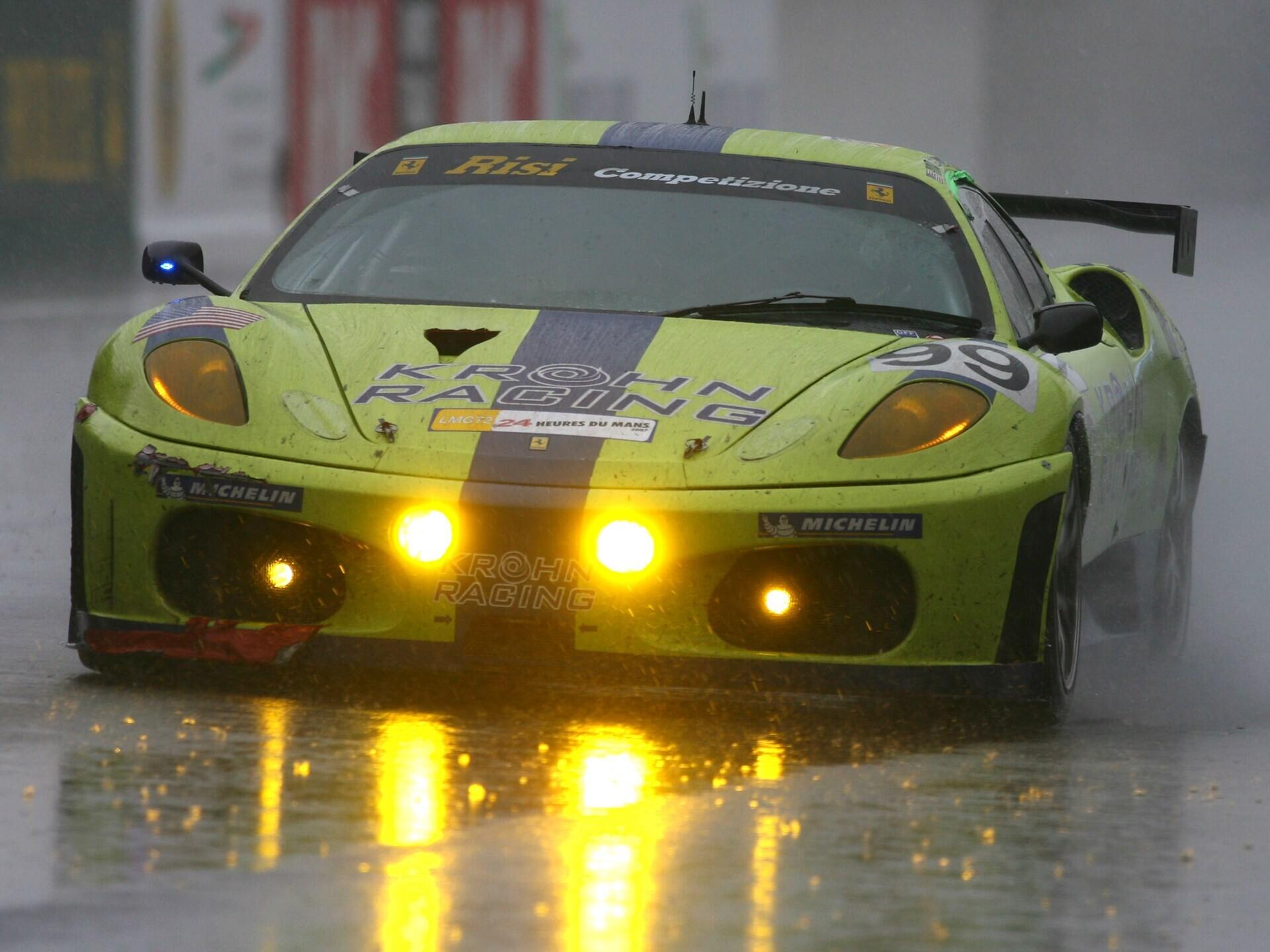
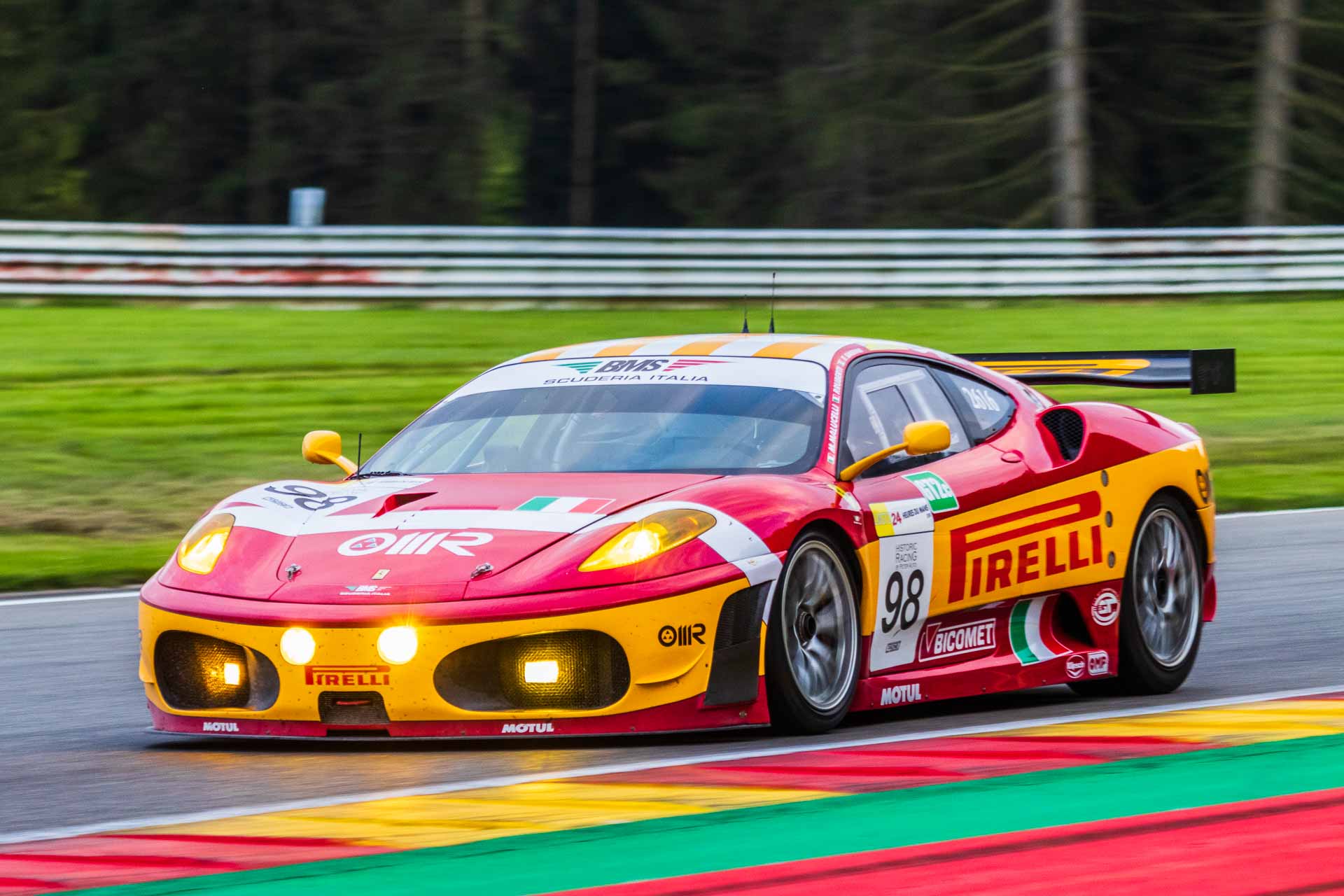
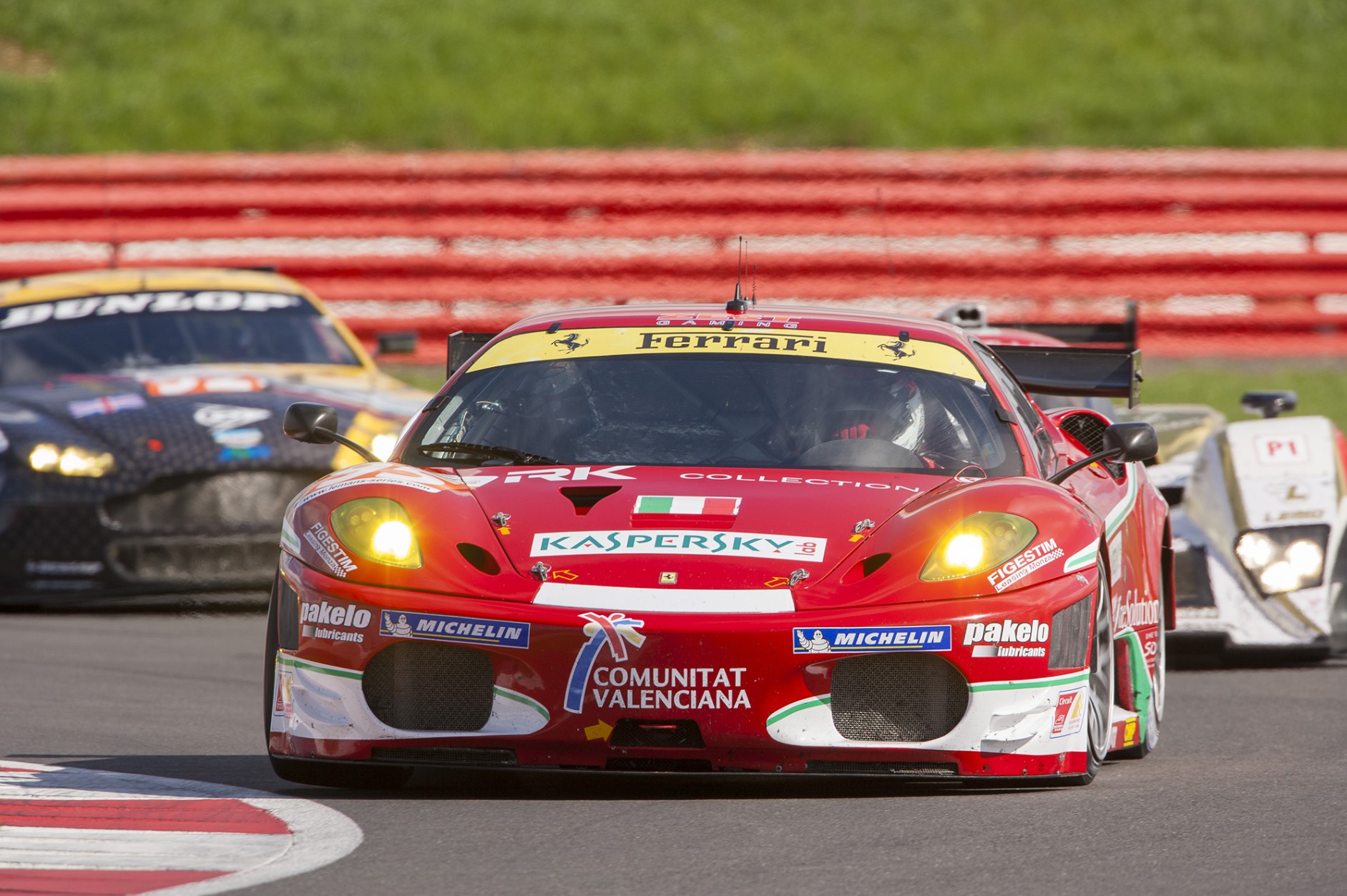
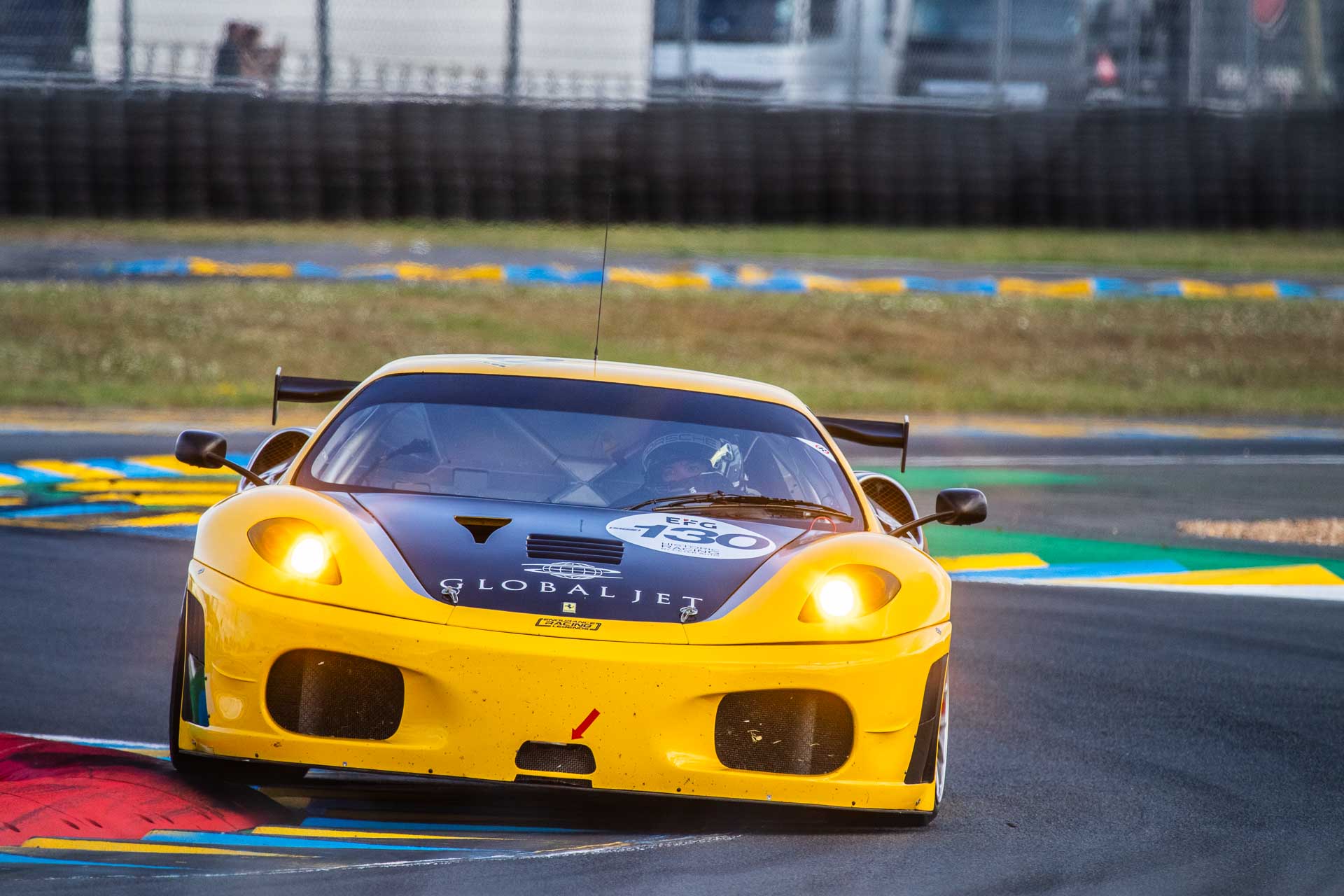
The arrival of the 2006 Ferrari F430 GTC marked a definitive shift in the hierarchy of international GT racing. By the mid-2000s, the GT2 category had evolved into a savage battleground, a place where the gentleman driver’s hobby was rapidly giving way to factory-backed warfare. The preceding Ferrari 360 GTC had been a capable machine, a rapier that used agility to parry the bludgeoning reliability of the Porsche 911s. But to dominate the new era, Maranello needed a broadsword. Developed in Padua by the legendary Michelotto Automobili—Ferrari’s unofficial “skunkworks” for tin-top racing—the F430 GTC was built with a singular directive: to reclaim the GT2 crown from Stuttgart on the world’s most punishing circuits, from the bumps of Sebring to the straights of Le Mans. It was not merely a converted road car; it was a bespoke endurance weapon that would go on to define the golden era of the FIA GT and American Le Mans Series.
Technically, the transformation from the road-going F430 to the GTC specification was a masterclass in regulation exploitation and engineering reductionism. While the road car utilized a 4.3-litre V8, the GTC’s powerplant, designated the F136 GT, was de-stroked to 3,996cc. This reduction was a strategic necessity to fit into the 1,100 kg weight class of the FIA regulations. Despite the smaller displacement and the suffocating presence of mandatory air restrictors, the engine was a marvel of response. It featured a flat-plane crankshaft, titanium connecting rods, and a remapped ECU that prioritized torque delivery out of corners over peak horsepower. Output was rated conservatively at roughly 450 to 470 bhp, but the delivery was ferocious. This power was channeled not through the road car’s paddle-shift system, but via a Hewland six-speed sequential gearbox with straight-cut gears, a unit loud enough to be heard over the engine itself.
The chassis was the standard aluminium spaceframe, but it was stiffened and fitted with a comprehensive roll cage that tied the suspension pick-up points together, creating a structure of immense rigidity. The suspension utilized double wishbones with rose joints, eliminating all rubber compliance, and was damped by multi-way adjustable shock absorbers. Aerodynamically, the GTC was a significant step forward from the 360. A prominent carbon-fibre front splitter shoveled air around the car, while a massive, adjustable rear wing and a full-width rear diffuser generated levels of downforce that allowed the car to corner flat at speeds that defied physics. The bodywork was a mix of aluminium and carbon fibre, widening the track to accommodate massive racing slicks, giving the GTC a hunkered, predatory stance that made the standard F430 look pedestrian by comparison.
The impact of the F430 GTC was immediate and devastating. Making its debut in the 2006 season, it quickly proved to be the new benchmark. In the American Le Mans Series (ALMS), the Risi Competizione team turned the F430 GTC into the scourge of the Porsche armada. The car’s balance was its greatest weapon; where the rear-engined Porsches fought for traction as the tires wore down, the mid-engined Ferrari remained consistent, allowing for double-stinting of tires and relentless lap times. The 2007 12 Hours of Sebring remains the car’s defining moment. In the closing minutes of the race, Jaime Melo in the Risi F430 GTC battled wheel-to-wheel with Jörg Bergmeister in the Flying Lizard Porsche. The final lap saw them side-by-side through the final corner, contact was made, and the Ferrari crossed the line sideways, smoking and battered, to take the win by a scant 0.2 seconds. It is widely regarded as the greatest finish in Sebring history.
Throughout 2006 and 2007, the F430 GTC racked up championships in the FIA GT series with AF Corse and dominated the ALMS. It conquered the 24 Hours of Le Mans in 2008, with Risi Competizione taking the GT2 class victory, proving that the Italian thoroughbred possessed the durability to outlast the German tractors. The car became the gold standard for privateer teams, offering a turn-key solution that was capable of winning major endurance races right out of the box. Its reliability was almost un-Ferrari-like; the engines could run for 30 hours without a rebuild, and the electronics were robust, a testament to Michelotto’s pragmatic engineering.
The legacy of the 2006 Ferrari F430 GTC is that of the dynasty builder. It laid the foundation for the subsequent GTC Evo and the 458 GT2, establishing a lineage of V8 mid-engined dominance that continues to this day. It broke the stranglehold Porsche held on the GT2 class, forcing rivals to redesign their cars to keep up. Today, these early F430 GTCs are revered in the historic racing community. They represent the last of the “pure” GT racers before advanced traction control systems and paddle-shift gearboxes became mandatory in the class. To witness an F430 GTC at full chat, spitting flames on downshifts and screaming at 9,000 rpm, is to see the very essence of 21st-century GT racing: sophisticated, violent, and utterly beautiful.
Brand
Produced from
Portal
Vehicle category
Model line
Predecessor
Sucessor
Brand
Produced from
Portal
Vehicle category
Model line
Model generation
Predecessor
Sucessor
Submodel Overview
The arrival of the 2006 Ferrari F430 GTC marked a definitive shift in the hierarchy of international GT racing. By the mid-2000s, the GT2 category had evolved into a savage battleground, a place where the gentleman driver’s hobby was rapidly giving way to factory-backed warfare. The preceding Ferrari 360 GTC had been a capable machine, a rapier that used agility to parry the bludgeoning reliability of the Porsche 911s. But to dominate the new era, Maranello needed a broadsword. Developed in Padua by the legendary Michelotto Automobili—Ferrari’s unofficial “skunkworks” for tin-top racing—the F430 GTC was built with a singular directive: to reclaim the GT2 crown from Stuttgart on the world’s most punishing circuits, from the bumps of Sebring to the straights of Le Mans. It was not merely a converted road car; it was a bespoke endurance weapon that would go on to define the golden era of the FIA GT and American Le Mans Series.
Technically, the transformation from the road-going F430 to the GTC specification was a masterclass in regulation exploitation and engineering reductionism. While the road car utilized a 4.3-litre V8, the GTC’s powerplant, designated the F136 GT, was de-stroked to 3,996cc. This reduction was a strategic necessity to fit into the 1,100 kg weight class of the FIA regulations. Despite the smaller displacement and the suffocating presence of mandatory air restrictors, the engine was a marvel of response. It featured a flat-plane crankshaft, titanium connecting rods, and a remapped ECU that prioritized torque delivery out of corners over peak horsepower. Output was rated conservatively at roughly 450 to 470 bhp, but the delivery was ferocious. This power was channeled not through the road car’s paddle-shift system, but via a Hewland six-speed sequential gearbox with straight-cut gears, a unit loud enough to be heard over the engine itself.
The chassis was the standard aluminium spaceframe, but it was stiffened and fitted with a comprehensive roll cage that tied the suspension pick-up points together, creating a structure of immense rigidity. The suspension utilized double wishbones with rose joints, eliminating all rubber compliance, and was damped by multi-way adjustable shock absorbers. Aerodynamically, the GTC was a significant step forward from the 360. A prominent carbon-fibre front splitter shoveled air around the car, while a massive, adjustable rear wing and a full-width rear diffuser generated levels of downforce that allowed the car to corner flat at speeds that defied physics. The bodywork was a mix of aluminium and carbon fibre, widening the track to accommodate massive racing slicks, giving the GTC a hunkered, predatory stance that made the standard F430 look pedestrian by comparison.
The impact of the F430 GTC was immediate and devastating. Making its debut in the 2006 season, it quickly proved to be the new benchmark. In the American Le Mans Series (ALMS), the Risi Competizione team turned the F430 GTC into the scourge of the Porsche armada. The car’s balance was its greatest weapon; where the rear-engined Porsches fought for traction as the tires wore down, the mid-engined Ferrari remained consistent, allowing for double-stinting of tires and relentless lap times. The 2007 12 Hours of Sebring remains the car’s defining moment. In the closing minutes of the race, Jaime Melo in the Risi F430 GTC battled wheel-to-wheel with Jörg Bergmeister in the Flying Lizard Porsche. The final lap saw them side-by-side through the final corner, contact was made, and the Ferrari crossed the line sideways, smoking and battered, to take the win by a scant 0.2 seconds. It is widely regarded as the greatest finish in Sebring history.
Throughout 2006 and 2007, the F430 GTC racked up championships in the FIA GT series with AF Corse and dominated the ALMS. It conquered the 24 Hours of Le Mans in 2008, with Risi Competizione taking the GT2 class victory, proving that the Italian thoroughbred possessed the durability to outlast the German tractors. The car became the gold standard for privateer teams, offering a turn-key solution that was capable of winning major endurance races right out of the box. Its reliability was almost un-Ferrari-like; the engines could run for 30 hours without a rebuild, and the electronics were robust, a testament to Michelotto’s pragmatic engineering.
The legacy of the 2006 Ferrari F430 GTC is that of the dynasty builder. It laid the foundation for the subsequent GTC Evo and the 458 GT2, establishing a lineage of V8 mid-engined dominance that continues to this day. It broke the stranglehold Porsche held on the GT2 class, forcing rivals to redesign their cars to keep up. Today, these early F430 GTCs are revered in the historic racing community. They represent the last of the “pure” GT racers before advanced traction control systems and paddle-shift gearboxes became mandatory in the class. To witness an F430 GTC at full chat, spitting flames on downshifts and screaming at 9,000 rpm, is to see the very essence of 21st-century GT racing: sophisticated, violent, and utterly beautiful.
Tech Specs
Technical Specifications
Tech Specs
Technical Specifications
Engine
01
03
Internal combustion engine
Configuration
Ferrari F136 GT, V8 - 90º (Flat-plane crankshaft)
Location
Mid, longitudinally mounted
Construction
Aluminium alloy block and heads
Displacement (cc)
3,996 cc
Displacement (cu in)
243.8 cu in
Compression
13.0:1
Bore x Stroke
92.0 mm x 75.2 mm (De-stroked from street car's 81mm)
Valvetrain
4 valves per cylinder, DOHC
Fuel feed
Magneti Marelli digital fuel injection
Lubrication
Dry sump
Aspiration
Naturally aspirated (with 2 x 28.6mm FIA Air Restrictors)c
Output
Power (hp)
~470 hp
Power (kW)
~350 kW
Max power at
7,500 RPM
Torque (Nm)
460 Nm
Torque (ft lbs)
339 ft lbs
Max torque at
5,500 RPM
Drivetrain
02
03
Chassis
Type
Monocoque with integrated steel roll cage
Material
Aluminium
Body
Material
Carbon fibre and Kevlar composite panels
Transmission
Gearbox
Hewland, 6-speed sequential
Drive
Rear Wheel Drive (Mechanical Limited Slip Differential)
Suspension
Front
Independent, double wishbones, coil springs over adjustable dampers, anti-roll bar
Rear
Independent, double wishbones, coil springs over adjustable dampers, anti-roll bar
Steering
Type
Rack and pinion, hydraulic power assisted
Brakes
Front
Ventilated steel discs Ø380 mm, 6-piston calipers (Brembo - Steel required by GT2 regs)
Rear
Ventilated steel discs Ø332 mm, 4-piston calipers (Brembo - Steel required by GT2 regs)
Wheels
Front
11" x 18" (Forged Magnesium BBS)
Rear
13" x 18" (Forged Magnesium BBS)
Tires
Front
30/65-18 (Michelin Racing Slicks)
Rear
31/71-18 (Michelin Racing Slicks)
Dimensions and performance
03
03
Dimensions
Length (mm)
4,512 mm
Length (in)
177.6 in
Width (mm)
2,060 mm
Width (in)
81.1 in
Height (mm)
1,175 mm
Height (in)
46.3 in
Wheelbase (mm)
2,600 mm
Wheelbase (in)
102.4 in
Weight (kg)
1,100 kg
Weight (lbs)
2,425 lbs
Performance
Power to weight
~0.43 hp/kg
Top speed (km/h)
300 km/h
Top speed (mph)
186 mph
0-100 km/h (0-60 mph)
~3.2 s