
Aston Martin AMR1 6.0
Brand
Produced from
Portal
Vehicle category
Model line
Predecessor
Successor
Submodel Overview
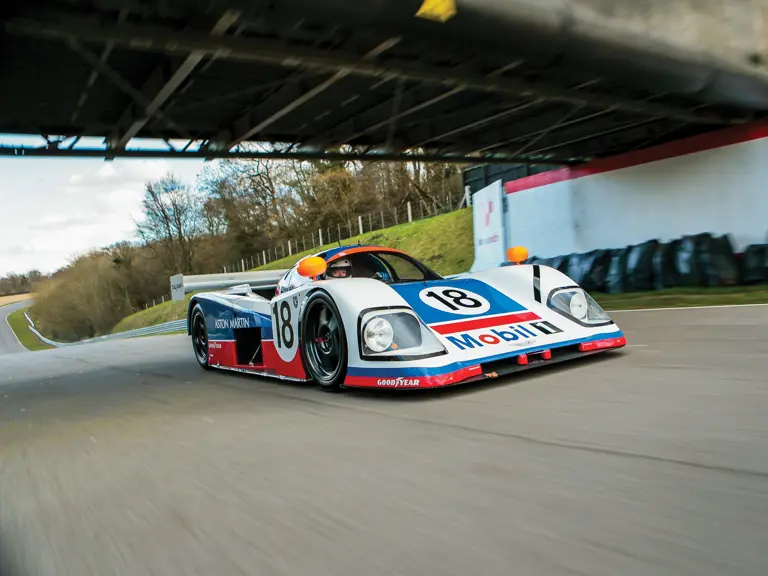
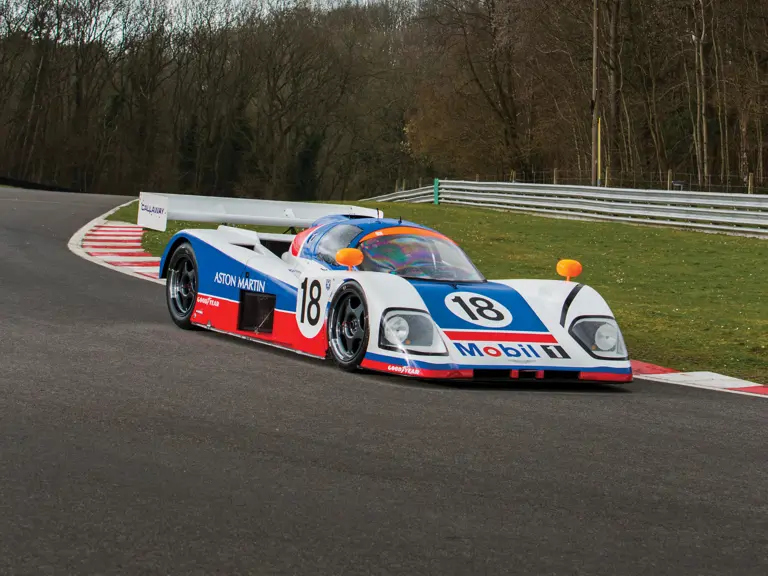
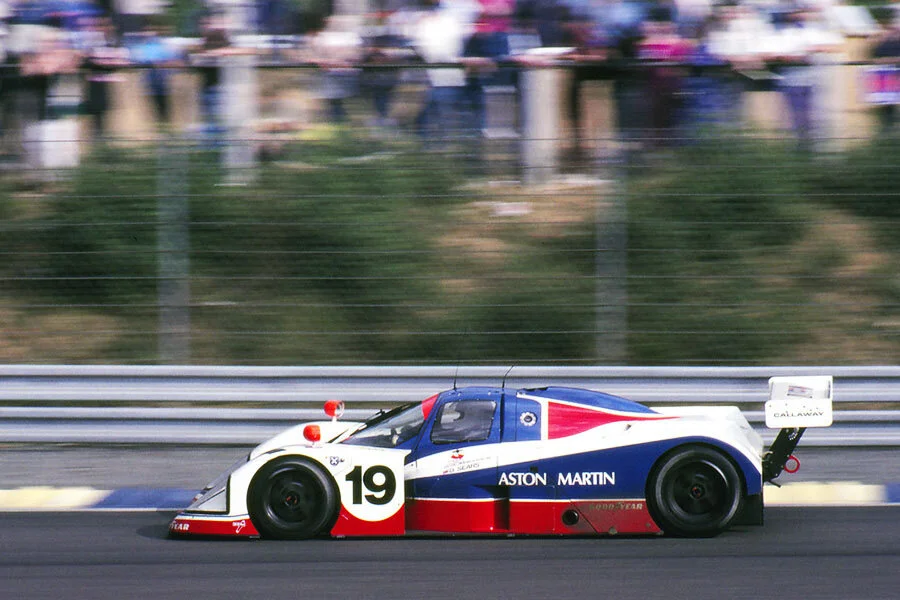
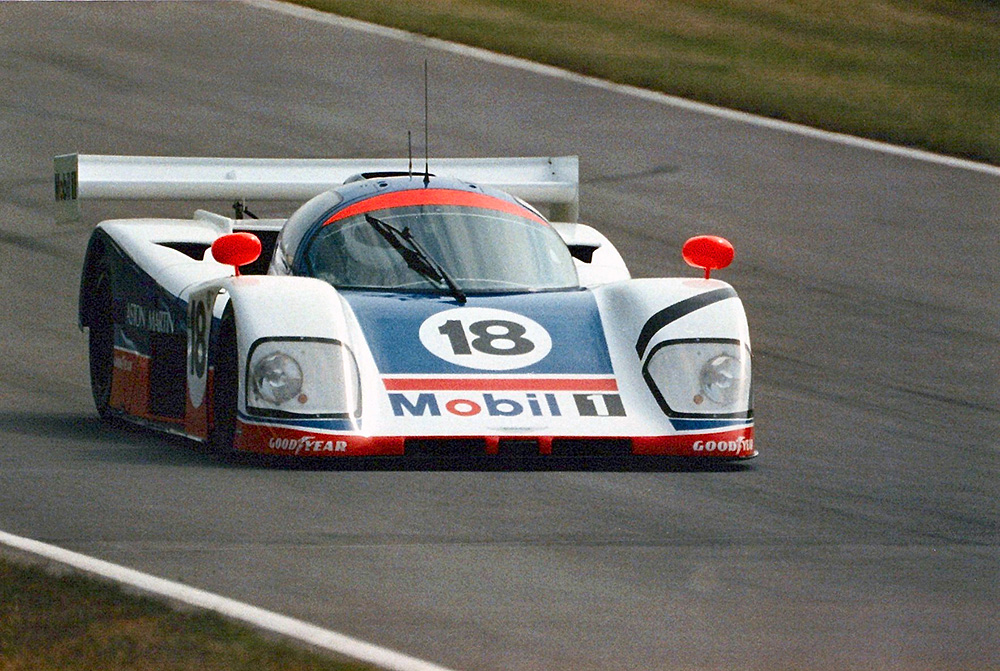
In the late 1980s, the World Sports Prototype Championship was a theatre of noise and technological excess, a peak era of Group C where the established order of Porsche was being violently disrupted by the arrival of Sauber-Mercedes and the Silk Cut Jaguars. For Aston Martin, a name synonymous with the golden age of sports car racing and that historic 1959 victory at La Sarthe, the urge to return to the top flight had become an obsession. Under the stewardship of Victor Gauntlett and Peter Livanos, and through a partnership with Ecurie Ecosse known as Proteus Technology (Protech), the 1989 Aston Martin AMR1 was born. It was a defiant, clean-sheet design that aimed to plant the Union Jack firmly back on the podium. Stepping into a grid dominated by the whistling turbos of the Porsche 962 and the sophisticated V12 of the Jaguar XJR-9, the AMR1 6.0L was a romantic but serious outlier. It didn’t just have to beat the clock; it had to prove that a naturally aspirated, road-car derived architecture could survive the most punishing 24-hour marathon in the world.
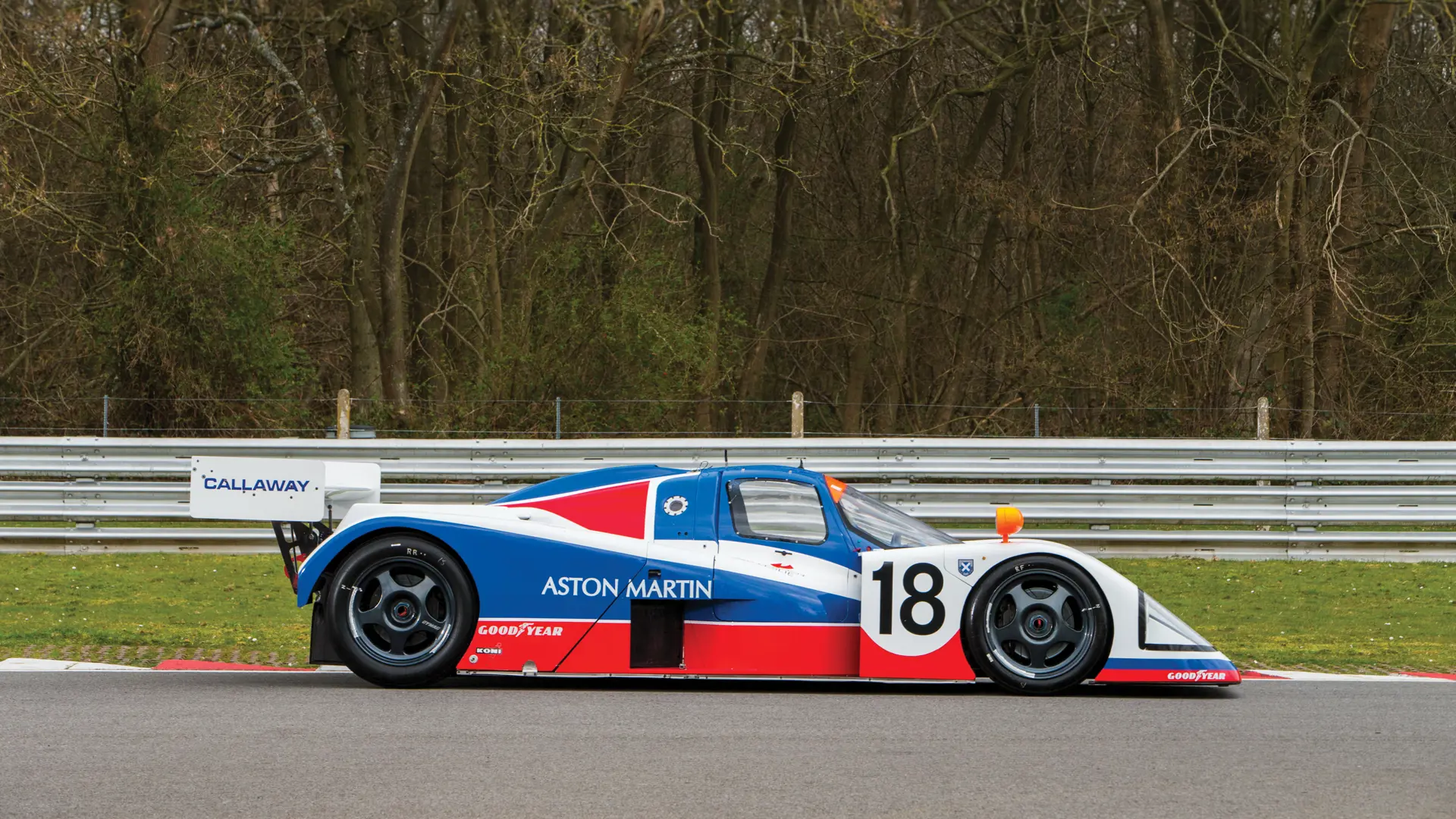
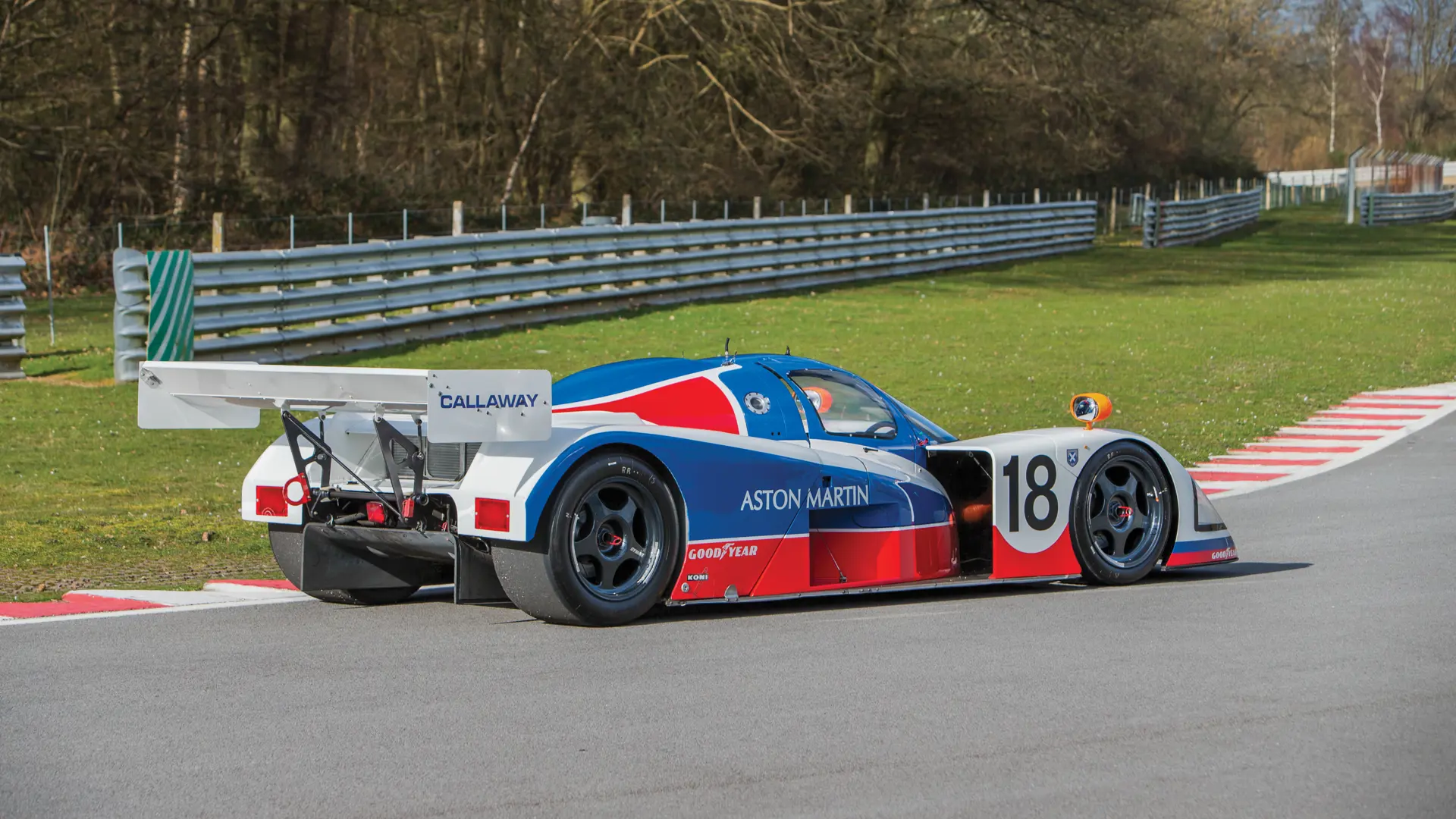
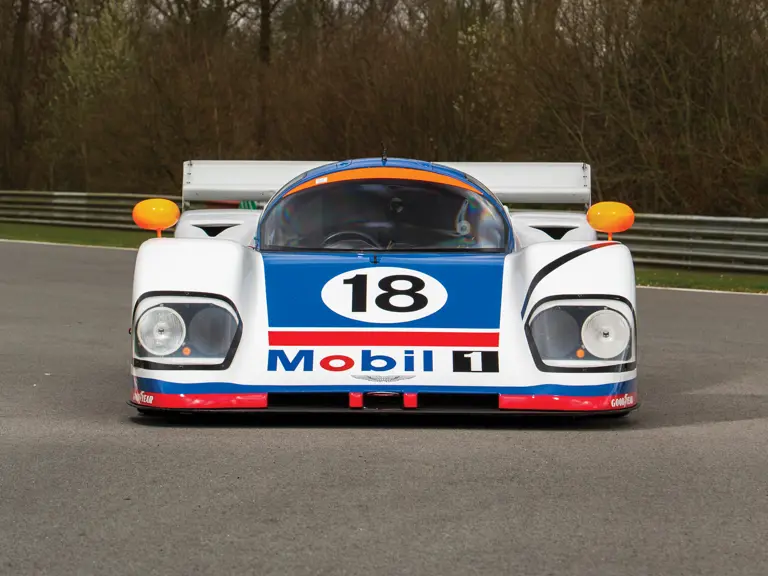
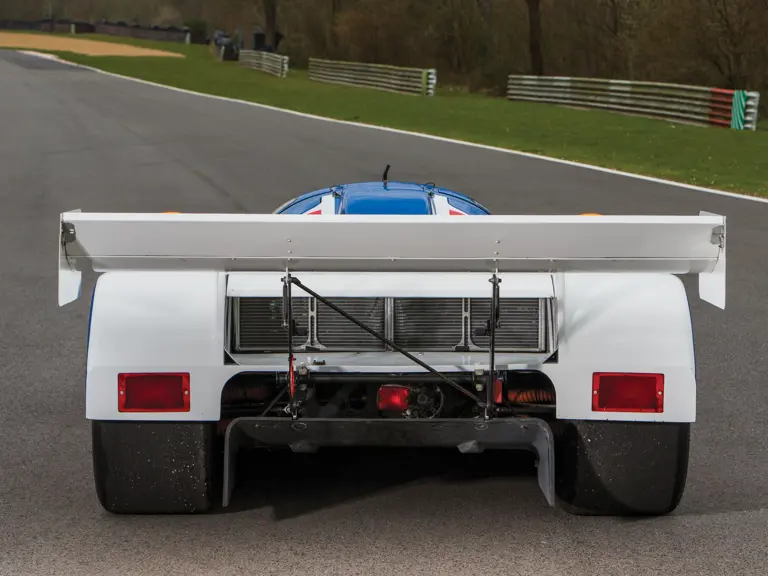
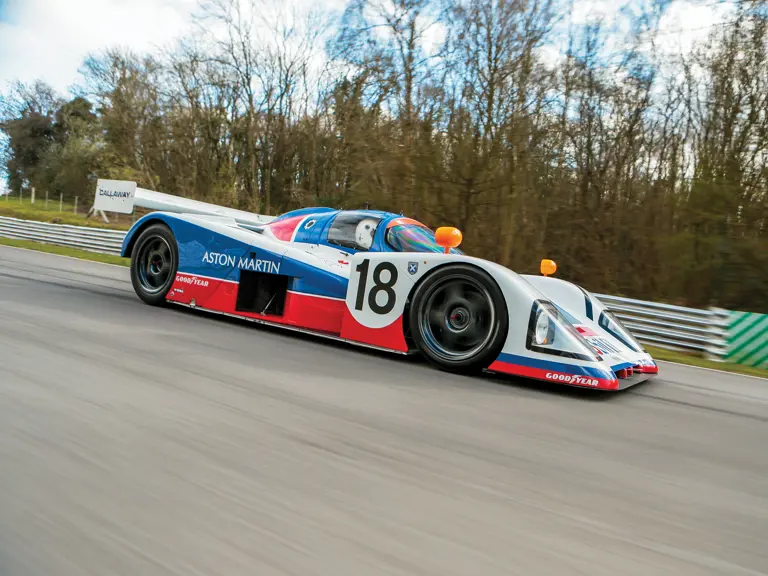
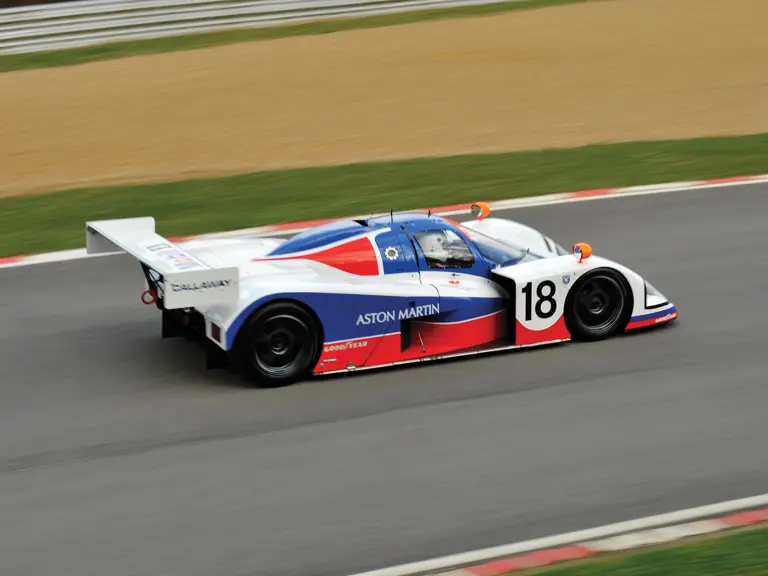
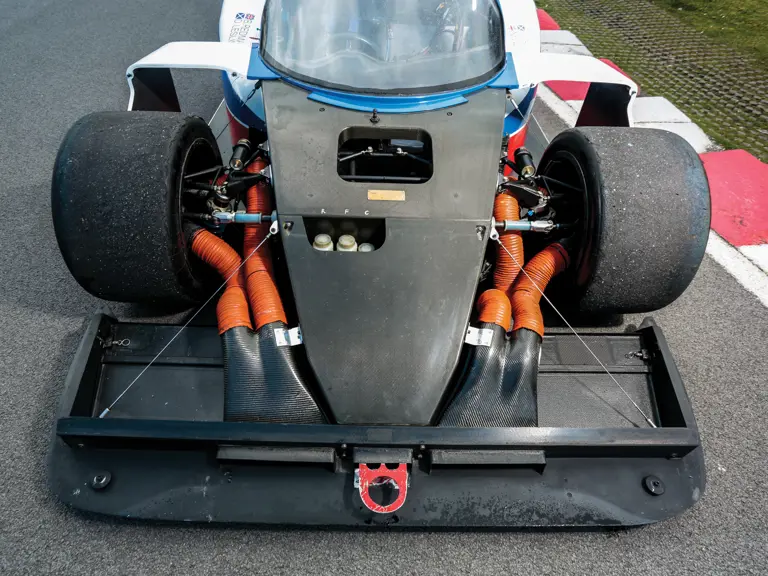
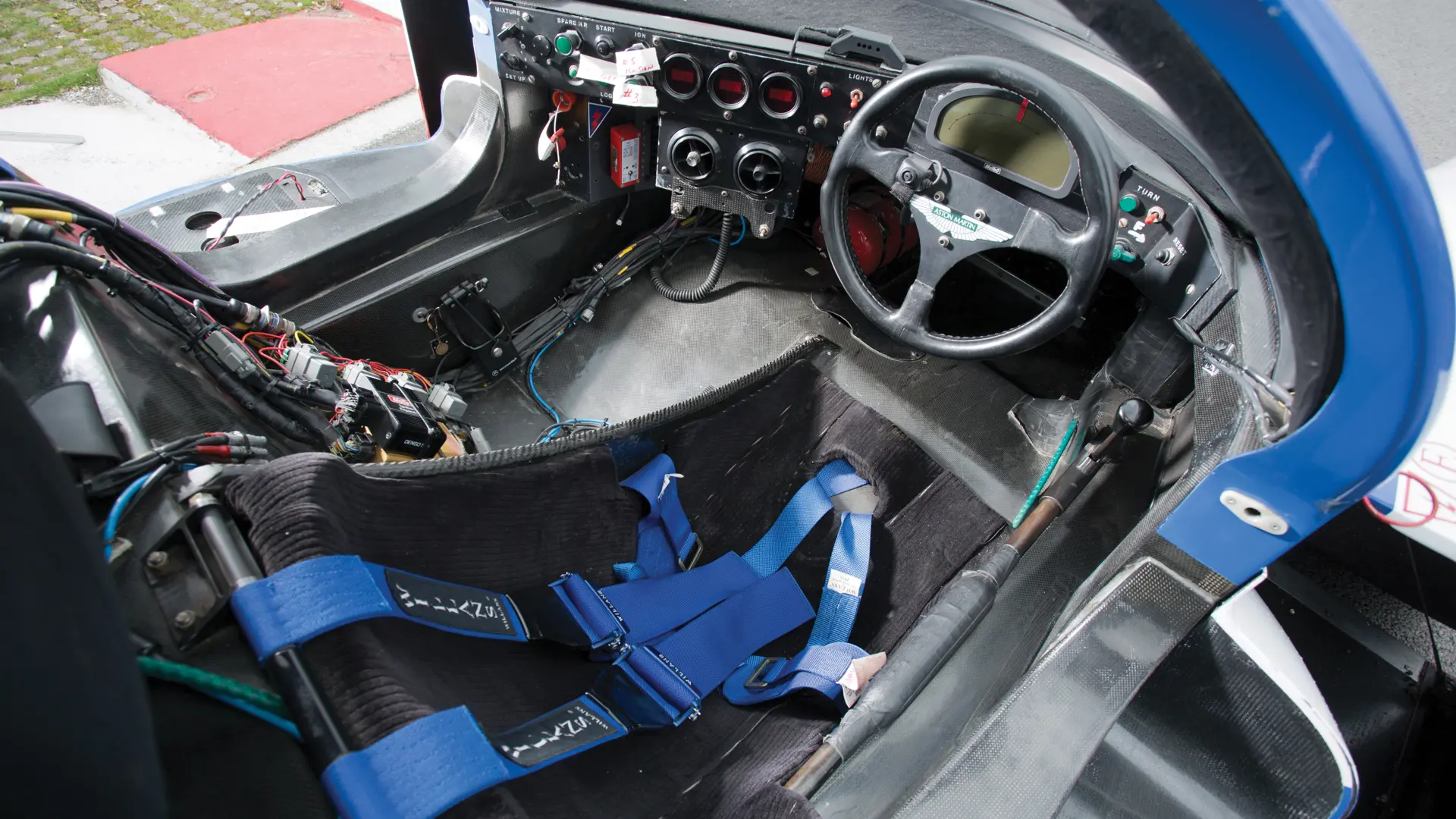
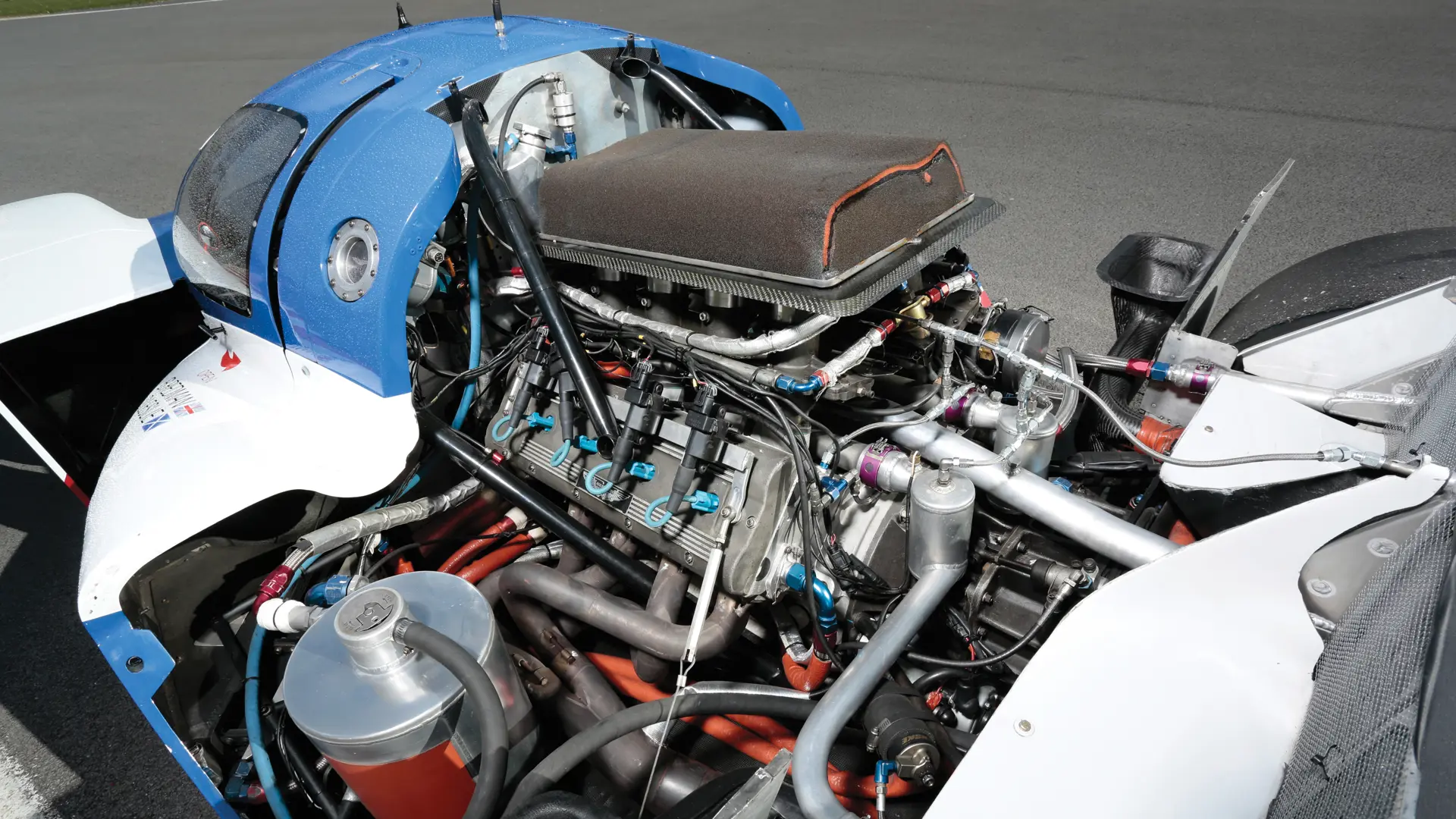
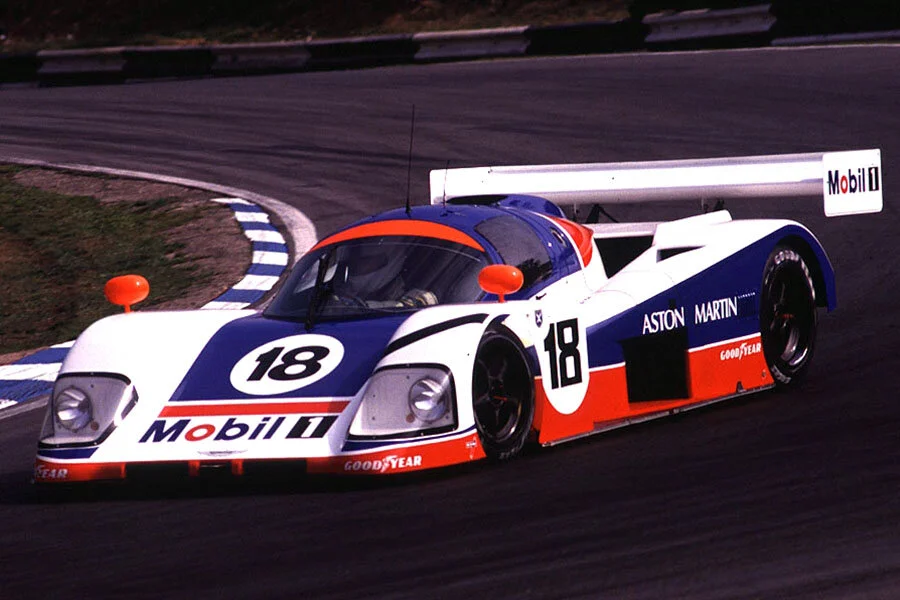
To look at the AMR1 6.0L is to see a radical departure from the flowing, teardrop silhouettes of its contemporaries. Designed by the visionary Max Boxstrom, the car possessed a monolithic, almost brutalist aesthetic. This was not for style, but for the pursuit of absolute ground effect. Boxstrom believed that by relocating the radiators from the front of the car to the rear, he could create a massive, clean airflow through the front and under the body’s venturi tunnels. The chassis itself was at the vanguard of materials science, utilizing a carbon fiber and Kevlar monocoque of immense rigidity, manufactured by Courtaulds. Beneath the rear bodywork sat the 6.0-liter version of the all-alloy, 32-valve V8. Developed by Reeves Callaway in Connecticut, this engine was a masterpiece of old-school displacement meeting modern breathing. While the rest of the world relied on turbochargers to find their 700 horsepower, the AMR1 relied on the frantic, baritone bellow of a high-revving N/A unit. It was a physical car—vibrational, loud, and demanding—clothed in a shape that seemed to punch its way through the air rather than slip through it.
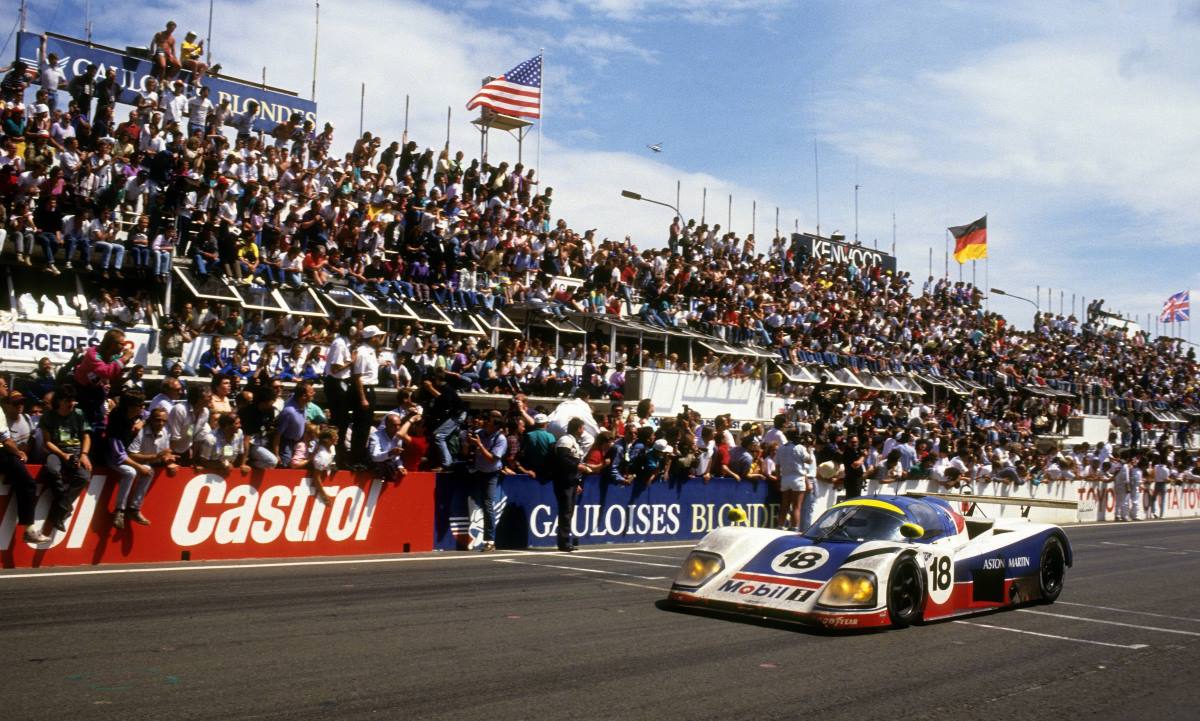
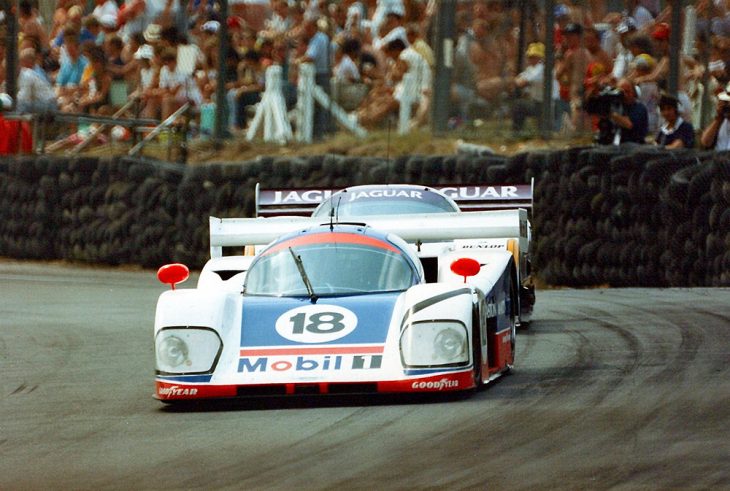
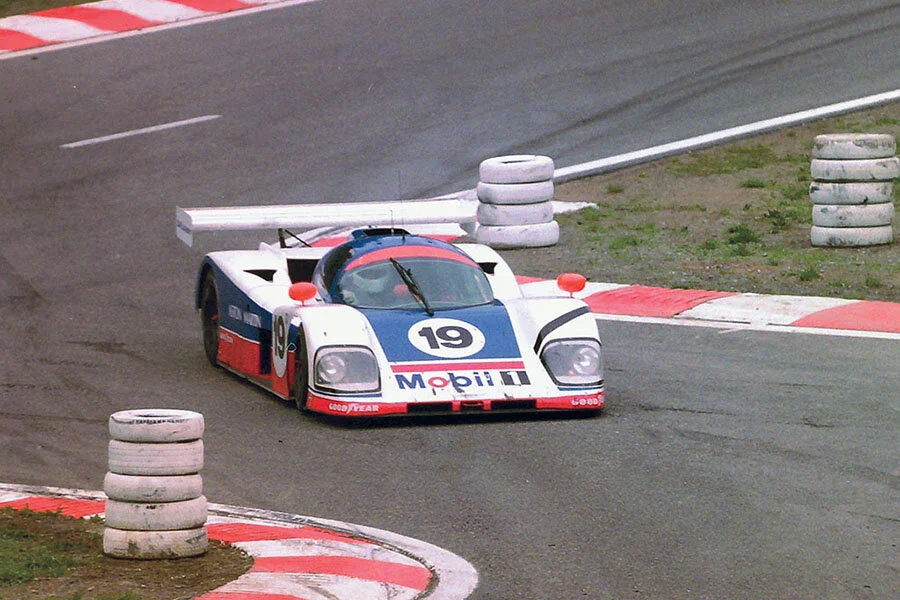
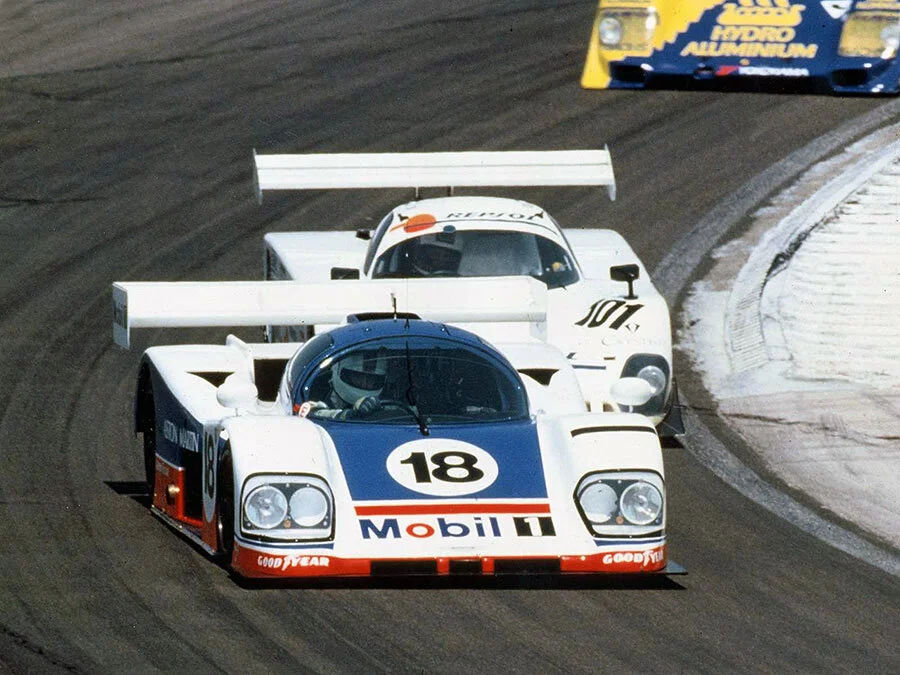
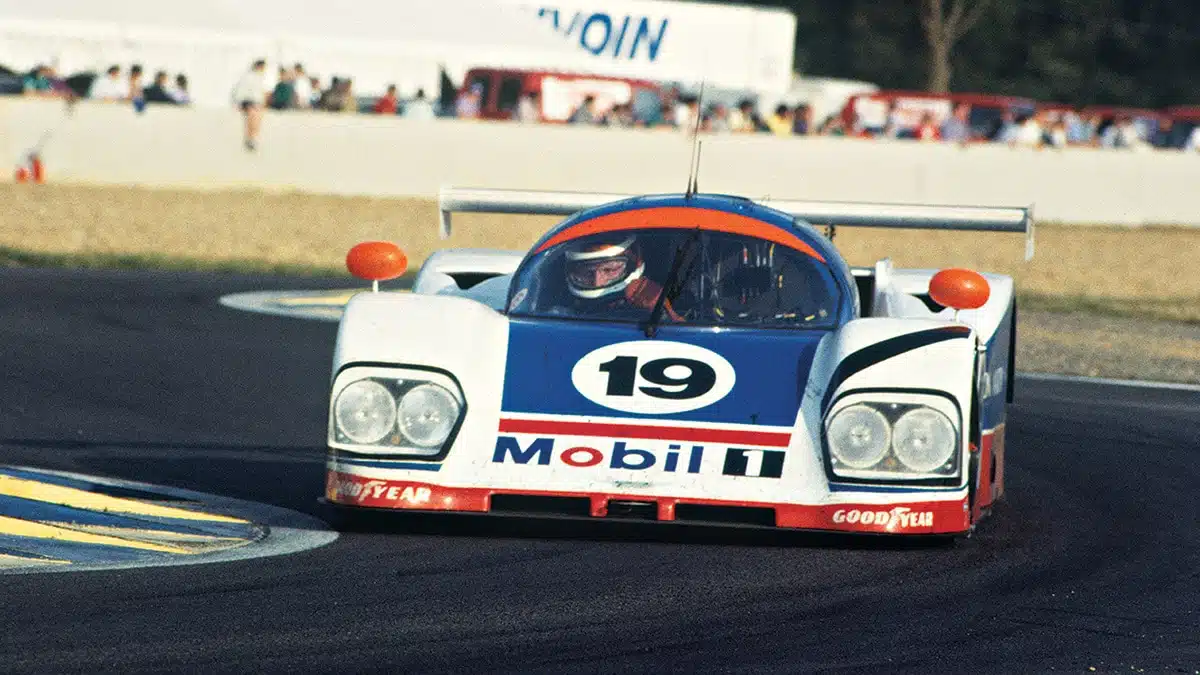
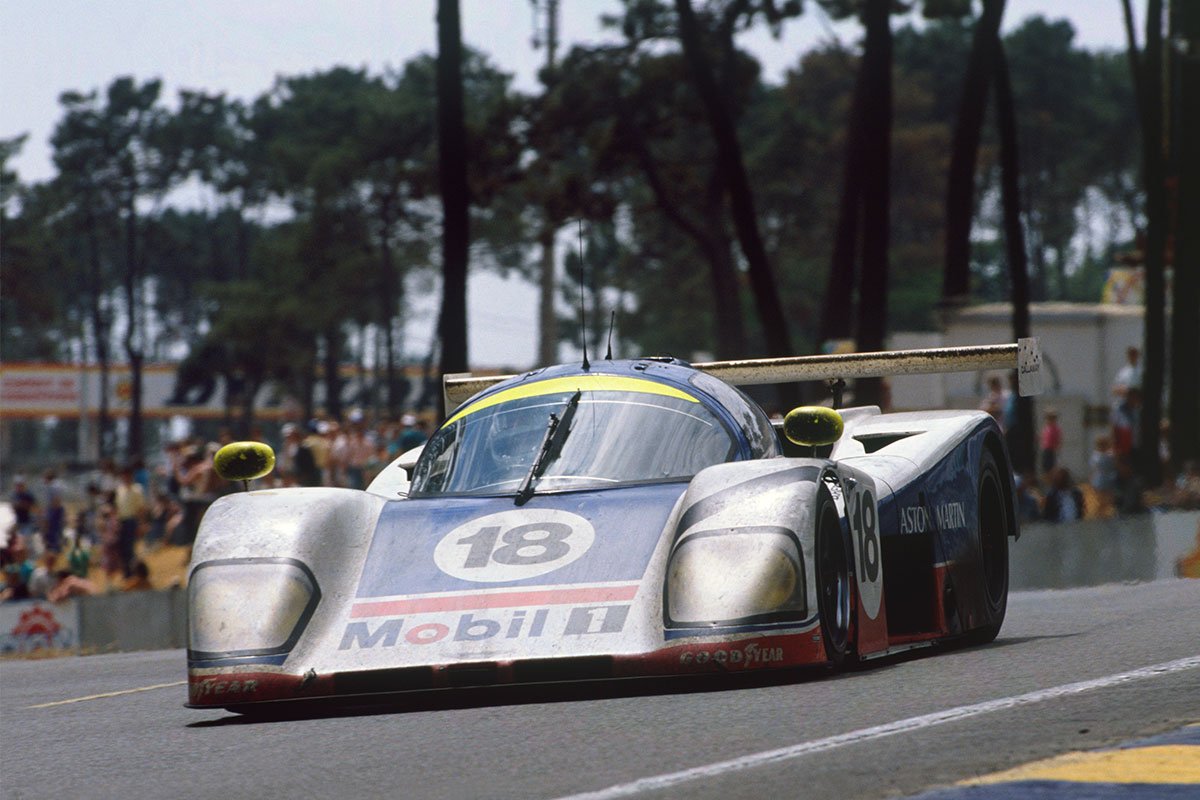
The competitive life of the 6.0L variant was a trial by fire. Debuting at the 480km of Dijon in May 1989, the car faced typical teething issues, struggling to find the pace of the front-running Silver Arrows. However, the true test was always the 24 Hours of Le Mans. In 1989, Aston Martin arrived with two 6.0L cars. While one car succumbed to electrical gremlins, the sister car, piloted by Brian Redman, Costas Los, and Michael Roe, ran a race defined by grit and mechanical sympathy. It was down on top speed compared to the turbos, but it was unbreakably consistent. Crossing the line in 11th place overall, the AMR1 6.0L secured a massive moral victory for Newport Pagnell. It wasn’t a podium, but it was a finish—a statement that Aston Martin was back. On the technical, undulating circuits like Brands Hatch, the AMR1’s immense downforce began to shine, allowing the 6.0L to punch far above its weight in cornering speeds, often hounding the leaders in the technical sections before being out-dragged on the straights.
Tragically, the story of the AMR1 was cut short not by mechanical failure, but by corporate consolidation. Just as Protech was refining the engine into the 6.3L evolution and preparing the sleeker AMR2 for 1990, Ford acquired a majority stake in Aston Martin. Ford already owned Jaguar and was successfully funding Tom Walkinshaw’s racing program. The boardroom decree was swift and clinical: there was no room for two competing factory programs. The AMR1 project was shuttered, leaving many to wonder what could have happened had the 6.0L had a second season to mature. Today, the AMR1 6.0L stands as a magnificent “what if” in the pantheon of motorsport. It remains one of the most charismatic prototypes of the Group C era, a thunderous V8 giant that prioritised engineering soul and aerodynamic daring. Whenever it appears at historic meetings, its earth-shaking roar serves as a visceral reminder of a time when a small, dedicated team from Buckinghamshire took on the giants of the world.
Brand
Produced from
Portal
Vehicle category
Model line
Predecessor
Sucessor
Brand
Produced from
Portal
Vehicle category
Model line
Model generation
Predecessor
Sucessor
Submodel Overview
In the late 1980s, the World Sports Prototype Championship was a theatre of noise and technological excess, a peak era of Group C where the established order of Porsche was being violently disrupted by the arrival of Sauber-Mercedes and the Silk Cut Jaguars. For Aston Martin, a name synonymous with the golden age of sports car racing and that historic 1959 victory at La Sarthe, the urge to return to the top flight had become an obsession. Under the stewardship of Victor Gauntlett and Peter Livanos, and through a partnership with Ecurie Ecosse known as Proteus Technology (Protech), the 1989 Aston Martin AMR1 was born. It was a defiant, clean-sheet design that aimed to plant the Union Jack firmly back on the podium. Stepping into a grid dominated by the whistling turbos of the Porsche 962 and the sophisticated V12 of the Jaguar XJR-9, the AMR1 6.0L was a romantic but serious outlier. It didn’t just have to beat the clock; it had to prove that a naturally aspirated, road-car derived architecture could survive the most punishing 24-hour marathon in the world.
To look at the AMR1 6.0L is to see a radical departure from the flowing, teardrop silhouettes of its contemporaries. Designed by the visionary Max Boxstrom, the car possessed a monolithic, almost brutalist aesthetic. This was not for style, but for the pursuit of absolute ground effect. Boxstrom believed that by relocating the radiators from the front of the car to the rear, he could create a massive, clean airflow through the front and under the body’s venturi tunnels. The chassis itself was at the vanguard of materials science, utilizing a carbon fiber and Kevlar monocoque of immense rigidity, manufactured by Courtaulds. Beneath the rear bodywork sat the 6.0-liter version of the all-alloy, 32-valve V8. Developed by Reeves Callaway in Connecticut, this engine was a masterpiece of old-school displacement meeting modern breathing. While the rest of the world relied on turbochargers to find their 700 horsepower, the AMR1 relied on the frantic, baritone bellow of a high-revving N/A unit. It was a physical car—vibrational, loud, and demanding—clothed in a shape that seemed to punch its way through the air rather than slip through it.
The competitive life of the 6.0L variant was a trial by fire. Debuting at the 480km of Dijon in May 1989, the car faced typical teething issues, struggling to find the pace of the front-running Silver Arrows. However, the true test was always the 24 Hours of Le Mans. In 1989, Aston Martin arrived with two 6.0L cars. While one car succumbed to electrical gremlins, the sister car, piloted by Brian Redman, Costas Los, and Michael Roe, ran a race defined by grit and mechanical sympathy. It was down on top speed compared to the turbos, but it was unbreakably consistent. Crossing the line in 11th place overall, the AMR1 6.0L secured a massive moral victory for Newport Pagnell. It wasn’t a podium, but it was a finish—a statement that Aston Martin was back. On the technical, undulating circuits like Brands Hatch, the AMR1’s immense downforce began to shine, allowing the 6.0L to punch far above its weight in cornering speeds, often hounding the leaders in the technical sections before being out-dragged on the straights.
Tragically, the story of the AMR1 was cut short not by mechanical failure, but by corporate consolidation. Just as Protech was refining the engine into the 6.3L evolution and preparing the sleeker AMR2 for 1990, Ford acquired a majority stake in Aston Martin. Ford already owned Jaguar and was successfully funding Tom Walkinshaw’s racing program. The boardroom decree was swift and clinical: there was no room for two competing factory programs. The AMR1 project was shuttered, leaving many to wonder what could have happened had the 6.0L had a second season to mature. Today, the AMR1 6.0L stands as a magnificent “what if” in the pantheon of motorsport. It remains one of the most charismatic prototypes of the Group C era, a thunderous V8 giant that prioritised engineering soul and aerodynamic daring. Whenever it appears at historic meetings, its earth-shaking roar serves as a visceral reminder of a time when a small, dedicated team from Buckinghamshire took on the giants of the world.
Tech Specs
Technical Specifications
Tech Specs
Technical Specifications
Engine
01
03
Internal combustion engine
Configuration
Aston Martin (Callaway modified) RDP87, V8 - 90º
Location
Mid, longitudinally mounted (tilted upwards 3º for ground effect)
Construction
Aluminium alloy block and heads
Displacement (cc)
5,998 cc
Displacement (cu in)
366.0 cu in
Compression
~12.0:1
Bore x Stroke
~100.0 mm x 95.5 mm
Valvetrain
4 valves per cylinder, DOHC
Fuel feed
Zytek electronic fuel management / injection
Lubrication
Dry sump
Aspiration
Naturally aspirated
Output
Power (hp)
700 hp
Power (kW)
522 kW
Max power at
7,000 RPM
Torque (Nm)
~678 Nm
Torque (ft lbs)
~500 ft lbs
Max torque at
5,500 RPM
Drivetrain
02
03
Chassis
Type
Monocoque unibody
Material
Carbon fibre, Kevlar, and Aluminium honeycomb
Body
Material
Carbon fibre and Kevlar composite
Transmission
Gearbox
Aston Martin / Hewland VGC bespoke 5-speed manual (Transaxle)
Drive
Rear Wheel Drive (Limited Slip Differential)
Suspension
Front
Independent, double wishbones, coil springs over telescopic dampers, anti-roll bar
Rear
Independent, double wishbones, inboard coil springs over telescopic dampers, anti-roll bar
Steering
Type
Rack and pinion, power assisted
Brakes
Front
Ventilated carbon-carbon discs Ø356 mm (14 in), AP Racing 6-piston calipers
Rear
Ventilated carbon-carbon discs Ø356 mm (14 in), AP Racing 6-piston calipers
Wheels
Front
13" x 17" (Dymag Cast Magnesium alloy 5-spoke)
Rear
14.5" x 18" (Dymag Cast Magnesium alloy 5-spoke)
Tires
Front
25.5/27.0-17 (Goodyear Racing Slicks)
Rear
28.5/31.0-18 (Goodyear Racing Slicks)
Dimensions and performance
03
03
Dimensions
Length (mm)
4,780 mm
Length (in)
188.2 in
Width (mm)
1,990 mm
Width (in)
78.3 in
Height (mm)
1,020 mm
Height (in)
40.2 in
Wheelbase (mm)
2,896 mm
Wheelbase (in)
114.0 in
Weight (kg)
902 kg
Weight (lbs)
1,988 lbs
Performance
Power to weight
0.77 hp/kg
Top speed (km/h)
~350 km/h
Top speed (mph)
~217 mph
0-100 km/h (0-60 mph)
~3.2 s