
Aston Martin AMR1 6.3
Brand
Produced from
Portal
Vehicle category
Model line
Predecessor
Successor
Submodel Overview
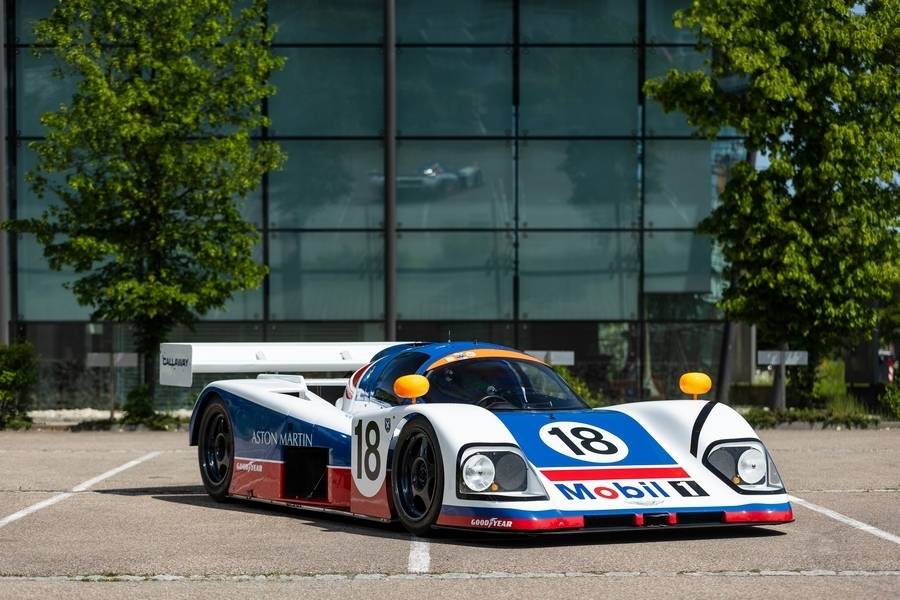
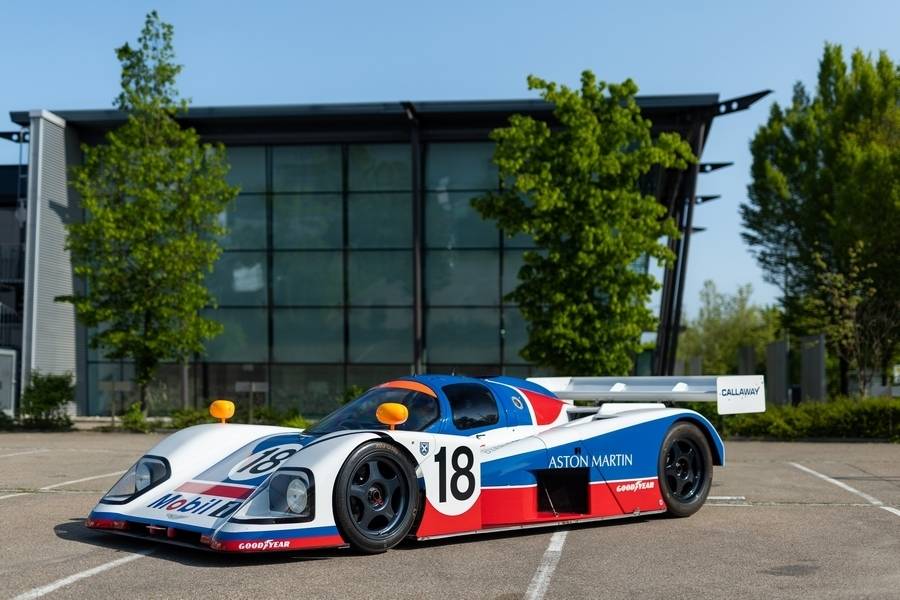
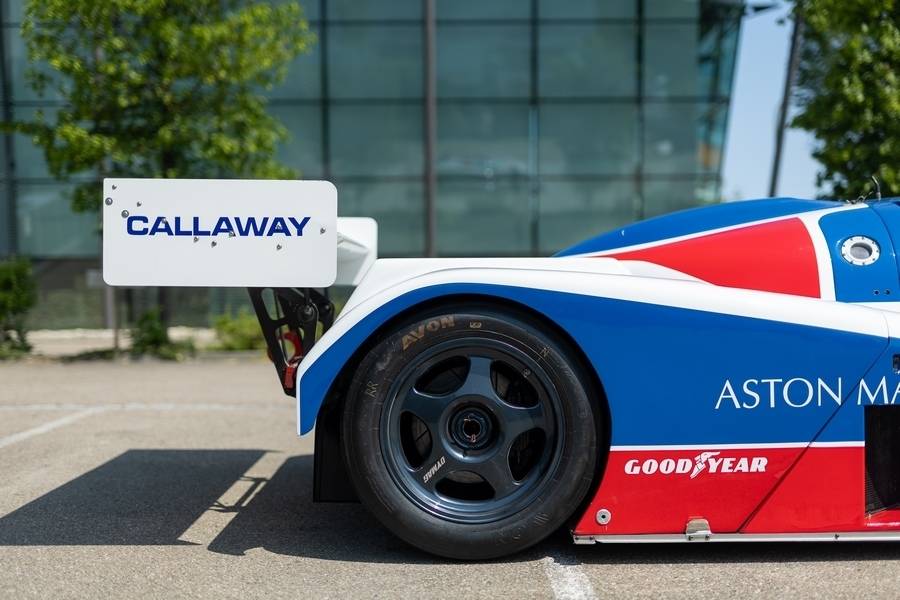
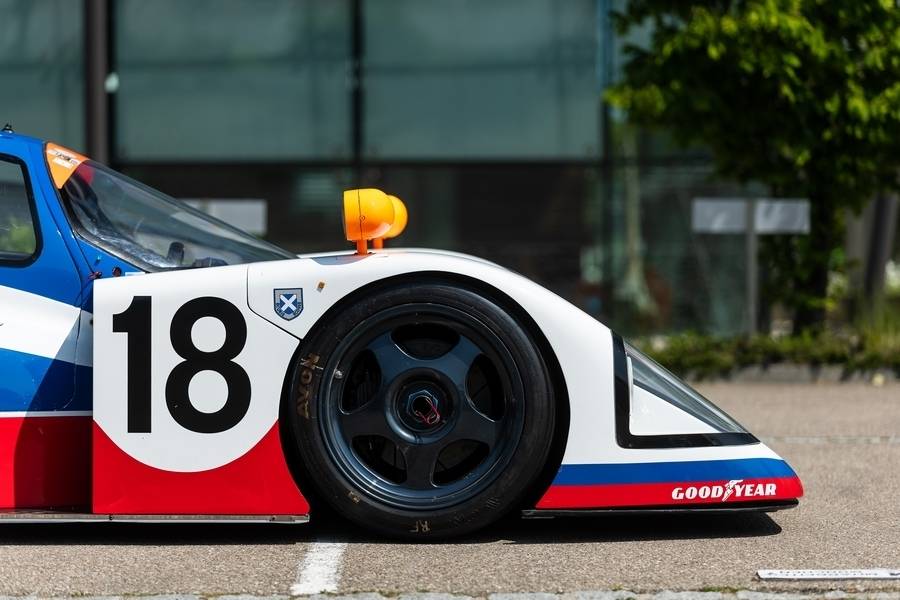
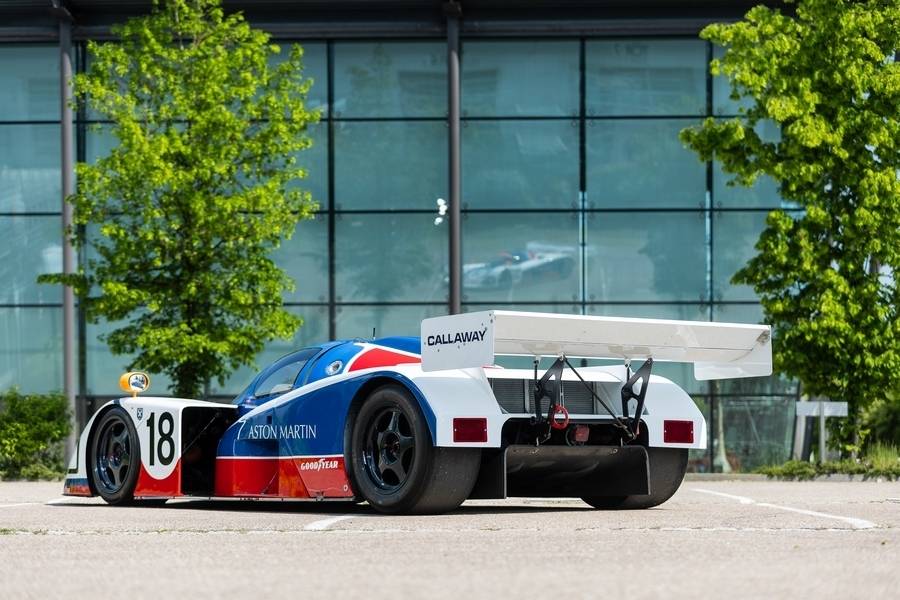
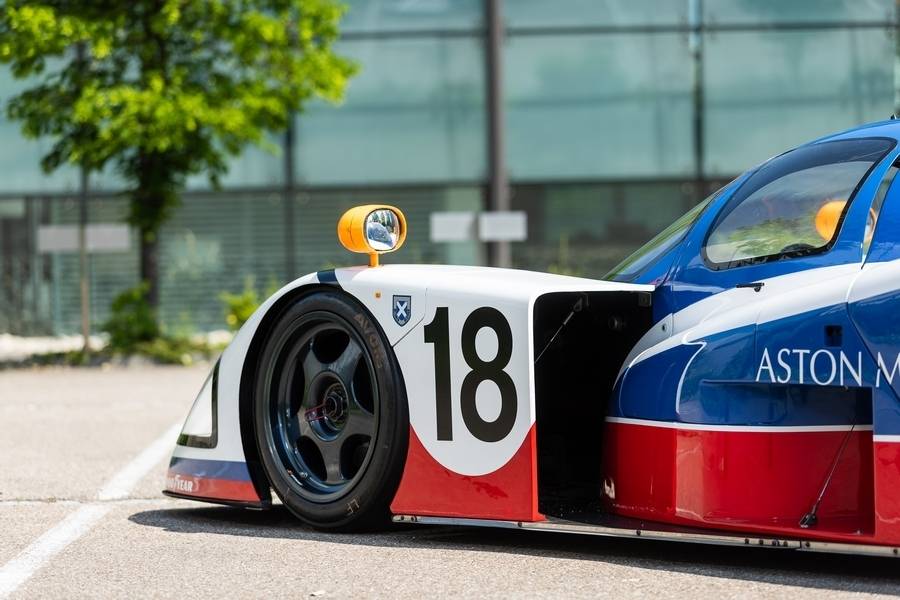
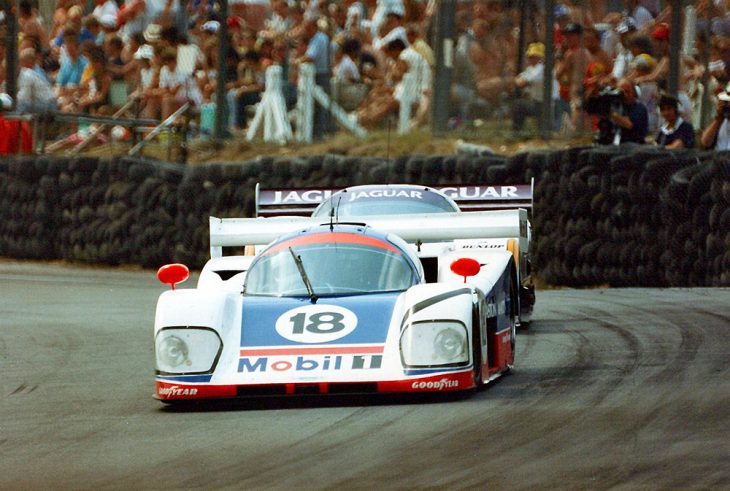
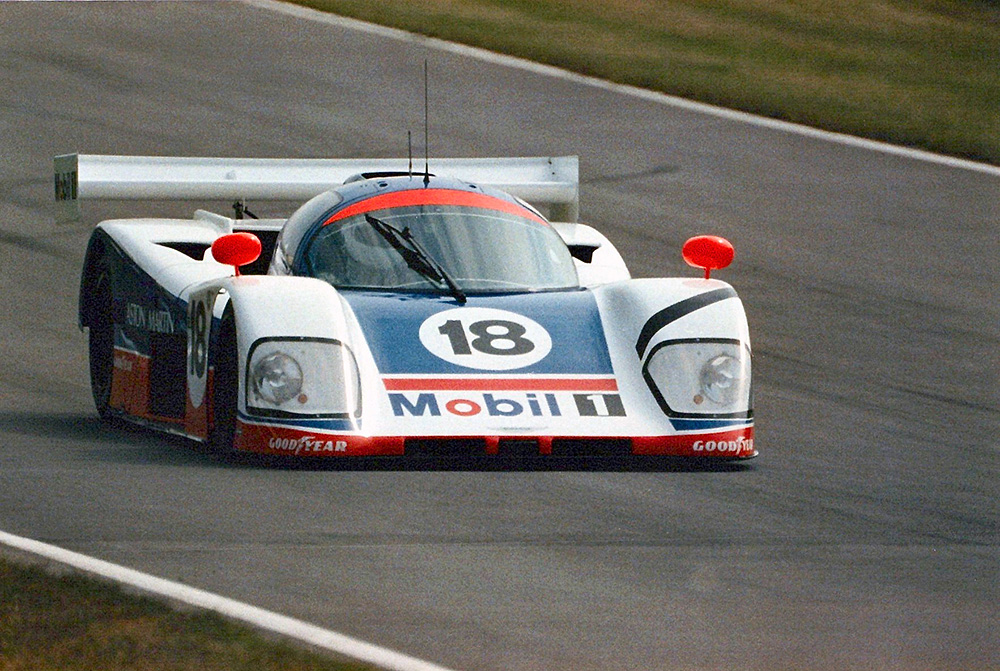
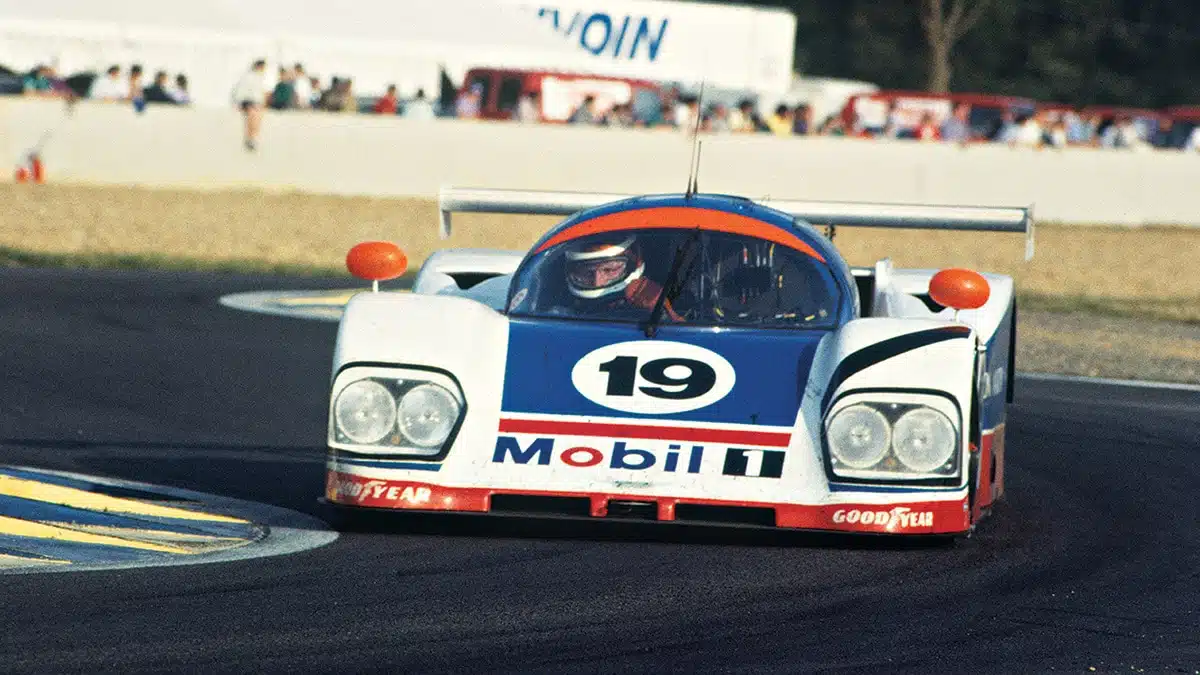
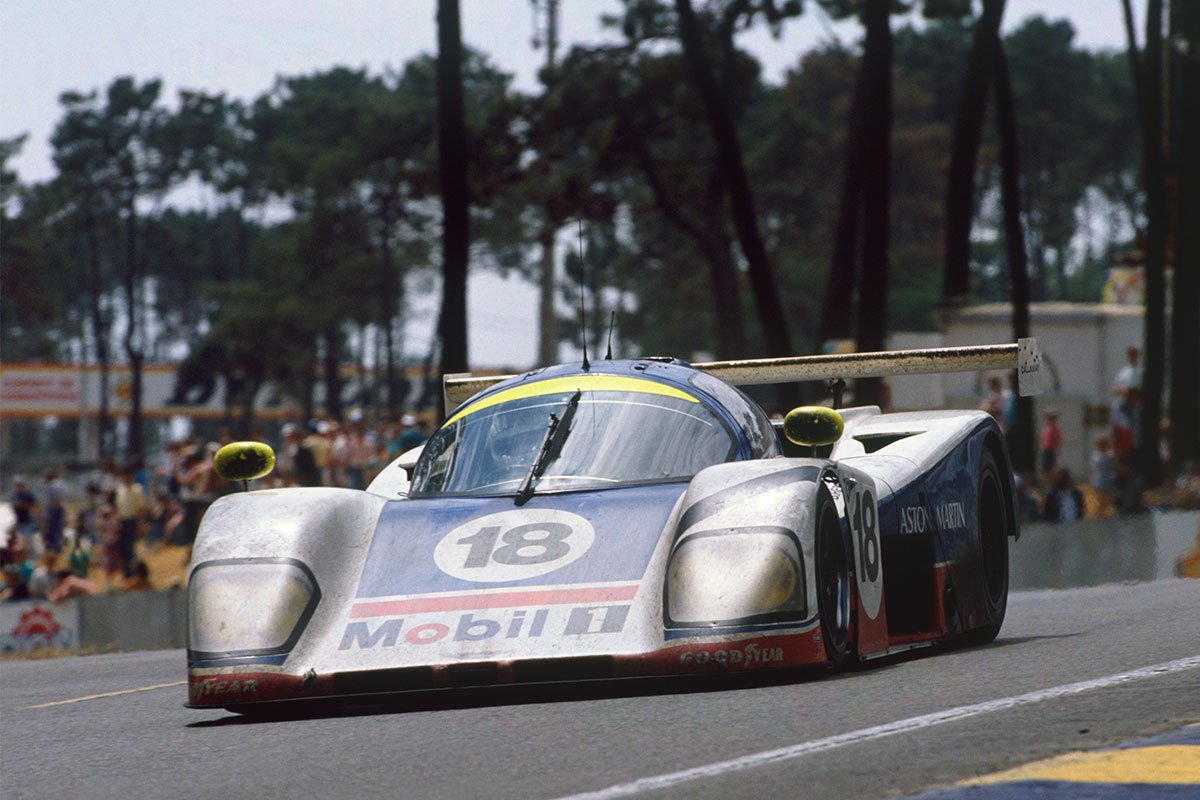
In the breathless, hyper-competitive cauldron of the 1989 World Sports Prototype Championship, survival was merely the first step; to actually threaten the podium required absolute, uncompromising evolution. Aston Martin and Ecurie Ecosse, operating under the Proteus Technology (Protech) banner, had successfully proven the fundamental durability of their radical, ground-effect AMR1 chassis when the 6.0-liter version survived the grueling 24 Hours of Le Mans to finish eleventh overall. Yet, as the championship pivoted away from the endless straights of La Sarthe back to the undulating, technical sprint circuits of Europe, a glaring deficiency was exposed. The naturally aspirated 6.0-liter engine, while unburstable, simply lacked the ferocious, low-end corner-exit punch necessary to keep pace with the explosive twin-turbocharged Sauber-Mercedes C9s and Porsche 962s, or the massive V12 of the Jaguar XJR-9. To fight at the sharp end of the grid, the British underdog needed more muscle. The answer arrived in the latter half of the 1989 season in the form of the 1989 Aston Martin AMR1 6.3. It was the ultimate, fully realized iteration of Max Boxstrom’s brutalist aerodynamic vision, endowed with the torque required to transform it from a mid-pack survivor into a genuine front-running terror.
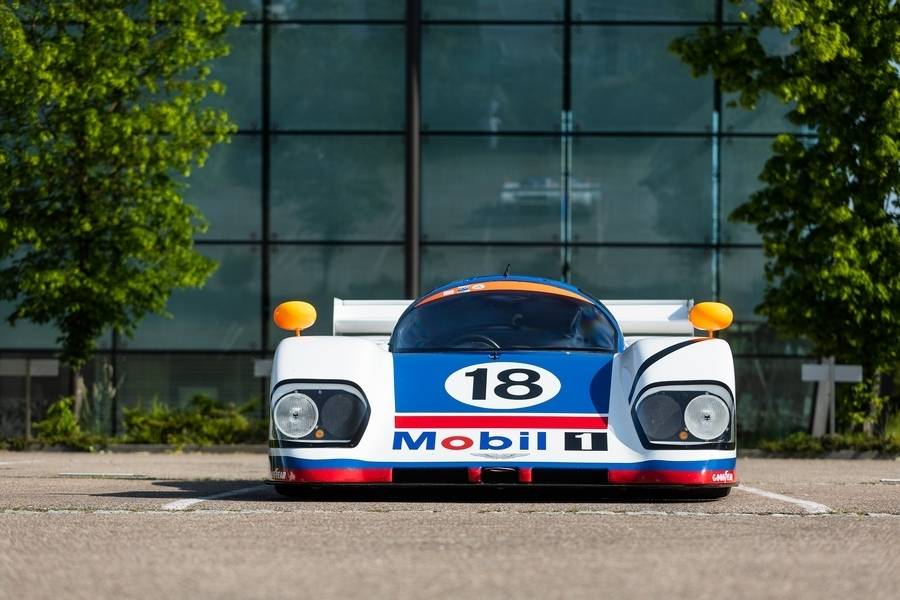
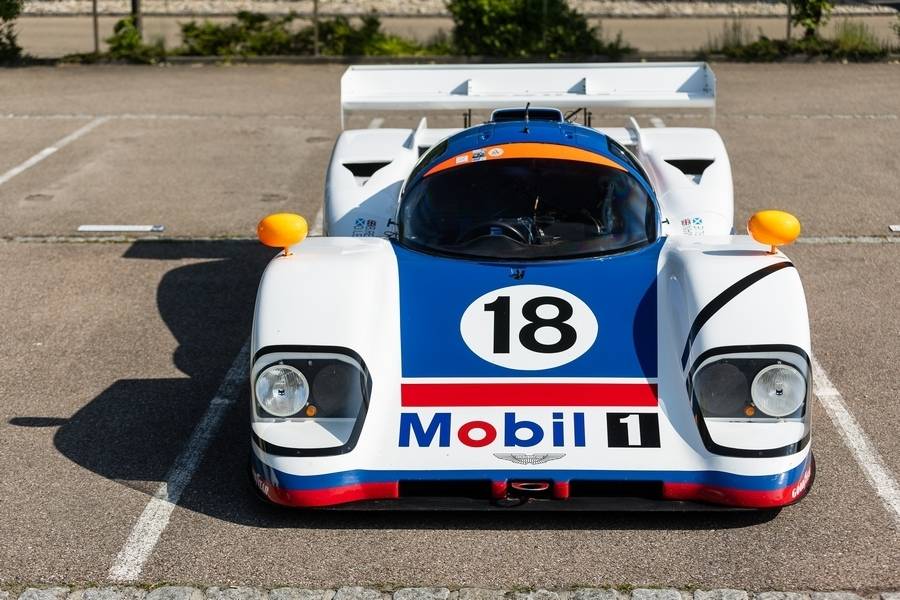
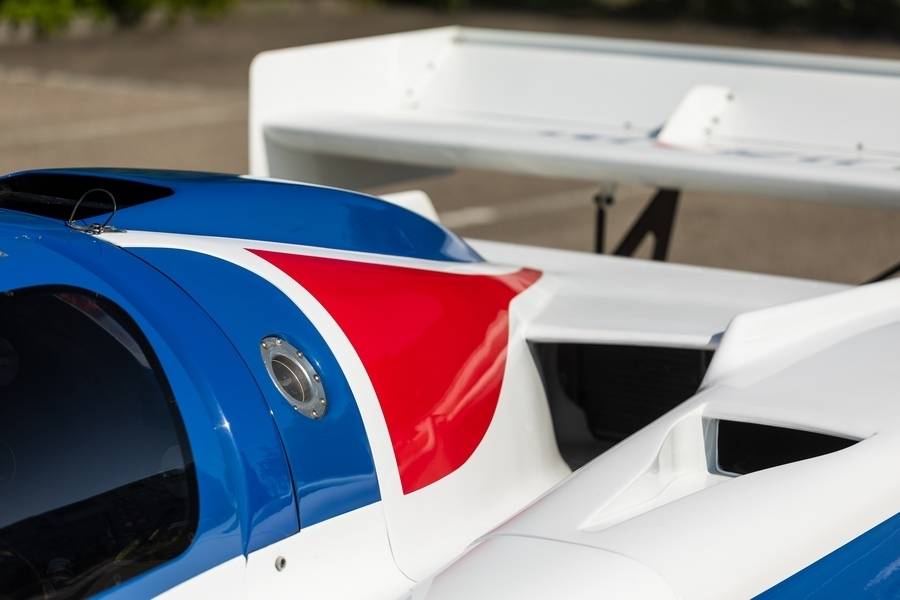
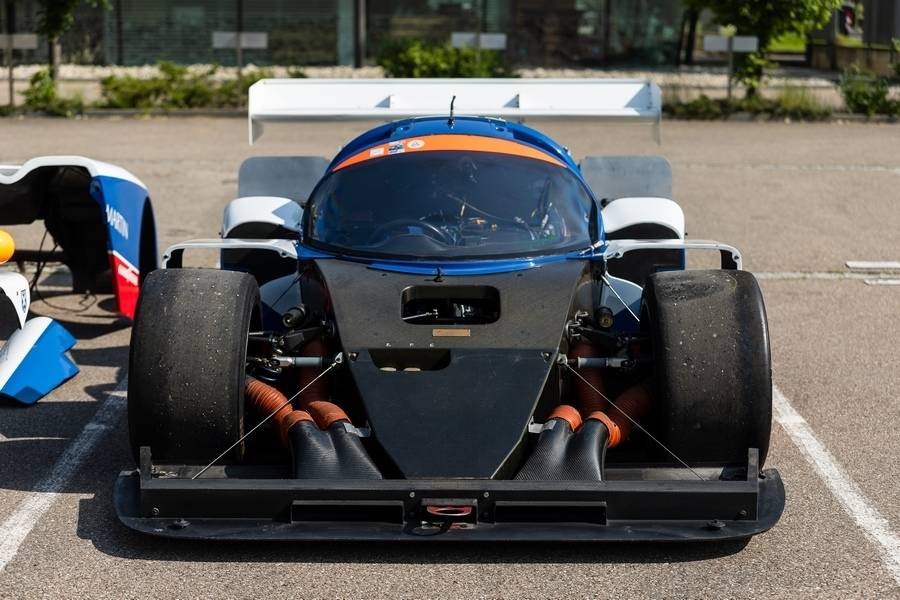
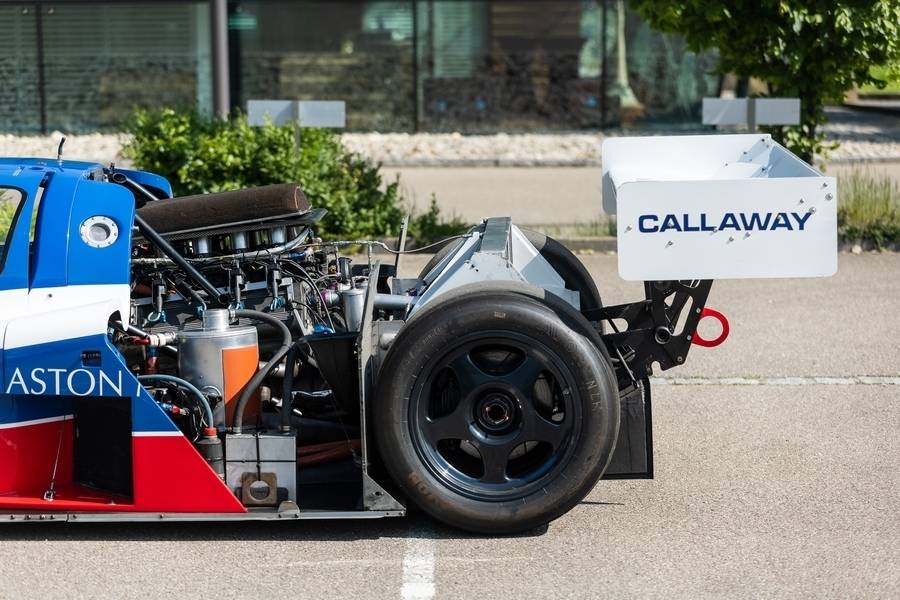
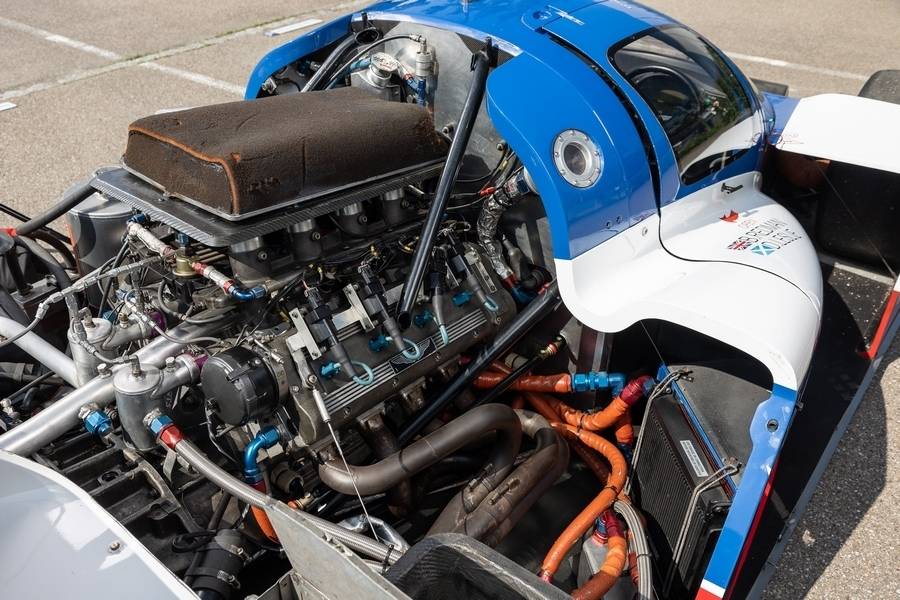
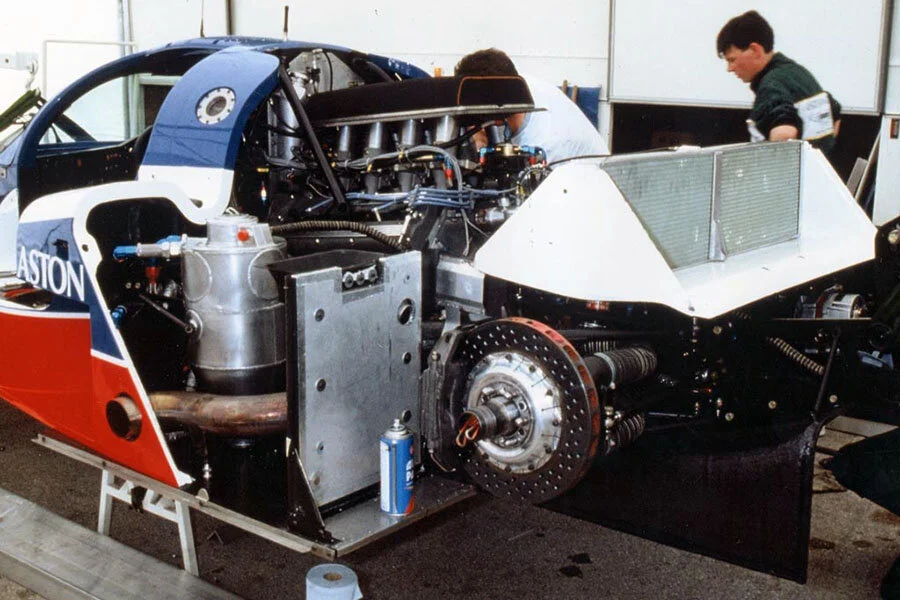
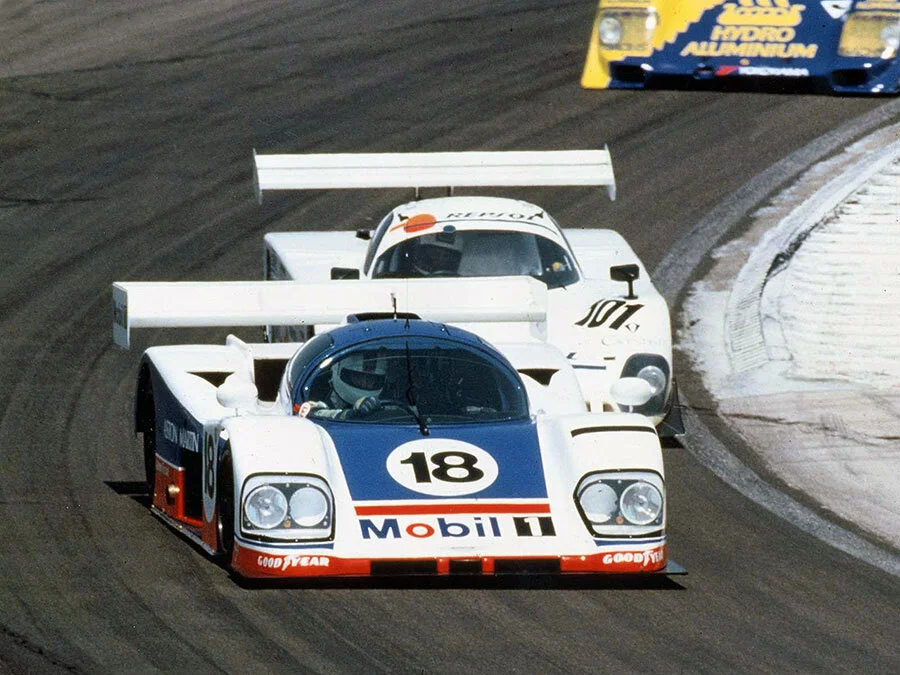
To extract this necessary pace, the Protech squad turned back to Connecticut-based engine maestro Reeves Callaway. Tasked with finding more power from the 32-valve, all-alloy Aston Martin Virage-based V8, Callaway’s engineers comprehensively reworked the internal geometry, stroking the engine to a full 6.3 liters. While peak horsepower saw a respectable bump to approximately 740 brake horsepower, the true engineering triumph lay in the torque curve. The 6.3-liter evolution delivered a massive, fat band of mid-range twisting force. This allowed drivers to lean heavily on the throttle far earlier in the corner, deploying devastating acceleration out of slow hairpins. This thunderous, dry-sumped V8 was housed within Boxstrom’s uncompromising carbon-fiber and Kevlar monocoque. The AMR1’s radical aesthetic—characterized by its sharp, monolithic lines and lack of conventional front radiators—was driven entirely by the pursuit of ground effect. By relocating the cooling systems to the rear, the front of the car scooped up massive volumes of air, channeling it through cavernous underbody venturi tunnels. When combined with the newfound mechanical grunt of the 6.3-liter engine, the AMR1 became a spectacularly effective weapon on high-downforce circuits. Massive carbon-ceramic brakes were tasked with hauling the heavy British prototype down from speed, while the bespoke five-speed manual transaxle demanded a firm, deliberate physical effort from the driver, making the AMR1 6.3 an incredibly visceral, exhausting machine to pilot at the limit.
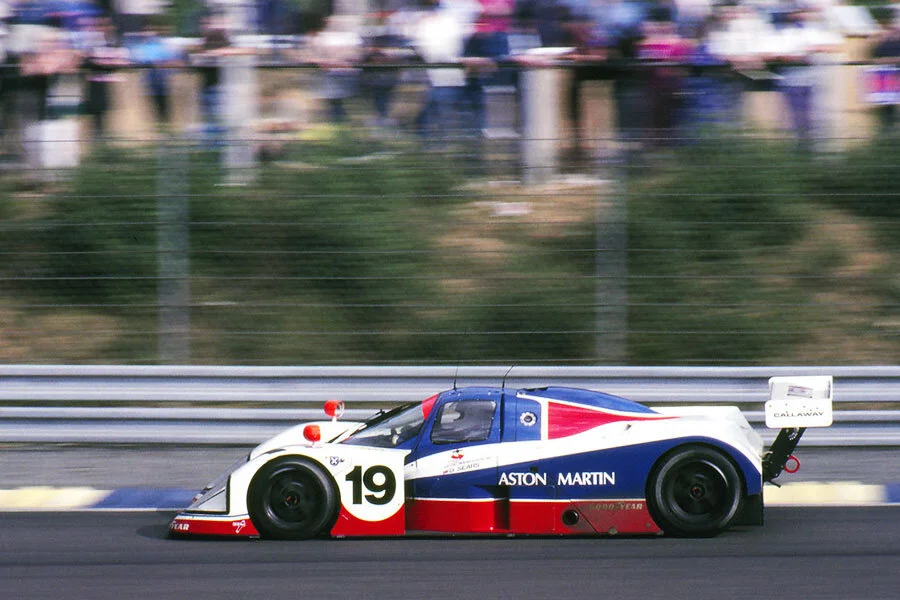
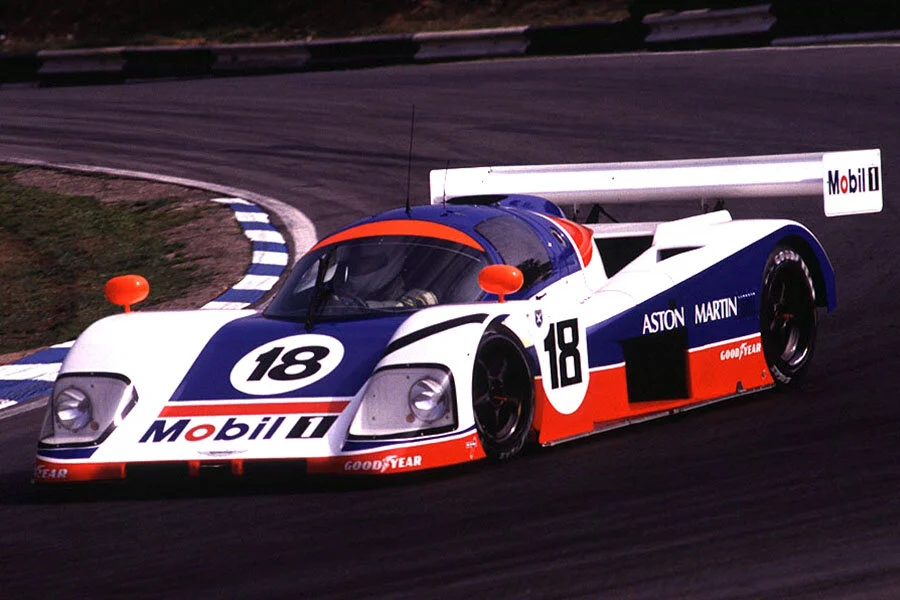
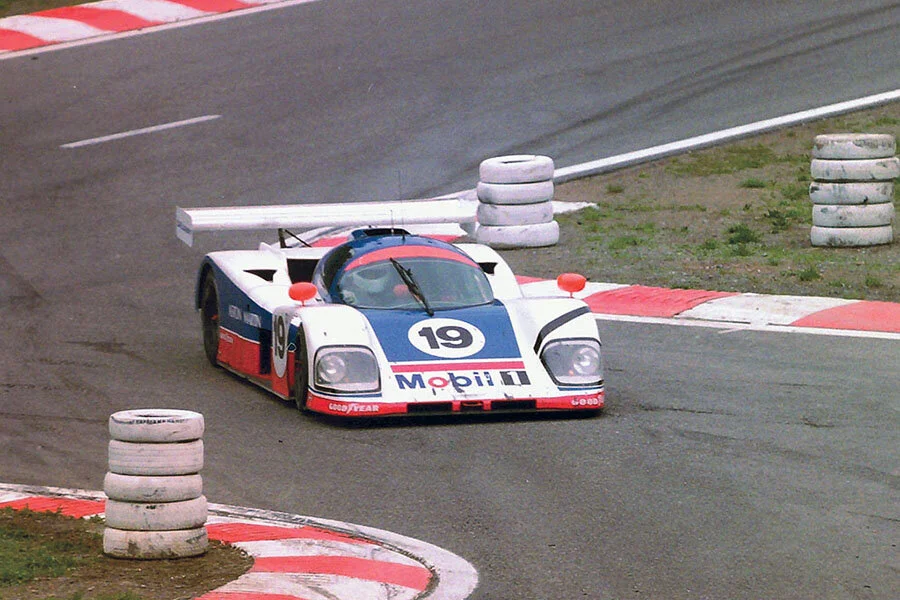
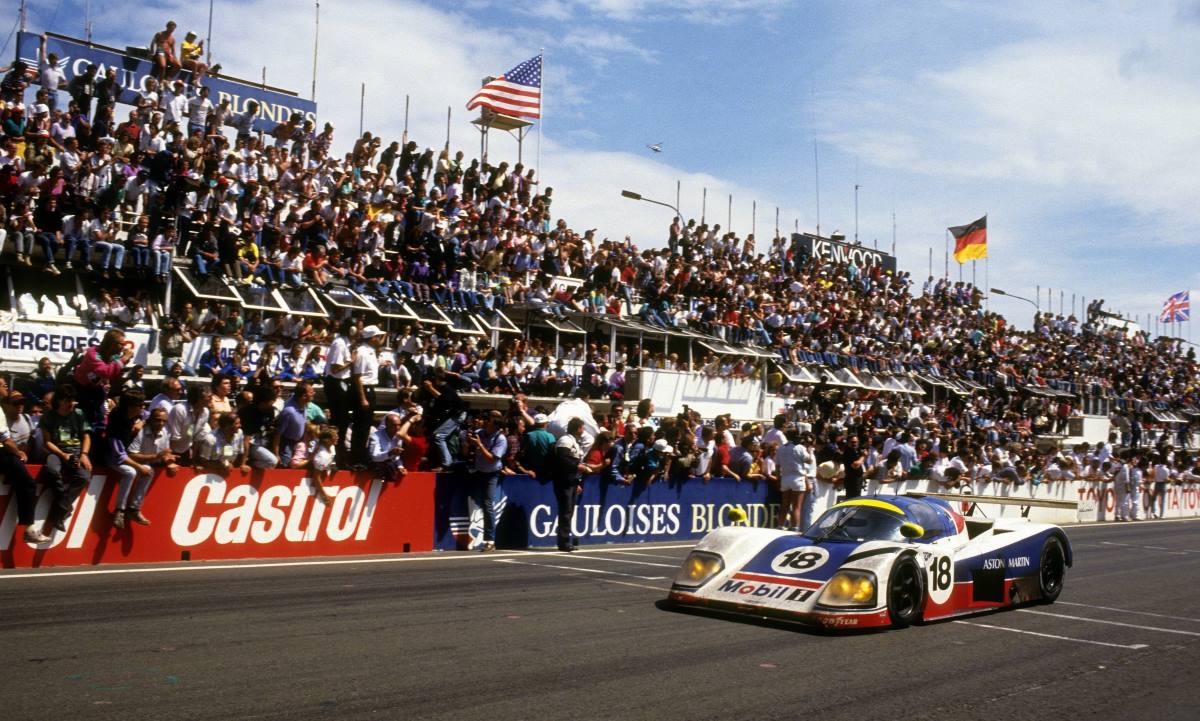
When the 6.3-liter AMR1 was unleashed onto the European sprint circuits, the transformation was immediate and spectacular. The car no longer just made up the numbers; it actively harassed the established titans of Group C. The absolute high-water mark for the 6.3-liter submodel—and indeed the entire AMR1 program—occurred at the 480km of Brands Hatch. In front of a fiercely patriotic British crowd, on a twisting, undulating track that perfectly suited the car’s immense aerodynamic grip and newfound V8 torque, drivers David Leslie and Brian Redman put on a masterclass. They hustled the roaring Aston Martin through Paddock Hill Bend and Druids, taking the fight directly to the turbocharged establishment. The thunderous AMR1 crossed the finish line in a magnificent fourth place overall, a result that sent shockwaves through the paddock. The 6.3L continued to prove its worth by scoring solid points at the Nürburgring and Donington Park rounds, allowing the fledgling Protech team to secure an incredibly respectable sixth place overall in the World Sports Prototype Championship teams’ standings. The naturally aspirated, 6.3-liter V8 was the magic bullet the chassis had always been waiting for.
Tragically, the 6.3-liter AMR1 represented both the zenith and the abrupt terminus of Aston Martin’s late-century Group C ambitions. Just as the Protech team had unlocked the car’s true potential, and as they feverishly prepared the lighter, aerodynamically refined AMR2 for the 1990 season, corporate politics delivered a fatal blow. The Ford Motor Company acquired a controlling interest in Aston Martin in late 1989. Because Ford also owned Jaguar—whose Silk Cut-liveried prototypes were already proven Le Mans winners and marketing juggernauts—executives saw no logic in funding a rival, in-house British prototype program. The AMR1 project was clinically and swiftly dismantled. The 1989 Aston Martin AMR1 6.3 stands today as one of the most magnificent, heart-wrenching “what ifs” in the pantheon of motorsport. It proved that a dedicated, innovative team could take a road-car-derived engine, stroke it to 6.3 liters, wrap it in a radical ground-effect chassis, and terrify the greatest automotive conglomerates on earth. When the surviving 6.3-liter chassis thunder around historic circuits today, their earth-shaking, baritone roar serves as a glorious, defiant echo of Aston Martin’s brief but brilliant crusade in the Group C wars.
Brand
Produced from
Portal
Vehicle category
Model line
Predecessor
Sucessor
Brand
Produced from
Portal
Vehicle category
Model line
Model generation
Predecessor
Sucessor
Submodel Overview
In the breathless, hyper-competitive cauldron of the 1989 World Sports Prototype Championship, survival was merely the first step; to actually threaten the podium required absolute, uncompromising evolution. Aston Martin and Ecurie Ecosse, operating under the Proteus Technology (Protech) banner, had successfully proven the fundamental durability of their radical, ground-effect AMR1 chassis when the 6.0-liter version survived the grueling 24 Hours of Le Mans to finish eleventh overall. Yet, as the championship pivoted away from the endless straights of La Sarthe back to the undulating, technical sprint circuits of Europe, a glaring deficiency was exposed. The naturally aspirated 6.0-liter engine, while unburstable, simply lacked the ferocious, low-end corner-exit punch necessary to keep pace with the explosive twin-turbocharged Sauber-Mercedes C9s and Porsche 962s, or the massive V12 of the Jaguar XJR-9. To fight at the sharp end of the grid, the British underdog needed more muscle. The answer arrived in the latter half of the 1989 season in the form of the 1989 Aston Martin AMR1 6.3. It was the ultimate, fully realized iteration of Max Boxstrom’s brutalist aerodynamic vision, endowed with the torque required to transform it from a mid-pack survivor into a genuine front-running terror.
To extract this necessary pace, the Protech squad turned back to Connecticut-based engine maestro Reeves Callaway. Tasked with finding more power from the 32-valve, all-alloy Aston Martin Virage-based V8, Callaway’s engineers comprehensively reworked the internal geometry, stroking the engine to a full 6.3 liters. While peak horsepower saw a respectable bump to approximately 740 brake horsepower, the true engineering triumph lay in the torque curve. The 6.3-liter evolution delivered a massive, fat band of mid-range twisting force. This allowed drivers to lean heavily on the throttle far earlier in the corner, deploying devastating acceleration out of slow hairpins. This thunderous, dry-sumped V8 was housed within Boxstrom’s uncompromising carbon-fiber and Kevlar monocoque. The AMR1’s radical aesthetic—characterized by its sharp, monolithic lines and lack of conventional front radiators—was driven entirely by the pursuit of ground effect. By relocating the cooling systems to the rear, the front of the car scooped up massive volumes of air, channeling it through cavernous underbody venturi tunnels. When combined with the newfound mechanical grunt of the 6.3-liter engine, the AMR1 became a spectacularly effective weapon on high-downforce circuits. Massive carbon-ceramic brakes were tasked with hauling the heavy British prototype down from speed, while the bespoke five-speed manual transaxle demanded a firm, deliberate physical effort from the driver, making the AMR1 6.3 an incredibly visceral, exhausting machine to pilot at the limit.
When the 6.3-liter AMR1 was unleashed onto the European sprint circuits, the transformation was immediate and spectacular. The car no longer just made up the numbers; it actively harassed the established titans of Group C. The absolute high-water mark for the 6.3-liter submodel—and indeed the entire AMR1 program—occurred at the 480km of Brands Hatch. In front of a fiercely patriotic British crowd, on a twisting, undulating track that perfectly suited the car’s immense aerodynamic grip and newfound V8 torque, drivers David Leslie and Brian Redman put on a masterclass. They hustled the roaring Aston Martin through Paddock Hill Bend and Druids, taking the fight directly to the turbocharged establishment. The thunderous AMR1 crossed the finish line in a magnificent fourth place overall, a result that sent shockwaves through the paddock. The 6.3L continued to prove its worth by scoring solid points at the Nürburgring and Donington Park rounds, allowing the fledgling Protech team to secure an incredibly respectable sixth place overall in the World Sports Prototype Championship teams’ standings. The naturally aspirated, 6.3-liter V8 was the magic bullet the chassis had always been waiting for.
Tragically, the 6.3-liter AMR1 represented both the zenith and the abrupt terminus of Aston Martin’s late-century Group C ambitions. Just as the Protech team had unlocked the car’s true potential, and as they feverishly prepared the lighter, aerodynamically refined AMR2 for the 1990 season, corporate politics delivered a fatal blow. The Ford Motor Company acquired a controlling interest in Aston Martin in late 1989. Because Ford also owned Jaguar—whose Silk Cut-liveried prototypes were already proven Le Mans winners and marketing juggernauts—executives saw no logic in funding a rival, in-house British prototype program. The AMR1 project was clinically and swiftly dismantled. The 1989 Aston Martin AMR1 6.3 stands today as one of the most magnificent, heart-wrenching “what ifs” in the pantheon of motorsport. It proved that a dedicated, innovative team could take a road-car-derived engine, stroke it to 6.3 liters, wrap it in a radical ground-effect chassis, and terrify the greatest automotive conglomerates on earth. When the surviving 6.3-liter chassis thunder around historic circuits today, their earth-shaking, baritone roar serves as a glorious, defiant echo of Aston Martin’s brief but brilliant crusade in the Group C wars.
Tech Specs
Technical Specifications
Tech Specs
Technical Specifications
Engine
01
03
Internal combustion engine
Configuration
Aston Martin (Callaway modified) RDP87, V8 - 90º
Location
Mid, longitudinally mounted (tilted upwards 3º for ground effect)
Construction
Aluminium alloy block and heads
Displacement (cc)
6,293 cc
Displacement (cu in)
384.0 cu in
Compression
~12.0:1
Bore x Stroke
~102.0 mm x 96.0 mm
Valvetrain
4 valves per cylinder, DOHC
Fuel feed
Zytek electronic fuel management / injection
Lubrication
Dry sump
Aspiration
Naturally aspirated
Output
Power (hp)
740 hp
Power (kW)
552 kW
Max power at
7,200 RPM
Torque (Nm)
~718 Nm
Torque (ft lbs)
~530 ft lbs
Max torque at
5,500 RPM
Drivetrain
02
03
Chassis
Type
Monocoque unibody
Material
Carbon fibre, Kevlar, and Aluminium honeycomb
Body
Material
Carbon fibre and Kevlar composite
Transmission
Gearbox
Aston Martin / Hewland VGC bespoke 5-speed manual (Transaxle)
Drive
Rear Wheel Drive (Limited Slip Differential)
Suspension
Front
Independent, double wishbones, coil springs over telescopic dampers, anti-roll bar
Rear
Independent, double wishbones, inboard coil springs over telescopic dampers, anti-roll bar
Steering
Type
Rack and pinion, power assisted
Brakes
Front
Ventilated carbon-carbon discs Ø356 mm (14 in), AP Racing 6-piston calipers
Rear
Ventilated carbon-carbon discs Ø356 mm (14 in), AP Racing 6-piston calipers
Wheels
Front
13" x 17" (Dymag Cast Magnesium alloy 5-spoke)
Rear
14.5" x 18" (Dymag Cast Magnesium alloy 5-spoke)
Tires
Front
25.5/27.0-17 (Goodyear Racing Slicks)
Rear
28.5/31.0-18 (Goodyear Racing Slicks)
Dimensions and performance
03
03
Dimensions
Length (mm)
4,780 mm
Length (in)
188.2 in
Width (mm)
1,990 mm
Width (in)
78.3 in
Height (mm)
1,020 mm
Height (in)
40.2 in
Wheelbase (mm)
2,896 mm
Wheelbase (in)
114.0 in
Weight (kg)
902 kg
Weight (lbs)
1,988 lbs
Performance
Power to weight
0.82 hp/kg
Top speed (km/h)
~355 km/h
Top speed (mph)
~220 mph
0-100 km/h (0-60 mph)
~3.1 s