
Marcos Mantara LM600 GT2
Brand
Produced from
Portal
Vehicle category
Model line
Predecessor
Successor
Submodel Overview
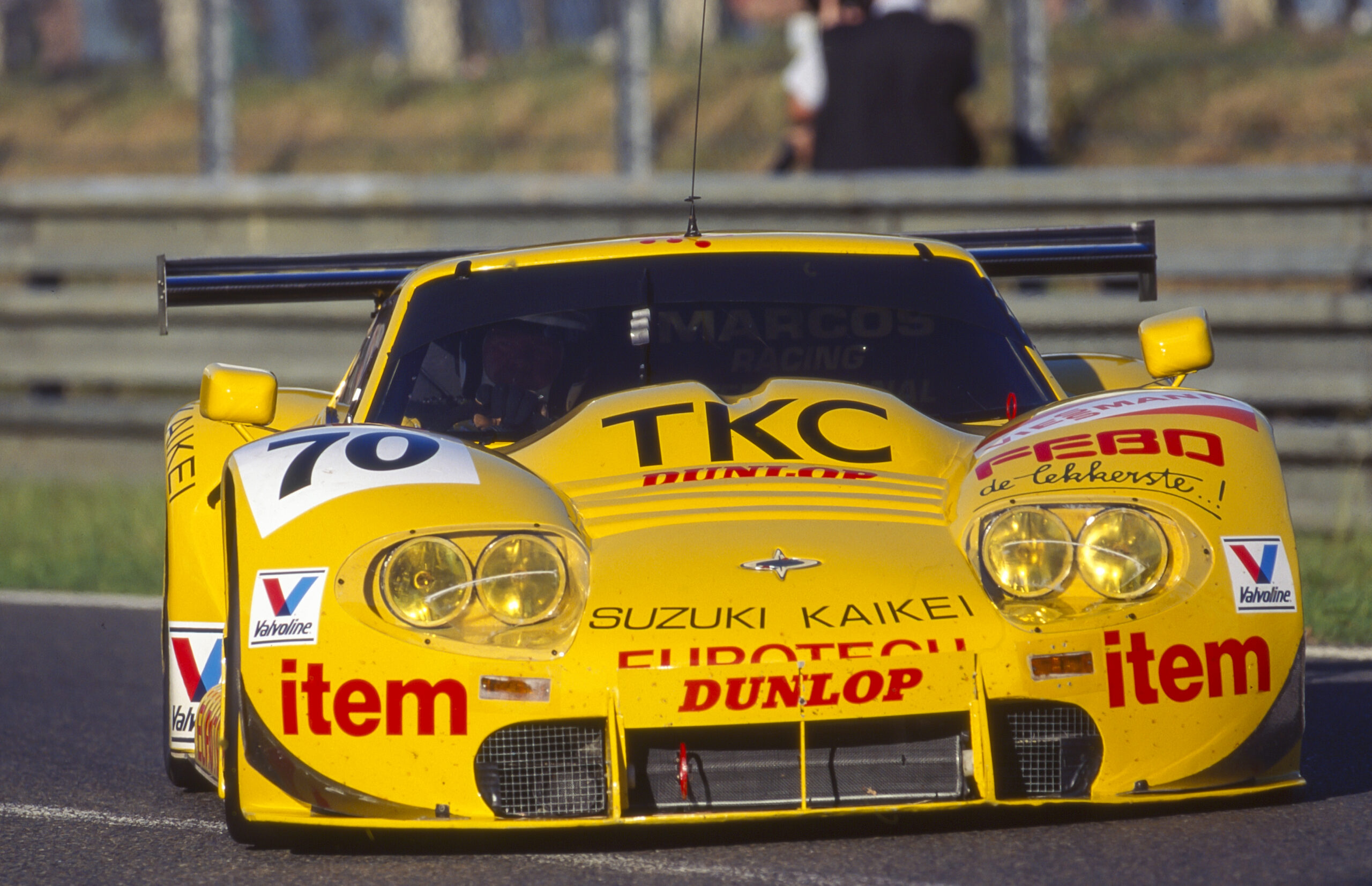
The mid-1990s witnessed a glorious, high-octane renaissance in international sports car racing. The inception of the BPR Global GT Series and the revitalization of the British GT Championship signaled a return to the romantic ideal of production-based supercars battling door-to-door. In this arena, the factory-backed monoliths from Stuttgart and Maranello usually dictated the terms of engagement. Yet, operating out of a modest facility in Westbury, Wiltshire, the fiercely independent Marcos firm refused to be intimidated. Having successfully transitioned from the kit-car era to factory-built sports cars with the Mantara, founder Jem Marsh had already unleashed the Rover V8-powered LM400 and LM500 upon the domestic racing scene. However, as the GT2 class regulations evolved and the sheer firepower of the Porsche 911 GT2 (993) and the Callaway Corvettes began to dominate, it became abundantly clear that the lightweight aluminium Rover block was fundamentally outgunned. To mount a serious assault on the European stage and secure a return to the 24 Hours of Le Mans, Marcos needed a sledgehammer. The spectacular, earth-shaking result was the 1995 Marcos Mantara LM600 GT2. It was a machine that took the classic, low-slung British wedge and mutated it into a fire-breathing, wide-arched international endurance weapon.
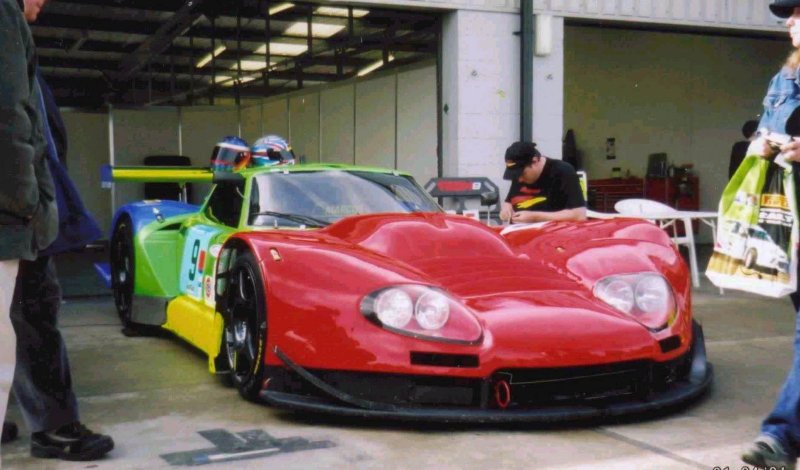
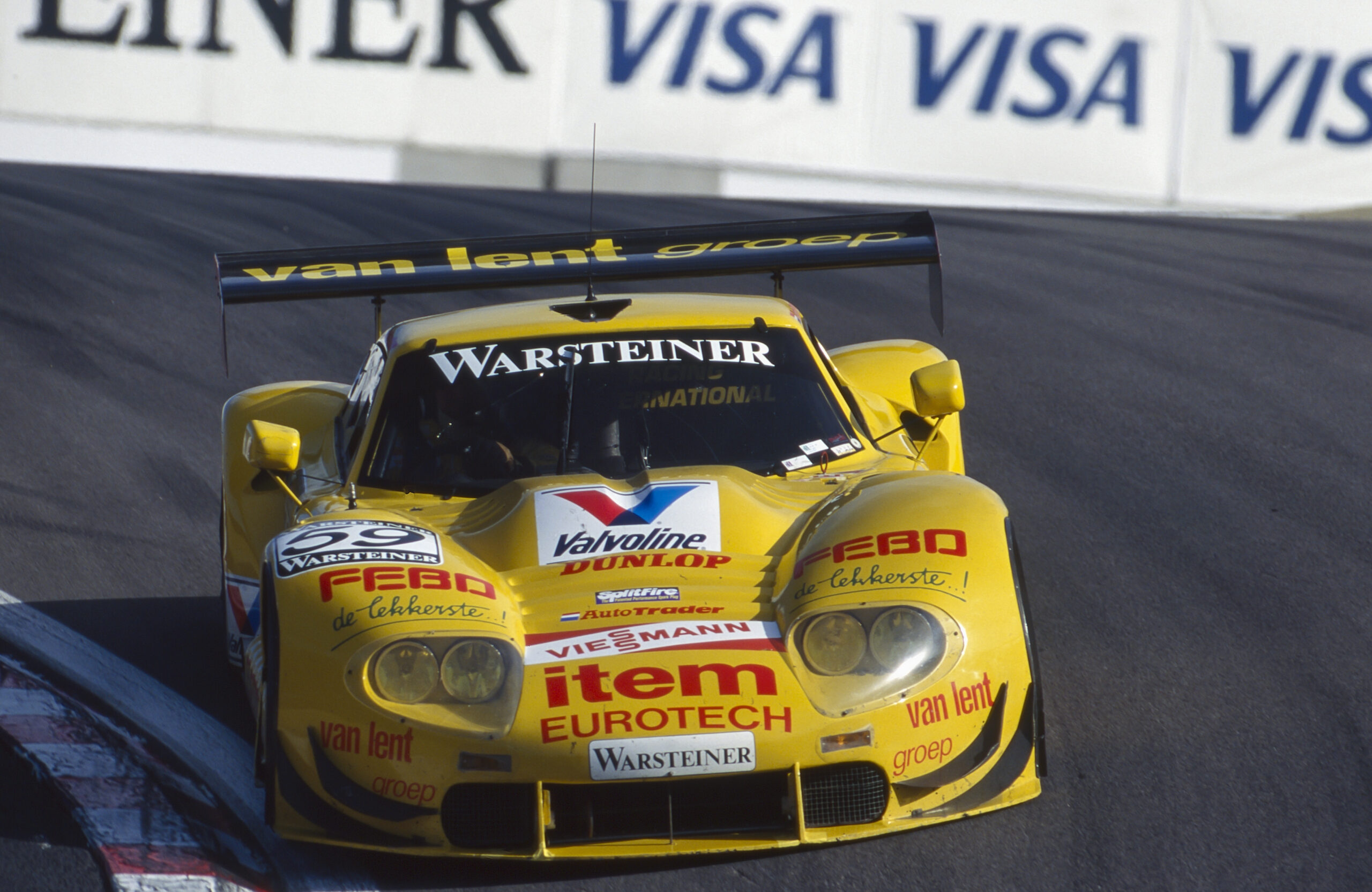
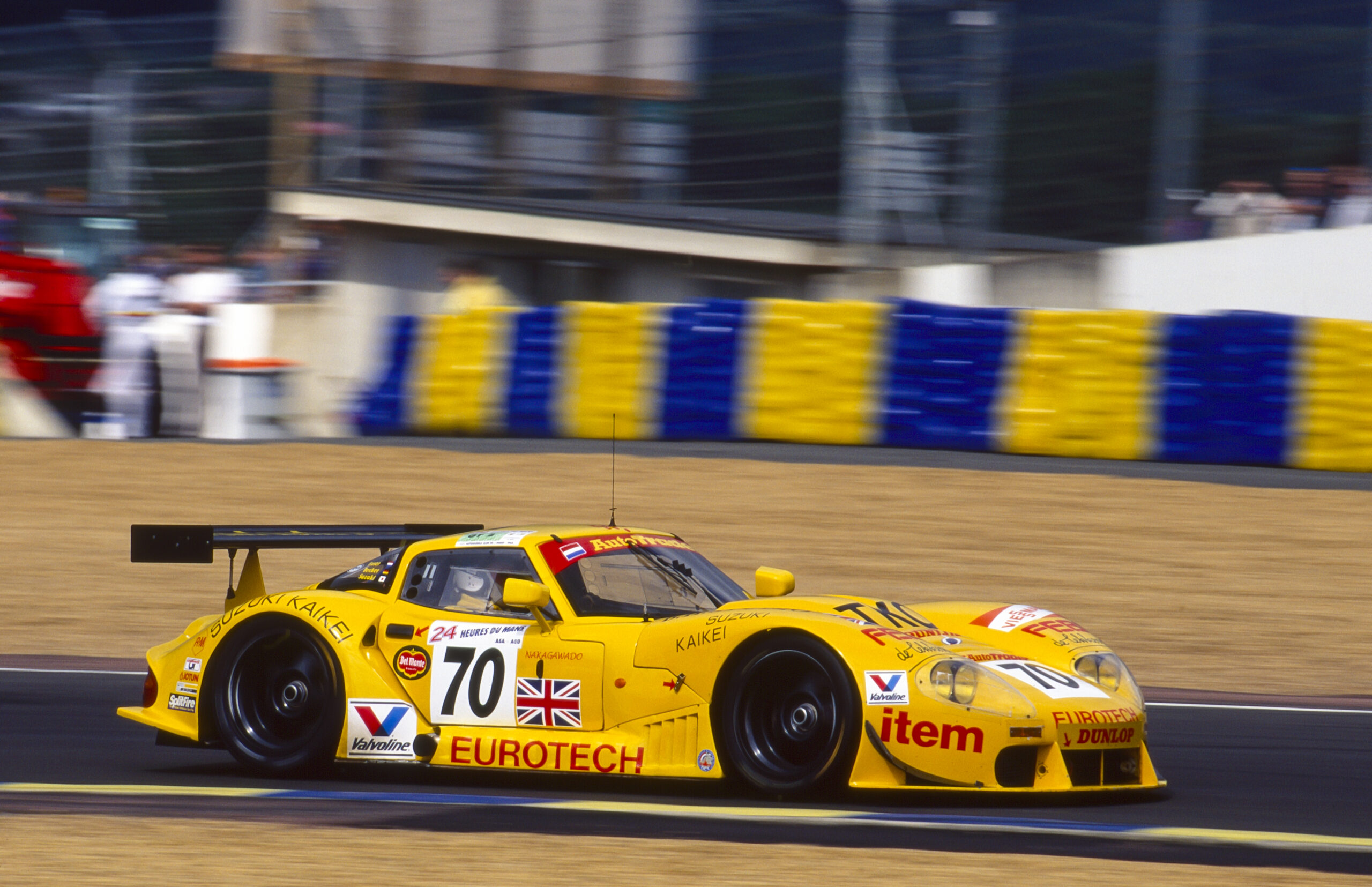
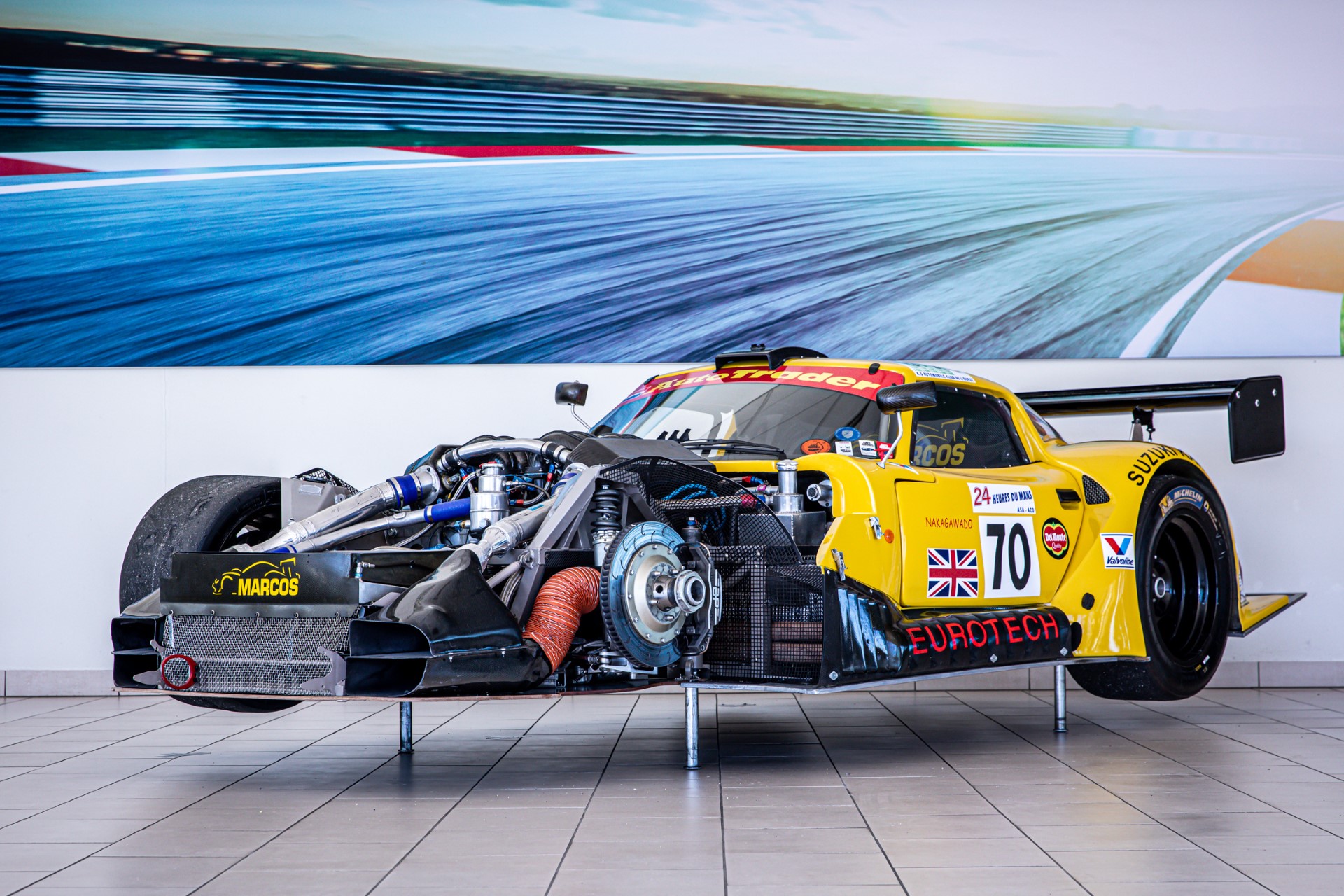
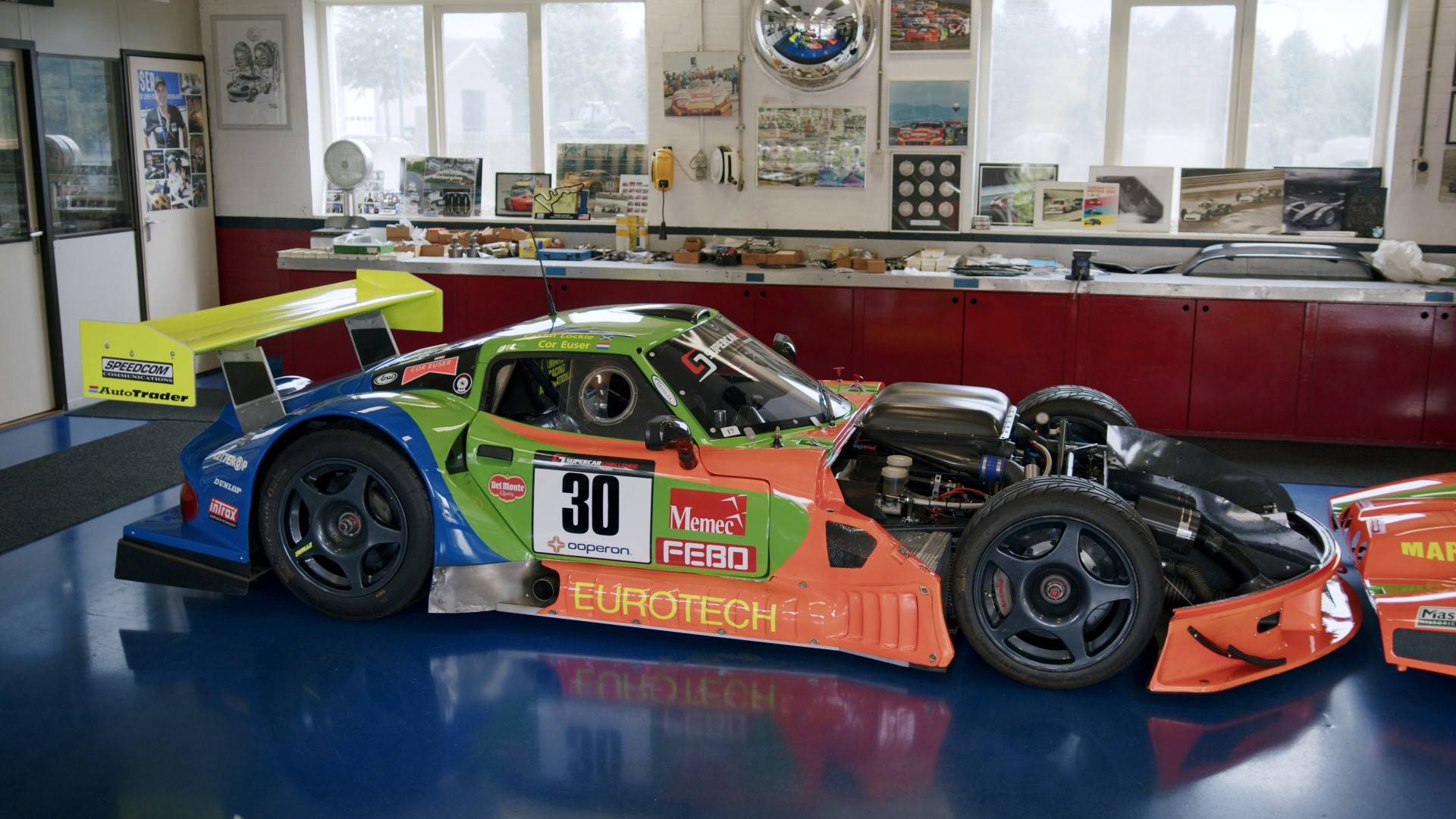
To stand in the presence of an LM600 GT2 is to behold an aerodynamic caricature of the original 1964 Dennis Adams design, stretched and swollen to its absolute physical limits. The LM600 sat impossibly low to the tarmac, a trait inherited from the road-going Mantara, but its bodywork was a riot of lightweight composites crafted explicitly for aerodynamic survival. It featured aggressively flared, boxy wheel arches designed to shroud massive, ultra-wide racing slicks, while the front end was dominated by a tarmac-scraping carbon fiber splitter and a deeply vented bonnet to extract heat. At the rear, an enormous, towering carbon wing provided the downforce necessary to keep the featherweight chassis planted at double-ton speeds. Beneath this dramatic, neon-accented shell lay a highly developed, bespoke tubular steel spaceframe, vastly stiffened with an integrated roll cage. But the defining characteristic of the LM600—the engineering pivot that turned it into a global contender—was its heartbeat. Marcos abandoned the Rover architecture and wedged a monstrous, 6.0-liter Chevrolet pushrod small-block V8 into the engine bay. Tuned by specialists to produce well over 500 brake horsepower and an avalanche of subterranean torque, this American leviathan was mated to a robust Hewland or Quaife racing transaxle. To arrest its terrifying momentum, massive AP Racing ventilated disc brakes were fitted at all four corners, visible through lightweight center-lock magnesium wheels. Inside, the cockpit was a brutalist, claustrophobic cell of exposed steel tubing and carbon fiber, retaining the quirky Marcos trademark of a fixed racing seat and an electrically adjustable pedal box, ensuring the driver’s mass remained as low and central as physically possible.
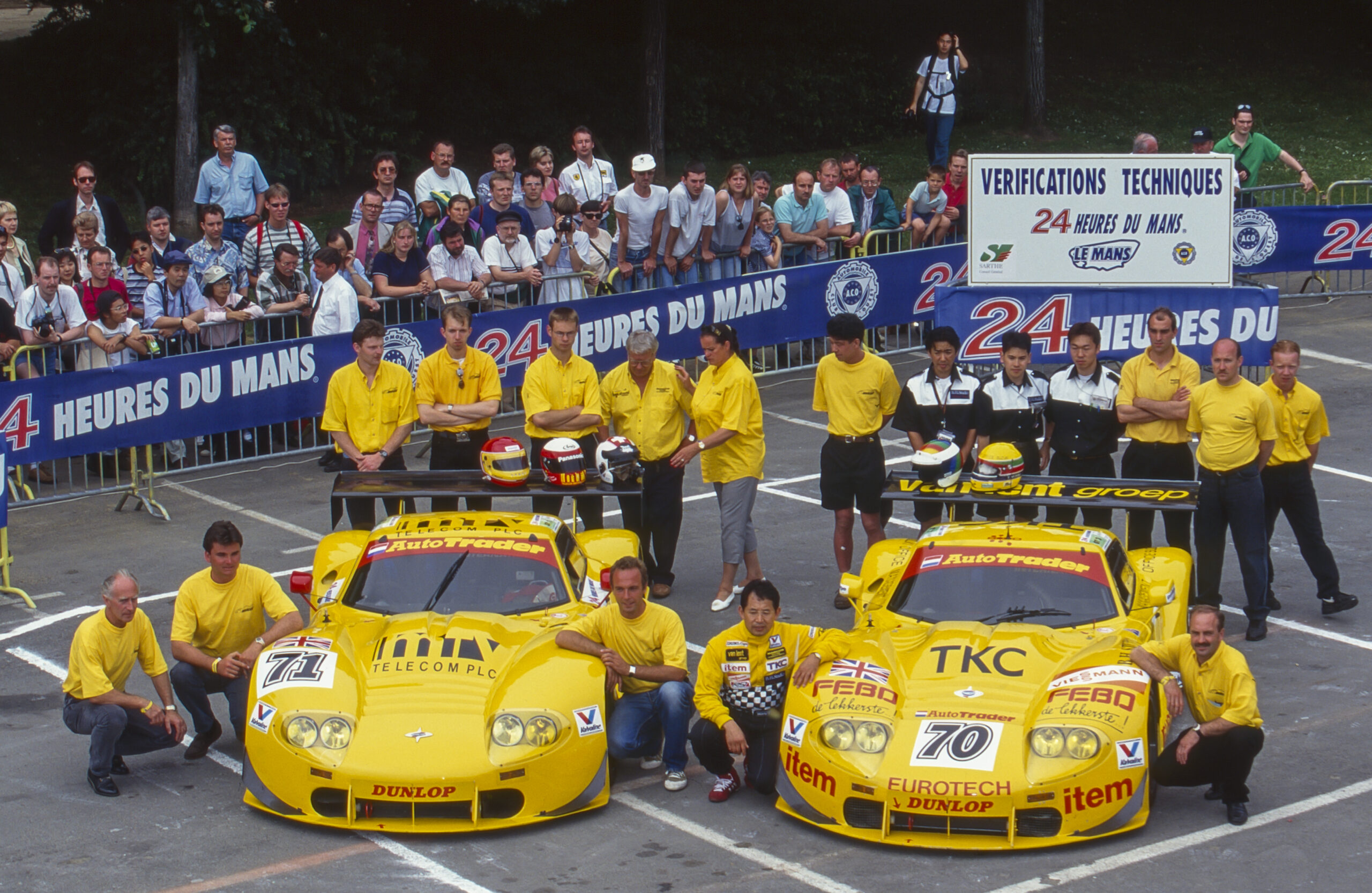
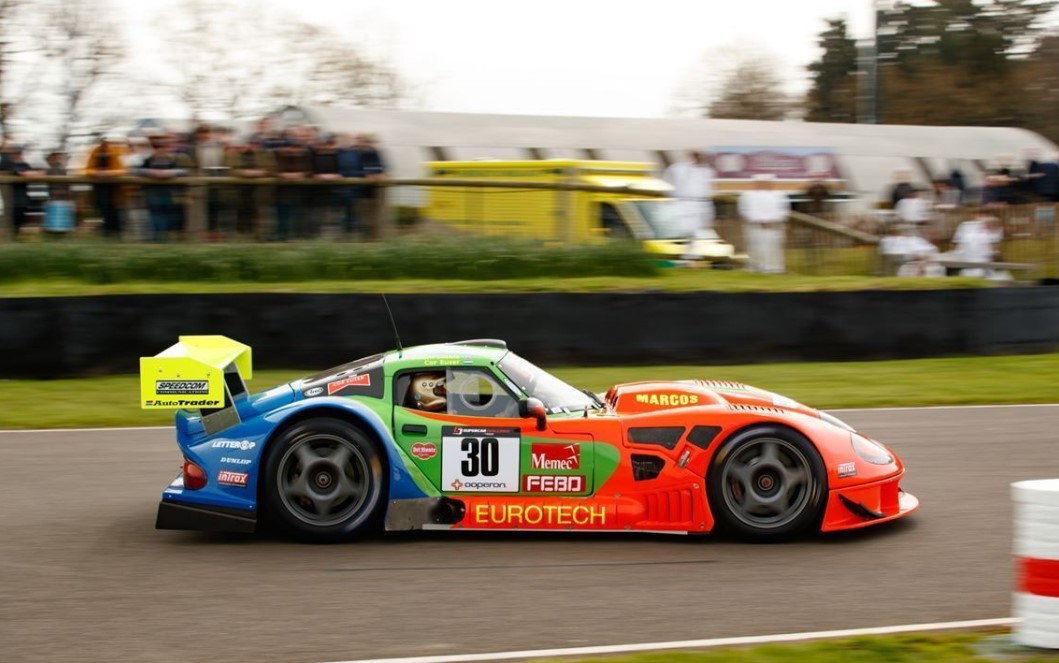
When the LM600 GT2 was unleashed, it possessed a basso-profondo exhaust note that could be felt in the chest cavities of spectators miles away. It was a raw, visceral, intensely physical machine to drive, lacking the refined electronic driver aids of its contemporary rivals. It demanded a pilot of immense bravery and upper-body strength. In the 1995 BRDC National Sports GT Championship (British GT), the LM600 was an absolute revelation. Driven by the fiercely talented Chris Hodgetts, the thundering Marcos utterly decimated the domestic competition, securing the championship title and cementing its giant-killing reputation. But the car’s true mythological status was forged on the continent. Campaigned relentlessly by the spectacular Dutch racer Cor Euser, the LM600 became a fan favorite in the BPR Global GT Series and the subsequent FIA GT Championship. Euser wrestled the Marcos to astonishing class victories and podiums against heavily funded Porsche and Ferrari efforts, proving that a bespoke British chassis paired with American displacement could genuinely challenge the establishment. Furthermore, the LM600 spearheaded Marcos’s highly emotional return to the 24 Hours of Le Mans in 1995, exactly twenty-nine years after a Mini Marcos had heroically crossed the finish line. While the grueling French classic tested the limits of the small privateer team’s endurance and budget, the sight of the roaring, wide-bodied LM600 blasting down the Mulsanne Straight secured the marque’s permanent place in the hearts of endurance racing purists.
The legacy of the 1995 Marcos Mantara LM600 GT2 is the absolute epitome of the British privateer spirit. It represents a fleeting, magnificent era when a small team of passionate engineers operating out of an English industrial estate could build a car capable of bloodying the noses of the world’s greatest automotive conglomerates. The LM600 prolonged the Marcos racing lineage well into the 2000s, directly inspiring the subsequent Mantis Challenge series and paving the way for the mighty LM600 Evo and Marcorelly track weapons. Today, the surviving LM600s are highly prized unicorns in historic GT racing, adored for their brutalist aesthetics, their deafening V8 thunder, and their unapologetic aggression. It stands immortal in the motorsport pantheon as the ultimate 1990s David-versus-Goliath endurance racer—a gloriously loud, beautifully unhinged brute that roared its way into the history books.
Brand
Produced from
Portal
Vehicle category
Model line
Predecessor
Sucessor
Brand
Produced from
Portal
Vehicle category
Model line
Model generation
Predecessor
Sucessor
Submodel Overview
The mid-1990s witnessed a glorious, high-octane renaissance in international sports car racing. The inception of the BPR Global GT Series and the revitalization of the British GT Championship signaled a return to the romantic ideal of production-based supercars battling door-to-door. In this arena, the factory-backed monoliths from Stuttgart and Maranello usually dictated the terms of engagement. Yet, operating out of a modest facility in Westbury, Wiltshire, the fiercely independent Marcos firm refused to be intimidated. Having successfully transitioned from the kit-car era to factory-built sports cars with the Mantara, founder Jem Marsh had already unleashed the Rover V8-powered LM400 and LM500 upon the domestic racing scene. However, as the GT2 class regulations evolved and the sheer firepower of the Porsche 911 GT2 (993) and the Callaway Corvettes began to dominate, it became abundantly clear that the lightweight aluminium Rover block was fundamentally outgunned. To mount a serious assault on the European stage and secure a return to the 24 Hours of Le Mans, Marcos needed a sledgehammer. The spectacular, earth-shaking result was the 1995 Marcos Mantara LM600 GT2. It was a machine that took the classic, low-slung British wedge and mutated it into a fire-breathing, wide-arched international endurance weapon.
To stand in the presence of an LM600 GT2 is to behold an aerodynamic caricature of the original 1964 Dennis Adams design, stretched and swollen to its absolute physical limits. The LM600 sat impossibly low to the tarmac, a trait inherited from the road-going Mantara, but its bodywork was a riot of lightweight composites crafted explicitly for aerodynamic survival. It featured aggressively flared, boxy wheel arches designed to shroud massive, ultra-wide racing slicks, while the front end was dominated by a tarmac-scraping carbon fiber splitter and a deeply vented bonnet to extract heat. At the rear, an enormous, towering carbon wing provided the downforce necessary to keep the featherweight chassis planted at double-ton speeds. Beneath this dramatic, neon-accented shell lay a highly developed, bespoke tubular steel spaceframe, vastly stiffened with an integrated roll cage. But the defining characteristic of the LM600—the engineering pivot that turned it into a global contender—was its heartbeat. Marcos abandoned the Rover architecture and wedged a monstrous, 6.0-liter Chevrolet pushrod small-block V8 into the engine bay. Tuned by specialists to produce well over 500 brake horsepower and an avalanche of subterranean torque, this American leviathan was mated to a robust Hewland or Quaife racing transaxle. To arrest its terrifying momentum, massive AP Racing ventilated disc brakes were fitted at all four corners, visible through lightweight center-lock magnesium wheels. Inside, the cockpit was a brutalist, claustrophobic cell of exposed steel tubing and carbon fiber, retaining the quirky Marcos trademark of a fixed racing seat and an electrically adjustable pedal box, ensuring the driver’s mass remained as low and central as physically possible.
When the LM600 GT2 was unleashed, it possessed a basso-profondo exhaust note that could be felt in the chest cavities of spectators miles away. It was a raw, visceral, intensely physical machine to drive, lacking the refined electronic driver aids of its contemporary rivals. It demanded a pilot of immense bravery and upper-body strength. In the 1995 BRDC National Sports GT Championship (British GT), the LM600 was an absolute revelation. Driven by the fiercely talented Chris Hodgetts, the thundering Marcos utterly decimated the domestic competition, securing the championship title and cementing its giant-killing reputation. But the car’s true mythological status was forged on the continent. Campaigned relentlessly by the spectacular Dutch racer Cor Euser, the LM600 became a fan favorite in the BPR Global GT Series and the subsequent FIA GT Championship. Euser wrestled the Marcos to astonishing class victories and podiums against heavily funded Porsche and Ferrari efforts, proving that a bespoke British chassis paired with American displacement could genuinely challenge the establishment. Furthermore, the LM600 spearheaded Marcos’s highly emotional return to the 24 Hours of Le Mans in 1995, exactly twenty-nine years after a Mini Marcos had heroically crossed the finish line. While the grueling French classic tested the limits of the small privateer team’s endurance and budget, the sight of the roaring, wide-bodied LM600 blasting down the Mulsanne Straight secured the marque’s permanent place in the hearts of endurance racing purists.
The legacy of the 1995 Marcos Mantara LM600 GT2 is the absolute epitome of the British privateer spirit. It represents a fleeting, magnificent era when a small team of passionate engineers operating out of an English industrial estate could build a car capable of bloodying the noses of the world’s greatest automotive conglomerates. The LM600 prolonged the Marcos racing lineage well into the 2000s, directly inspiring the subsequent Mantis Challenge series and paving the way for the mighty LM600 Evo and Marcorelly track weapons. Today, the surviving LM600s are highly prized unicorns in historic GT racing, adored for their brutalist aesthetics, their deafening V8 thunder, and their unapologetic aggression. It stands immortal in the motorsport pantheon as the ultimate 1990s David-versus-Goliath endurance racer—a gloriously loud, beautifully unhinged brute that roared its way into the history books.
Tech Specs
Technical Specifications
Tech Specs
Technical Specifications
Engine
01
03
Internal combustion engine
Configuration
Chevrolet Small Block (Race prepared), V8 - 90º
Location
Front-Mid, longitudinally mounted
Construction
Aluminium alloy block and heads
Displacement (cc)
5,997 cc
Displacement (cu in)
366.0 cu in
Compression
12.0:1
Bore x Stroke
101.6 mm x 92.4 mm
Valvetrain
2 valves per cylinder, OHV (Pushrod)
Fuel feed
Multipoint electronic fuel injection
Lubrication
Dry sump
Aspiration
Naturally aspirated
Output
Power (hp)
530 hp
Power (kW)
395 kW
Max power at
6,250 RPM
Torque (Nm)
610 Nm
Torque (ft lbs)
450 ft lbs
Max torque at
4,700 RPM
Drivetrain
02
03
Chassis
Type
Tubular spaceframe with integrated roll cage
Material
Steel
Body
Material
Carbon-fibre and Fibreglass composite with flat floor and rear venturi
Transmission
Gearbox
KMS 5-speed manual (Later upgraded to Hewland 6-speed sequential)
Drive
Rear Wheel Drive (Limited Slip Differential)
Suspension
Front
Independent, double wishbones, Intrax fully adjustable dampers, adjustable anti-roll bar
Rear
Independent, double wishbones, Intrax fully adjustable dampers, adjustable anti-roll bar
Steering
Type
Rack and pinion
Brakes
Front
Ventilated steel discs Ø380 mm, 6-piston calipers
Rear
Ventilated steel discs Ø332 mm, 4-piston calipers
Wheels
Front
10" x 18" (Dymag Magnesium alloy)
Rear
12" x 18" (Dymag Magnesium alloy)
Tires
Front
270/650-18
Rear
300/680-18
Dimensions and performance
03
03
Dimensions
Length (mm)
4,191 mm
Length (in)
165.0 in
Width (mm)
1,854 mm
Width (in)
73.0 in
Height (mm)
1,015 mm
Height (in)
39.5 in
Wheelbase (mm)
2,378 mm
Wheelbase (in)
93.6 in
Weight (kg)
1,100 kg
Weight (lbs)
2,425 lbs
Performance
Power to weight
0.48 hp/kg
Top speed (km/h)
~295 km/h
Top speed (mph)
~183 mph
0-100 km/h (0-60 mph)
~3.5 s