
Nissan R90CK
Brand
Produced from
Portal
Vehicle category
Predecessor
Successor
Submodel Overview
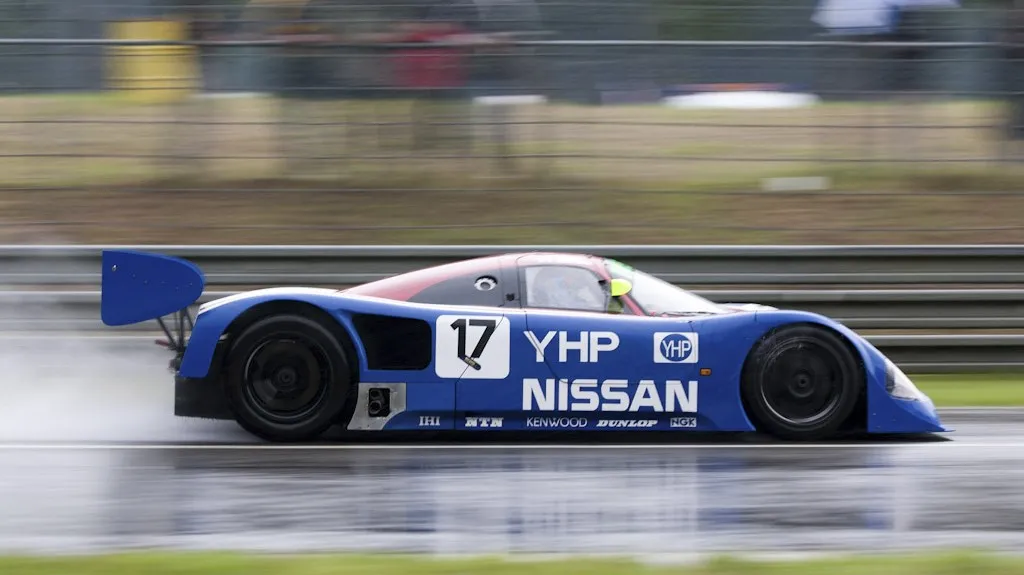
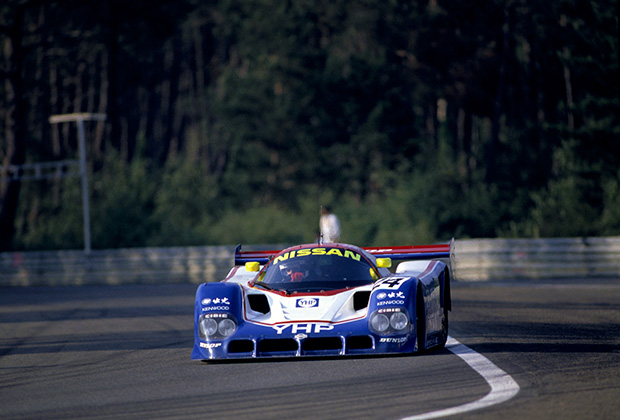
To fully comprehend the sheer, terrifying magnitude of the 1990 Nissan R90CK, one must understand the climate of the World Sportscar Championship at the dawn of the decade. Group C was at its absolute, intoxicating peak. The horsepower wars had escalated to a point bordering on madness, and the major manufacturers were locked in a multimillion-dollar arms race to conquer the 24 Hours of Le Mans. Nissan, having campaigned the competent but ultimately fragile R89C the previous year, realized that to defeat the aerodynamic perfection of the Mercedes-Benz C11, the V12 thunder of the Jaguar XJR-12, and the relentless endurance of the Porsche 962C, a massive paradigm shift was required. In a highly unusual but brilliant strategic move, Nissan split its 1990 development program. The domestic Nismo division in Japan developed the R90CP for the local championship, while the European World Sportscar Championship effort was handed to the brilliant British outfit Ray Mallock Ltd (RML). The result of this European skunkworks project was the R90CK—a carbon-kevlar leviathan that prioritized sheer, unadulterated brute force, creating one of the most fearsome and legendary qualifying monsters in the history of endurance racing.
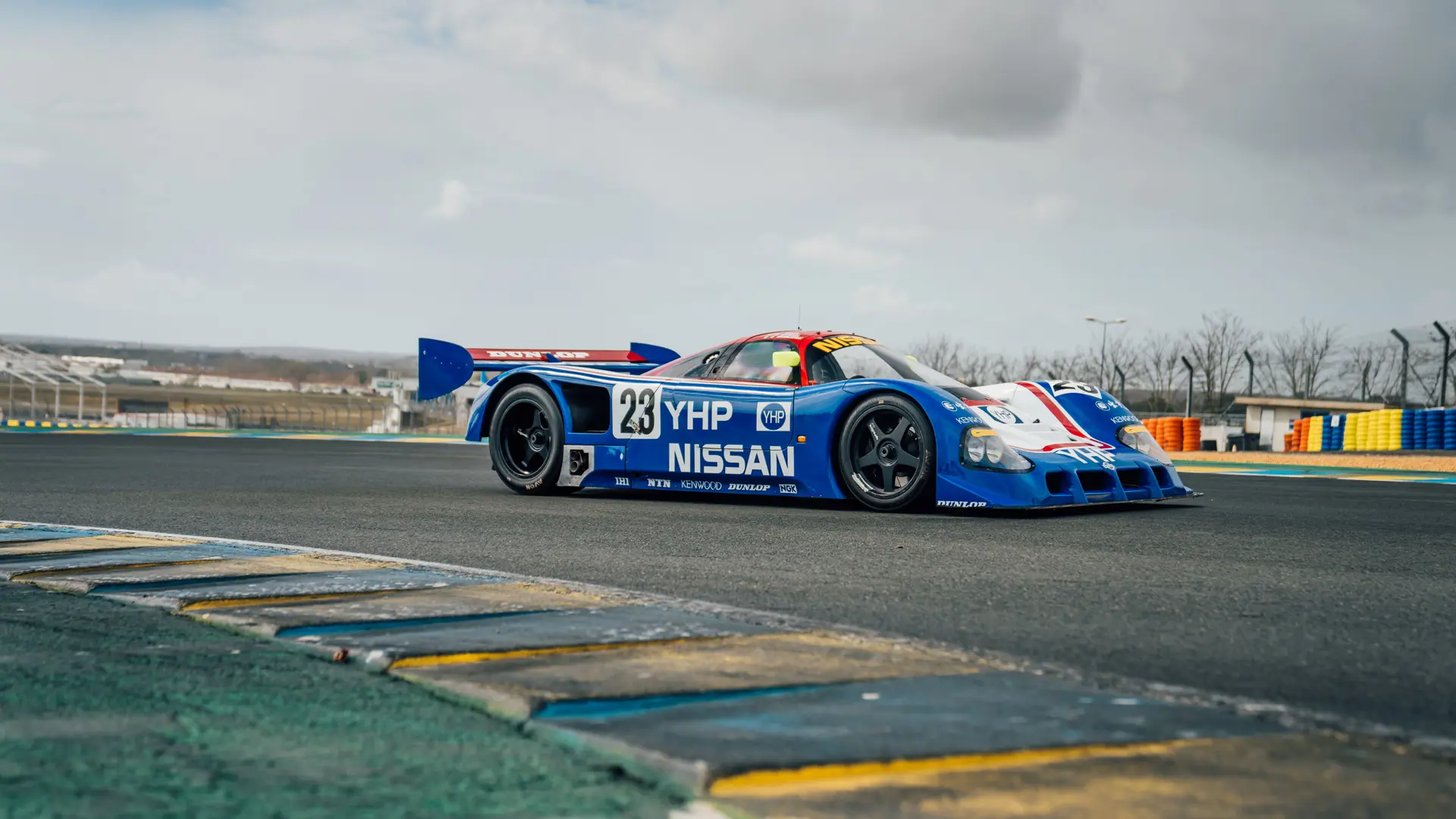
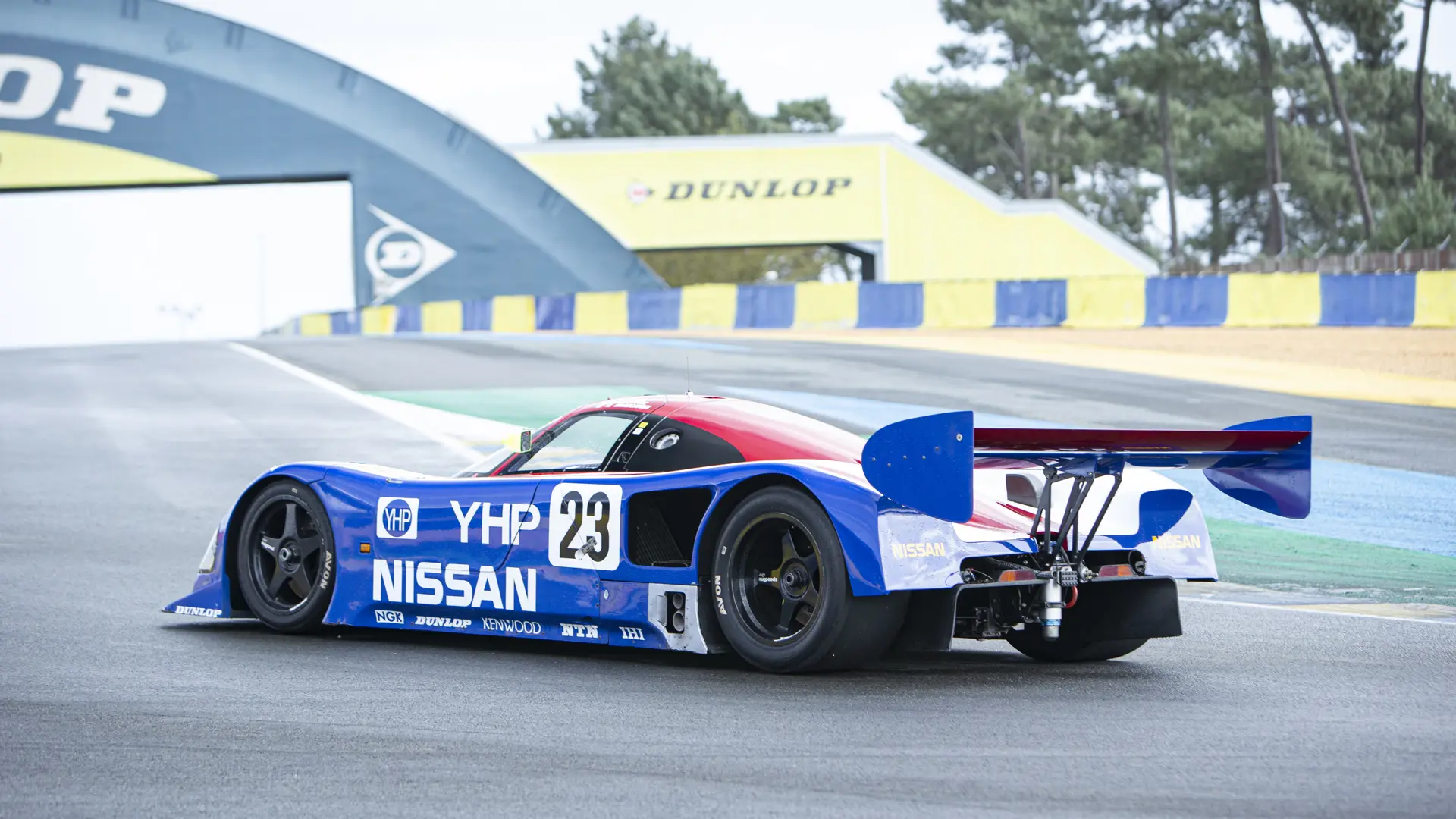
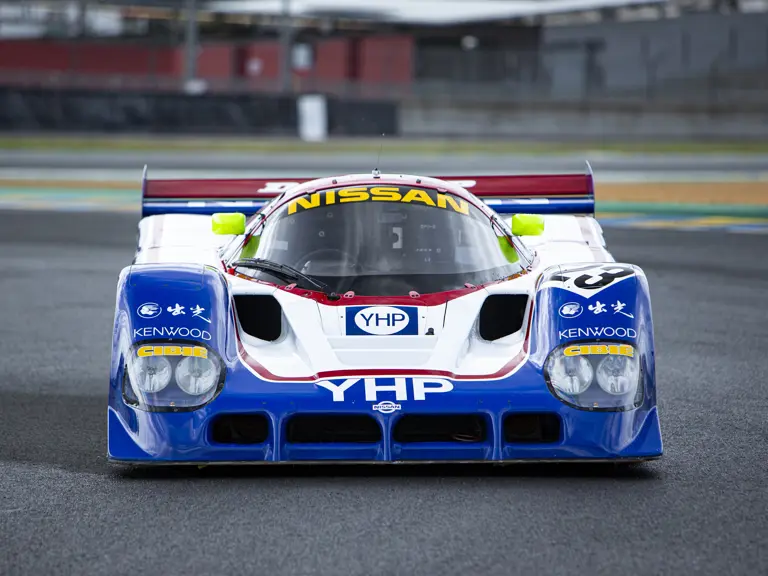
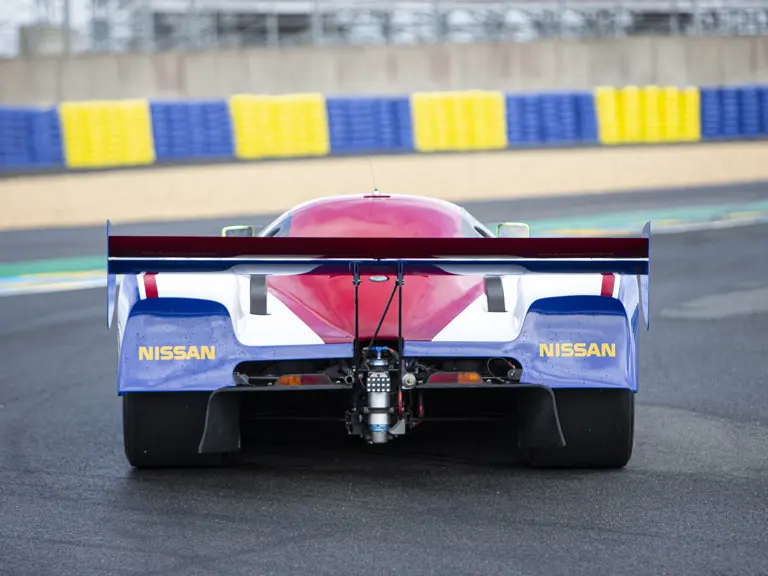
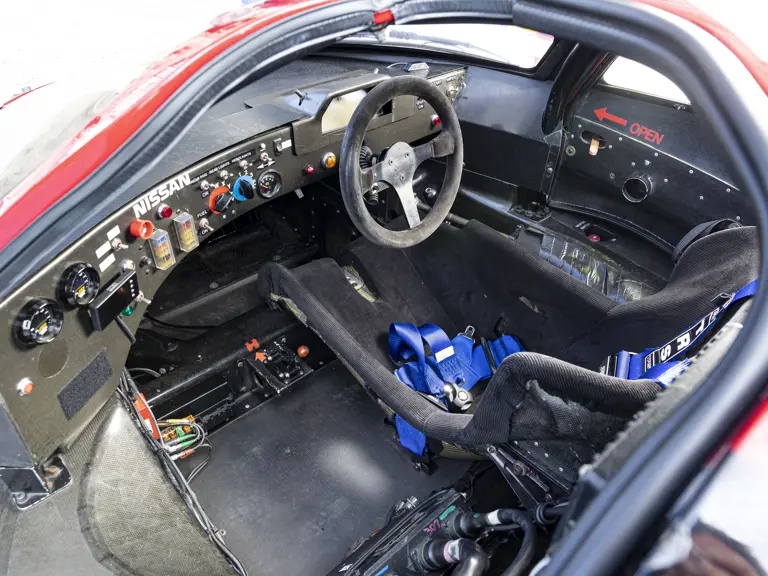
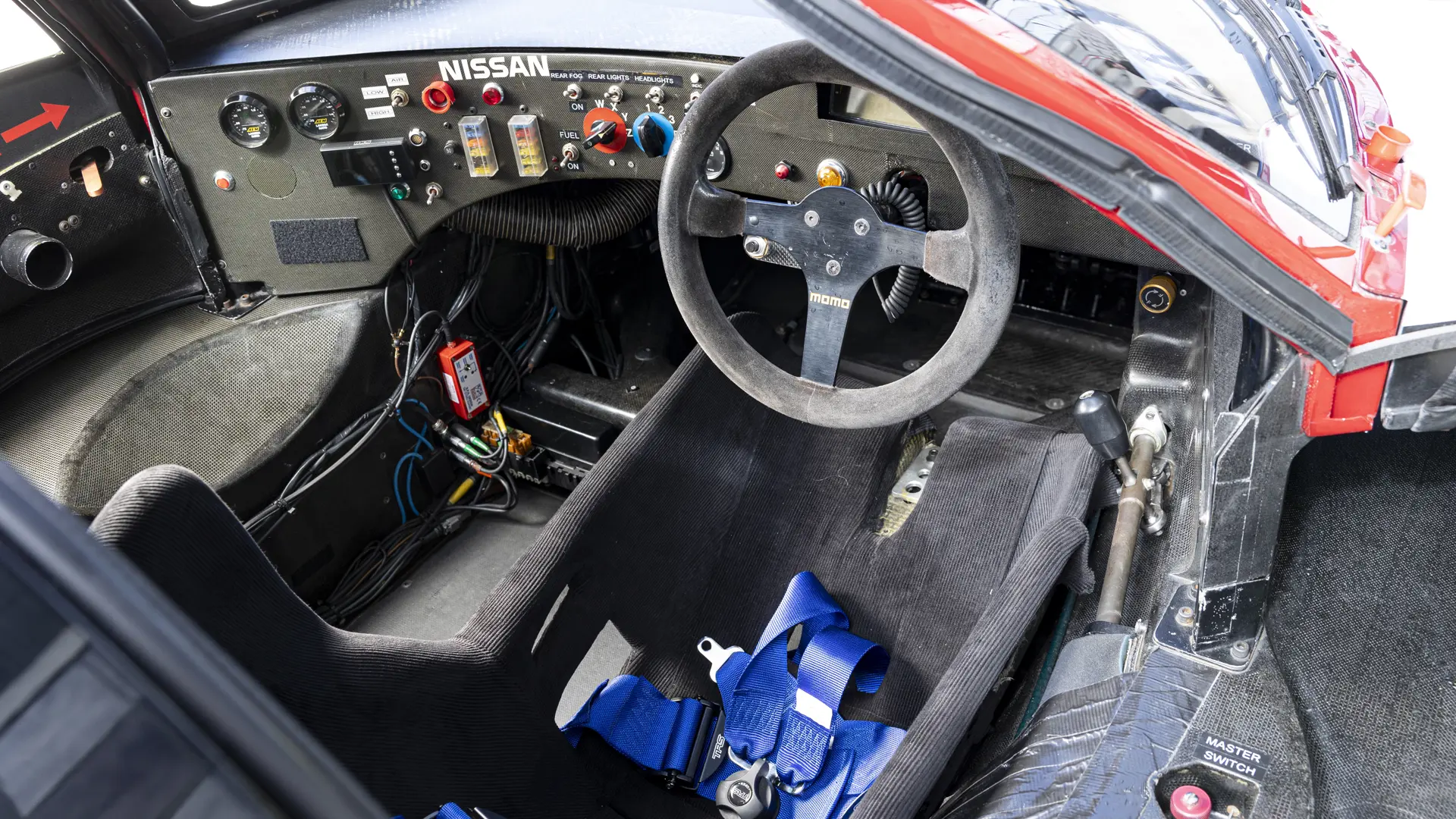
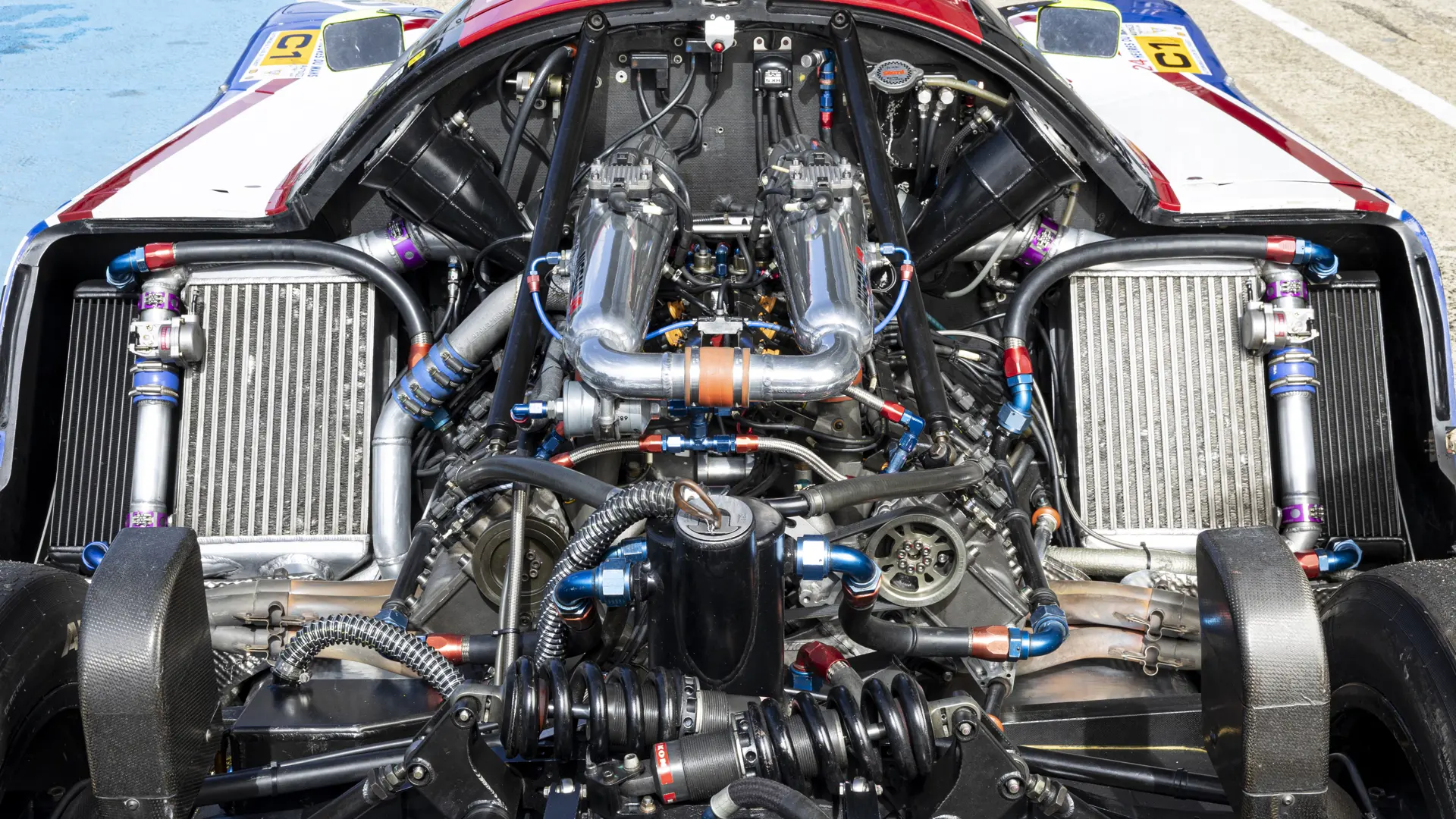
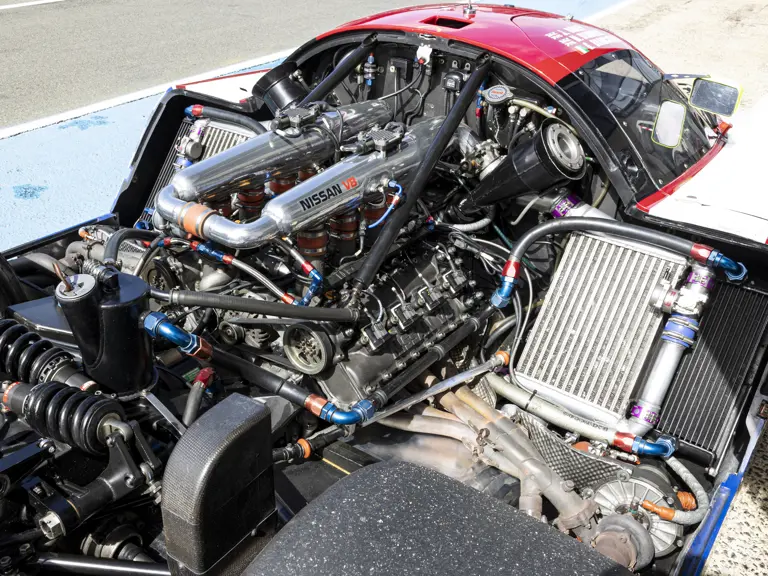
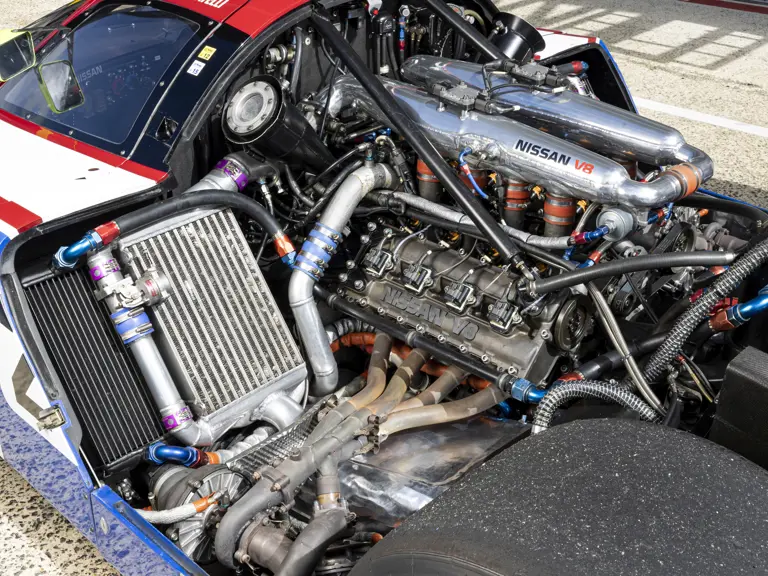
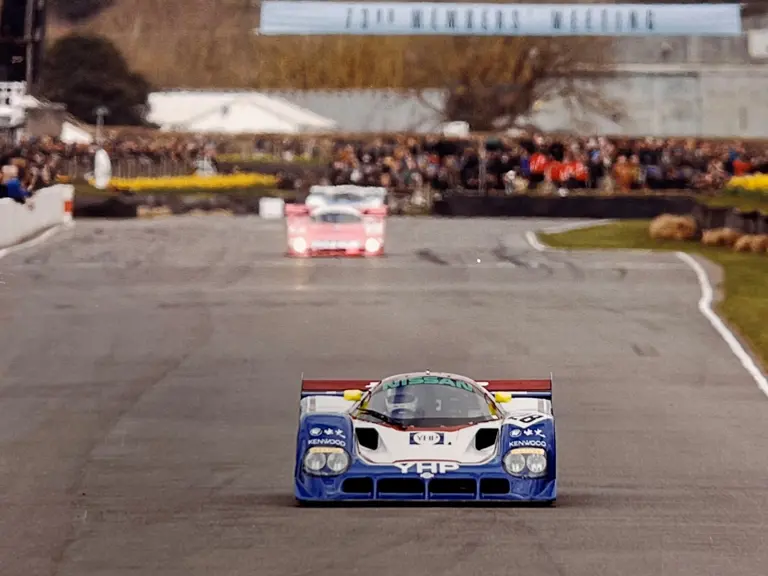
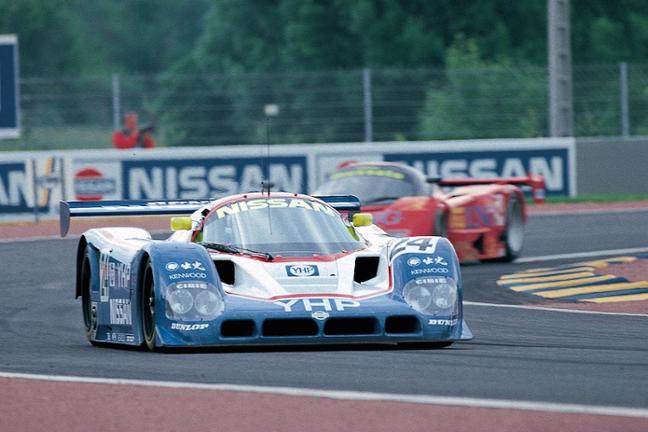
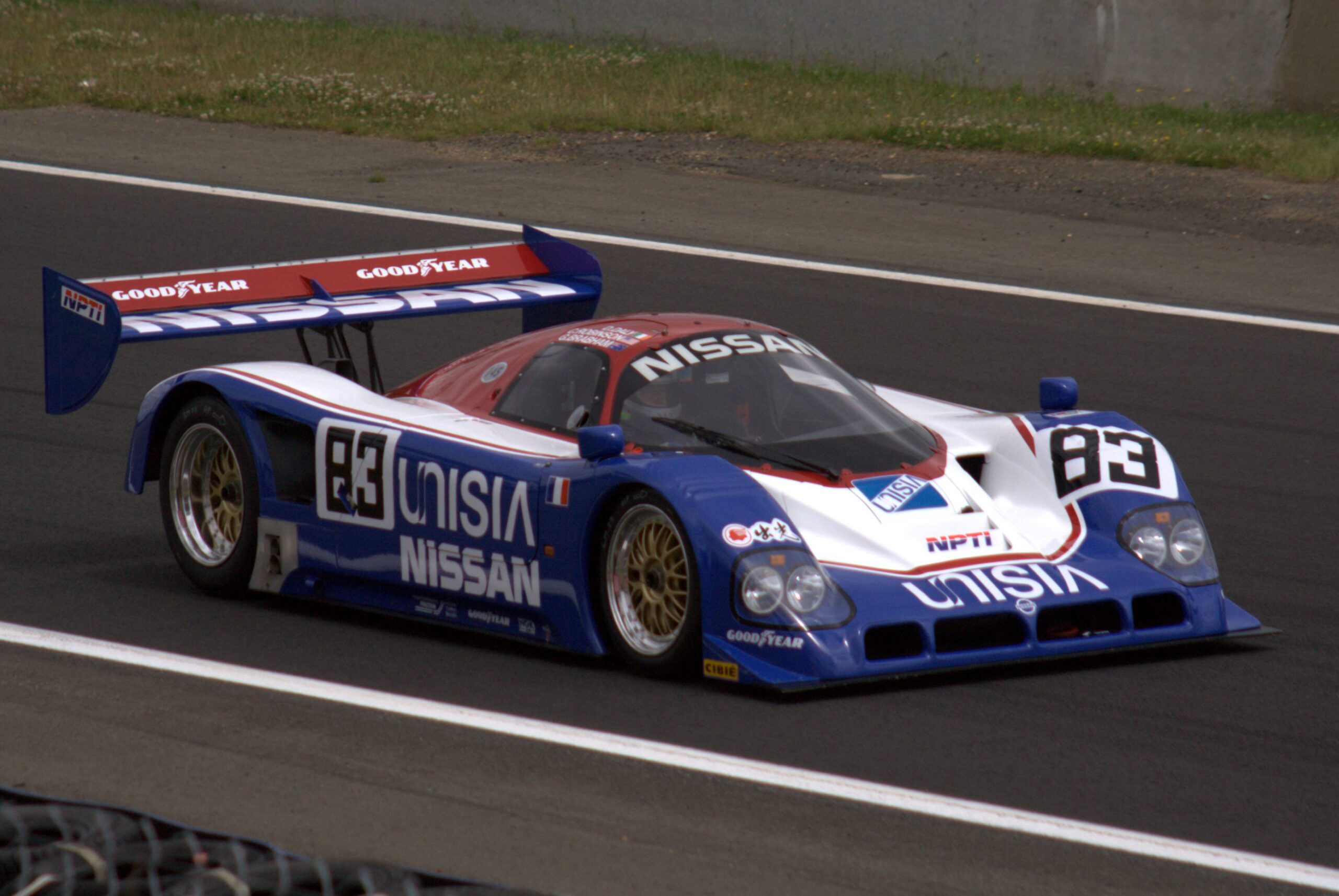
To peer beneath the aggressive, red, white, and blue Calsonic or YHP-liveried bodywork of the R90CK is to witness a masterpiece of uncompromising engineering. RML took the Lola-built carbon-kevlar monocoque of the outgoing R89C and heavily redesigned the aerodynamic package. The R90CK featured a flatter, more aerodynamically efficient nose and a distinct rear wing configuration compared to its Japanese CP sibling, aiming to generate immense downforce for the shorter WSC sprint races while maintaining low drag for Le Mans. However, the undisputed centerpiece of the R90CK was its engine: the VRH35Z. This 3.5-liter, twin-turbocharged aluminum V8 was an absolute powerhouse. In standard endurance racing trim, it produced a highly reliable 800 brake horsepower. Mated to a specialized five-speed Hewland manual transaxle, the powertrain was designed to withstand 24 hours of relentless abuse. Colossal carbon-ceramic brakes were tasked with arresting the 900-kilogram prototype from speeds well over 220 mph. Inside, the cockpit was a claustrophobic, heat-soaked carbon cavern, with the driver seated precariously close to the nose, surrounded by a dizzying array of analog gauges and the all-important, dial-operated electronic boost controller.
The competitive history of the R90CK is forever immortalized by a single, mythical lap at the 1990 24 Hours of Le Mans. That year, the ACO had controversially installed two chicanes on the legendary Mulsanne Straight, theoretically ending the era of 240-mph top speeds. During Thursday night qualifying, British driver Mark Blundell was strapped into the #24 Nissan R90CK. The mechanics had fitted specialized, short-life qualifying turbos and instructed Blundell to turn the boost dial to its maximum setting, expecting around 1,000 horsepower. However, as Blundell left the pits, the electronic wastegate jammed completely shut. The VRH35Z engine was suddenly producing an estimated 1,100 to 1,200 brake horsepower—a figure so violent that the rear wheels spun relentlessly in fourth gear. Rather than aborting the lap, Blundell wrung the neck of the detonating monster. Fighting massive turbo lag, terrifying vibration, and an engine that was desperately trying to tear itself apart, he crossed the line with a time of 3:27.020. He took pole position by an astonishing six seconds, hitting 227 mph despite the new chicanes. It was a display of white-knuckle heroism that instantly cemented the R90CK into Le Mans folklore. In the race itself, the sheer strain of the pace eventually took its toll; while the R90CKs led the early hours and fought valiantly, reliability issues with gearboxes and the highly stressed engines ultimately handed the victory to Jaguar. In the broader World Sportscar Championship, the R90CK proved blisteringly fast, securing multiple podiums against the dominant Mercedes-Benz C11s, but that single qualifying lap at La Sarthe remains its defining legacy.
The legacy of the 1990 Nissan R90CK is that of the ultimate Group C supernova—a car that burned brighter, hotter, and faster than almost anything else before the formula changed. It represents the absolute pinnacle of the turbocharged horsepower wars, a fleeting moment in time when regulations allowed engineers and drivers to harness well over a thousand horsepower on the world’s most dangerous circuits. Following the 1990 season, the FIA began transitioning the championship towards 3.5-liter, naturally aspirated Formula 1-style engines, effectively closing the book on these turbocharged leviathans. While Nissan would find incredible success in America with the NPT-90 and win Daytona in 1992 with the R91CP, the R90CK stands alone in the pantheon of motorsport. It is the definitive qualifying monster, a brutal, beautiful reminder of a time when the only limit to a Group C car’s speed was the bravery of the driver strapped inside.
Brand
Produced from
Portal
Vehicle category
Predecessor
Sucessor
Brand
Produced from
Portal
Vehicle category
Model generation
Predecessor
Sucessor
Submodel Overview
To fully comprehend the sheer, terrifying magnitude of the 1990 Nissan R90CK, one must understand the climate of the World Sportscar Championship at the dawn of the decade. Group C was at its absolute, intoxicating peak. The horsepower wars had escalated to a point bordering on madness, and the major manufacturers were locked in a multimillion-dollar arms race to conquer the 24 Hours of Le Mans. Nissan, having campaigned the competent but ultimately fragile R89C the previous year, realized that to defeat the aerodynamic perfection of the Mercedes-Benz C11, the V12 thunder of the Jaguar XJR-12, and the relentless endurance of the Porsche 962C, a massive paradigm shift was required. In a highly unusual but brilliant strategic move, Nissan split its 1990 development program. The domestic Nismo division in Japan developed the R90CP for the local championship, while the European World Sportscar Championship effort was handed to the brilliant British outfit Ray Mallock Ltd (RML). The result of this European skunkworks project was the R90CK—a carbon-kevlar leviathan that prioritized sheer, unadulterated brute force, creating one of the most fearsome and legendary qualifying monsters in the history of endurance racing.
To peer beneath the aggressive, red, white, and blue Calsonic or YHP-liveried bodywork of the R90CK is to witness a masterpiece of uncompromising engineering. RML took the Lola-built carbon-kevlar monocoque of the outgoing R89C and heavily redesigned the aerodynamic package. The R90CK featured a flatter, more aerodynamically efficient nose and a distinct rear wing configuration compared to its Japanese CP sibling, aiming to generate immense downforce for the shorter WSC sprint races while maintaining low drag for Le Mans. However, the undisputed centerpiece of the R90CK was its engine: the VRH35Z. This 3.5-liter, twin-turbocharged aluminum V8 was an absolute powerhouse. In standard endurance racing trim, it produced a highly reliable 800 brake horsepower. Mated to a specialized five-speed Hewland manual transaxle, the powertrain was designed to withstand 24 hours of relentless abuse. Colossal carbon-ceramic brakes were tasked with arresting the 900-kilogram prototype from speeds well over 220 mph. Inside, the cockpit was a claustrophobic, heat-soaked carbon cavern, with the driver seated precariously close to the nose, surrounded by a dizzying array of analog gauges and the all-important, dial-operated electronic boost controller.
The competitive history of the R90CK is forever immortalized by a single, mythical lap at the 1990 24 Hours of Le Mans. That year, the ACO had controversially installed two chicanes on the legendary Mulsanne Straight, theoretically ending the era of 240-mph top speeds. During Thursday night qualifying, British driver Mark Blundell was strapped into the #24 Nissan R90CK. The mechanics had fitted specialized, short-life qualifying turbos and instructed Blundell to turn the boost dial to its maximum setting, expecting around 1,000 horsepower. However, as Blundell left the pits, the electronic wastegate jammed completely shut. The VRH35Z engine was suddenly producing an estimated 1,100 to 1,200 brake horsepower—a figure so violent that the rear wheels spun relentlessly in fourth gear. Rather than aborting the lap, Blundell wrung the neck of the detonating monster. Fighting massive turbo lag, terrifying vibration, and an engine that was desperately trying to tear itself apart, he crossed the line with a time of 3:27.020. He took pole position by an astonishing six seconds, hitting 227 mph despite the new chicanes. It was a display of white-knuckle heroism that instantly cemented the R90CK into Le Mans folklore. In the race itself, the sheer strain of the pace eventually took its toll; while the R90CKs led the early hours and fought valiantly, reliability issues with gearboxes and the highly stressed engines ultimately handed the victory to Jaguar. In the broader World Sportscar Championship, the R90CK proved blisteringly fast, securing multiple podiums against the dominant Mercedes-Benz C11s, but that single qualifying lap at La Sarthe remains its defining legacy.
The legacy of the 1990 Nissan R90CK is that of the ultimate Group C supernova—a car that burned brighter, hotter, and faster than almost anything else before the formula changed. It represents the absolute pinnacle of the turbocharged horsepower wars, a fleeting moment in time when regulations allowed engineers and drivers to harness well over a thousand horsepower on the world’s most dangerous circuits. Following the 1990 season, the FIA began transitioning the championship towards 3.5-liter, naturally aspirated Formula 1-style engines, effectively closing the book on these turbocharged leviathans. While Nissan would find incredible success in America with the NPT-90 and win Daytona in 1992 with the R91CP, the R90CK stands alone in the pantheon of motorsport. It is the definitive qualifying monster, a brutal, beautiful reminder of a time when the only limit to a Group C car’s speed was the bravery of the driver strapped inside.
Tech Specs
Technical Specifications
Tech Specs
Technical Specifications
Engine
01
03
Internal combustion engine
Configuration
Nissan VRH35Z, V8 - 90º
Location
Mid, longitudinally mounted
Construction
Aluminium alloy block and heads
Displacement (cc)
3,496 cc
Displacement (cu in)
213.3 cu in
Compression
8.5:1
Bore x Stroke
85.0 mm x 77.0 mm
Valvetrain
4 valves per cylinder, DOHC
Fuel feed
Nissan ECCS electronic fuel injection
Lubrication
Dry sump
Aspiration
Twin-Turbocharged (2 x IHI turbochargers)
Output
Power (hp)
800 hp
Power (kW)
596 kW
Max power at
7,600 RPM
Torque (Nm)
784 Nm
Torque (ft lbs)
578 ft lbs
Max torque at
5,600 RPM
Drivetrain
02
03
Chassis
Type
Monocoque unibody
Material
Carbon fibre composite and aluminium honeycomb
Body
Material
Carbon fibre and Kevlar composite
Transmission
Gearbox
Nissan / Hewland 5-speed manual
Drive
Rear Wheel Drive (Limited Slip Differential)
Suspension
Front
Independent, double wishbones, pushrod-actuated coil springs over dampers, anti-roll bar
Rear
Independent, double wishbones, pushrod-actuated coil springs over dampers, anti-roll bar
Steering
Type
Rack and pinion, power assisted
Brakes
Front
Ventilated carbon ceramic discs Ø356 mm (14 in), 6-piston AP Racing calipers
Rear
Ventilated carbon ceramic discs Ø356 mm (14 in), 6-piston AP Racing calipers
Wheels
Front
13" x 17"
Rear
14.5" x 18"
Tires
Front
25.5/27.0-17
Rear
28.5/31.0-18
Dimensions and performance
03
03
Dimensions
Length (mm)
4,800 mm
Length (in)
189.0 in
Width (mm)
2,000 mm
Width (in)
78.7 in
Height (mm)
1,000 mm
Height (in)
39.4 in
Wheelbase (mm)
2,779 mm
Wheelbase (in)
109.4 in
Weight (kg)
900 kg
Weight (lbs)
1,984 lbs
Performance
Power to weight
0.88 hp/kg
Top speed (km/h)
366 km/h
Top speed (mph)
227 mph
0-100 km/h (0-60 mph)
~2.8 s