
Maserati 300S
Brand
Produced from
Vehicle category
Portal
Model line
Model generation
Predecessor
Sucessor
Model Overview
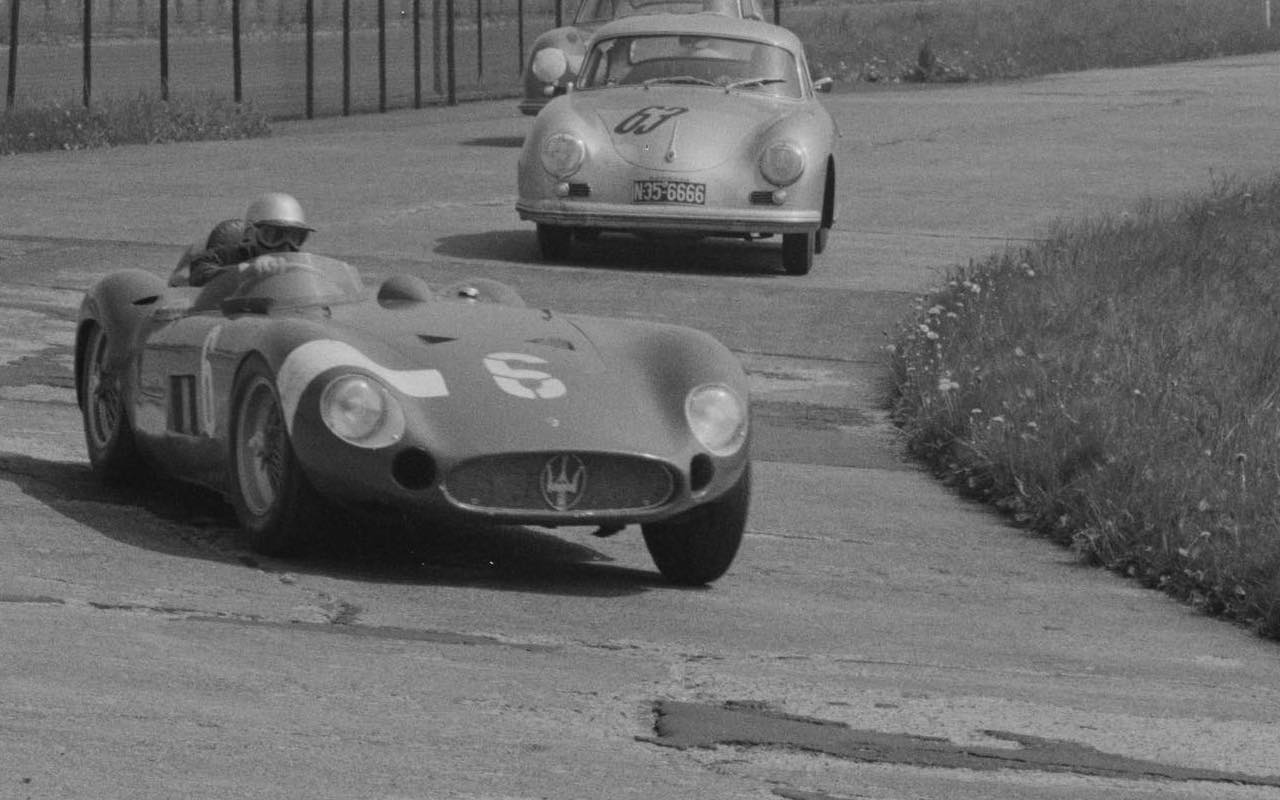
To fully comprehend the majesty and the historical weight of the Maserati 300S, one must cast their mind back to the mid-1950s—an incredibly romantic, intoxicating, and lethal era of the World Sportscar Championship. The motorsport landscape was a fiercely contested theater of national pride, where Mercedes-Benz was unleashing unparalleled technological terror, Jaguar was refining the science of aerodynamics, and Enzo Ferrari was churning out brutal, four-cylinder sports racers. In Modena, just down the road from Maranello, the Orsi family and Maserati found themselves in a precarious position. Their 2.0-liter A6GCS was a masterpiece of agility, yet hopelessly outgunned on long straights. Their Formula 1 machine, the legendary 250F, was a world-beater, but its 2.5-liter engine lacked the sheer displacement required to combat the 3.0-liter Ferrari 750 Monza and the Aston Martin DB3S in endurance racing. The solution, spearheaded by Vittorio Bellentani and later refined by Giulio Alfieri, was an exercise in sublime automotive alchemy. They took the grand prix-winning DNA of the 250F, enlarged its heart, and draped it in some of the most sensuous aluminium coachwork ever hammered over a wooden buck. The resulting Maserati 300S was not merely a response to Ferrari; it was the creation of what Sir Stirling Moss would later declare as arguably the best-handling, best-balanced front-engined sports racing car ever built.
Peeling away the exquisite aluminium skin of the 300S reveals a mechanical architecture explicitly designed to prioritize balance and driver communication over blunt-force horsepower. At its core lay a highly advanced, tubular trellis frame, utilizing a complex web of small-diameter steel tubes to provide immense rigidity while keeping weight to an absolute minimum. However, the true stroke of genius in the 300S’s chassis dynamics was its transaxle layout. Maserati engineers moved the four-speed transverse gearbox to the rear, mounting it in unit with the limited-slip differential and a De Dion rear axle. This eradicated the nose-heavy characteristics that plagued many of its contemporaries, blessing the 300S with a near-perfect 50/50 weight distribution and a beautifully low polar moment of inertia. Up front, independent double wishbones and coil springs kept the nose planted. To arrest the speeds generated by this featherweight chassis, Maserati employed massive, deeply finned aluminium drum brakes that filled the intricate Borrani wire wheels, effectively dissipating heat during gruelling alpine descents.
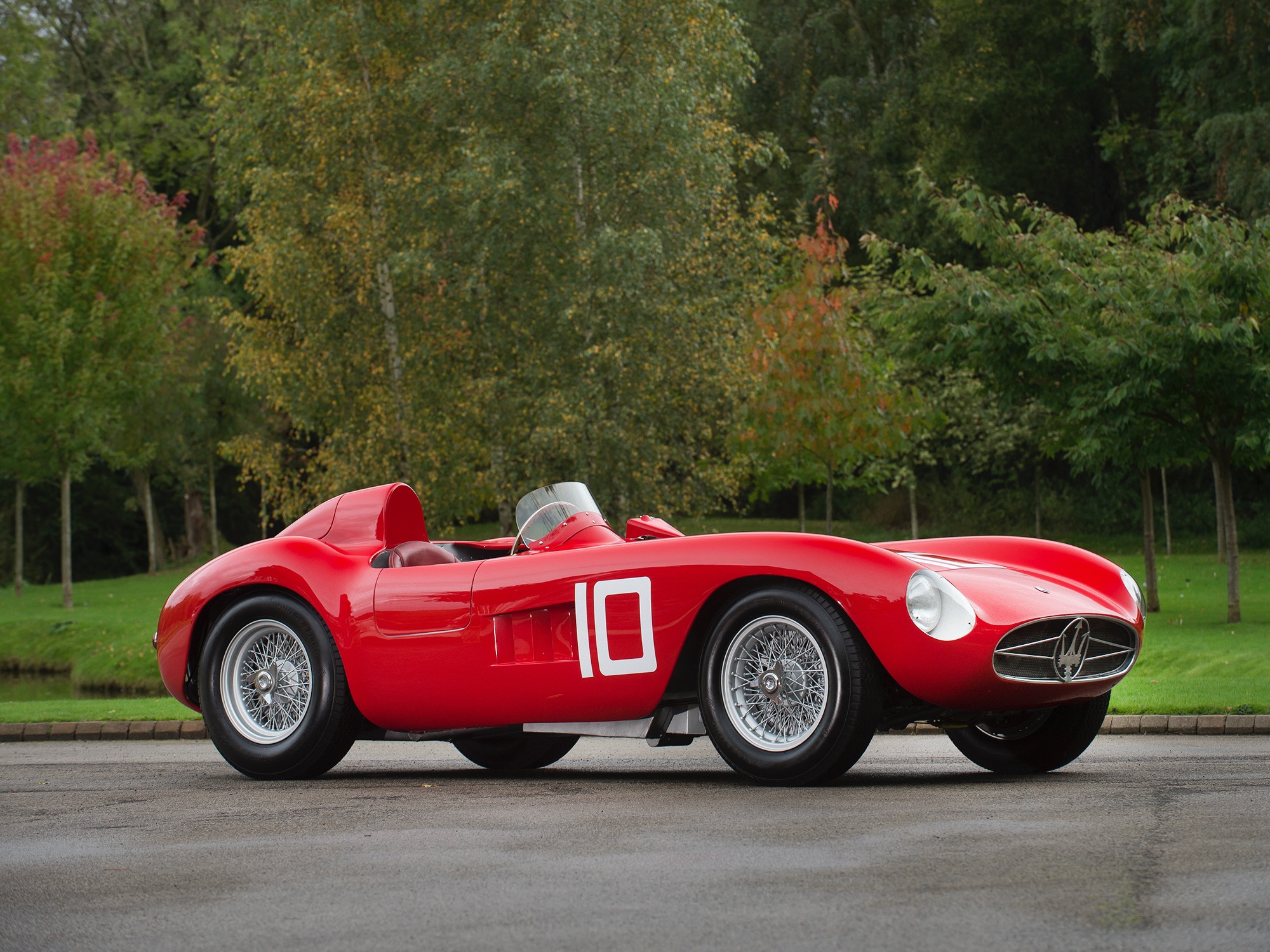
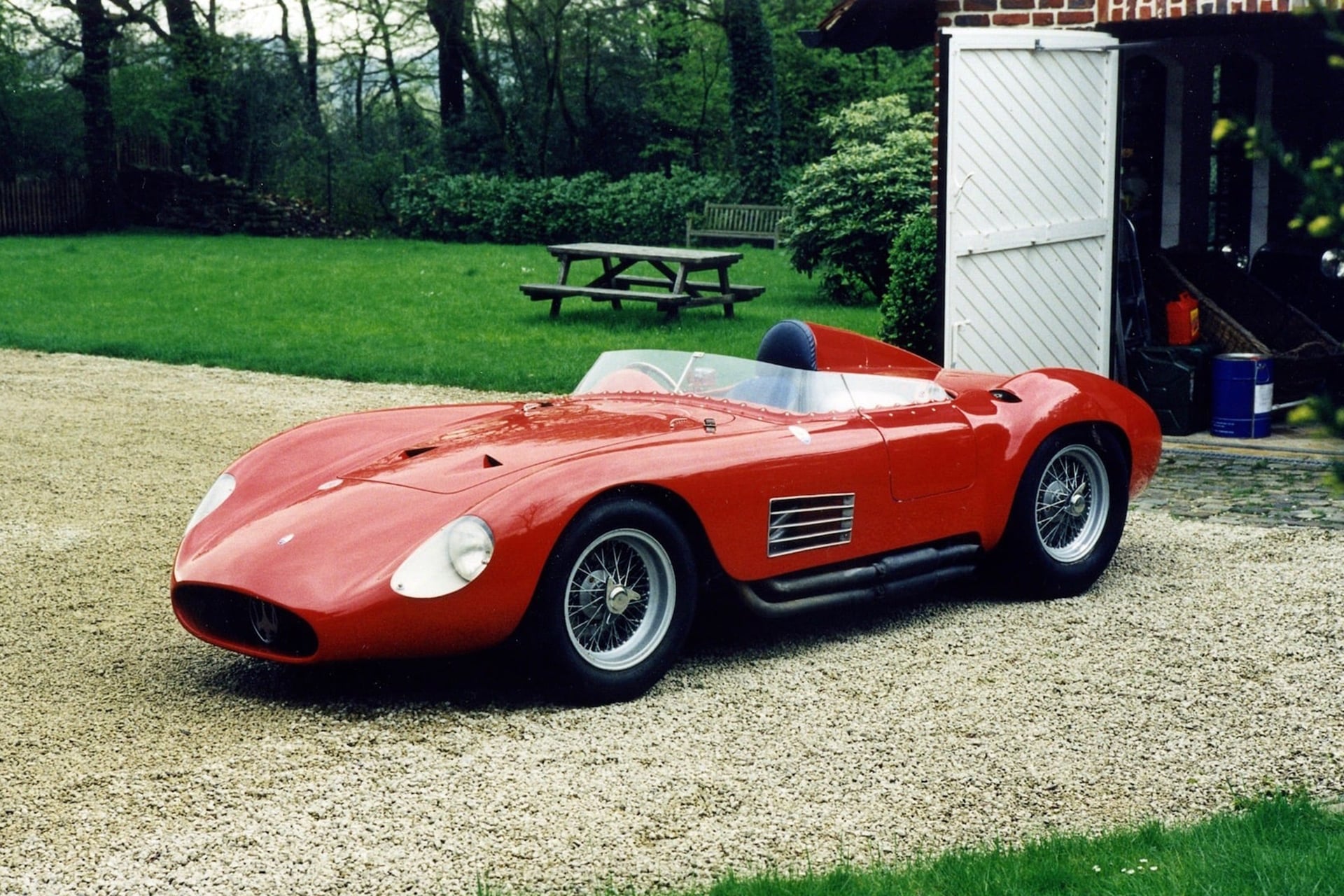
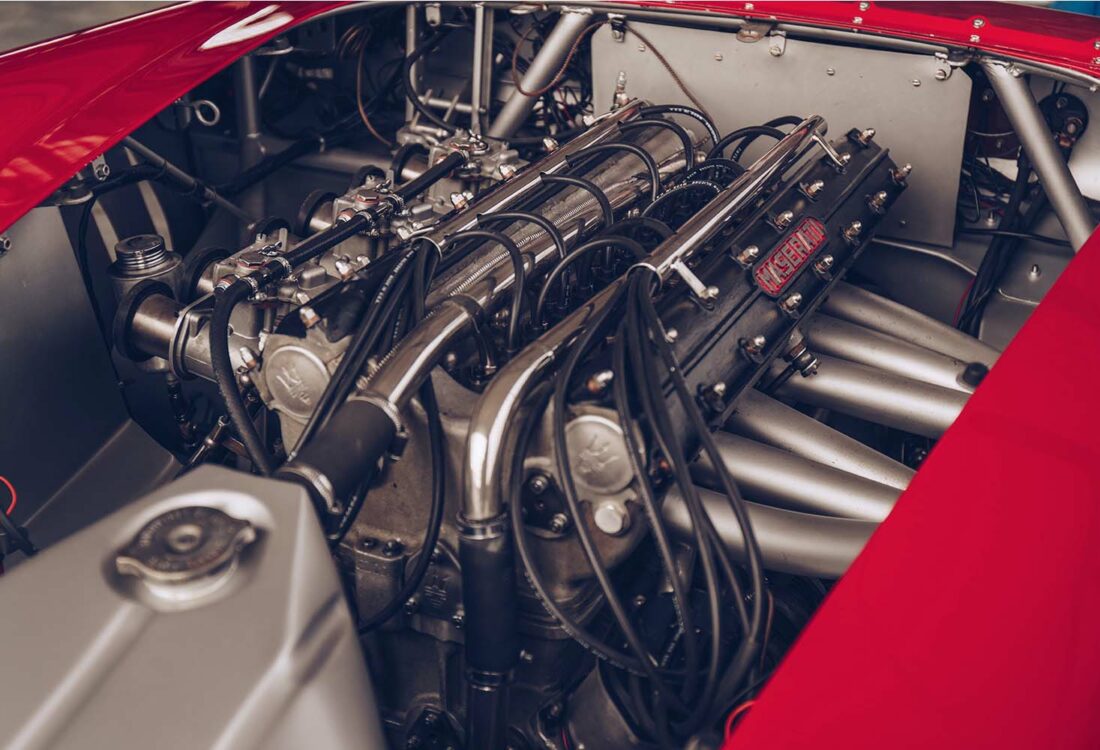
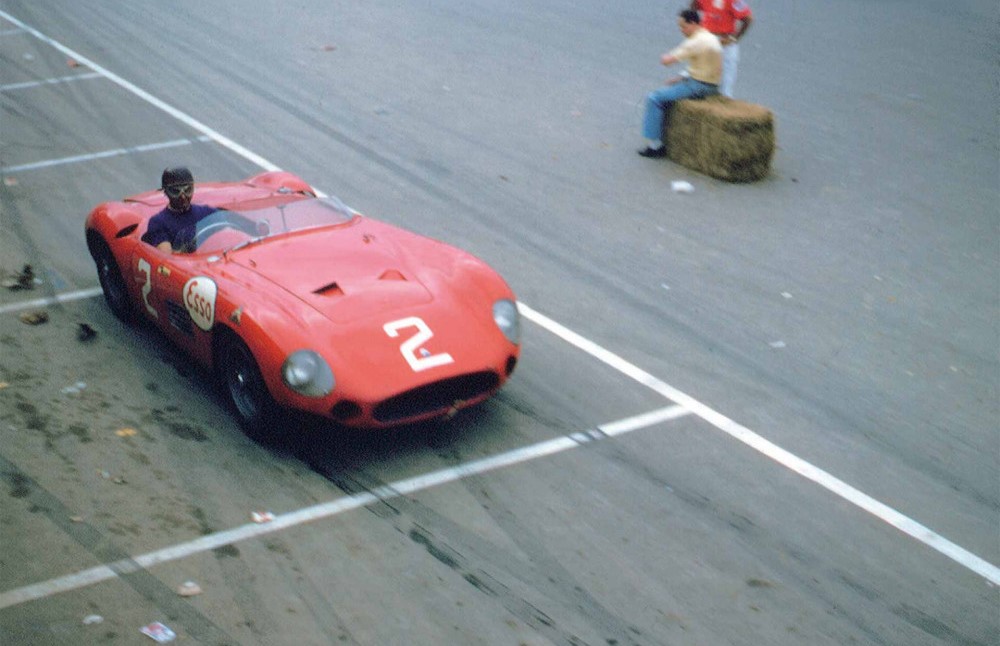
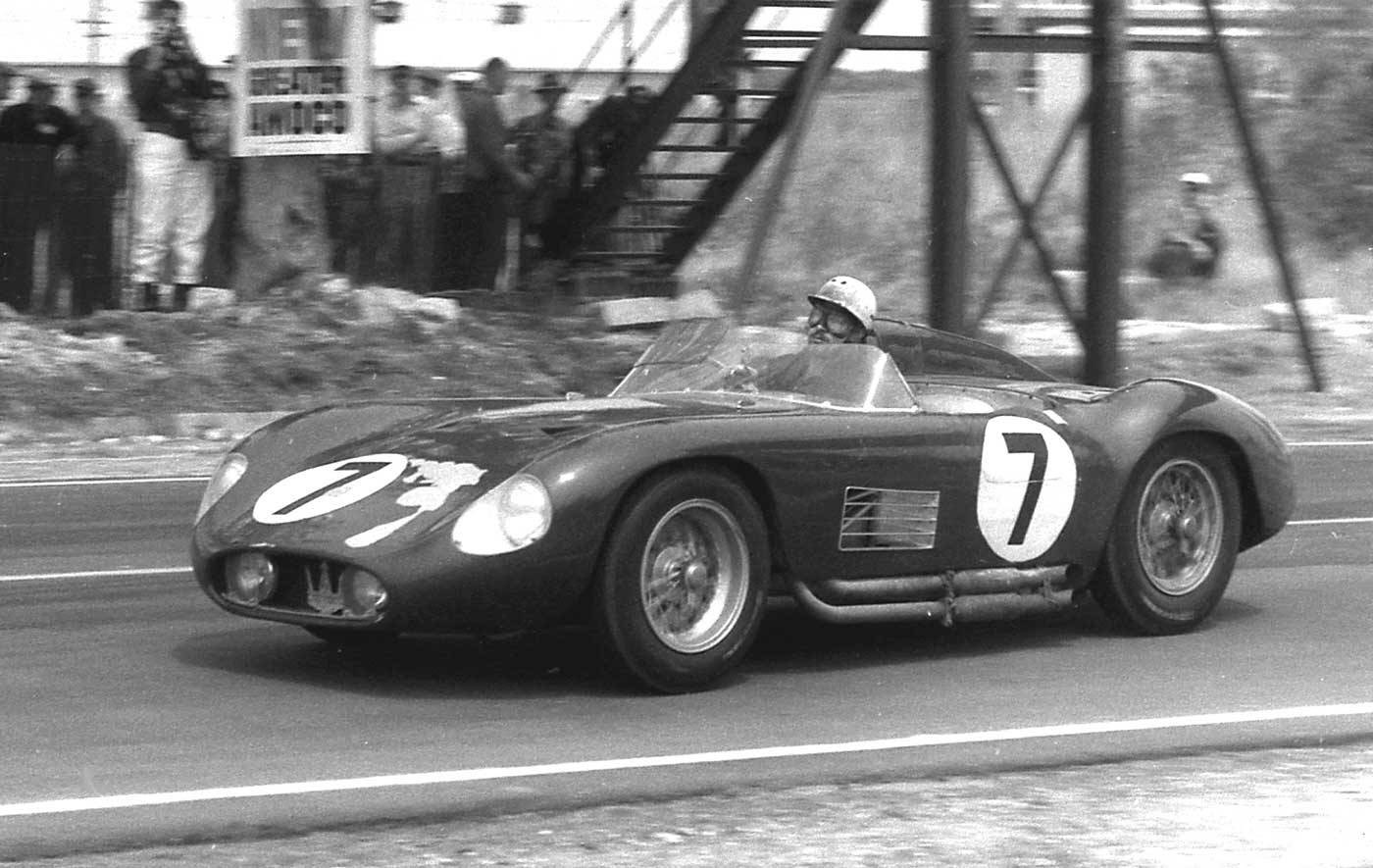
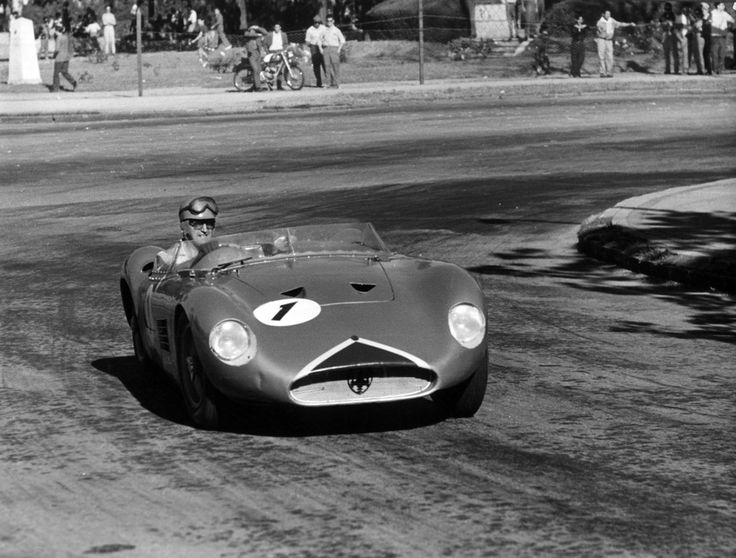
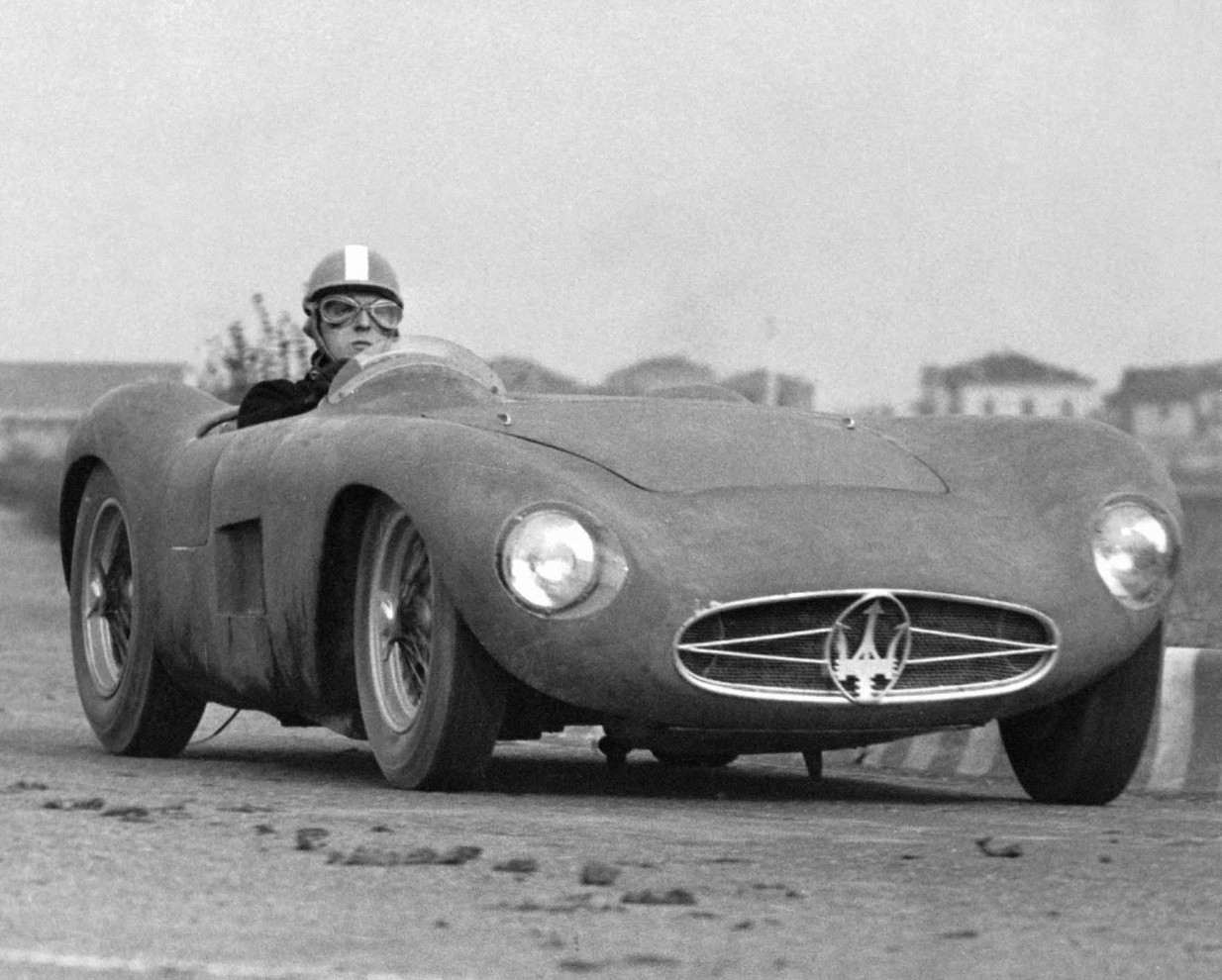
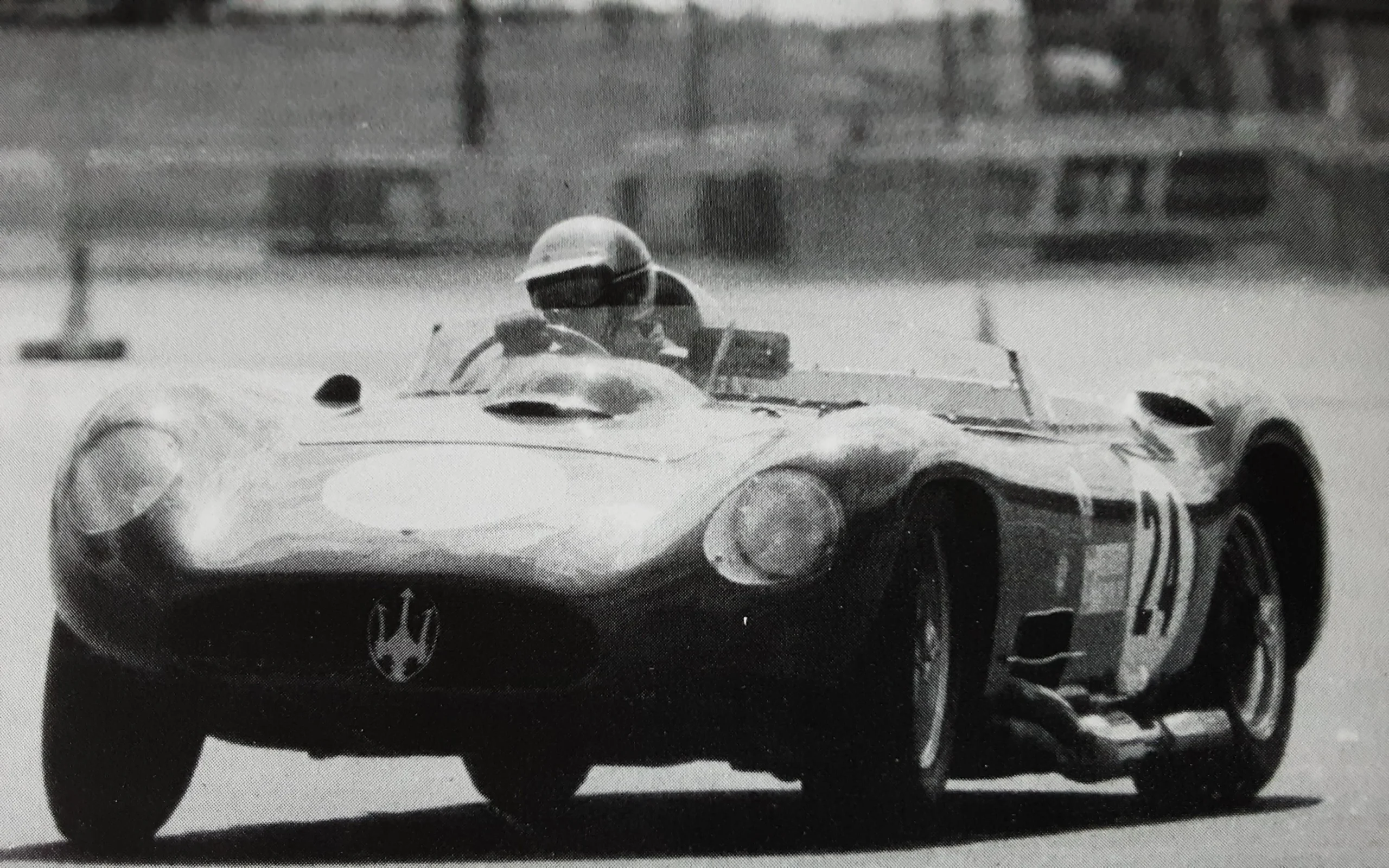
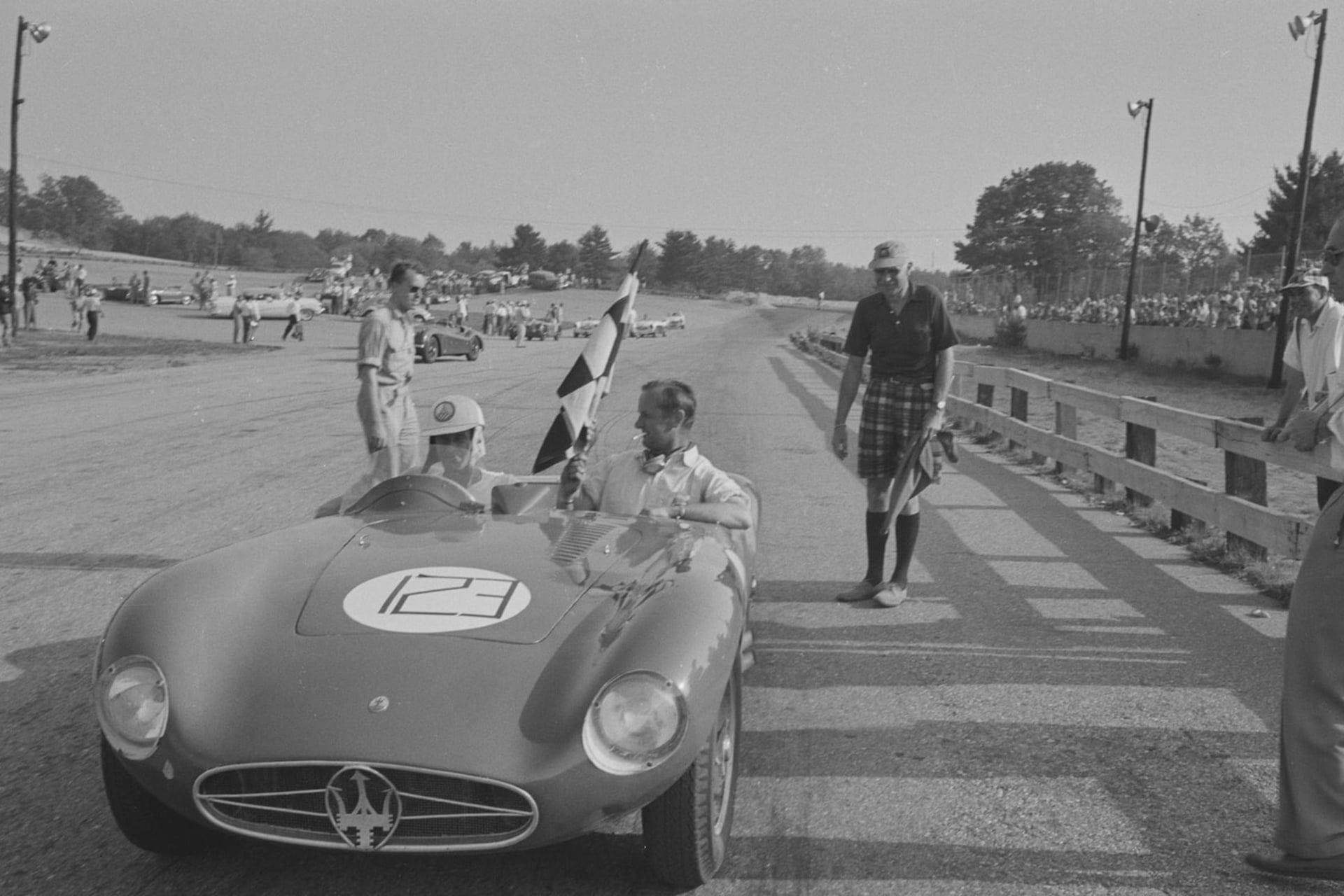
The beating heart of the 300S was a masterpiece of mid-century Italian metallurgy. Directly derived from the 250F Grand Prix car, the engine was a 3.0-liter, naturally aspirated inline-six. Cast in lightweight aluminium alloy, it featured gear-driven twin overhead camshafts, dry-sump lubrication, and a hemispherical combustion chamber ignited by a complex twin-spark ignition system fueled by dual magnetos. Breathing ferociously through three massive twin-choke Weber 45 DCOE carburettors, this inline-six produced a reliable, incredibly linear 245 to 260 brake horsepower. It possessed a raspy, tearing-canvas exhaust note that would echo off the forests of the Nürburgring. But the visual identity of the 300S was defined by Carrozzeria Fantuzzi. Medardo Fantuzzi’s early 1955 bodies, retrospectively known as the ‘Short Nose’, featured a blunt, aggressive front end with a slightly gaping grille, optimized for cooling and agility on tighter circuits. However, as the speeds at tracks like Le Mans and Reims increased, aerodynamic lift became a terrifying issue. In response, Fantuzzi evolved the design for 1956 and 1957 into the breathtaking ‘Long Nose’ variant. By elongating the front overhang, lowering the bonnet line, and extending the front fenders to gracefully channel the air, the ‘Long Nose’ 300S gained vital high-speed stability and reduced drag, transforming a beautiful car into a wind-cheating sculpture of mathematical grace. Inside, the right-hand-drive cockpit was a stark, heat-soaked crucible of speed. The driver sat splay-legged around the massive transmission tunnel, gripping a large wood-rimmed steering wheel, completely exposed to the elements and the deafening mechanical symphony erupting from the engine bay.
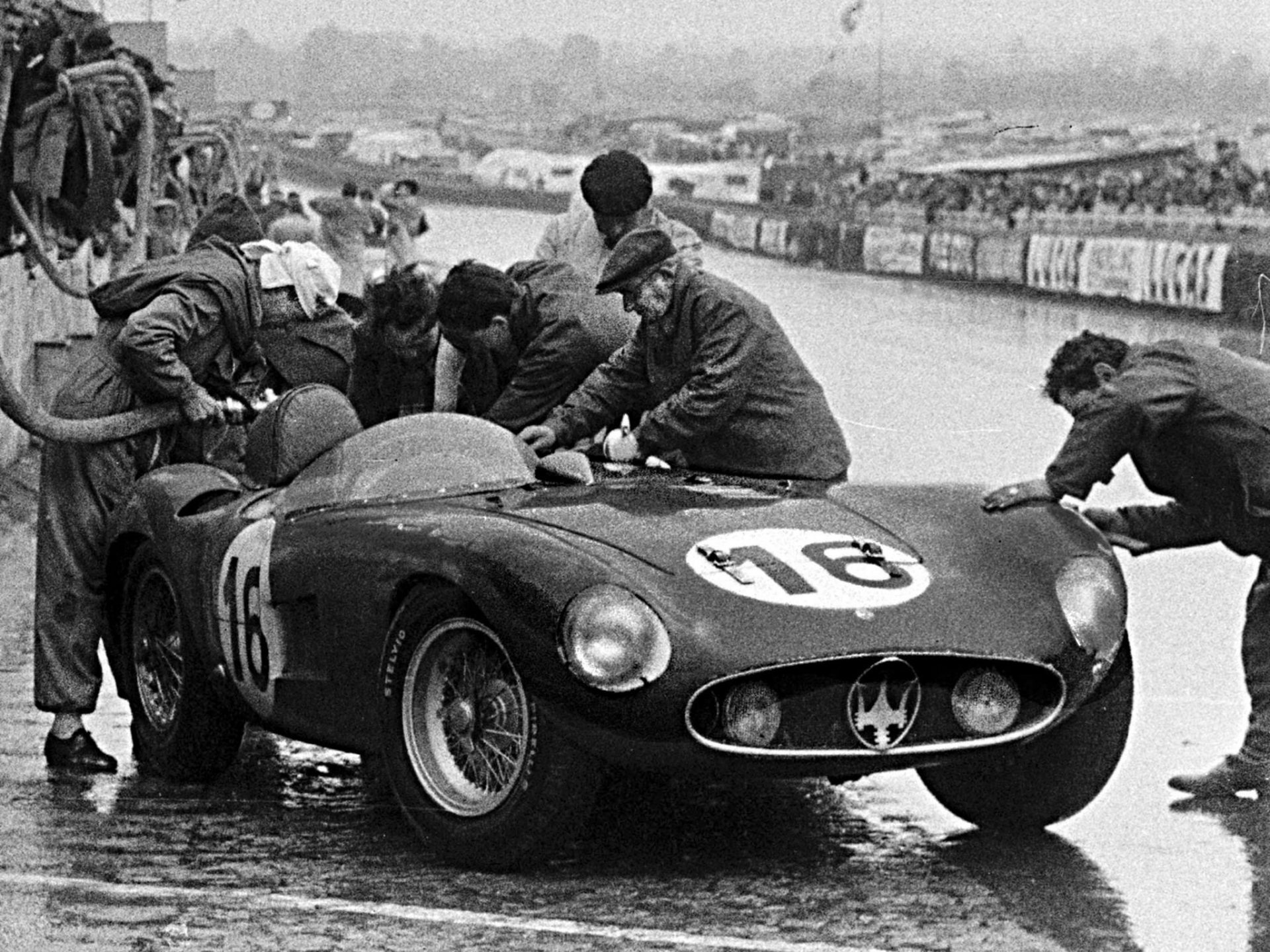
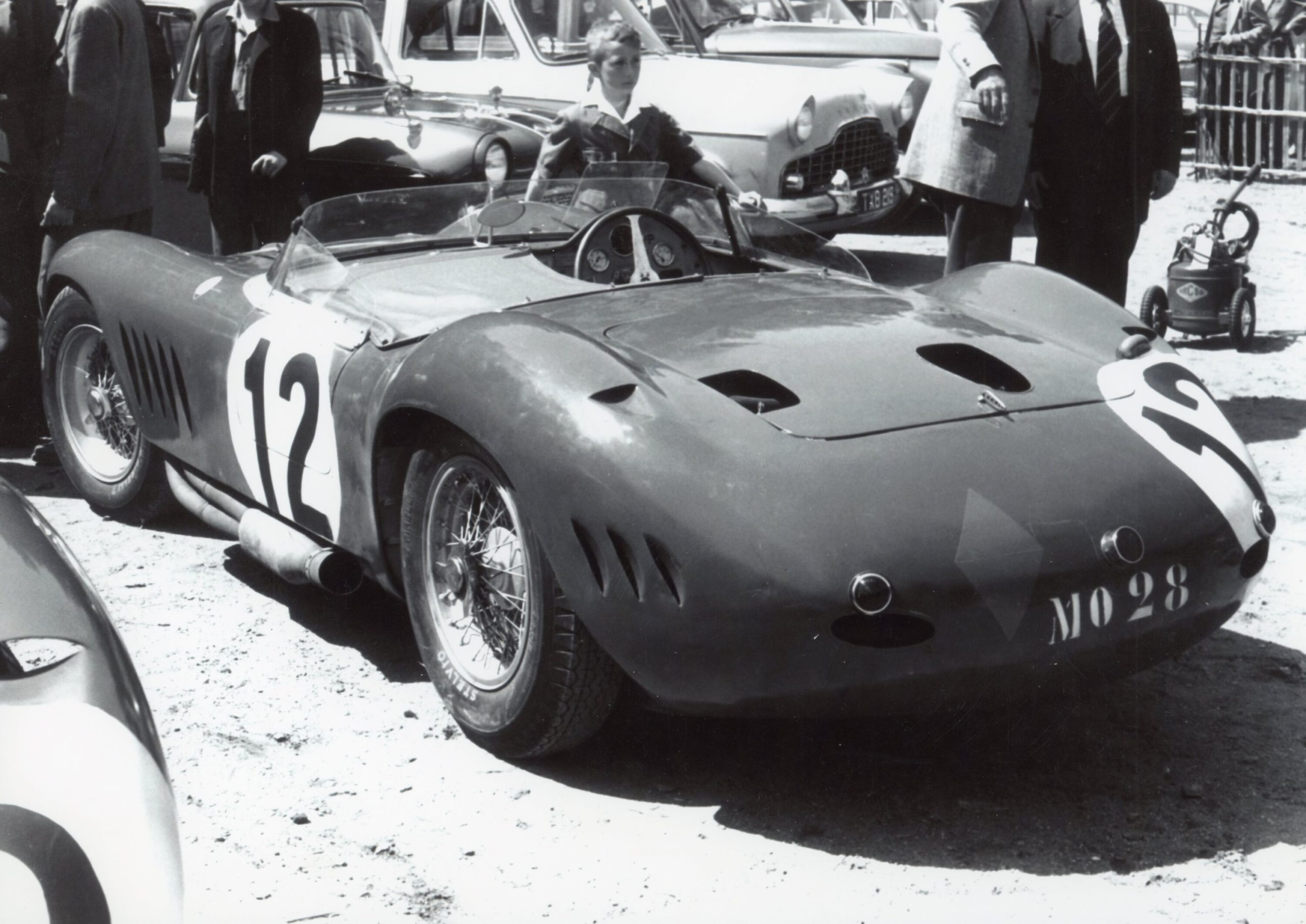
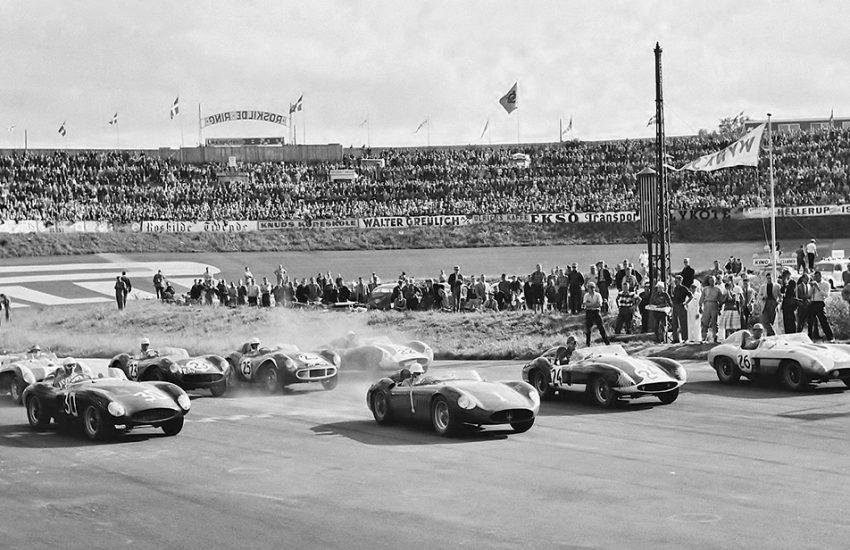
When unleashed upon the circuits of the world, the Maserati 300S did not rely on overwhelming straight-line speed; instead, it dismantled the opposition through telepathic handling and unburstable reliability. It was a machine that flattered its driver, communicating grip limits with such transparency that it could be danced through high-speed sweepers in a state of controlled, glorious four-wheel drift. The 1955 season was largely developmental, but by 1956, the 300S hit its absolute zenith. In the hands of Sir Stirling Moss and Carlos Menditeguy, the ‘Long Nose’ 300S decimated the field at the 1000km of Buenos Aires. But the car’s most mythological triumph occurred at the daunting Nürburgring 1000km later that year. On the treacherous, 14-mile Nordschleife, where chassis balance meant the difference between life and death, the Maserati was in its element. Stirling Moss, sharing driving duties with Jean Behra, Piero Taruffi, and Harry Schell, drove an absolute masterclass. Despite intense pressure from Juan Manuel Fangio and Eugenio Castellotti in the vastly more powerful Ferrari 860 Monza, the superior handling of the 300S prevailed, securing a historic overall victory for the Trident. The 300S came agonizingly close to securing the 1956 World Sportscar Championship for Maserati, ultimately losing to Ferrari by a heartbreakingly narrow margin at the final round in Sweden. Commercially, the 300S was a massive success among wealthy privateers. Maserati produced exactly 26 examples, selling them to international heroes like Briggs Cunningham and Tony Parravano, who terrorized the SCCA circuits in North America, proving that the inline-six masterpiece was just as effective on bumpy American airfields as it was on European road courses.
The legacy of the 1955 Maserati 300S, encompassing both the aggressive ‘Short Nose’ and the aerodynamic ‘Long Nose’ evolutions, represents the absolute pinnacle of Maserati’s inline-six sports racing lineage. It was the harmonious, perfectly calibrated peak of the company’s engineering before the escalating horsepower wars forced them to build the brutal, V8-powered 450S—a car that was immensely faster, but notoriously terrifying to drive. The 300S proved that a well-sorted transaxle chassis and a perfectly balanced engine could run rings around cars with vastly superior displacement. Today, it resides in the most rarefied air of the classic car market, a multi-million-dollar blue-chip unicorn that is universally adored by historic racers for its sublime, forgiving dynamics. It is a crown jewel of the Goodwood Revival and the Mille Miglia Storica. The Maserati 300S stands immortalized not just as a weapon that fought Enzo Ferrari to a standstill, but as a rolling, bellowing piece of mechanical poetry—the quintessential 1950s sports racer that captured the absolute soul of Modena.
Portal
Model line
Model generation
Predecessor
Sucessor
Brand
Produced from
Vehicle category
Portal
Model line
Model generation
Predecessor
Sucessor
Model Overview
To fully comprehend the majesty and the historical weight of the Maserati 300S, one must cast their mind back to the mid-1950s—an incredibly romantic, intoxicating, and lethal era of the World Sportscar Championship. The motorsport landscape was a fiercely contested theater of national pride, where Mercedes-Benz was unleashing unparalleled technological terror, Jaguar was refining the science of aerodynamics, and Enzo Ferrari was churning out brutal, four-cylinder sports racers. In Modena, just down the road from Maranello, the Orsi family and Maserati found themselves in a precarious position. Their 2.0-liter A6GCS was a masterpiece of agility, yet hopelessly outgunned on long straights. Their Formula 1 machine, the legendary 250F, was a world-beater, but its 2.5-liter engine lacked the sheer displacement required to combat the 3.0-liter Ferrari 750 Monza and the Aston Martin DB3S in endurance racing. The solution, spearheaded by Vittorio Bellentani and later refined by Giulio Alfieri, was an exercise in sublime automotive alchemy. They took the grand prix-winning DNA of the 250F, enlarged its heart, and draped it in some of the most sensuous aluminium coachwork ever hammered over a wooden buck. The resulting Maserati 300S was not merely a response to Ferrari; it was the creation of what Sir Stirling Moss would later declare as arguably the best-handling, best-balanced front-engined sports racing car ever built.
Peeling away the exquisite aluminium skin of the 300S reveals a mechanical architecture explicitly designed to prioritize balance and driver communication over blunt-force horsepower. At its core lay a highly advanced, tubular trellis frame, utilizing a complex web of small-diameter steel tubes to provide immense rigidity while keeping weight to an absolute minimum. However, the true stroke of genius in the 300S’s chassis dynamics was its transaxle layout. Maserati engineers moved the four-speed transverse gearbox to the rear, mounting it in unit with the limited-slip differential and a De Dion rear axle. This eradicated the nose-heavy characteristics that plagued many of its contemporaries, blessing the 300S with a near-perfect 50/50 weight distribution and a beautifully low polar moment of inertia. Up front, independent double wishbones and coil springs kept the nose planted. To arrest the speeds generated by this featherweight chassis, Maserati employed massive, deeply finned aluminium drum brakes that filled the intricate Borrani wire wheels, effectively dissipating heat during gruelling alpine descents.
The beating heart of the 300S was a masterpiece of mid-century Italian metallurgy. Directly derived from the 250F Grand Prix car, the engine was a 3.0-liter, naturally aspirated inline-six. Cast in lightweight aluminium alloy, it featured gear-driven twin overhead camshafts, dry-sump lubrication, and a hemispherical combustion chamber ignited by a complex twin-spark ignition system fueled by dual magnetos. Breathing ferociously through three massive twin-choke Weber 45 DCOE carburettors, this inline-six produced a reliable, incredibly linear 245 to 260 brake horsepower. It possessed a raspy, tearing-canvas exhaust note that would echo off the forests of the Nürburgring. But the visual identity of the 300S was defined by Carrozzeria Fantuzzi. Medardo Fantuzzi’s early 1955 bodies, retrospectively known as the ‘Short Nose’, featured a blunt, aggressive front end with a slightly gaping grille, optimized for cooling and agility on tighter circuits. However, as the speeds at tracks like Le Mans and Reims increased, aerodynamic lift became a terrifying issue. In response, Fantuzzi evolved the design for 1956 and 1957 into the breathtaking ‘Long Nose’ variant. By elongating the front overhang, lowering the bonnet line, and extending the front fenders to gracefully channel the air, the ‘Long Nose’ 300S gained vital high-speed stability and reduced drag, transforming a beautiful car into a wind-cheating sculpture of mathematical grace. Inside, the right-hand-drive cockpit was a stark, heat-soaked crucible of speed. The driver sat splay-legged around the massive transmission tunnel, gripping a large wood-rimmed steering wheel, completely exposed to the elements and the deafening mechanical symphony erupting from the engine bay.
When unleashed upon the circuits of the world, the Maserati 300S did not rely on overwhelming straight-line speed; instead, it dismantled the opposition through telepathic handling and unburstable reliability. It was a machine that flattered its driver, communicating grip limits with such transparency that it could be danced through high-speed sweepers in a state of controlled, glorious four-wheel drift. The 1955 season was largely developmental, but by 1956, the 300S hit its absolute zenith. In the hands of Sir Stirling Moss and Carlos Menditeguy, the ‘Long Nose’ 300S decimated the field at the 1000km of Buenos Aires. But the car’s most mythological triumph occurred at the daunting Nürburgring 1000km later that year. On the treacherous, 14-mile Nordschleife, where chassis balance meant the difference between life and death, the Maserati was in its element. Stirling Moss, sharing driving duties with Jean Behra, Piero Taruffi, and Harry Schell, drove an absolute masterclass. Despite intense pressure from Juan Manuel Fangio and Eugenio Castellotti in the vastly more powerful Ferrari 860 Monza, the superior handling of the 300S prevailed, securing a historic overall victory for the Trident. The 300S came agonizingly close to securing the 1956 World Sportscar Championship for Maserati, ultimately losing to Ferrari by a heartbreakingly narrow margin at the final round in Sweden. Commercially, the 300S was a massive success among wealthy privateers. Maserati produced exactly 26 examples, selling them to international heroes like Briggs Cunningham and Tony Parravano, who terrorized the SCCA circuits in North America, proving that the inline-six masterpiece was just as effective on bumpy American airfields as it was on European road courses.
The legacy of the 1955 Maserati 300S, encompassing both the aggressive ‘Short Nose’ and the aerodynamic ‘Long Nose’ evolutions, represents the absolute pinnacle of Maserati’s inline-six sports racing lineage. It was the harmonious, perfectly calibrated peak of the company’s engineering before the escalating horsepower wars forced them to build the brutal, V8-powered 450S—a car that was immensely faster, but notoriously terrifying to drive. The 300S proved that a well-sorted transaxle chassis and a perfectly balanced engine could run rings around cars with vastly superior displacement. Today, it resides in the most rarefied air of the classic car market, a multi-million-dollar blue-chip unicorn that is universally adored by historic racers for its sublime, forgiving dynamics. It is a crown jewel of the Goodwood Revival and the Mille Miglia Storica. The Maserati 300S stands immortalized not just as a weapon that fought Enzo Ferrari to a standstill, but as a rolling, bellowing piece of mechanical poetry—the quintessential 1950s sports racer that captured the absolute soul of Modena.
Submodels

