
Ford GT40 Coupe



Brand
Produced from
Portal
Model line
Model generation
Predecessor
Successor
Submodel Overview
By early 1965, the Ford GT program was teetering on the precipice of an embarrassing, multimillion-dollar failure. The 1964 season had been a spectacle of speed but a catastrophe of reliability; the sleek prototypes developed by Ford Advanced Vehicles (FAV) in Slough had shown terrifying potential on the Mulsanne Straight, but had failed to finish a single race due to fragile Colotti gearboxes and aerodynamic instability that made test drivers threaten resignation. Enter Carroll Shelby. In a move that shifted the program’s center of gravity from the polite engineering offices of England to the hot-rodding hangars of Venice, California, Henry Ford II handed the project to Shelby American. The 1965 Ford GT40 (specifically the refined Mk I Coupe) represents the crucial metamorphosis of the car. No longer a delicate Anglo-American experiment, it was “Cobra-ized” into a durable, blunt-force weapon. This was the year the GT40 learned to finish races, and consequently, learned to win.
Technically, the 1965 GT40 was a significant evolution of the previous year’s prototype. While it retained the advanced steel semi-monocoque chassis—a novelty in an era of tube frames—almost every other mechanical tendon was stiffened or replaced. The heart of the machine remained the 289 cubic inch (4.7-litre) Windsor V8, an engine that Shelby knew intimately from the Cobra. However, the unreliable dry-sump systems of the ’64 cars were overhauled, and the engines were tuned to produce a reliable 380 to 390 bhp, screaming through a bundle of snakes exhaust that exited centrally above the gearbox. Crucially, Shelby discarded the fragile Italian Colotti dog-engagement gearbox, replacing it with the robust German-built ZF 5-speed transaxle, a change that single-handedly transformed the car’s durability.
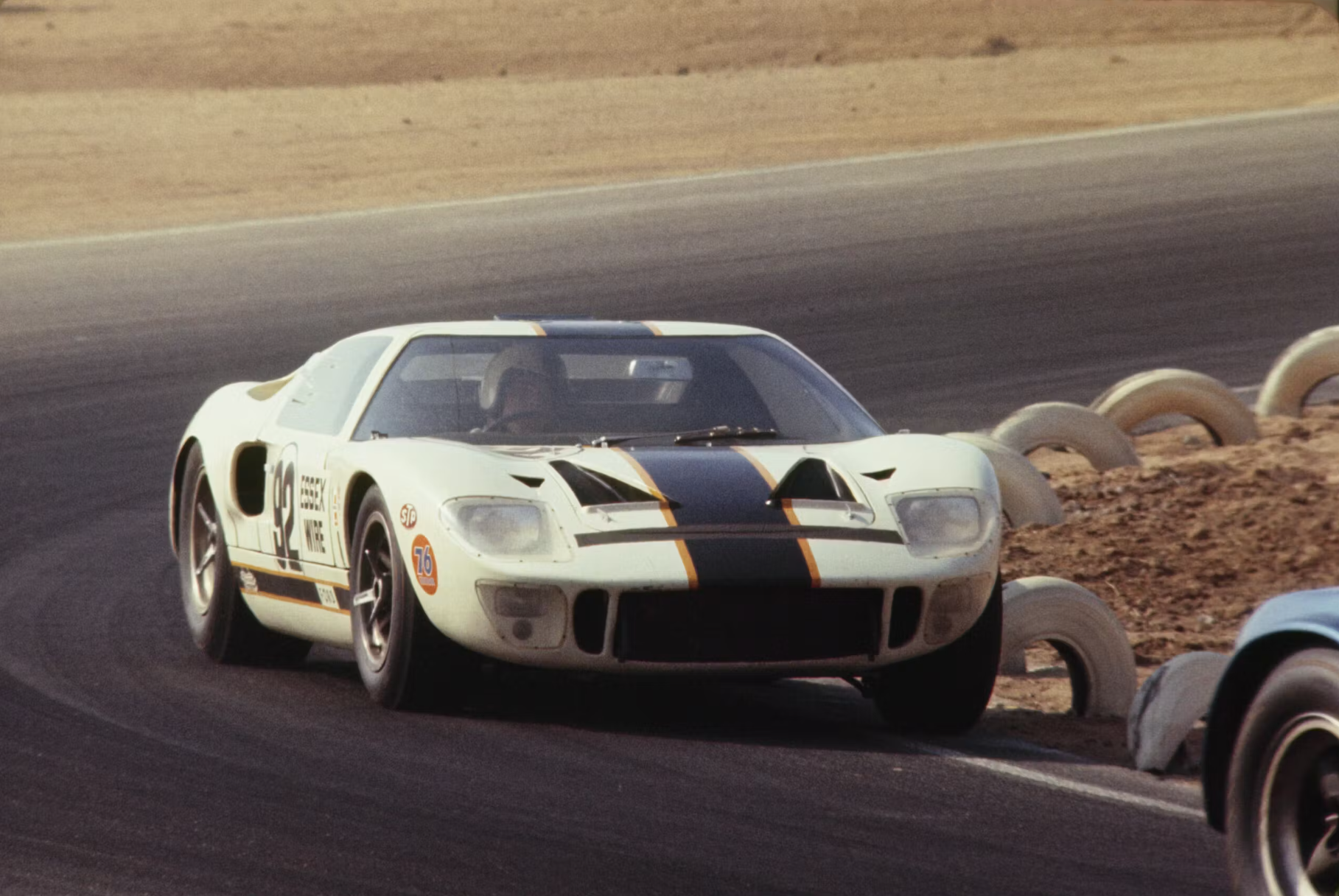
Aerodynamically, the 1965 Coupe was visually distinct from the early prototypes. The “smiling” nose of the ’64 car, which generated frightening front-end lift at 200 mph, was reworked. The new nose featured different ducting and a more planted stance, often supplemented by small chin spoilers and rear deck spoilers to glue the car to the tarmac. The wire wheels, a holdover from the classic sports car era, were abandoned in favor of magnesium Halibrand or BRM wheels, wide enough to carry the massive Goodyear Blue Streak tires. Inside, the cabin remained a claustrophobic, right-hand-drive sweatbox (essential for the clockwise circuit at Le Mans), with the gear lever located on the right sill, but the addition of the “Gurney Bubble” on the roof for taller drivers became a common modification during this period.
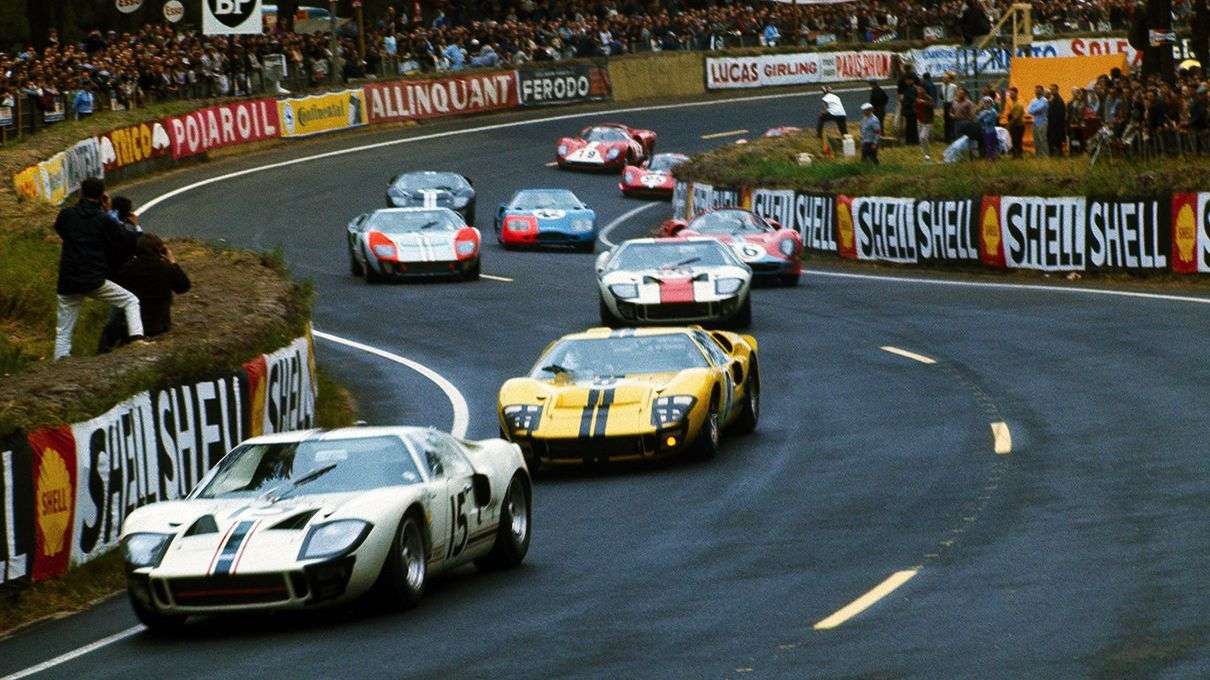
The impact of the 1965 GT40 was immediate and historic. The season opener, the Daytona 2000km, served as the proving ground for Shelby’s modifications. Driven by Ken Miles and Lloyd Ruby, the #73 Ford GT40 didn’t just win; it dominated, securing Ford’s first-ever victory in endurance racing and proving that the Ferrari dominance was not insurmountable. This victory at Daytona was the turning point in the “Ford vs. Ferrari” war. It validated the program and kept the funding tap open. However, the rest of the 1965 season was a mixed bag of development pains. At Le Mans, the factory experimented with the new 7.0-litre Mk II prototypes, which failed spectacularly, as did the 289-powered Mk I Coupes due to overheating and gasket failures. Yet, amidst these factory struggles, the “Production” GT40 Mk I (the P/1000 chassis series) began to reach privateer hands. These cars, built to the 1965 specification, would go on to become the backbone of privateer sportscar racing.
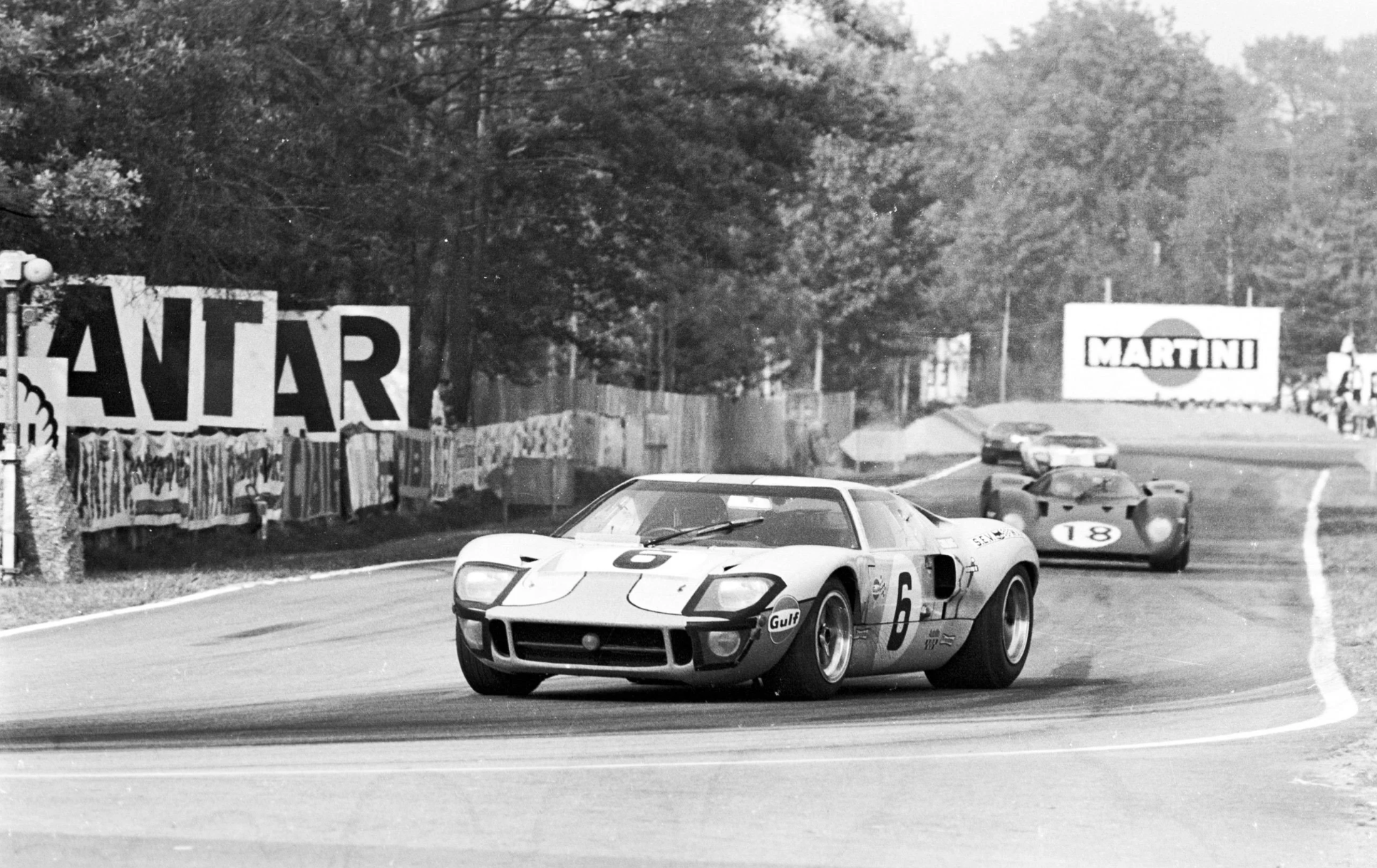
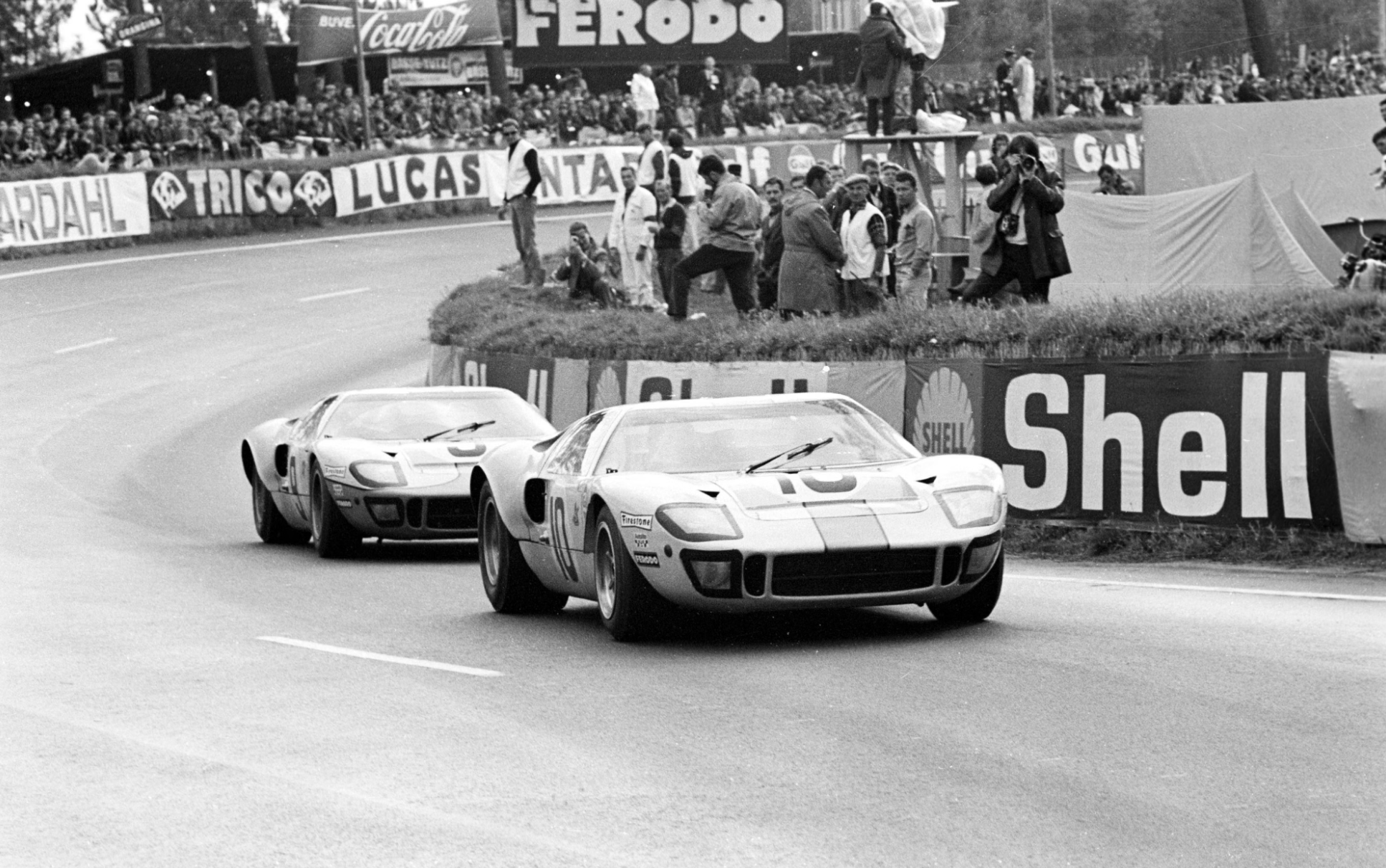
The legacy of the 1965 Ford GT40 Coupe is complex but foundational. While the history books often skip straight to the 7.0-litre Mk II that won Le Mans in 1966, it was the 1965 small-block Coupe that did the heavy lifting. It proved the chassis worked. It established the relationship with ZF that saved the transmission issues. Most importantly, this 1965 specification—the lightweight chassis with the 289/302 V8—was the blueprint that John Wyer would later refine to win Le Mans in 1968 and 1969 with Chassis 1075. The 1965 GT40 was the bridge between the fragility of the prototype and the invincibility of the legend. It was the machine that stopped being a fragility risk and started being a Ferrari killer.
Brand
Produced from
Portal
Model line
Predecessor
Sucessor
Brand
Produced from
Portal
Model line
Model generation
Predecessor
Sucessor
Submodel Overview
By early 1965, the Ford GT program was teetering on the precipice of an embarrassing, multimillion-dollar failure. The 1964 season had been a spectacle of speed but a catastrophe of reliability; the sleek prototypes developed by Ford Advanced Vehicles (FAV) in Slough had shown terrifying potential on the Mulsanne Straight, but had failed to finish a single race due to fragile Colotti gearboxes and aerodynamic instability that made test drivers threaten resignation. Enter Carroll Shelby. In a move that shifted the program’s center of gravity from the polite engineering offices of England to the hot-rodding hangars of Venice, California, Henry Ford II handed the project to Shelby American. The 1965 Ford GT40 (specifically the refined Mk I Coupe) represents the crucial metamorphosis of the car. No longer a delicate Anglo-American experiment, it was “Cobra-ized” into a durable, blunt-force weapon. This was the year the GT40 learned to finish races, and consequently, learned to win.
Technically, the 1965 GT40 was a significant evolution of the previous year’s prototype. While it retained the advanced steel semi-monocoque chassis—a novelty in an era of tube frames—almost every other mechanical tendon was stiffened or replaced. The heart of the machine remained the 289 cubic inch (4.7-litre) Windsor V8, an engine that Shelby knew intimately from the Cobra. However, the unreliable dry-sump systems of the ’64 cars were overhauled, and the engines were tuned to produce a reliable 380 to 390 bhp, screaming through a bundle of snakes exhaust that exited centrally above the gearbox. Crucially, Shelby discarded the fragile Italian Colotti dog-engagement gearbox, replacing it with the robust German-built ZF 5-speed transaxle, a change that single-handedly transformed the car’s durability.
Aerodynamically, the 1965 Coupe was visually distinct from the early prototypes. The “smiling” nose of the ’64 car, which generated frightening front-end lift at 200 mph, was reworked. The new nose featured different ducting and a more planted stance, often supplemented by small chin spoilers and rear deck spoilers to glue the car to the tarmac. The wire wheels, a holdover from the classic sports car era, were abandoned in favor of magnesium Halibrand or BRM wheels, wide enough to carry the massive Goodyear Blue Streak tires. Inside, the cabin remained a claustrophobic, right-hand-drive sweatbox (essential for the clockwise circuit at Le Mans), with the gear lever located on the right sill, but the addition of the “Gurney Bubble” on the roof for taller drivers became a common modification during this period.
The impact of the 1965 GT40 was immediate and historic. The season opener, the Daytona 2000km, served as the proving ground for Shelby’s modifications. Driven by Ken Miles and Lloyd Ruby, the #73 Ford GT40 didn’t just win; it dominated, securing Ford’s first-ever victory in endurance racing and proving that the Ferrari dominance was not insurmountable. This victory at Daytona was the turning point in the “Ford vs. Ferrari” war. It validated the program and kept the funding tap open. However, the rest of the 1965 season was a mixed bag of development pains. At Le Mans, the factory experimented with the new 7.0-litre Mk II prototypes, which failed spectacularly, as did the 289-powered Mk I Coupes due to overheating and gasket failures. Yet, amidst these factory struggles, the “Production” GT40 Mk I (the P/1000 chassis series) began to reach privateer hands. These cars, built to the 1965 specification, would go on to become the backbone of privateer sportscar racing.
The legacy of the 1965 Ford GT40 Coupe is complex but foundational. While the history books often skip straight to the 7.0-litre Mk II that won Le Mans in 1966, it was the 1965 small-block Coupe that did the heavy lifting. It proved the chassis worked. It established the relationship with ZF that saved the transmission issues. Most importantly, this 1965 specification—the lightweight chassis with the 289/302 V8—was the blueprint that John Wyer would later refine to win Le Mans in 1968 and 1969 with Chassis 1075. The 1965 GT40 was the bridge between the fragility of the prototype and the invincibility of the legend. It was the machine that stopped being a fragility risk and started being a Ferrari killer.
Tech Specs
Technical Specifications
Tech Specs
Technical Specifications
Engine
01
03
Internal combustion engine
Configuration
Ford Windsor 289 "Cobra" Race Spec, V8 - 90º
Location
Mid, longitudinally mounted
Construction
Cast iron block and heads
Displacement (cc)
4,736 cc
Displacement (cu in)
289.0 cu in
Compression
10.5:1
Bore x Stroke
101.6 mm x 72.9 mm
Valvetrain
2 valves per cylinder, OHV (Pushrod)
Fuel feed
4 x Weber 48 IDA carburetors
Lubrication
Dry sump
Aspiration
Naturally aspirated
Output
Power (hp)
385 hp
Power (kW)
287 kW
Max power at
7,200 RPM
Torque (Nm)
440 Nm
Torque (ft lbs)
324.5 ft lbs
Max torque at
5,000 RPM
Drivetrain
02
03
Chassis
Type
Semi-monocoque with subframes
Material
Steel
Body
Material
Fibreglass
Transmission
Gearbox
ZF 5DS-25, 5-speed manual
Drive
Rear Wheel Drive (Limited Slip Differential)
Suspension
Front
Independent, double wishbones, coil springs over adjustable dampers, anti-roll bar
Rear
Independent, double trailing links, lower wishbones, coil springs over adjustable dampers, anti-roll bar
Steering
Type
Rack and pinion
Brakes
Front
Ventilated Girling discs Ø292 mm, 4-piston calipers
Rear
Ventilated Girling discs Ø285 mm, 2-piston calipers
Wheels
Front
8" x 15"
Rear
9.5" x 15"
Tires
Front
5.50-15
Rear
7.00-15
Dimensions and performance
03
03
Dimensions
Length (mm)
4,140 mm
Length (in)
163.0 in
Width (mm)
1,778 mm
Width (in)
70.0 in
Height (mm)
1,029 mm
Height (in)
40.5 in
Wheelbase (mm)
2,413 mm
Wheelbase (in)
95.0 in
Weight (kg)
1,065 kg
Weight (lbs)
2,348 lbs
Performance
Power to weight
~0.36 hp/kg
Top speed (km/h)
~310 km/h
Top speed (mph)
~192 mph
0-100 km/h (0-60 mph)
~4.2 s