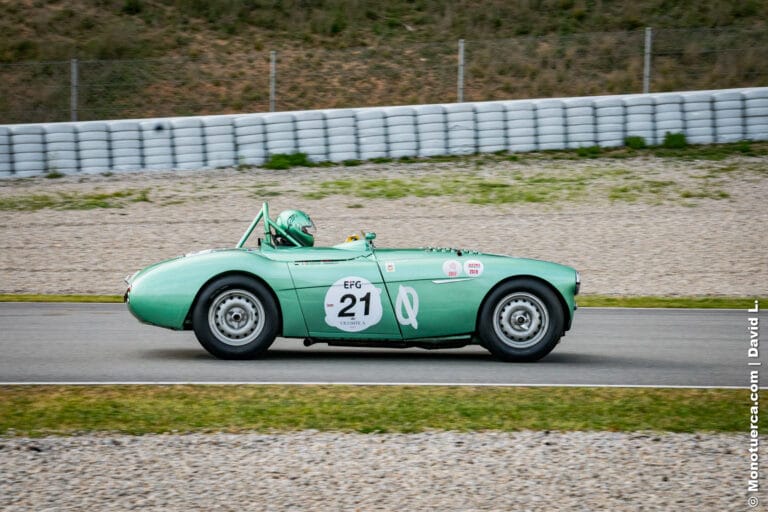
Austin Healey 100 Series BN2
Brand
Produced from
Vehicle category
Portal
Model line
Model generation
Predecessor
Generation Overview
By the summer of 1955, the Austin-Healey 100 had already cemented its status as an undisputed transatlantic triumph. Donald Healey’s opportunistic masterpiece, the BN1, had rescued British sports car enthusiasts from the glacial pace of the MG TD and the financial exclusivity of the Jaguar XK120. Yet, for all its sculptural beauty and undeniable torque, the BN1 harbored a mechanical compromise that irked the true driving purist: its makeshift three-speed gearbox. The Austin A90-derived transmission, with its uselessly low first gear blanked off by the factory, was a pragmatic solution that fell short of the car’s dynamic potential. Enter the Austin-Healey 100 BN2. Introduced in August 1955, the BN2 was not a reinvention, but rather the crucial refinement of a foundational legend. It arrived just as the British sports car market was becoming fiercely competitive, squaring off against the newly introduced MGA and the gutsy Triumph TR3. While the MGA offered delicate handling and the TR3 provided rugged thrills, the BN2 delivered a sophisticated, muscular elegance that culminated in the ultimate expression of the four-cylinder Healey: the legendary 100M.
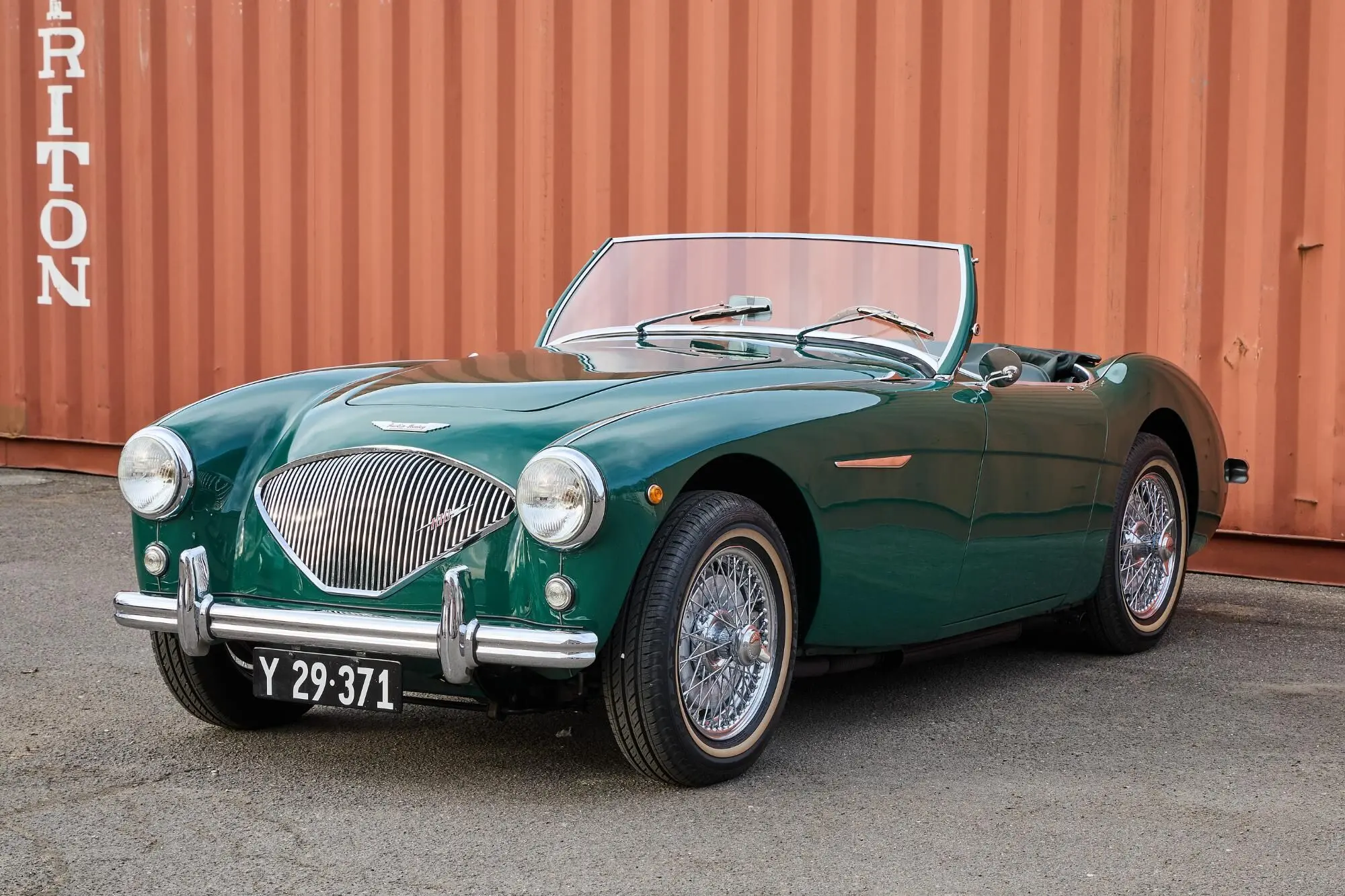
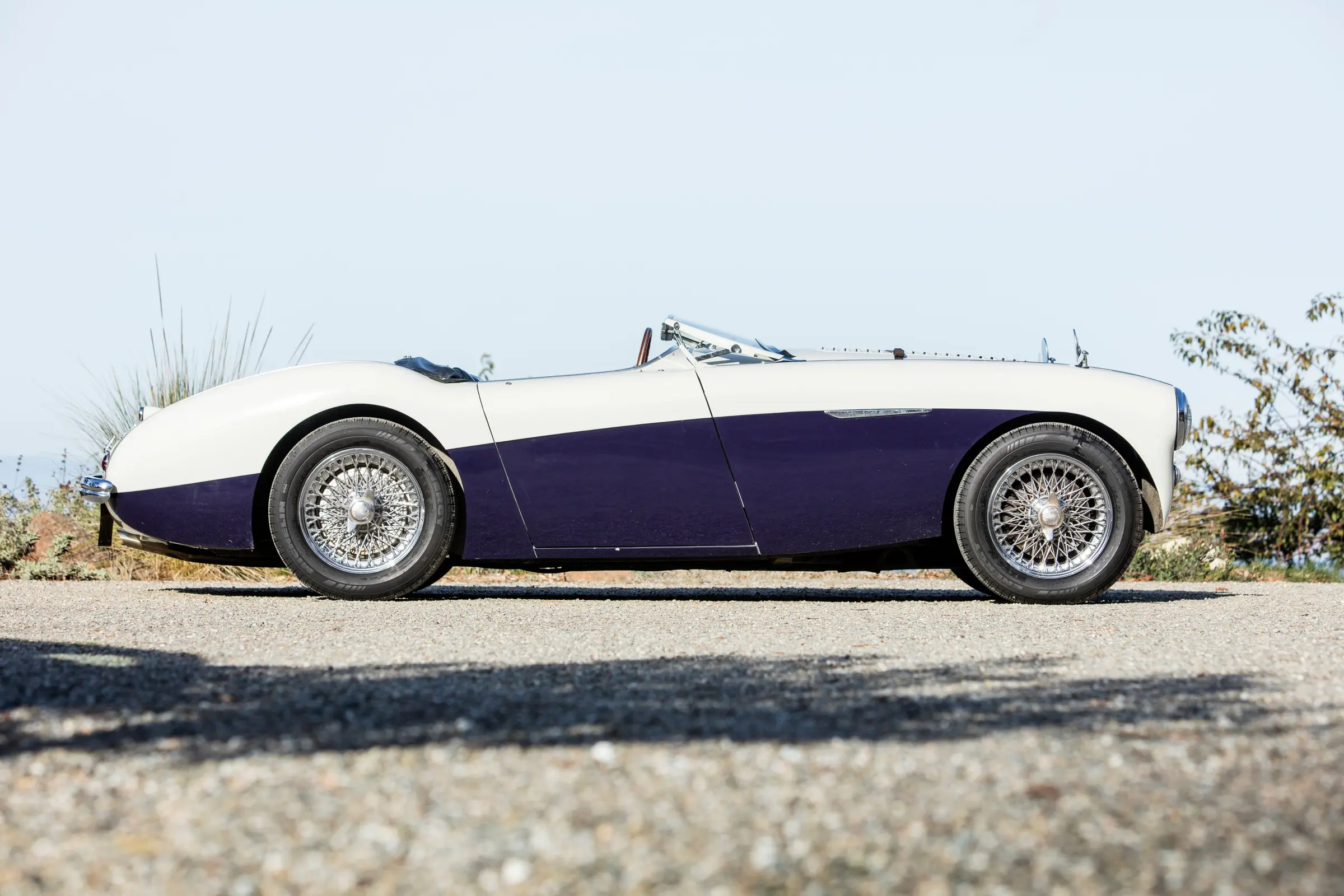
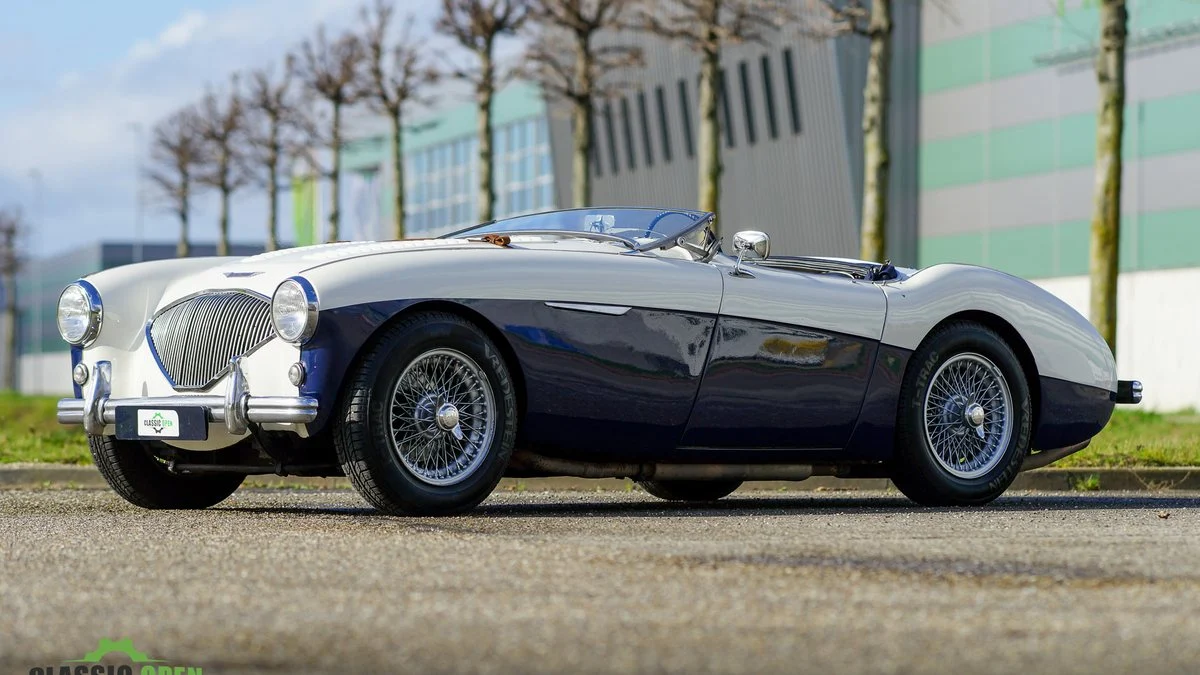
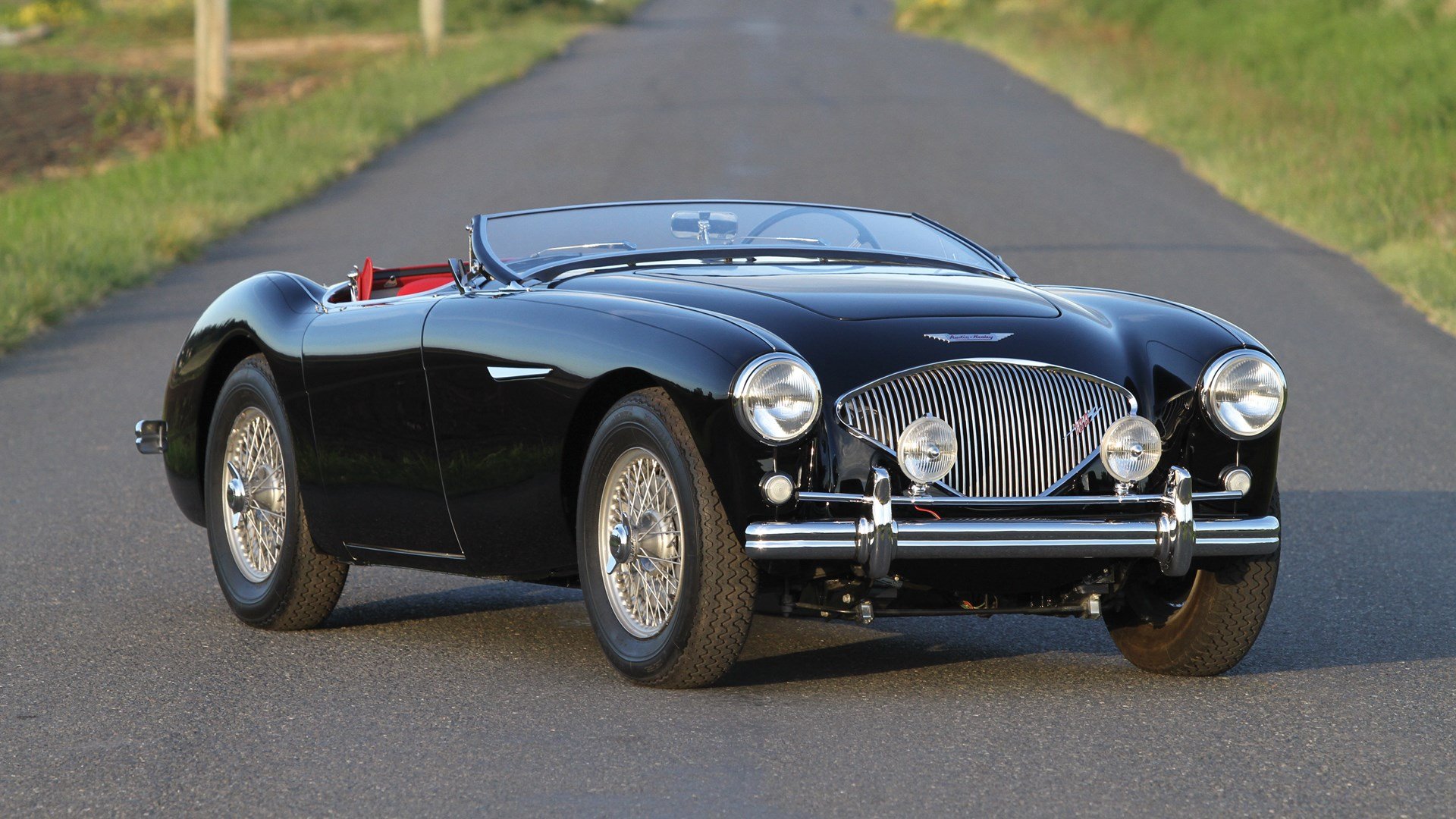
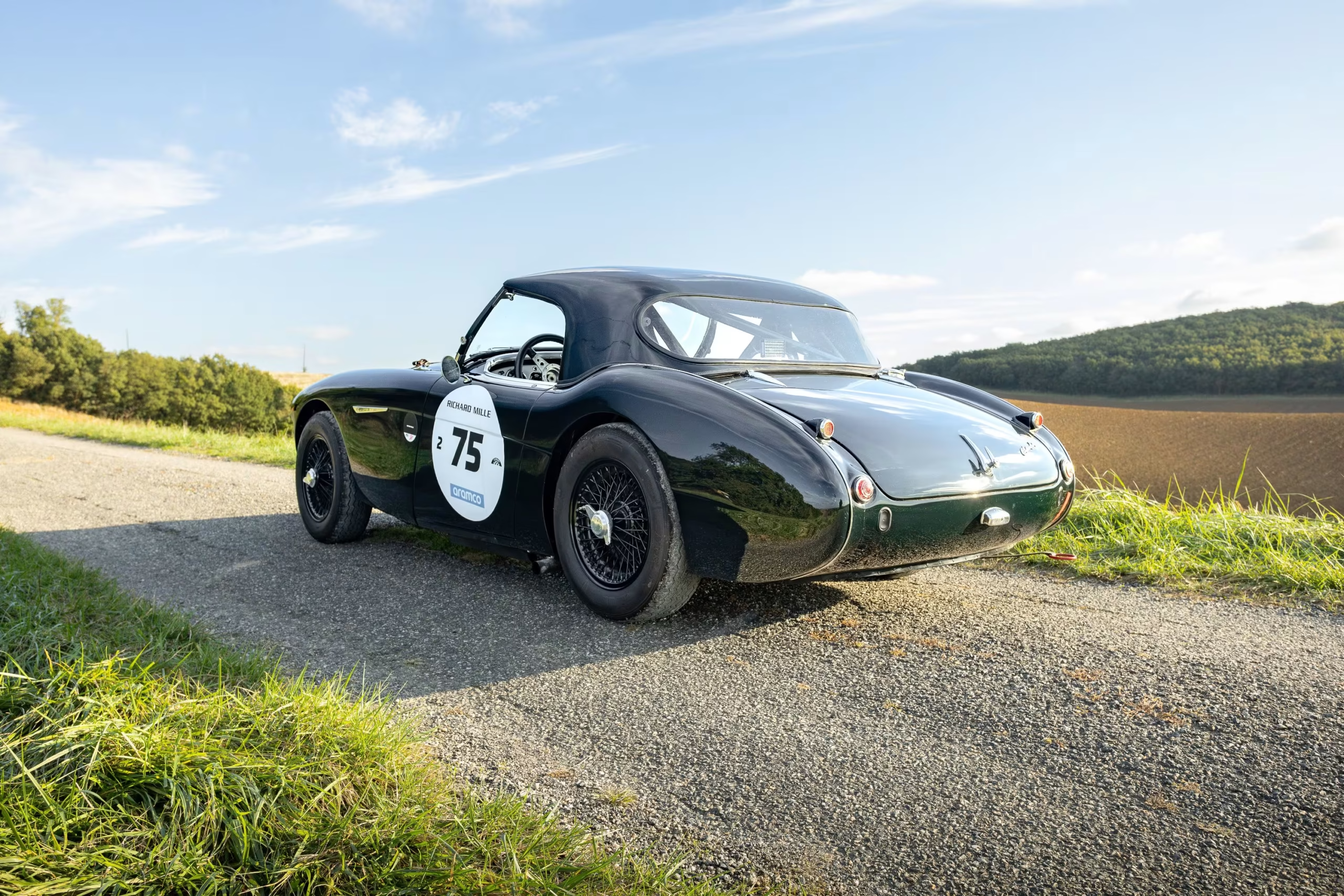
To slide behind the thin-rimmed steering wheel of a BN2 is to experience the pinnacle of Donald Healey’s original four-cylinder vision, uncorrupted but finally fully realized. Outwardly, the BN2 retained the breathtaking Gerry Coker-penned bodywork. The sweeping fender line, the underslung chassis that gave the car its predatory, ground-hugging stance, and the iconic fold-flat windscreen all remained. The visual telltales of a BN2 were subtle: slightly larger front wheel arches and the introduction of striking factory two-tone paint schemes, most famously Reno Red over Black or Healey Blue over White, which perfectly accentuated the car’s dramatic coves. Beneath the skin, however, the alchemy had been perfected. The 2.6-liter (2660cc) long-stroke inline-four engine still produced its nominal 90 brake horsepower, but it was finally mated to a proper four-speed manual transmission. This new gearbox, supplemented by a Laycock de Normanville overdrive operating on third and fourth gears, completely transformed the car’s character. Drivers could now exploit the engine’s massive torque curve with precision, making the BN2 both a ferocious back-road brawler and a relaxed, long-legged continental tourer. To handle the newfound usability, Healey also upgraded the rear axle to a stronger five-stud design and fitted slightly larger front drum brakes.
The history of the BN2 is inextricably linked to its high-performance alter ego, the 100M. Eager to capitalize on the racing successes of the works cars at the 24 Hours of Le Mans, the factory introduced a “Le Mans” engine modification kit. While owners could retrofit these parts to standard cars, the factory produced 640 genuine, factory-built 100M models exclusively during the BN2’s production run. The 100M was a homologation special for the street. It featured larger 1 ¾-inch SU carburetors, a high-lift camshaft, a cold-air box, and higher compression pistons, bumping output to a robust 110 horsepower. Visually, the 100M announced its intentions with a spectacularly louvered bonnet secured by a leather strap, a detail that remains one of the most evocative styling cues of the 1950s. In the hands of amateur racers across the United States and Europe, the BN2 and the 100M became dominant forces in SCCA production classes and club racing. It was the quintessential weekend warrior—driven to the track, raced to a podium finish, and driven home.
The production life of the BN2 was brilliantly bright but fleetingly short. After merely eleven months and just over 4,600 units produced, the BN2 was retired in July 1956. The American market, hungry for more smoothness and perceived sophistication, demanded a six-cylinder engine, leading to the heavier, longer Austin-Healey 100-Six (BN4). While the subsequent six-cylinder “Big Healeys” would go on to achieve their own legendary status, particularly in rallying, the cessation of the BN2 marked the end of the four-cylinder era.
Today, the Austin-Healey 100 BN2 occupies a hallowed space in the pantheon of classic motoring. For the discerning purist, it is the holy grail of the Healey lineage. It flawlessly bridges the gap between the raw, pioneering spirit of the BN1 and the heavier grand touring nature of the 3000 series. The BN2 represents the moment when the original chassis, with its perfectly balanced weight distribution and lighter front end, was finally paired with a transmission worthy of its torque. To pilot a BN2—snicking the gear lever into a true second gear, listening to the deep, percussive bellow of the big four-cylinder engine through the side-exit exhaust, and feeling the chassis pivot precisely around your hips—is to understand the absolute zenith of the 1950s British sports car experience. It is Donald Healey’s original masterpiece, perfected.
Portal
Model line
Model generation
Predecessor
Brand
Produced from
Vehicle category
Generation Overview
By the summer of 1955, the Austin-Healey 100 had already cemented its status as an undisputed transatlantic triumph. Donald Healey’s opportunistic masterpiece, the BN1, had rescued British sports car enthusiasts from the glacial pace of the MG TD and the financial exclusivity of the Jaguar XK120. Yet, for all its sculptural beauty and undeniable torque, the BN1 harbored a mechanical compromise that irked the true driving purist: its makeshift three-speed gearbox. The Austin A90-derived transmission, with its uselessly low first gear blanked off by the factory, was a pragmatic solution that fell short of the car’s dynamic potential. Enter the Austin-Healey 100 BN2. Introduced in August 1955, the BN2 was not a reinvention, but rather the crucial refinement of a foundational legend. It arrived just as the British sports car market was becoming fiercely competitive, squaring off against the newly introduced MGA and the gutsy Triumph TR3. While the MGA offered delicate handling and the TR3 provided rugged thrills, the BN2 delivered a sophisticated, muscular elegance that culminated in the ultimate expression of the four-cylinder Healey: the legendary 100M.
To slide behind the thin-rimmed steering wheel of a BN2 is to experience the pinnacle of Donald Healey’s original four-cylinder vision, uncorrupted but finally fully realized. Outwardly, the BN2 retained the breathtaking Gerry Coker-penned bodywork. The sweeping fender line, the underslung chassis that gave the car its predatory, ground-hugging stance, and the iconic fold-flat windscreen all remained. The visual telltales of a BN2 were subtle: slightly larger front wheel arches and the introduction of striking factory two-tone paint schemes, most famously Reno Red over Black or Healey Blue over White, which perfectly accentuated the car’s dramatic coves. Beneath the skin, however, the alchemy had been perfected. The 2.6-liter (2660cc) long-stroke inline-four engine still produced its nominal 90 brake horsepower, but it was finally mated to a proper four-speed manual transmission. This new gearbox, supplemented by a Laycock de Normanville overdrive operating on third and fourth gears, completely transformed the car’s character. Drivers could now exploit the engine’s massive torque curve with precision, making the BN2 both a ferocious back-road brawler and a relaxed, long-legged continental tourer. To handle the newfound usability, Healey also upgraded the rear axle to a stronger five-stud design and fitted slightly larger front drum brakes.
The history of the BN2 is inextricably linked to its high-performance alter ego, the 100M. Eager to capitalize on the racing successes of the works cars at the 24 Hours of Le Mans, the factory introduced a “Le Mans” engine modification kit. While owners could retrofit these parts to standard cars, the factory produced 640 genuine, factory-built 100M models exclusively during the BN2’s production run. The 100M was a homologation special for the street. It featured larger 1 ¾-inch SU carburetors, a high-lift camshaft, a cold-air box, and higher compression pistons, bumping output to a robust 110 horsepower. Visually, the 100M announced its intentions with a spectacularly louvered bonnet secured by a leather strap, a detail that remains one of the most evocative styling cues of the 1950s. In the hands of amateur racers across the United States and Europe, the BN2 and the 100M became dominant forces in SCCA production classes and club racing. It was the quintessential weekend warrior—driven to the track, raced to a podium finish, and driven home.
The production life of the BN2 was brilliantly bright but fleetingly short. After merely eleven months and just over 4,600 units produced, the BN2 was retired in July 1956. The American market, hungry for more smoothness and perceived sophistication, demanded a six-cylinder engine, leading to the heavier, longer Austin-Healey 100-Six (BN4). While the subsequent six-cylinder “Big Healeys” would go on to achieve their own legendary status, particularly in rallying, the cessation of the BN2 marked the end of the four-cylinder era.
Today, the Austin-Healey 100 BN2 occupies a hallowed space in the pantheon of classic motoring. For the discerning purist, it is the holy grail of the Healey lineage. It flawlessly bridges the gap between the raw, pioneering spirit of the BN1 and the heavier grand touring nature of the 3000 series. The BN2 represents the moment when the original chassis, with its perfectly balanced weight distribution and lighter front end, was finally paired with a transmission worthy of its torque. To pilot a BN2—snicking the gear lever into a true second gear, listening to the deep, percussive bellow of the big four-cylinder engine through the side-exit exhaust, and feeling the chassis pivot precisely around your hips—is to understand the absolute zenith of the 1950s British sports car experience. It is Donald Healey’s original masterpiece, perfected.
Submodels