Dodge Viper SR II
Brand
Produced from
Vehicle category
Portal
Model line
Model generation
Generation Overview
When the original Dodge Viper RT/10 violently shook the automotive establishment in 1992, it was less a production car and more a thinly veiled concept—an ergonomic disaster and a dynamic handful that seduced purely through its brute force and sheer audacity. But the novelty of burning your calves on side-exit exhausts and driving a canvas-roofed car with zip-up plastic windows can only sustain a manufacturer for so long. By 1996, the world was moving on. The Porsche 993 was perfecting the air-cooled 911 formula, and Chevrolet was readying the highly sophisticated C5 Corvette. Dodge needed to mature its venomous snake without castrating it. The resulting Dodge Viper SR II generation, produced from 1996 to 2002, was the metamorphosis from a crude roadster into a legitimate, world-conquering grand tourer and track weapon. It ushered in an era of refinement, introducing the drastically improved RT/10 alongside the undisputed crown jewel of the lineage: the breathtaking Viper GTS coupe.
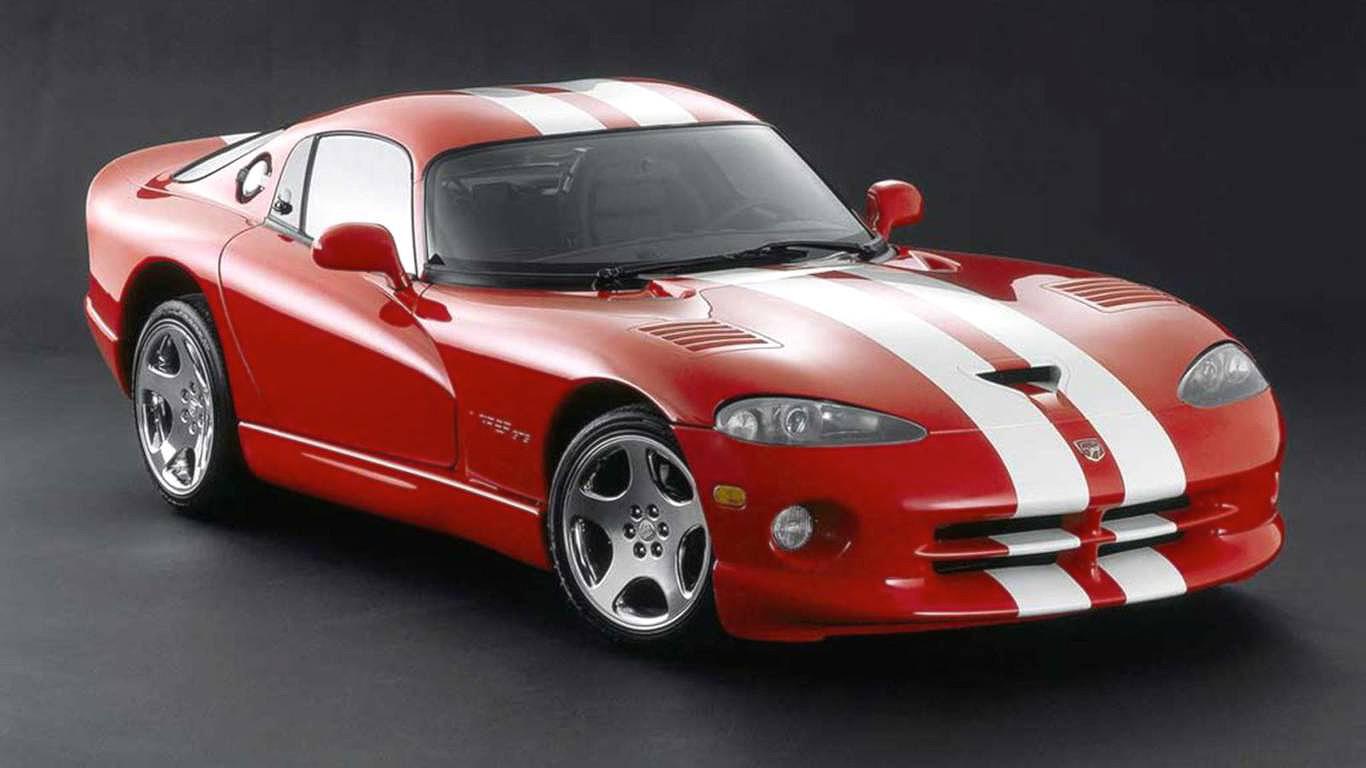
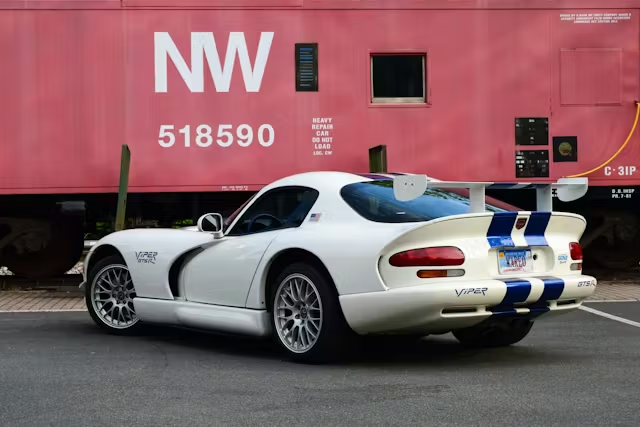
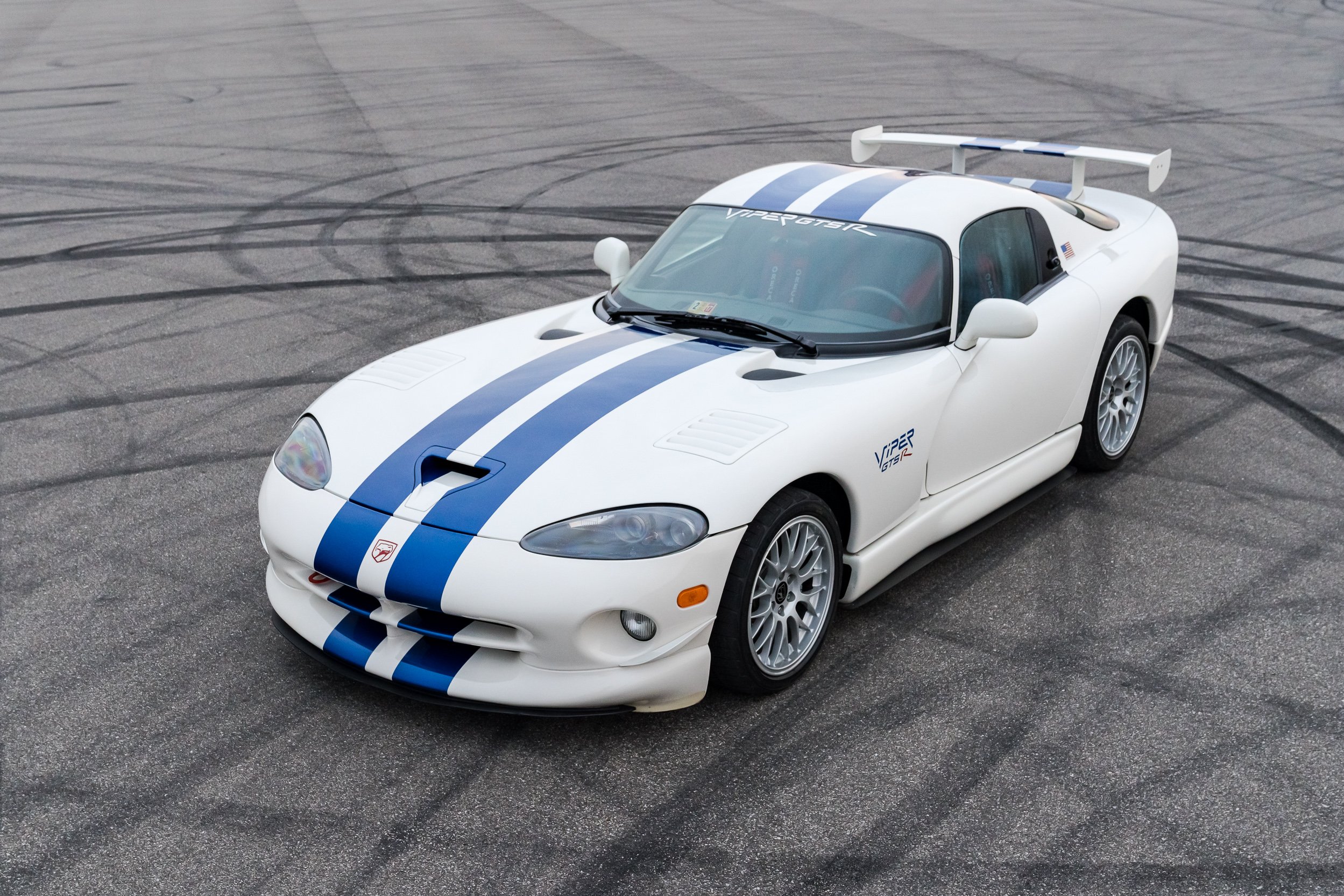
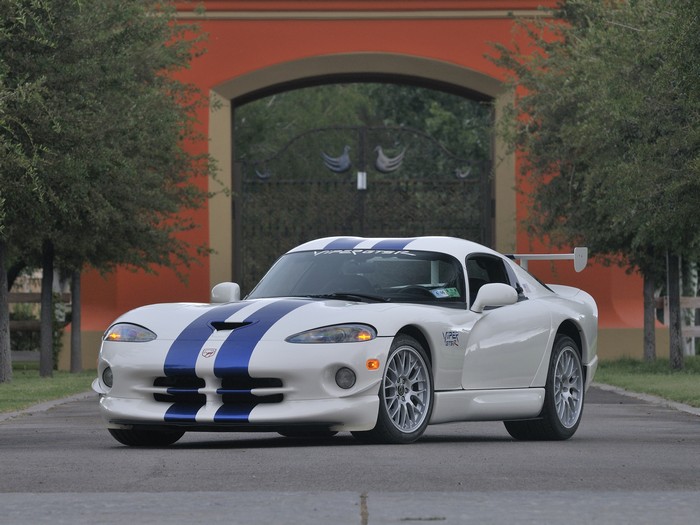
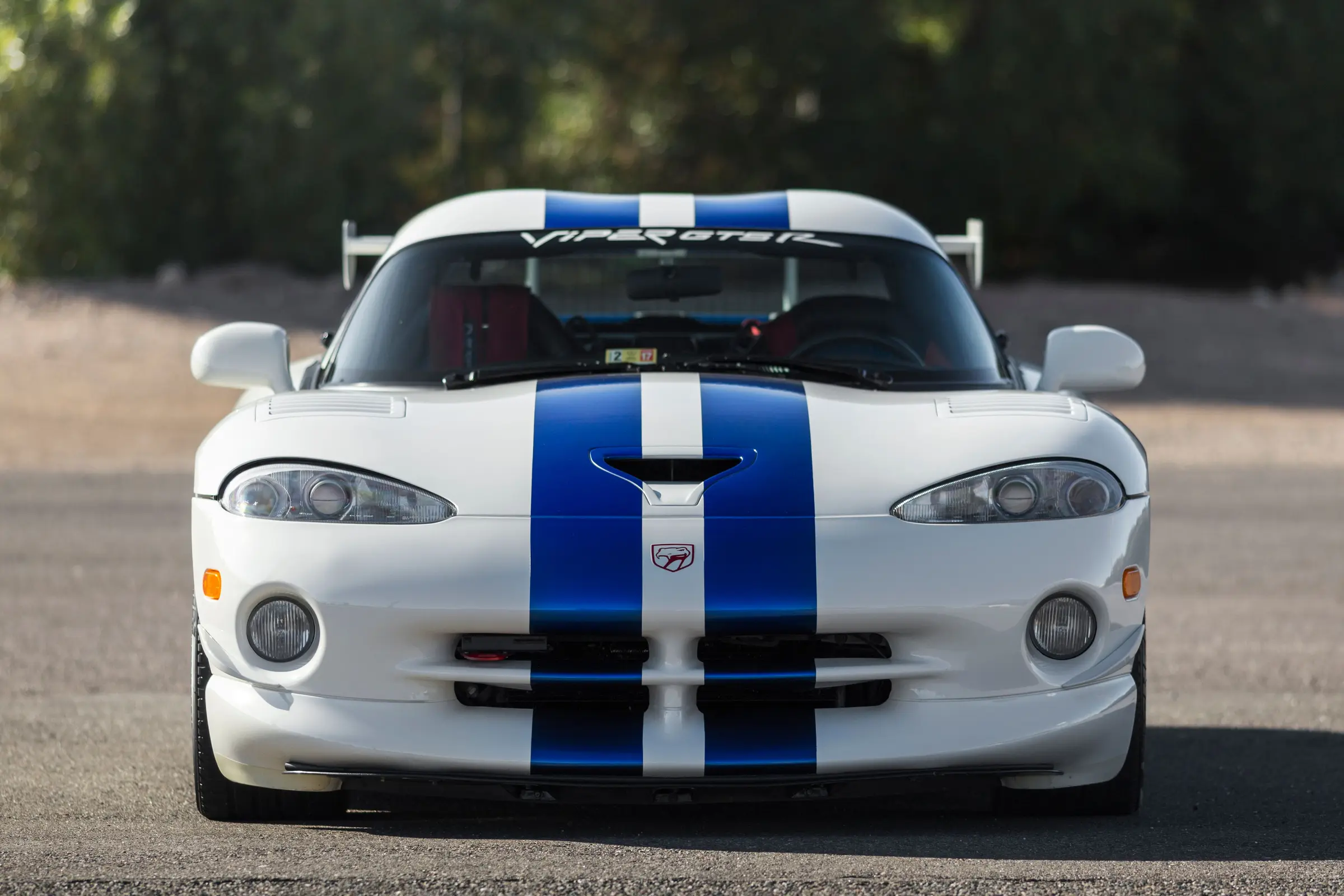
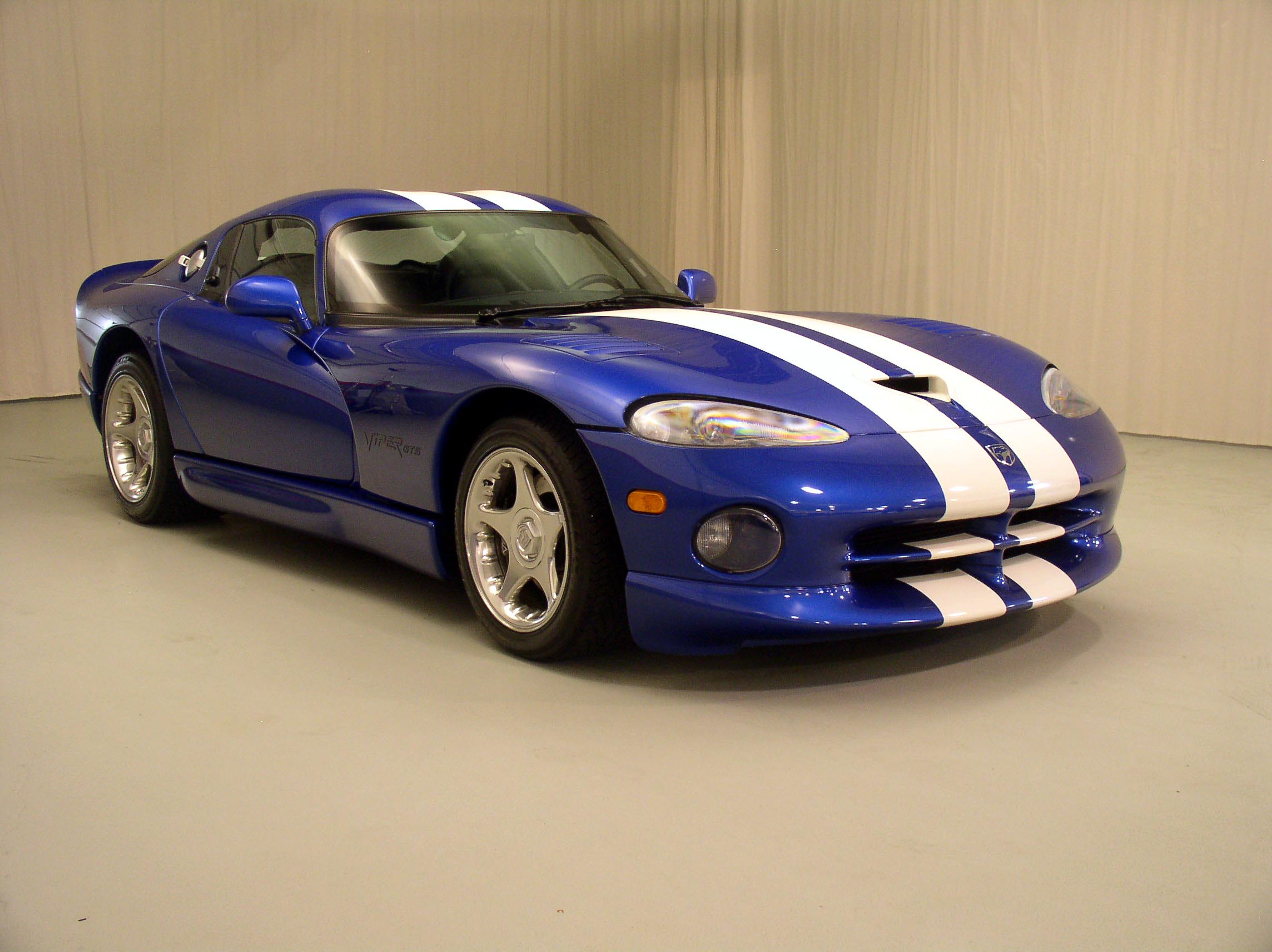
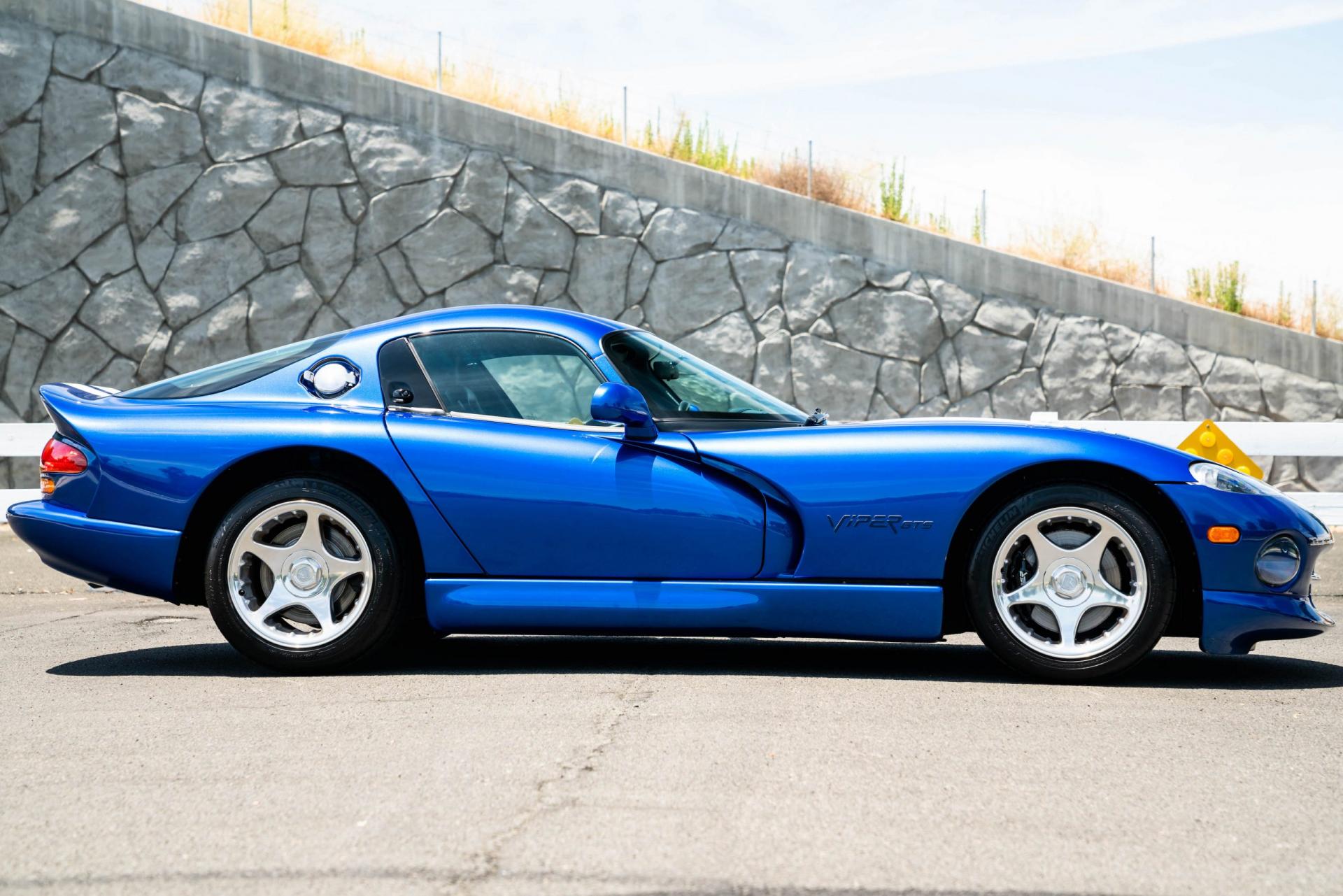
To gaze upon the 1996 Viper GTS is to witness one of the most sublime shapes to ever emerge from Detroit. Penned under the watchful eye of Chrysler design chief Tom Gale, the GTS was not merely an RT/10 with a fiberglass hat. It was reportedly over ninety percent new. The silhouette was defined by its sweeping fastback profile, culminating in an integrated ducktail spoiler and punctuated by the iconic “double-bubble” roof—a design flourish explicitly integrated to accommodate drivers wearing racing helmets. Beneath the striking blue paint and dual white racing stripes that defined the launch cars, the engineering had matured exponentially. The SR II chassis was stiffened significantly, and the heavy cast-iron suspension components of the first generation were discarded in favor of lightweight aluminum control arms.
Yet, the beating heart remained the monumental 8.0-liter, odd-firing V10 engine. However, for the GTS (and later the RT/10), the block was thoroughly reworked. It was cast with lighter aluminium, breathing through a revised intake and cylinder heads. This engineering wizardry shed nearly 40 kilograms from the powerplant while boosting output to a fearsome 450 brake horsepower and 490 lb-ft of torque. Power was sent to the massive rear tires via a stout BorgWarner T-56 six-speed manual transmission. To meet tightening noise and emissions regulations, and to save owners from third-degree leg burns, the exhaust was routed to the rear, exiting through dual central pipes. Astonishingly, the SR II also brought actual creature comforts. It featured roll-up glass windows, exterior door handles, a CD player, and dual front airbags. But lest anyone think the Viper had gone soft, Dodge stubbornly refused to fit Anti-Lock Brakes (ABS) until the 2001 model year. It remained a machine that demanded absolute respect, capable of biting the unwary driver who dared to disrespect the immense swell of V10 torque mid-corner.
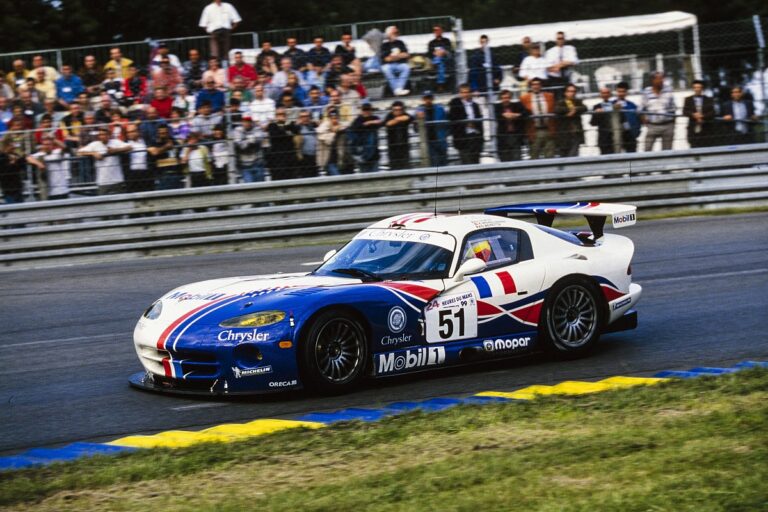
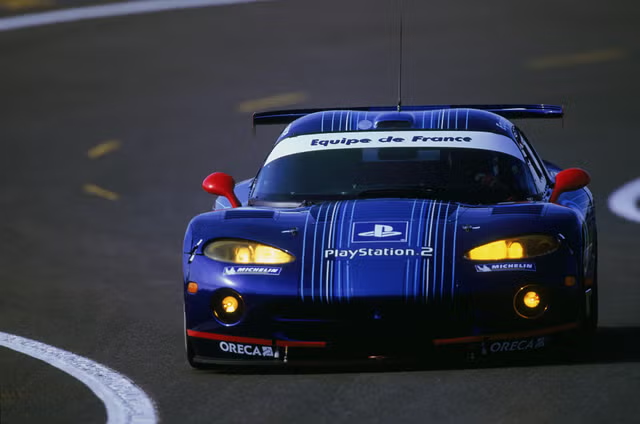
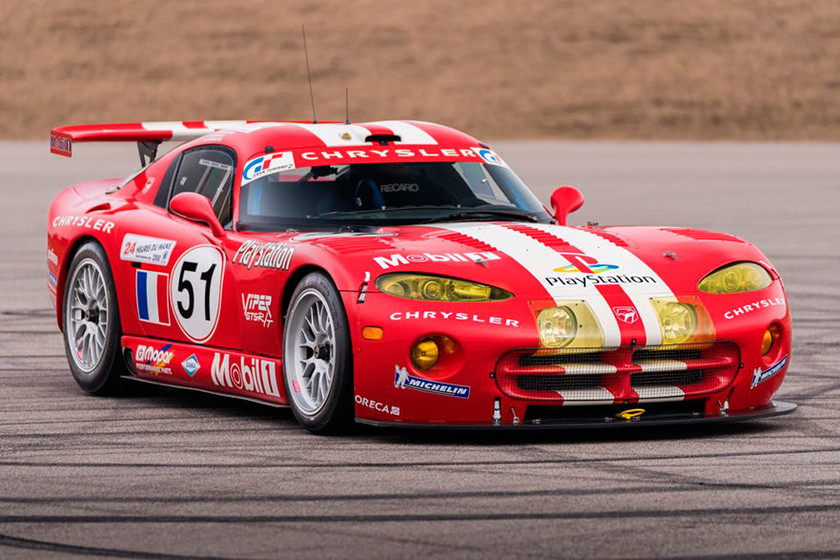
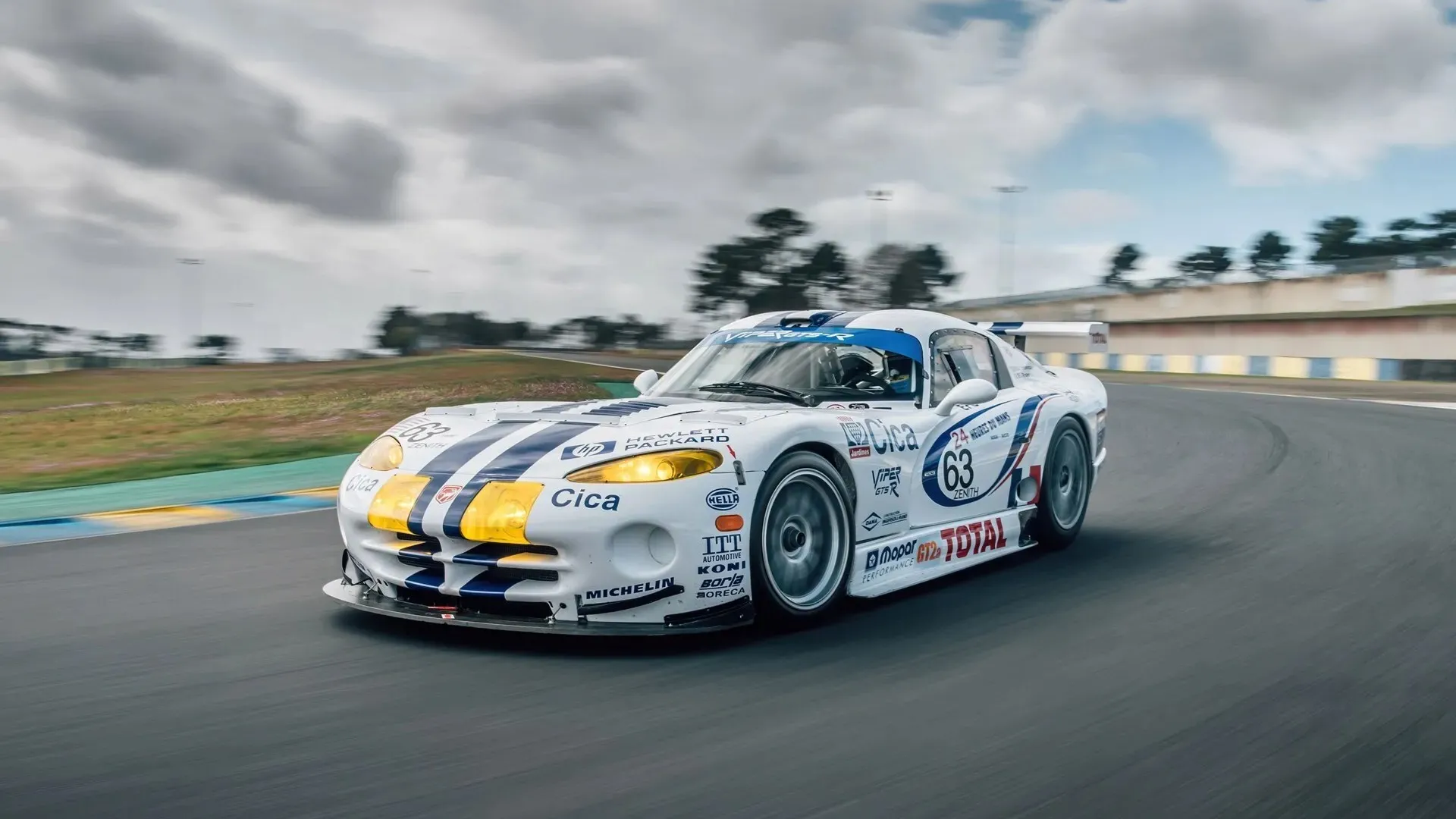
If the SR II’s street presence was intoxicating, its impact on international motorsport was nothing short of historic. The introduction of the GTS coupe provided the rigid aerodynamic platform necessary for endurance racing. Chrysler partnered with the legendary French racing outfit Oreca to create the Viper GTS-R. Decked out in aggressive aero and sporting the quintessential blue and white livery, the GTS-R embarked on a campaign of absolute terror across the globe. It decimated the European establishment, securing three consecutive class victories at the 24 Hours of Le Mans in 1998, 1999, and 2000. It captured multiple FIA GT Championships and, in a crowning achievement of American grit, scored a stunning overall victory at the 2000 24 Hours of Daytona, outlasting purpose-built sports prototypes. To celebrate this dominance, Dodge released the spectacular street-legal GT2 Commemorative Edition in 1998, complete with GTS-R aero and 460 horsepower, and later launched the hardcore ACR (American Club Racer) version, stripping weight and adding adjustable suspension for the weekend track warrior.
Culturally, the SR II Viper GTS became the definitive poster car of the late 1990s. Its fame was eternally cemented by its starring role as the hero car in the original Gran Turismo video game, exposing a massive global audience to its blue-and-white muscularity. Commercially, the SR II was a massive success, proving that America could build a world-class sports car that didn’t rely on European delicacy.
The legacy of the 1996 Dodge Viper SR II is monumental. It is the generation that saved the Viper from being a mere historical footnote, transforming a fun novelty into a respected performance icon. It proved that a pushrod engine and a manual gearbox could humiliate the finest overhead-cam exotics on the legendary straights of La Sarthe. When the SR II gave way to the sharper, more angular ZB I generation in 2003, it left behind a silhouette that remains the most widely recognized and beloved in the Viper’s history. It sits in the pantheon of true driving legends: a beautiful, analogue brute that bridged the gap between raw hot-rod ethos and modern supercar capability.
Portal
Model line
Model generation
Brand
Produced from
Vehicle category
Generation Overview
When the original Dodge Viper RT/10 violently shook the automotive establishment in 1992, it was less a production car and more a thinly veiled concept—an ergonomic disaster and a dynamic handful that seduced purely through its brute force and sheer audacity. But the novelty of burning your calves on side-exit exhausts and driving a canvas-roofed car with zip-up plastic windows can only sustain a manufacturer for so long. By 1996, the world was moving on. The Porsche 993 was perfecting the air-cooled 911 formula, and Chevrolet was readying the highly sophisticated C5 Corvette. Dodge needed to mature its venomous snake without castrating it. The resulting Dodge Viper SR II generation, produced from 1996 to 2002, was the metamorphosis from a crude roadster into a legitimate, world-conquering grand tourer and track weapon. It ushered in an era of refinement, introducing the drastically improved RT/10 alongside the undisputed crown jewel of the lineage: the breathtaking Viper GTS coupe.
To gaze upon the 1996 Viper GTS is to witness one of the most sublime shapes to ever emerge from Detroit. Penned under the watchful eye of Chrysler design chief Tom Gale, the GTS was not merely an RT/10 with a fiberglass hat. It was reportedly over ninety percent new. The silhouette was defined by its sweeping fastback profile, culminating in an integrated ducktail spoiler and punctuated by the iconic “double-bubble” roof—a design flourish explicitly integrated to accommodate drivers wearing racing helmets. Beneath the striking blue paint and dual white racing stripes that defined the launch cars, the engineering had matured exponentially. The SR II chassis was stiffened significantly, and the heavy cast-iron suspension components of the first generation were discarded in favor of lightweight aluminum control arms.
Yet, the beating heart remained the monumental 8.0-liter, odd-firing V10 engine. However, for the GTS (and later the RT/10), the block was thoroughly reworked. It was cast with lighter aluminium, breathing through a revised intake and cylinder heads. This engineering wizardry shed nearly 40 kilograms from the powerplant while boosting output to a fearsome 450 brake horsepower and 490 lb-ft of torque. Power was sent to the massive rear tires via a stout BorgWarner T-56 six-speed manual transmission. To meet tightening noise and emissions regulations, and to save owners from third-degree leg burns, the exhaust was routed to the rear, exiting through dual central pipes. Astonishingly, the SR II also brought actual creature comforts. It featured roll-up glass windows, exterior door handles, a CD player, and dual front airbags. But lest anyone think the Viper had gone soft, Dodge stubbornly refused to fit Anti-Lock Brakes (ABS) until the 2001 model year. It remained a machine that demanded absolute respect, capable of biting the unwary driver who dared to disrespect the immense swell of V10 torque mid-corner.
If the SR II’s street presence was intoxicating, its impact on international motorsport was nothing short of historic. The introduction of the GTS coupe provided the rigid aerodynamic platform necessary for endurance racing. Chrysler partnered with the legendary French racing outfit Oreca to create the Viper GTS-R. Decked out in aggressive aero and sporting the quintessential blue and white livery, the GTS-R embarked on a campaign of absolute terror across the globe. It decimated the European establishment, securing three consecutive class victories at the 24 Hours of Le Mans in 1998, 1999, and 2000. It captured multiple FIA GT Championships and, in a crowning achievement of American grit, scored a stunning overall victory at the 2000 24 Hours of Daytona, outlasting purpose-built sports prototypes. To celebrate this dominance, Dodge released the spectacular street-legal GT2 Commemorative Edition in 1998, complete with GTS-R aero and 460 horsepower, and later launched the hardcore ACR (American Club Racer) version, stripping weight and adding adjustable suspension for the weekend track warrior.
Culturally, the SR II Viper GTS became the definitive poster car of the late 1990s. Its fame was eternally cemented by its starring role as the hero car in the original Gran Turismo video game, exposing a massive global audience to its blue-and-white muscularity. Commercially, the SR II was a massive success, proving that America could build a world-class sports car that didn’t rely on European delicacy.
The legacy of the 1996 Dodge Viper SR II is monumental. It is the generation that saved the Viper from being a mere historical footnote, transforming a fun novelty into a respected performance icon. It proved that a pushrod engine and a manual gearbox could humiliate the finest overhead-cam exotics on the legendary straights of La Sarthe. When the SR II gave way to the sharper, more angular ZB I generation in 2003, it left behind a silhouette that remains the most widely recognized and beloved in the Viper’s history. It sits in the pantheon of true driving legends: a beautiful, analogue brute that bridged the gap between raw hot-rod ethos and modern supercar capability.
Submodels