Ford Capri I
Generation Overview
If the 1960s were defined by the swinging youth culture of London and the post-war economic miracles of mainland Europe, the automotive industry was desperately searching for a way to capture that newfound optimism in steel and glass. Ford of Europe, watching the unprecedented, continent-sweeping success of the Mustang in the United States, decided it was time to translate that trans-Atlantic alchemy into a package suited for narrower European roads and tighter wallets. Codenamed “Project Colt” and officially unveiled at the Brussels Motor Show in January 1969, the Ford Capri Mk I was billed with one of the greatest marketing slogans in automotive history: “The car you always promised yourself”. It was the genesis of the European pony car, arriving to do battle against the charming Alfa Romeo GT Junior and anticipating its eternal nemesis, the Opel Manta. The Capri wasn’t just a single car; it was a highly modular canvas. A buyer could walk into a dealership and order a painfully slow, 1.3-liter four-cylinder commuter, or tick the right boxes and drive out in a muscular, tail-happy 3.0-liter V6 grand tourer. It successfully bridged the gap between the working-class pragmatism of the Cortina and the exotic allure of a proper sports coupe.
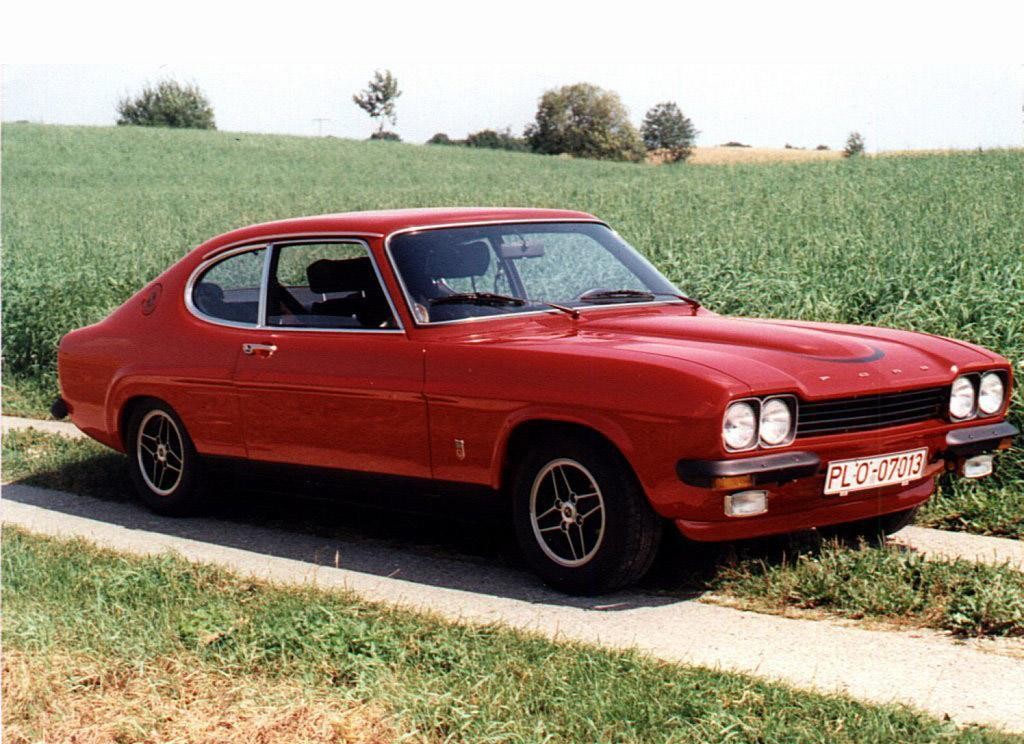
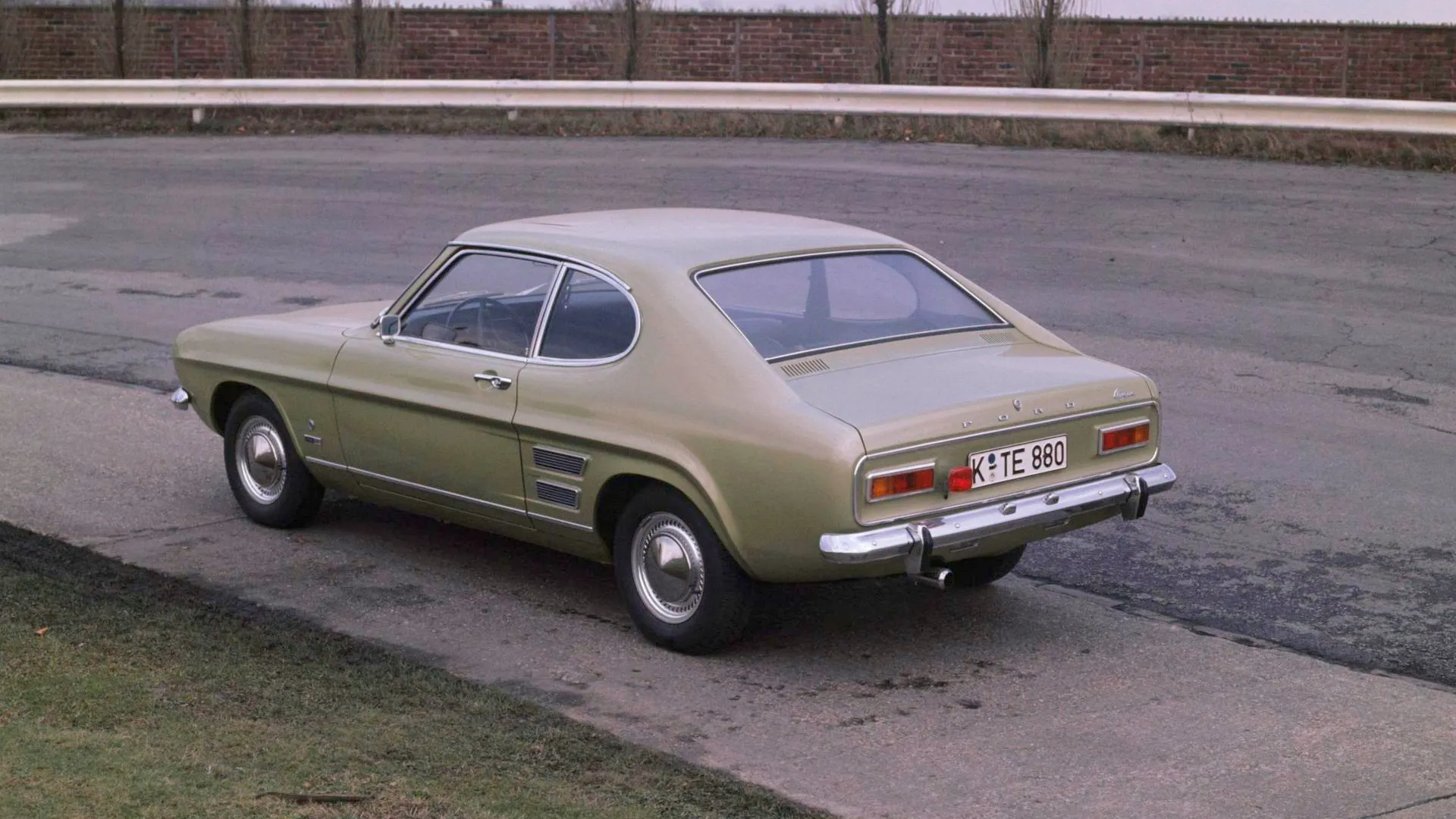
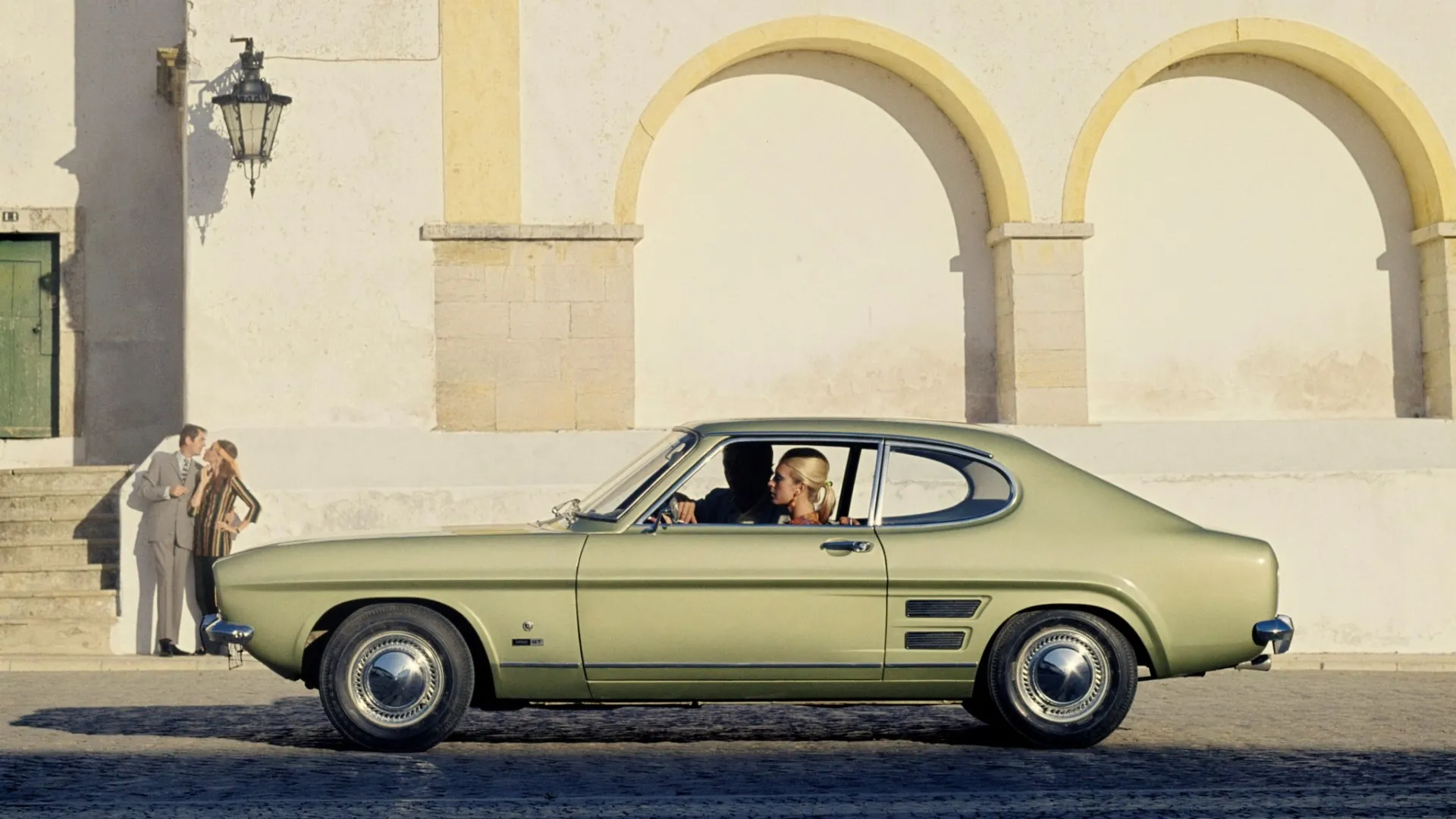
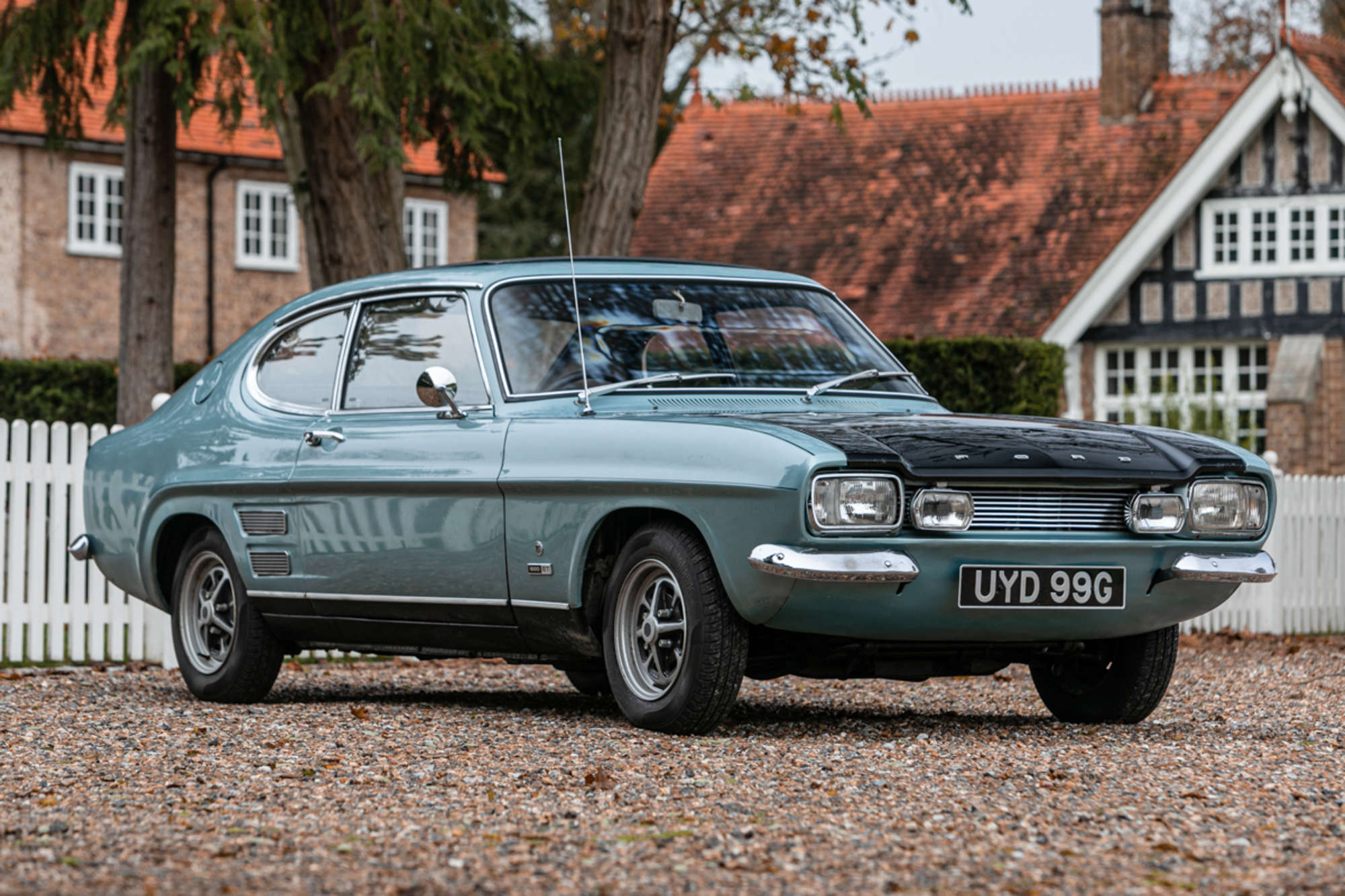
To understand the engineering behind the Mk I Capri is to appreciate the absolute brilliance of Ford’s parts-bin pragmatism. Penned by Philip T. Clark—who was notably one of the lead designers on the original Mustang—the Capri’s silhouette was a masterclass in the “long hood, short deck” philosophy. It featured a sweeping fastback roofline, a distinctive semi-circular rear quarter window, and simulated air intakes stamped into the rear wings behind the doors, creating a muscular, aggressive stance even on the cheapest models. Underneath this glamorous skin, the mechanicals were unapologetically conventional, borrowed heavily from the Cortina Mk II. The suspension relied on McPherson struts at the front and a live rear axle suspended by leaf springs at the back. While lacking the sophistication of independent rear suspension, this setup was incredibly robust, cheap to repair, and, when properly tuned, offered predictable, throttle-steerable handling. The engine bay was designed to swallow a massive variety of powertrains from both the British and German Ford divisions. Early UK cars utilized the Kent inline-fours and the heavy Essex V4s, culminating in the torquey 3.0-liter Essex V6. German factories installed the Taunus V4s and the smoother Cologne V6 engines. Inside, the cabin was a triumph of 1970s sporting intent, featuring deeply sculpted rear bucket seats that made it a true 2+2, and a driver-focused dashboard that, in GT trims, housed a handsome array of circular dials monitoring everything from oil pressure to alternator output.
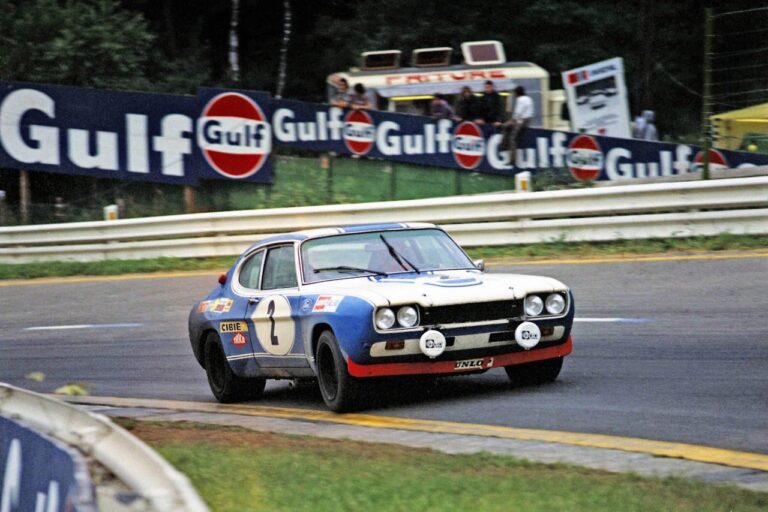
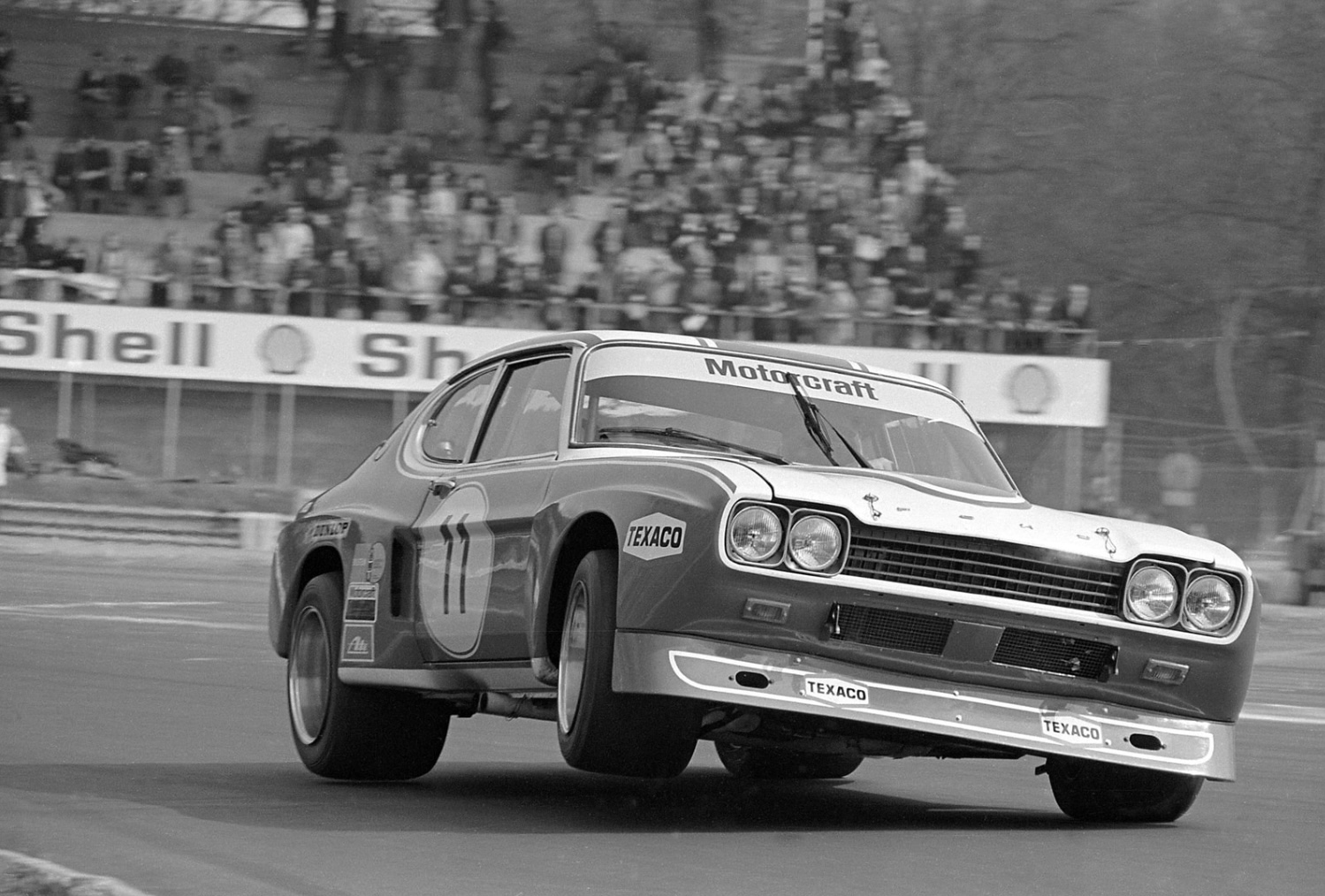
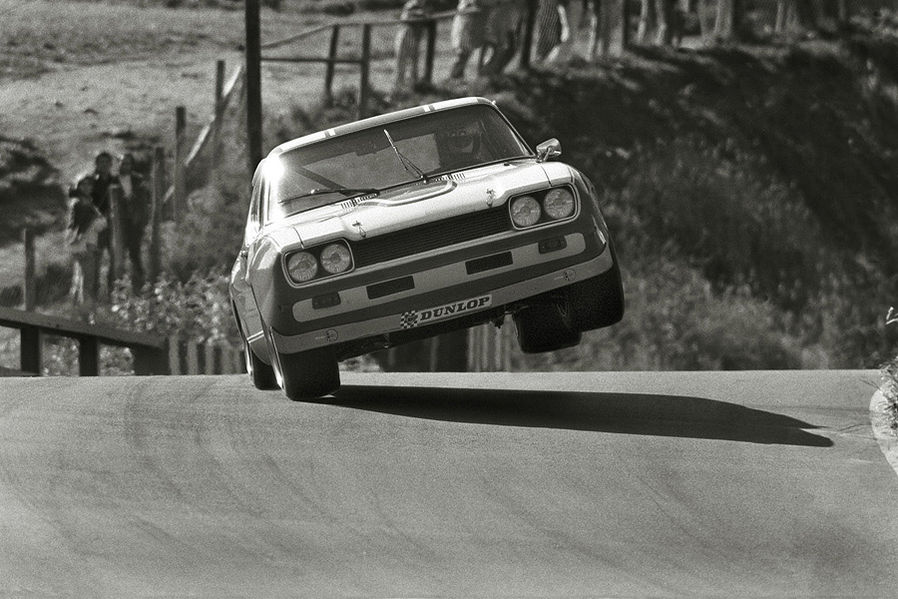
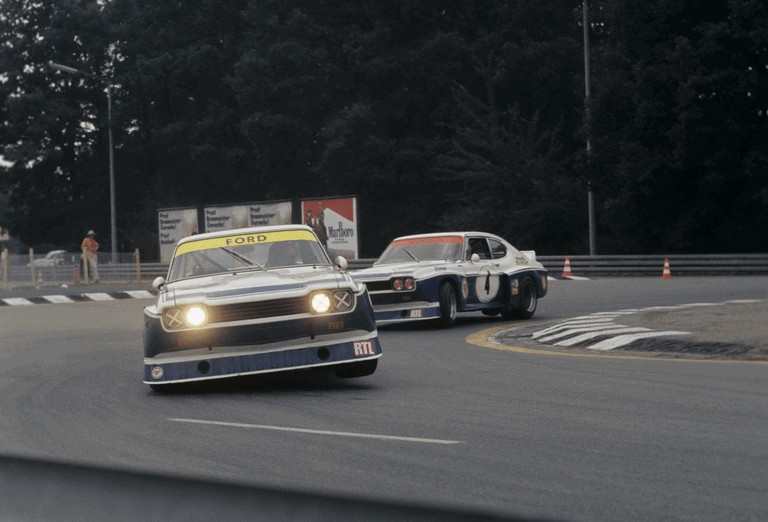
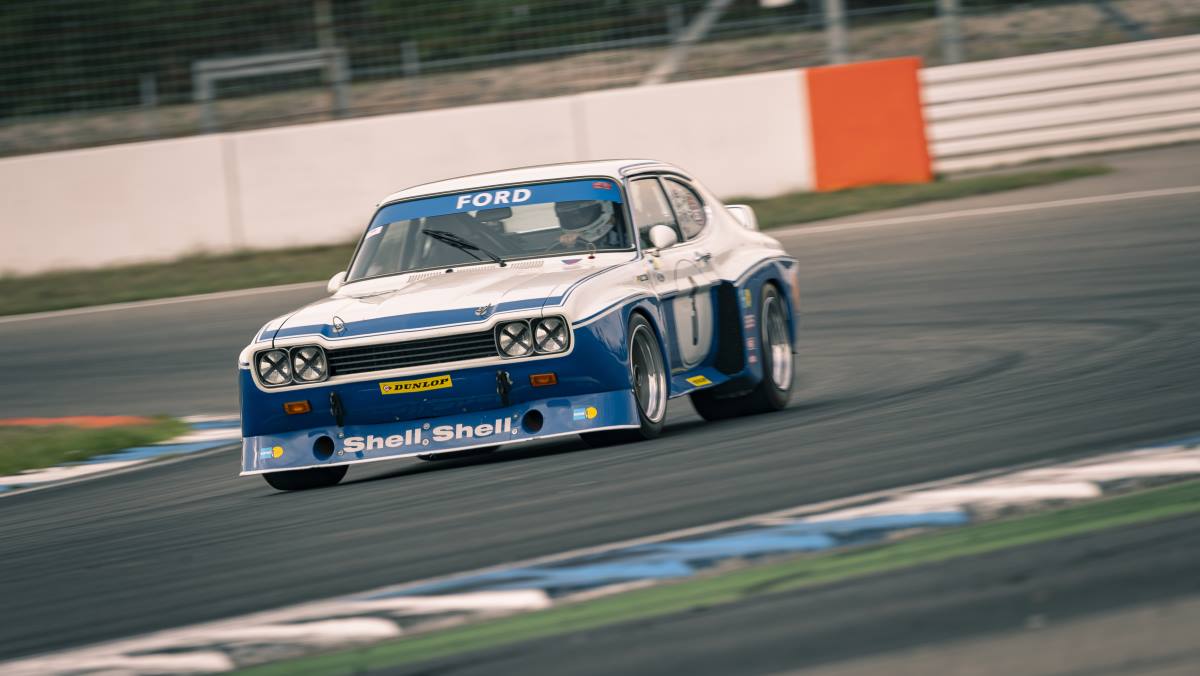
While the standard Capri became an immediate fixture of suburban driveways and high-street cruising, its true immortality was forged on the racetracks of Europe. To combat the rising dominance of BMW in the European Touring Car Championship (ETCC), Ford’s motorsport department in Cologne, spearheaded by Jochen Neerpasch, created a homologation monster: the Capri RS2600. Stripped of its bumpers, sporting lightweight fiberglass panels, and fitted with lowered suspension and wide alloy wheels, the RS2600 was a spectacular weapon. Its 2.6-liter Cologne V6 was fitted with Kugelfischer mechanical fuel injection, pushing output well past 150 horsepower on the street and over 280 horsepower in race trim. Driven by legends like Dieter Glemser and Jochen Mass, the RS2600 dominated the ETCC in 1971 and 1972, engaging in deafening, door-banging battles against the BMW 2800 CS and early 3.0 CSLs. The sight of a blue-and-white factory Ford Capri lifting its inside front wheel through the Karussell at the Nürburgring is a defining image of 1970s motorsport. When BMW returned fire with the winged “Batmobile”, Ford responded with the incredibly rare RS3100, featuring the Essex V6 bored out by Cosworth and a distinctive ducktail rear spoiler to keep the rear wheels planted at 150 mph.
When the Mk I generation was replaced in 1974 by the heavily revised, hatchback-equipped Mk II, it had already secured its place in automotive history. Over one million Mk I Capris were sold in its relatively short production run, proving beyond a shadow of a doubt that the American pony car formula could be perfectly adapted for the European market. It was a blue-collar hero that offered movie-star looks without demanding a movie-star salary. Today, the Ford Capri I, particularly in its muscular V6 and highly coveted RS guises, commands immense respect in the classic car world. It is the definitive working-class sports coupe of the 1970s, a beautifully proportioned, gloriously simple machine that taught a generation of European drivers the joy of a long hood, rear-wheel drive, and the rasp of a well-tuned V6.
Generation Overview
If the 1960s were defined by the swinging youth culture of London and the post-war economic miracles of mainland Europe, the automotive industry was desperately searching for a way to capture that newfound optimism in steel and glass. Ford of Europe, watching the unprecedented, continent-sweeping success of the Mustang in the United States, decided it was time to translate that trans-Atlantic alchemy into a package suited for narrower European roads and tighter wallets. Codenamed “Project Colt” and officially unveiled at the Brussels Motor Show in January 1969, the Ford Capri Mk I was billed with one of the greatest marketing slogans in automotive history: “The car you always promised yourself”. It was the genesis of the European pony car, arriving to do battle against the charming Alfa Romeo GT Junior and anticipating its eternal nemesis, the Opel Manta. The Capri wasn’t just a single car; it was a highly modular canvas. A buyer could walk into a dealership and order a painfully slow, 1.3-liter four-cylinder commuter, or tick the right boxes and drive out in a muscular, tail-happy 3.0-liter V6 grand tourer. It successfully bridged the gap between the working-class pragmatism of the Cortina and the exotic allure of a proper sports coupe.
To understand the engineering behind the Mk I Capri is to appreciate the absolute brilliance of Ford’s parts-bin pragmatism. Penned by Philip T. Clark—who was notably one of the lead designers on the original Mustang—the Capri’s silhouette was a masterclass in the “long hood, short deck” philosophy. It featured a sweeping fastback roofline, a distinctive semi-circular rear quarter window, and simulated air intakes stamped into the rear wings behind the doors, creating a muscular, aggressive stance even on the cheapest models. Underneath this glamorous skin, the mechanicals were unapologetically conventional, borrowed heavily from the Cortina Mk II. The suspension relied on McPherson struts at the front and a live rear axle suspended by leaf springs at the back. While lacking the sophistication of independent rear suspension, this setup was incredibly robust, cheap to repair, and, when properly tuned, offered predictable, throttle-steerable handling. The engine bay was designed to swallow a massive variety of powertrains from both the British and German Ford divisions. Early UK cars utilized the Kent inline-fours and the heavy Essex V4s, culminating in the torquey 3.0-liter Essex V6. German factories installed the Taunus V4s and the smoother Cologne V6 engines. Inside, the cabin was a triumph of 1970s sporting intent, featuring deeply sculpted rear bucket seats that made it a true 2+2, and a driver-focused dashboard that, in GT trims, housed a handsome array of circular dials monitoring everything from oil pressure to alternator output.
While the standard Capri became an immediate fixture of suburban driveways and high-street cruising, its true immortality was forged on the racetracks of Europe. To combat the rising dominance of BMW in the European Touring Car Championship (ETCC), Ford’s motorsport department in Cologne, spearheaded by Jochen Neerpasch, created a homologation monster: the Capri RS2600. Stripped of its bumpers, sporting lightweight fiberglass panels, and fitted with lowered suspension and wide alloy wheels, the RS2600 was a spectacular weapon. Its 2.6-liter Cologne V6 was fitted with Kugelfischer mechanical fuel injection, pushing output well past 150 horsepower on the street and over 280 horsepower in race trim. Driven by legends like Dieter Glemser and Jochen Mass, the RS2600 dominated the ETCC in 1971 and 1972, engaging in deafening, door-banging battles against the BMW 2800 CS and early 3.0 CSLs. The sight of a blue-and-white factory Ford Capri lifting its inside front wheel through the Karussell at the Nürburgring is a defining image of 1970s motorsport. When BMW returned fire with the winged “Batmobile”, Ford responded with the incredibly rare RS3100, featuring the Essex V6 bored out by Cosworth and a distinctive ducktail rear spoiler to keep the rear wheels planted at 150 mph.
When the Mk I generation was replaced in 1974 by the heavily revised, hatchback-equipped Mk II, it had already secured its place in automotive history. Over one million Mk I Capris were sold in its relatively short production run, proving beyond a shadow of a doubt that the American pony car formula could be perfectly adapted for the European market. It was a blue-collar hero that offered movie-star looks without demanding a movie-star salary. Today, the Ford Capri I, particularly in its muscular V6 and highly coveted RS guises, commands immense respect in the classic car world. It is the definitive working-class sports coupe of the 1970s, a beautifully proportioned, gloriously simple machine that taught a generation of European drivers the joy of a long hood, rear-wheel drive, and the rasp of a well-tuned V6.
Submodels