
Lotus 30 (S1) Ford 4.7L (289)

Brand
Produced from
Portal
Vehicle category
Model line
Model generation
Predecessor
Successor
Submodel Overview
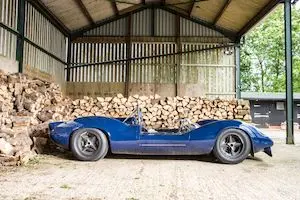
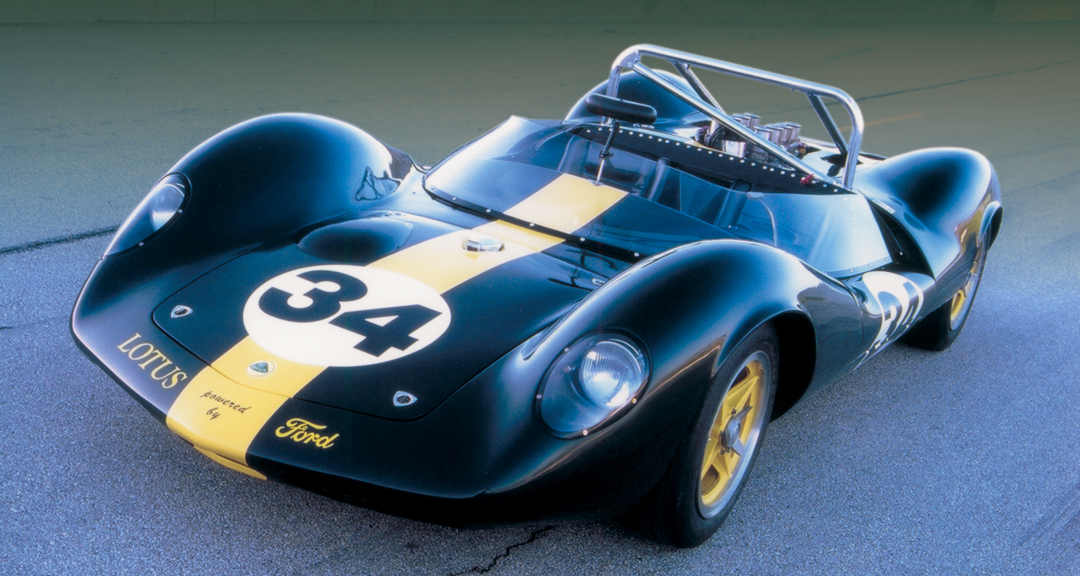
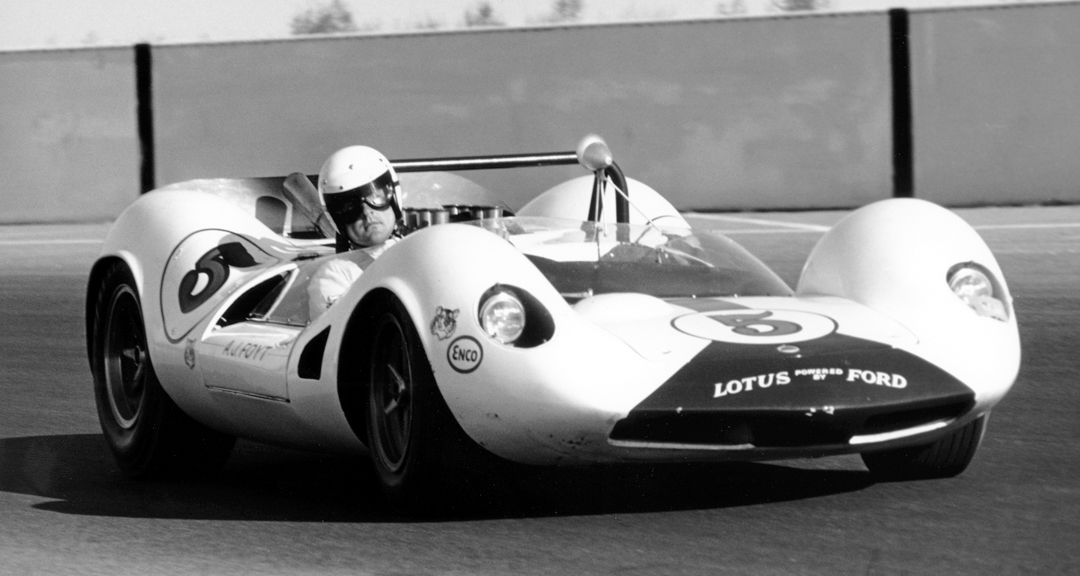
In the history of motorsport engineering, the line between genius and madness is often measured in millimetres of steel and degrees of torsional stiffness. The 1964 Lotus 30 Series 1 stands precariously on that line, a breathtakingly beautiful testament to Colin Chapman’s audacious belief that less is always more, even when “more” is a 350-horsepower American V8. Introduced to combat the rising tide of large-displacement Group 7 sports racers, the Lotus 30 was intended to be the spiritual successor to the agile Lotus 19 “Monte Carlo”. However, where the 19 was a giant-killer that used handling to defeat horsepower, the 30 was Chapman’s attempt to harness the thunder. It arrived in a paddock rapidly filling with the nascent McLaren M1As and the high-tech Chaparral 2As, bringing with it a silhouette that looked like it had been poured from liquid mercury and a chassis concept that would prove to be its tragic undoing. It was a machine that promised the world but delivered a white-knuckle ride into the unknown.
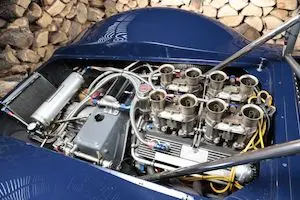
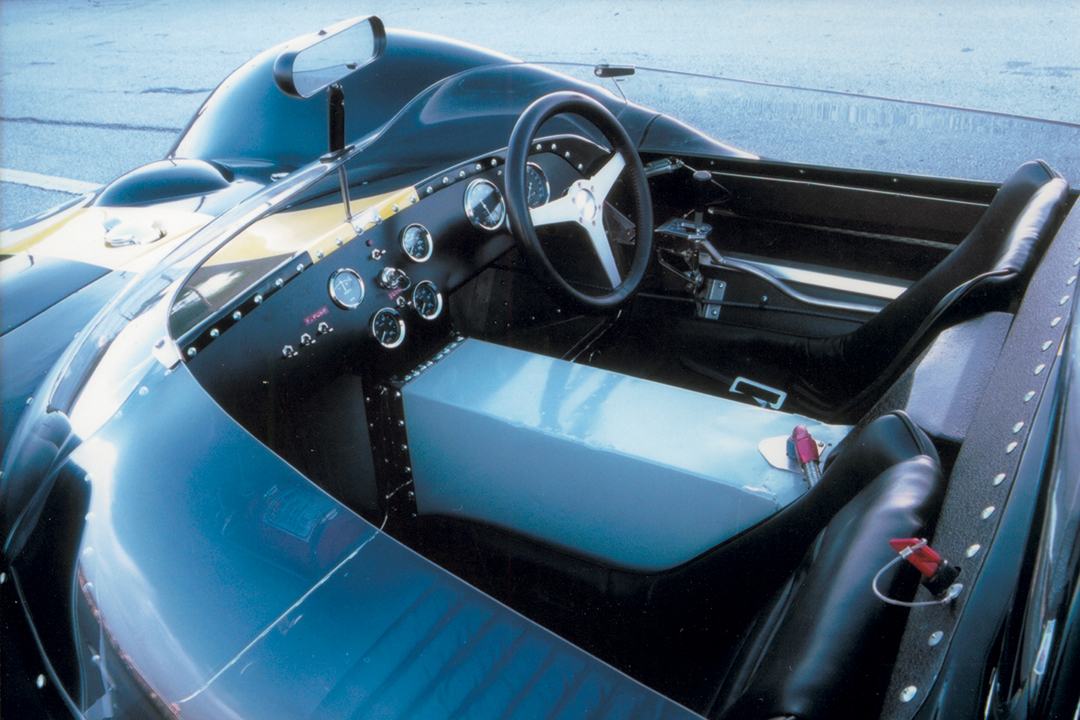
Technically, the Lotus 30 S1 was a radical departure from the conventional tube-frame sports cars of the era. Chapman and designer Len Terry opted to scale up the backbone chassis concept that had proven so successful in the nimble Lotus Elan road car. The chassis was essentially a central sheet-steel box section—shaped like a tuning fork—that housed the driver, fuel, and transmission, with the engine cradled in the rear fork. Ideally, this would provide a lightweight, rigid spine. In reality, when subjected to the torque of a 4.7-litre (289 cubic inch) Ford Fairlane V8, the chassis acted less like a spine and more like a torsion bar. The engine, capable of producing roughly 350 brake horsepower in racing trim, was mated to a robust ZF 5DS20 transaxle, but the structure holding them together flexed alarmingly under load, altering suspension geometry mid-corner.
Visually, the car was a masterpiece. To reduce frontal area and lower the centre of gravity, Chapman insisted on using 13-inch wheels. This gave the Lotus 30 S1 an impossibly low, predatory stance, with bodywork that swooped dramatically over the wheels and culminated in a distinctive “ducktail” spoiler. However, this aesthetic choice had a dire mechanical consequence: the tiny wheels necessitated diminutive brake discs. Trying to stop a 1,500 lb car powered by a Detroit V8 with brakes designed for a small saloon was a recipe for relentless fade. The suspension utilized double wishbones all around, but the pickup points on the chassis were prone to cracking, and the rear wishbones famously struggled to handle the lateral loads, leading to a reputation for fragility that bordered on the terrifying.
The competitive history of the Lotus 30 S1 is dominated by the supernatural abilities of Jim Clark. It is no exaggeration to say that without Clark, the Lotus 30 would be remembered solely as a disaster. While other gifted drivers like Trevor Taylor and Frank Gardner found the car treacherous, describing it as “hinged in the middle,” Clark drove it with a serene, terrifying commitment. He debuted the car at Aintree in 1964, finishing second, and later took a spectacular victory at the Silverstone International. Watching Clark in the Lotus 30 became a spectator sport in itself; he would often corner with the inside front wheel pawing the air, the chassis visibly twisting, steering the car with the throttle to compensate for the wandering geometry. In the United States, the car struggled against the robust American specials in the USRRC and the precursors to Can-Am. At tracks like Riverside, the heat would boil the brakes and the bumps would crack the suspension, yet the car’s straight-line speed was undeniable.
The S1 was rapidly updated to S2 specification (with larger wheels and chassis stiffening) in a desperate attempt to cure its ailments, but the reputation was set. It was the “Widowmaker,” a car that required a deal with the devil to drive fast. The S1’s most famous privateer guise was likely the Team Willment car, often painted in red and white, which campaigned tirelessly in British national events. Despite its flaws, the car was commercially successful simply because it was a Lotus and it was available; over 30 chassis were built, finding homes with brave privateers who were seduced by its looks and the promise of Lotus handling, only to find themselves wrestling a grizzly bear.
The legacy of the 1964 Lotus 30 S1 is complex. It represents a rare moment where Colin Chapman’s philosophy of “add lightness” hit a hard wall of physics. It proved that the backbone chassis, while brilliant for low-torque applications, was unsuitable for the brute force of Group 7 racing. It led directly to the Lotus 40—famously derided by Richie Ginther as “a Lotus 30 with ten more mistakes”—and ultimately to Lotus abandoning the big-displacement sports car class to focus on the Indy 500 and Formula 1. Today, the Lotus 30 S1 is revered as one of the most beautiful racing cars of all time. In historic racing, with modern metallurgy reinforcing the chassis and better friction materials for the brakes, it finally drives as well as it looks. But it stands in the pantheon as a cautionary tale: a reminder that even the greatest engineers can fly too close to the sun, and that sometimes, beauty is a warning sign.
Brand
Produced from
Portal
Vehicle category
Model line
Model generation
Predecessor
Sucessor
Brand
Produced from
Portal
Vehicle category
Model line
Model generation
Predecessor
Sucessor
Submodel Overview
In the history of motorsport engineering, the line between genius and madness is often measured in millimetres of steel and degrees of torsional stiffness. The 1964 Lotus 30 Series 1 stands precariously on that line, a breathtakingly beautiful testament to Colin Chapman’s audacious belief that less is always more, even when “more” is a 350-horsepower American V8. Introduced to combat the rising tide of large-displacement Group 7 sports racers, the Lotus 30 was intended to be the spiritual successor to the agile Lotus 19 “Monte Carlo”. However, where the 19 was a giant-killer that used handling to defeat horsepower, the 30 was Chapman’s attempt to harness the thunder. It arrived in a paddock rapidly filling with the nascent McLaren M1As and the high-tech Chaparral 2As, bringing with it a silhouette that looked like it had been poured from liquid mercury and a chassis concept that would prove to be its tragic undoing. It was a machine that promised the world but delivered a white-knuckle ride into the unknown.
Technically, the Lotus 30 S1 was a radical departure from the conventional tube-frame sports cars of the era. Chapman and designer Len Terry opted to scale up the backbone chassis concept that had proven so successful in the nimble Lotus Elan road car. The chassis was essentially a central sheet-steel box section—shaped like a tuning fork—that housed the driver, fuel, and transmission, with the engine cradled in the rear fork. Ideally, this would provide a lightweight, rigid spine. In reality, when subjected to the torque of a 4.7-litre (289 cubic inch) Ford Fairlane V8, the chassis acted less like a spine and more like a torsion bar. The engine, capable of producing roughly 350 brake horsepower in racing trim, was mated to a robust ZF 5DS20 transaxle, but the structure holding them together flexed alarmingly under load, altering suspension geometry mid-corner.
Visually, the car was a masterpiece. To reduce frontal area and lower the centre of gravity, Chapman insisted on using 13-inch wheels. This gave the Lotus 30 S1 an impossibly low, predatory stance, with bodywork that swooped dramatically over the wheels and culminated in a distinctive “ducktail” spoiler. However, this aesthetic choice had a dire mechanical consequence: the tiny wheels necessitated diminutive brake discs. Trying to stop a 1,500 lb car powered by a Detroit V8 with brakes designed for a small saloon was a recipe for relentless fade. The suspension utilized double wishbones all around, but the pickup points on the chassis were prone to cracking, and the rear wishbones famously struggled to handle the lateral loads, leading to a reputation for fragility that bordered on the terrifying.
The competitive history of the Lotus 30 S1 is dominated by the supernatural abilities of Jim Clark. It is no exaggeration to say that without Clark, the Lotus 30 would be remembered solely as a disaster. While other gifted drivers like Trevor Taylor and Frank Gardner found the car treacherous, describing it as “hinged in the middle,” Clark drove it with a serene, terrifying commitment. He debuted the car at Aintree in 1964, finishing second, and later took a spectacular victory at the Silverstone International. Watching Clark in the Lotus 30 became a spectator sport in itself; he would often corner with the inside front wheel pawing the air, the chassis visibly twisting, steering the car with the throttle to compensate for the wandering geometry. In the United States, the car struggled against the robust American specials in the USRRC and the precursors to Can-Am. At tracks like Riverside, the heat would boil the brakes and the bumps would crack the suspension, yet the car’s straight-line speed was undeniable.
The S1 was rapidly updated to S2 specification (with larger wheels and chassis stiffening) in a desperate attempt to cure its ailments, but the reputation was set. It was the “Widowmaker,” a car that required a deal with the devil to drive fast. The S1’s most famous privateer guise was likely the Team Willment car, often painted in red and white, which campaigned tirelessly in British national events. Despite its flaws, the car was commercially successful simply because it was a Lotus and it was available; over 30 chassis were built, finding homes with brave privateers who were seduced by its looks and the promise of Lotus handling, only to find themselves wrestling a grizzly bear.
The legacy of the 1964 Lotus 30 S1 is complex. It represents a rare moment where Colin Chapman’s philosophy of “add lightness” hit a hard wall of physics. It proved that the backbone chassis, while brilliant for low-torque applications, was unsuitable for the brute force of Group 7 racing. It led directly to the Lotus 40—famously derided by Richie Ginther as “a Lotus 30 with ten more mistakes”—and ultimately to Lotus abandoning the big-displacement sports car class to focus on the Indy 500 and Formula 1. Today, the Lotus 30 S1 is revered as one of the most beautiful racing cars of all time. In historic racing, with modern metallurgy reinforcing the chassis and better friction materials for the brakes, it finally drives as well as it looks. But it stands in the pantheon as a cautionary tale: a reminder that even the greatest engineers can fly too close to the sun, and that sometimes, beauty is a warning sign.
Tech Specs
Technical Specifications
Tech Specs
Technical Specifications
Engine
01
03
Internal combustion engine
Configuration
Ford Windsor 289, V8 - 90º
Location
Mid, longitudinally mounted
Construction
Cast iron block and heads
Displacement (cc)
4,727 cc
Displacement (cu in)
289.0 cu in
Compression
11.0:1
Bore x Stroke
101.6 mm x 72.9 mm
Valvetrain
2 valves per cylinder, OHV
Fuel feed
4 x Weber 48 IDM (or IDA) carburetors
Lubrication
Dry sump
Aspiration
Naturally aspirated
Output
Power (hp)
350 hp
Power (kW)
261 kW
Max power at
6,500 RPM
Torque (Nm)
434 Nm
Torque (ft lbs)
320 ft lbs
Max torque at
4,500 RPM
Drivetrain
02
03
Chassis
Type
Central backbone box-section
Material
Steel (20-gauge sheet)
Body
Material
Fibreglass
Transmission
Gearbox
ZF 5DS-20, 5-speed manual
Drive
Rear Wheel Drive (Limited Slip Differential)
Suspension
Front
Independent, unequal length double wishbones, coil springs over dampers, anti-roll bar
Rear
Independent, reversed lower wishbones, top links, twin radius arms, coil springs over dampers, anti-roll bar
Steering
Type
Rack and pinion
Brakes
Front
Girling solid discs Ø279 mm
Rear
Girling solid discs Ø279 mm
Wheels
Front
7" x 13" (Lotus cast magnesium alloy, 4-spoke)
Rear
8.5" x 13" (Lotus cast magnesium alloy, 4-spoke)
Tires
Front
6.00-13 (Dunlop or Firestone Racing)
Rear
7.00-13 (Dunlop or Firestone Racing)
Dimensions and performance
03
03
Dimensions
Length (mm)
4,191 mm
Length (in)
165.0 in
Width (mm)
1,727 mm
Width (in)
68.0 in
Height (mm)
673 mm
Height (in)
26.5 in
Wheelbase (mm)
2,400 mm
Wheelbase (in)
94.5 in
Weight (kg)
693 kg
Weight (lbs)
1,529 lbs
Performance
Power to weight
0.50 hp/kg
Top speed (km/h)
~260 km/h
Top speed (mph)
~160 mph
0-100 km/h (0-60 mph)
~3.8 s