
Alfa Romeo Giulia 1600 GTA (Sprint GTA) Corsa
Brand
Produced from
Portal
Vehicle category
Model line
Model generation
Predecessor
Successor
Submodel Overview
In the mid-1960s, the battlegrounds of the European Touring Car Championship were defined by an elegant yet utterly ruthless form of motorsport. The established order was being terrorized by the agile, three-wheeling Lotus Cortina and the blunt, Bavarian brute force of the BMW 1800 TI/SA. Alfa Romeo’s weapon of choice, the boxy four-door Giulia TI Super, had been valiant but was rapidly approaching the limits of its aerodynamic and dynamic potential. The Milanese marque needed a silver bullet, a machine that could marry the sultry lines of Bertone’s 105-series coupe with the ruthless engineering required to dominate the 1600cc class. In 1965, Carlo Chiti’s recently fully integrated Autodelta racing division delivered an absolute masterpiece: the Alfa Romeo Giulia 1600 GTA. The added ‘A’ stood for Alleggerita—lightened—and while 500 Stradale examples were built to satisfy Group 2 homologation requirements, it was the pure, unadulterated Corsa specification that would scorch the earth across Europe and America, cementing itself as arguably the greatest touring car of its era.
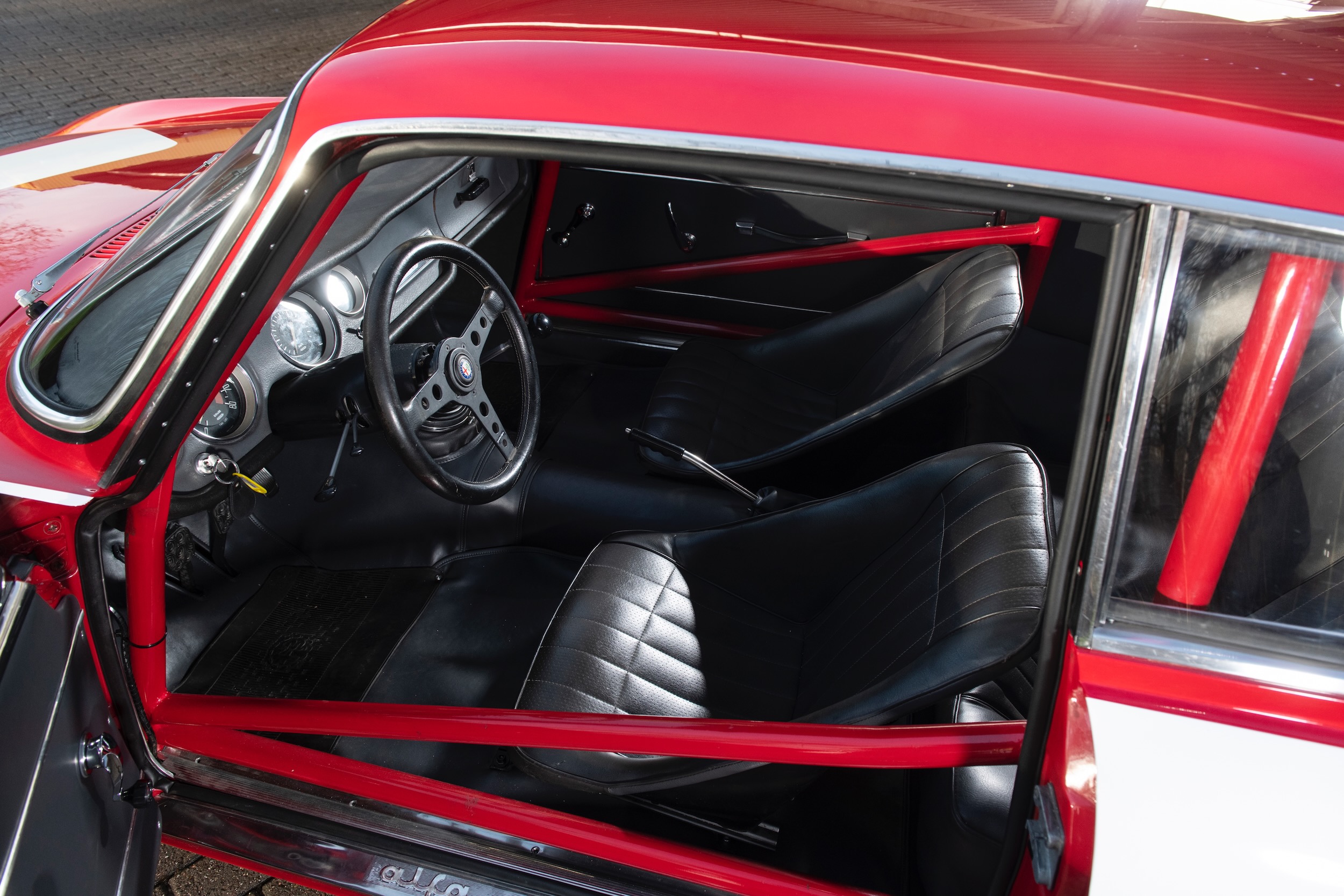
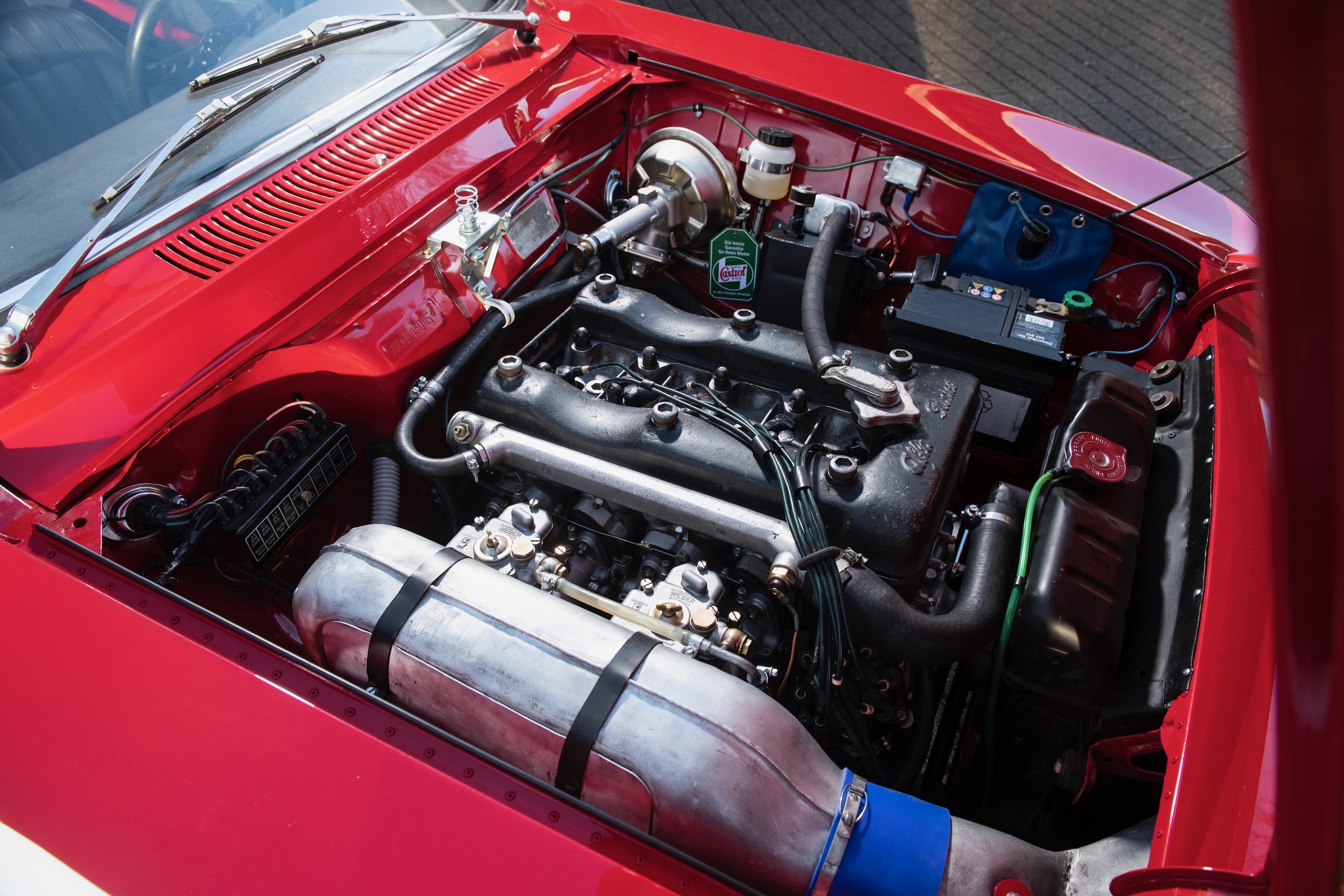
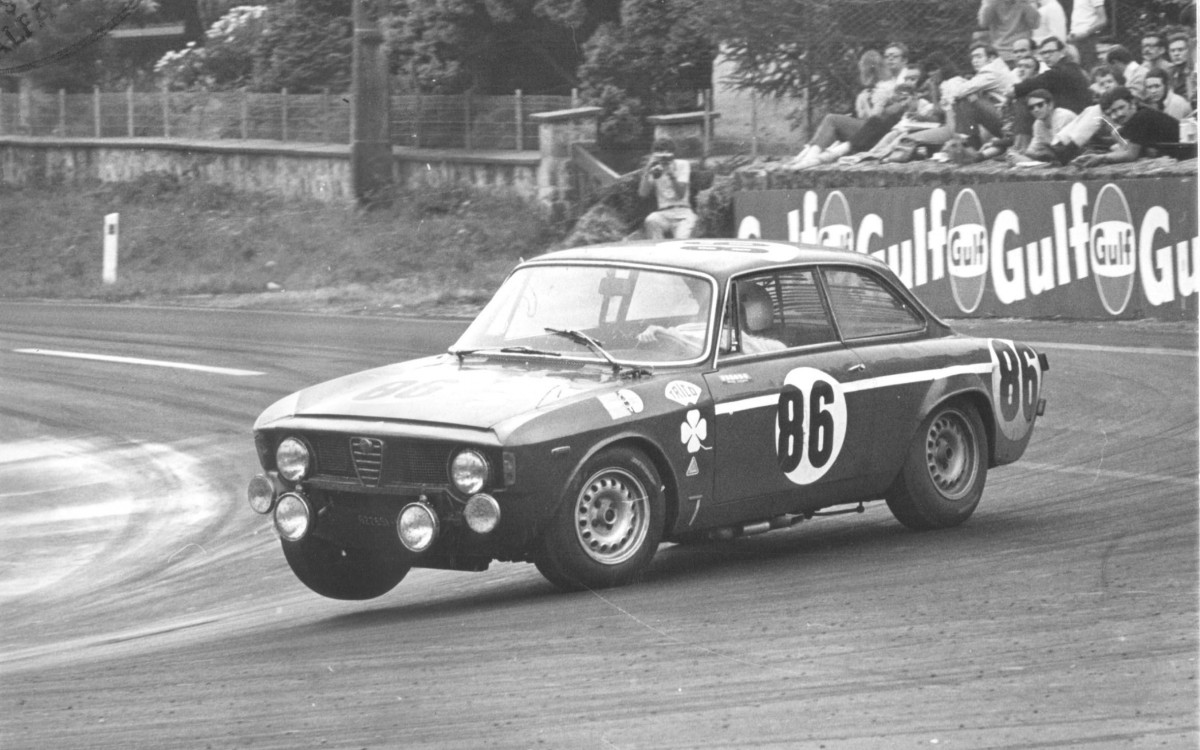
To peel back the skin of the 1600 GTA Corsa is to witness an uncompromising obsession with weight reduction and mechanical maximization. Autodelta did not simply strip the standard Giulia Sprint GT; they completely re-engineered its anatomy. The outer body panels—the roof, doors, bonnet, and boot lid—were stamped from Peraluman 25, an ultra-lightweight magnesium-aluminium alloy, and riveted directly to the steel inner structural shell. This exotic skin was paired with Plexiglas side and rear windows, lightweight bucket seats, and the removal of every ounce of sound deadening. The result was a featherweight brawler that tipped the scales at a mere 740 kilograms. But the true sorcery lay beneath the alloy bonnet. The legendary 1570cc Bialbero (twin-cam) inline-four engine was heavily massaged. Autodelta cast the valve cover, timing cover, bell housing, and sump in magnesium. Crucially, they developed an entirely new, bespoke cylinder head featuring a narrower valve angle and a revolutionary twin-spark (doppia accensione) ignition system fed by a Marelli distributor. In full Corsa tune, breathing through massive 45 DCOE Weber carburettors and exhaling through a booming side-exit exhaust, this 1.6-liter jewel revved to the heavens, producing a staggering 170 brake horsepower—an astonishing specific output for 1965. To harness this fury, Autodelta fitted close-ratio gearboxes, lightweight magnesium Campagnolo wheels, and an ingenious sliding-block rear suspension linkage known as the slittone, which drastically lowered the rear roll center and gave the GTA its signature, wheel-lifting, tail-sliding cornering stance.
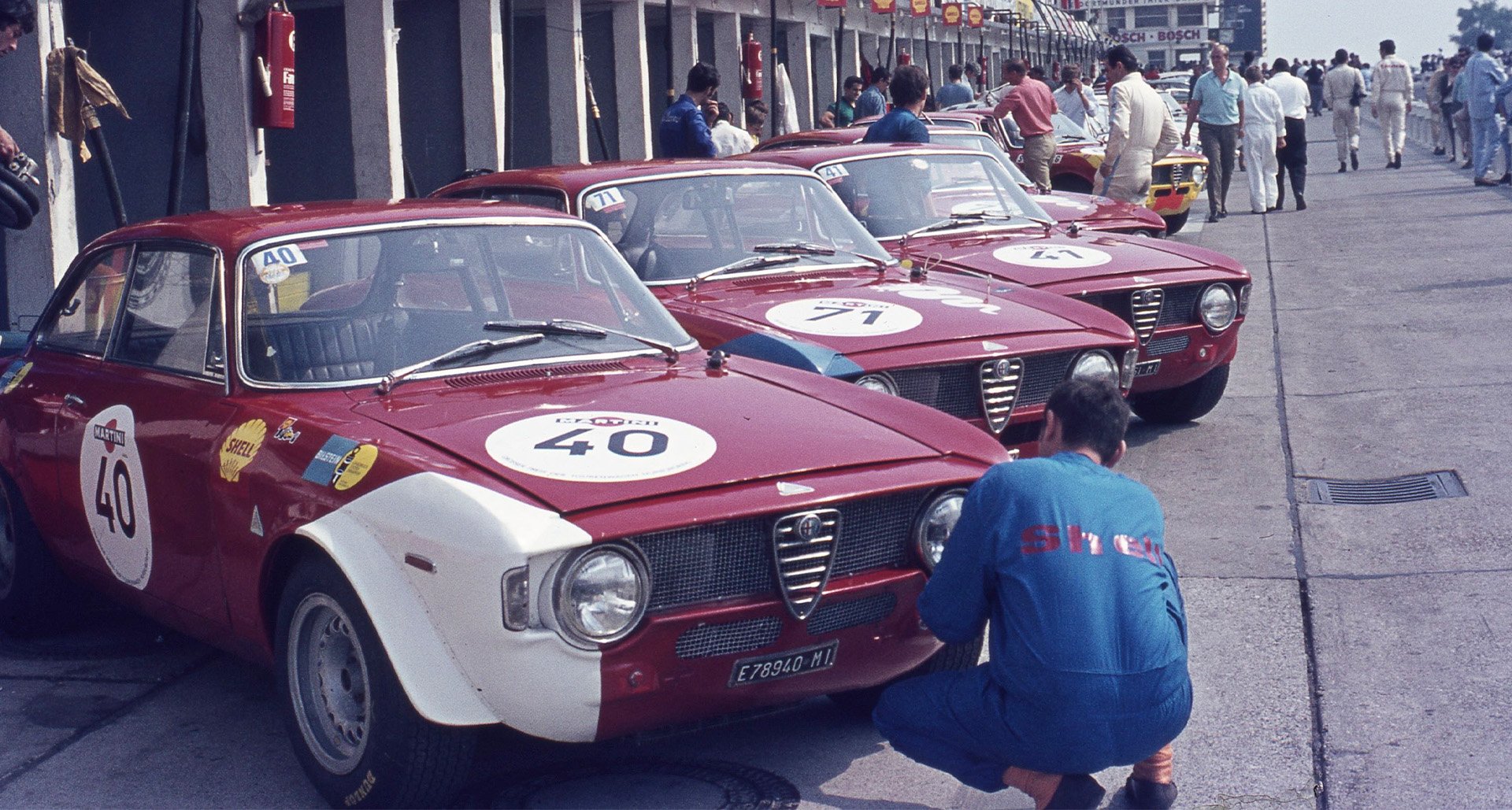
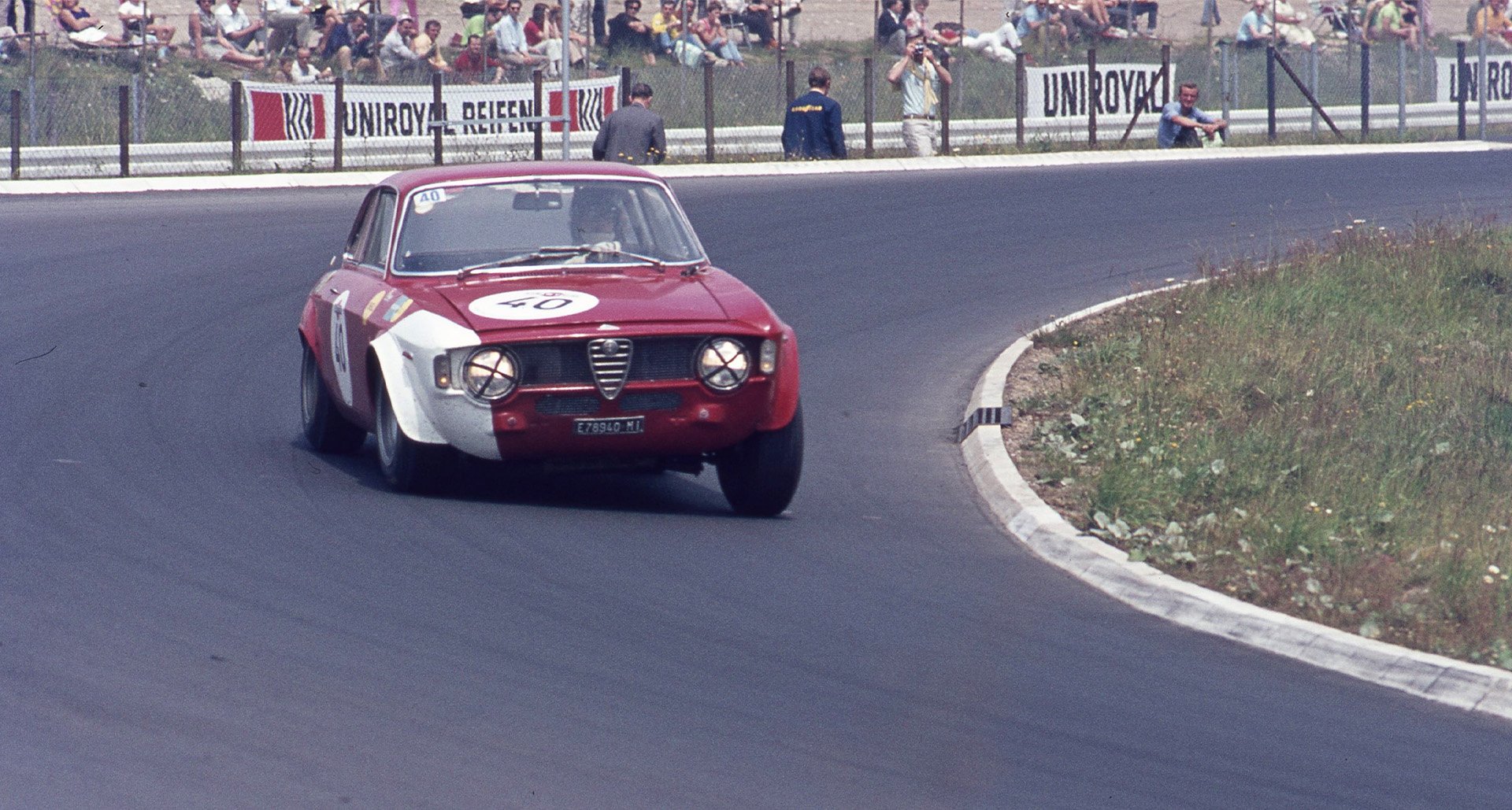
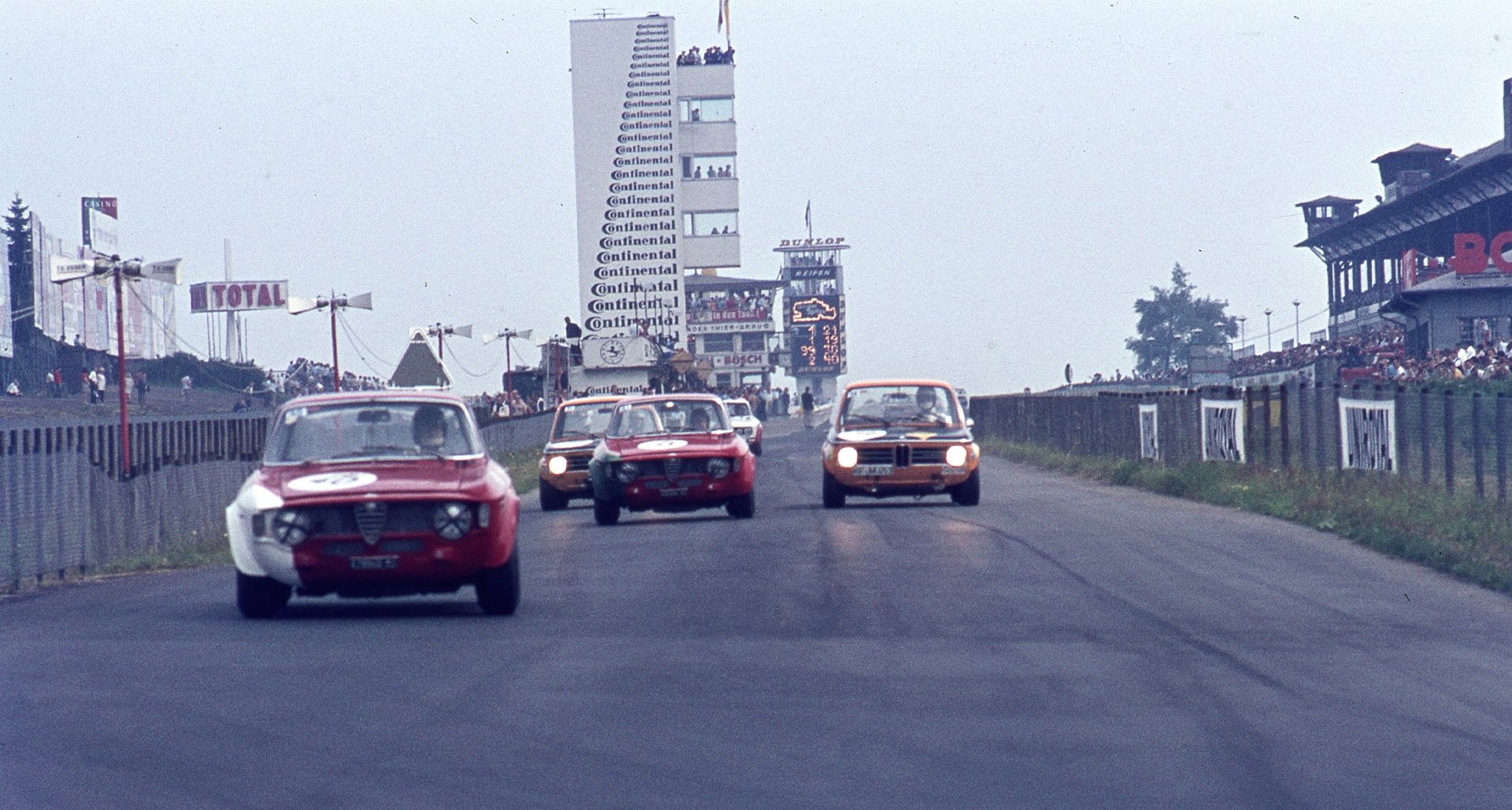
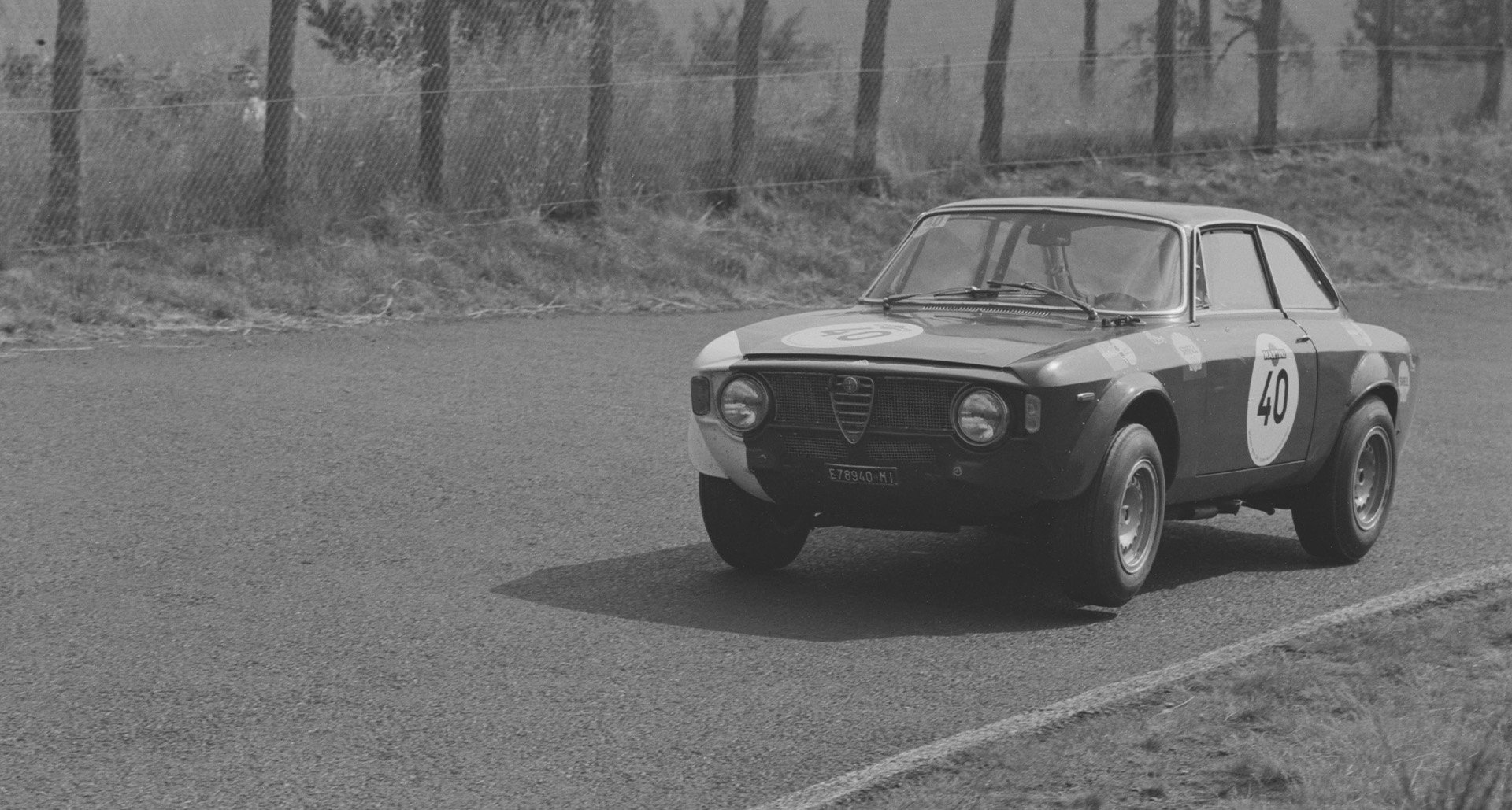
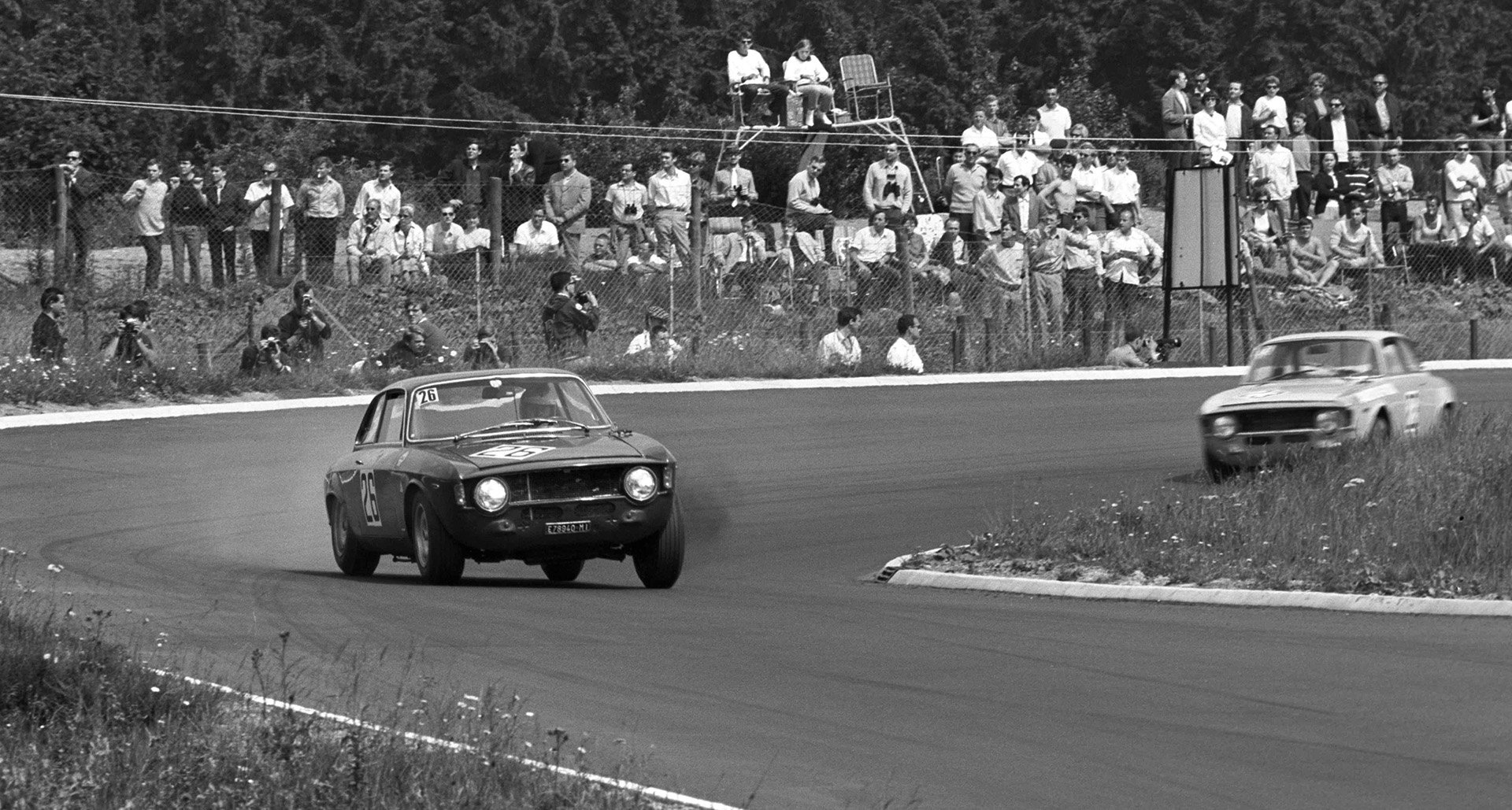
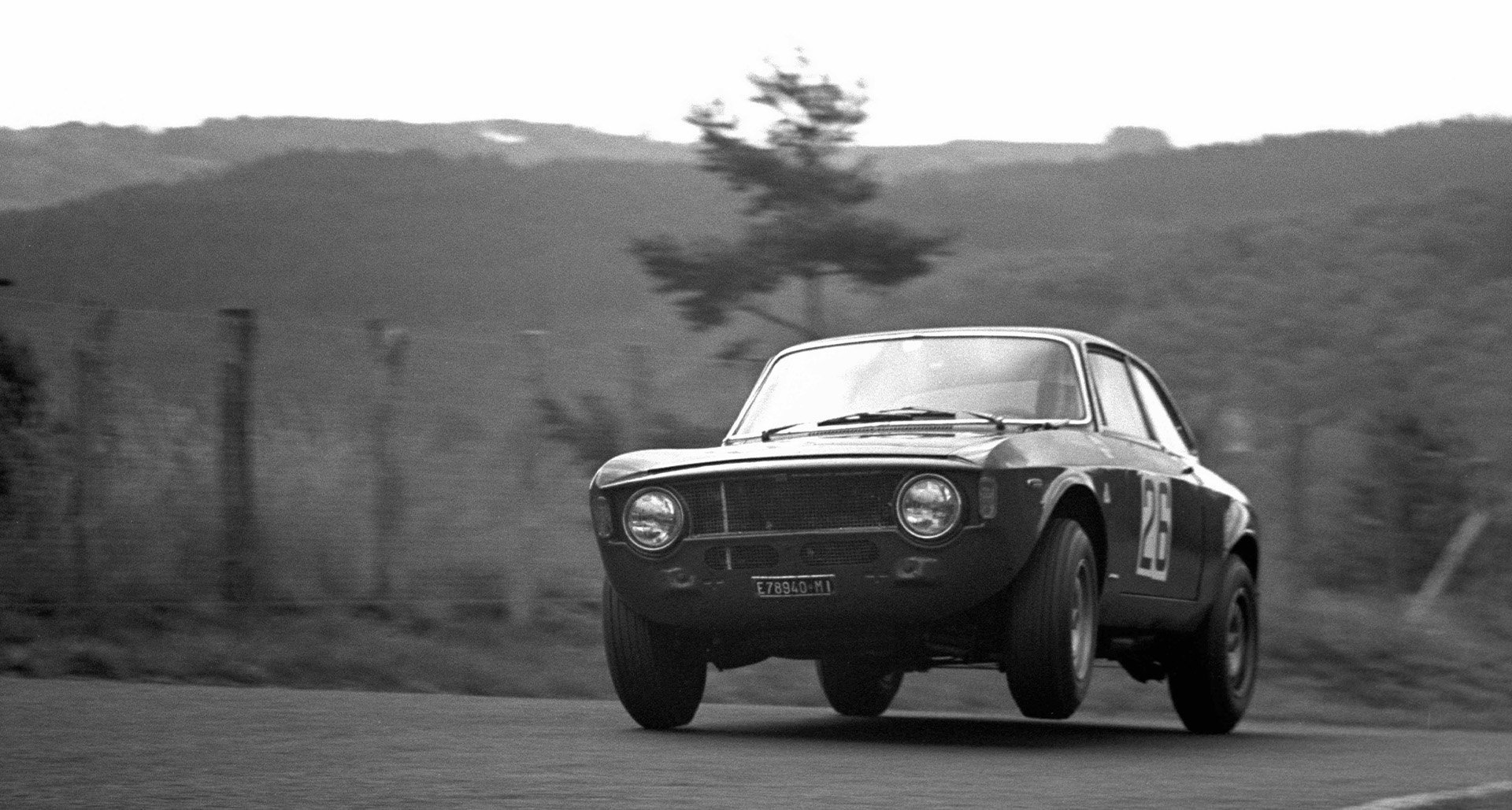
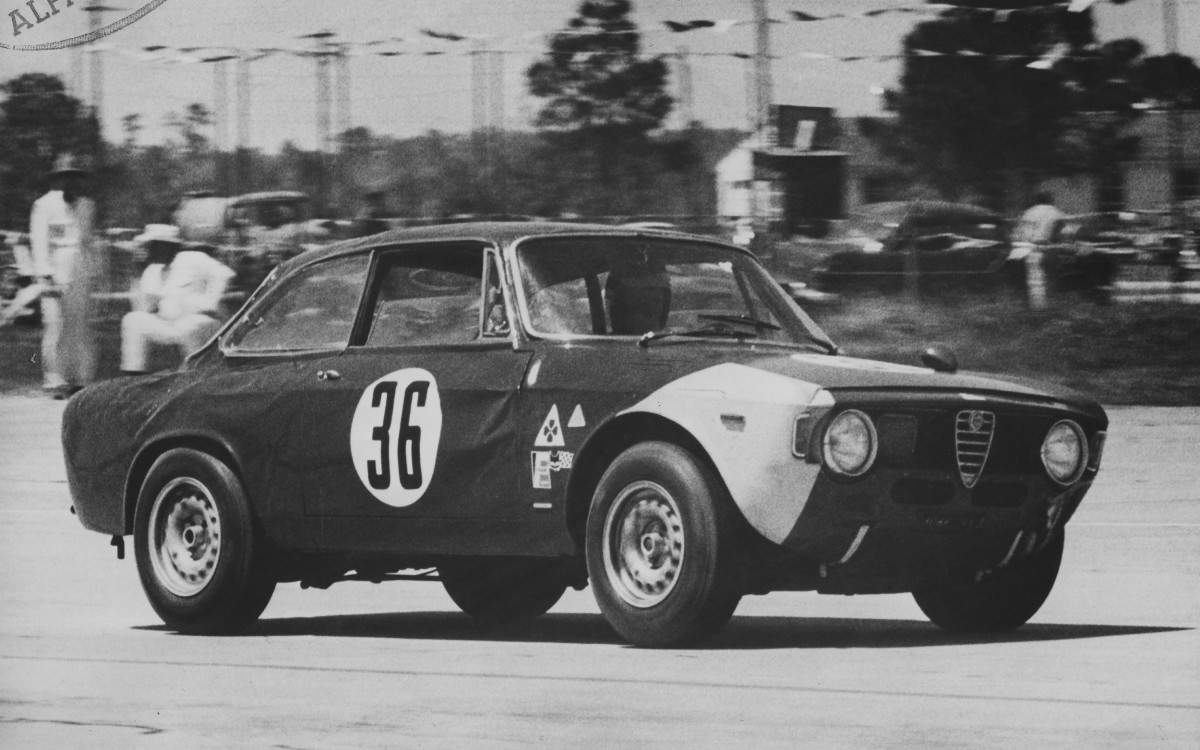
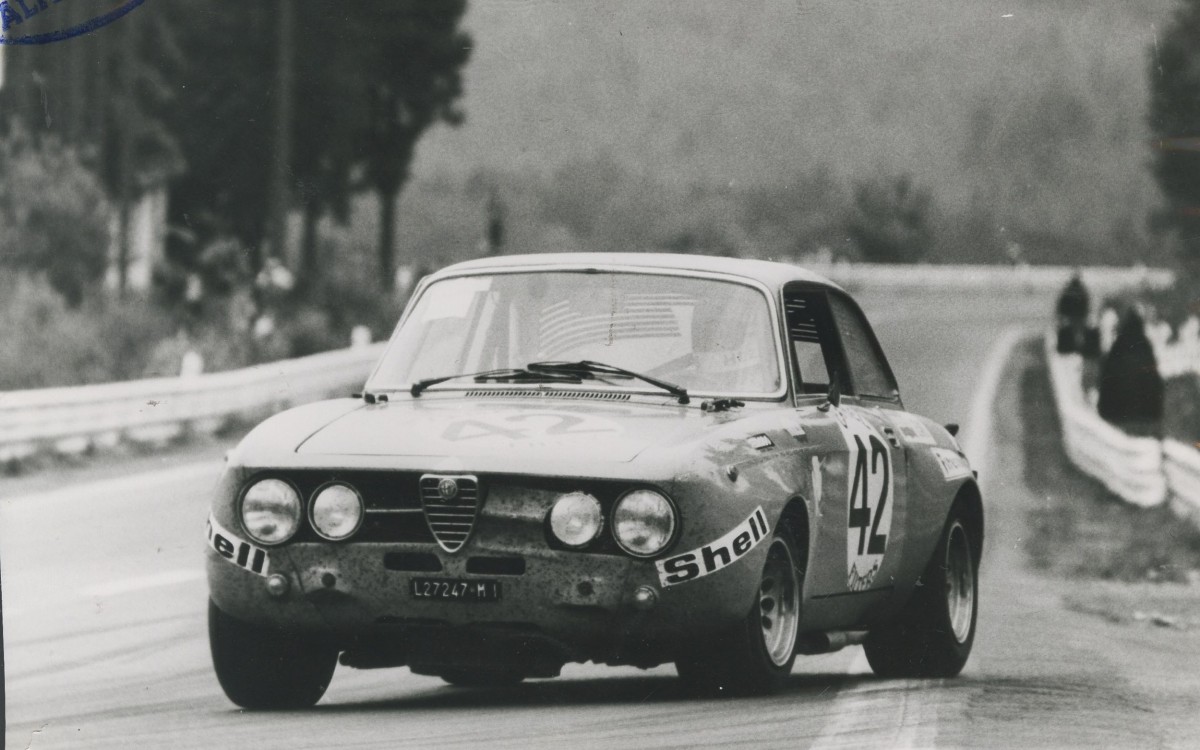
When the GTA Corsa was unleashed onto the circuits of the world, it did not just compete; it annihilated the opposition. In the hands of fiercely talented Autodelta works drivers like Andrea de Adamich, Ignazio Giunti, and the spectacular Jochen Rindt, the GTA became an unstoppable force. De Adamich secured the European Touring Car Championship title in 1966 and 1967, while Spartaco Dini continued the streak in 1968. The Corsa was utterly dominant in grueling endurance events, famously securing an outright victory at the Nürburgring 6 Hours. Its prowess was not limited to Europe; across the Atlantic, the Horst Kwech-prepared GTA Corsas waged war in the inaugural 1966 Trans-Am series, violently wrestling the Under 2.0-Liter championship away from the factory-supported Cortinas and Porsches. The GTA Corsa was a mesmerizing spectacle on track. Photographs of the red coupes lifting their inside front wheels high into the air as they pounded over the curbs of Monza and Zandvoort became the defining images of 1960s touring car racing. It was an Italian street-fighter in a tailored suit, producing a raspy, chainsaw-like induction howl that echoed through the European forests and captivated a generation of racing fans.
The legacy of the 1965 Alfa Romeo Giulia 1600 GTA Corsa is the absolute bedrock of Alfa Romeo’s sporting mythos. It proved that Carlo Chiti’s Autodelta was a world-class engineering powerhouse capable of bending the rules of physics to their will. As the 1960s drew to a close, the 1600 GTA naturally evolved into the high-revving GTA 1300 Junior and the wider, more brutal 1750 and 2000 GTAm to remain competitive. Yet, the original 1600 Corsa remains the purest, most historically significant iteration of the Alleggerita philosophy. Today, genuine Autodelta-prepared Corsas are the undisputed crown jewels of historic touring car racing, dominating grids at the Goodwood Revival and commanding deep reverence wherever they appear. It stands immortal in the pantheon of motorsport as the quintessential 1960s touring car—a featherweight giant-killer that transformed a beautiful road car into an invincible, howling legend.
Brand
Produced from
Portal
Vehicle category
Model line
Model generation
Predecessor
Sucessor
Brand
Produced from
Portal
Vehicle category
Model line
Model generation
Predecessor
Sucessor
Submodel Overview
In the mid-1960s, the battlegrounds of the European Touring Car Championship were defined by an elegant yet utterly ruthless form of motorsport. The established order was being terrorized by the agile, three-wheeling Lotus Cortina and the blunt, Bavarian brute force of the BMW 1800 TI/SA. Alfa Romeo’s weapon of choice, the boxy four-door Giulia TI Super, had been valiant but was rapidly approaching the limits of its aerodynamic and dynamic potential. The Milanese marque needed a silver bullet, a machine that could marry the sultry lines of Bertone’s 105-series coupe with the ruthless engineering required to dominate the 1600cc class. In 1965, Carlo Chiti’s recently fully integrated Autodelta racing division delivered an absolute masterpiece: the Alfa Romeo Giulia 1600 GTA. The added ‘A’ stood for Alleggerita—lightened—and while 500 Stradale examples were built to satisfy Group 2 homologation requirements, it was the pure, unadulterated Corsa specification that would scorch the earth across Europe and America, cementing itself as arguably the greatest touring car of its era.
To peel back the skin of the 1600 GTA Corsa is to witness an uncompromising obsession with weight reduction and mechanical maximization. Autodelta did not simply strip the standard Giulia Sprint GT; they completely re-engineered its anatomy. The outer body panels—the roof, doors, bonnet, and boot lid—were stamped from Peraluman 25, an ultra-lightweight magnesium-aluminium alloy, and riveted directly to the steel inner structural shell. This exotic skin was paired with Plexiglas side and rear windows, lightweight bucket seats, and the removal of every ounce of sound deadening. The result was a featherweight brawler that tipped the scales at a mere 740 kilograms. But the true sorcery lay beneath the alloy bonnet. The legendary 1570cc Bialbero (twin-cam) inline-four engine was heavily massaged. Autodelta cast the valve cover, timing cover, bell housing, and sump in magnesium. Crucially, they developed an entirely new, bespoke cylinder head featuring a narrower valve angle and a revolutionary twin-spark (doppia accensione) ignition system fed by a Marelli distributor. In full Corsa tune, breathing through massive 45 DCOE Weber carburettors and exhaling through a booming side-exit exhaust, this 1.6-liter jewel revved to the heavens, producing a staggering 170 brake horsepower—an astonishing specific output for 1965. To harness this fury, Autodelta fitted close-ratio gearboxes, lightweight magnesium Campagnolo wheels, and an ingenious sliding-block rear suspension linkage known as the slittone, which drastically lowered the rear roll center and gave the GTA its signature, wheel-lifting, tail-sliding cornering stance.
When the GTA Corsa was unleashed onto the circuits of the world, it did not just compete; it annihilated the opposition. In the hands of fiercely talented Autodelta works drivers like Andrea de Adamich, Ignazio Giunti, and the spectacular Jochen Rindt, the GTA became an unstoppable force. De Adamich secured the European Touring Car Championship title in 1966 and 1967, while Spartaco Dini continued the streak in 1968. The Corsa was utterly dominant in grueling endurance events, famously securing an outright victory at the Nürburgring 6 Hours. Its prowess was not limited to Europe; across the Atlantic, the Horst Kwech-prepared GTA Corsas waged war in the inaugural 1966 Trans-Am series, violently wrestling the Under 2.0-Liter championship away from the factory-supported Cortinas and Porsches. The GTA Corsa was a mesmerizing spectacle on track. Photographs of the red coupes lifting their inside front wheels high into the air as they pounded over the curbs of Monza and Zandvoort became the defining images of 1960s touring car racing. It was an Italian street-fighter in a tailored suit, producing a raspy, chainsaw-like induction howl that echoed through the European forests and captivated a generation of racing fans.
The legacy of the 1965 Alfa Romeo Giulia 1600 GTA Corsa is the absolute bedrock of Alfa Romeo’s sporting mythos. It proved that Carlo Chiti’s Autodelta was a world-class engineering powerhouse capable of bending the rules of physics to their will. As the 1960s drew to a close, the 1600 GTA naturally evolved into the high-revving GTA 1300 Junior and the wider, more brutal 1750 and 2000 GTAm to remain competitive. Yet, the original 1600 Corsa remains the purest, most historically significant iteration of the Alleggerita philosophy. Today, genuine Autodelta-prepared Corsas are the undisputed crown jewels of historic touring car racing, dominating grids at the Goodwood Revival and commanding deep reverence wherever they appear. It stands immortal in the pantheon of motorsport as the quintessential 1960s touring car—a featherweight giant-killer that transformed a beautiful road car into an invincible, howling legend.
Tech Specs
Technical Specifications
Tech Specs
Technical Specifications
Engine
01
03
Internal combustion engine
Configuration
Alfa Romeo Twin Cam (Twin Spark head), Inline-4
Location
Front, longitudinally mounted
Construction
Aluminium alloy block and head
Displacement (cc)
1,570 cc
Displacement (cu in)
95.8 cu in
Compression
10.5:1
Bore x Stroke
78.0 mm x 82.0 mm
Valvetrain
2 valves per cylinder, DOHC
Fuel feed
2 x Weber 45 DCOE carburetors
Lubrication
Wet sump
Aspiration
Naturally aspirated
Output
Power (hp)
170 hp
Power (kW)
126 kW
Max power at
7,500 RPM
Torque (Nm)
160 Nm
Torque (ft lbs)
118 ft lbs
Max torque at
6,000 RPM
Drivetrain
02
03
Chassis
Type
Monocoque unibody
Material
Steel
Body
Material
Peraluman 25 Aluminium alloy (Outer panels riveted/bonded to chassis), Plexiglass side/rear windows
Transmission
Gearbox
Alfa Romeo, 5-speed manual
Drive
Rear Wheel Drive (Limited Slip Differential)
Suspension
Front
Independent, double wishbones, coil springs, telescopic dampers, anti-roll bar
Rear
Live axle, trailing arms, sliding block/trunnion location, coil springs, telescopic dampers
Steering
Type
Worm and roller, unassisted
Brakes
Front
Solid discs Ø267 mm, 2-piston calipers
Rear
Solid discs Ø267 mm, 2-piston calipers
Wheels
Front
7" x 14" (Campagnolo Magnesium alloy)
Rear
7" x 14" (Campagnolo Magnesium alloy)
Tires
Front
5.50 M 14
Rear
5.50 M 14
Dimensions and performance
03
03
Dimensions
Length (mm)
4,080 mm
Length (in)
160.6 in
Width (mm)
1,580 mm
Width (in)
62.2 in
Height (mm)
1,310 mm
Height (in)
51.6 in
Wheelbase (mm)
2,350 mm
Wheelbase (in)
92.5 in
Weight (kg)
740 kg
Weight (lbs)
1,631 lbs
Performance
Power to weight
~0.23 hp/kg
Top speed (km/h)
220 km/h
Top speed (mph)
137 mph
0-100 km/h (0-60 mph)
~6.5 s