Alfa Romeo Giulia (Tipo 105/115)
Brand
Produced from
Vehicle category
Portal
Model line
Model generation
Generation Overview
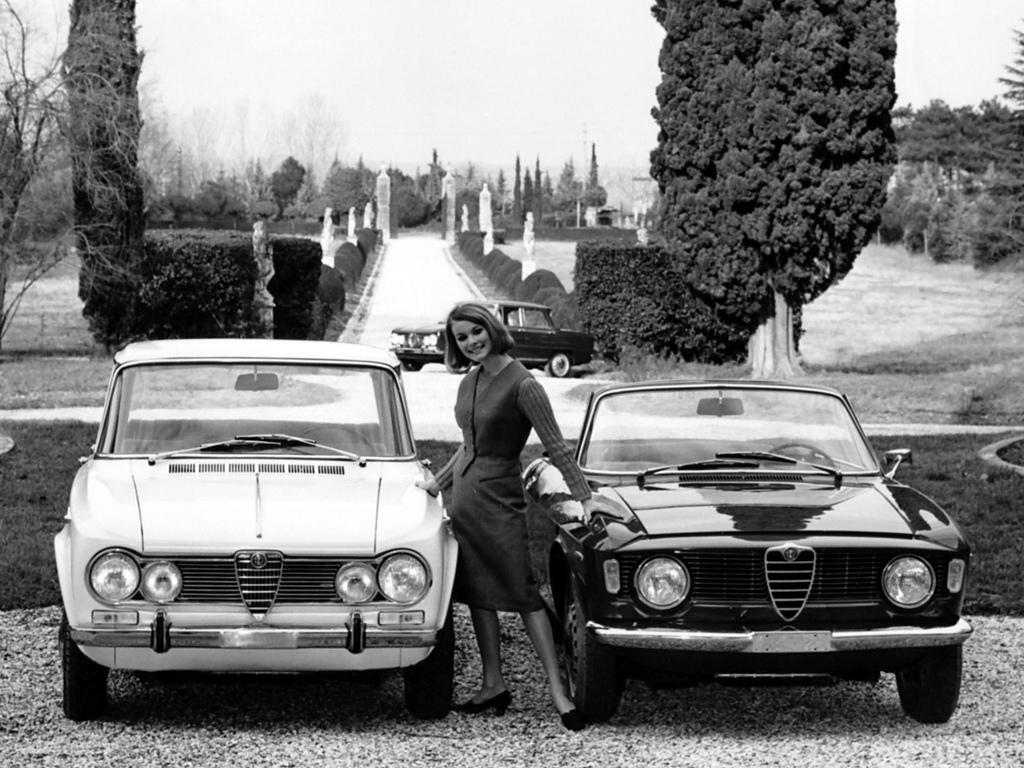
If the automotive world of the early 1960s was a black-and-white photograph of utilitarian transport and fragile sports cars, the arrival of the Alfa Romeo Giulia (Tipo 105) was a splash of vibrant, Rosso Corsa paint across the canvas. Replacing the beloved but aging Giulietta, the Giulia series did not merely evolve the concept of the small Italian performance car; it revolutionized it, effectively inventing the modern sports sedan and cementing the Gran Turismo coupe as an attainable dream for the middle class. Unveiled in 1962 at the Monza Autodromo, the Giulia was a declaration of engineering supremacy from Arese. It was a platform that spawned two distinct but spiritually identical lineages: the boxy, aerodynamic Giulia Berlina (sedan) and the breathtakingly beautiful Giulia GT (coupe). Together, they formed a dynasty that would rule European roads and racetracks for nearly fifteen years, fending off challenges from the nascent BMW “Neue Klasse” and the sophisticated Lancia Fulvia.
To understand the genius of the Tipo 105, one must look past the sheet metal and into its heart. The Giulia was built around the legendary all-aluminium, twin-cam inline-four engine—the Bialbero. Designed by Giuseppe Busso, this engineering jewel featured hemispherical combustion chambers, sodium-filled exhaust valves (a technology borrowed from aircraft engines), and a thirst for revs that made contemporary pushrod engines from Ford or BMC feel agricultural. Whether displacing 1300, 1600, 1750, or 2000cc, the engine was mated to a fully synchronized 5-speed manual gearbox—a rarity in an era when four speeds were the luxury standard and three were common.
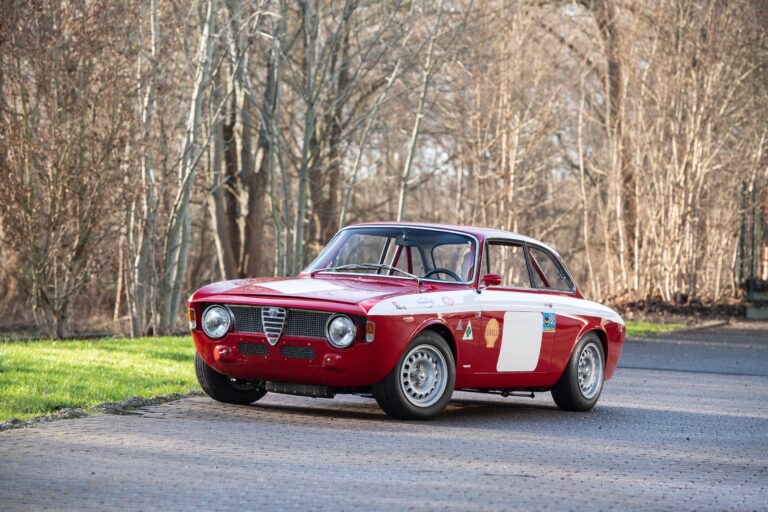
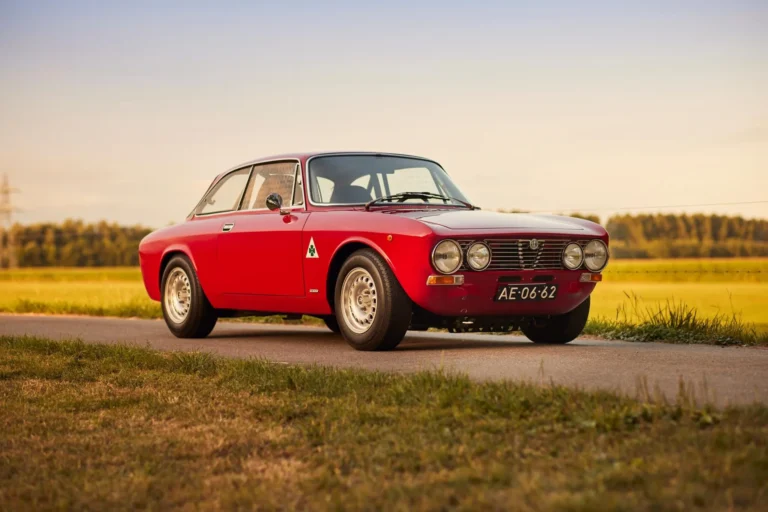
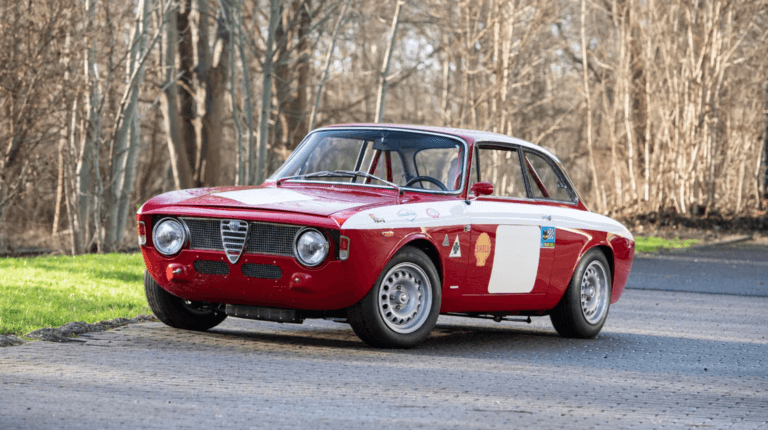
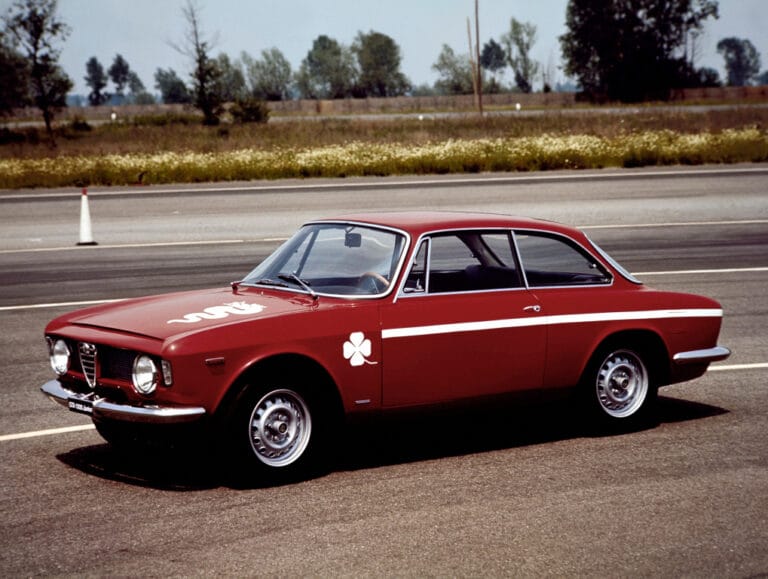
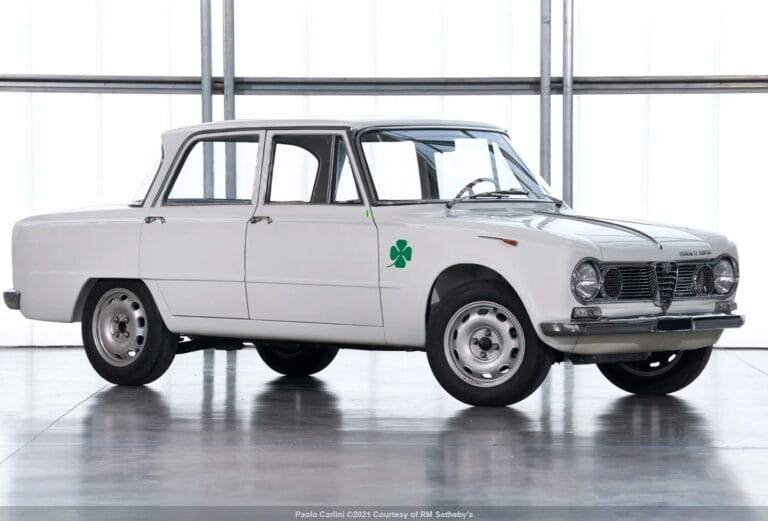
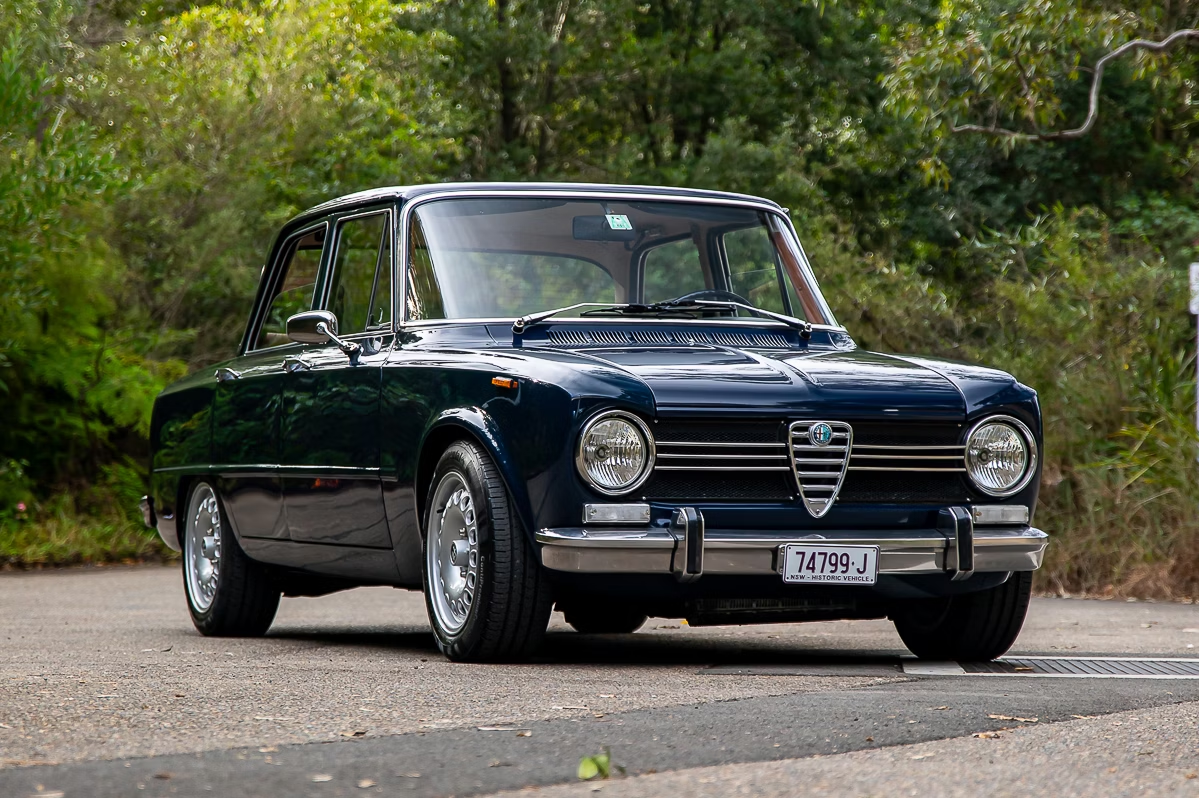
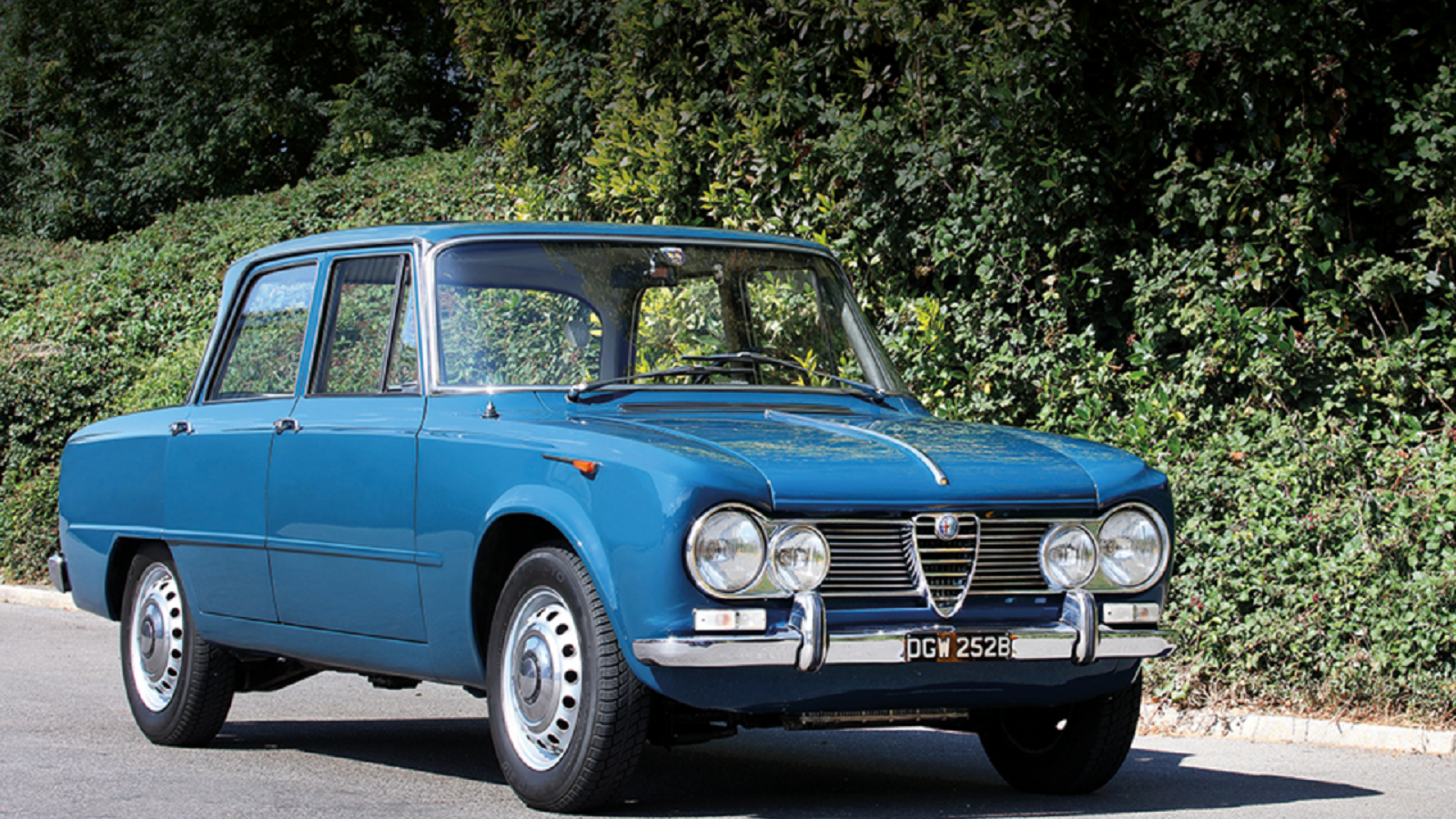
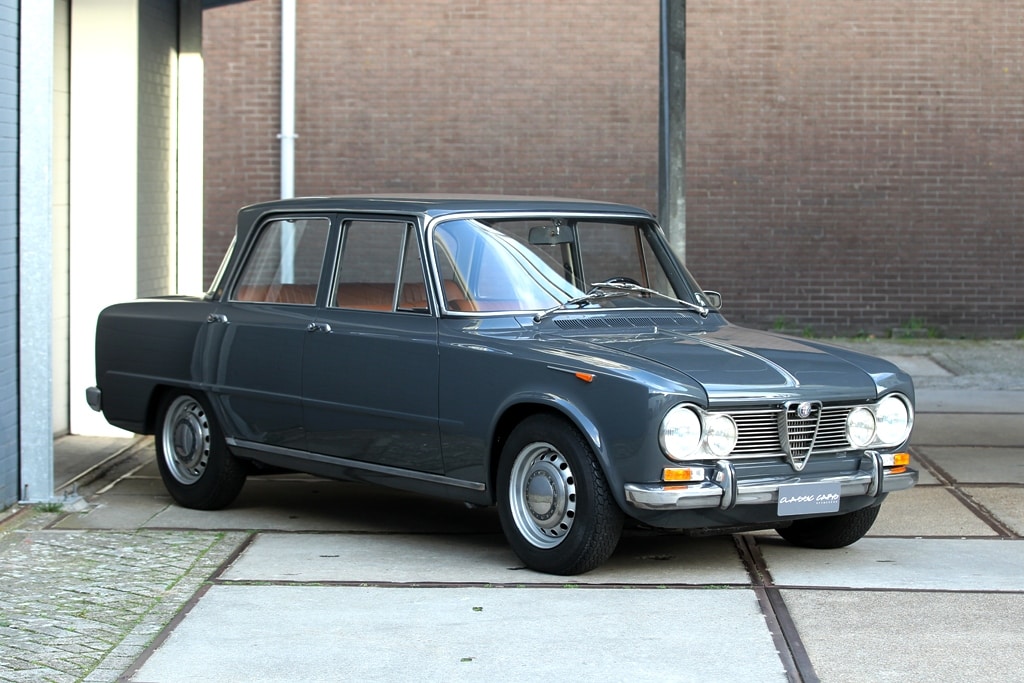
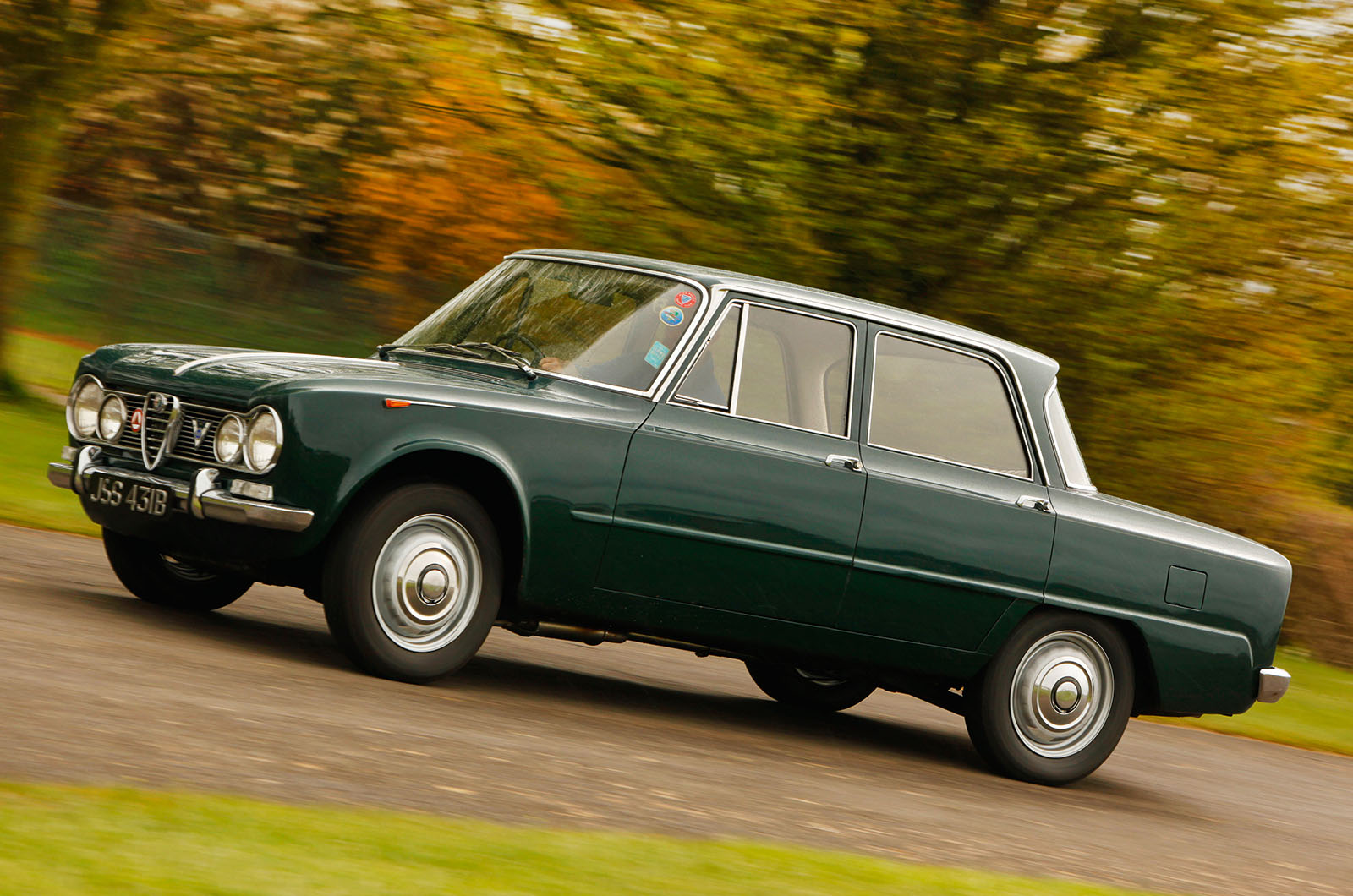
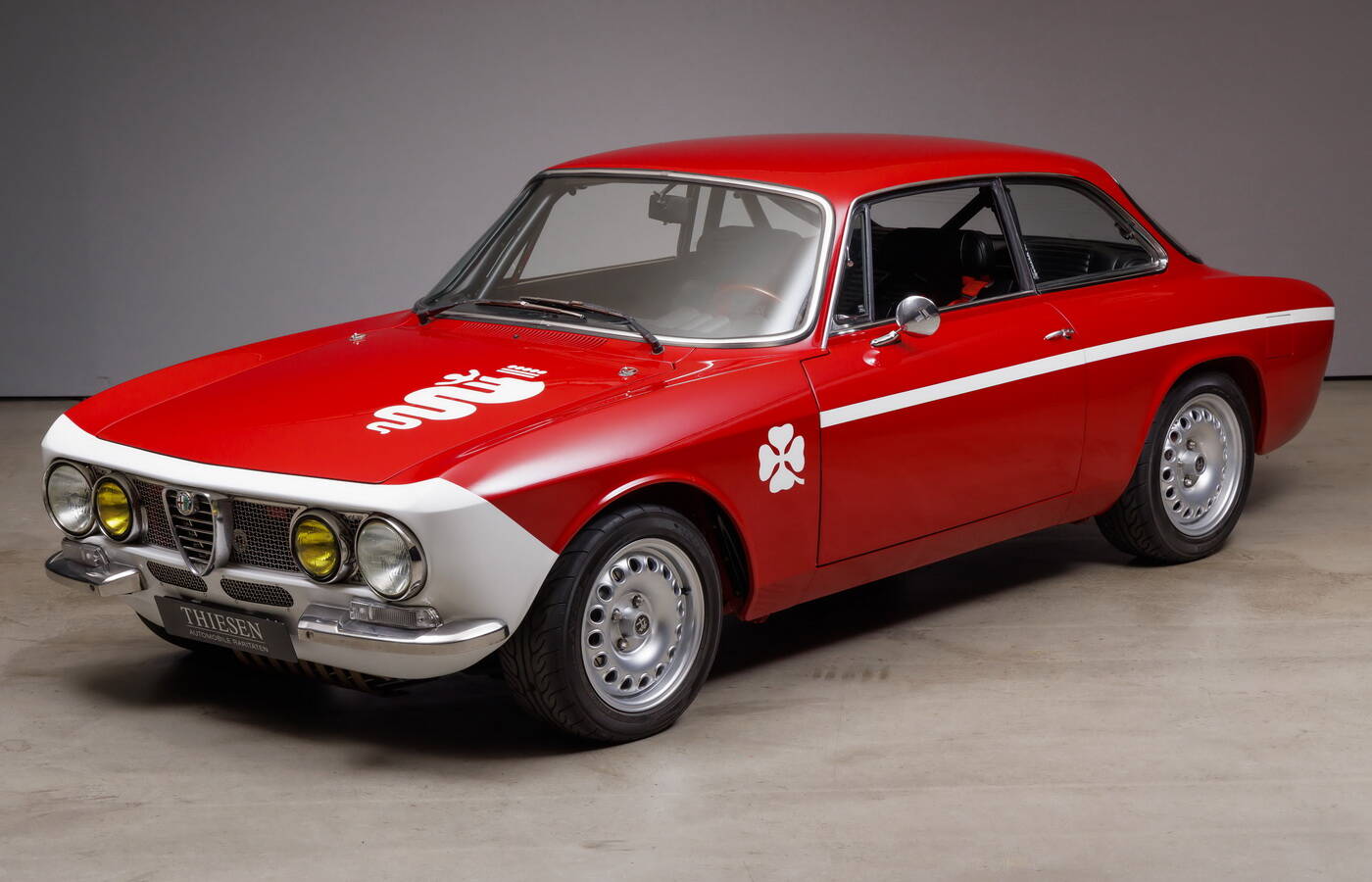
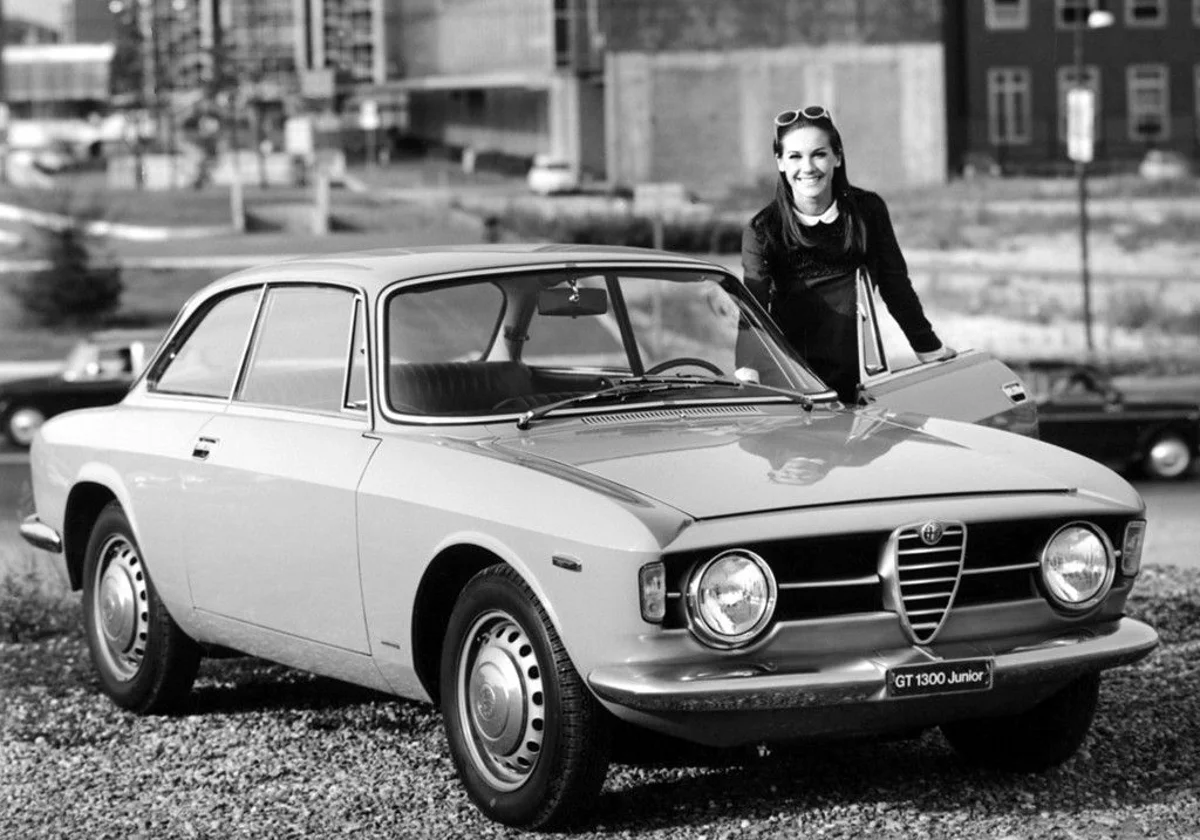
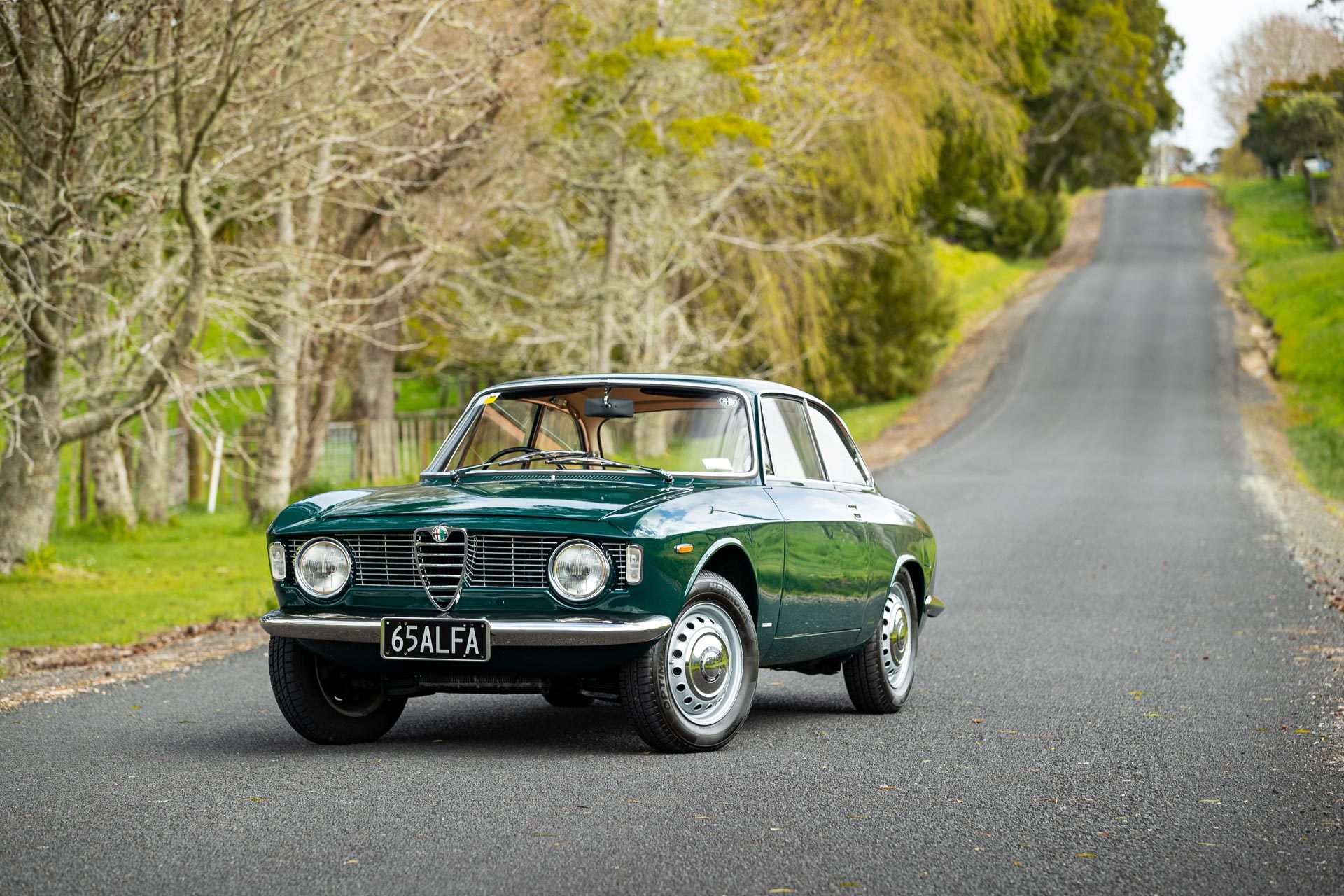
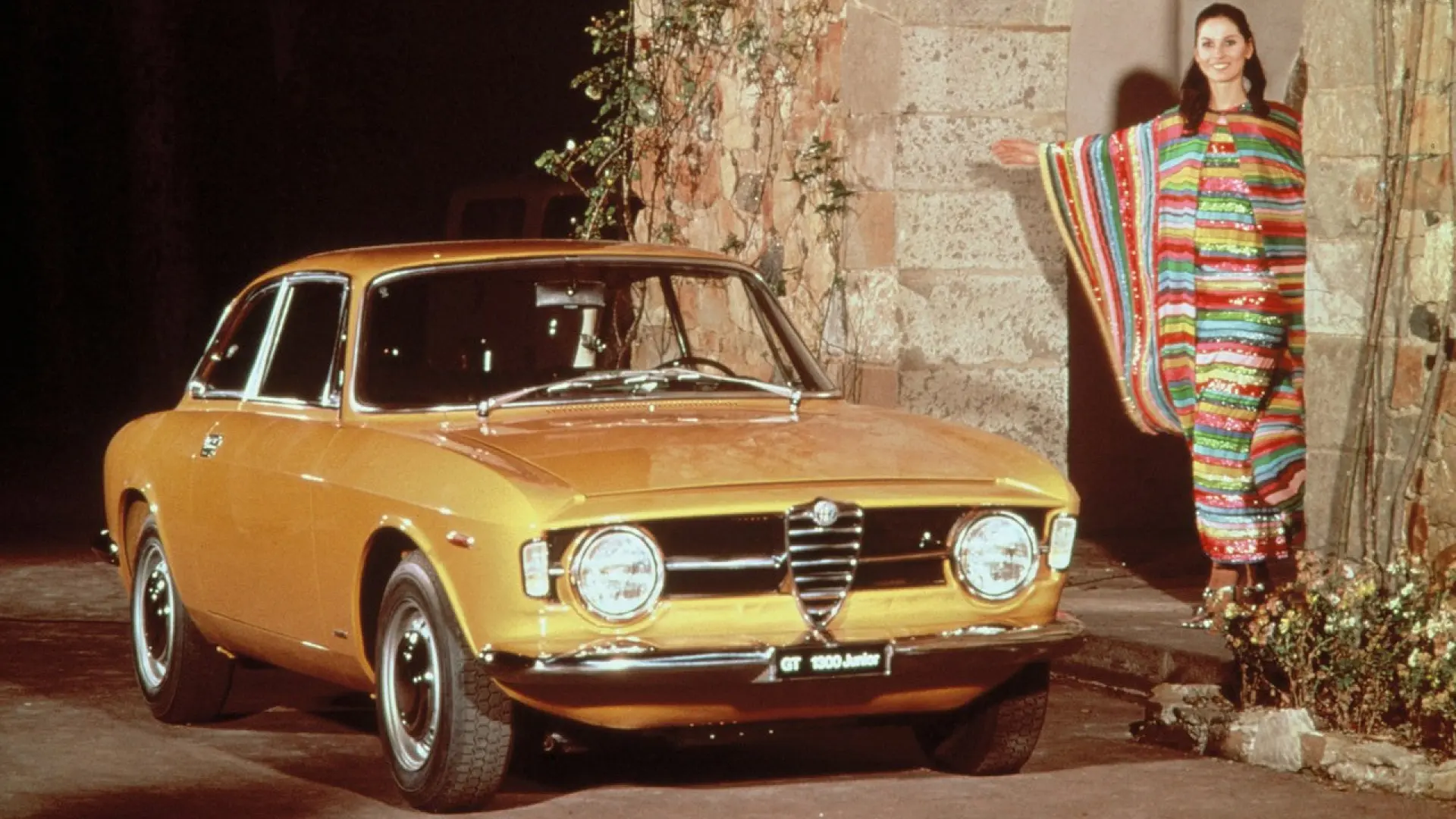
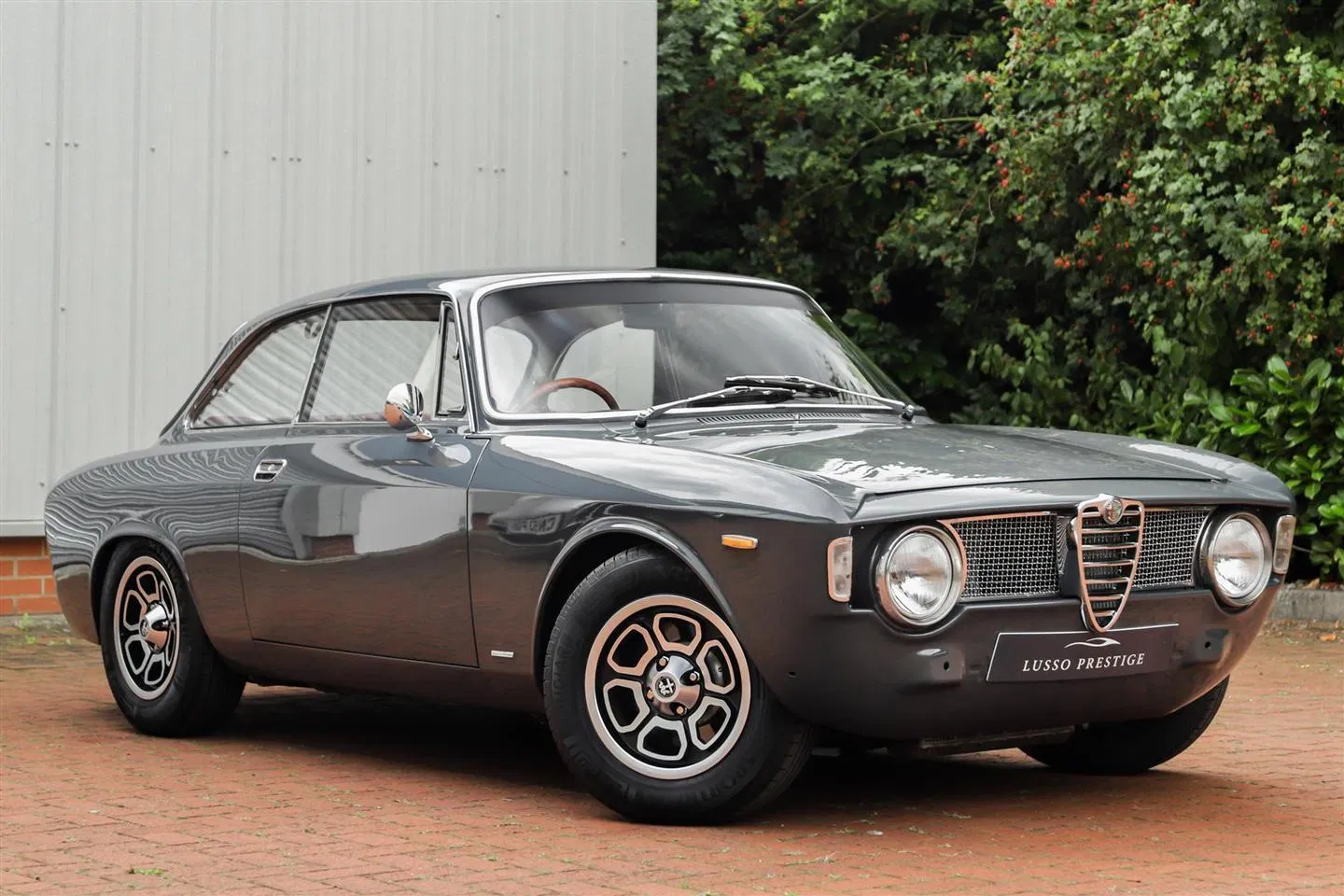
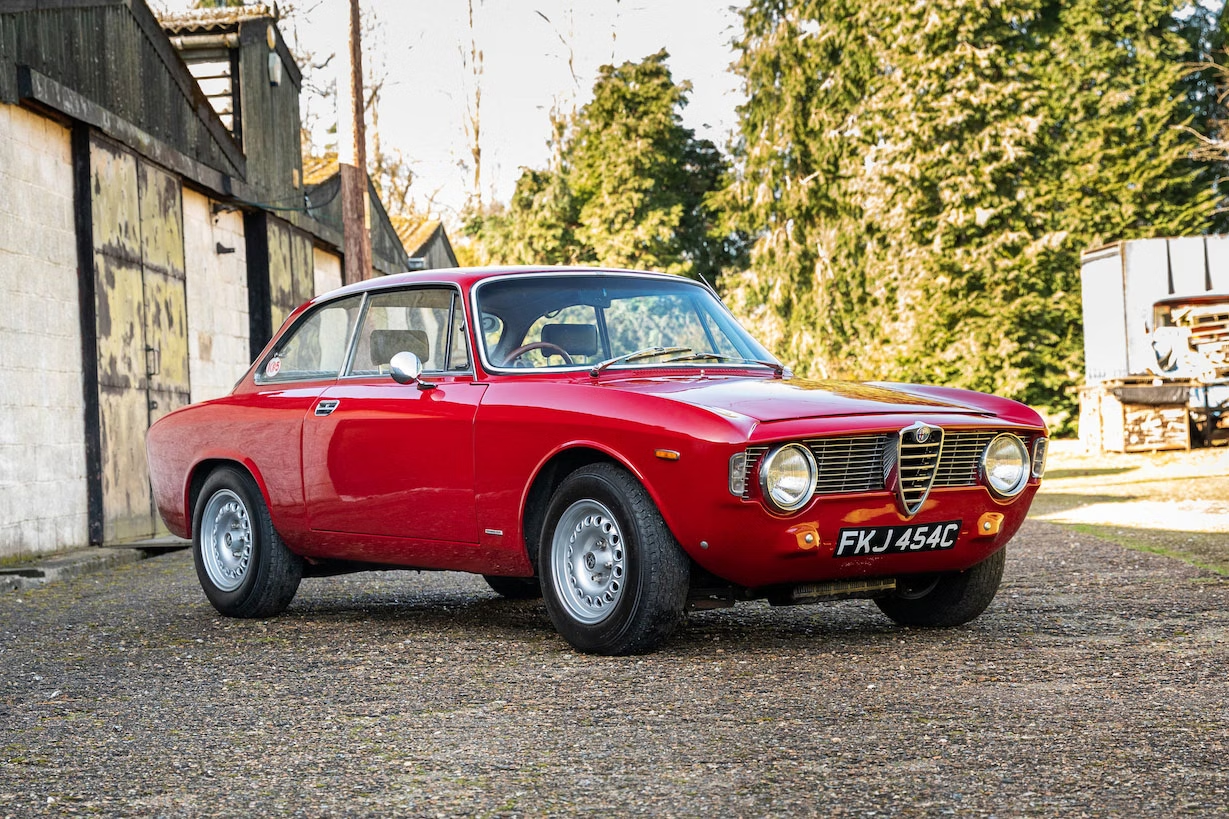
The design language of the two body styles could not have been more different, yet both were masterpieces of their respective genres. The Giulia Berlina, penned by Alfa’s in-house Centro Stile, was initially controversial. Its “three-box” shape appeared square and upright, but it was actually the result of pioneering wind tunnel testing. The scalloped rear deck, the cut-off “Kamm tail” (Coda Tronca), and the curved windshield resulted in a drag coefficient (Cd 0.34) lower than that of a Porsche 911 of the same era. It was “designed by the wind”, as the marketing claimed, hiding a race car chassis beneath the guise of a family taxi. Conversely, the Giulia GT was pure artistry. Designed by a young Giorgetto Giugiaro at Bertone, the coupe featured perfect proportions, thin pillars, and the iconic “step-nose” (scalino) hood on early models. It was elegant, aggressive, and timeless, a shape that looks as right today parked in Milan as it did in 1963.
Underneath, the chassis was a marvel of balance. The Giulia utilized a monocoque construction with independent front suspension and a live rear axle. However, calling it a “live axle” does it a disservice; Alfa located it with trailing arms and a T-arm to control lateral movement, creating a setup that offered predictable, drift-happy handling without the treacherous snap-oversteer of early independent rear setups. Braking was handled by Dunlop (later ATE) discs on all four wheels, ensuring that the Giulia stopped as well as it sprinted.
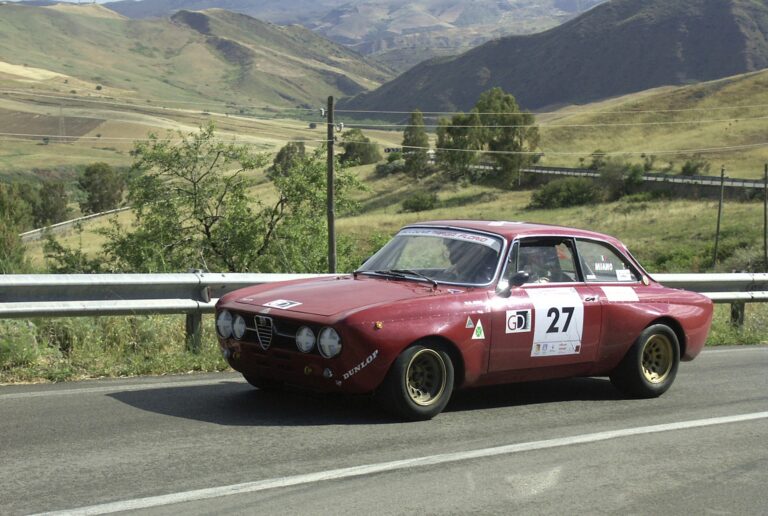
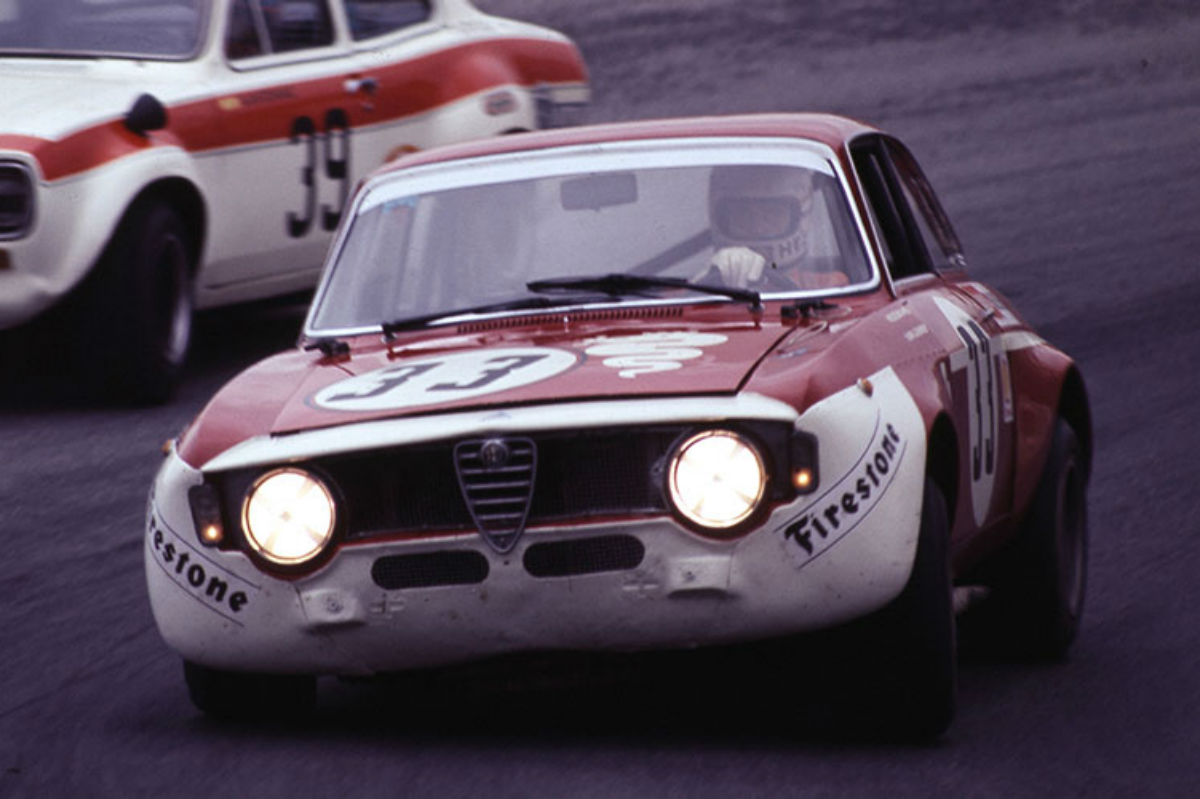
The impact of the Giulia on motorsport is the stuff of legend. While the Berlina famously served as the mount for Italy’s Polizia and Carabinieri—engaging in high-speed pursuits that fueled a sub-genre of Italian cinema—the coupe became the weapon of choice for Autodelta, Alfa’s racing division. The Giulia GTA (Gran Turismo Alleggerita), with its twin-spark cylinder head and aluminium body panels, decimated the European Touring Car Championship, winning seven consecutive titles. From the Nürburgring to Sebring (in the Trans-Am series under Horst Kwech), the little Alfas humiliated massive American V8s and German sedans on technical circuits. The “GTA” badge became synonymous with winning, creating a halo effect that drove sales of the standard GT Junior and GTV models to unprecedented heights.
But the Giulia’s success wasn’t just measured in trophies; it was measured in soul. It democratized the exotic. For the price of a sensible Rover or a Volvo, a driver got an engine that sang like a soprano at 6,000 rpm, a gearbox that sliced through ratios like a rifle bolt, and a chassis that communicated every granule of the road surface. It created the template for the “sports sedan” that BMW would later perfect with the 3-Series, but Alfa Romeo did it with a distinctly Latin flair—a blend of mechanical precision and emotional volatility.
The legacy of the Tipo 105/115 series is immense. It kept Alfa Romeo afloat and culturally relevant through the turbulent 1970s, bridging the gap between the sweet, small-displacement Giuliettas and the transaxle-equipped Alfettas that followed. It proved that a practical car didn’t have to be boring and that a beautiful car didn’t have to be fragile. Today, the Giulia GT is one of the most collectible classics in the world, with “Restomod” companies like Alfaholics reimagining them for the modern age, proving that the underlying engineering was nearly perfect. The Giulia Berlina, once discarded as a mere sedan, has gained a cult following for offering the same thrills in a stealthier package. In the pantheon of automobilia, the Giulia stands as the moment Alfa Romeo perfected its recipe: a race engine in a street car, designed with passion, driven with brio, and loved forever.
Portal
Model line
Model generation
Brand
Produced from
Vehicle category
Generation Overview
If the automotive world of the early 1960s was a black-and-white photograph of utilitarian transport and fragile sports cars, the arrival of the Alfa Romeo Giulia (Tipo 105) was a splash of vibrant, Rosso Corsa paint across the canvas. Replacing the beloved but aging Giulietta, the Giulia series did not merely evolve the concept of the small Italian performance car; it revolutionized it, effectively inventing the modern sports sedan and cementing the Gran Turismo coupe as an attainable dream for the middle class. Unveiled in 1962 at the Monza Autodromo, the Giulia was a declaration of engineering supremacy from Arese. It was a platform that spawned two distinct but spiritually identical lineages: the boxy, aerodynamic Giulia Berlina (sedan) and the breathtakingly beautiful Giulia GT (coupe). Together, they formed a dynasty that would rule European roads and racetracks for nearly fifteen years, fending off challenges from the nascent BMW “Neue Klasse” and the sophisticated Lancia Fulvia.
To understand the genius of the Tipo 105, one must look past the sheet metal and into its heart. The Giulia was built around the legendary all-aluminium, twin-cam inline-four engine—the Bialbero. Designed by Giuseppe Busso, this engineering jewel featured hemispherical combustion chambers, sodium-filled exhaust valves (a technology borrowed from aircraft engines), and a thirst for revs that made contemporary pushrod engines from Ford or BMC feel agricultural. Whether displacing 1300, 1600, 1750, or 2000cc, the engine was mated to a fully synchronized 5-speed manual gearbox—a rarity in an era when four speeds were the luxury standard and three were common.
The design language of the two body styles could not have been more different, yet both were masterpieces of their respective genres. The Giulia Berlina, penned by Alfa’s in-house Centro Stile, was initially controversial. Its “three-box” shape appeared square and upright, but it was actually the result of pioneering wind tunnel testing. The scalloped rear deck, the cut-off “Kamm tail” (Coda Tronca), and the curved windshield resulted in a drag coefficient (Cd 0.34) lower than that of a Porsche 911 of the same era. It was “designed by the wind”, as the marketing claimed, hiding a race car chassis beneath the guise of a family taxi. Conversely, the Giulia GT was pure artistry. Designed by a young Giorgetto Giugiaro at Bertone, the coupe featured perfect proportions, thin pillars, and the iconic “step-nose” (scalino) hood on early models. It was elegant, aggressive, and timeless, a shape that looks as right today parked in Milan as it did in 1963.
Underneath, the chassis was a marvel of balance. The Giulia utilized a monocoque construction with independent front suspension and a live rear axle. However, calling it a “live axle” does it a disservice; Alfa located it with trailing arms and a T-arm to control lateral movement, creating a setup that offered predictable, drift-happy handling without the treacherous snap-oversteer of early independent rear setups. Braking was handled by Dunlop (later ATE) discs on all four wheels, ensuring that the Giulia stopped as well as it sprinted.
The impact of the Giulia on motorsport is the stuff of legend. While the Berlina famously served as the mount for Italy’s Polizia and Carabinieri—engaging in high-speed pursuits that fueled a sub-genre of Italian cinema—the coupe became the weapon of choice for Autodelta, Alfa’s racing division. The Giulia GTA (Gran Turismo Alleggerita), with its twin-spark cylinder head and aluminium body panels, decimated the European Touring Car Championship, winning seven consecutive titles. From the Nürburgring to Sebring (in the Trans-Am series under Horst Kwech), the little Alfas humiliated massive American V8s and German sedans on technical circuits. The “GTA” badge became synonymous with winning, creating a halo effect that drove sales of the standard GT Junior and GTV models to unprecedented heights.
But the Giulia’s success wasn’t just measured in trophies; it was measured in soul. It democratized the exotic. For the price of a sensible Rover or a Volvo, a driver got an engine that sang like a soprano at 6,000 rpm, a gearbox that sliced through ratios like a rifle bolt, and a chassis that communicated every granule of the road surface. It created the template for the “sports sedan” that BMW would later perfect with the 3-Series, but Alfa Romeo did it with a distinctly Latin flair—a blend of mechanical precision and emotional volatility.
The legacy of the Tipo 105/115 series is immense. It kept Alfa Romeo afloat and culturally relevant through the turbulent 1970s, bridging the gap between the sweet, small-displacement Giuliettas and the transaxle-equipped Alfettas that followed. It proved that a practical car didn’t have to be boring and that a beautiful car didn’t have to be fragile. Today, the Giulia GT is one of the most collectible classics in the world, with “Restomod” companies like Alfaholics reimagining them for the modern age, proving that the underlying engineering was nearly perfect. The Giulia Berlina, once discarded as a mere sedan, has gained a cult following for offering the same thrills in a stealthier package. In the pantheon of automobilia, the Giulia stands as the moment Alfa Romeo perfected its recipe: a race engine in a street car, designed with passion, driven with brio, and loved forever.
Submodels