
Maserati 300S ‘Long Nose’
Brand
Produced from
Portal
Vehicle category
Model line
Predecessor
Successor
Submodel Overview
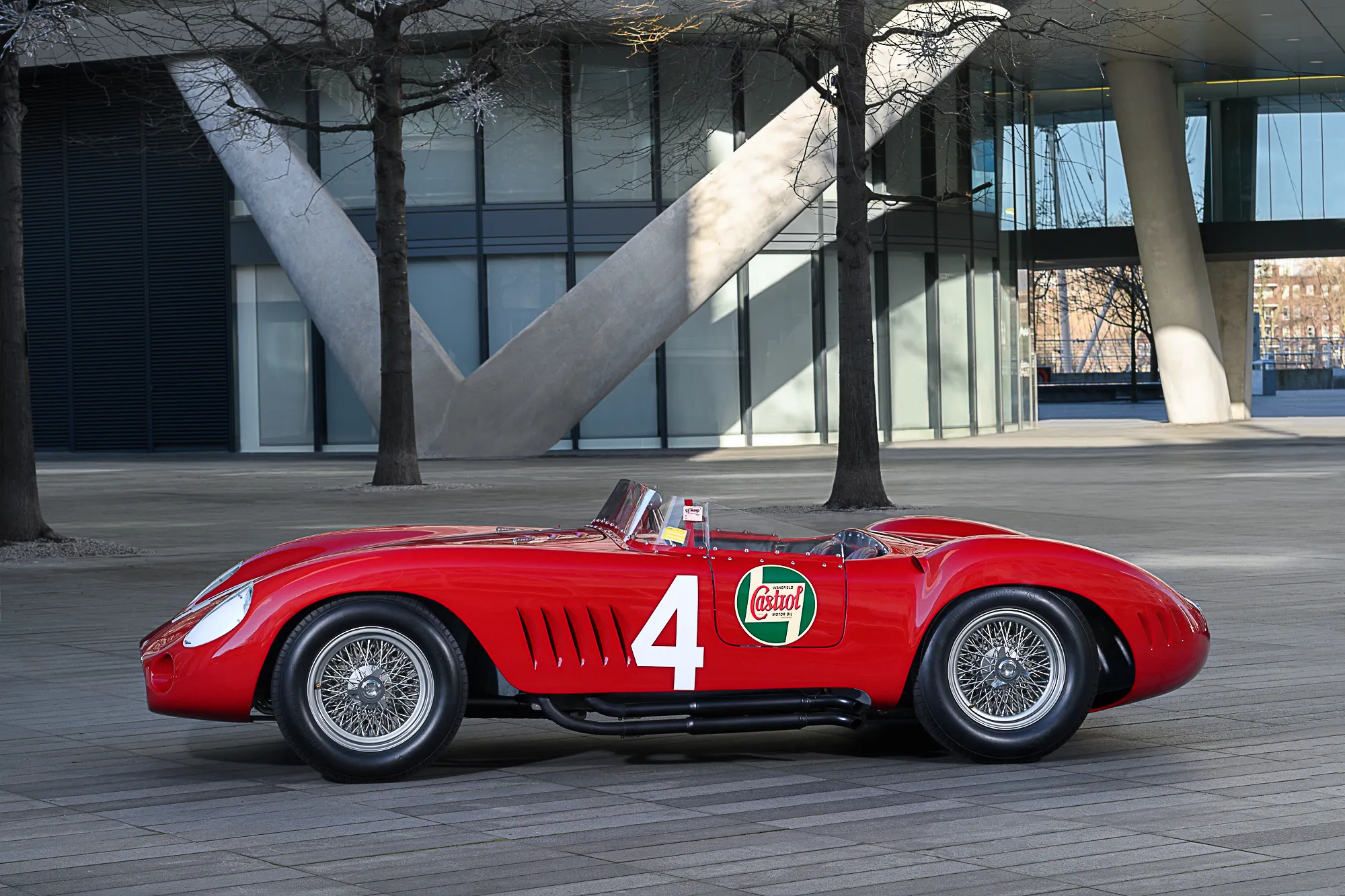
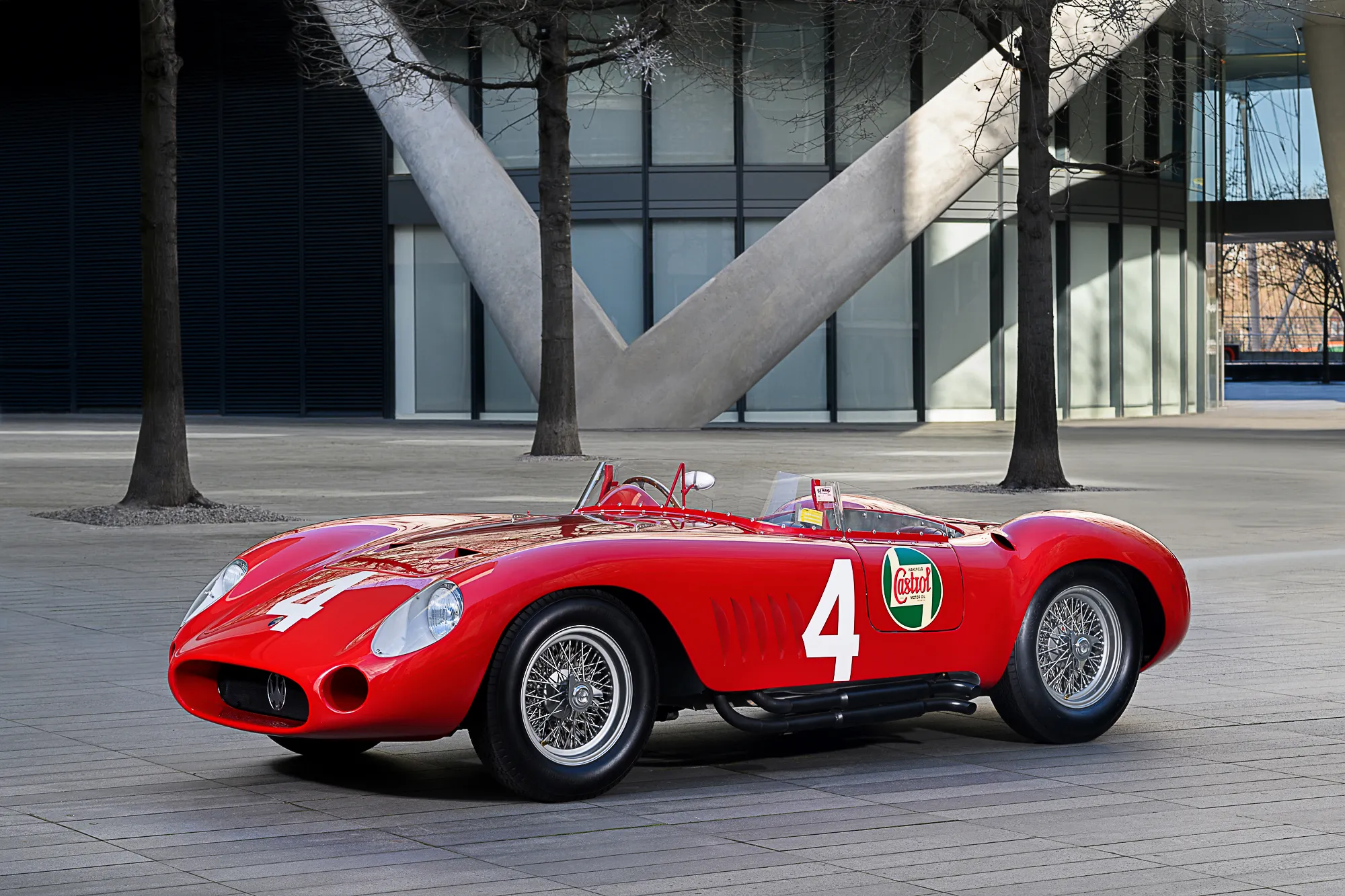
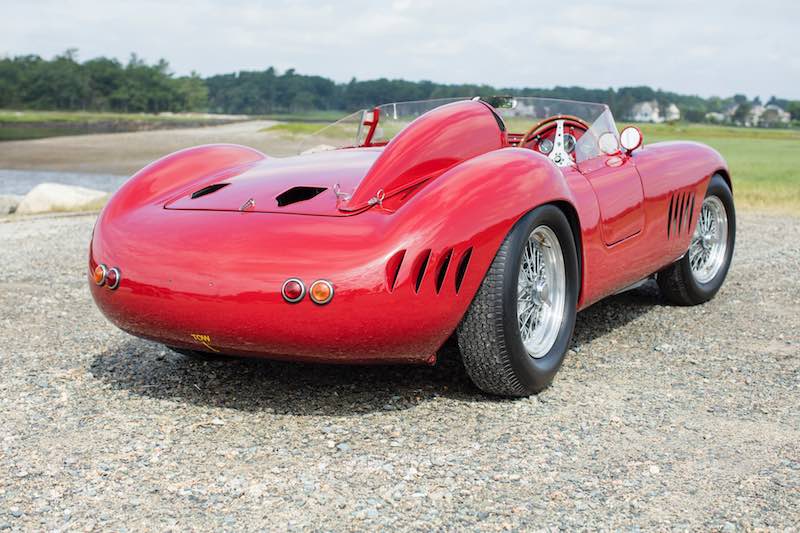
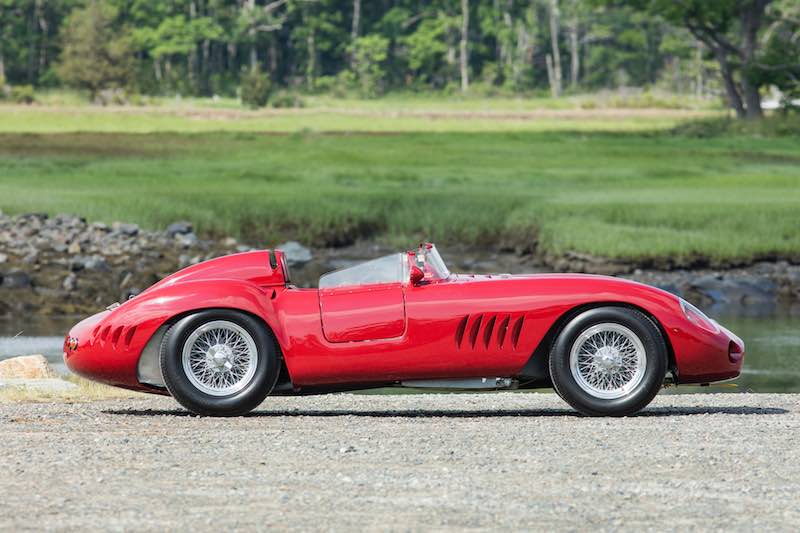
The mid-1950s World Sportscar Championship was a theater of relentless mechanical evolution, where the margin between absolute glory and terrifying tragedy was dictated by an endless horsepower and aerodynamic arms race. In 1955, Maserati had introduced the 300S, a sublime, 3.0-liter sports racer that utilized the DNA of the world-beating 250F Grand Prix car. It was immediately lauded for its telepathic chassis balance, but as the speeds at high-velocity circuits like Le Mans and Reims continued to climb, a perilous flaw emerged. The original, blunt ‘Short Nose’ bodywork acted like an airplane wing at triple-digit speeds, creating horrifying aerodynamic lift that rendered the steering perilously light. In Modena, the brilliant engineers Giulio Alfieri and Vittorio Bellentani realized that to maintain their assault against the muscular, four-cylinder Ferrari 860 Monza’s and the slippery, disc-braked Jaguar D-Type’s, they could not merely add horsepower; they had to cheat the wind. The magnificent result was the 1956 Maserati 300S ‘Long Nose’. It was an evolutionary masterstroke that transformed an already brilliant sports car into an aerodynamic work of art, widely considered by driving deities like Sir Stirling Moss to be the most perfectly balanced front-engined sports racer ever constructed.
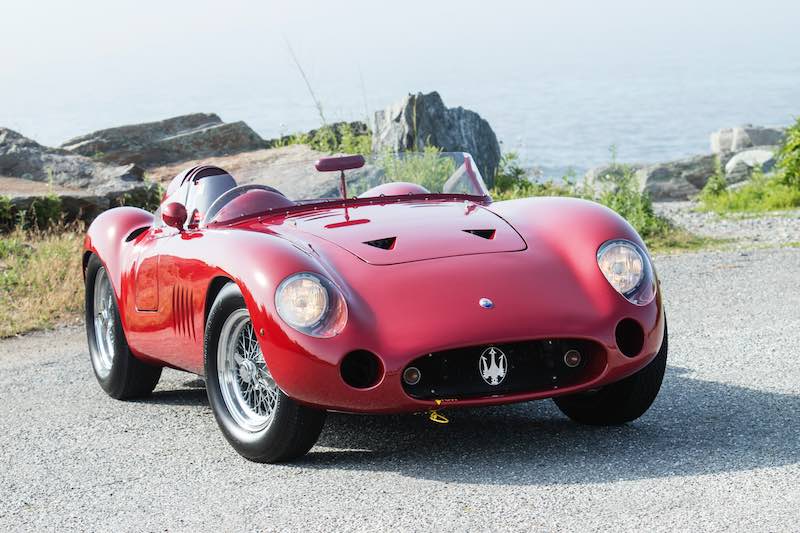
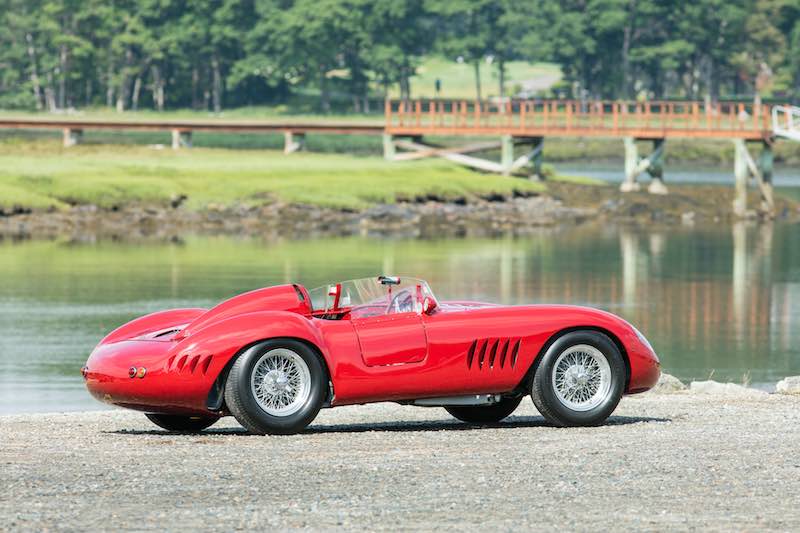
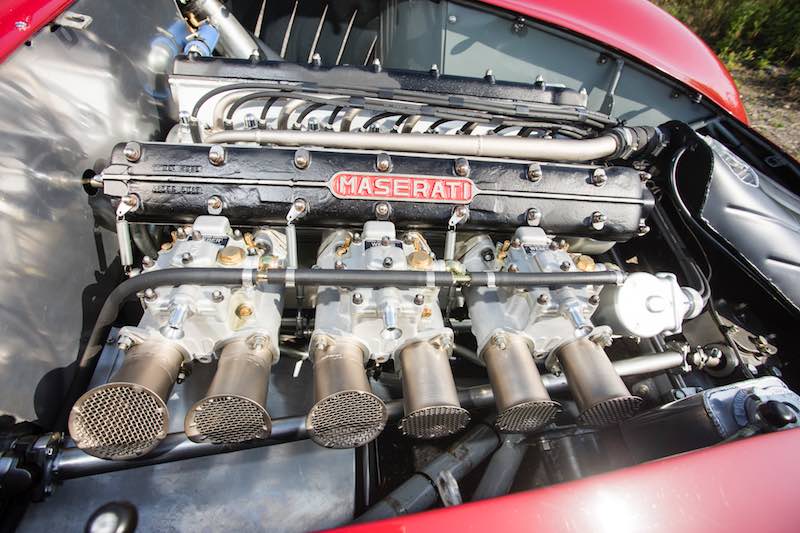
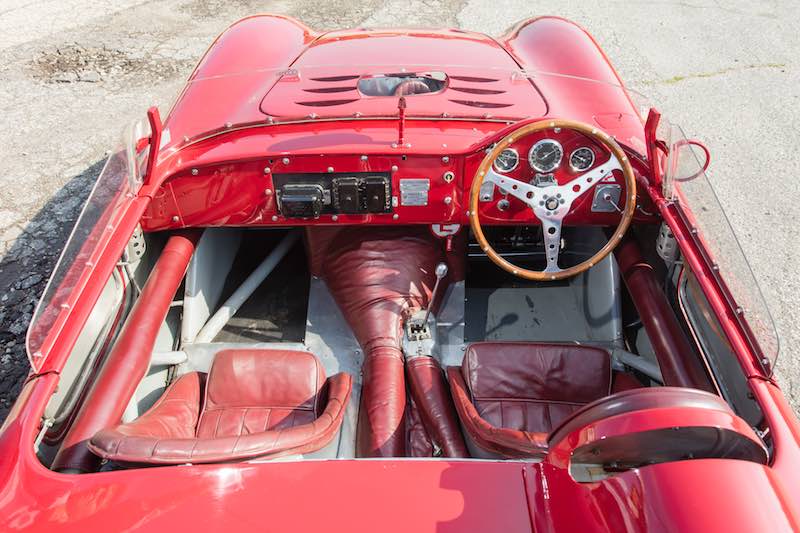
To peer beneath the astonishingly beautiful, hand-hammered aluminium skin of the ‘Long Nose’ is to witness the absolute zenith of Maserati’s inline-six engineering. Medardo Fantuzzi’s coachbuilding workshop was tasked with curing the aerodynamic woes of the earlier cars. By extending the front overhang by several inches, lowering the bonnet line, and reshaping the front fenders, Fantuzzi masterfully guided the turbulent air over the car, pinning the front wheels to the tarmac and dramatically reducing high-speed drag. Beneath this wind-cheating sculpture lay a complex, lightweight tubular trellis frame. The absolute genius of the 300S’s dynamic superiority was its transaxle layout. Maserati moved the four-speed gearbox to the rear, mounting it in unit with the limited-slip differential and the De Dion rear axle. This eradicated the nose-heavy understeer common to front-engined cars, blessing the ‘Long Nose’ with a mid-engine-like 50/50 weight distribution and a beautifully low polar moment of inertia. The beating heart of the machine was a 3.0-liter, all-alloy inline-six, breathing deeply through three massive twin-choke Weber 45 DCOE carburettors. Featuring gear-driven twin overhead camshafts and a complex twin-spark ignition system, this grand prix-derived jewel produced a highly tractable 260 brake horsepower. Stopping power was managed by massive, deeply finned aluminium drum brakes that peeked through the exquisite Borrani wire wheels. Inside, the right-hand-drive cockpit was a spartan, heat-soaked crucible; the driver sat splay-legged over the transmission tunnel, exposed to the deafening, tearing-canvas mechanical symphony of the twin-cam six.
The 1956 season marked the absolute competitive zenith of the 300S ‘Long Nose’. While it surrendered outright top speed to the Jaguar D-Type on the Mulsanne Straight, on technical, undulating circuits where chassis communication was paramount, the Maserati was an untouchable weapon. It was a car that famously flattered its driver, telegraphing its limits with such absolute clarity that it could be danced through high-speed sweepers in a glorious, controllable four-wheel drift. This superiority was brutally demonstrated at the season-opening 1000 km of Buenos Aires, where Sir Stirling Moss and Carlos Menditeguy utterly decimated the field. However, the ‘Long Nose’ secured its immortal mythological status at the daunting 1956 Nürburgring 1000km. On the treacherous, 14-mile Nordschleife, Moss drove what is widely considered one of the greatest races of his career. Sharing driving duties with Jean Behra, Piero Taruffi, and Harry Schell, Moss utilized the sublime balance of the transaxle Maserati to hunt down and defeat Juan Manuel Fangio in the vastly more powerful factory Ferrari 860 Monza. It was a masterclass in finesse overcoming brute force. Throughout the year, the ‘Long Nose’ 300S fought Ferrari to a bitter standstill, agonizingly losing the World Sportscar Championship manufacturer’s title to Maranello by a mere two points at the final, grueling round in Sweden. Commercially, it was the ultimate privateer weapon; wealthy gentlemen racers clamored to purchase the forgiving, unburstable machine, filling grids from European hillclimbs to American SCCA airfield circuits.
The legacy of the 1956 Maserati 300S ‘Long Nose’ is securely cemented at the very summit of automotive royalty. It represents the absolute, harmonious peak of Maserati’s inline-six development before the escalating horsepower wars forced the Trident to build the V8-powered 450S—a car that possessed terrifying straight-line speed but entirely lost the delicate, communicative magic of its predecessor. The ‘Long Nose’ validated the transaxle architecture in endurance racing and proved that mathematical aerodynamic refinement was just as crucial as outright displacement. Today, the surviving ‘Long Nose’ examples are among the most fiercely coveted, multi-million-dollar unicorns in the classic car world, universally adored by historic racers at the Goodwood Revival for their forgiving, tactile brilliance. It stands immortal as the ultimate rolling sculpture of 1950s Modena—a wind-cheating masterpiece that allowed Stirling Moss to dance through the Green Hell.
Brand
Produced from
Portal
Vehicle category
Model line
Predecessor
Sucessor
Brand
Produced from
Portal
Vehicle category
Model line
Model generation
Predecessor
Sucessor
Submodel Overview
The mid-1950s World Sportscar Championship was a theater of relentless mechanical evolution, where the margin between absolute glory and terrifying tragedy was dictated by an endless horsepower and aerodynamic arms race. In 1955, Maserati had introduced the 300S, a sublime, 3.0-liter sports racer that utilized the DNA of the world-beating 250F Grand Prix car. It was immediately lauded for its telepathic chassis balance, but as the speeds at high-velocity circuits like Le Mans and Reims continued to climb, a perilous flaw emerged. The original, blunt ‘Short Nose’ bodywork acted like an airplane wing at triple-digit speeds, creating horrifying aerodynamic lift that rendered the steering perilously light. In Modena, the brilliant engineers Giulio Alfieri and Vittorio Bellentani realized that to maintain their assault against the muscular, four-cylinder Ferrari 860 Monza’s and the slippery, disc-braked Jaguar D-Type’s, they could not merely add horsepower; they had to cheat the wind. The magnificent result was the 1956 Maserati 300S ‘Long Nose’. It was an evolutionary masterstroke that transformed an already brilliant sports car into an aerodynamic work of art, widely considered by driving deities like Sir Stirling Moss to be the most perfectly balanced front-engined sports racer ever constructed.
To peer beneath the astonishingly beautiful, hand-hammered aluminium skin of the ‘Long Nose’ is to witness the absolute zenith of Maserati’s inline-six engineering. Medardo Fantuzzi’s coachbuilding workshop was tasked with curing the aerodynamic woes of the earlier cars. By extending the front overhang by several inches, lowering the bonnet line, and reshaping the front fenders, Fantuzzi masterfully guided the turbulent air over the car, pinning the front wheels to the tarmac and dramatically reducing high-speed drag. Beneath this wind-cheating sculpture lay a complex, lightweight tubular trellis frame. The absolute genius of the 300S’s dynamic superiority was its transaxle layout. Maserati moved the four-speed gearbox to the rear, mounting it in unit with the limited-slip differential and the De Dion rear axle. This eradicated the nose-heavy understeer common to front-engined cars, blessing the ‘Long Nose’ with a mid-engine-like 50/50 weight distribution and a beautifully low polar moment of inertia. The beating heart of the machine was a 3.0-liter, all-alloy inline-six, breathing deeply through three massive twin-choke Weber 45 DCOE carburettors. Featuring gear-driven twin overhead camshafts and a complex twin-spark ignition system, this grand prix-derived jewel produced a highly tractable 260 brake horsepower. Stopping power was managed by massive, deeply finned aluminium drum brakes that peeked through the exquisite Borrani wire wheels. Inside, the right-hand-drive cockpit was a spartan, heat-soaked crucible; the driver sat splay-legged over the transmission tunnel, exposed to the deafening, tearing-canvas mechanical symphony of the twin-cam six.
The 1956 season marked the absolute competitive zenith of the 300S ‘Long Nose’. While it surrendered outright top speed to the Jaguar D-Type on the Mulsanne Straight, on technical, undulating circuits where chassis communication was paramount, the Maserati was an untouchable weapon. It was a car that famously flattered its driver, telegraphing its limits with such absolute clarity that it could be danced through high-speed sweepers in a glorious, controllable four-wheel drift. This superiority was brutally demonstrated at the season-opening 1000 km of Buenos Aires, where Sir Stirling Moss and Carlos Menditeguy utterly decimated the field. However, the ‘Long Nose’ secured its immortal mythological status at the daunting 1956 Nürburgring 1000km. On the treacherous, 14-mile Nordschleife, Moss drove what is widely considered one of the greatest races of his career. Sharing driving duties with Jean Behra, Piero Taruffi, and Harry Schell, Moss utilized the sublime balance of the transaxle Maserati to hunt down and defeat Juan Manuel Fangio in the vastly more powerful factory Ferrari 860 Monza. It was a masterclass in finesse overcoming brute force. Throughout the year, the ‘Long Nose’ 300S fought Ferrari to a bitter standstill, agonizingly losing the World Sportscar Championship manufacturer’s title to Maranello by a mere two points at the final, grueling round in Sweden. Commercially, it was the ultimate privateer weapon; wealthy gentlemen racers clamored to purchase the forgiving, unburstable machine, filling grids from European hillclimbs to American SCCA airfield circuits.
The legacy of the 1956 Maserati 300S ‘Long Nose’ is securely cemented at the very summit of automotive royalty. It represents the absolute, harmonious peak of Maserati’s inline-six development before the escalating horsepower wars forced the Trident to build the V8-powered 450S—a car that possessed terrifying straight-line speed but entirely lost the delicate, communicative magic of its predecessor. The ‘Long Nose’ validated the transaxle architecture in endurance racing and proved that mathematical aerodynamic refinement was just as crucial as outright displacement. Today, the surviving ‘Long Nose’ examples are among the most fiercely coveted, multi-million-dollar unicorns in the classic car world, universally adored by historic racers at the Goodwood Revival for their forgiving, tactile brilliance. It stands immortal as the ultimate rolling sculpture of 1950s Modena—a wind-cheating masterpiece that allowed Stirling Moss to dance through the Green Hell.
Tech Specs
Technical Specifications
Tech Specs
Technical Specifications
Engine
01
03
Internal combustion engine
Configuration
Maserati Tipo 9, Inline-6
Location
Front-Mid, longitudinally mounted
Construction
Aluminium alloy block and head
Displacement (cc)
2,992 cc
Displacement (cu in)
182.6 cu in
Compression
9.5:1
Bore x Stroke
84.0 mm x 90.0 mm
Valvetrain
2 valves per cylinder, DOHC
Fuel feed
3 x Weber 45 DCO3 carburetors
Lubrication
Dry sump
Aspiration
Naturally aspirated
Output
Power (hp)
260 hp
Power (kW)
194 kW
Max power at
6,500 RPM
Torque (Nm)
300 Nm
Torque (ft lbs)
221 ft lbs
Max torque at
4,250 RPM
Drivetrain
02
03
Chassis
Type
Multi-tubular trellis spaceframe
Material
Steel
Body
Material
Aluminium
Transmission
Gearbox
Maserati 4-speed manual (Transaxle mounted)
Drive
Rear Wheel Drive (Limited Slip Differential)
Suspension
Front
Independent, double wishbones, coil springs, telescopic dampers, anti-roll bar
Rear
De Dion tube, transverse semi-elliptic leaf spring, telescopic dampers
Steering
Type
Worm and sector, unassisted
Brakes
Front
Finned Aluminium Drum brakes Ø330 mm
Rear
Finned Aluminium Drum brakes Ø330 mm
Wheels
Front
5" x 16" (Borrani wire wheels)
Rear
5.5" x 16" (Borrani wire wheels)
Tires
Front
6.00-16
Rear
6.50-16
Dimensions and performance
03
03
Dimensions
Length (mm)
4,250 mm
Length (in)
167.3 in
Width (mm)
1,550 mm
Width (in)
61.0 in
Height (mm)
980 mm
Height (in)
38.6 in
Wheelbase (mm)
2,310 mm
Wheelbase (in)
90.9 in
Weight (kg)
780 kg
Weight (lbs)
1,720 lbs
Performance
Power to weight
~0.33 hp/kg
Top speed (km/h)
290 km/h
Top speed (mph)
180 mph
0-100 km/h (0-60 mph)
~5.2 s