
McLaren M8C
Brand
Produced from
Vehicle category
Portal
Model line
Model generation
Generation Overview
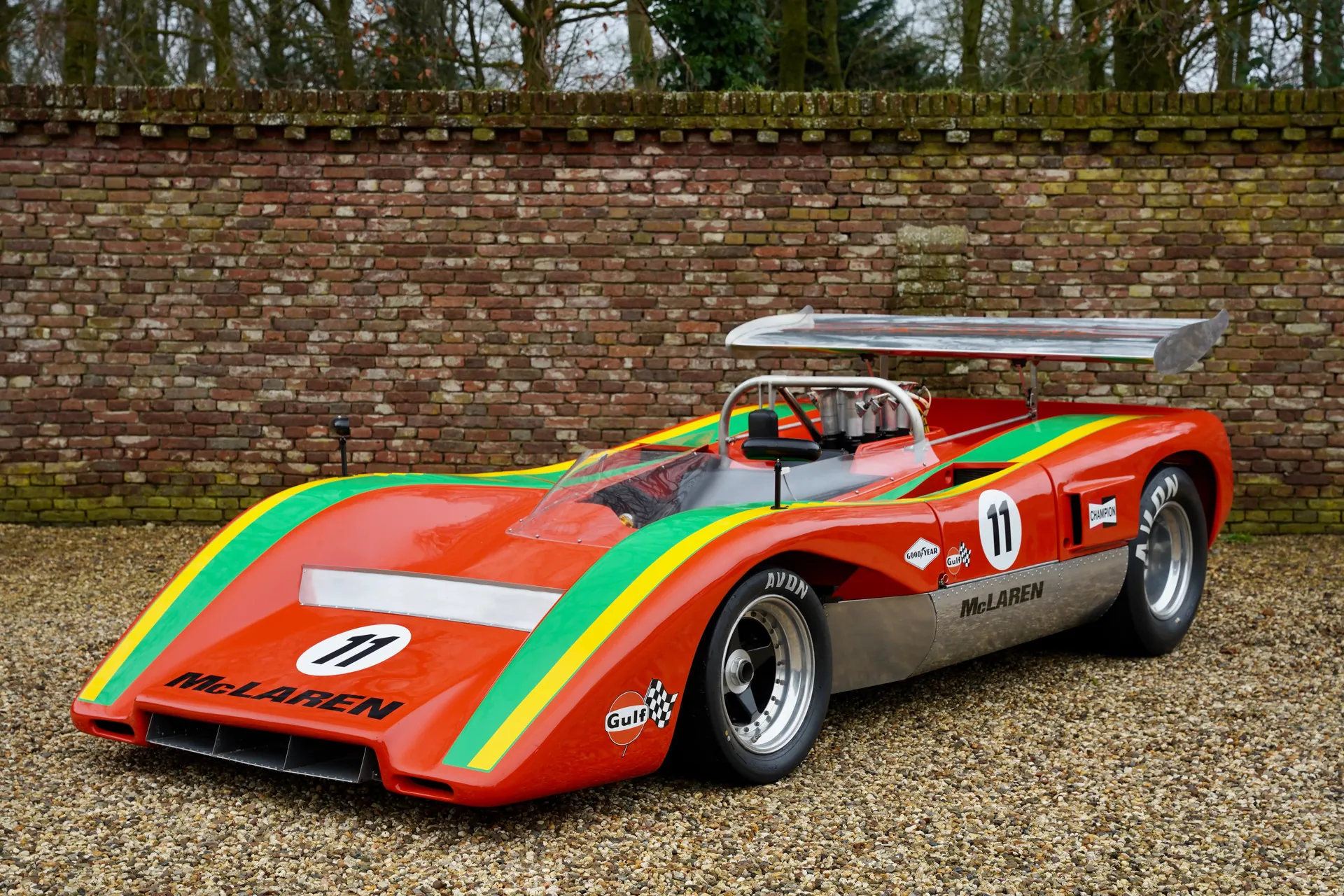
By the dawn of the 1970s, the Canadian-American Challenge Cup had escalated into a relentless, high-stakes arms race, unequivocally ruled by the papaya-orange works McLarens. Bruce McLaren and Denny Hulme had just completed their historic, devastating 1969 sweep in the M8B, winning every single race on the calendar. For the wealthy privateer looking over the pit wall, the message was stark: if you wanted to win, or even merely survive, you needed a McLaren. However, the bespoke, highly stressed architecture of the works cars was deemed too complex and demanding for independent teams to run without factory support. Enter the 1970 McLaren M8C. Engineered in collaboration with Peter Agg’s Trojan firm—the official manufacturer of customer McLarens based in Croydon—the M8C was the democratized embodiment of Bruce’s Can-Am dream. It arrived to do battle not just in the North American Can-Am series against Eric Broadley’s ubiquitous Lola T160 and T163 customer cars, but also across the Atlantic in the burgeoning European Interserie, fighting against agile Porsche 908s and Ferrari 512s. The M8C was designed to be the ultimate off-the-shelf monster, a turnkey leviathan for the brave.
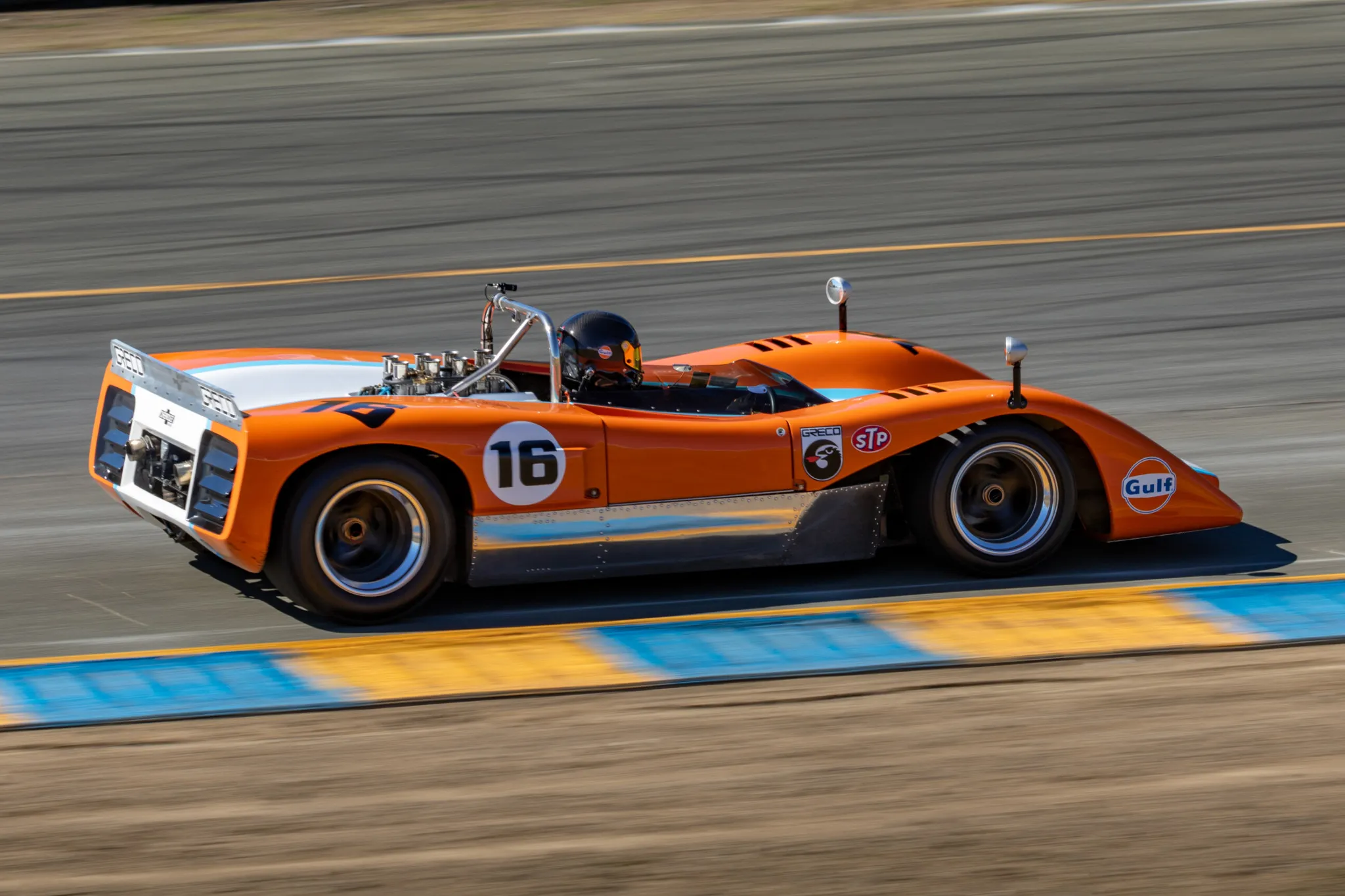
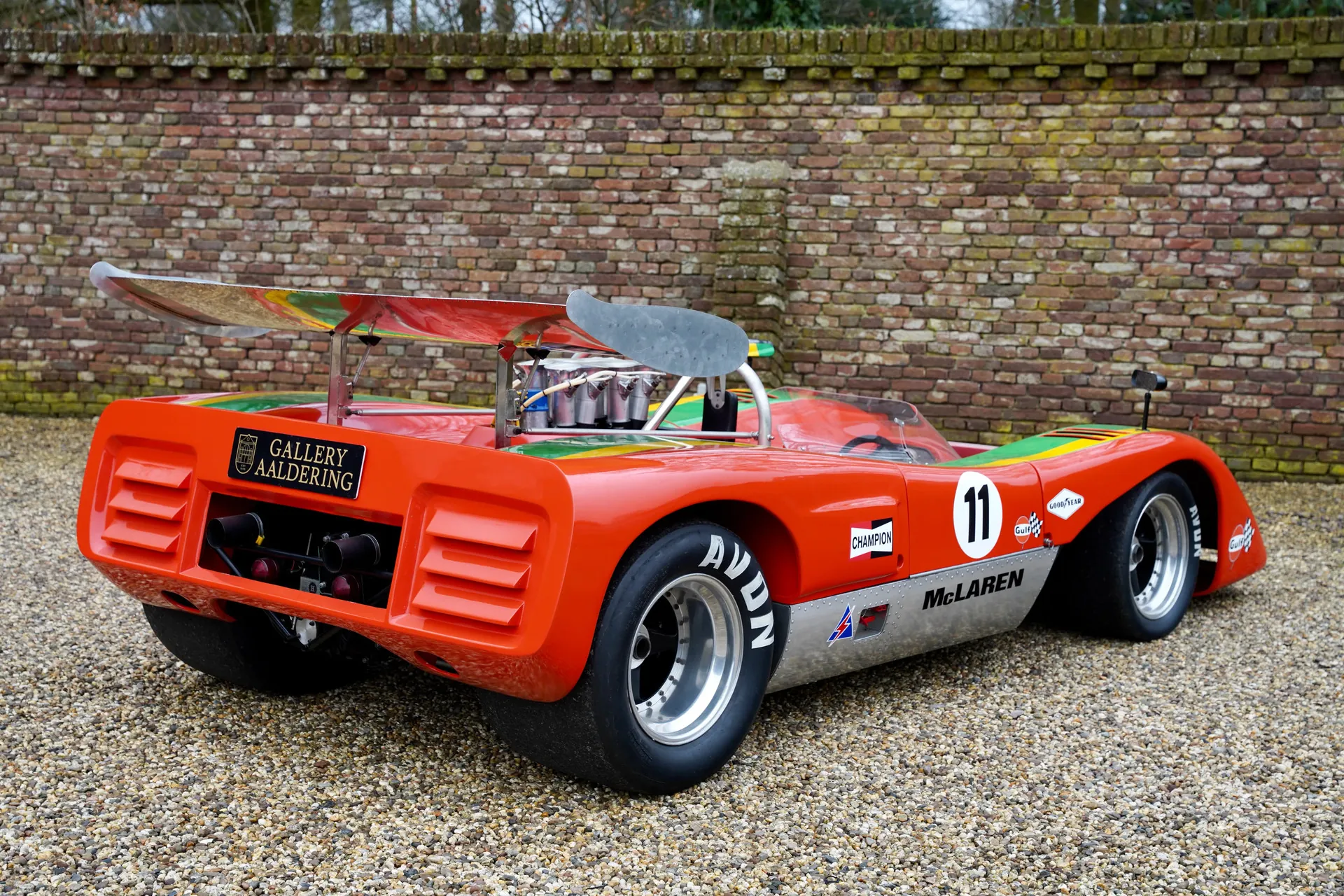
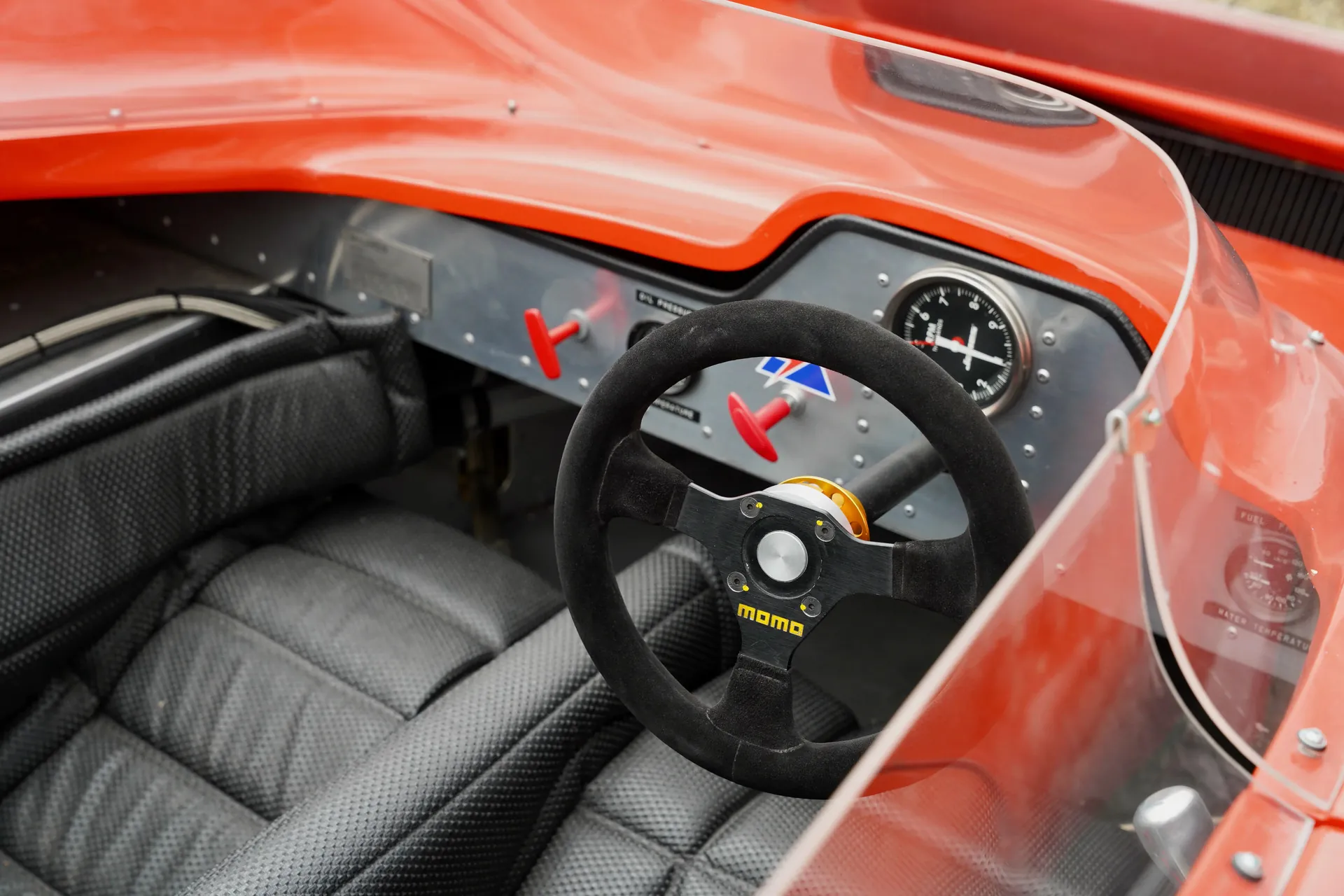
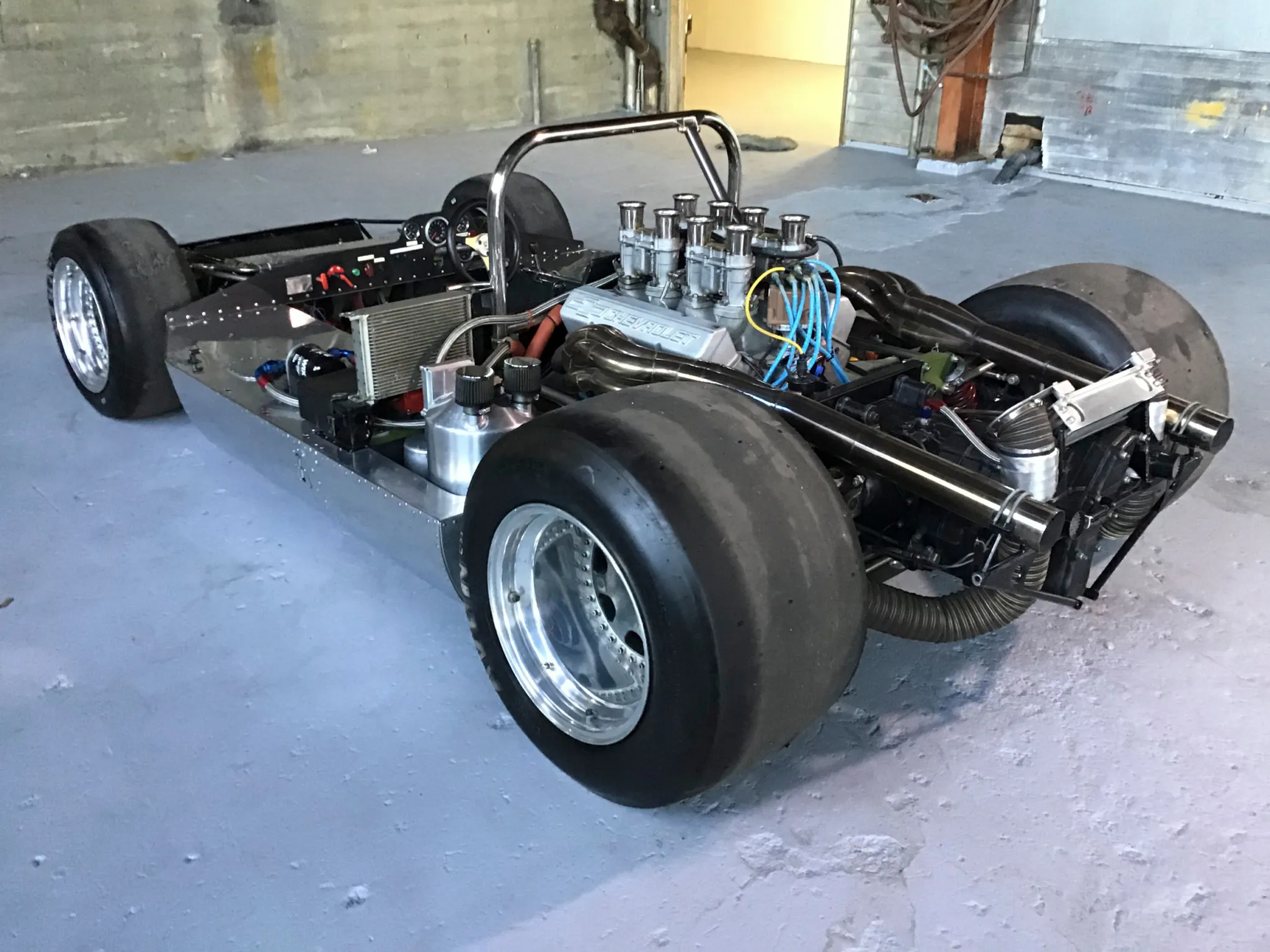
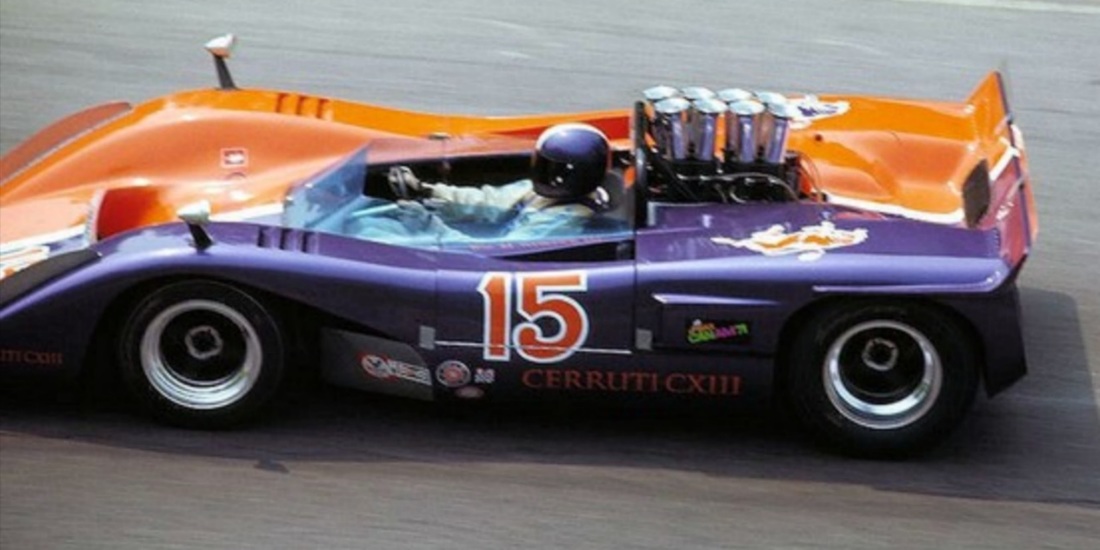
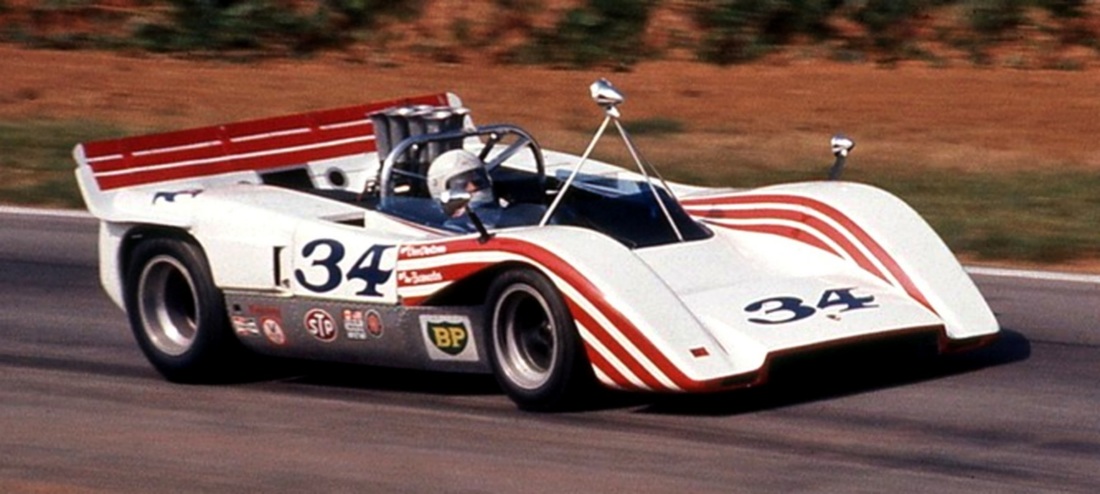
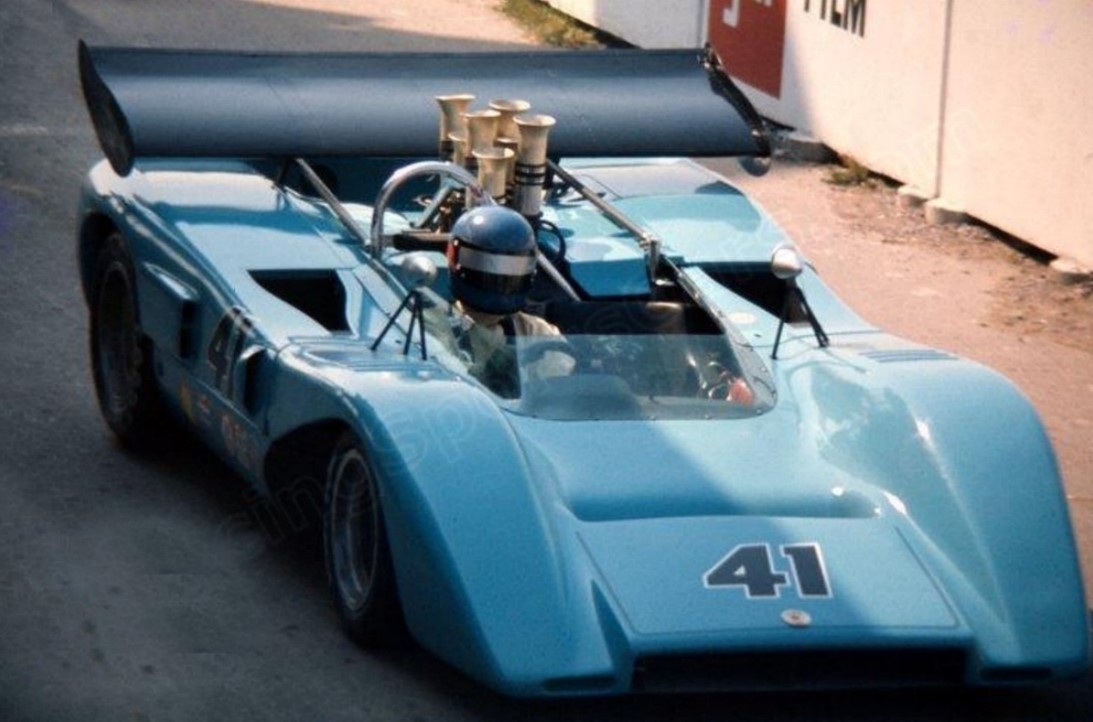
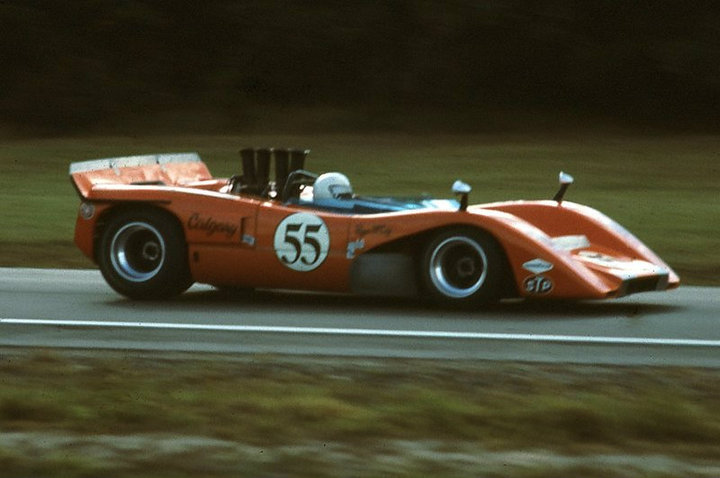
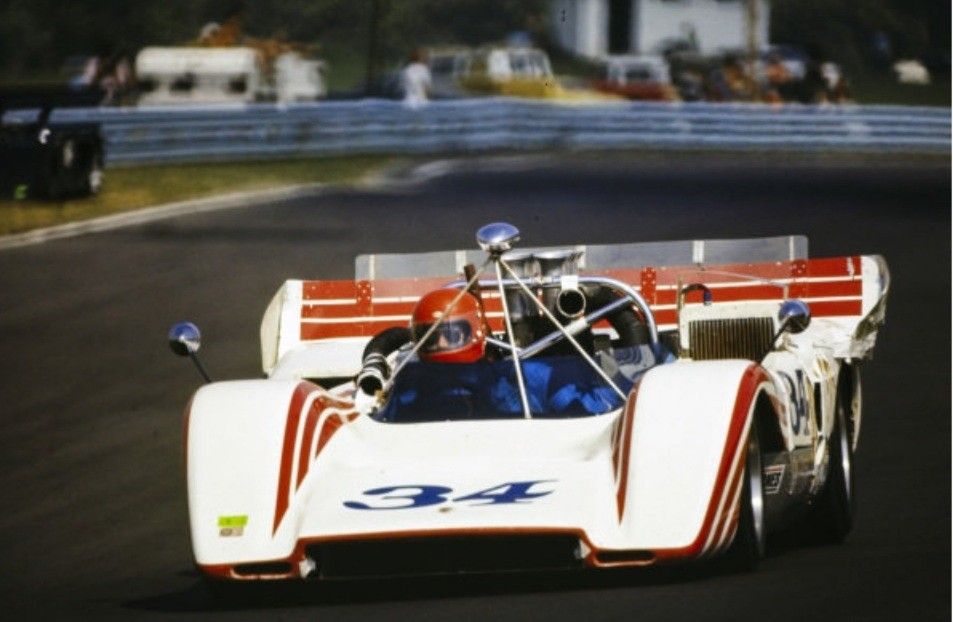
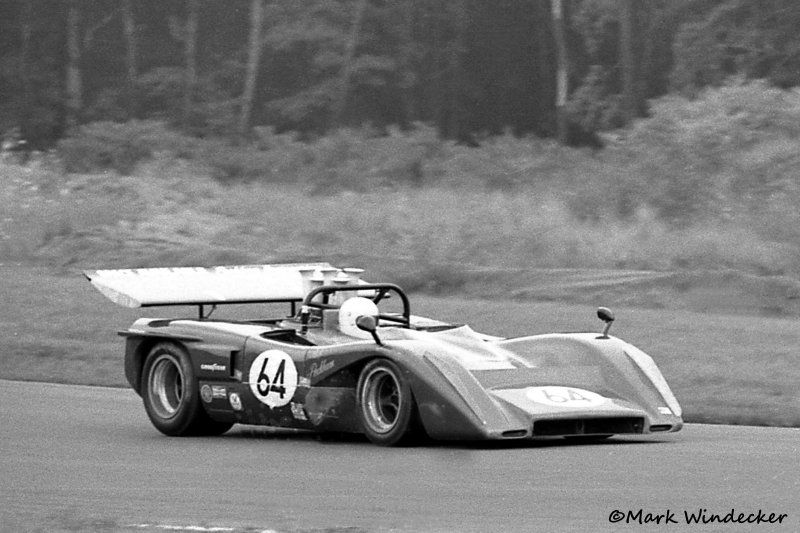
To examine the chassis of the M8C is to understand the brilliant pragmatism required for customer racing. The works M8A and M8B had utilized their massive V8 engines as fully stressed structural members. While incredibly light and rigid, this arrangement required meticulous, factory-level maintenance and specific engine blocks. For the M8C, Trojan and McLaren designer Gordon Coppuck reverted to a more conventional, albeit immensely strong, aluminium and magnesium monocoque tub that extended rearward to form a complete engine bay. This crucial engineering pivot meant privateers could easily bolt in a variety of powerplants without risking catastrophic structural failure. The vast majority of the fifteen M8C chassis built were equipped with the thunderous, all-aluminium 7.0-liter Chevrolet big-block V8, breathing through towering Lucas mechanical fuel injection stacks and churning out well over 600 horsepower. However, the versatile engine bay famously allowed Ford of Germany to shoehorn a monstrous 7.0-liter Boss 429 V8 into the chassis. Power was delivered to the colossal rear tires via a robust, virtually indestructible Hewland LG600 transaxle. Aerodynamically, the M8C was a masterpiece of the post-high-wing era. Following the FIA’s abrupt ban on strut-mounted wings, the M8C featured sweeping, continuous fiberglass bodywork with a low, integrated rear wing. Lacking the massive vertical ‘batmobile’ fences of the contemporary works M8D, the M8C presented a cleaner, undeniably elegant, yet brutally purposeful silhouette that hugged the tarmac.
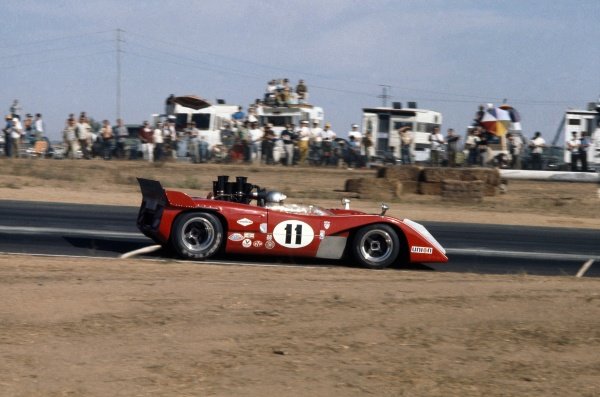
Unleashed onto the circuits in 1970, the M8C instantly became the absolute backbone of the international Group 7 grid. In North America, while they lacked the ultimate developmental edge and factory resources to consistently beat the works M8D, they were the undisputed kings of the privateer ranks, frequently snatching top-five finishes and podiums when the factory cars faltered. But it was in Europe that the M8C truly carved out its legend. In the wildly popular Interserie championship—essentially a European interpretation of Can-Am—the thunderous British-built, American-powered machines provided a spectacular, earth-shaking contrast to the high-revving European sports prototypes. Drivers like Helmut Kelleners and Chris Craft, piloting the spectacular Ecurie Evergreen entry, utilized the M8C’s brute force to bludgeon the opposition. The sight and sound of an unsilenced, big-block M8C power-sliding out of a slow corner at Hockenheim or Silverstone, massive rear slicks smoking and engine bellowing a deep, baritone roar, became a defining, intoxicating memory for a generation of European motorsport fans.
The legacy of the 1970 McLaren M8C is that of the ultimate privateer chariot. It flawlessly bridged the gap between untouchable factory exotica and the independent racer, proving that the brilliance of McLaren’s engineering could be packaged, sold, and successfully campaigned by private hands. It cemented the enormously profitable and historic relationship between McLaren and Trojan, directly paving the way for the subsequent M8E and M8FP customer cars that would sustain the Can-Am grids in its twilight years. Today, the M8C remains a highly coveted, earth-shaking staple of the historic racing scene, frequently seen thundering around Goodwood or Laguna Seca. It stands immortal in the pantheon of motorsport not as the car that won Bruce and Denny their championships, but as the roaring, papaya-orange weapon that allowed the brave, independent gladiators to step into the Can-Am arena and fight on their own terms.
Portal
Model line
Model generation
Brand
Produced from
Vehicle category
Generation Overview
By the dawn of the 1970s, the Canadian-American Challenge Cup had escalated into a relentless, high-stakes arms race, unequivocally ruled by the papaya-orange works McLarens. Bruce McLaren and Denny Hulme had just completed their historic, devastating 1969 sweep in the M8B, winning every single race on the calendar. For the wealthy privateer looking over the pit wall, the message was stark: if you wanted to win, or even merely survive, you needed a McLaren. However, the bespoke, highly stressed architecture of the works cars was deemed too complex and demanding for independent teams to run without factory support. Enter the 1970 McLaren M8C. Engineered in collaboration with Peter Agg’s Trojan firm—the official manufacturer of customer McLarens based in Croydon—the M8C was the democratized embodiment of Bruce’s Can-Am dream. It arrived to do battle not just in the North American Can-Am series against Eric Broadley’s ubiquitous Lola T160 and T163 customer cars, but also across the Atlantic in the burgeoning European Interserie, fighting against agile Porsche 908s and Ferrari 512s. The M8C was designed to be the ultimate off-the-shelf monster, a turnkey leviathan for the brave.
To examine the chassis of the M8C is to understand the brilliant pragmatism required for customer racing. The works M8A and M8B had utilized their massive V8 engines as fully stressed structural members. While incredibly light and rigid, this arrangement required meticulous, factory-level maintenance and specific engine blocks. For the M8C, Trojan and McLaren designer Gordon Coppuck reverted to a more conventional, albeit immensely strong, aluminium and magnesium monocoque tub that extended rearward to form a complete engine bay. This crucial engineering pivot meant privateers could easily bolt in a variety of powerplants without risking catastrophic structural failure. The vast majority of the fifteen M8C chassis built were equipped with the thunderous, all-aluminium 7.0-liter Chevrolet big-block V8, breathing through towering Lucas mechanical fuel injection stacks and churning out well over 600 horsepower. However, the versatile engine bay famously allowed Ford of Germany to shoehorn a monstrous 7.0-liter Boss 429 V8 into the chassis. Power was delivered to the colossal rear tires via a robust, virtually indestructible Hewland LG600 transaxle. Aerodynamically, the M8C was a masterpiece of the post-high-wing era. Following the FIA’s abrupt ban on strut-mounted wings, the M8C featured sweeping, continuous fiberglass bodywork with a low, integrated rear wing. Lacking the massive vertical ‘batmobile’ fences of the contemporary works M8D, the M8C presented a cleaner, undeniably elegant, yet brutally purposeful silhouette that hugged the tarmac.
Unleashed onto the circuits in 1970, the M8C instantly became the absolute backbone of the international Group 7 grid. In North America, while they lacked the ultimate developmental edge and factory resources to consistently beat the works M8D, they were the undisputed kings of the privateer ranks, frequently snatching top-five finishes and podiums when the factory cars faltered. But it was in Europe that the M8C truly carved out its legend. In the wildly popular Interserie championship—essentially a European interpretation of Can-Am—the thunderous British-built, American-powered machines provided a spectacular, earth-shaking contrast to the high-revving European sports prototypes. Drivers like Helmut Kelleners and Chris Craft, piloting the spectacular Ecurie Evergreen entry, utilized the M8C’s brute force to bludgeon the opposition. The sight and sound of an unsilenced, big-block M8C power-sliding out of a slow corner at Hockenheim or Silverstone, massive rear slicks smoking and engine bellowing a deep, baritone roar, became a defining, intoxicating memory for a generation of European motorsport fans.
The legacy of the 1970 McLaren M8C is that of the ultimate privateer chariot. It flawlessly bridged the gap between untouchable factory exotica and the independent racer, proving that the brilliance of McLaren’s engineering could be packaged, sold, and successfully campaigned by private hands. It cemented the enormously profitable and historic relationship between McLaren and Trojan, directly paving the way for the subsequent M8E and M8FP customer cars that would sustain the Can-Am grids in its twilight years. Today, the M8C remains a highly coveted, earth-shaking staple of the historic racing scene, frequently seen thundering around Goodwood or Laguna Seca. It stands immortal in the pantheon of motorsport not as the car that won Bruce and Denny their championships, but as the roaring, papaya-orange weapon that allowed the brave, independent gladiators to step into the Can-Am arena and fight on their own terms.
Submodels

