
McLaren M8C Ford Cosworth DFV
Brand
Produced from
Portal
Vehicle category
Model line
Model generation
Predecessor
Successor
Submodel Overview
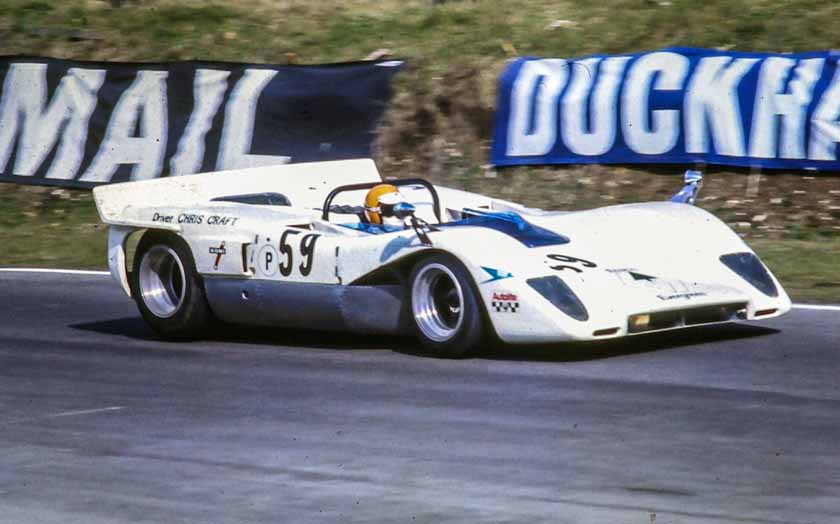
To truly comprehend the spectacular anomaly that is the 1970 McLaren M8C Ford Cosworth DFV, one must first appreciate the rigid dividing lines of international motorsport at the dawn of the decade. In North America, the Can-Am series was a theater of unrestricted, brutal excess, ruled by Bruce McLaren’s papaya-orange leviathans utilizing massive, 7.0-liter Chevrolet big-block V8s. Conversely, the European endurance scene—governed by the FIA’s World Sportscar Championship (WSC)—was a realm of high-revving, 3.0-liter finesse dominated by the delicate Porsche 908s and Ferrari 312Ps. Enter Alain de Cadenet, the charismatic British privateer, television presenter, and founder of Ecurie Evergreen. Unintimidated by the establishment, de Cadenet looked at the devastatingly effective McLaren M8 chassis and wondered if it could be adapted to conquer Europe’s endurance classics. Commissioning the very first customer M8C from Trojan (chassis 70-01), de Cadenet boldly requested that it be fitted not with a thunderous American pushrod engine, but with the crown jewel of Formula 1: the 3.0-liter Ford Cosworth DFV. The resulting vehicle was a magnificent, one-of-a-kind transatlantic hybrid. It was an ambitious, highly romantic attempt to beat the European factory prototypes at their own endurance game using the wide, ground-hugging architecture of a Can-Am brawler.
Mating a Grand Prix engine to a Group 7 Can-Am chassis was an engineering headache of magnificent proportions, requiring a masterclass in adaptation. The standard Trojan-built M8C utilized a conventional aluminium monocoque that extended rearward to cradle large American V8s, a departure from the works cars that used the engine as a stressed member. However, the Cosworth DFV was a 90-degree 3.0-liter V8 that was significantly wider at the heads and completely lacked the standard suspension attachment points required by the McLaren’s rear geometry. Trojan was forced to fabricate a completely bespoke, widened rear tub specifically to accommodate the Cosworth block. Furthermore, they engineered custom steel uprights to ease field repairs during grueling WSC endurance races. The DFV, breathing through precise Lucas mechanical fuel injection, produced a shrieking 430 horsepower at 9,000 rpm. While it lacked the earth-shaking 600 lb-ft of torque provided by a Can-Am Chevrolet, the DFV was incredibly light. This reduced the overall weight of the M8C to a feathery, nimble sub-600 kg. To handle the long driving stints of the World Sportscar Championship, the bodywork was meticulously modified with specialized dry-break fueling valves. The exterior retained the sleek, low-wing profile of the standard M8C, featuring pontoon-like extensions and lacking the massive high wings banned the previous year. It was a visually arresting package: a wide, imposing Can-Am silhouette that emitted the unmistakable, high-pitched wail of a Formula 1 grid.
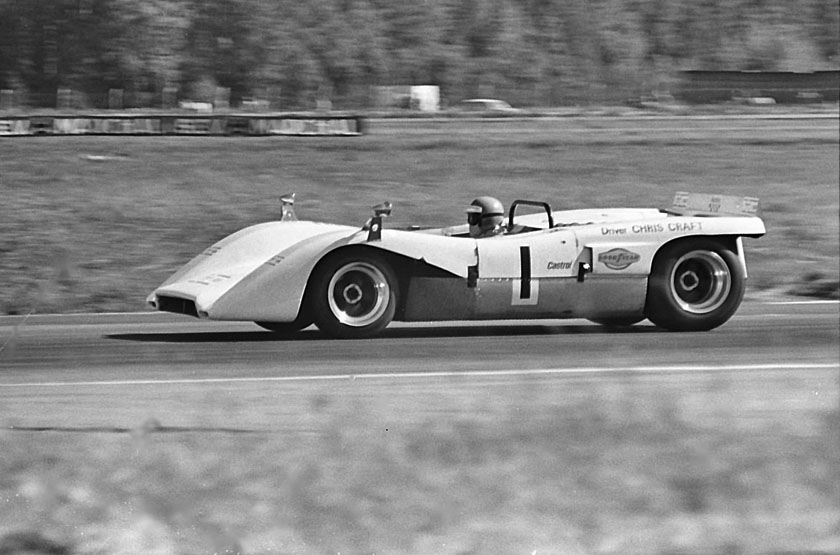
Unleashing a DFV-powered McLaren onto the endurance circuits of 1970 was an act of pure privateer audacity. Raced primarily by the fiercely talented Chris Craft, alongside former Lotus F1 driver Trevor Taylor, the Ecurie Evergreen M8C debuted at the BOAC 1000 km at Brands Hatch. However, the conventional wisdom of the era—that a DFV was designed to run flat-out for two hours in a Grand Prix, not six hours in an endurance race—initially proved difficult to overcome. The high-revving nature of the F1 engine sent severe vibrations through the chassis, leading to frustrating mechanical retirements early in its career. Yet, when the car held together, its pace was absolutely blistering. Craft wrung the neck of the DFV-powered McLaren, proving its ultimate capability by securing a brilliant outright victory at the 1970 Swedish Grand Prix in Karlskoga. The car also scored pole positions in early Interserie rounds, thrilling European crowds with its sheer speed and exotic soundtrack. In 1971, Craft and Taylor muscled the car to a commendable 9th place finish at the 1000 km of Buenos Aires against a grid of factory 5.0-liter Porsche 917s and Ferrari 512s. Following its South American adventure, the chassis was sold to an Argentine team where it spent a decade racing with local, small-block engines. It wasn’t until the 1990s that the tub was rediscovered, brought to the United States, and painstakingly restored to its original, Cosworth-powered Ecurie Evergreen configuration.
The 1970 McLaren M8C Cosworth DFV occupies a beautiful, esoteric niche in the pantheon of classic motorsport. It remains a physical, howling testament to the sheer ingenuity of Alain de Cadenet and the golden, unrepeatable era of the ambitious independent racer. By attempting to marry the ultimate customer chassis with the ultimate Grand Prix engine, Ecurie Evergreen successfully bridged two entirely distinct racing philosophies. While it did not ultimately topple the factory might of Porsche or Ferrari in the WSC, it proved that the McLaren tub was versatile enough to house the highly sophisticated DFV. Crucially, it predated the widespread, highly successful use of the Cosworth DFV in sports car racing—a trend that would eventually lead to outright Le Mans victories for the engine later in the decade. Today, chassis 70-01 is a highly coveted historic racer, a screaming, 9,000-rpm unicorn that serves as a glorious reminder of a time when a privateer could simply call up a factory, order a custom tub, bolt in a Formula 1 engine, and go hunting for giants.
Brand
Produced from
Portal
Vehicle category
Model line
Model generation
Predecessor
Sucessor
Brand
Produced from
Portal
Vehicle category
Model line
Model generation
Predecessor
Sucessor
Submodel Overview
To truly comprehend the spectacular anomaly that is the 1970 McLaren M8C Ford Cosworth DFV, one must first appreciate the rigid dividing lines of international motorsport at the dawn of the decade. In North America, the Can-Am series was a theater of unrestricted, brutal excess, ruled by Bruce McLaren’s papaya-orange leviathans utilizing massive, 7.0-liter Chevrolet big-block V8s. Conversely, the European endurance scene—governed by the FIA’s World Sportscar Championship (WSC)—was a realm of high-revving, 3.0-liter finesse dominated by the delicate Porsche 908s and Ferrari 312Ps. Enter Alain de Cadenet, the charismatic British privateer, television presenter, and founder of Ecurie Evergreen. Unintimidated by the establishment, de Cadenet looked at the devastatingly effective McLaren M8 chassis and wondered if it could be adapted to conquer Europe’s endurance classics. Commissioning the very first customer M8C from Trojan (chassis 70-01), de Cadenet boldly requested that it be fitted not with a thunderous American pushrod engine, but with the crown jewel of Formula 1: the 3.0-liter Ford Cosworth DFV. The resulting vehicle was a magnificent, one-of-a-kind transatlantic hybrid. It was an ambitious, highly romantic attempt to beat the European factory prototypes at their own endurance game using the wide, ground-hugging architecture of a Can-Am brawler.
Mating a Grand Prix engine to a Group 7 Can-Am chassis was an engineering headache of magnificent proportions, requiring a masterclass in adaptation. The standard Trojan-built M8C utilized a conventional aluminium monocoque that extended rearward to cradle large American V8s, a departure from the works cars that used the engine as a stressed member. However, the Cosworth DFV was a 90-degree 3.0-liter V8 that was significantly wider at the heads and completely lacked the standard suspension attachment points required by the McLaren’s rear geometry. Trojan was forced to fabricate a completely bespoke, widened rear tub specifically to accommodate the Cosworth block. Furthermore, they engineered custom steel uprights to ease field repairs during grueling WSC endurance races. The DFV, breathing through precise Lucas mechanical fuel injection, produced a shrieking 430 horsepower at 9,000 rpm. While it lacked the earth-shaking 600 lb-ft of torque provided by a Can-Am Chevrolet, the DFV was incredibly light. This reduced the overall weight of the M8C to a feathery, nimble sub-600 kg. To handle the long driving stints of the World Sportscar Championship, the bodywork was meticulously modified with specialized dry-break fueling valves. The exterior retained the sleek, low-wing profile of the standard M8C, featuring pontoon-like extensions and lacking the massive high wings banned the previous year. It was a visually arresting package: a wide, imposing Can-Am silhouette that emitted the unmistakable, high-pitched wail of a Formula 1 grid.
Unleashing a DFV-powered McLaren onto the endurance circuits of 1970 was an act of pure privateer audacity. Raced primarily by the fiercely talented Chris Craft, alongside former Lotus F1 driver Trevor Taylor, the Ecurie Evergreen M8C debuted at the BOAC 1000 km at Brands Hatch. However, the conventional wisdom of the era—that a DFV was designed to run flat-out for two hours in a Grand Prix, not six hours in an endurance race—initially proved difficult to overcome. The high-revving nature of the F1 engine sent severe vibrations through the chassis, leading to frustrating mechanical retirements early in its career. Yet, when the car held together, its pace was absolutely blistering. Craft wrung the neck of the DFV-powered McLaren, proving its ultimate capability by securing a brilliant outright victory at the 1970 Swedish Grand Prix in Karlskoga. The car also scored pole positions in early Interserie rounds, thrilling European crowds with its sheer speed and exotic soundtrack. In 1971, Craft and Taylor muscled the car to a commendable 9th place finish at the 1000 km of Buenos Aires against a grid of factory 5.0-liter Porsche 917s and Ferrari 512s. Following its South American adventure, the chassis was sold to an Argentine team where it spent a decade racing with local, small-block engines. It wasn’t until the 1990s that the tub was rediscovered, brought to the United States, and painstakingly restored to its original, Cosworth-powered Ecurie Evergreen configuration.
The 1970 McLaren M8C Cosworth DFV occupies a beautiful, esoteric niche in the pantheon of classic motorsport. It remains a physical, howling testament to the sheer ingenuity of Alain de Cadenet and the golden, unrepeatable era of the ambitious independent racer. By attempting to marry the ultimate customer chassis with the ultimate Grand Prix engine, Ecurie Evergreen successfully bridged two entirely distinct racing philosophies. While it did not ultimately topple the factory might of Porsche or Ferrari in the WSC, it proved that the McLaren tub was versatile enough to house the highly sophisticated DFV. Crucially, it predated the widespread, highly successful use of the Cosworth DFV in sports car racing—a trend that would eventually lead to outright Le Mans victories for the engine later in the decade. Today, chassis 70-01 is a highly coveted historic racer, a screaming, 9,000-rpm unicorn that serves as a glorious reminder of a time when a privateer could simply call up a factory, order a custom tub, bolt in a Formula 1 engine, and go hunting for giants.
Tech Specs
Technical Specifications
Tech Specs
Technical Specifications
Engine
01
03
Internal combustion engine
Configuration
Ford Cosworth DFV, V8 - 90º
Location
Mid, longitudinally mounted
Construction
Aluminium alloy block and heads
Displacement (cc)
2,993 cc
Displacement (cu in)
182.6 cu in
Compression
11.5:1
Bore x Stroke
85.6 mm x 64.8 mm
Valvetrain
4 valves per cylinder, DOHC
Fuel feed
Lucas mechanical fuel injection
Lubrication
Dry sump
Aspiration
Naturally aspirated
Output
Power (hp)
430 hp
Power (kW)
320 kW
Max power at
10,000 RPM
Torque (Nm)
339 Nm
Torque (ft lbs)
250 ft lbs
Max torque at
8,500 RPM
Drivetrain
02
03
Chassis
Type
Monocoque unibody (Built by Trojan)
Material
Aluminium and magnesium sheet riveted and bonded to steel bulkheads
Body
Material
Fibreglass
Transmission
Gearbox
Hewland DG300, 5-speed manual
Drive
Rear Wheel Drive (Limited Slip Differential)
Suspension
Front
Independent, double unequal length wishbones, coil springs over telescopic dampers, anti-roll bar
Rear
Independent, reversed lower wishbones, top links, twin radius arms, coil springs over telescopic dampers, anti-roll bar
Steering
Type
Rack and pinion, unassisted
Brakes
Front
Ventilated discs Ø305 mm, 4-piston calipers (Girling or Lockheed)
Rear
Ventilated discs Ø305 mm, 4-piston calipers (Girling or Lockheed)
Wheels
Front
10" x 15" (Cast Magnesium alloy)
Rear
15" x 15" (Cast Magnesium alloy)
Tires
Front
4.30/11.50-15
Rear
5.50/15.00-15
Dimensions and performance
03
03
Dimensions
Length (mm)
3,988 mm
Length (in)
157.0 in
Width (mm)
1,981 mm
Width (in)
78.0 in
Height (mm)
914 mm
Height (in)
36.0 in
Wheelbase (mm)
2,387 mm
Wheelbase (in)
94.0 in
Weight (kg)
~680 kg
Weight (lbs)
~1,500 lbs
Performance
Power to weight
~0.63 hp/kg
Top speed (km/h)
~295 km/h
Top speed (mph)
~183 mph
0-100 km/h (0-60 mph)
~3.4 s