
Mercedes-Benz C11
Brand
Produced from
Portal
Vehicle category
Predecessor
Successor
Submodel Overview
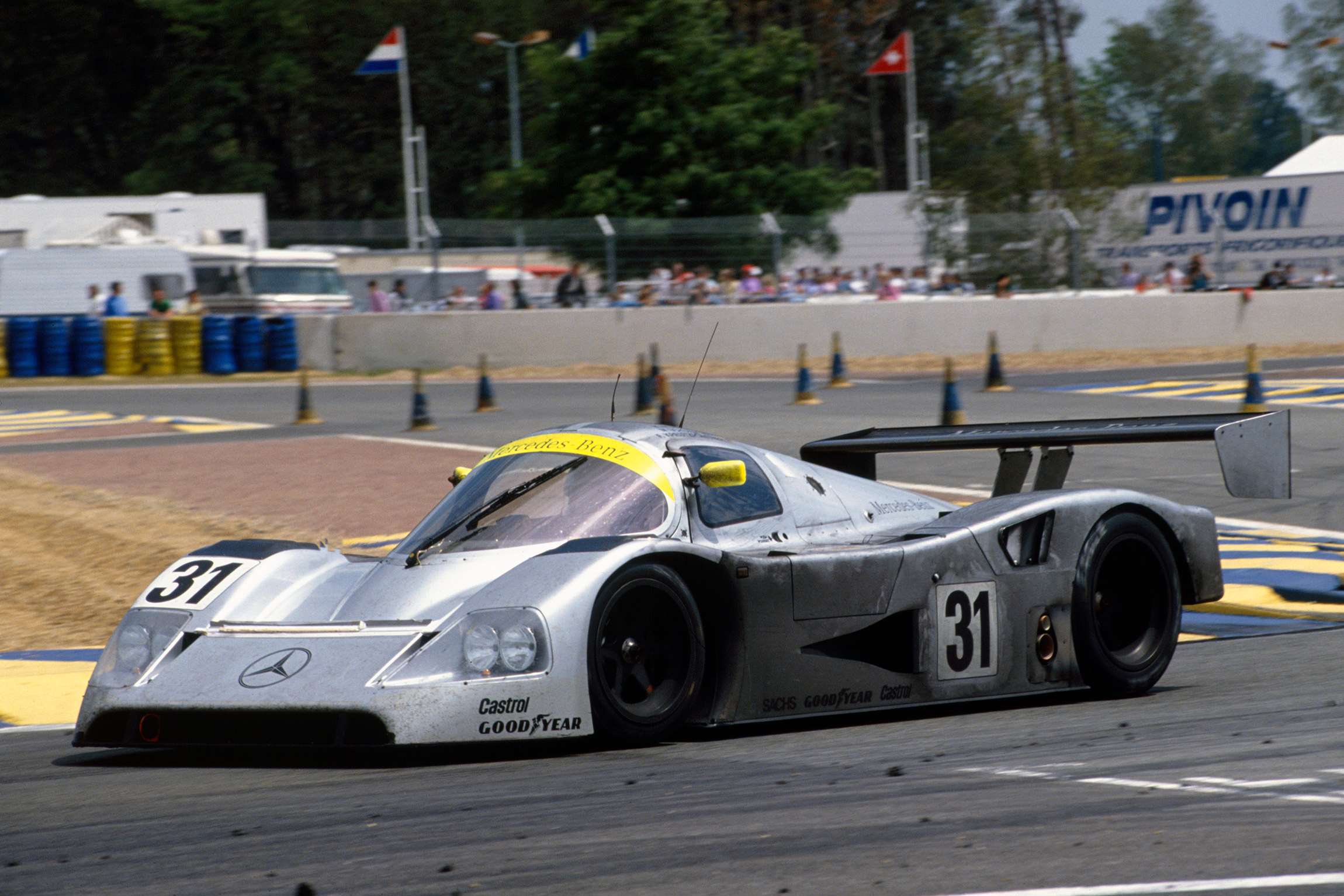
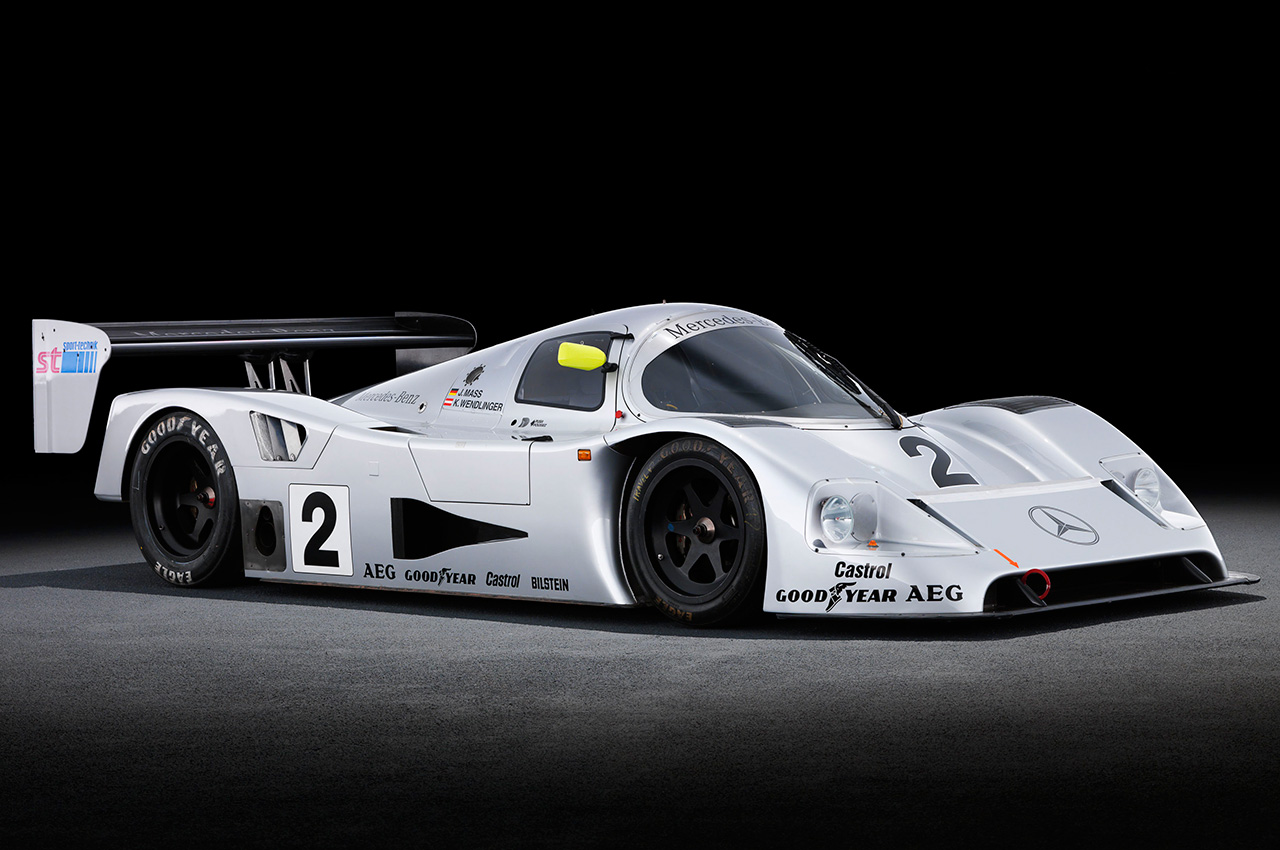
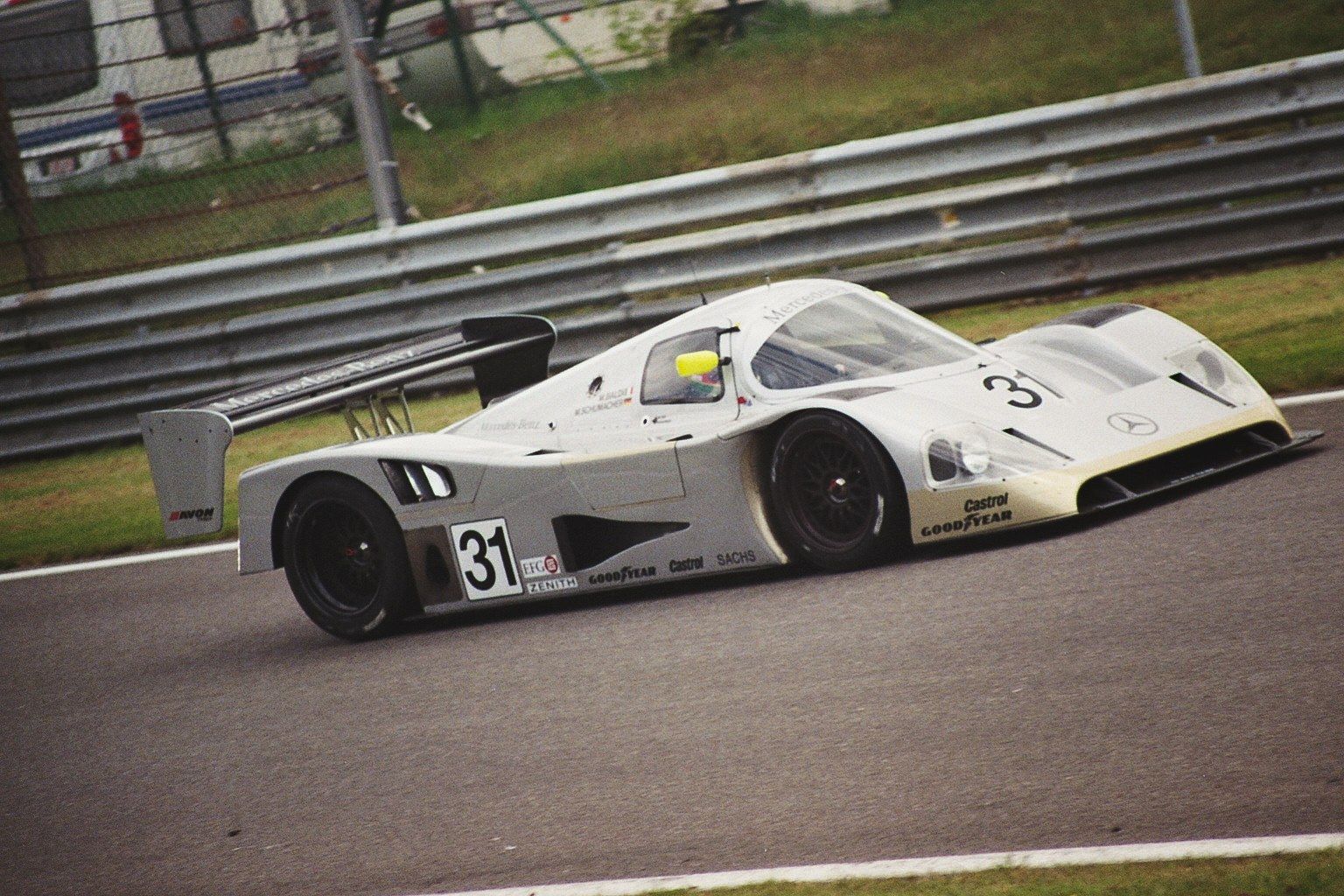
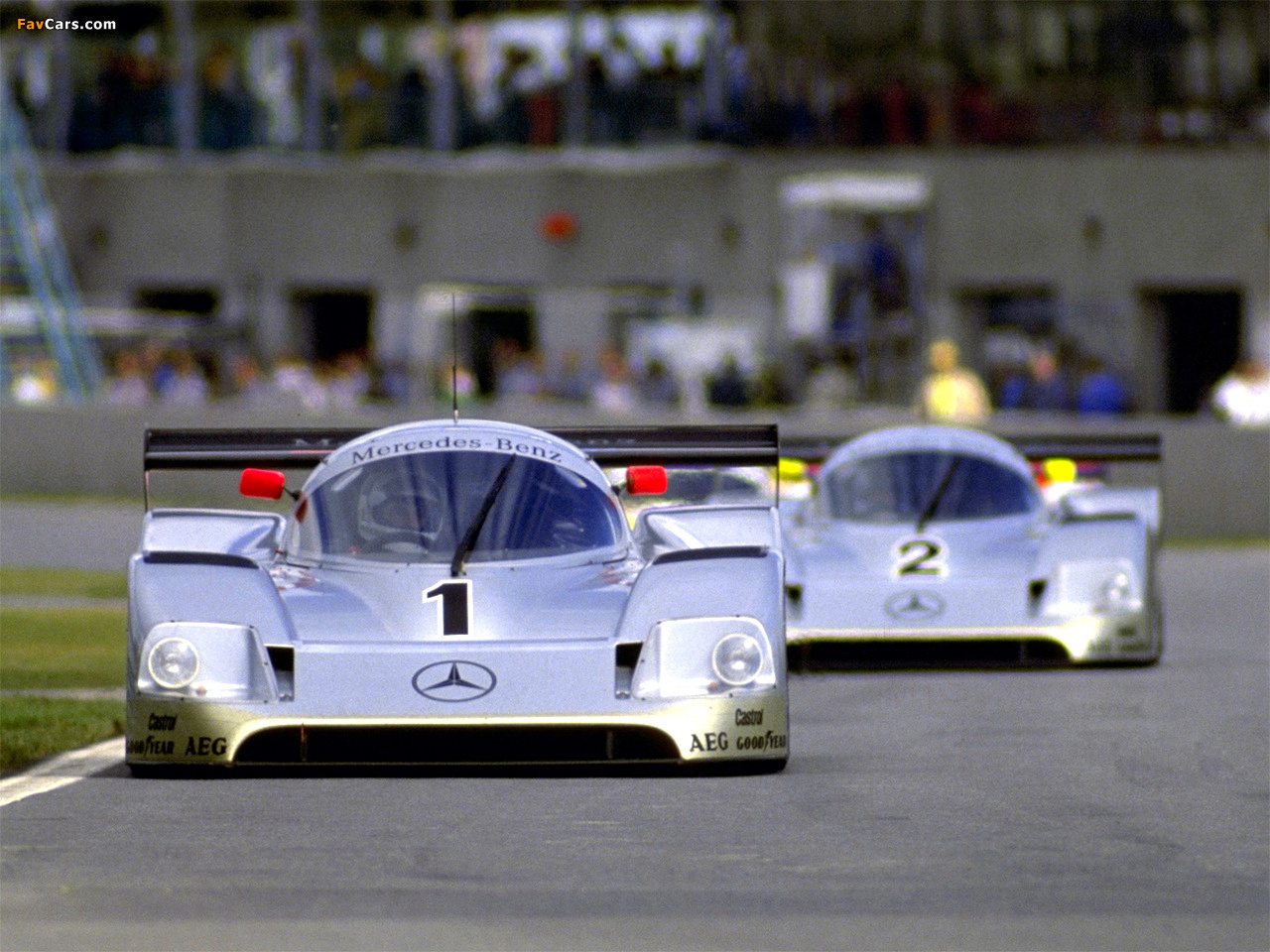
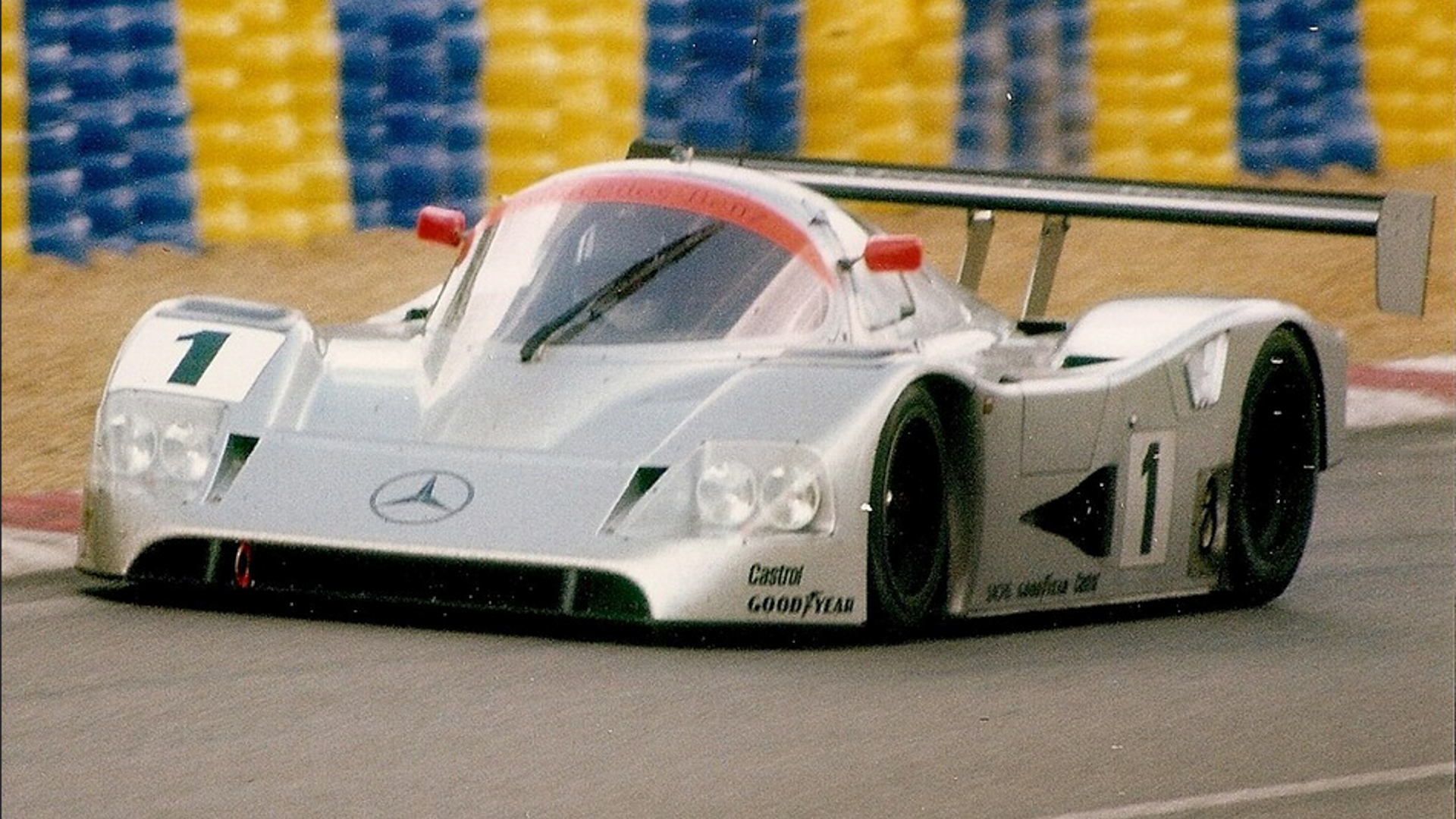
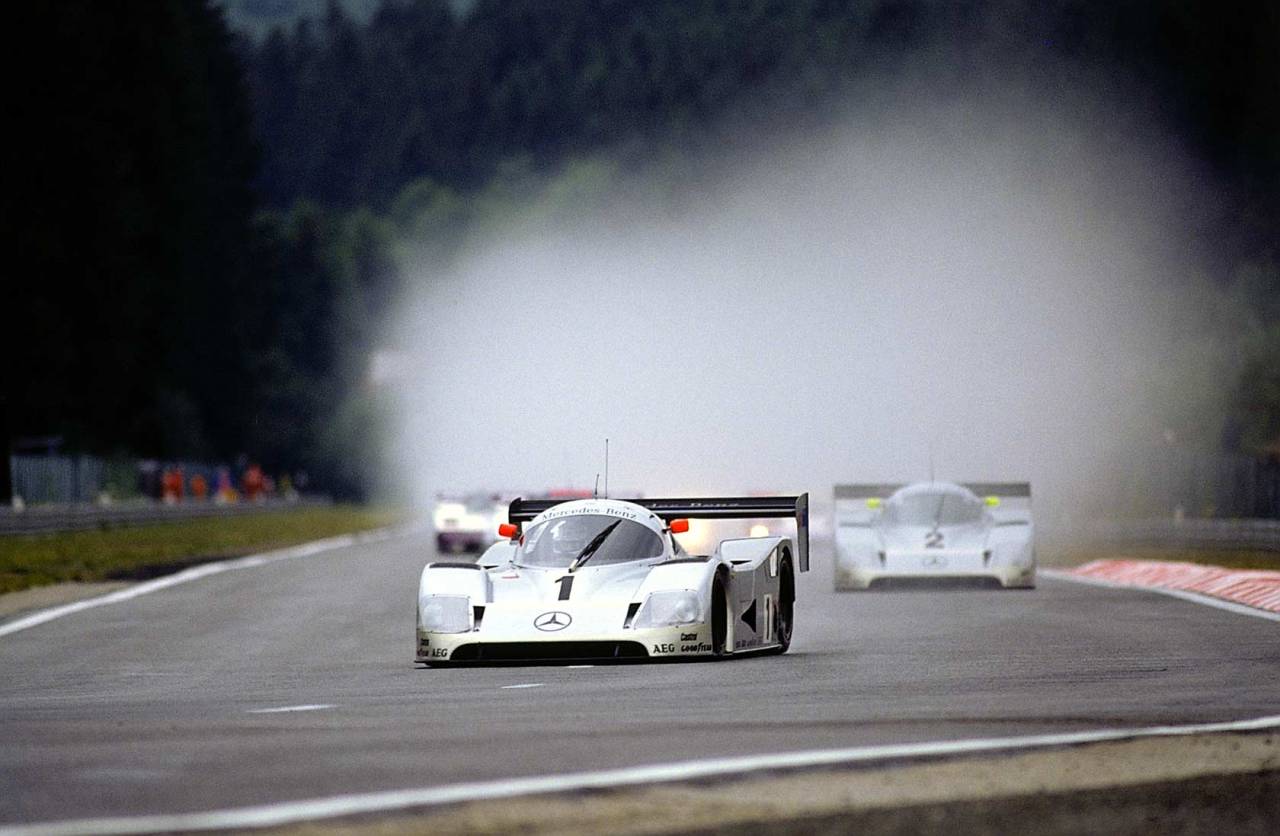
The air at Suzuka in April 1990 vibrated with a distinctly guttural, baritone menace. While the high-pitched shrieks of naturally aspirated rivals pierced the eardrums, the looming silver silhouette that tore down the main straight announced itself with the deep, concussive thunder of a twin-turbocharged V8. This was the Mercedes-Benz C11, a machine that marked the definitive, unashamed return of the Silver Arrows to top-tier factory motorsport. Following the monumental, Le Mans-winning success of its predecessor, the Sauber C9, the executives in Stuttgart finally dropped the cautious ‘Sauber-Mercedes’ nomenclature. They claimed full naming rights for their 1990 World Sports-Prototype Championship (WSPC) challenger, signaling an all-out corporate assault. The Group C landscape was arguably at its absolute zenith, populated by ferocious, deep-pocketed factory efforts like the Jaguar XJR-11, the relentlessly developed Porsche 962C, and the impossibly fast Nissan R90CK. Yet, into this shark tank of multi-million-dollar engineering dropped the C11, a prototype so fundamentally devastating that it would reduce one of the greatest eras of endurance racing to a spectacular, silver-painted procession.
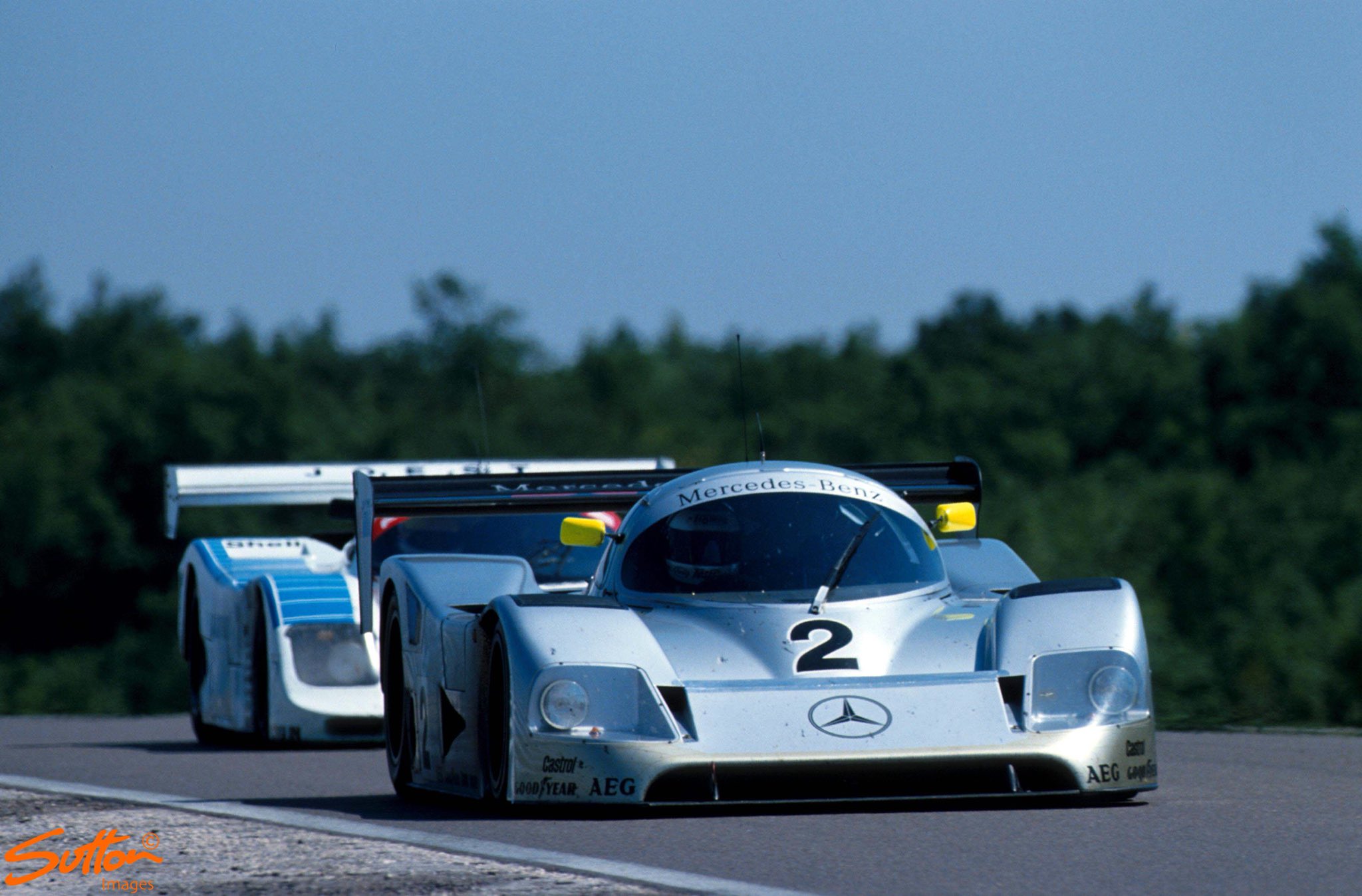
To peer beneath the impeccably smooth, silver Kevlar and carbon-fiber bodywork of the C11 is to witness a paradigm shift in Swiss-German racing architecture. Chief designer Leo Ress finally discarded the aluminium monocoque of the C9, embracing a state-of-the-art carbon-fiber tub built in conjunction with the aerospace experts at Dornier. This transition yielded a chassis of immense torsional rigidity and significantly reduced weight, providing the perfect skeletal foundation for the aerodynamic and mechanical violence to come. Aesthetically, it was a masterpiece of low-drag efficiency, featuring a lower nose, smoother flanks, and deeply sculpted underbody venturi tunnels that generated immense ground-effect downforce.
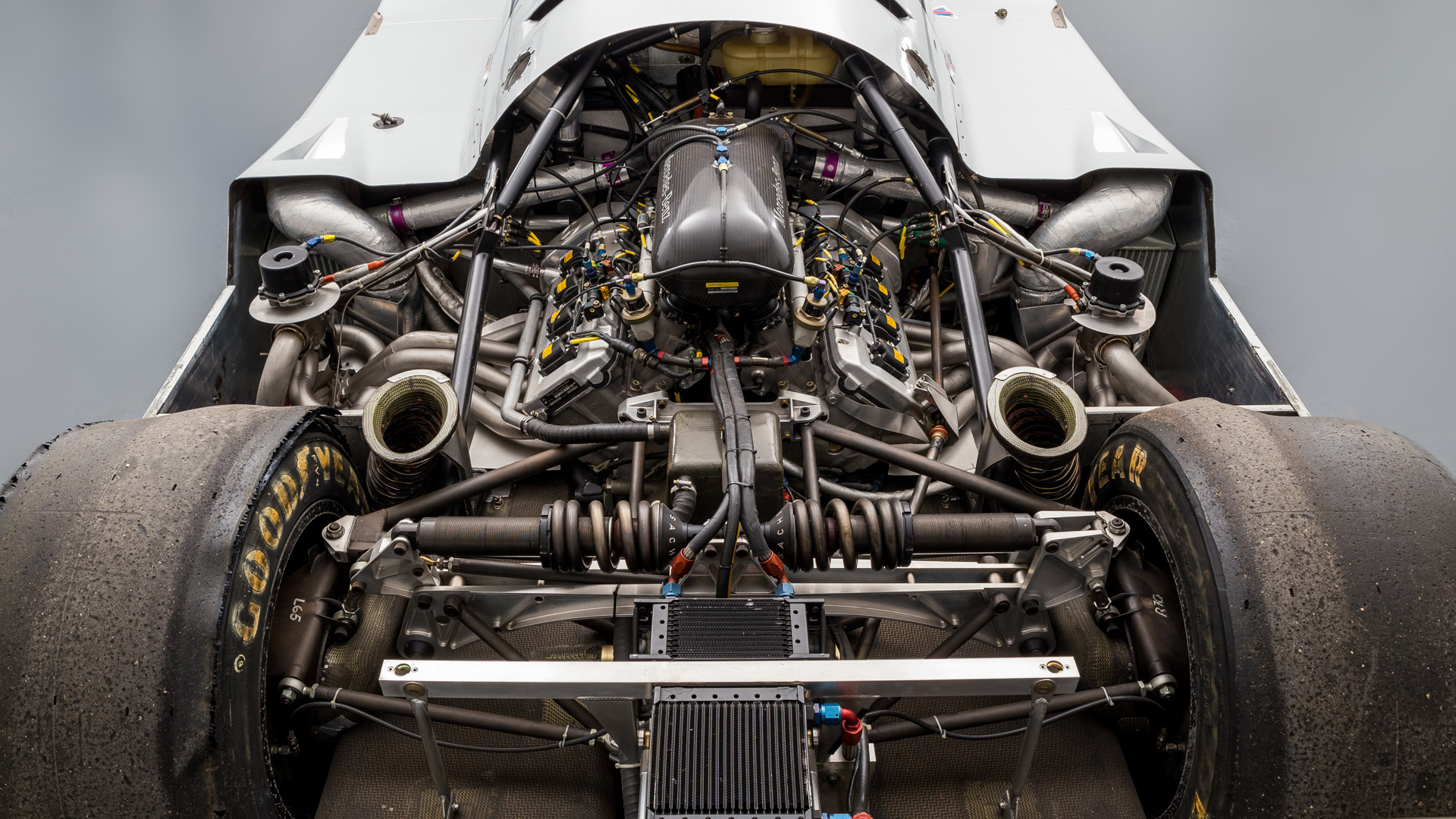
However, the true soul of the C11 was bolted directly behind the driver’s bulkhead: the legendary Mercedes-Benz M119 5.0-liter, 32-valve V8 engine. Assisted by a pair of massive KKK turbochargers, this magnificent powerplant was a paragon of endurance engineering. In conservative race trim, it delivered a totally reliable, torque-rich 730 brake horsepower. But when the wastegates were wound tightly for qualifying, the M119 could produce close to 1,000 horsepower, capable of hurling the 900-kilogram prototype down the straights with terrifying violence. Power was channeled through a bespoke five-speed manual transaxle, while massive ventilated carbon-ceramic brakes—a still-emerging and incredibly expensive technology at the time—were tasked with arresting the car from speeds well in excess of 386 km/h (240 mph).
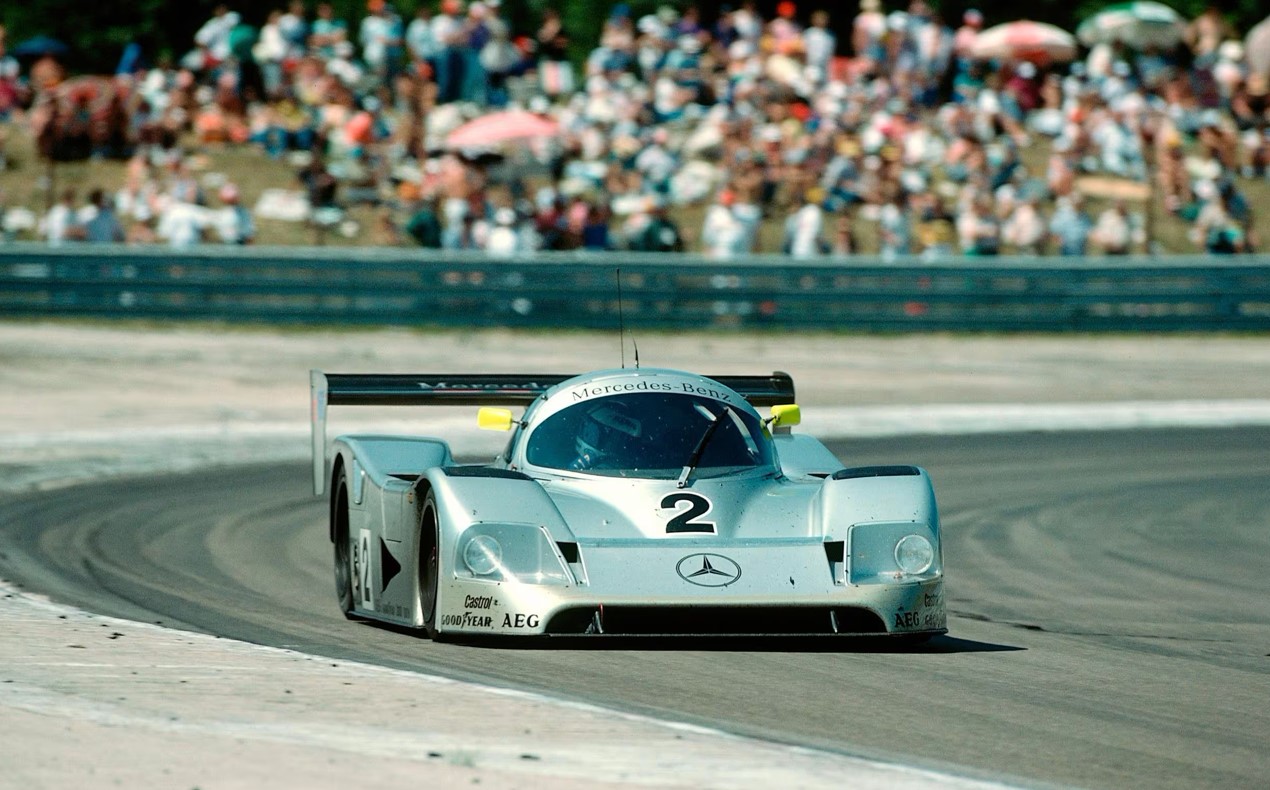
When the C11 was unleashed upon the 1990 championship, the results were less a competition and more an absolute slaughter. In the hands of veteran aces Jean-Louis Schlesser and Mauro Baldi, the lead Silver Arrow became an inescapable nightmare for the opposition. The C11 possessed a terrifying duality: it was devastatingly fast over a single qualifying lap, yet possessed the bulletproof reliability to pound around European and global circuits for hours on end without missing a single beat. Out of the nine rounds in the 1990 WSPC season, the C11 was victorious in eight, an astonishing display of dominance that secured both the Teams’ and Drivers’ titles with consummate ease. Curiously, the car did not race at the 24 Hours of Le Mans that year, as the legendary French marathon had been temporarily stripped of its world championship status due to a political dispute over chicanes, and Mercedes pragmatically opted to focus strictly on the WSPC crown. Beyond the seasoned veterans, the C11 also served as the ultimate, high-speed classroom for the famed Mercedes Junior Team. It was in the cockpit of this brutal Group C monster that a trio of young prodigies—Heinz-Harald Frentzen, Karl Wendlinger, and a fiercely ambitious Michael Schumacher—learned the dark arts of aerodynamic grip, traffic management, and fuel conservation, setting the stage for their eventual ascents into Formula 1.
The legacy of the 1990 Mercedes-Benz C11 is permanently etched in motorsport history as the absolute zenith of the turbocharged Group C era. It was the ultimate, uncompromising expression of Mercedes-Benz engineering might before the FIA fundamentally altered the rulebook for 1991, mandating high-revving 3.5-liter Formula 1-style naturally aspirated engines. That draconian shift birthed the C11’s successor, the flat-12 powered C291, a car that ultimately proved too fragile and complex to replicate the turbo Silver Arrow’s sheer dominance. Today, the C11 is revered as a high-water mark of endurance prototype racing. It represents a brief, glorious window in time where massive displacement, twin turbochargers, and carbon-fiber ground effects merged into a flawless package. In the pantheon of motorsport, the C11 sits proudly alongside the Porsche 956 and the Jaguar XJR-9 as one of the defining shapes of Group C—a relentless titan that conquered the world with terrifying Teutonic precision.
Brand
Produced from
Portal
Vehicle category
Predecessor
Sucessor
Brand
Produced from
Portal
Vehicle category
Model generation
Predecessor
Sucessor
Submodel Overview
The air at Suzuka in April 1990 vibrated with a distinctly guttural, baritone menace. While the high-pitched shrieks of naturally aspirated rivals pierced the eardrums, the looming silver silhouette that tore down the main straight announced itself with the deep, concussive thunder of a twin-turbocharged V8. This was the Mercedes-Benz C11, a machine that marked the definitive, unashamed return of the Silver Arrows to top-tier factory motorsport. Following the monumental, Le Mans-winning success of its predecessor, the Sauber C9, the executives in Stuttgart finally dropped the cautious ‘Sauber-Mercedes’ nomenclature. They claimed full naming rights for their 1990 World Sports-Prototype Championship (WSPC) challenger, signaling an all-out corporate assault. The Group C landscape was arguably at its absolute zenith, populated by ferocious, deep-pocketed factory efforts like the Jaguar XJR-11, the relentlessly developed Porsche 962C, and the impossibly fast Nissan R90CK. Yet, into this shark tank of multi-million-dollar engineering dropped the C11, a prototype so fundamentally devastating that it would reduce one of the greatest eras of endurance racing to a spectacular, silver-painted procession.
To peer beneath the impeccably smooth, silver Kevlar and carbon-fiber bodywork of the C11 is to witness a paradigm shift in Swiss-German racing architecture. Chief designer Leo Ress finally discarded the aluminium monocoque of the C9, embracing a state-of-the-art carbon-fiber tub built in conjunction with the aerospace experts at Dornier. This transition yielded a chassis of immense torsional rigidity and significantly reduced weight, providing the perfect skeletal foundation for the aerodynamic and mechanical violence to come. Aesthetically, it was a masterpiece of low-drag efficiency, featuring a lower nose, smoother flanks, and deeply sculpted underbody venturi tunnels that generated immense ground-effect downforce.
However, the true soul of the C11 was bolted directly behind the driver’s bulkhead: the legendary Mercedes-Benz M119 5.0-liter, 32-valve V8 engine. Assisted by a pair of massive KKK turbochargers, this magnificent powerplant was a paragon of endurance engineering. In conservative race trim, it delivered a totally reliable, torque-rich 730 brake horsepower. But when the wastegates were wound tightly for qualifying, the M119 could produce close to 1,000 horsepower, capable of hurling the 900-kilogram prototype down the straights with terrifying violence. Power was channeled through a bespoke five-speed manual transaxle, while massive ventilated carbon-ceramic brakes—a still-emerging and incredibly expensive technology at the time—were tasked with arresting the car from speeds well in excess of 386 km/h (240 mph).
When the C11 was unleashed upon the 1990 championship, the results were less a competition and more an absolute slaughter. In the hands of veteran aces Jean-Louis Schlesser and Mauro Baldi, the lead Silver Arrow became an inescapable nightmare for the opposition. The C11 possessed a terrifying duality: it was devastatingly fast over a single qualifying lap, yet possessed the bulletproof reliability to pound around European and global circuits for hours on end without missing a single beat. Out of the nine rounds in the 1990 WSPC season, the C11 was victorious in eight, an astonishing display of dominance that secured both the Teams’ and Drivers’ titles with consummate ease. Curiously, the car did not race at the 24 Hours of Le Mans that year, as the legendary French marathon had been temporarily stripped of its world championship status due to a political dispute over chicanes, and Mercedes pragmatically opted to focus strictly on the WSPC crown. Beyond the seasoned veterans, the C11 also served as the ultimate, high-speed classroom for the famed Mercedes Junior Team. It was in the cockpit of this brutal Group C monster that a trio of young prodigies—Heinz-Harald Frentzen, Karl Wendlinger, and a fiercely ambitious Michael Schumacher—learned the dark arts of aerodynamic grip, traffic management, and fuel conservation, setting the stage for their eventual ascents into Formula 1.
The legacy of the 1990 Mercedes-Benz C11 is permanently etched in motorsport history as the absolute zenith of the turbocharged Group C era. It was the ultimate, uncompromising expression of Mercedes-Benz engineering might before the FIA fundamentally altered the rulebook for 1991, mandating high-revving 3.5-liter Formula 1-style naturally aspirated engines. That draconian shift birthed the C11’s successor, the flat-12 powered C291, a car that ultimately proved too fragile and complex to replicate the turbo Silver Arrow’s sheer dominance. Today, the C11 is revered as a high-water mark of endurance prototype racing. It represents a brief, glorious window in time where massive displacement, twin turbochargers, and carbon-fiber ground effects merged into a flawless package. In the pantheon of motorsport, the C11 sits proudly alongside the Porsche 956 and the Jaguar XJR-9 as one of the defining shapes of Group C—a relentless titan that conquered the world with terrifying Teutonic precision.
Tech Specs
Technical Specifications
Tech Specs
Technical Specifications
Engine
01
03
Internal combustion engine
Configuration
Mercedes-Benz M119 HL, V8 - 90º
Location
Mid, longitudinally mounted
Construction
Aluminium alloy block and heads
Displacement (cc)
4,973 cc
Displacement (cu in)
303.5 cu in
Compression
8.5:1
Bore x Stroke
96.5 mm x 85.0 mm
Valvetrain
4 valves per cylinder, DOHC
Fuel feed
Bosch Motronic MP 2.7 electronic fuel injection
Lubrication
Dry sump
Aspiration
Twin-Turbocharged (2 x KKK K27 turbochargers)
Output
Power (hp)
~900 hp
Power (kW)
~670 kW
Max power at
7,000 RPM
Torque (Nm)
~820 Nm
Torque (ft lbs)
~605 ft lbs
Max torque at
3,500 RPM
Drivetrain
02
03
Chassis
Type
Monocoque unibody
Material
Carbon fibre composite and aluminium honeycomb
Body
Material
Carbon fibre and Kevlar composite
Transmission
Gearbox
Mercedes-Benz / Hewland 5-speed manual
Drive
Rear Wheel Drive
Suspension
Front
Independent, double wishbones, pushrod-actuated coil springs over dampers, anti-roll bar
Rear
Independent, double wishbones, pushrod-actuated coil springs over dampers, anti-roll bar
Steering
Type
Rack and pinion, power assisted
Brakes
Front
Ventilated carbon ceramic discs Ø356 mm (14 in), 6-piston Brembo calipers
Rear
Ventilated carbon ceramic discs Ø356 mm (14 in), 6-piston Brembo calipers
Wheels
Front
13" x 17" (Speedline Magnesium alloy)
Rear
14.5" x 19" (Speedline Magnesium alloy)
Tires
Front
25/64-17
Rear
28.5/73-19
Dimensions and performance
03
03
Dimensions
Length (mm)
4,800 mm
Length (in)
189.0 in
Width (mm)
2,000 mm
Width (in)
78.7 in
Height (mm)
1,030 mm
Height (in)
40.6 in
Wheelbase (mm)
2,770 mm
Wheelbase (in)
109.1 in
Weight (kg)
905 kg
Weight (lbs)
1,995 lbs
Performance
Power to weight
~1 hp/kg
Top speed (km/h)
~400 km/h
Top speed (mph)
~248 mph
0-100 km/h (0-60 mph)
~2.6 s