
Alba AR2 Carma FF
Brand
Produced from
Portal
Vehicle category
Model line
Predecessor
Successor
Submodel Overview
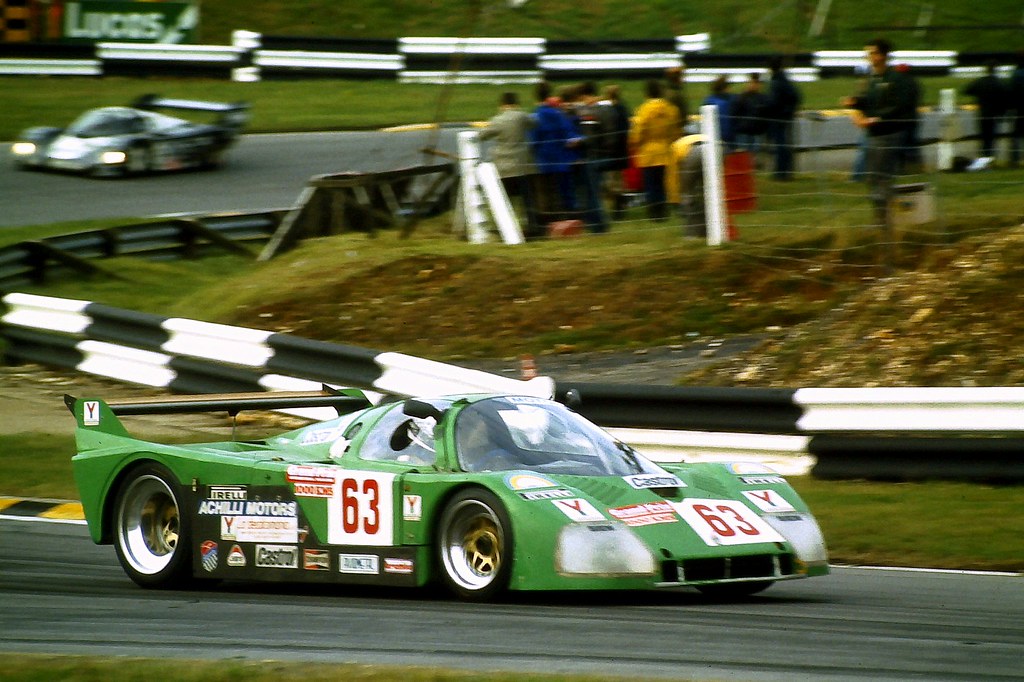
To truly appreciate the 1983 Alba AR2 Carma FF, one must look past the shadow cast by the gargantuan Porsche 956s and Lancia LC2s that defined the Group C era. While those titans fought for outright glory, a more nuanced and technically daring battle was unfolding in the junior category, Group C2. It was here that Giorgio Stirano, a man whose engineering soul was forged at Osella, decided to challenge the status quo. The Alba AR2 was not merely a smaller version of a top-tier prototype; it was a bespoke, carbon-fiber response to a world that was beginning to embrace composite technology. It stepped into a competitive landscape dominated by the likes of Tiga and Lola, yet it brought a distinctly Italian flair for high-tech solutions. The Carma FF submodel, in particular, represented the most radical technological fringe of the C2 class, opting for a diminutive but ferocious turbocharged heart in a field that largely relied on the rhythmic, naturally aspirated roar of the Cosworth V8.
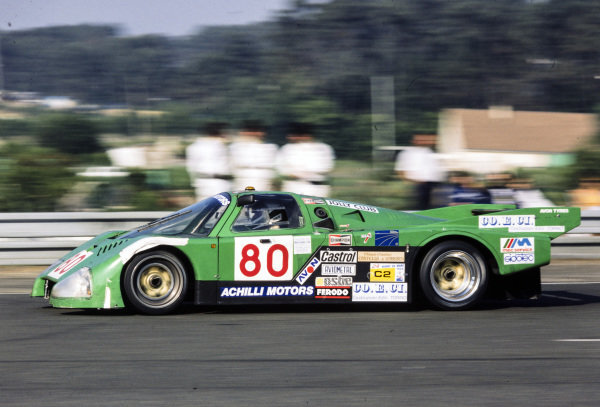
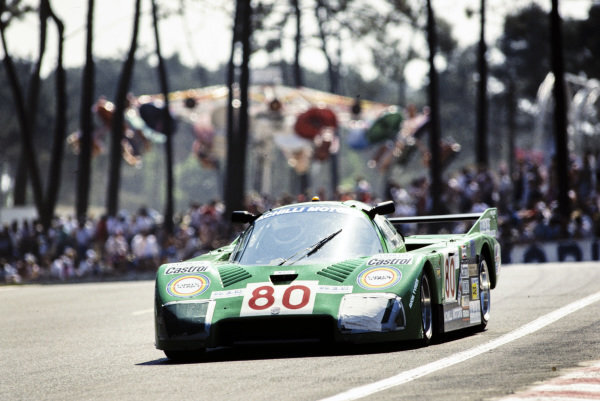
Technically, the AR2 was a pioneer. At a time when many junior prototypes were still utilizing aluminium tubs or even spaceframe hybrids, Stirano utilized a monocoque constructed from carbon fiber and Kevlar. This granted the Alba a structural rigidity and a safety cell that was years ahead of its rivals, all while keeping the weight perilously close to the 700kg minimum. The bodywork was a masterclass in packaging; the AR2 featured a low, aggressive wedge profile with short overhangs, designed to maximize the ground-effect venturis beneath its skin. However, the “Carma FF” designation is where the car’s true character resided. The name was a portmanteau of its creators—Carlo Facetti and Martino Finotto—who developed a 1.8-liter, four-cylinder turbocharged engine for the project. This jewel of an engine was effectively a miniature powerhouse, utilizing a KKK turbocharger to churn out nearly 450 horsepower. In a car this light, the power-to-weight ratio was staggering. To manage this explosive delivery, the AR2 utilized a Hewland five-speed gearbox and massive ventilated disc brakes tucked behind dish-style magnesium wheels. Inside, the cockpit was a claustrophobic, carbon-walled sanctuary, with the driver positioned far forward, peering through a panoramic windshield that offered a fighter-pilot’s view of the approaching apex.
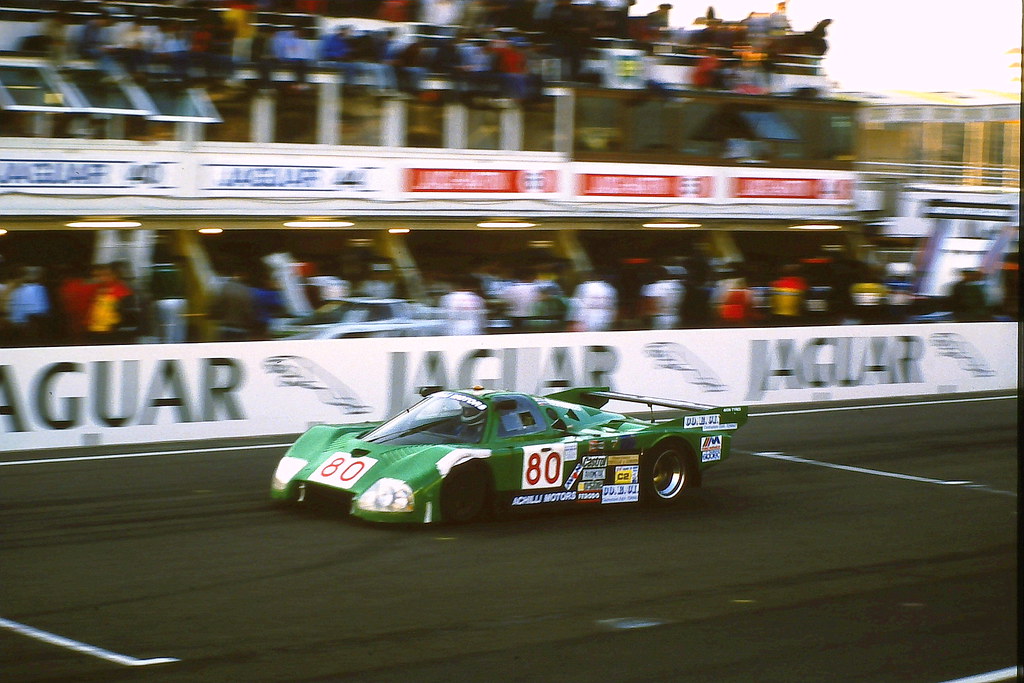
The competitive history of the Alba AR2 Carma FF is a saga of immediate, crushing dominance. In 1983, the car didn’t just win; it redefined the standards of the C2 class. Driven by the formidable duo of Facetti and Finotto, the Alba secured the inaugural FIA Group C Junior Trophy, effectively winning the world championship for junior prototypes in its first year of operation. It was a giant-killer of the highest order. On technical circuits like the Nürburgring or Brands Hatch, the nimble Alba would frequently humiliate much more powerful C1 machinery during qualifying, darting through corners with an agility that the heavy Porsches simply couldn’t match. One of the most significant moments in its career was the 1983 24 Hours of Le Mans. While mechanical fragility—the perennial curse of the highly-strung turbo four-cylinder—denied it a finish, its pace during the night was a revelation to the establishment. It proved that a small, independent Italian team could use high-tech materials and sophisticated turbocharging to out-engineer the world.
The legacy of the Alba AR2 Carma FF is its role as the catalyst for the professionalization of the junior endurance ranks. It was the car that forced other constructors to abandon aluminium in favor of carbon fiber and proved that small displacement didn’t have to mean slow. While the team eventually transitioned to the Ford Cosworth DFL engine for better reliability, the original Carma FF remains the most exotic and technically pure expression of Stirano’s vision. It paved the way for the dominant Spice and Ecurie Ecosse programs that would follow in the late 1980s. Today, the AR2 Carma FF is a hallowed sight at historic events like the Le Mans Classic, a screaming, turbocharged testament to a time when Italian ingenuity used a gossamer web of carbon fiber to capture a world title.
Brand
Produced from
Portal
Vehicle category
Model line
Predecessor
Sucessor
Brand
Produced from
Portal
Vehicle category
Model line
Model generation
Predecessor
Sucessor
Submodel Overview
To truly appreciate the 1983 Alba AR2 Carma FF, one must look past the shadow cast by the gargantuan Porsche 956s and Lancia LC2s that defined the Group C era. While those titans fought for outright glory, a more nuanced and technically daring battle was unfolding in the junior category, Group C2. It was here that Giorgio Stirano, a man whose engineering soul was forged at Osella, decided to challenge the status quo. The Alba AR2 was not merely a smaller version of a top-tier prototype; it was a bespoke, carbon-fiber response to a world that was beginning to embrace composite technology. It stepped into a competitive landscape dominated by the likes of Tiga and Lola, yet it brought a distinctly Italian flair for high-tech solutions. The Carma FF submodel, in particular, represented the most radical technological fringe of the C2 class, opting for a diminutive but ferocious turbocharged heart in a field that largely relied on the rhythmic, naturally aspirated roar of the Cosworth V8.
Technically, the AR2 was a pioneer. At a time when many junior prototypes were still utilizing aluminium tubs or even spaceframe hybrids, Stirano utilized a monocoque constructed from carbon fiber and Kevlar. This granted the Alba a structural rigidity and a safety cell that was years ahead of its rivals, all while keeping the weight perilously close to the 700kg minimum. The bodywork was a masterclass in packaging; the AR2 featured a low, aggressive wedge profile with short overhangs, designed to maximize the ground-effect venturis beneath its skin. However, the “Carma FF” designation is where the car’s true character resided. The name was a portmanteau of its creators—Carlo Facetti and Martino Finotto—who developed a 1.8-liter, four-cylinder turbocharged engine for the project. This jewel of an engine was effectively a miniature powerhouse, utilizing a KKK turbocharger to churn out nearly 450 horsepower. In a car this light, the power-to-weight ratio was staggering. To manage this explosive delivery, the AR2 utilized a Hewland five-speed gearbox and massive ventilated disc brakes tucked behind dish-style magnesium wheels. Inside, the cockpit was a claustrophobic, carbon-walled sanctuary, with the driver positioned far forward, peering through a panoramic windshield that offered a fighter-pilot’s view of the approaching apex.
The competitive history of the Alba AR2 Carma FF is a saga of immediate, crushing dominance. In 1983, the car didn’t just win; it redefined the standards of the C2 class. Driven by the formidable duo of Facetti and Finotto, the Alba secured the inaugural FIA Group C Junior Trophy, effectively winning the world championship for junior prototypes in its first year of operation. It was a giant-killer of the highest order. On technical circuits like the Nürburgring or Brands Hatch, the nimble Alba would frequently humiliate much more powerful C1 machinery during qualifying, darting through corners with an agility that the heavy Porsches simply couldn’t match. One of the most significant moments in its career was the 1983 24 Hours of Le Mans. While mechanical fragility—the perennial curse of the highly-strung turbo four-cylinder—denied it a finish, its pace during the night was a revelation to the establishment. It proved that a small, independent Italian team could use high-tech materials and sophisticated turbocharging to out-engineer the world.
The legacy of the Alba AR2 Carma FF is its role as the catalyst for the professionalization of the junior endurance ranks. It was the car that forced other constructors to abandon aluminium in favor of carbon fiber and proved that small displacement didn’t have to mean slow. While the team eventually transitioned to the Ford Cosworth DFL engine for better reliability, the original Carma FF remains the most exotic and technically pure expression of Stirano’s vision. It paved the way for the dominant Spice and Ecurie Ecosse programs that would follow in the late 1980s. Today, the AR2 Carma FF is a hallowed sight at historic events like the Le Mans Classic, a screaming, turbocharged testament to a time when Italian ingenuity used a gossamer web of carbon fiber to capture a world title.
Tech Specs
Technical Specifications
Tech Specs
Technical Specifications
Engine
01
03
Internal combustion engine
Configuration
Carma FF (later Giannini-Carma), Inline-4
Location
Mid, longitudinally mounted (Fully stressed member)
Construction
Cast iron block and Aluminium alloy head
Displacement (cc)
1,840 cc
Displacement (cu in)
112.3 cu in
Compression
~7.5:1
Bore x Stroke
-
Valvetrain
4 valves per cylinder, DOHC
Fuel feed
Electronic fuel injection
Lubrication
Dry sump
Aspiration
Turbocharged (Single KKK turbocharger)
Output
Power (hp)
410 hp
Power (kW)
306 kW
Max power at
8,500 RPM
Torque (Nm)
~450 Nm
Torque (ft lbs)
~332 ft lbs
Max torque at
~6,000 RPM
Drivetrain
02
03
Chassis
Type
Monocoque with rear tubular subframe
Material
Carbon-fibre composite and steel tubes
Body
Material
Fibreglass and Kevlar composite
Transmission
Gearbox
Hewland 5-speed manual
Drive
Rear Wheel Drive (Limited Slip Differential)
Suspension
Front
Independent, double wishbones, pull-rod actuated in-board coil springs over dampers, anti-roll bar
Rear
Independent, double wishbones, push-rod actuated in-board coil springs over dampers, anti-roll bar
Steering
Type
Rack and pinion, unassisted
Brakes
Front
Ventilated discs (initially steel, later carbon-fibre), 4-piston Brembo calipers
Rear
Ventilated discs (initially steel, later carbon-fibre), 4-piston Brembo calipers
Wheels
Front
11" x 16"
Rear
14" x 16"
Tires
Front
-
Rear
-
Dimensions and performance
03
03
Dimensions
Length (mm)
4,800 mm
Length (in)
189.0 in
Width (mm)
1,990 mm
Width (in)
78.3 in
Height (mm)
1,000 mm
Height (in)
39.4 in
Wheelbase (mm)
2,600 mm
Wheelbase (in)
102.4 in
Weight (kg)
789 kg
Weight (lbs)
1,739 lbs
Performance
Power to weight
0.52 hp/kg
Top speed (km/h)
~345 km/h
Top speed (mph)
~214 mph
0-100 km/h (0-60 mph)
~3.6 s